
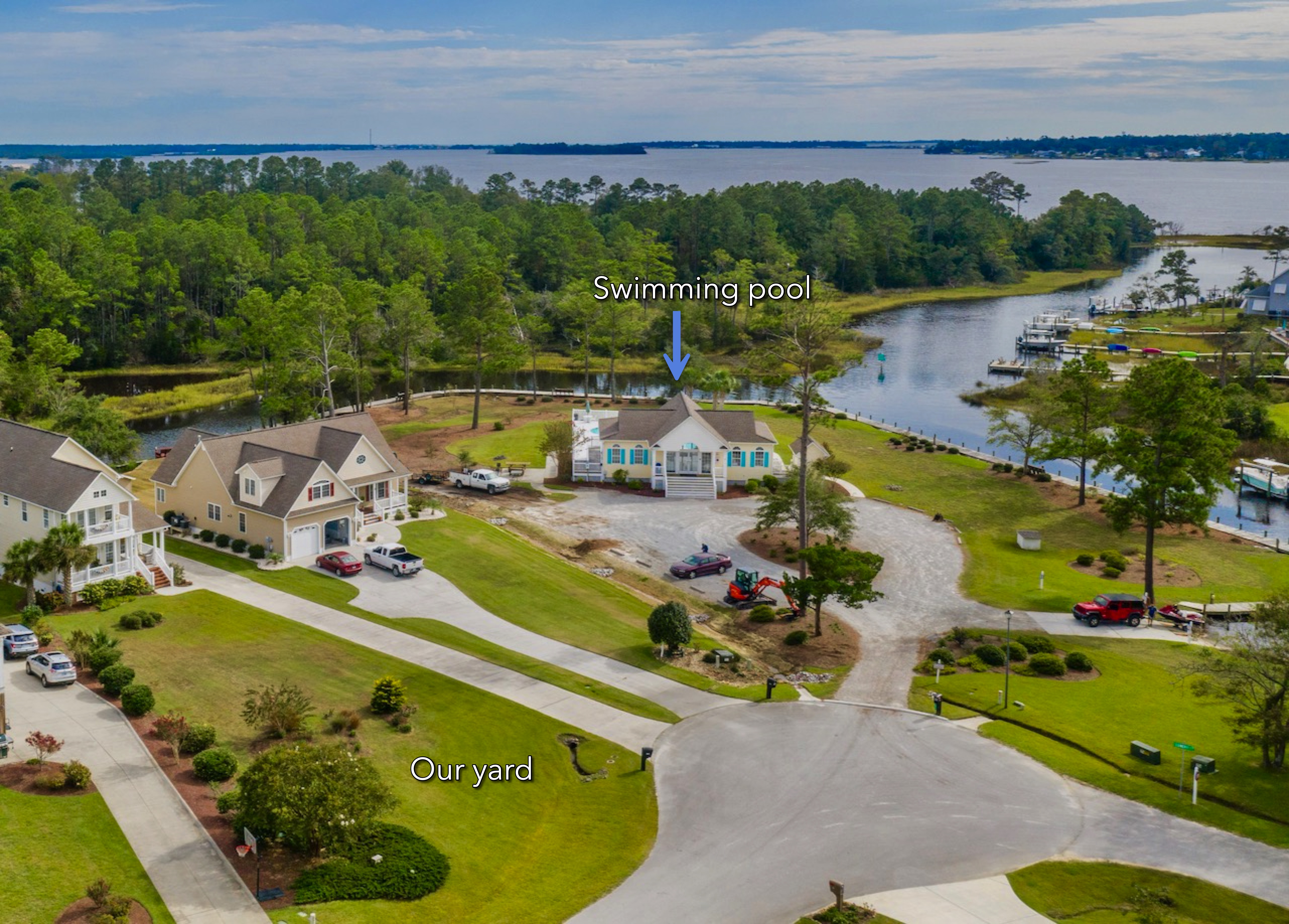
Some of you who aren’t used to heat will likely get a taste of it this summer. From 2006, until 2021, we lived on the North Carolina coast where heat is part of the life. Our house and large yard are pictured. Except for the last three years, I did all the mowing and trimming. Until like many grasses, the centipede we had thrives eat and can come close to needing to be mowed more than once a week. Any Bermuda grass absolutely needs more than weekly mowing. We had a nice patch of Bermuda in the middle of our yard.
Fortunately, heat has been part of my life for many years. There are few things we learned to do before we had air conditioning. Also the way we work has changed a little since the proliferation of heat pumps.
I grew in the South in the fifties. We did not get our first single room air conditioner until I was about ten years old. It cooled our living room and kitchen and that was about it. Still it was a miracle because it gave you a cool oasis where you could seek refuge on the hottest days. My bedroom was too far away to get any benefit so on really hot nights I would sneak into the living room and sleep on the sofa.
Heat was part of your life back then, shade trees were to be treasured and the deep dark woods were our friends during the day in summer. At night it was cool enough to play capture the flag in our yards.
The first thing you learn about heat when you grow up is that for outside work, you have to work early or late and find something else to do from noon to four or five pm.
When we moved back from Nova Scotia to the states in the late eighties, we spent our first two years in Maryland. I didn’t work outside much but I wore a suit everyday. It was a dash from the air-conditioned car to a similarly air-conditioned building. I could hardly wait to get home and switch to shorts.
By the time we got to our mountainside in SW Virginia, I was used to heat and I went back to mowing our yard. Seventeen years in Virginia was not enough serious heat training for our move to coastal North Carolina.
We lived on a coastal river in Carteret County which is mostly water. Heat did not come early to Carteret County because it took a while for all the water to warm up. When the real heat arrived in late June or July, it was serious heat. I did a lot of boating, hiking, and kayaking and I learned never to be far from a bottle of water. Sometimes I would freeze a bottle and carry in my kayaking tackle pack. It was a lifesaver a number of times.
The biggest challenge was mowing a big yard like ours in the heat. The best planned days sometimes get offtrack, and you end up mowing when you should be cooling in the air conditioning. There are things I learned in coastal North Carolina that are of value anywhere you have to face heat.
Our garage which had a good cross breeze when the back door was open was what I called a transition zone. It is never a good idea to charge out from a chilled house directly into 85F heat and start pushing a lawn mower. I alway puttered around in the garage until my body started getting accustomed to the heat. Then I would put my straw hat on and start mowing. You are always better pacing yourself than racing with yourself. When I felt myself getting really hot – the kind of hot that sends the message – “Well you’ve done it, this is nearly as hot as your body can get without shutting down,” I would head back to our porch or garage and request some ice water. I would always drink my water outside in the shade or in the garage but not in the sunshine. Real heat means that you have sweated so much your clothes are damp if not wet. Going inside and getting chilled in air conditions just makes it harder to finish your job.
Once you’re done, you cool off outside in shade but still in the heat. When you’re not longer about to incinerate, head inside to the shower.
On the NC coast the water lines are so shallow that in the summer, cold water is pretty warm. I could tell it was the peak of summer when I could shower without any hot water.
They say take off clothes to stay cool, but on the Carolina coast, our uniform ten months out of the year was shorts and t-shirts. I wore shorts mowing but pulled on some leg protectors when I switched over to weed eating.
There were times in early summer when I would take a quick shower, switch to bathing suit and head to pool. Until mid-July the pool water would be cool enough in the mornings to feel good.
By the end of July or early August, the outdoor swimming pools offered no cooling and were often empty. I have even heard of people dumping bags of ice in a pool in an attempt to cool it. I always figured it would take a chunk of an iceberg to really make a difference.
Most of the summer, you could count on the ocean retaining its cooling power. I used to joke that the one sure way to get the heat to drain out of your body was to head to ocean, get about waist-deep in the water, then turn around and face the shore while a wave hits you between the shoulder blades. Usually that will do the trick. Of course in the summer time by July, you should plan on wearing something on your feet to get across what can become very hot sand. Even with it only being ten minutes to the beach, it was easier to find an easy chair under a fan and relax after a shower.
The only good thing about heat at the coast is that remnants of it make for a very pleasant fall. I have many memories of kayaking in November and even December when the air was cool but the water kept you warm. Aside from the odd dangerous hurricane, fall is the best time to go to the beach.

 Our technological infirmity