Years on the farm, calving season

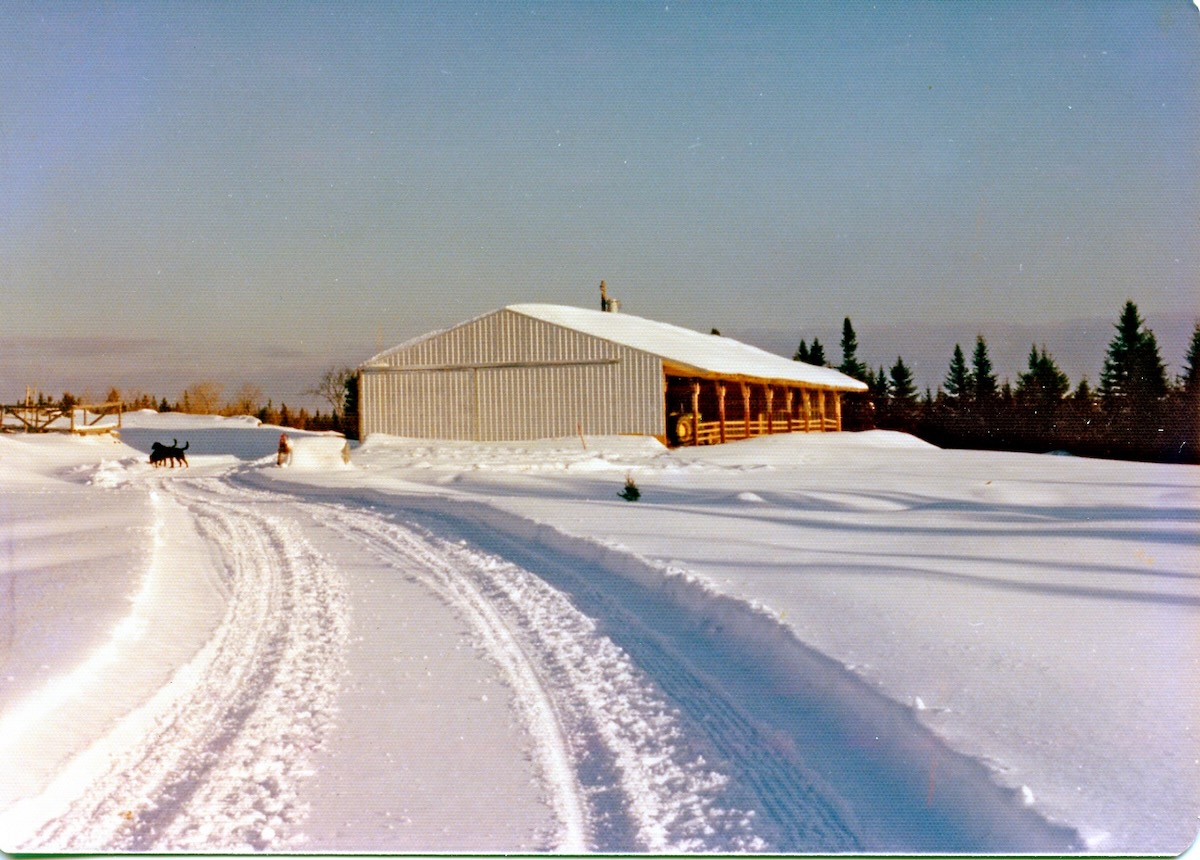
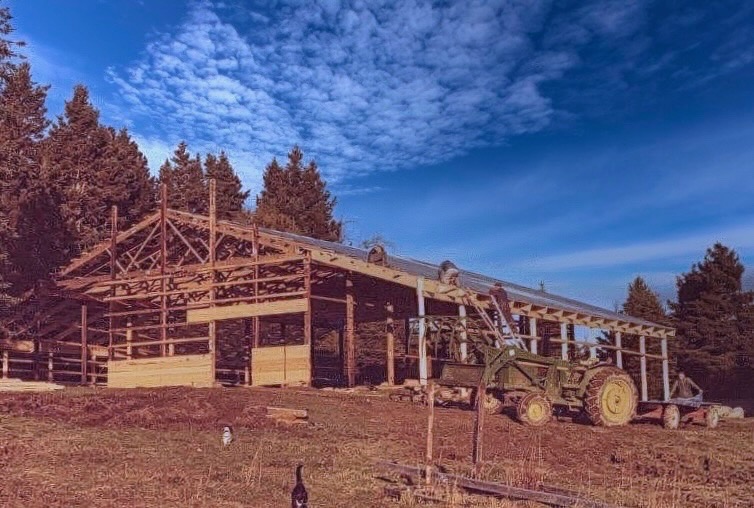
Calving barn under construction 1975

Many years ago in the seventies my wife and I were running a cattle farm located about twenty miles north of Fredericton, New Brunswick. This is the first in a series about our life on the farm

We eventually had about two hundred head of cattle with around 65 calves being born each year. The calves were typically born in February and March which as you might guess is a cold, snowy time in the part of Canada where we lived. For some reason, most calves like to be born at night.

Raising cattle is not the kind of thing where lots of help is available unless you have a a large family. Calving season is especially tough because it demands 24 hours a day attention. I would make two to three trips a night to our calving area which was in the woods around the second barn we built. It is hard to get out of a warm bed, suit up for the cold, and head outside not knowing what you would find.

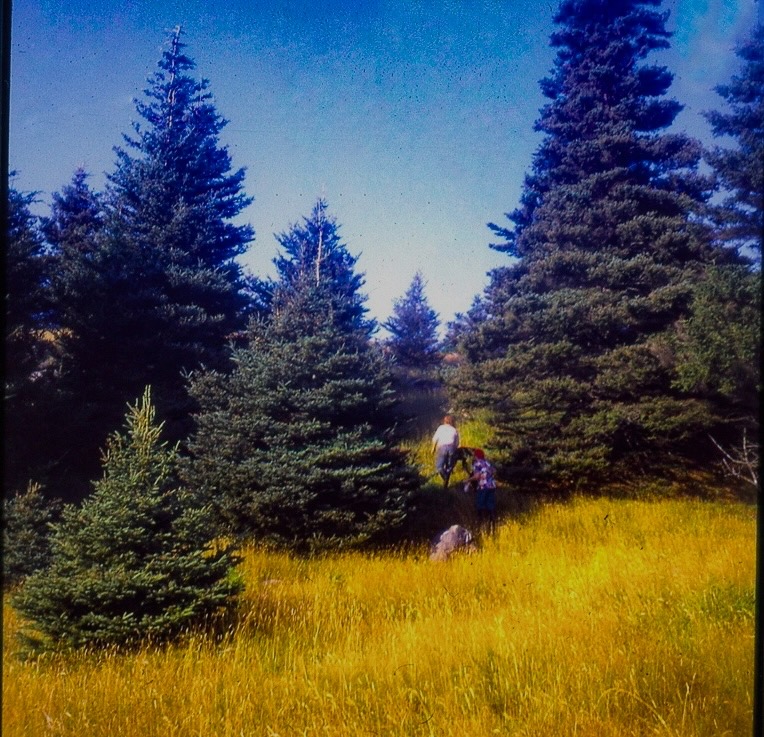
The walk up the hill to the small field by the woods where the cattle were fenced was not a long one. Even with the walk back to the house it was only about six tenths of a mile. It seemed much longer in blowing snow especially since a good part of the walk went through the grove of tall spruce trees that separated our farm house from the barns.

Of course there were no street lights in the spruce forest. You had to go on that walk no matter what the weather. If I found a cow that had calved, I would walk the new calf to the barn between my legs and the new mother would follow. I would put the calf and cow in a stall filled with nice clean straw. Sometimes there would be more than one birth during a night. Depending on the weather the cow and calf would stay in the open front barn two to three days and then go back to join the herd. I had a larger pen in the barn where I could turn the cow and calve if things got crowded in the individual pens.  

Once the cow and calf went back with herd, the calves had a special place for protection. The front part of the barn was arranged so that the calves could get under cover on dry straw during wet weather. With the barn facing south it made a nice place for them on a sunny day. Sometimes the straw looked like it was blanketed with calves. I remember looking over there one time and my oldest daughter who had just started school was sitting there in the sunshine in the middle of a dozen sleeping red and black Angus calves.

My relatives who were back in North Carolina asked me more than once if the walk in the dark scared me. I would always calmly tell them that walking through the dark woods in area most would call wilderness was safer than walking around Boston when I was in college.There was nothing in the woods that could harm me especially in the winter. All the bears and there were lots of them were hibernating. The moose were deep in the swamps and the rest of the critters were more afraid of me than I was of them.

There is one thing almost certain about the northern woods. When the temperature is down around minus twenty-eight Fahrenheit, there are no crazed muggers hiding in the three to four feet of snow in the spruce forest. They would be frozen like a Popsicle pretty quick.

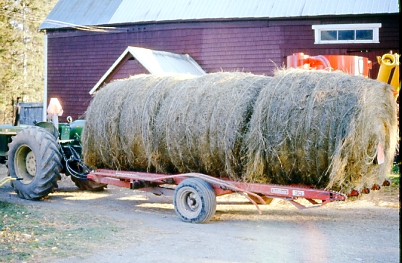
The only good thing about calving season was that it was over in six to eight weeks. Getting the calves out of the snowy, wet weather was a good prescription for healthy calves. No one at the department of agriculture told us that this was the way we should raise calves. We figured it out ourselves. They also though that it was impossible to raise cattle using round bales. We put up over two hundred each year and proved that they worked. We could have used another barn for the bales but there was not a lot of money in cattle at the time.

In our ten years raising cattle, we never had a vet on the farm for a sick calf. I sometimes struggle to believe that myself and the fact that I cannot remember ever losing a calf. There were plenty of other adventures like the time a teenager on a motorbike chased a dozen heifers deep into the woods. It took most of the summer to get them back but that is a story for next time.

The Lost Art of Calling Home

The rotary telephone in my home bedroom until 2004

I took a course in college my senior year. It was decades ago. The class focused on communications. Computers were not on the desktop, cameras were film based, and telephones were analog with rotary dials. There was no Internet much less text messaging or cell phones. People still wrote letters on paper by hand. I still have some of my old ones. The other choice for a was a typewriter. In the seventies it was not unusual to find people who did not know how to touch type.
I went away to boarding school at the tender age of fourteen. The weekend call home from the telephone booth in the hallway was a lifeline to family and all that was familiar. You might not be able to predict the person who would answer but you learned how to make the most out of whomever you got on the phone. The old fashioned telephone was a great leveler. If you called one of your friends, you could get their parents, but back in the fifties and sixties, we learned how to talk to adults respectfully.
The weekend call became more of a ritual than a lifeline when we started farming in Canada. It was something that kept us connected long after the art of writing letters disappeared. I still love phone calls to my Canadian friends. I enjoy talking to my friends whether I reach the wife or the husband. These calls keep the web of friendship healthy.
A couple decades ago, a friend died. I did not have the opportunity to say good bye to that friend. It caused me to recommit to finding people who had been important in my life. Over the years I made several car trips to Ronceverte, WV, because that was the only way to really visit with my high school Latin teacher who never went beyond the telephone in the world of electronics. He was a little hard to talk to on the telephone but I treasured our visits. He has been dead several years now. I never regretted the effort I made to stay in touch.
Our trips to Mount Airy, NC and Yadkin County, NC to visit friends and family have gotten fewer and farther between each trip as we have aged. The time we spend with elderly relatives is precious. We have lost several over the last few years but the time spent with them was well spent.
Sharing our lives and communicating with others has given us strength to do things we never would have done by ourselves. It has also connected us to history and stories that we might never have known
We were living at the coast when Hurricane Irene made landfall on August 26-27, 2011, about 35 miles to the east of our home near the beaches of Emerald Isle. We received a lot of phone calls from friends and family prior to Irene’s arrival urging us to head for higher grounds than our six feet above sea level. Irene was our first serious storm in our first five years on the coast.
Interestingly, none of the calls came from our three grown children who ranged in age at the time from the late twenties to the mid thirties. I told myself at the time that they knew we were well prepared and tough enough to handle the storm. At sixty-one, I think that was a fair description of us. We were not people who had led quiet lives in one place all their lives. Still Irene roared for thirty-six hours but we only used our generator for three hours.
Perhaps there was something else at play. Most of us older adults have noted that today’s young adults rarely communicate even though they have far more ways to connect than our generation ever had.
One of the other things besides the weekly phone call that happened at military school when I was fourteen was we had an assignment to write a letter home every Sunday night. It was graded, and mailed home for us complete with red marks. Of course no useful communication ever took place in the letters. The weekend phone call was the lifeline to home.
While I quit shining my shoes every morning like I did in military school when I went away to college, I didn’t drop the ritual of the weekend call home and writing letters. Even after graduating from college, moving to Nova Scotia to farm, and getting married, the calls continued. We added a weekly call to the parents of my wife, Glenda. We also wrote letters in cursive to family and friends. Long distance calls for much of our early married life were extremely costly but they remained important to our mental health so we rarely missed one.
Calling home for all those decades was always something of a surprise, you never knew who was going to answer the phone, but 99% of the time they were happy to hear your voice if not your message. Almost always you felt better after talking to them.
I think the old cold calling home on a rotary phone helped us be the people we are today. It helped us build strong networks of support and advice. It gave us skills that the current younger generations may never master. The world will be lonelier and poorer because of that.

Stay up with the Goose Speaks commentary on our country’s situation in “Time to Trust Our Own Eyes” either for free at Substack on as a simple HTML flat file with a different name, “Time to Speak Out,” at my Crystal Coast website.

Doing it the hard way

In the sixties or early seventies, the back to land movement was well known. The 1968 Whole Earth Catalog was the instruction manual dedicated to it. Helen and Scott Nearing were its inspirational grandparents. Many in my generation’s back to the land movement were vegetarians like the Nearings. Some were vegetarian by choice and others because of necessity. Because of my proclivity to cattle and farming, I studied Louis Bromfield’s book, Malabar Farm. Today there there is a new generation of people going back to the land.
In this century they are known by the label “off grid.” Few of those folks are openly vegetarians. This new generation proudly hunts and fishes for protein to supplement what they grow. Though their animals are more likely goats than cows, there are some with cows and even horses.
Many of today’s off grid folks are often in places deliberately difficult to reach. Most back to the landers in the seventies went where they could find cheap land whether it was alongside a road like my house and barn or back in the boonies where my friends in the dome lived.
During the seventies, the rural Annapolis Valley where we shopped did not have supermarkets. It had small grocery stores and cooperatives where you could get your food, your baler twine, and some beef fattener for your steer all in one shopping trip. Beaver Fruit Cooperative got most of our business. I also did some bulk orders with the folks in the dome. We had a local hardware and a Sears catalogue store which is where we ordered our appliances.
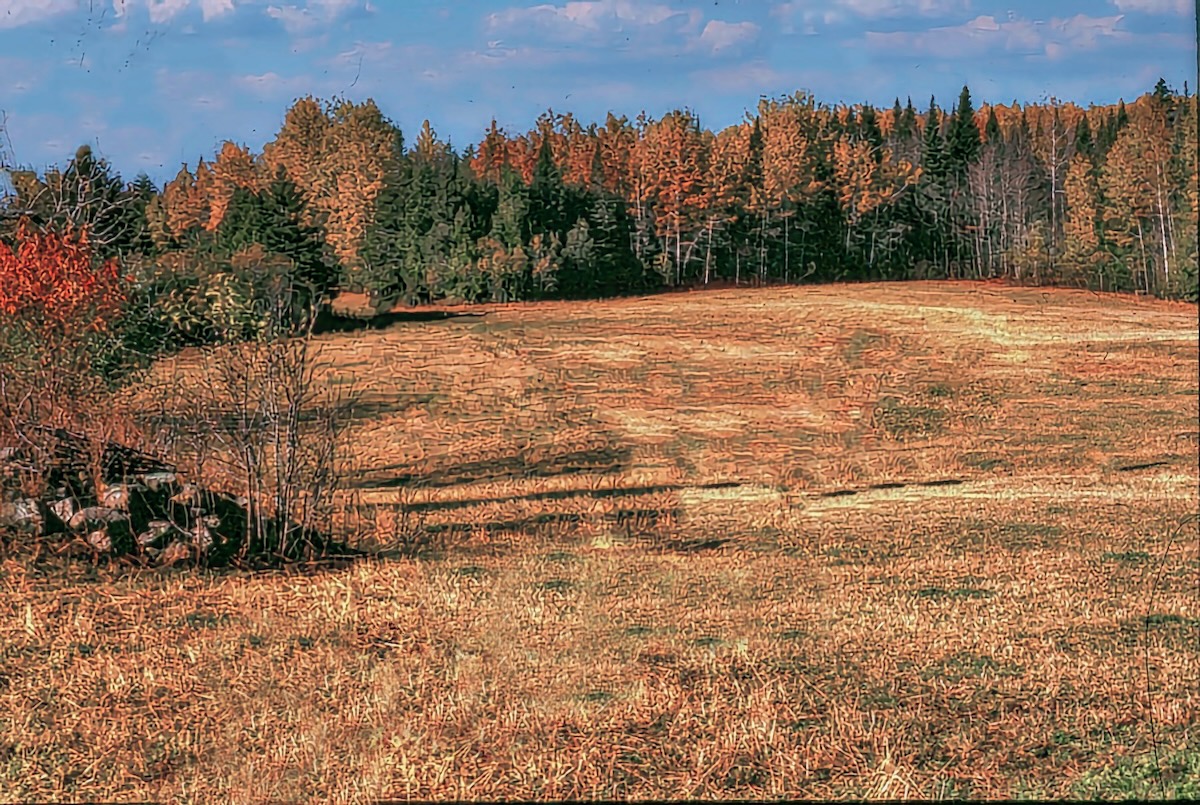
There were times in the early seventies when I thought about getting farther from the roads that connected us to the rest of the world. Reality always intruded. I thought about homesteading in Newfoundland, but my wife took one look and said I would be homesteading alone. I even found a great spot high on a hill on my land in Nova Scotia.
It is pictured at the top of the post. It was over a mile off the road which does not sound very far until you factor in the heavy clay soil and the astronomical expense of building a mile-long gravel road where gravel is in short supply. Then there would be the likely impossible task of getting power to the homestead. In those days there were no solar panels and battery systems to give you electricity off grid. Drilling water wells on our North Mountain was also problematic.
By the time we moved to New Brunswick we were well on the track for serious farming. We still gardened on a large scale, had chickens, and a milk cow. We did move to having someone butcher our annual steer for us instead of doing it ourselves. In creating our farm, we built well over a mile and a half of roads with New Brunswick’s ready supply of gravel over our rocky soils. I also convinced New Brunswick power to bring power a quarter of a mile back to the new barns that we built. We drilled a well back by the barns. It provided so much water that it was hard to measure.
So by 1976, all the elements were in place for us to move farther from the village of Tay Creek near our new barns but with no close neighbors. It wasn’t in the cards. While we had not had a great experience with the people of St. Croix Cove, the people of Tay Creek had been so welcoming that neither my wife or I would consider having the village become less accessible. It was also a great convenience to be by the road where the school bus picked up our children. It turned out we liked being part of our small farming village. We valued the connections of people dropping by to chat. I did not even mind cleaning the driveways of some residents who became close friends. When we needed them, our farming neighbors were there to help as much as they could.
In the end it seems the biggest difference between the back to the land movement of the sixties and seventies and today’s off grid homesteader is that the homesteader of today is often working to isolate themselves from others. In the sixties and seventies back to landers were still interested in community. I loved the small country stores, but today’s off grid folks are much more likely to seek out the anonymity of COSTCO. The money that some make from YouTube makes it even easier to not have ties with nearby communities. We were part of communities because we needed connections and income. Even today you will find exceptions and some off grid folks are much more community oriented than others. However, when I hear the term off grid what comes to mind are people living in places that are only accessible by four wheel drive, snow mobile or ice road for at least part of the year.

Barely Clinging To The Grid

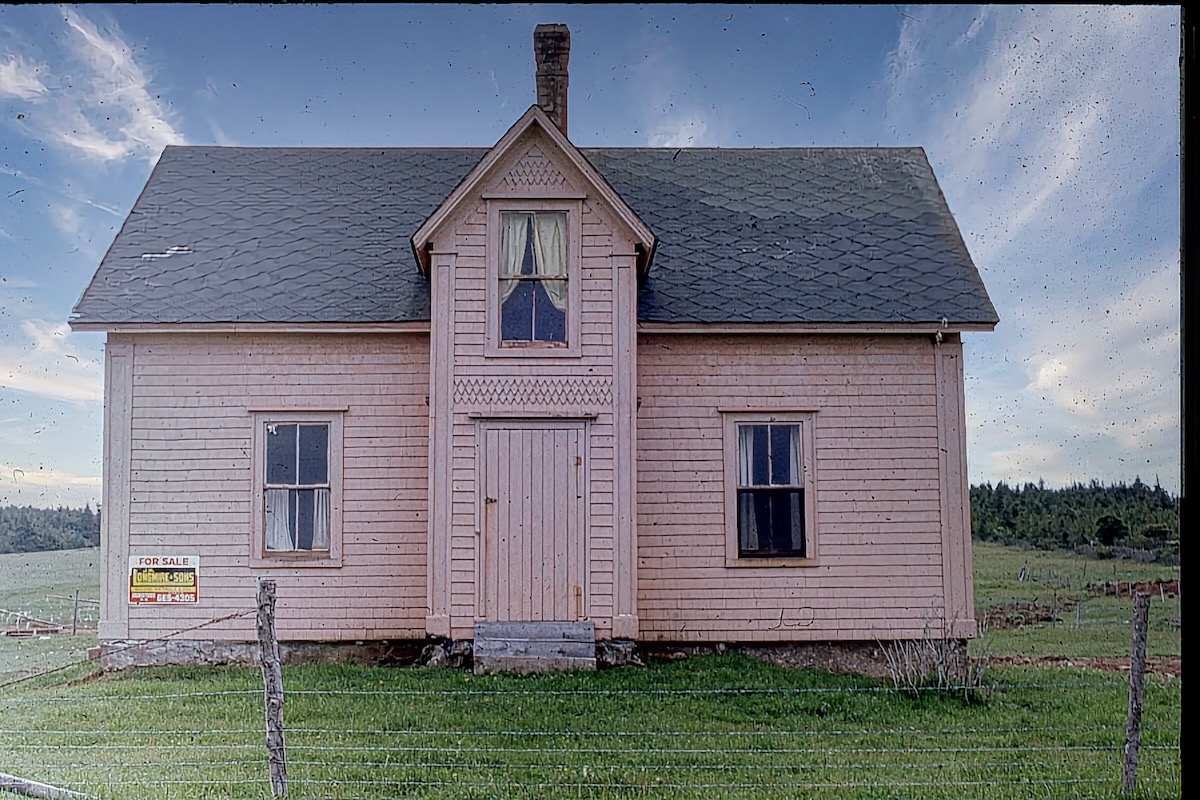
Our formerly pink house after a year of intense work

The dearth of good programming this holiday season has sent me to YouTube where I have enjoyed watching this generation’s homesteaders who would have been part of my generation’s back to the land movement in the late sixties and early seventies.
I was on the fringes of that movement back in 1971 when I bought an old farm including 140 acres, a two-hundred-fifty year old farmhouse (pictured above after a year’s hard work), with a barn and out buildings. I had just graduated from Harvard but had chosen Nova Scotia over law school. Four, also disillusioned, college friends went with me to Canada, but I was the only one to make the commitment to become a landed immigrant. My Dodge Powerwagon and Landrover came with me to Nova Scotia. They carried all that I owned including a TV and lots of spare kitchen utensils from my mother in Mt. Airy, North Carolina.
The pink house in the middle of a sheep pasture was in rough shape when I took possession. We set about tearing it down to the hand hewn beams, insulating it and attempting to bring some modern conveniences to the house. That was probably what set me apart from most in the back to land movement who leaned towards off grid domes, hauling their water, and hand tools for gardening and no modern conveniences,
Maybe it was a childhood in rural North Carolina which was still close to the land filled with small farms that made me different. My mother had been born on a millpond in 1910. I had listened to plenty of her stories of ice being stored in saw-dust insulated holes in the ground and cooking over a wood stove. When I was growing up in the fifties some of relatives still had outhouses on their farms. I also probably had camped in the woods more than most. For whatever reason, I was fine with the conveniences that electricity brought including hot water and a dishwasher. I was also happy to use a diesel tractor on our farm.
I became the electrician and plumber for the modernization of the old house. By Thanksgiving of 1971 we were ready to host some college friends who were sure that we were crazy. It was the first Thanksgiving on our own for all of us. It was pretty rough with everyone sleeping on the floor, a blanket for a bathroom door, chicken crates for kitchen cabiinets, and mayonaise jars for glasses. Still we had an electric stove and a dishwasher. Still it was a great celebration of our independence.
The next year the house was more livable but we poured our energies into gardening and farming. My dad gave me $11,000 to buy a tractor, three furrow plow, disk harrows, front end loader, manure spreader and a bush hog. I took $1,500 and bought our first herd of six or seven cows. We also started refurbishing the old baler that had come with the farm. We converted it to a PTO driven model instead of one powered by a mounted gasoline engine.
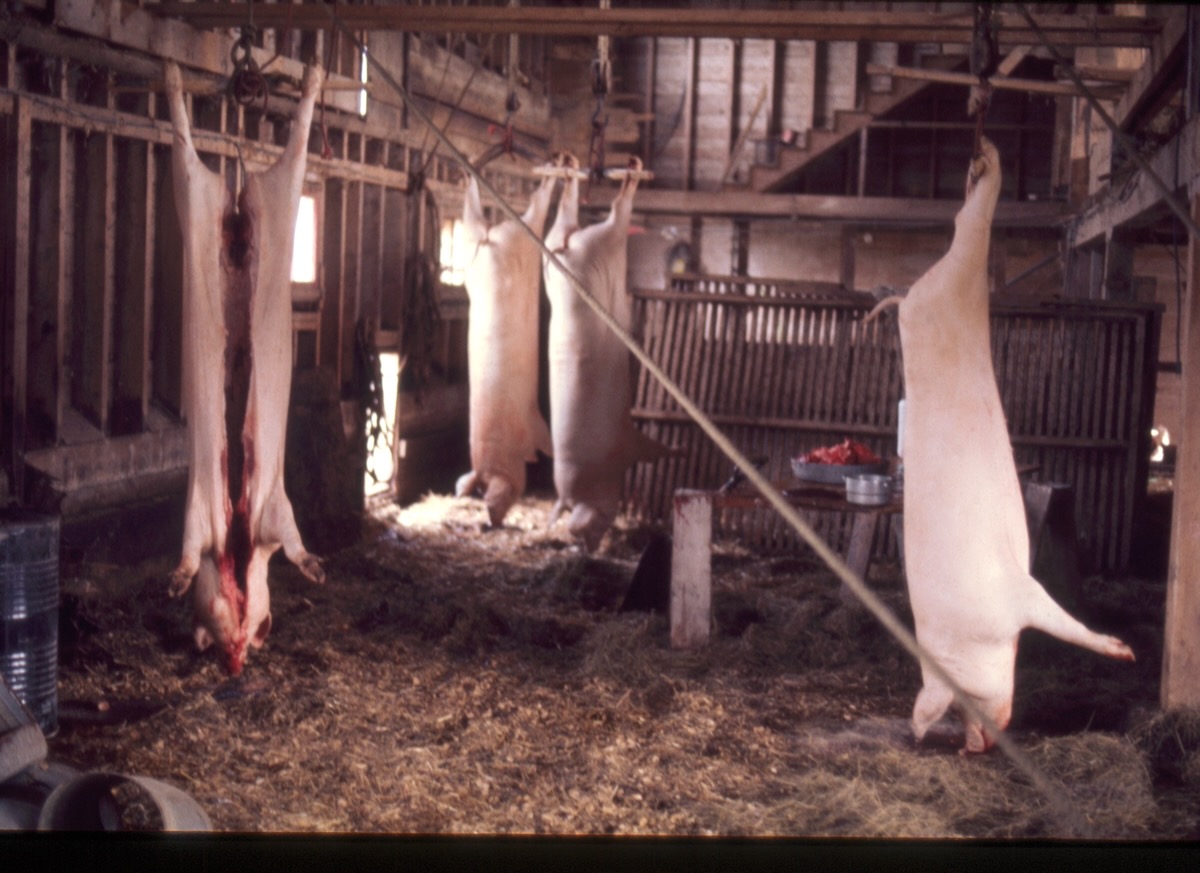
We had unlimited compost from chicken manure that had rotted for years behind some old chicken houses. I had little experience gardening besides helping my mother grow tomato plants in North Carolina. What I did have was inspiration from Helen and Scott Nearing and Malabar Farm. Gardening in Nova Scotia on the foggy North Mountain by the Bay of Fundy required a lot more expertise than in North Carolina. Still the abundance from the garden was overwhelming until my mother and her sister, both experienced canners, showed up to help us through that first harvest. We filled the freezer and the cupboards. That winter we butchered a steer we had fattened from our herd. We hung it age in our cellar before carving it up. The next summer we raised pigs, one for us and three more for neighbors. We butchered them with the help of neighbors in the fall, topped up the freezer and made crocks of salt pork. It was an amazing amount of work that made me appreciate all the fresh pork in the fall that our relatives had always given my mother and me.

That winter of 1972 was something of a lonely one. One member of the college crew married the local school teacher and moved into another old house across the dirt road. The last one of my college friends left for a warmer climate. That left me wintering on the Bay of Fundy with our two Labs, Tok and Fundy, and a handful of cats. I made friends with some back to the land folks who lived far in the woods in a dome. I ordered some supplies with them including a giant tub of honey that was still with me when we moved. Mostly what we didn’t grow came from Beaver Fruit Cooperative in Lawrencetown down in the Annapolis Valley or from itenerant peddlers who sold salt fish and winter vegetables. I say we because that was my last winter alone.
I got married in the summer of 1973 and brought my new North Carolina bride home that September just in time for an early season snow storm that took the power out for a week. We stayed warm with the fireplace and cooked over the same. It was not unusual for the powe to go out on our dirt shore road but a week long outage was rare. That next summer my wife and I continued to garden, work on the house, and farm a little. Farming was a little because I had sold the cattle and part of my land to disolve an uneasy partnership with the friend who had married the village school teacher. Well before garden season my wife and I had made the decision to move to a better farming area with more and friendlier people.
We found the perfect place for us in Tay Creek, New Brunswick. We moved there in the fall of 1974 and started the process of building a real farm with the help of some great neighbors. We built our first barn in 1975 and converted to round bales in the summer of 1975.

Annually, we put up 200 large round bales for our herd which eventually grew to 200 head of purehred Angus.

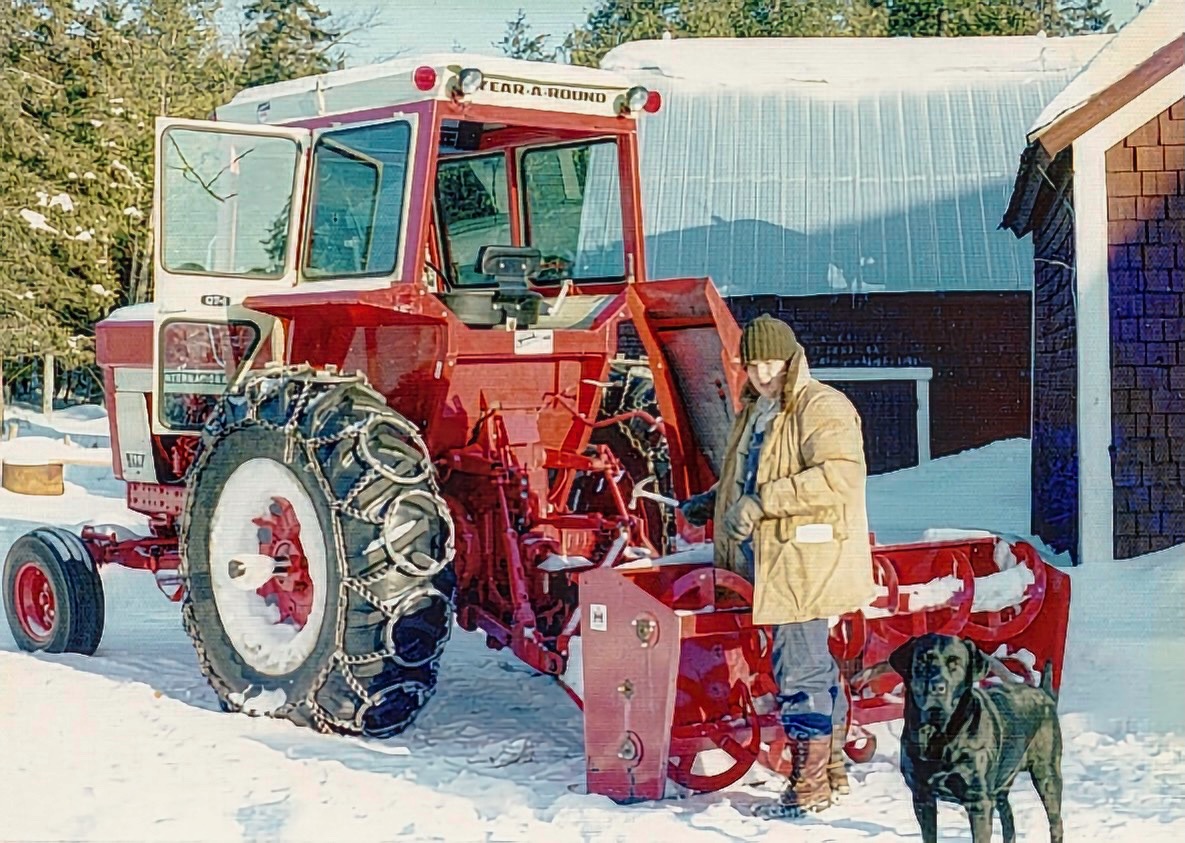
We were actually even closer to the land than we were in Nova Scotia. On our New Brunswick farm we had spring-fed water for our house. We continued to garden, added chickens, and a milk cow. However, we found a local butcher to do our annual steer. We were still on the edge of the grid. Our first winter we got twenty-three feet of snow. We saw weather as cold as minus forty with sixty mile per hour winds. We went back to mostly heating with wood, burning three to four cords per year in our much newer home which was only one hundred years old. It was cold enough that we unplugged our freezers in the shed which was attached to house so you could get wood without going outside. The first winter there I fed hay that had been put up with horses. One thing we did not do is fight snow with tiny all terrain vehicles. A couple of miles of road to keep clear required real snow removal equipment.

Our 85 HP International 786 tractor with 8 ft wide blower, Tok and me with lots of layers

When I look back on it all, I am amazed that we did it without someone getting really injured. There was no Internet or YouTube for advice. Advice either came from a book or your neighbors. I learned to be pretty self-sufficient often repairing broken equipment with my torch and welder. I added chain saw carpentry to my resume as we built the barns. We ran our cattle in the woods in the winter and managed to get through our farming years without ever having a vet come out for a sick animal. We might still be farming if interest rates hadn’t surged to 20% and drove me to working in the city with computers and eventually to a career of nearly twenty years at Apple Computer.

We were never off grid but if your farm doesn’t have any cattle fences in the back because there is no place for the cattle to go, you can justifiably say you were barely clinging to the grid.

The First Frost

Raymond’s Gut with a few inches of ice during a previous winter

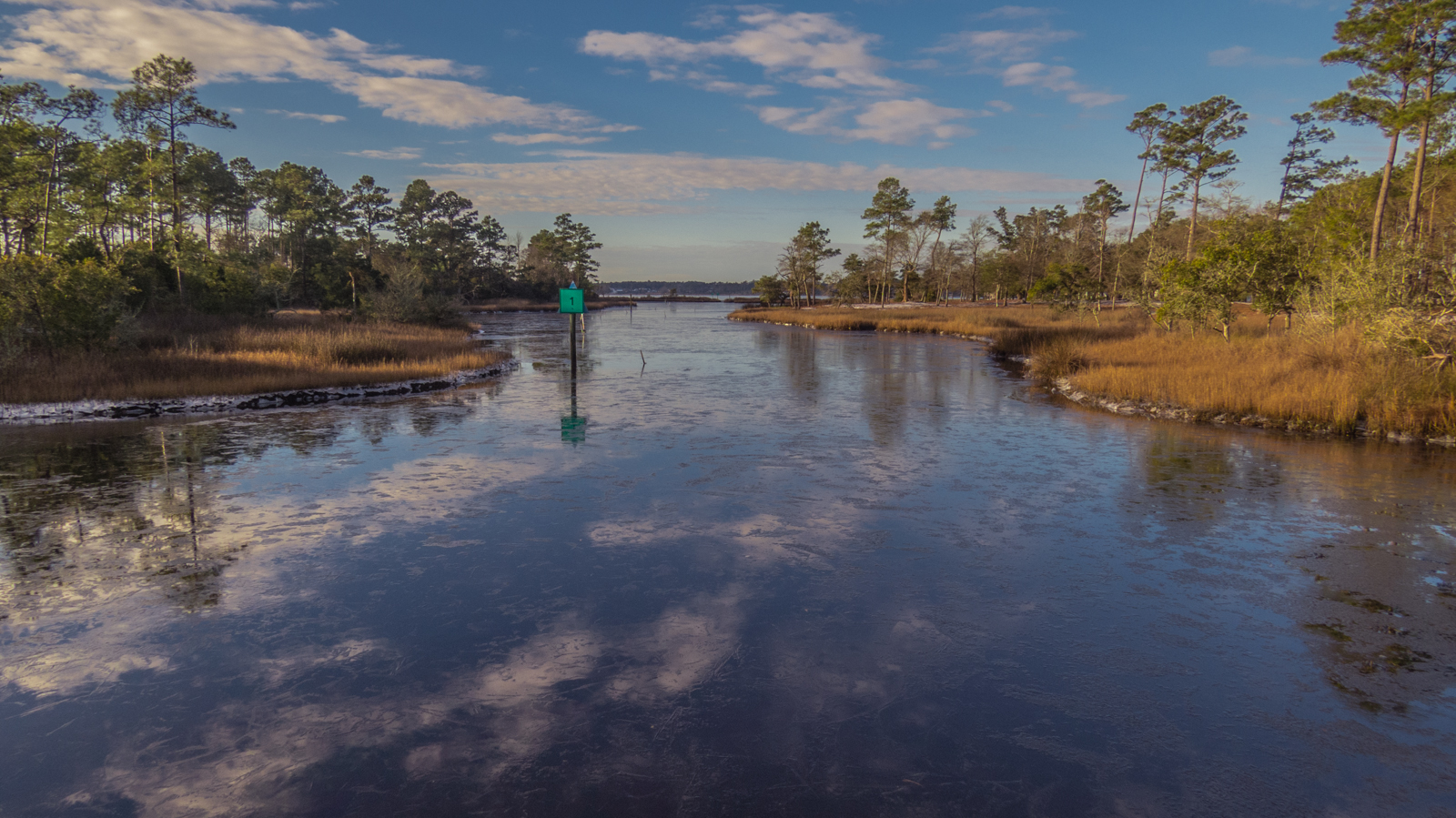
When we living on the North Carolina coast, we always considered the first cold day to be the one when we had to give up wearing shorts. Only the first two weeks of February were reliably cold. The picture of the frozen body of water (Raymond’s Gut) was taken during a Febraury cold snap in Carteret County. The trouble with packing your shorts away was that warmth could descend on the coastal area almost at any time. The result was that I rarely gave up my shorts while living at the coast. When I lived on the farm in Tay Creek, New Brunswick, the first cold day was when I had to start wearing mittens. That was actually a whole lot colder than you might think. I rarely used mittens until it got below zero Fahrenheit.
Growing up in North Carolina, cold is not something you think about very much. To me it was cold when the red dirt banks sparkled with frost crystals. As I got older and went winter camping with our Boy Scout Troop 752 at Camp Raven Knob, I got to know real cold. There is nothing like rain and chilly weather to make you appreciate a nice warm home. Still it was not serious cold.
The first serious cold that I remember was on a trip freshman year (1967) from Cambridge to Dartmouth in Hanover, New Hampshire. I cannot remember why we went, but I do remember it being minus twenty-four degrees Fahrenheit the Saturday morning we left. Fortunately, serious cold does bother you very long if you are in a car with a functioning heater. Still it left an impression. While temperatures in Cambridge got down into single digits, they could not come close to the Hanover freeze.
Sometime in my college years I caught a snow-loving virus. That and a obsession with having some land of my own led me to head off to Maritime Canada after graduation. In the early seventies land was cheap in Nova Scotia and life seemed like a throwback to life in the fifties in the United States.
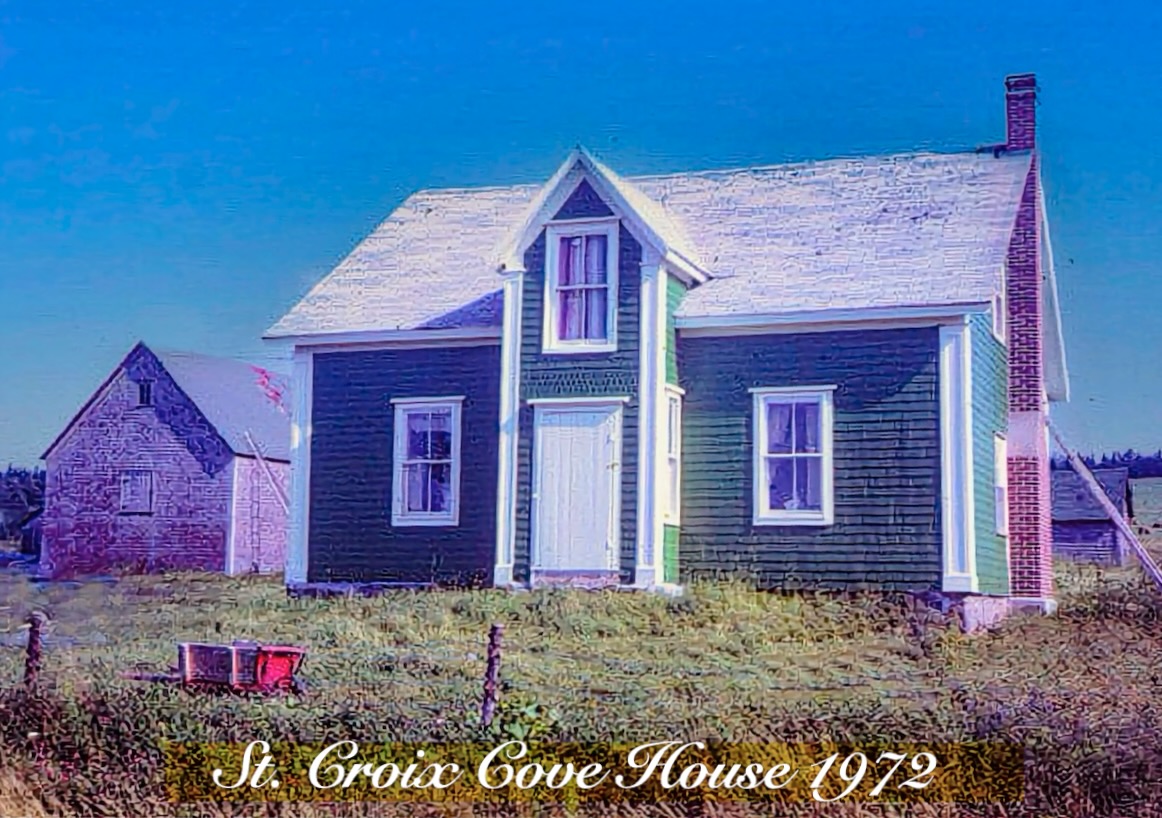
The old house that I bought on the shore of the Bay of Fundy was not exactly the warmest house around. In spite of lots of efforts and a newly built fireplace, it could still be cold especially since the wind often howled in St. Croix Cove where the house was. That part of Nova Scotia was famous for storms that went from rain to snow to sleet to freezing rain back to snow accompanied by bitter cold.
Fortunately, for the snow loving part of me, the lousy Nova Scotia weather was also bad for running cattle outside so my wife and I decided to move to New Brunswick. Without much thought other than falling in love with the farm, we ended up in Tay Creek, New Brunswick in the middle of New Brunswick’s snow belt. Our first winter we had over twenty feet of snow. We also got to endure minus twenty-eight Fahrenheit that first year. In January of 1982, when our youngest daughter was born one January, the thermometer dipped to minus forty with an accompanying blizzard and high winds.
Most years in New Brunswick the first real cold came in the first week or so December just about the time busy mothers needed to finish up their Christmas shopping. You could tell the real cold weather had arrived when on successive days the previous day’s low would become the next day’s high temperature. Things would continue that way as we started plugging our cars in until the temperature bottomed out at something seriously below zero Fahrenheit.
I endured some bitter cold on our New Brunswick farm but I doubt that I ever felt colder than when I went fishing in a skiff on the rainy, wind morning of October 25, 2005 with the temperature in the forties. When we finished fishing that morning and I was dropped off at the dock, it only took me about a block of walking before I realized that I could not feel my extremities. There is nothing like being completely soaked in the wind to make cold penetrate to your bones. I had to spend some serious time in a very hot tub bath before I recovered. It is no surprise that I did not feel cold while I was catching all the fish. That fishing trip remains one of my coldest memories next to sitting on a brick hard seat in my pickup at minus forty.
Since we have moved back to North Carolina’s Piedmont, cold weather has become a little more dependable. Most years we see a little snow. In 2024, our first frost was October 20th. ‘We have already beaten that. It looks like that in 2025, the first chance for frost will be no earlier than Wednesday, October 23 when our low temperature is forecasted to reach 36F.
This potential frost got me to thinking about the tales that my mother used to tell. She was born in 1910 and told us of stories of her father taking teams of horses out on their frozen mill pond to cut ice and store it for the summer in a deep hole insulated with saw dust. That would not be too much of a surprise had she not lived in the foothills of North Carolina, just west of Winston-Salem. The mill pond which was part of so many of her stories was near Yadkinville, North Carolina which is not exactly known as one the earth’s cold spots.
A little climate research indicates western North Carolina the earlier 1910s was cooler than our current weather. Since then the trend has been steadily warmer with a noticeable peak in the 1950s.
I cannot remember anyone telling me about people skating on ponds in central North Carolina during the fifties when I grew up. There certainly was no report of driving teams of horses onto the frozen ponds. I cannot even remember a pond freezing over.
My son pulled our tomatoes out yesterday but that was more from being tired of looking after tomatoes than the danger of frost. Needless to say, I will still be wearing shorts when I go out to the front porch to read the next few days. When I change to blue jeans, it is going to have to be a whole lot colder. The weather might be sweatshirt worthy.

Paths Not Taken

The backfield at our Tay Creek farm where I am homesteading and splitting wood in my dreams

In every life there are decisions which determine what direction your life will take. I have been fortunate to be in positions where I had enough flexibiity to guide our life in certain directions. Even now fifty years after some of those decisions, it is hard to say that what we did was the right decision for us. Our decisions worked out for us but it is impossible to tell if another path might have given us an even more rewarding (and not in monetary terms) life.
I graduated Harvard and instead of going to law school, I went back to the land in Nova Scotia. Whether the neighbors ever called us hippies or not is still an open question, but my bet is that they didn’t because we had a John Deere tractor and were trying to farm the land. We were friends with hippies living in a Dome in the woods, but I worked hard to wire our house so we could have electricity and the modern coveniences that came with it
We did grow a huge garden and put up prodigous amounts of produce both canned and frozen. We butchered our own steer and hogs. We collected wild Chantrelle mushrooms from the woods. We even tended a gill net for a while.
The old house I bought and fixed up had 140 acres. Of that well over 25 acres was a cleared hayfield with a small pond. Though the woodland with it was mostly spruce, I did eventually get another piece that had some hardwood. It is not too much of a stretch of the imagination to think that we could have kept a few cows, had a huge garden, and lived a very simple life. Looking at recent aerial photos of the property which I sold in 1976, the property appears to now have lots of gardens, more trees and little pasture though I am sure goats would be happy with what is there now. I might well have done something similar had my partner in the enterprise not been such a jerk. He married the local school teacher in our small community and devoted far too much time to telling our neighbors what a terrible person I was. While my new bride stayed with me there for a year, we were determined to move a friendlier place.
We found the better place in the hardwood hills north of Fredericton, New Brunswick. Instead of people being petty and mean, the residents of Tay Creek were welcoming, helpful, and supportive. I can think of no better place to raise a family. The community when we moved there had two country stores, three churches, a town hall, and a lot of opened minded people.
We stayed in Tay Creek for over a decade. Our three children were born while we were on the farm. Our two Labrador retrievers are buried there a long with a good chunk of my soul. This would have been an even better place to have a few cows, lots of gardens, and even fill the freezer with trout to supplement our beef.
We did not take that path, I wanted to work the soil and to raise high quality cattle, selling bulls to improve the local herds. We accomplished that goal, along with continuing to grow much of our own food. We had chickens, a Guernsey milk cow and a beautiful farm.
We eventually had to give up farming because interest rates soared to over 20% during the early eighties when our herd had grown to two hundred head. We couldn’t handle the high interest rates on our $100,000 operating loan, so we had a very successful dispersal sale. . After selling the cattle we could have hunkered down on the farm which was paid for, sold off some of the machinery, and continued to work the land, but we had three children, and we wanted them to go to college. Like many others I went to work in town after taking a few months off. My job was in an early computer store and led to a twenty year career at Apple. After Apple I worked as a vice president of a network construction and consulting firm for over a decadsa.
It has been a good life. All three children who were born while we were living on the farm have gone to college and done well. Yet as I have been watching some of the Alaska homesteading YouTube videos, I can only wonder how would things be different if we had stuck with working the land instead of keyboards. After all, I made the trip to Alaska before I moved to Nova Scotia and I even considered homesteading in Newfoundland.
Instead of that I ended up walking the halls of government as Apple’s director of federal sales. I know the people that I would have gotten to know working the land would have made much better friends than the politicians that I have met.
Still in my dreams I am splitting hunks of birch, milking the cow, collecting eggs and filling the freezer with brook trout, beef, pork and the cupboards and root cellar with homegrown veggies. We still garden in a token fashion and I still make sourdough bread but we buy more from local small farmers thsn we grown. At my age the amount of wood, even birch, that I could split would be limited.

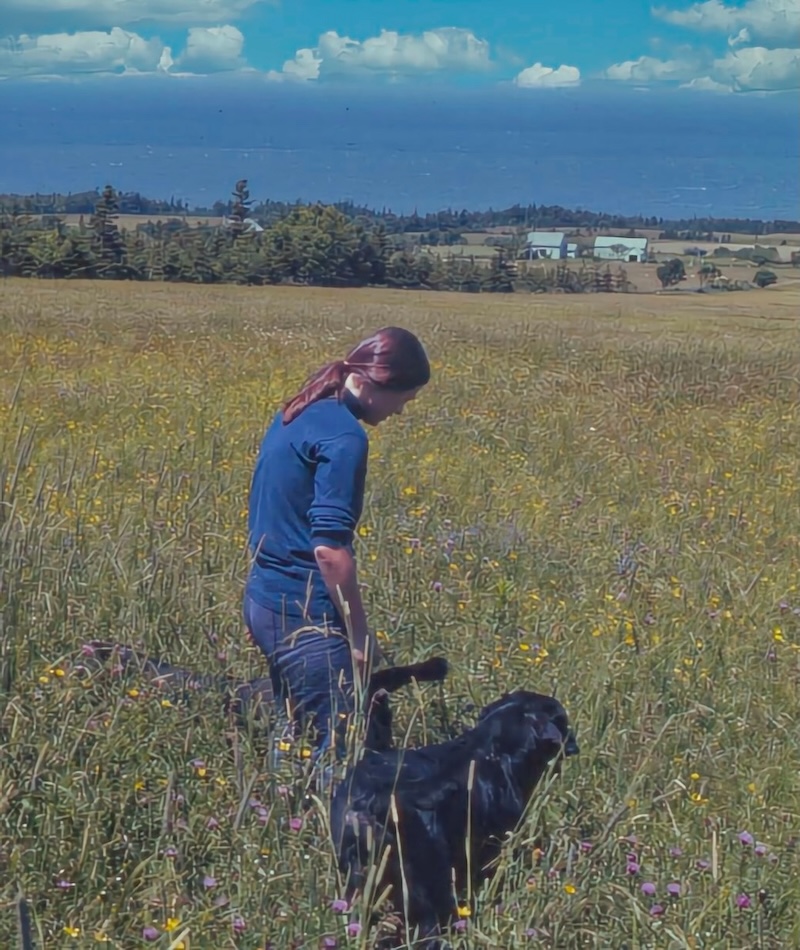
My wife in the large hayfield behind the house at our first farm in Nova Scotia

The Evolution of a Fisherman

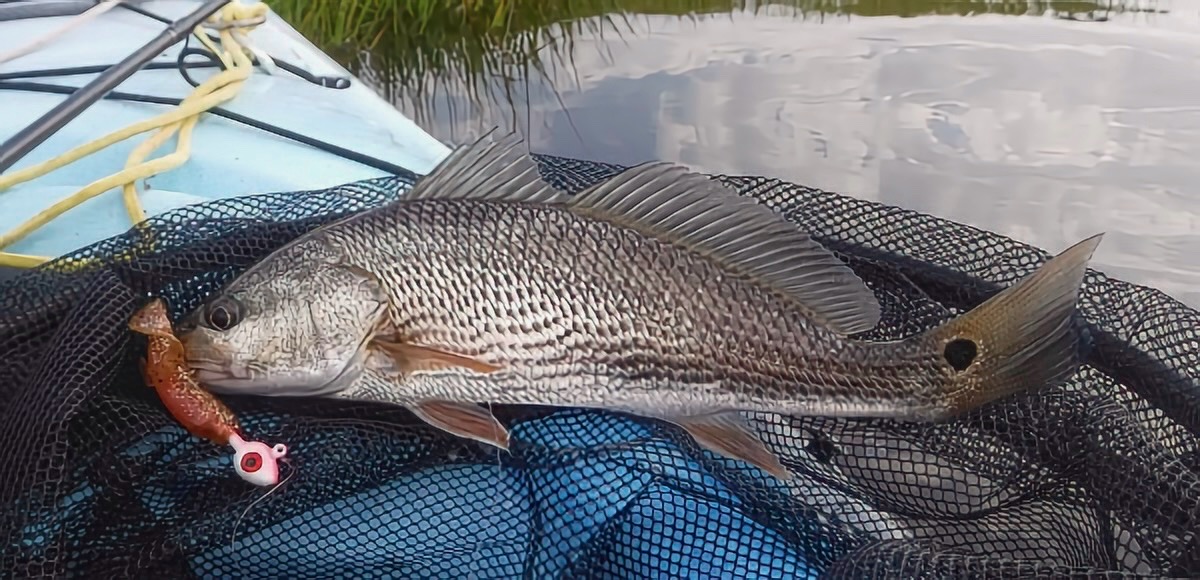
Puppy Drum, a Red Drum small enough that most fisherman throw them back


The society of fishermen (and women who fish) is far more open minded thanyour average members of the population.

In politics, the mobility between conservative and liberal groups is almost non-existent. It would be fair to say that without some extraordinary circumstance once you are born a conservative, the chances of becoming a liberal are very slim unless you get whacked on the head with a police billy club. Likewise most liberals would only become conservatives if they won the lottery and caught a bad case of greed.

Fisherman really do not care about your history unless it is fishing history, they care about what you are catching today and how you are doing it. Everything beyond that is pretty much irrelevant unless you are trapped inside a house in a blizzard and have no entertainment beyond the stories you can spin.

Actually you can be a worm dunker one day, and a dry fly fisherman the next day. No one will care except the worms. Fortunately, I was born into a Presbyterian family which if you have seen the movie, A River Runs Through It, means I should be a dry fly fisherman. For many years, that was most of fishing.

Actually, I fished with a fly rod before I was even a teenager, but I have avoided the purity of only one type of angling. I came from a long line of worm dunkers on my mother’s side. No only did they dunk worms, they also dunked shrimp and fished along the North Carolina coast for whatever was biting. They caught a lot of fish every fall that they took home to fill their freezers.

When it comes to fishing, I have tried almost any method though I now lean away from the dark side of using live bait . There is a certain point in your fishing life when catching fish is not nearly as important as catching certain fish by a particular means. While most sports seek out ways to be more productive, fishermen often seek out ways which are more difficult and which result in fewer fish being caught. Often it doesn’t even matter if you catch something or not. It is the time on or by the water and the comradeship of your fishing buddy.

I was blessed to live for sixteen years on the NC coast in what was close to fishing heaven at the time. I did catch fish to be proud of just a couple of minutes from the dock behind our home. One quest was to catch a bluefish from the surf on a light spinning rod using an artificial lure. It is not an impossible task, I had actually done it before butnfar more often from a boat than from the surf. If you get a shiny lure in front of feeding bluefish, you will usually catch something. So catching one is not a huge challenge. However, if you give yourself a short time window and a long beach to read, then the challenge becomes a little more fun.

One evenng we left our home on the banks of the White Oak for a 15-20 minute drive to one of my favorite beaches. I like it because there are rarely people there for much of the year, and I have caught fish there before. That evening we got there a little after seven PM and stayed for around thirty minutes. That was all the time I had allotted myself to catch a bluefish.

It was a great evening to be on the beach. In fact when we headed home around eight PM, the temperature was still 80F. Anyway, I started my fishing with a Gotcha plug. I probably fished with it for the first fifteen minutes with no luck. Then I switched to a gold spoon. The sun was starting to drop quickly, and I had been watching a number of jumping fish just out of the range of my casts.

I was hoping the light from the dropping sun might make my lure more attractive.It was the third cast with the gold spoon when I got a solid hit. My next cast there was nothing, but on the following cast I hooked a bluefish but it quickly threw the hook. One more throw, and I had another hit and was solidly onto a nice bluefish. It did not take long to bring him to shore. He was about sixteen inches long. I quickly heaved him back into the surf and told my wife that I was done. She could not believe that I did not want to fish more, but I had accomplished what I wanted to do and the feeling was good. I was actually using a very light, long spinning rod which was purchased more with the soft mouths of trout in mind than bluefish. Of course that added a little to the challenge.

There are always more challenges for a fisherman. One of the most exciting is catching North Carolina’s state fish, the Red Drum, on an artificial lure.

On Saturday, November 5, 2016, I only had a few minutes late in the day to fish some close-in oyster bars on the White Oak River but it was spectacularly beautiful out on the water. I managed to catch and release a sixteen inch drum and bring home a sixteen inch trout for dinner.

On Tuesday, November 8, I had almost two hours to fish the oyster rocks near our home in my kayak. I caught four red drum and one black drum. I brought home one nineteen inch drum. In ten days, I landed with artificial lures, ten red drum, the best around twenty inches and another at nineteen inches. I only kept one red drum but I kept two trout, one sixteen inches and another eighteen inches and also one black drum at fifteen inches. We have feasted on fish these last few days. Baked browned-butter, panko-encrusted drum is one of my favorites.

That is only a sample of my fishing tales. Fishing during fall of 2016 will stick in my memory. I caught some memorable fish.

Food, Post Pandemic

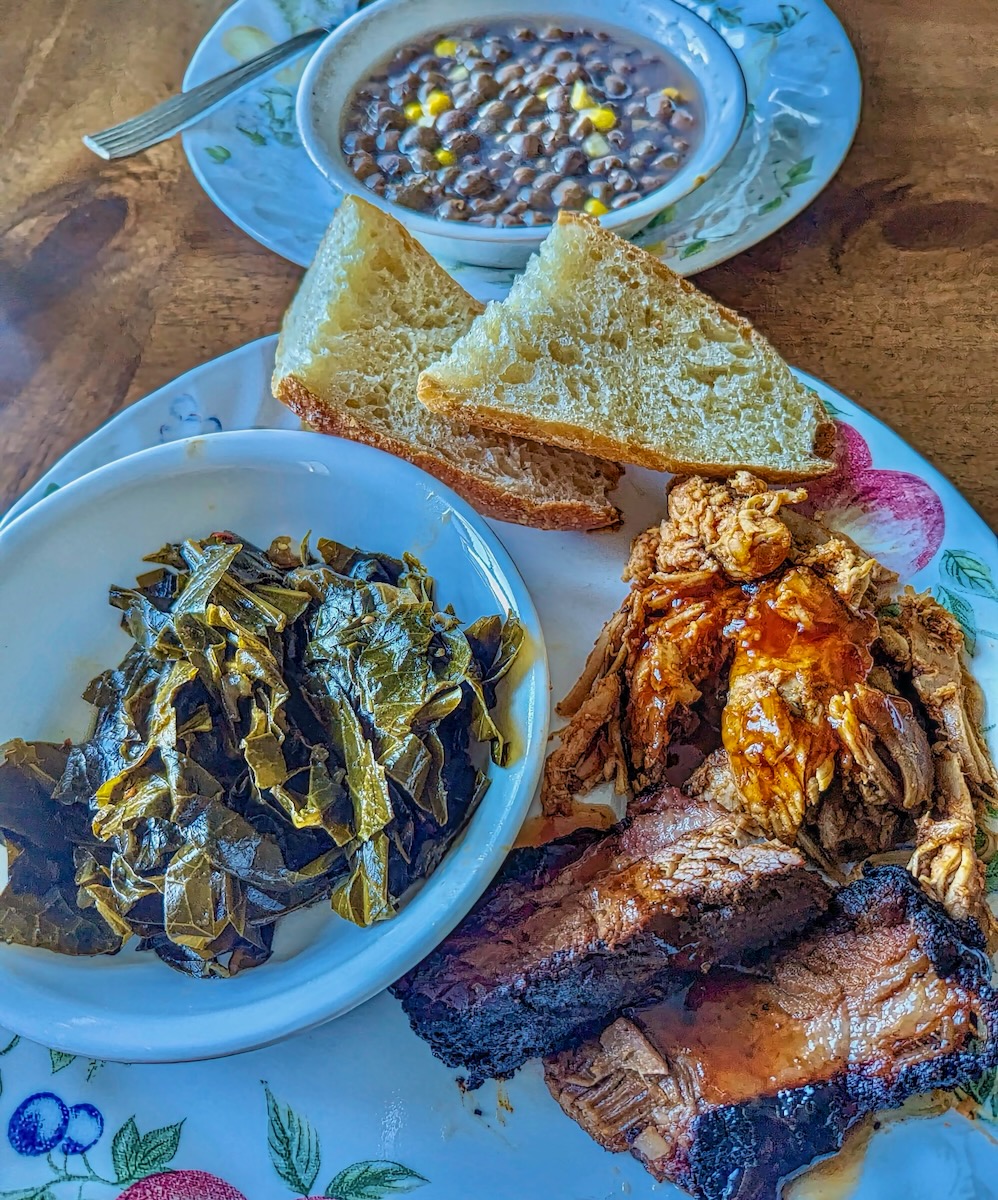
A feast that did not take a lot of cooking

It has been years since I spent significant time in the big cities so I cannot vouch for the state of restaurants outside the rural world of North Carolina’s Piedmont. We have some good restaurants here, but with few exceptions, most can be faulted on something, service, price, or even the quality of the food.

Like many families since the pandemic, we have cut back our in-restaurant eating drastically. We have been disappointed so many times that we often choose to not go back.

Our home-cooked meals have for the last few decades been exceptional. We were fortunate enough to eat wonderful fish like red drum and flounder fresh from the waters of the White Oak River where we lived from 2006-2021. The fish I caught was often supplemented with vegetables from our own garden.

We know what good food is. We understand what it looks like and how it tastes. 

For a decade we had a cattle farm and raised most of our own food. Our kids grew up on unpasteurized Guernsey milk that I got from Rosie, our cow, every morning. Our freezer was full of beef. We had our own chickens which provided us with eggs even when they had only snow for their water.

We had wild red raspberries that grew along the rock piles by our fields. There were plenty of blueberries to be had in the fall and a wonderful strawberry u-pick near us. There were still a few wild strawberries around in those days. We harvested Chantelle mushrooms from our woods and fiddlehead greens from our marshes.  My wife made butter, yogurt, and lots of homemade oatmeal bread.

Times have changed, we left our farm in 1984. We are a lot older but we still love good food. We still garden but it is only supplemental to what we buy from farmers, farmers’ markets and grocery stores. We also have relatives that garden. In  2024, I grew enough tomatoes to sell a few pounds, pay for seeds/plants and still have plenty to enjoy and share with friends.

We have all the tools we need to cook well from a sous vide stick to a gas grill, a wood pellet smoker, an Instapot, and an induction stove.  The challenge is that the older you get, the less time you want to spend cooking and cleaning up. If you don’t like to cook and are not excited by going out, you have to get creative.

We use our cooking energy sparingly, often working to cook something that will last a few days. If I smoke something, we might eat off it for four or five days or until it ends up in the soup pot. A pot of beans or crowder peas will last at least as long. When I bake sourdough bread which I have been doing for over fifty years, it is usually three or four pounds of bread. We always freeze most of what I bake.

Even so there comes a time when the spirit to cook needs a rest. We have learned very little take out food even the good stuff travels well. Pizza needs to come from a place as close as possible, certainly not more than ten minutes away and it is still just pizza. Burgers are better eaten in the parking lot.

Chinese and Mexican food just don’t travel well. Even rotisserie chicken is a gamble and often too salty. The one food we have found that travels well is barbecue or smoked meat. We are lucky to live in the North Carolina where the real wood smoked stuff is plentiful.

A recent meal had crowder peas that were given to us by relatives and cooked by my wife. The brisket and smoked-pulled chicken, and collards came from Honky Tonk Smokehouse in Winston-Salem, NC. Honky Tonk is one of the hidden gems in the Triad area. The baguette was from Camino Bakery in Winston-Salem. It was a delicious takeout meal supplemented by some of our cooking and bread from a good local bakery. It is the way we have learned to give ourselves a cooking break post pandemic – find something that travels well and build a meal around it.

Reminders of the past

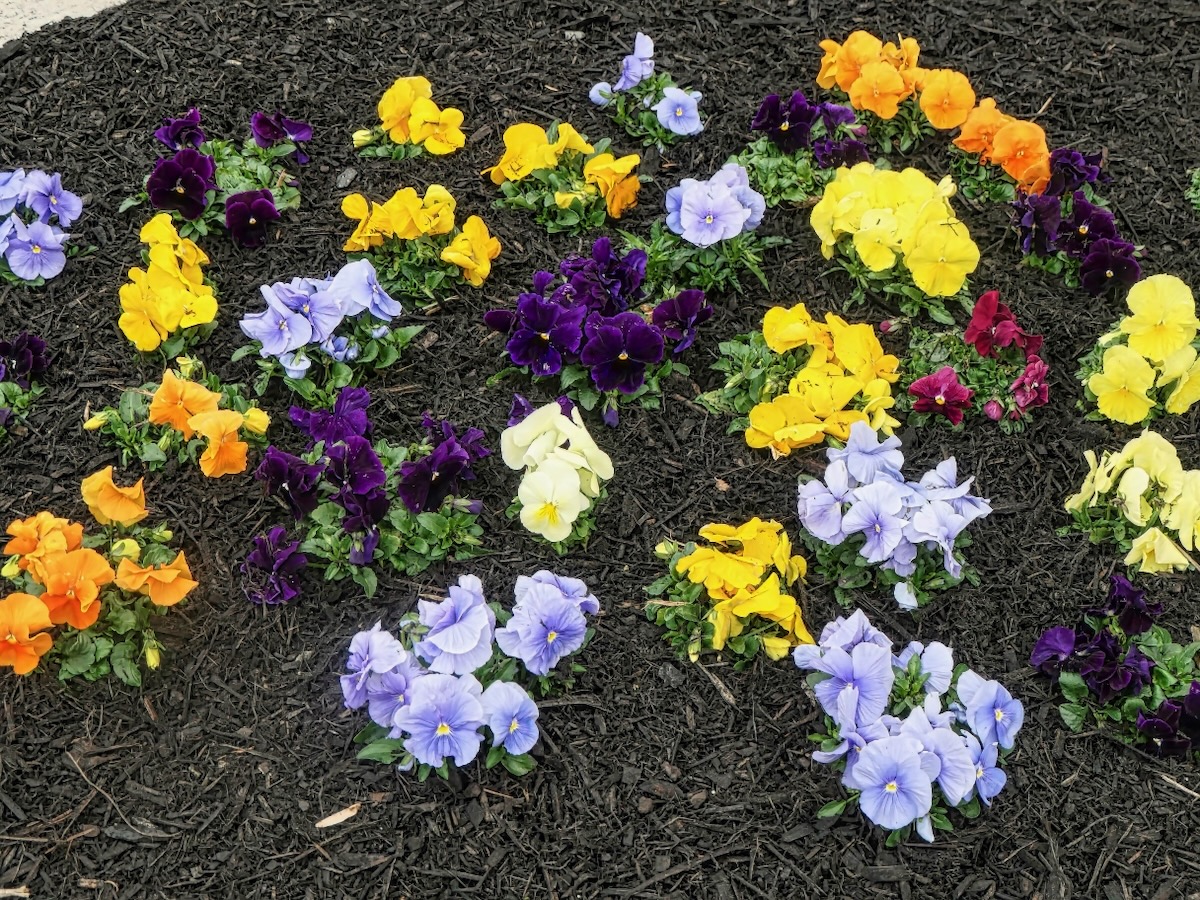
Pansies growing in front of our house

When you live a rich life full of challenges and adventures, it is inevitable that as age catches up with you, a different light falls on the surrounding world. I remember my mother in her later years saying that the worst thing about getting old was seeing things that you have done all your life which you can no longer do.
That happens to be a great truth. Aches and pains come and go but there is no denying that I can no longer spend a hot afternoon in the woods cutting brush or spend a whole day on a tractor bailing hay. My wife has said that I am lot like her father who enjoyed nothing more than working all day until there was not a dry thread on his body. Sometimes that meant three showers in a day, no more.
Even long after we left our New Brunswick farm, and we were living in Roanoke, Virginia, and I was working for Apple, some of my best days were clearing a trail on the side of our mountain. Our Labrador, Chester, would watch over me from a shady spot while I used my weed whip, Swedish saw and axe to clear the trail which was over two miles long.
When we moved to the North Carolina coast, there were always projects and a yard that took two hours to mow behind our push mower. There I built a green bean trellis, a garden potting table, and even a desk for my office. I built the desk in our garage, then took it apart and hauled it up to my office three stories above the garage. When we moved to the Piedmont, the desk came with us, and we had a rock wall built. There we created a wonderful garden behind it. For a couple of years I dedicated myself to the garden even as I continued to work a full time job.
Of course these activities all pale compared to some accomplishments that I managed on the farm. We built two huge barns, but there is nothing harder than running a couple of hundred head of cattle through a handling chute to weigh and vaccinate them. I lost five pounds one day doing that. One of the worst things that I ever did was to be on the wrong end of the hay conveyor stacking seventy-five pound bales of straw. I think the biggest load was 535 bales and that day the temperature was minus 28F. When I was finished that day every exposed hair was frosted.
I often think back to when my mother was in her eighties and could not longer plant her beloved winter pansies. My wife and I took over that job and loved giving her the joy of seeing the pansies grow as she did her winter reading. Because of my heart valve replacement this year I have had to cede the job of planting our pansies to my son. My hope is that when spring comes, I might be helping with the planting once again. However, life often throws you curves so only time will tell. The curve balls are harder to hit as you slow down with age.