

I have made my living in the broadband world for over twelve years. I spend the time at my day job analyzing broadband in counties across the United States.
While there are publications that would disagree, I can confidently say that most of you might at best have a choice between two providers. Sometimes it is between an expensive provider and a lousy provider, one with high costs and terrible customer service and the other with dead slow or unreliable service.
All this results from the broadband world being cut up into little fiefdoms. Competition to broadband providers is “I am going to lock up this subdivision before you have a chance to wire it.”
Competition in the broadband world is rarely here are three services competing for my business, I will pick the one that best suits my needs.
Many of us for years have believed that community-run, open-access fiber fixes this problem. The challenge is that sixteen states won’t let communities run networks. I have used the road analogy many times. We don’t build different roads for UPS, FEDEX and Amazon Prime. We build one road they all share it.
In broadband each provider builds their own network. They like to do that because it locks the customers into them. If we built fiber once, there is plenty for them to share but what mini-monopolist wants to share customers.
If Amazon Prime had to build their own roads, it would be a more expensive proposition than today’s sharing of roads.
Our company has built open-access networks across the country. Some have been running successfully for over a decade. They all have multiple providers competing for customers.
The problem is that now the federal government is throwing bucketloads of money around. Many local governments who are tired of being beat up by their citizens over broadband just want broadband to go away. They know they need a network but they don’t want to go through the difficult process of figuring out how to come up with a long-term solution that fixes both availability and competitive pricing.
They opt for what I call the “Westshore Homes Model.” I came up with the name from the home remodeling outfit that promises your bathroom remodel will be easy and done in a day.
A current Internet Service Provider hears the city/county wants a network. They show up, “We will build you a network, and you don’t have to worry about the details. Just trust us.”
The government jumps into bed or perhaps better out of the frying pan into the fire with the Internet Service Provider (ISP). The ISP applies for funding with their new government partner. They get money and build another leg of their mini-monopoly. The only problem, you and I are financing their profits.
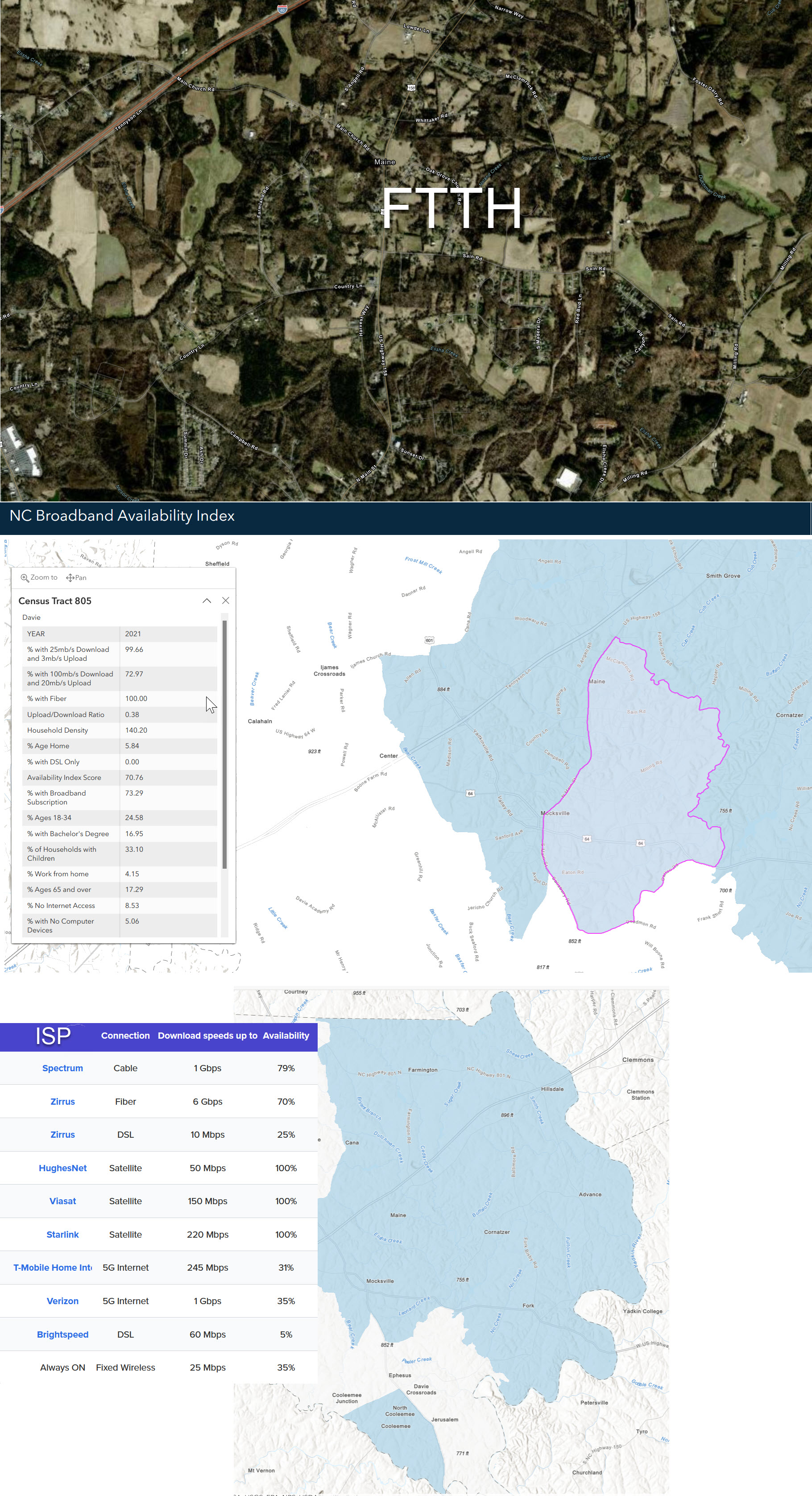
Sometimes you run across a situation where there is competition and government money has helped foster that competition. I live in one of those places.
A situation like mine where I have a choice between telephone coop built fiber, cable and other technologies while living in a very rural setting is not what I usually see in my studies.
While I work for a fiber company, I have nothing against cable companies. In the absence of a lot of open-access networks, cable competing against fiber is what keeps pricing competitive.
In areas where there is only cable or only fiber, you run the risk of someone taking advantage of the situation. Having both around usually fixes that.
I will make one prediction. In ten years, someone is going to ask why did we spend so much government money creating mini-monopolies to carve up the world?
The government is helping Big Telecom squeeze out city-run broadband is a great article from the Verge that tells the broadband story better than I can. It is a good education on the problem.
Below you see that same rural area with fiber to the home (FTTH).
Below the first map are state maps showing broadband availability.

 Our technological infirmity