Living  on the Water

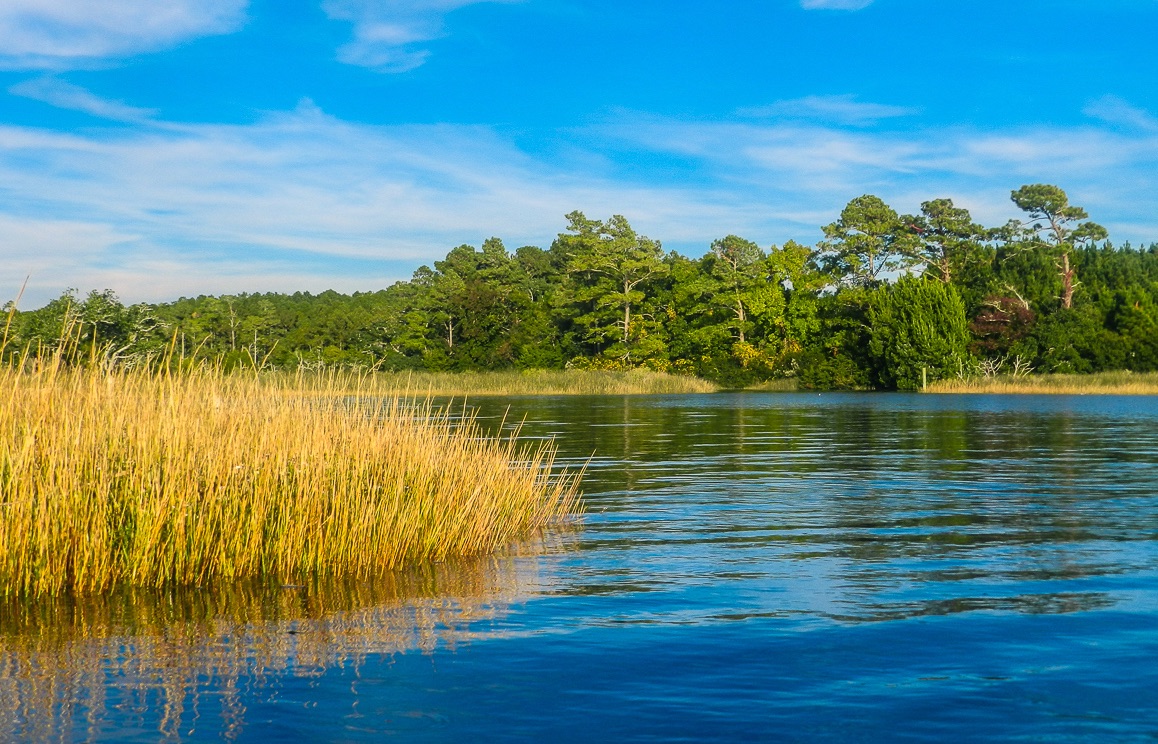
Marshes Near Swansboro, North Carolina

Living near the tidal waters around Swansboro, North Carolina, was one of the true pleasures of my life. Pictured above are the marshes between Swansboro and Bear Island.  Those marshes had some of the most spectacular scenery along the coast and some prettiest waters that I have seen anywhere. They were less than a fifteen minute boat ride from our house. 

I was reminded of how wonderful living on the water is each morning when I looked out towards the River from our dock on Raymond’s Gut.  Part of my morning routine is to check the tide level on one of the dock pilings and survey the water’s surface.  Our home was very close to the water as you can see from this picture taken from my kayak back before we built a small house on the back deck

After checking the tide, I tried to gauge the winds out on the river.  If it is really windy out on the river, it is pretty easy to catch on from the visible whitecaps.  However, it can be very calm in our inlet and still windy on the river. Or it can look calm on the river and still be pretty windy on the river once you are out there.  About the only way to really know how windy it is on the river is to get in the boat or kayak and head out to the river.

There were mornings when the air, wind, and tides just seemed to tell me to get in our skiff and ride down the river.  It was one of the urges in life that I never tried to resist.

Many mornings I could actually take the boat down to Swansboro and be back before my wife even got out of bed.  Usually early in the morning, even in the summer, the river mostly belongs to solitary boaters.  A typical trip might look like the one shown this Google map.

Once in a while, there is an another early morning fisherman or someone checking their crab traps, but mostly an early ride down the river is a solitary experience that lets you really enjoy the pleasure of being on the water. 

There are couple of reasons that the traffic on the White Oak is so light.  One, there is plenty of other water for boating down here, and two, there are oyster beds in the lower river which require you to pay attention while boating.  The channel is well marked, but if you aren’t used to following buoys it can be challenging especially if the light is bad. Many boaters would rather not pay attention since they are accustomed to boating in lakes where there are few if any marked channels

If you are lucky enough to have a GPS and can follow someone up the river who knows where they are going, it is pretty easy to establish your own road map.  Most people going up the river know where they are going, but once in a while someone who seems to know where they are headed will venture off into shallow water and start looking lost.  You can get into trouble on the White Oak quickly and it is not unusual to hear a boat scrapping its bottom on oyster rocks.

This  is a photo of the oyster rock that runs across much of the river near where we lived. The picture was taken at low tide.  At high tide these rocks are sometimes covered by as little as six inches of water.  Hitting those oyster rocks at high speed makes a terrible sound. The boat bottom always loses.

However, with the right conditions, a little forethought and attention to the marked channel, I can think of nothing that I enjoy as much as my early morning boat ride.  It sure beats mowing the lawn or going to a sales meeting.

I have a number of maps of the river posted, but this Google maps one shows the most challenging part of the channel between Bluewater Cove at Red Sixteen and Jones Island just before the Swansboro Harbor.

Here is an album with a number of White Oak photos containing GPS data which can give you a good idea of a ride down the river. 

The river is a great place to enjoy the water, but it also leads to lots of other places like the marshes pictured or even Bogue Inlet and out to the Atlantic Ocean. Once you get to know the waters along our coast, they are not such a big puzzle.

Living by the water was a great adventure and the main reason I lived at the coast for sixteen years. I did even start boating until I was fifty-seven and I did it safely for sixteen years until I sold my boat.

Neighbors Not Evil Red Hats

Goose, Encouraging Me to Speak Up

Eleven years ago I wrote what I fondly call my snippets of life book, The Road to My Country. It is far from a complete autobiography but it has a lot of background information on my life. I wanted to get it out because I suspected North Carolina’s image was going to take a hit when the republicans (I no longer capitalize republican or gop as long as they remain a cult) gained control of the NC House and Governorship. That did happen with the bathroom bill and my nearly invisible book did nothing to help. My way of dealing with a crisis is to work it out with a keyboard even if no one but me reads it. Still we recovered and elected Governor Cooper who has held the crazies at bay.

Both my wife and I were born in North Carolina in 1949. My mother’s family has been in North Carolina since just after the revolutionary war. My wife’s family has been here longer. My father arrived in North Carolina around 1900 at the age of 25. Both our families have deep agricultural roots in the state. I grew up around farming and my wife even worked in tobacco as a teenager. I went away to military school in Tennessee at the age of fourteen in 1963. While I was home in NC most summers and some holidays, I mentally left the state in that same year, 1963. I wasn’t running from North Carolina, I was trying to put distance between myself and my family. I did not have a terrible childhood but there were some demons loose in the family and the only to avoid them was leave until they were conquered by the only ones who could do it.

With that in mind, when I left for college, I put my suitcases and typewriter in the car and headed off to Cambridge, Massachusetts to become a Harvard freshman. That year, 1967, I was one of three students in the class of 1,200 who called North Carolina home. Harvard wasn’t a place where you had to defend your state, but you did have to defend yourself with your wits. I didn’t have any trouble doing that since freshman year was my fifth year away from home. Other than visits and business, I would not come back to North Carolina as a resident until 2006, thirty-nine years later when we bought a second home along the shores of the White Oak River near the beaches of Emerald Isle, North Carolina.

I left with visions seen by the eyes of a fourteen year-old teenager. I came back as a survivor of ten years of farming and over twenty years of selling Apple’s computers. By the time I got back and wrote the book, I had visited all fifty states, ten Canadian provinces, Ireland, England, France, Switzerland, Austria, Germany, Australia, and New Zealand. We had owned homes in two provinces and three states. We had lived in everything from the tiny village of dozen homes in St. Croix Cove, Nova Scotia to the big city of Halifax and halfway between Washington and Baltimore. I spent the last five years of my Apple career working the federal government from inside the beltway to Los Alamos and Lawrence Livermore National Labs. I had set in on Congressional hearings and dealt with many politicians. The fifty-seven year old corporate survivor who moved to North Carolina in 2006 was very different than the youngster who could see little besides an escape route north.

Back in 2021 during the pandemic we made a move from Carteret County, North Carolina to Davie County, North Carolina.

We were ready to walk on ground that wasn’t squishy even though we had grown to love the salt marshes where we lived. We wanted to be close to the few relatives we have remaining and be a part of the lives of our grandchildren who continue to grow faster than we can comprehend.

The North Carolina that I left with its small patches of tobacco allotment was long gone. There were 4.7 million people in NC in 1963, today the state population has more than doubled to 10.8 million. The state is still full of a lot of very good people who would do almost anything to help you even if a MAGA hat has been on their head at some point.

When we moved back from the coast, we knew we were moving to solid red Davie County from solid red Carteret County. The only obvious advantage was that in Davie County, I no longer had a daily drive by the sign saying, “Welcome to Carteret County, Clinging to Our Guns and Bibles since 1760.” (See attached election results)

We have been in Davie County three years and three months and I have had one run in with a couple of red hats who were ranting while they shopped in a tiny store about how much they loved the former guy. It lasted two minutes and I have never seen them again.

We regularly go to eat in a small restaurant in the most rural part of the county, I have never see any red hats there. We are regular visitors at all the farmers markets and I haven’t been kicked out of one yet. There are few farmers I don’t farm a little with while my wife is shopping. I know of maybe two or three signs for the former president.

What I can say is that there are redder counties around us. A few have had contentious school board meetings but I don’t think it has become normalized behavior yet.

We don’t have a massive number of blacks in our community but we do have a lot of Hispanic people. Our house cleaner is one of them and we are very proud that she went to her citizenship ceremony last Friday.

I can categorically say that I have had far more HOA political battles (down at the coast) than ones with local republicans. While there might be little hope of Davie County turning blue, I like to think that given the chance to have a civil conversation, people here will listen, maybe not change their mind today, but possibly in the future. The young people already have more open minds.

The biggest problem we have In places like Davie County are the politicians like Virginia Foxx who mock our form of government by refusing to acknowledge the validity of the 2020 election. Foxx once said that Obamacare was a bigger threat than terrorists. She seemed to think it was funny to shout down a reporter’s question with “SHUT UP.” I can respect Foxx humble beginnings but I have no respect for someone who weaponizes the House Education Committee like she has. Politicians like her are the problem, not the solution.

When the founders cobbled together our constitution, their fervent hope was that we would have leaders who tried to bring out the best in their constituents. The hope was that government and the shared goal of making things better for as many people as possible would temper the bad human tendencies. What we have today are hack politicians who try to mine political benefit off of problems instead of trying to solve them.

Foxx and her republican buddies had a chance to make things much better at the border but they decided to pass up the once in a long time opportunity to get the Democrats to agree to stiff border measures for the opportunity to campaign on border problems. They had a sham impeachment against a cabinet member after denying him funding to try to solve the problem they used for impeachment. These people just want to stay in power. They care nothing about any of us unless we write big checks for their re-election. They actually favor Russia over Ukraine, our struggling democratic ally. They live in some fairy tale world where Putin is not the murderous thug everyone knows him to be.

These are the same politicians who fought Medicaid expansion, deny climate change, and tell their constituents year after that tax breaks to the rich will benefit them. That has yet to work even though they have been saying it for decades. When is the last time someone from the gop supported an increase in the minimum wage?

The $28 Billion that Trump had to spend on farmers to compensate for his tariffs on China gets spun into something good. Wouldn’t it have been far better to let the farmers keep their markets and not have to spend $28B of taxpayers money to cover up a policy mistake of his own making? (See attached table)

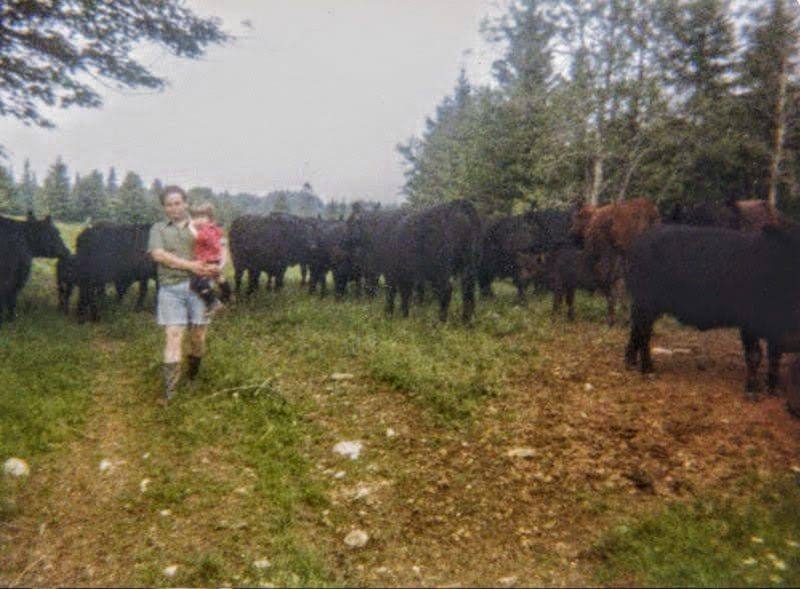
I know there are plenty of good people in Davie County. They aren’t that different than me. I worked the soil for ten years and had 200 head of Angus cattle. I still have a shotgun in the closet. I eat country ham and chicken stew. I have butchered hogs and had a garden big enough to feed my family. I drive a car nineteen years old. I have spent more time on a tractor than almost anyone that I know.

What we need to do more than anything else is to restore rural residents’ belief in our government’s ability to solve their problems. We should show them how makes this is a great place to live. We have libraries, streets, schools, police, and a thriving economy. Government plays a part in that.

People who treat politics as war do no good for any of us. I would like to invite some government advocates to come talk in Davie County but stop by for a visit with me first so you know that you do have friends in the County.

You can get more government supporters if you made it clear what you are doing to help the people in the County and listen to what they need. Maybe it is time for free community college education. It would be a great thing to lift up any rural community.

Your Bubble Shouldn’t Define You

Me in Alaska, August 1970

We all grow up in something of a bubble of our parents’ opinions and the ideas that surround us. I am grateful that I had Chet Huntley and David Brinkley instead of FOX News. I am also pleased that my mother would often take the opposite side or opposing candidate just so we could debate. Still race was something of mystery until I was well into my teenage years.
As an elementary school student I once rode the bus to Winston-Salem. When I got on the bus, I ran to the back of the bus to sit in the back seat only to be told I couldn’t sit there because I wasn’t black.
I can remember when I was fourteen flying back from my all-white male boarding school in Tennessee. It was the first time that I would be heading back to my dad’s big house in Mt. Airy instead of my mother’s small ranch in Lewisville. Alfred, the husband of dad’s maid, Mertha, had driven my mom to the airport. We stopped in Winston-Salem for lunch at the K&W Cafeteria.
As my mother and I were starting to enter K&W, Alfred, who was black, turned and started to leave. I asked him why he wasn’t joining us for lunch. He said he was not allowed to eat there. I was floored.
Over the next week, Alfred, his wife, Mertha, my mom and I had most of our meals together at the kitchen table. Obviously, I was still clueless about race with one set of rules at home and another out in the world of 1963.
Three years later I took my first trip around the country. The first trip taught me more than you could eat ketchup with eggs. It was a big country with lots of different people but it was unlikely that I was going to meet any of the different ones at McCallie, the all white military prep school my parents had shipped me off to in Chattanooga, Tennessee.
I would, however, meet some at Harvard.
There was probably not a more privileged place to be in 1967 than Harvard. We figured it out pretty quickly. Someone would ask where you went to school and you would say Cambridge. Most times it didn’t work and people still knew immediately where you went to college. Still Harvard was a very different world than McCallie, beyond the sprinkling of different races, we went to school with Radcliffe ladies. Boston and Cambridge were a different world than Chattanooga which was decades from its rejuvenation. McCallie was on Missionary Ridge just a few miles from downtown, but downtown was often hidden in smog and smoke from the factories.
At McCallie the only way to get from one stop to another was to hitchhike. At Harvard, I had my car for longer trips but the Massachusetts Bay Transit Authority (MBTA) subway was a revolution. You could go downtown, to the airport, and all sorts of places for little money. Being on the Red Line even though it rattled our room in Wigglesworth freshman year was still eye-opening. Just walking through Harvard Square exposed you to more diversity than some see in a lifetime.
There were three things that really opened my eyes once I got settled in Cambridge. The first was having a car to go places in New England. My sophomore year, I came back with an original Ford Bronco that my uncle had helped me buy secondhand from a vet in Michigan. I had gone with him to Michigan to buy it and drive it back. Traveling with my uncle Henry was almost as eye-opening as a couple days in Harvard Square. He didn’t believe in motels and had private homes where he could rent a room when passing. We stayed in one on the way up. I came close to freezing that night. Still once the old Bronco got to Cambridge in the fall of 1968, it and some stop-leak for the radiator were to be the keys to exploring a lot of places including Nova Scotia, Maine, New Hampshire and Massachusetts even where there were not roads.
The second thing was going from being a barely politically interested student to one who felt like politics had the potential to save us or destroy us. The anti-war unrest kicked off at Harvard in the spring of 1969. As kids of the sixties we had already been through more heartache than some could take.
Still in the days before cell phones and social media, we were oblivious to what was happening locally when University Hall was seized by around fifty students. University Hall is in Harvard Yard. Only freshman live in the Yard. Upper class students live in Houses or dorm complexes sprinkled around the area between Harvard Yard and the Charles River. That evening the students took over University Hall, four of us were walking from Quincy House up Plympton Street towards Massachusetts Ave. with the plan that we would go to Barley’s Burger Cottage. As we turned right, our peripheral vision caught a line of charging Massachusetts State Police with riot shields and billy clubs. We were obviously in the wrong place at the wrong time.
I was chased into the doorway of a nearby bookstore where I got a couple of whacks on the back before I escaped and started running back to Quincy House. We all got back to the dorm with the police not far behind us. They tear gassed our dorm’s courtyard. We were fortunate to have a fourth floor room. It was chilling to hear the sound that we all know, shotguns with shells being chambered. We’re lucky no one died that night. The campus was energized with anti-war/anti-administration sentiment. People could not forgive the college administrators for turning the police loose on students who had done nothing. It was a lesson in how it feels to be attacked when you have done nothing wrong. I haven’t looked at peaceful demonstrations the same way since then.
The third change happened my senior year when my roommates and I became part of Harvard’s coed experiment. Fifty male Harvard students were moved to Radcliffe. Our dorm was the brand new Currier House which housed 275 Radcliffe students. We were spread out throughout the dorm. One roommate and I had single rooms sharing a bathroom. Adjoining rooms housed Radcliffe students. Our floor had everything from first year students to juniors. It was a wonderful experience, I met more people who have become life-long friends there than in any other similar timeframe. I have more female friends from Currier House that I keep up with fifty-three years later than I do male Harvard friends.
The next year, my junior year, with the invasion of Cambodia, the campus exploded again and classes were canceled for the rest of the semester. We went home hoping to convince people the war had to end. People in North Carolina didn’t want to hear it from us. They had already seen enough on the nightly news. By mid-June, I was packing my Dodge PowerWagon for a trip to Alaska. The PowerWagon would also change me.

Full article also available on Medium.

From VCRs to Streaming- Apple TV – Fire TV

Apple TV. -Amazon Fire Cube

This history on viewing video was a result of being asked to review a Google Fire device and compare it to the Apple TV device. As you might guess from the picture I will get to a review of the Fire Cube and Apple TV but it is at the end of the article.  If you are looking for a very technical review this won’t be it. However, if you are looking for a review by someone who uses both and has no iron in the fire, this might be it.  We have both hooked up to our LG television and we regularly switch  back and forth.

I have been watching television since I was seven or eight years old. I feel fortunate that television could not compete with the outdoors when I was growing up and my high school years were nearly devoid of television. I went to a military boarding school starting in the fall of 1963. Our television was limited to fifteen minutes after study hall in the evenings.  I never got hooked. We did end up with three children born while we were living on the farm and they were fond of Sesame Street among other shows. Television there was limited to two channels which we picked up with an antennae. It sort of matched the newspaper, the Daily Gleaner, that we received in the mail the day after it was printed.  We listened to a lot of CBC radio.

In the snowy winter of 1984, we had enough cash to splurge on a Panasonic VCR. Even though the Betamax – VHS war had yet to be settled, I bet on VHS.  After all I was in the technology world selling Apple computers.  We paid just over $700 Canadian for the VCR.  It was easy enough for me to pick up some movies on the way home and bring them back in a day or two.

Five years later after we have lived in Halifax, Nova Scotia, and Columbia, Maryland, we moved to the side of a mountain in Roanoke, Virginia.  There we had easy access to a Blockbuster Video store among others.

By the mid-nineties changes were afoot, as DVDs took over from VCRs rather quickly.  The only reason to keep your VCR was for dance recital tapes. Recordable one session DVDs were incredibly expensive when they first came out sometimes costing over $20 each but they easily beat the LaserDisk competition. By the end of the decade (1999) Apple had iMovie software out for creating great personal movies. By early 2001 Apple released iDVD for authoring DVRs using movies created in iMovie. It had limitations but it was a great tool and I made a number of DVDs until the product was discontinued in 2011.

When we moved into our new house at the coast in 2006, it was the peak of the tower babel for video. We had a Sony-DVD-CD player and a Sony VCR hooked to a whole house system of speakers in each room.  Each room had port where you could plug an iPod. We might have used one of the original iPods that I won at Apple on the system once or twice but that was it.  The times were a changing.  Our system was probably out of date before we finished paying for it.  As people started streaming media on the Internet, interest in DVDs and even creating them dwindled. Sometime in late 2010, Apple introduced the last iDVD software with its iLife series. Steve Jobs had lost interest in it so  iDVD was part of iLife but not promoted.

Not long after that we got our first Roku and started experimenting with streaming alongside our cable Television.  Prime Video came along in 2011 but the first series to really get us to bite on streaming was Netflix’s House of Cards in early 2013.

In 2018, we did a refresh of our household video equipment.  The driving force was our twelve-year-old cable box needed almost daily rebooting, We took the opportunity to send the dead Sony CD-ROM/DVD player and dead Sony VCR to electronics recycling,  We added a Sony streaming box with a Blu-ray Disk player.  I also rewired everything so I could get rid of the extra HDMI cables that showed on the mantel.  It made my wife very happy. By rewiring and adding an HDMI switch I could add a Chromecast to our Roku and Sony box. The biggest challenge was getting our new cable modem to work. It was quite the saga We also took the opportunity to add a streaming only television to a newly constructed upstairs room

I just checked Amazon.  After the installation of the new BlueRay DVD player, I bought exactly one BlueRay movie, Second Hand Lions.

While this was all going on, I started making YouTube videos. I made my first ones in 2009. While I haven’t uploaded a new one since 2020, I have 153 videos that I made on my YouTube Channel. I started doing videos on Google Photos eleven years ago in 2013.

In 2021 when we moved to North Carolina’s Piedmont, we signed up for a fiber connection with the local telephone Coop.  While I work for a company that builds fiber networks, we don’t have one in North Carolina.  We never even hooked up the available cable outside our house.  A year after moving here, I was comfortable enough to write an article, How to be a sensible streamer.

So here we are forty years after buying that first VCR.  We are on our second Fire Cube. After two years the first one got cranky as electronic sometimes will do. We bought a new one in February 2023 and it has been great. Our company is considering a promo where we give away an Apple TV streaming box with new signups. I offered to buy and test The Apple TV since I have more experience streaming with fiber than anyone else in the office.

First off they both boxes offer all the bells and whistles that you need to get high quality streaming. Their user interfaces  and how some things work are the main differences,

It you are used to the Apple ecosystem and have either an iPad, iPhone or a Mac, you will likely be very comfortable with the Apple TV.  The controller which has a tiny touchpad takes some time to get used to using but it is something most people master in a few minutes.  As a bonus Siri is really good at turning on closed captions and finding apps.  The Apple TV user interface is more pleasing that Amazon’s. Amazon uses its interface to try to get you to buy content. I don’t get the feeling that Apple is pushing me to buy a particular show.  I also like how Apple TV keeps track of what I have been watching even if I was watching Britbox on FireTV.  Every app, Britbox, Acorn, Disney, Prime Video, or Netflix looks better and more consistent on Apple TV.

If you are not an Apple user, the authentication required to download an app might be something new to you.  When you install a new app on your Apple TV, you will be asked to authenticate with your Apple ID password (it is easy to create if you don’t have one).   Because I had an iPad in the room with the Apple TV, it sent a notice to the iPad which verified who I was with facial recognition. I still had to confirm the download by doing a double click on an iPad button.  Then and only then can you sign into the service.

Fire TV does not ask for the authentication before downloading, you move directly to entering you password for the service.

The only quirks we have noticed are the FireTV regularly hangs on trying to load Britbox.  On the Apple TV side, we have been unable to find our local news to stream. Currently we just switch over to FireTV and for some reason local live TV is available there.
One question which might come up. We have our Apple TV hooked up with Ethernet but we are using WiFi for the FireTV Cube. First the television is hooked up by Ethernet. Second the Fire Cube has a limited Ethernet connection which is slower than wireless. The Apple TV has a 1 Gb Ethernet port. From what I have been able to learn that makes no difference. Most reports state that streaming only requires 100 Mbps.

The Absence of Snow

Snow in Tay Creek, New Brunswick

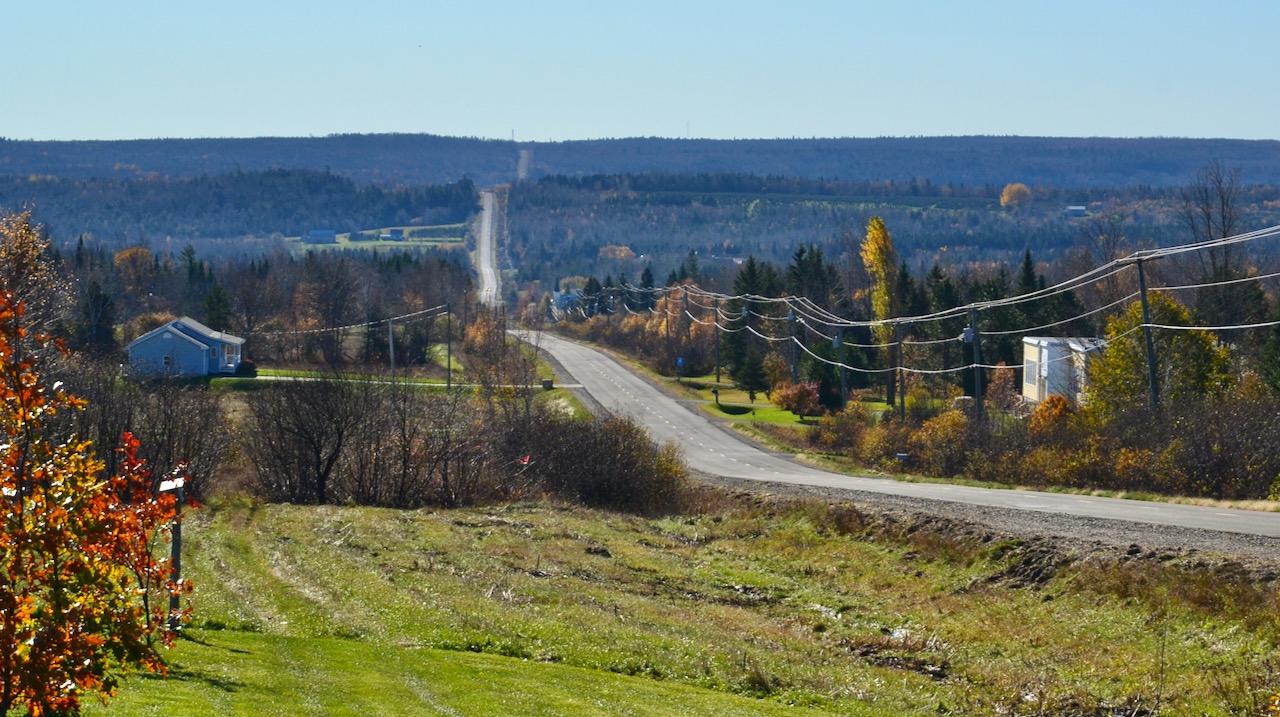
While I was growing up, it would have been a dream come true to find a snowy scene as beautiful as the one above taken near our old farm in Tay Creek, New Brunswick. Tay Creek had more snow than even I bargained for when I set off to raise cattle.
My youth was not snow deprived. I feel fortunate that my childhood took place in the fifties and sixties in North Carolina. We lived in a small, rural town just west of Winston-Salem. My first distinct memories of snow are from when I was in the fifth grade at the Lewisville School which housed grades one through eight. In March 1960, it started snowing on my birthday early that month. They sent us home from school before lunch which wasn’t a big deal for me since I walked to school. Like many in those days we lived on a dirt road. We were lucky. Our home was only one hundred feet from pavement but there were others who lived miles into a red dirt road. Snow made a mess of those roads so school was often called off until the dirt roads dried up. We hardly went to school that March 1960 because it snowed for three Wednesdays in a row. It was a very unique weather event.
My life after high school could be summarized by saying, “He started going north and didn’t stop until the roads were blocked with snow.” As a result we spent years in snow country (Canada) before turning south and finding the mountains of Southwest Virginia. There was enough snow and ice there that we eventually ran from it after seventeen years and ended up living for fifteen years on the North Carolina coast. We now live in the foothills on the western edge of the Piedmont about twenty-five minutes southwest of where I grew up and enjoyed that snowy month without school in March 1960. In our fifteen years on the coast, we had a few snows that mostly disappeared by noon. The most impressive one and probably the last one the area has seen came in January 2018. 
At our current location the last snow was January 18, 2022. Snow has not completely disappeared from the Carolina Piedmont, it is just getting a little more rare. It is climate related I am sure so there is little that we can do in the short term. However, we are entering a patch of very cold, even record-breaking weather for some areas. All we need is moisture and snow will be back in our yards. If we are on a trend to have more infrequent snows, we all should be a little sad and not just from the climate change that it represents.
The excitement of snow day when you were in elementary school in the fifties is hard to convey. The authorities did not make it easy to get excited because they refused to announce school closings until early the morning of the closings. We would crowd around the radio hoping to hear our county’s name included in the list of closings. There were no text messages, emails, or web sites to check. Once school was closed, it was like someone had added a day to your year and said happy birthday, this is your day. All pressures were gone, any tests had vaporized, and your neighborhood was a giant snowfield ready for you to make your mark on it. I am not sure there are many times in life that you get to enjoy that kind of freedom. The one thing that could be guaranteed is that a taste of that pure freedom made you crave more. In 1960, it never seemed to end.
In 1963, I went off to boarding school and you don’t get snow days there. You also don’t get snow days at college. At least we didn’t in Cambridge, Massachusetts.
I completely understand that a snow day sixty-four years after that wondrous March 1960 is a lot more complex. Parents have to make child care arrangements instead of letting the kids join the free-roaming herd of neighborhood children. Businesses don’t want to get sued for someone slipping on ice or lose sales by closing down for a day.
I guess my point is that snow days are something of a symbol of a simpler time. I can remember getting snowed in on the mountain where we lived overlooking Roanoke, Virginia. The kids went outside and played with all the neighboring kids, and we were not that upset that we didn’t know exactly where they were. We knew they were on foot, sliding down hills well-covered with snow. They always came back soaked to the bone, frozen and ready to sit around the fire and recharge their batteries from the exhaustion of pure play. Even after our the children were gone, my wife and I got snowed in there just before Christmas in 2009. It was an impressive snow as you can see from these pictures. I am pretty sure there hasn’t been a snow as impressive or at least as difficult to shovel since then.
There are lots of areas in the country that rarely if ever see snow and I am sure they produce lots of well adjusted adults, but I feel sorry that they have never gotten to have a real snow day. I am pretty sure that there is a group of kids in our subdivision with the freedom to really enjoy a snow day if we got four or five inches of the white stuff.
Everyone deserves to have a snow day or two in their life. May you get one this year and figure out how to really enjoy it.

The Last of Those Who Know How?

My Mother Working On Flowers In Handmade Flower Boxes

We all go through life differently. That much I know from being around this long. I have known people who could hardly use a screwdriver. I have also known some who could do almost anything with nothing. Human society is trending towards those who might not even recognize a screwdriver unless their smartphone can show them a picture.
Last summer finally convinced me that most people would rather have food out of a grocery store than a garden. That comes after many years of giving away produce from our garden. Giving away produce is not just picking it from the garden and handing it over to someone.
Often you have to clean it up, sort it, wash it multiple times and sometimes even prepare for the table. You have to make it look like it came from the produce aisle. There are not many people I could tell, “Just go cut whatever head of lettuce you want.”
There are even fewer people you hand over a plot of land and have them successfully plant a garden and harvest food from it. In a little over a hundred years, most of the people in the country have gone from living close to the land to living in the city or the suburbs and divorced from everything but their yard.
Of course it is not just gardening. There are plenty of things that people used to do for themselves that they cannot or choose not to for themselves. There are a lot of professionals out there who make a living filling in the gaps.
At a certain age there are things that you are better off not doing. Just before I turned seventy, I quit using the push mower to mow my yard. It was a two-mile walk and a couple of hours of hard work in the coastal heat. We hired someone to do it but I continued to do some of the fussy mowing. I would probably still be doing that if we had not moved.
I am one of those people who went back to land after college. I did not become a back to the land hippie, I became a farmer or actually a cattleman with two hundred head of Angus. During the decade after college I learned everything from doing copper sweat joints, making cabinets, welding and wiring a house to building barns and growing all the food we needed. We had a milk cow, chickens, and even pigs once. I know where and how meat gets from the pasture to the table. In 1972, two of us killed a steer and hung it in our root cellar with the salt pork from our pig while we cut the steer up by hand meatsaw. It was a lot of work. We went with the butcher the next time.
I have managed to build a few things over the last years including the desk in my office. I know there are still people out there who build things with their hands but I also know their number is shrinking. When we moved in 2012, I had to pay someone to take my radial arm saw.
A lot of the things you learn long the way lose their significance. Very few people probably even remember what a distributor did much less how to make sure it is set to specifications. Points/distributors are no longer in cars. A car today is much more likely to have a computer problem than something feeding electricity to the spark plugs.
Even with computers, a lot of what I have learned is worthless today even though it was critical knowledge at the time. I still remember how to make an Apple III work. That has to be high on the list of useless things to know.
There are thousands of people who know how do things who had different life paths than me. Each one of those people picked up unique skills that may or may not be relevant today. There are a lot of stories there worth telling- maybe a new Foxfire series. I would read it.
As people recede further and further into their cocoons insulated from the real world by today’s service economy, those of us that remember how to do all those things can often no longer do them ourselves so it is good the service economy is there. Maybe I will hang on long enough to remind some of the more able people what they could do if they would.

Competition and the Internet

Fiber Optical Network Terminator (ONT)

I like white button mushrooms. They are a favorite in omelets, salads and all sorts of things. Six years ago we were living on North Carolina’s Crystal Coast which is roughly defined as the area from the White Oak River in Swansboro to Town of Beaufort. It is a very unique area because most of the year there are less than 70,000 people in residence but for six to twelve weeks during the summer, the population more than doubles. In order to feed all those people staying in rental homes, the area has an abundance of grocery stores.

Yet for our first eleven years on the coast, button mushrooms remained relatively expensive. Whether you went to Harris-Teeter, Lowes, Publix, IGA, or Piggly Wiggly, button mushrooms seemed priced higher than I expected.

Then almost simultaneously Aldi and Lidl opened stores in the area. Instead of paying $2 to $3 a box for mushrooms, you could get a box for ninety-nine cents. It was a welcome change which I expected to go away, but it didn’t and to this day, white button mushrooms are more competitively priced than were before Aldi and Lidl came to town.

Studies show that less than ten percent of households in the United are not connected to the Internet. However, a larger portion of those connected people in effect only have one provider that delivers anything close to the speeds needed in our wired world. Usually those with only one option find their Internet is more expensive than what can be found in areas with competition.

Much like my expensive button mushrooms, it doesn’t really matter if you have five grocery stores in your community if they all charge similarly high prices. What it took to get the price of mushrooms down was a different kind of grocery store with a different pricing model.

There are a number of factors which affect competition for Internet services. Much like the grocery stores that all sold mushrooms at a similar price, Internet Service Providers (ISPs) often set their pricing to be very close to other ISPs. Some providers even charge people with slow Internet the same as people getting faster Internet. That is the classic definition of tier flattening.

Fiber Internet connectivity is the gold standard for home Internet. In general national providers are competitive with their fiber pricing. Competition for new fiber customers is fierce right now with some great offers and pricing that is unlikely to stay that low without competition.

It is really a golden age for faster Internet because fiber is more widely available in more neighborhoods and there are more fiber providers. Fiber Internet service providers have figured out that very few fiber customers change providers once they get on fiber. The reason for this is two fold. One is that fiber Internet is so much better than other copper-based or wireless Internet services that few will ever go back to slower cable, DSL, or wireless. The second reason is very few areas have a choice of two fiber service providers.

In most communities, the ISPs have a captive audience—a local monopoly. It is very difficult for a second (competitive) provider to make a business case to build a second fiber network in community where there is already an ISP offering fiber Internet. According to a recent study only 12% of homes have access to two fiber providers.

Unlike copper-based cable and DSL Internet, a fiber network can easily carry several competing Internet services. Cable and DSL are like a two lane road.  They can only handle a limited amount of traffic. Fiber is like a superhighway with unlimited lanes. You can have multiple service providers offering services over the network—this is known as the “open access” business model.  

We have built networks that have six service providers offering service from a single fiber network. Service providers can focus on delivering differentiated services without the immense capital costs of constructing a second (or third) fiber network. In this scenario, one party owns the network—it can be a local government, a nonprofit, or a for profit company. Service providers can each sell their own services, Internet packages, and offer their own pricing on the single high performance fiber “road.”

Amazon, UPS, and USPS do not each build a road so they can deliver packages; the government builds roads and all public and private businesses use the one shared road system to deliver goods and services.

Until recently, most Internet Service Providers have resisted this “shared network” model because they prefer having monopoly control over customers and pricing—that is, they do not want to compete.

Currently, some state and Federal grant money is being channeled directly to ISPs, which enables them to expand their monopoly network to more customers. A better solution is to use state and Federal funding to build open access networks. Some local and regional governments have embraced this model and have a long track record of success. And there are now ISPs that recognize open access networks as a business opportunity.

Modern fiber Internet networks are easy to build and to operate. Local and regional government that adopt the open access model create private sector jobs and business opportunities, and help keep the cost of Internet affordable for businesses and residents.

Design Nine has been a pioneer in assisting with the development of open access networks. Visit our website Designnine.com for info or send me an email: dsobotta at designnine.com or dsobotta at wideopennetworks.us .

 1TIER FLATTENING: AT&T and Verizon Home Customers Pay a High Price for Slow InternetJuly 31, 2018- National Digital Inclusion Alliance – by Bill Callahan and Angela Siefer

2Fiber Broadband Association Reports North America Hit Highest Annual FTTH Growth Record- Fiber Broadband Association -December 11, 2023

All Through The House

Goose on his blanket, Maverick by her pillow, and Merlin on the highest pillow

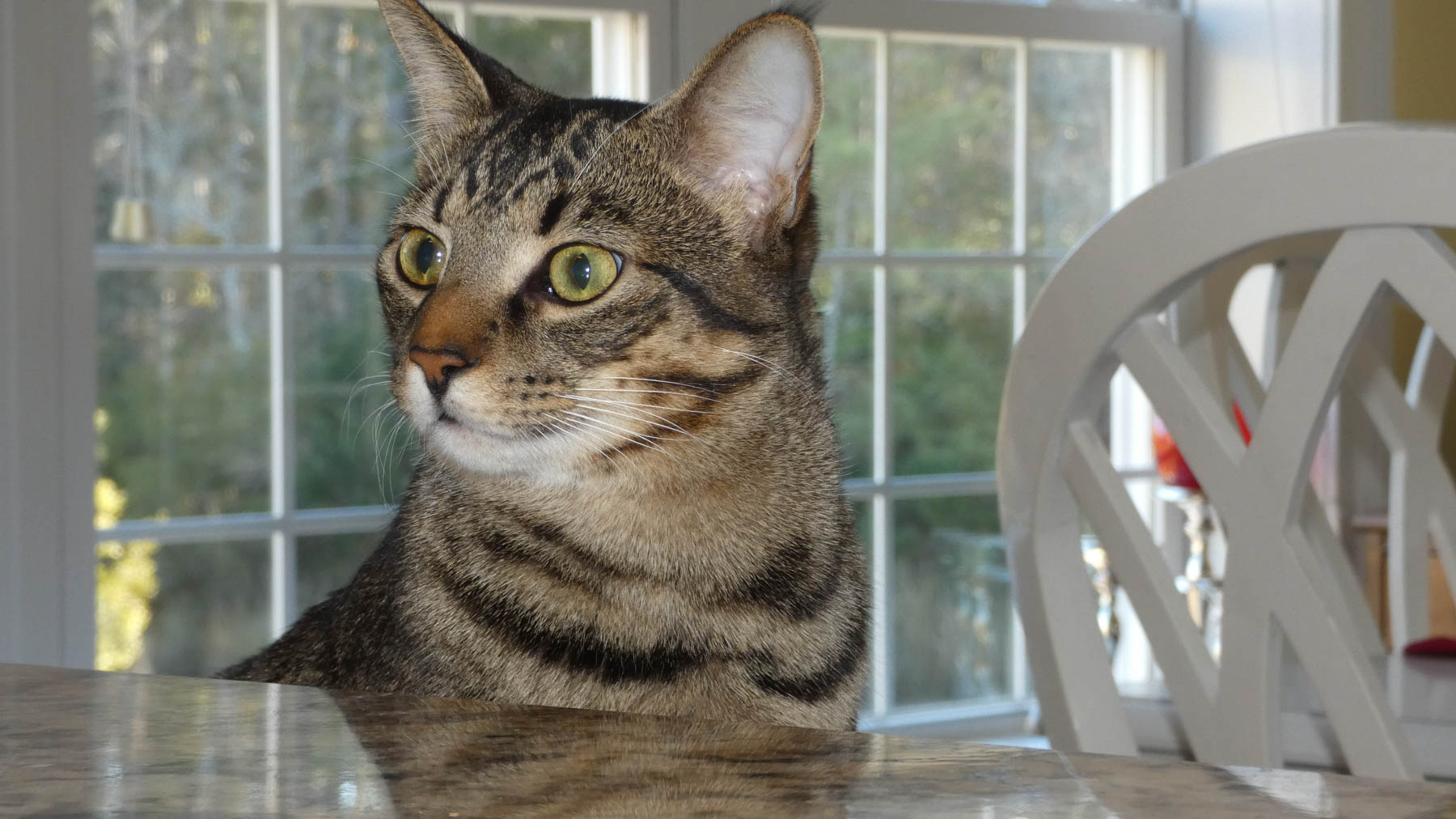
Not a creature was stirring not even one of the tabby cats. They were all snuggled in their beds dreaming of Santa Cat and his sled full of cat treats. What a feast there would be if the sled just turned over. Even Goose might get his fill for once.

Merry Christmas from Goose, Merlin, Jester, and Maverick and the less furry members of the family. 

May the next year find you living where you want to live and doing what inspires you. May whatever you do help you to love others and most importantly leave the people whose lives you touch better off for having known you.

-David

Read our latest Christmas story here at Post.news.

The McCallie Years

Me back on campus fifty years later

Chapter Three, McCallie, “Honor, Truth, and Duty”

It was the fall of 1963, and I was headed for Chattanooga, Tennessee.  I was being sent to McCallie School so I could have more male influence in my life.  In retrospect that almost seems funny since my mother was far tougher than most men.  She might not have been much at hunting and fishing, but that was only because she did not enjoy them.

Still I was destined to go to McCallie.  Like most teenage boys, I was not particularly interested in being dragged away from what I considered a perfectly good life.  I had enjoyed an exceptionally rich family life for an only child with a single mother.  Living close to my mother’s sisters and her oldest brother, Henry, had given me just about everything you could ask for in life except a dad.  It was really tough going to away to school, and I fought it pretty hard.

Sometime during that first fall away, my dad had a heart attack. He was 88 at the time of the attack.  If you do the math, you can figure out that I was born when he was 74.  Something in the care he was receiving really upset my mother who in a very short time went to live in his house and took over his care.  She eventually agreed to what he had wanted for many years, and they got married.

I know my mother made a few trips to Chattanooga to try to help me adjust that fall, but it was only when Major Arthur Burns had a talk with me, that I finally gave up and decided to make the best of what I considered to be a tough situation. I was a heavy kid so that created some challenges for me, but fortunately the academics came pretty easy to me so I did well there.

I had also been taught to not get into trouble so I stayed out of trouble, did my work, and figured out the system.  The system as a freshman was not a lot of fun.  We had to carry our laundry down the side of Missionary Ridge each week.  As freshmen we also got to carry that of upper class students.  I can remember a couple of frozen laundry bags that I had to carry.

I managed to get involved with things and eventually paid enough attention that I started succeeding in the military world.  Getting by at a military school means getting up when the bells ring every morning, getting your name checked off at breakfast whether you ate or not, making your bed, and showing up for inspection with a shiny belt buckle and shoes.  For some strange reason, I enjoyed shining my shoes and brass so that was never a problem.

Each morning we would head off to chapel for a few minutes of talk and announcements. There I mastered one of the great skills in life, sleeping while appearing to be awake. Then we would have classes, drill, lunch, another chapel meeting, more classes, and then sports.  Unfortunately, I figured out how to do as little as possible in after school exercise so my weight remained a problem all through McCallie.  I did get involved in some school sports as a manager and really enjoyed that.

In the evenings we had a very short time after the afternoon activities before our six PM dinner.  Lunch and dinner were both eaten at a family style table with a teacher at each table.  When I became a sophomore, I was rescued from the life at an ordinary table by my Latin II teacher, W.O.E.A. Humphreys.  I joined his table which eventually came to be known as the Establishment.  It was a bright spot in an otherwise uninspiring dinner environment.  It offered intelligent conversation and a group where I felt like I belonged.  Perhaps that explains why I took four years of Latin at McCallie.

After dinner was study hall which ran from 7 to 9:30 PM each night except weekends when Saturday was free and Sunday was a little shorter.  You had to do study hall in the study hall unless you had good grades and had stayed out of trouble.  If you met the requirements, you got to study in your room.  I do not remember many weeks in the study hall.  If you got over ten demerits each week, you had to walk them off around the track on Saturday afternoon. It was a system designed to keep you on the straight and narrow.

Some kids fought the system, I decided to make it work for me.

I had come back to McCallie my sophomore year with a different last name since my dad went through the formal adoption process so I could have his name.  My roommate was a little worried until I showed up, and he figured out that the new person was actually me.

Somewhere along the years, I became popular enough to run for office.  I ended up in the student senate for a term or two.  I still remember one of our great victories was outlawing the hazing of freshmen students.  We lived on floors in dorms.  Each floor had a room with two seniors who were called prefects.  Their job was to inspect our rooms, make certain we were in bed by 10:15 PM and in general keep us in line.

The summer of my junior year I was chosen as one of the prefects for the second floor of Founders Hall.  It was one of the nicest dorms on campus and housed mostly juniors.  I had worked exceptionally hard my junior year, often waking at 5 AM to study by a flashlight in the small alcove for our room doorway.  I had risen to second or third in our class rankings.

That spring I was also one of four juniors appointed to the rank of captain. I was also inducted into some leadership organizations.  It was to be a pretty good senior year.  I can remember getting into some trouble with the senior play when we executed Santa Claus which I believe was me, but I doubt anyone goes through high school without a few challenges.

My senior year, I got a special privilege which was to keep my car on campus because my dad seemed to be rotating in and out of the hospital, and I was often called home because he appeared to be dying. I was only allowed to drive the car for these emergency missions, but still it was nice having the car there.  I think my parents had felt guilty about sending me away so they had given me a blue and white GTO convertible.  It was a very cool car.  It took me a while maybe even into my college years to figure out that having a cool car did not make you cool, but I suppose I figured it out a lot sooner than some.

A big part of McCallie was getting into college.  Getting into college in those days did not mean you had been on a grand tour to select the colleges which you liked.  You applied to some colleges, got in to some and went to the one everyone thought you should go to.

Lynn Weigel, my prefect my junior year, had gone to Harvard.  When he figured out what a great experience it was, he convinced me to apply to Harvard.  Harvard even sent an admissions person down to Chattanooga and I spent some time with him. I am sure he had other stops, but he made a compelling case for going to Harvard.  When the admissions slips came, I had gotten into Harvard.  In what seemed like an obvious decision, I decided to go to Harvard.

I was glad to leave McCallie, and I vowed to make the most of my experience at Harvard.  I can still remember pulling the cord of my alarm clock out of the wall.  When I got home to Mt. Airy, I filled the clock with solder so that I would never forget the exact time when I left McCallie.

I know I learned to work hard, take care of myself, and to be careful with any power that was given to me, but sometime you have repeat lessons until they really sink into your character.  I did vow that my children would never be sent way to school.

The next chapter is Harvard and the world beyond the South.

The Lewisville Years

Our Lewisville, NC at the corner of Shallowford Road and Styers Street

My mother wanted to be independent so as soon as she could she bought a lot in Lewisville and built a house with an attached beauty shop. She bought the lot from Uncle Joe Styers. We were a Styers family living on Styers Street no far from Styers Ferry Road which was named after the ferry across the river run by my great grandfather Abe Styers. While Abe was gone, his wife Millie lived next door to us. One of my jobs was to run over and peak in the window of her little house to see if she was still alive. Every time I looked she was sitting in her rocking chair next to her wood stove with the newspaper in her lap. She died a year or so after we moved. In those days, the viewing was help in the home. Great grandmother Millie was viewed in Uncle Joe’s house. She was the first dead person I had seen.

Lewisville was my first experience with school. Not many people have the privilege of going to first grade and finding out their teacher is a first cousin who has been teaching first grade for longer than anyone can imagine.  Miss Conrad was my first grade teacher, and she was as tough as they come.  I had no choice but to shape up and be a good student even as a first grader.  I think my mother got daily reports or at least it seemed that way.

My first year in the Lewisville School was the last year that the school was a complete grade one to grade twelve school.  The first and second grades were isolated on the bottom floor of the school near the cafeteria.  I guess that protected us from all the high school students, but I seriously doubt that anyone would have messed with one of Miss Conrad’s charges.

I remember surprisingly little about my elementary years.  I guess time mellows those memories.  I can remember the “ah hah” moment of learning to add two columns of numbers in the second grade.  I think we played a lot of dodge ball and kick ball during recess.  I can remember some school plays where I had to memorize lots of lines, but most of it is sort of a blur.   A few teacher names spring to memory, O’Daniels, Jenkins, and Greer.  I remember Mrs. Greer because I had a crush on her.  She was the youngest of the teachers that I had.  I can remember baby sitting for her.  I suspect that was my only baby sitting job ever.  I can still remember the old white Volvo that she drove.  

I had only one male teacher in my seven years at Lewisville. His name was something like Lasley, and I do remember that he used to drive the activity bus in the summer for those two wonderful weeks when we got to go to school sponsored swimming lessons at Tanglewood Park.  That was truly a dream since we would go to one hour of swimming lessons in the morning, swim the rest of the morning, have a hot dog at the snack bar, and then play putt-putt until the bus took us home in the afternoon.

It did not take long to get through all the swimming classes, but we kept going because it was such a treat.  Swimming pools were rare commodities in the fifties in North Carolina where almost no one had an air conditioner much less a swimming pool.

I must have been almost ten years old when we finally got an air conditioner that handled one room.  We choose the living room.  When it was hot, I would sneak in there and sleep on the sofa.

Television came to our neighborhood when I was six or seven, but I think I was more like eight by the time we got a TV.  We would have been classed as media novices since the color film strips and the old reels of movies at school were a true wonder to us.  Beyond those few enhancements, books and the blackboard served us well.  In the end I think we mostly had to learn on our own.

Going to the movies required going to Winston-Salem which was a rare treat. I can remember the long winding two lane road which got replaced with a four lane road by the time I was a teenager.  When finally there was a Saturday night at the movies on television, we were enthralled.  A color television did not make it into our home until I was a teenager.

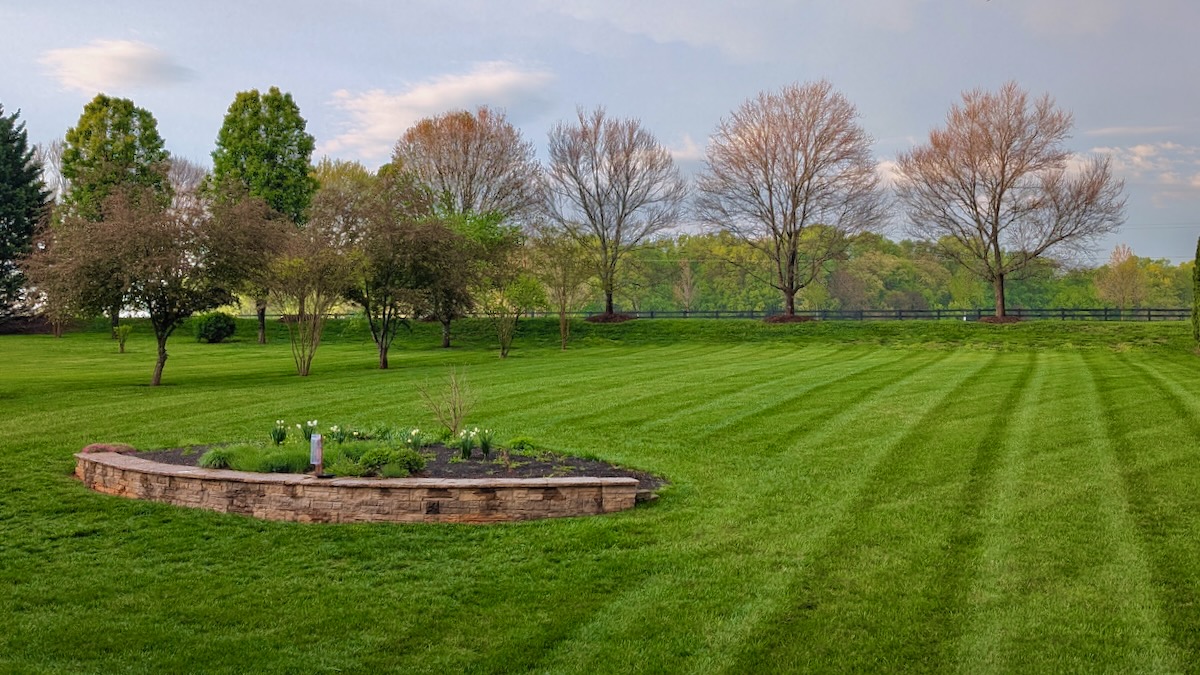
I do not remember homework being a burden during elementary school.  In fact I can remember going home most days and playing outside until dark and finishing my homework after dinner. We had a huge cedar tree, a cherry tree, a plum tree, a persimmon tree, and a row of new planted white pines. Mother also planted some Japanese Weeping Cherry trees. There is a picture of me standing by a newly planted cherry tree. In summer of 2023 I took a picture of the same trees over 67 years later. They are pretty gnarly at this point.

I often rode my bicycle to school. When I got older, I got to be a member of the safety patrol and eventually was the Captain in the sixth and seventh grades.  There were actually a couple of ways that I could get home from school.  One took me through the back of our church and the other took me by the general store which other than the dry cleaners and furniture store was the only commercial entity in our end of town.

There was a great mysterious grove of tall bamboo growing behind the general store in a marshy area.  It was a little scarier than the big woods where we often played.  It was scarier mostly because it was nearly impossible to penetrate the center of the bamboo grove because it grew so close together.

Towards the other end of Lewisville there was a feed mill, another general store, two gas stations, a hardware store, the fire department, and eventually what passed as a grocery store and a small snack bar which kept going out of business.

The hardware store was my favorite place in town because they sold fishing tackle.  I loved to fish and probably drove my mother crazy asking her to take my friend, Mike, and me fishing.  My Uncle Henry had fishing ponds ten to fifteen miles away in Yadkin County.  We eventually got to the age probably around ten that we could be left there.  We spent many a day fishing those ponds.  We caught everything from bream to bass.

I can remember learning how to run electrical current with two screw drivers through my mother’s flower beds so that the worms would crawl to the surface.  Fishing was my favorite thing to do, but there were few other things that Lewisville had to offer.  You could go watch softball games in the evening during the summer at the school for twenty-five cents.  There was small parade on the Fourth of July.  Other than that, you were on your own with your imagination.  We lived in the world of forts we built and dams that we created.  Eventually we got to the age that we could hunt. We would sometimes wander the woods with shotguns looking for squirrels, rabbits or quail.  In those long ago days, deer were hardly known in the area.

We might have ended up more committed hunters if deer had been around, but as it was, we did  better fishing so hunting mostly dropped off the radar. I think that by the time I was fourteen I had given up hunting.

When we were about eleven or twelve years old, a few of the parents got together and started taking us to a  Boy Scout troop in a nearby town.  I think there were five us, Mike, Skip, Russ, Cary, and me.  After a year, we splintered off and formed Troop 752 in Lewisville.

Troop 752 became the focus of most of what we did.  We were lucky to have a troop campground at the far end of town.  Often we would plan a trip on Thursday and spend Friday and Saturday nights in tents.  It was a great way to learn about camping and leadership.  I became a Patrol leader and then the Senior Patrol leader for the troop.

In the summers we enjoyed Camp Raven Knob and Lake Sobotta which happened to be named after my father who still was only in my life a Saturday once a month or so. Every time he visited Lewisville, he would stop at one of the general stores and get a pound of sliced boiled ham. I still associate boiled ham with him  I think it was in the Boy Scouts when they started father-son camp outs, that I first really missed having a father.

Still the Boy Scouts was a great organization to be part of in the fifties.  I became a member of the Order of the Arrow and the next level Brotherhood. I lacked only a couple of merit badges in chasing the Eagle Scout award until I got shipped away to military school.

But before military school, I had one more educational experience that had a huge impact on me.  I was selected to be one of thirty gifted  seventh grade students out of Forsyth County to go to a summer school program at the Graylyn Estate in Winston-Salem.  That summer they taught us how to type among other things and the next year I joined the other students in a special class at the Old Town School.  My mother had to drive me there every day before her work.  It was exciting being with people as smart or smarter than me.  I enjoyed the year immensely, but there was even more challenge in the wind.

My mother was an amazing lady, she worked harder to keep us going than could be imagined, and I never heard her complain.  She often worked so late that I had to start supper or fix something for myself.  How she managed the burden of forty minutes of driving morning and afternoon that year I was in the eighth grade, I will never know.  She was also always ready to a haul a car load of Boy Scouts anywhere.  She was a great driver, and she took us to many camping spots. Most of my friends in Scouts considered my mother a better driver than the men.  There was always competition to ride with her.

In September 1963, back when President Kennedy was touting hiking as good for your fitness, our troop decided to hike the 20.3 miles of Daniel Boone’s Wilderness Road through the Cumberland Gap. We did a number of five mile hikes to prepare us, but only our youth saved us.  We should have done a couple of ten mile hikes first.  We hiked all 20.3 miles in a day. I know that I was never that tired again until I farmed. I was lucky because instead of spending the night after the hike in a tent, mother hauled me back to a motel where I got to soak in a tub. It was the last spoiling that I would get for a while.

It had been decided that I needed more of a manly influence in my life, so my mother and father apparently picked McCallie School in Chattanooga, Tennessee to be the school where I would get my high school education. Not long after the Wilderness Road hike, I was in the car headed for Chattanooga, Tennessee.  The first trip to Chattanooga we picked absolutely the worst way to get there going all the way through Murphy and emerging into Tennessee at Ducktown.  That route took us through a mining area which had lost all vegetation. We quickly learned that it was best to go north into Virginia and then follow the valleys down to Chattanooga.

There are few pictures of me from this period.

Next Chapter, McCallie, “Honor, Truth, and Duty”