The Heat of Summer

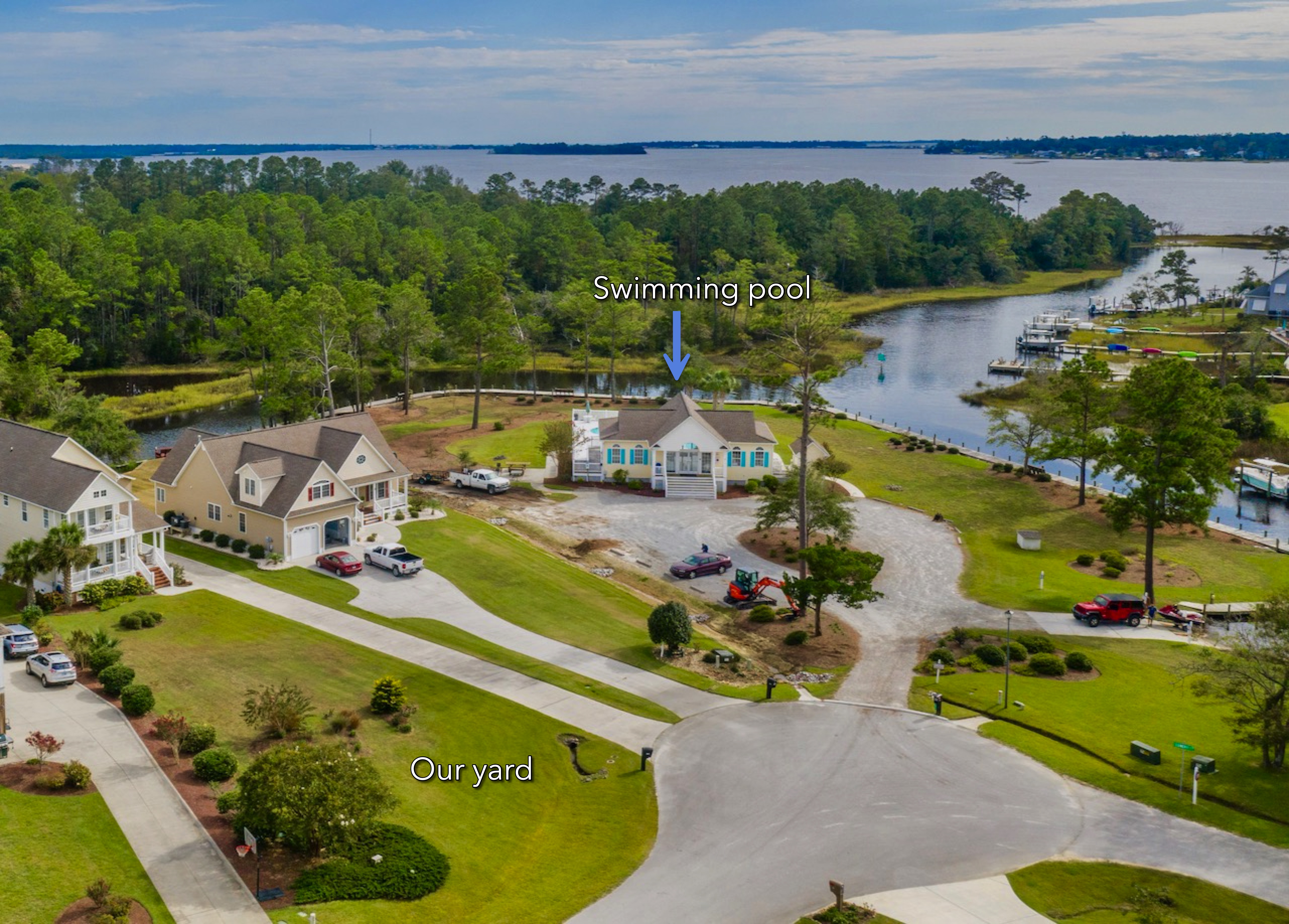
Our former home just off the White Oak River, near Swansboro, NC

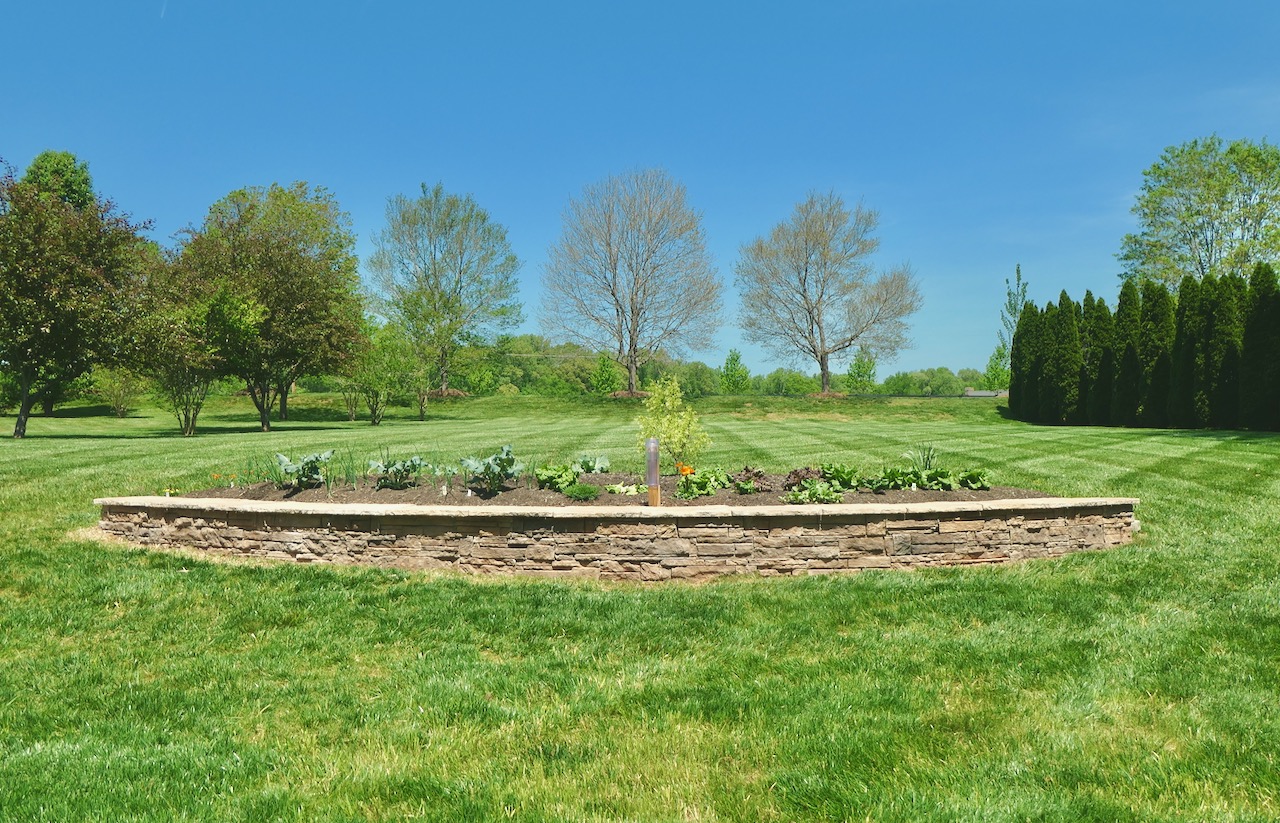
Some of you who aren’t used to heat will likely get a taste of it this summer. From 2006, until 2021, we lived on the North Carolina coast where heat is part of the life. Our house and large yard are pictured. Except for the last three years, I did all the mowing and trimming. Until like many grasses, the centipede we had thrives eat and can come close to needing to be mowed more than once a week. Any Bermuda grass absolutely needs more than weekly mowing. We had a nice patch of Bermuda in the middle of our yard.
Fortunately, heat has been part of my life for many years. There are few things we learned to do before we had air conditioning. Also the way we work has changed a little since the proliferation of heat pumps.
I grew in the South in the fifties. We did not get our first single room air conditioner until I was about ten years old. It cooled our living room and kitchen and that was about it. Still it was a miracle because it gave you a cool oasis where you could seek refuge on the hottest days. My bedroom was too far away to get any benefit so on really hot nights I would sneak into the living room and sleep on the sofa.
Heat was part of your life back then, shade trees were to be treasured and the deep dark woods were our friends during the day in summer. At night it was cool enough to play capture the flag in our yards.
The first thing you learn about heat when you grow up is that for outside work, you have to work early or late and find something else to do from noon to four or five pm.
When we moved back from Nova Scotia to the states in the late eighties, we spent our first two years in Maryland. I didn’t work outside much but I wore a suit everyday. It was a dash from the air-conditioned car to a similarly air-conditioned building. I could hardly wait to get home and switch to shorts.
By the time we got to our mountainside in SW Virginia, I was used to heat and I went back to mowing our yard. Seventeen years in Virginia was not enough serious heat training for our move to coastal North Carolina.
We lived on a coastal river in Carteret County which is mostly water. Heat did not come early to Carteret County because it took a while for all the water to warm up. When the real heat arrived in late June or July, it was serious heat. I did a lot of boating, hiking, and kayaking and I learned never to be far from a bottle of water. Sometimes I would freeze a bottle and carry in my kayaking tackle pack. It was a lifesaver a number of times.
The biggest challenge was mowing a big yard like ours in the heat. The best planned days sometimes get offtrack, and you end up mowing when you should be cooling in the air conditioning. There are things I learned in coastal North Carolina that are of value anywhere you have to face heat.
Our garage which had a good cross breeze when the back door was open was what I called a transition zone. It is never a good idea to charge out from a chilled house directly into 85F heat and start pushing a lawn mower. I alway puttered around in the garage until my body started getting accustomed to the heat. Then I would put my straw hat on and start mowing. You are always better pacing yourself than racing with yourself. When I felt myself getting really hot – the kind of hot that sends the message – ā€œWell you’ve done it, this is nearly as hot as your body can get without shutting down,ā€ I would head back to our porch or garage and request some ice water. I would always drink my water outside in the shade or in the garage but not in the sunshine. Real heat means that you have sweated so much your clothes are damp if not wet. Going inside and getting chilled in air conditions just makes it harder to finish your job.
Once you’re done, you cool off outside in shade but still in the heat. When you’re not longer about to incinerate, head inside to the shower.
On the NC coast the water lines are so shallow that in the summer, cold water is pretty warm. I could tell it was the peak of summer when I could shower without any hot water.
They say take off clothes to stay cool, but on the Carolina coast, our uniform ten months out of the year was shorts and t-shirts. I wore shorts mowing but pulled on some leg protectors when I switched over to weed eating.
There were times in early summer when I would take a quick shower, switch to bathing suit and head to pool. Until mid-July the pool water would be cool enough in the mornings to feel good.
By the end of July or early August, the outdoor swimming pools offered no cooling and were often empty. I have even heard of people dumping bags of ice in a pool in an attempt to cool it. I always figured it would take a chunk of an iceberg to really make a difference.
Most of the summer, you could count on the ocean retaining its cooling power. I used to joke that the one sure way to get the heat to drain out of your body was to head to ocean, get about waist-deep in the water, then turn around and face the shore while a wave hits you between the shoulder blades. Usually that will do the trick. Of course in the summer time by July, you should plan on wearing something on your feet to get across what can become very hot sand. Even with it only being ten minutes to the beach, it was easier to find an easy chair under a fan and relax after a shower.
The only good thing about heat at the coast is that remnants of it make for a very pleasant fall. I have many memories of kayaking in November and even December when the air was cool but the water kept you warm. Aside from the odd dangerous hurricane, fall is the best time to go to the beach.

Customer Delight

Our New Wall

Last fall we had a wall built. I was amazed at how well the company did their job. They had the right tools, everyone knew what to do and they were done in the three days and left no mess. I asked the owner if he ever did any advertising. He told me that he has never advertised. All his business comes from customers telling others about his great work. Who do you think will get my recommendation, the company that built the wall or the pressure washing company that never came back to finish the job?
Everyone one wants customers that are excited about their products and services. Executives want customers to be delighted but we also want them to tell others about how good our company is at delivering what we promise.
Few people write something like this.

From the day we arrived in Mocksville on Feb.1, 2021, every interaction that I have had with your employees has consistently exceeded my expectations.

David Sobotta

Certainly even fewer people write that about their Internet Service Provider like I did. When I see employees that have customer satisfaction in their DNA, it is well worth the effort to encourage companies to treasure those employees.
In our very wired world where customer interactions take place in a mix of places from online to telephone calls and in person, you have to build a culture that values customers as something more than revenue. That is a challenge when many of the people coming into the work force are not enamored with making a phone call or even talking to someone that they do not know. The challenge is to get new workers to see the big picture of how all their actions reflect on the company. Treating customers well can improve customer satisfaction but also the bottom line.
Back in the day of rotary and pay phones, it was not unusual to make a phone call and not be sure who was going to answer the call. You needed enough conversational skills to get through the person who answered the phone to the one who you really wanted to get on the phone. It is a skill that many are missing today.
I have trained fresh out of college interns to make effective calls. By coaching them and using a script the first few times, they can learn to do a great job. It is far better to jump with them into the fire as opposed to throwing them in the fire and assuming they will figure it out. I had friends in the technology world who were willing to be pretend customers. Do practice sales calls with someone you do not know is a great way to get on the right track. Some of my pretend customers were people who I had also trained years earlier.
Talking to customers is a learned behavior and when you get good at it, you want to continue doing it. It also helps to new employees who might be technology savvy get some perspective on how their customers view technology. After the Macintosh was introduced by Apple, I was fond of making sales trainees learn how to use and sale the Apple IIe. I often introduced the training by saying you cannot appreciate how easy it is to draw a circle on the Macintosh without figuring out how to do it on an Apple IIe. Today I would probably make sure sales people could get a picture from a real camera to a smartphone and explain what they have done.
With automated online signups, the opportunities for good phone calls are diminishing but they are still there and should not be ignored. Writing a good customer response email is also something that seems to falling out of favor to automated responses. I am not a fan of automated responses or customers never being able to reach a real person. The easiest way to lose a customer is a phone tree with no real people.
An enthusiastic customer is worth their weight in gold but how do you measure that and take into account the not so enthusiastic customers?

In 2003, Fred Reichheld, a partner at Bain & Company, created a new way of measuring how well an organization treats the people whose lives it affects—how well it generates relationships worthy of loyalty. He called that metric the Net Promoter ScoreSM, or NPSĀ®

https://www.netpromotersystem.com/about/

You may have never heard of NPS but it is likely that you have answered, ā€œOn a scale of 0 to 10, how likely are you to recommend our business to a friend or colleague?ā€ That is the classic NPS survey question and it is used to create a metric that shows what customers think about your company, its products and services. It allows companies to find under performing areas and fix them.
When it comes to customers that love companies, I feel fortunate to have spent a couple of decades at Apple. Apple would not be here today if its customers had not become extensions of its sales force. Customers loved the products so much, many were on a mission to convert friends and colleagues using MS/DOS and later Windows. However, one of the maxims about Apple for the balance of its early years was “love the products but hate doing business with the company.”
For many years at least in Higher Education, Apple’s revenue was sustained by a tiny higher education sales force that rarely numbered more than 125. They were responsible for institutional and individual sales all across the United States. The higher ed sales reps were so enthusiastic about their products and their customers that they held the whole thing together even when Apple ran through a set of horrible products or pulled stupid contractual stunts.
The Apple case makes it clear that in order to have delighted customers over the long run you need both enthusiastic customers and dedicated employees committed to their customers.
I worked at Webmail.us before it was purchased by Rackspace. Rackspace is mentioned as an example of the success of NPS in some publicity that I seen. Our goal at Webmail was to deliver fanatical customer support. I am pleased to see Rackspace still using the term and by the way, I love my Rackspace mail. Give me a few minutes and I will outline why.
We achieved fanatical customer support by aggressive training of sales and support people. We also gave them the resources and support to excel at their jobs. If you have ever had to change your MX records at your hosting provider or transfer your domain, you realize how complex a task that can be. We solved the problem by creating detailed step by step guides on the web that a new employee could click on and read to a customer when the need arose. We did the same thing for customers, we had guides for Rackspace email to work with every conceivable client. We were aggressive about testing on every platform.
Today I was researching some Internet Service Provider pricing. As is often the case I ran into some web pages that did not work properly. I had one that I tried on two browsers on a Mac and two on Windows before getting it to work on Chrome on my Pixel 6 Pro. Can you imagine how dissatisfied a customer experiencing that would be?
I did a stint working the retail floor in the early days of the computer revolution. I learned early that it wasn’t really the product features that would complete the sale, it was what the product would do for the customer that would get them to buy it.
Our challenge with many of the new sales and support people is to get them to understand they need to convey an understanding of what the product can do and how buying it from their company will make the product even more valuable.
I go back to my post on QR codes being required to register at North Carolina DMV offices. We need to explain key technologies like QR codes to people walking out the door with new smartphones or they won’t be very happy with their expensive smartphones or with the company that sold them when they try to get their licenses renewed. It only takes a couple minutes to make sure someone knows how to use a QR code. It might well be the gem of knowledge that keeps the customer excited about the experience with your company.
Apple’s Genius Bar was a brilliant idea. More companies need to embrace it. I can almost guarantee it will improve your NPS. Imagine a genius bar for smartphones. It would be swamped with customers eager to be convinced your company really understands their products.

Haying Stays In Your Blood

Hayfield
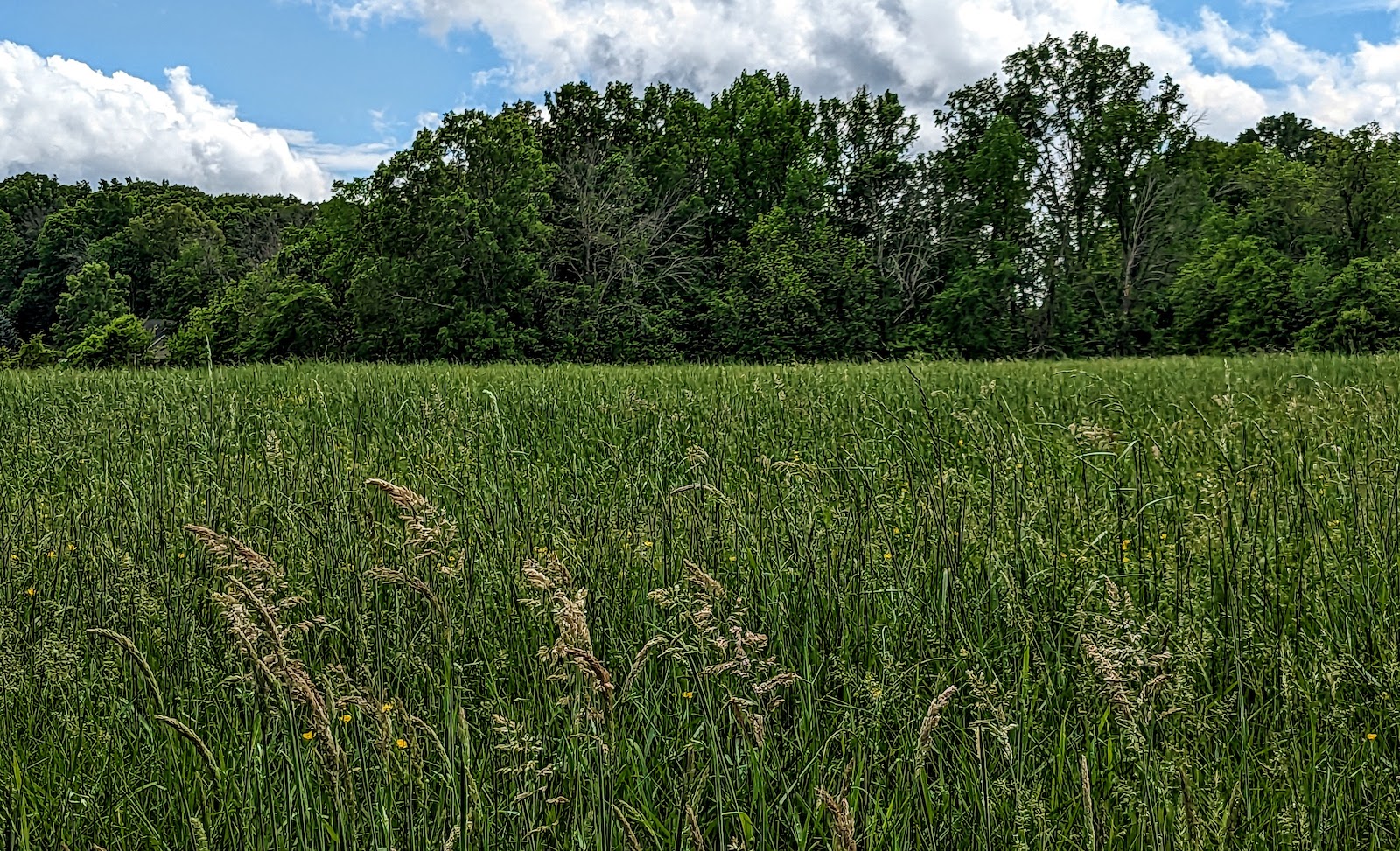
Hayfield Near Farmington, North Carolina, April 22, 2023

Of the over fifty years that I have worked since I graduated college, only a little over a decade was spent farming. I did grow up in North Carolina in the fifties and sixties when everyone we knew had gardens, some had chickens, and even a few had a milk cow. It was not unusual to see hog killings in the fall and to receive some fresh country sausage as a gift.

The land was what gave life to us all, and where we go when life is gone. The land was at the center of all, and how could understand anything without first being on the land?

The Road to My Country

I felt that I had to go back to land. I was a little shellshocked after the sixties, four years in a military school and another four in the funny lights of Cambridge. I bought an old farm in Nova Scotia the summer that I graduated from Harvard. The skies in Nova Scotia were like the ones I remembered in my youth.
The urge to work the soil was strong even though I did not grow up on a farm. The immersion course we got in farming was intense but somehow we thrived for over a decade. We might have stayed on the farm if interest rates had not hit twenty percent in the early eighties and there were better local opportunities for our children. We dispersed our cattle in the fall of 1982 and sold the farm three years later after I spent a couple of years working in the city.

Farming has stayed with me all these years, even during my years in technology. It was only a year or two ago when I was driving from our home at the coast through the Virginia Mountains to headquarters when I saw a field of grass down. It was well on its way to being ready to be becoming hay. I had to stop, roll down the windows and enjoy the smells and remember all the good memories.
It was not unusual for our ā€œteam,ā€ Harvey and I to put up sixty tons of hay in a good day. Harvey was in his sixties when I bought his farm which he had farmed with horses. We sometimes cut hay with two nine-foot mower conditioners. The big fields Harvey would rake with our twenty-one foot rake and the small fields with a ten-foot rake. I would bale with the big Vermeer baler and one of the 105 HP International tractors.
You could start cutting hay in the morning while the dew was still on it. Raking the hay before noon was okay, but I rarely started baling the hay until the afternoon. Large windrows that the tractor could barely straddle helped me churn out a nearly 2,000 pound bale every five to ten minutes depending on how much turning had to be done. When the hay was rolled up, we left it in the field until we had time to haul it back to the farm in the fall. Our hay farm was a couple of miles from where we kept the cows. We also cut hay all around the area wherever we could strike a deal with the owners. Before our children came, my wife even used to rake hay.

On a good day, making hay was something that gave you a feeling of accomplishment. A good crop of hay started with clearing the field of brush and rocks, applying lime, then working the ground, planting the grass seed in an oat cover crop, and sometimes fertilizing the fields in the spring. It doesn’t sound like much but it was lots of back-breaking work and sweat.

There were bad days making hay. Our mowers in those days had cutter bars with blades riveted on them. If you hit a rock and broke a blade, you had to stop and replace it. There are few things dirtier that replacing a blade on a mower conditioner cutter bar that has been collecting bugs, seeds, and dust for ten acres on its platform. If you didn’t itch from something that got on you, just remembering all the bugs would make you itch. The worst thing is when the equipment broke when you had hay ready to bale and wet weather was on the way. You try to forget those days. Getting hay that was ready to be baled dry after it was rained on is not a lot of fun.

There were some great memories from those haying seasons. Sometimes I would stop for lunch and my wife and the kids would show up with a real lunch. While my wife and I ate lunch, the kids would pick red raspberries on the rock piles. There were no snakes so it was as safe as it could be. Few of the raspberries they picked made it to us but they were so plentiful you could pick all that you wanted in a few minutes. The hay farm was high on a ridge and you could see for miles. There were no places any nicer on a summer day in the hardwood hills of New Brunswick.

It should be no surprise that I stopped recently to look at a field of grass (pictured above) that needed cutting. It is the last week of April here in North Carolina. There will be no thoughts other than my dreams of cutting hay in New Brunswick, Canada for another couple of months.
If I am lucky in the next two to three weeks, I will get to smell some curing hay in our rural area. I can hardly wait because it is still in my blood.

Love Where You Are Planted

Our Backyard Garden

I got sent off to boarding school at the ripe old age of fourteen. It was six hours from home and was a military school. I was pretty miserable for a few months. Then it dawned on me that there will be times in your life that you will have little control of where you are. What you can control is how you choose to react to the situation and your location.
Four years later when I got in my car and drove the twelve hours by myself to Harvard in Cambridge, Massachusetts, I was determined to make the best of it. I had never been there, but I planned to push my limits.
As a married adult, I have lived in eight different homes in two provinces and three states. At least one was a little insular but we managed to find good people in all places.
From 2006 until 2021, we had a home on the North Carolina coast. It was on the water and had stunning views. I am a photographer so I was in paradise with all the water and big birds. I had a wonderful time. When we got ready to move, our friends started asking what beauty could we possibly find to compare all the scenery at the coast.
I simply smiled and said I am confident that there will be lots of things to capture with my cameras. That has turned out to be the cast.
When you have lived in a lot of places, you probably figure out quickly that there are no perfect places for those us not in the ranks of the super rich. We bought our current house during the pandemic-fueled housing boom. We are very pleased that it has turned out even better than we expected.
While I don’t have great egrets, great blue herons and otters at my beck and call, I do have beautiful forest and fields that remind me of where I grew up.
That is no real surprise because we moved back to the area near where my mother’s family settled in 1790. When I was wandering the hills and forests of the area in the fifties, I was living on Styers Street not far from Styers Ferry Road which happened to be named for my great grandfather who ran a ferry across the Yadkin River. So this is home, but it is more than that.
This is one of few rural areas in North Carolina where you have modern services and are within a few minutes of about everything that your consumer heart can imagine. On top of that we are blessed with farmers’ markets all through the summer.
After years of tolerating faux beach grass, we are now living where our yards don’t feel squishy when you step in them. We have a real backyard that is unlikely to ever flood. It is big enough for us to have a small garden.
Settling into an area which was not far from where I grew up is one of the most pleasant moves that I have ever made. I am just a few minutes from one of my grade school fishing buddies.
I laugh when some of my northern friends talk about North Carolina’s humidity. The thing is when we moved from the coast to the Piedmont, we took a serious step down in humidity. Summer humidity is very real across the South, but there are degrees of it and the marshes along the coast can feel like you’re being swallowed by the humidity.
Here in the Piedmont there is fall and spring. If you have ever lived on the coast, you know that both fall and spring are very subtle. Here in the Piedmont they are a riot of colors.
I wonder if I have enough time left to try living in the desert?

We Find Our Farm

An aerial photo which a super-imposed elevation of our old farm with picture of the house, a barn, and some cattle.
Tay Ridge Angus Aerial Photo

While we were still working on our old farm house the winter of 1973-74, we were also trying to find a place to move where we could have more success farming. When I look back on it, I am amazed that we found a place which was forgiving enough for us to take what little we knew about farming and have a run at being successful. Still I wanted to work the soil.
We looked in several places in Nova Scotia and Cape Breton Island without much success. We took a trip to New Brunswick from St. Croix Cove to deliver Sophie, the goat, and to lend a hand moving to my college roommate and his wife. Mostly my job was to upgrade the electrical panel in the old house that they had purchased.
The trip there was quite an adventure, the Saint John River was flooding and as I have said many times, the only way we made it through the flooded roads was staying in the wake of a tractor trailer that was in front of us on the Trans Canada highway.
This was well before cellphones and the Internet so you might say that we were flying blind but we got there, delivered Sophie, and on the first weekend in May after surviving a night in my roommate’s newly purchased and almost flooded old house, we had a look at a nearby farm that would become Tay Ridge Angus.
It was a spur of the moment decision to look at farm near where my college roommate had found his old farm. It was the first weekend in May. There was still snow on the ground. A rational person would have said snow in May, no way.
My wife and I have talked about it a number of times, but we were hardly on the farm when it was clear that it was love at first sight. The farm had a lot of sheltered areas where cattle could be kept in the woods during the winter. There were plenty of streams and brooks for water, and the land matched the soils that I hoped to farm.
We finally came to an agreement with owner that carved off a couple of acres on the front of the farm so he could build a new house and have a garden spot.
It would take a few years, but Harvey, the previous owner, would become the main help on my farm which he had farmed mostly with horse-drawn equipment. He would transition from raking with a converted horse-drawn rake to a double one that was over twenty feet wide. It made the Vermeer round baler that I built the farm around very happy.
After one winter with a few cows housed in an old barn, I transitioned to cattle running in the woods and calves born on the snow. It turned out to be a wise decision. In the seven years that we farmed there, we never had the vet on the farm. Even Harvey came to believe that cattle were healthier outside and that in spite of what the Dept. of Agriculture said, round bale hay worked for them.
In hind sight, there are a lot of things I might have done differently, the first being to have kept our herd smaller. A lot of things and cows are one of them, you have to learn the hard way, having just a few cows is a hard lesson to learn. We eventually got to two hundred head. It was too much work and required too much equipment. However, that was the dynamics of farming then, get big or get out. The second is that I would have tried harder to get a government-backed 2% loan. We tried once and were turned down.
The twenty per cent interest rates on our operating loan killed us while our neighbors with 2% loans did just fine. We could have built a third bard to store our hay and save a lot of waste. However, with no government loans, we crunched the numbers, weighed the options and decided going to work in town was the better of the two. We had a very successful dispersal sale. We sold our cattle in the fall of 1981. I went to work helping people market their cattle but quickly moved to selling computers in the fall of 1982 and by the fall of 1984, I was working for Apple which turned out to be a career of nearly twenty years which came with a good dose of magic before my wings melted.
Still, I would love to relive those years on the farm with the knowledge and skills that I have gotten since then. However, I doubt the old body would hold up to all the work that a farm, even a modern one, requires.

We Should Have Stayed Angry About Computers

New Mac Studio on my desk to illustrate the purchase of a new computer
New Mac Studio, my favorite mouse, my LaCie SSD work backup drive with my Cherry keyboard

I bought a new Mac Studio just before Christmas and just wrote an article about getting my wife a new Mac Book Air. There was a time not too long ago that people were passionate about technology. Just after I left Apple, an article on my Applepeels blog could generate twenty thousand or more hits in less than twenty-four hours.

If I said something negative about Apple, even the slightest criticism, I would get comments that would make you hair stand on end. If I praised anything that Apple did the Windows’ diehards would attack with the same fervor as the Mac zealots. When I wrote for ReadWrite just eleven years ago, I had people write horrendous things about me when I hinted that Apple was anything but perfect.

Now people seem to have gotten over technology to the point that no one cares what kind of computer you use or even what type of smartphone you have. I suspect people still line up for the latest iPhones but no one has attacked me personally for using a Pixel Pro 6. I suspect announcing that I am buying some new Macs will bring a yawn if anything.

It seems all the anger and partisan fighting is now reserved for politics and life choices. I wish we had stuck with fighting over technology.

Somehow it is easier to get over someone attacking my computer choice than someone attacking me because I believe that we should not ban books or the teaching of real history.

When you attacked my computer, well it was a computer. When you attack my thoughts about books, you’re attacking me and it makes it difficult to get along with you.

For almost twenty years, I worked at Apple and many of my relatives and even friends chose to use the Windows platform. I even recommended that some of them buy Windows machines because there was a time when most people needed some support when they bought a computer. There were just not enough Mac people around to provide even the most basic question and answers on using a Mac but there always seemed to a self-designated Windows expert not far away.

During that all those year- decades, not a single person stopped speaking to me because I used a Mac. Today, there are people who won’t speak to me because I have said our former president should be held accountable for his actions which I find treasonous.

The funny thing is that computers are truly at the heart of our lives in 2023, both individually and nationally. I remain convinced that we do not pay enough attention to computer security at home, in business and especially in government. When I was director of federal sales for Apple, I practically had to drag Avie Tevanian, Apple’s head of software, to a July 2004, Congressional Hearing on computer security.

Today, Apple’s focus appears to have changed and security is something they care about enough to make it a priority on their products. For that reason, Tim Cook, who was briefly my boss, should be proud that I bought a Mac Studio (I have been nagging for this product for years) and even more excited that I moved my wife’s computing to a MacBook Air just because of security.

For many years, I argued to the federal government that having all of our computing resources on one operating system, running on a single processor family was a horrendous idea. It still is and diversity in computing is just as important today as it was in 2004. I consider my self a computer expert and I weighed the odds and went with a Mac because I thought it was more secure.

So next time you want to charge after someone’s political views, take a time out and consider the question, ā€œWhat would happen if someone got all my passwords?ā€ Think about how best to solve that question and you might not have as much time trying to control how someone else acts or thinks or does with their body. I can assure you that not one among us is going to have a good day if hackers get your info.

If you are interested enough to want to know more about my recent Mac purchases and more of the history behind it, this is the link to the post.

Local Adjacent Hippies

One of Lexington’s Many Decorative Pigs

Our daughter recently chose North Carolina’s Piedmont for her wedding. I was tasked with writing up some interesting nearby places.

Our families have a long history in the area.  My mother’s family, the Styers show up on the 1790 census.  Glenda’s family, Snodys and the Haymores, have been in the area so long, my family is consider newcomers. However, my great grandfather ran Styers Ferry across the Yadkin River in the days before bridges and there is even a road in nearby Forsyth County called Styers Ferry Road.  I also grew up in the area and lived on Styers Street. My childhood home there is now a restaurant which is probably not a coincidence considering how good a cook my mother was.

North Carolina’s Piedmont is very unique among the places we have lived. It is a vibrant, growing place that is still blessed with lots of small farmers and plenty of farmers’ markets.  Small farmers are an endangered species in these days of combines with 50ft headers.

There are restaurants here that are closely connected to the land and the farmers who care for it.  You do not have to explain why homegrown tomatoes are better. People here know how to cook food from scratch- from beans to homemade jams. They also know everything you need to know and some things you don’t want to know about using all of a pig.

This is the land of country sausage and country hams, and of course true pit cooked pork barbecue.

We know farmers whose families have been farming the same land for five generations. Food is important here and it is how North Carolina welcomes its guests and keeps them coming back.  We can teach you all you need to know about pork, fried chicken,  chicken pies -Moravian or otherwise, pimento cheese and even cobblers or sonkers. 

When our daughter asked us to research things for visitors to do,  the obvious place to look was nearby Lexington, North Carolina. It is around fifteen minutes from the Finch House and has plenty to entertain visitors. It is also the home of the Holt House which some of you will visit.  Most importantly, Lexington is the barbecue capital of North Carolina and hence the world.  That is settled fact.

As the holidays were getting in gear in December, we decided to see what we could find to entertain us in Lexington for an afternoon.  Obviously, we first had to decide where to eat. I found  a nice place, Rustic Roots,  in a building that used to house an old hotel on Main Street.  We arrived just before the lunch rush.  I ordered the BLT and Glenda got the lunch special, a chicken pot pie.  My BLT was delicious with hand-sliced sourdough bread and a little twist with melted cheese on the ham.  It was accompanied by homemade chips. Glenda’s pot pie was obviously not from a  sous vide bag.  It was topped with some beautiful puff pastry.

Next we wandered down to Bruce’s Tuxedos, the largest supplier of tuxedos in the region.  I was hoping for some advice on where to get a suit for Erin’s and Tim’s wedding.  True to my hippy-adjacent roots (I had to look it up), I do not own a suit at least yet. Bruce gave me a great recommendation but it was in Winston-Salem, thirty minutes away.  Exploring Lexington took priority.

Next, my other persona, that of being a cattleman running two hundred  head of Angus cattle in New Brunswick,  caused us to head down the block to visit the Butcher Block. I had read of their high quality meat and wanted to see the place in person.  While I have made and eaten a few soy burgers, I still favor a good steak on my plate at least once a quarter.

It turns out that the Butcher Block goes well beyond great meat.  They have a wonderful selection of oysters, and other interesting items like pineapple flavored rum cake.  They get fresh grouper and flounder from the coast on Fridays.  I had a great time and brought home some really nice pork chops with a test batch of house bacon.  I expect to be a regular customer.

Next we wandered back by the car to stick the meat in a cooler and visited the Conrad Hinkle Food Market just across from the old Courthouse which is now a free local museum.  Conrad Hinkle sells a lot of their brand pimento chesse all across the Triad (Winston-Salem, High Point, Greensboro). Their store is an old-fashioned grocery store and has a mother lode of  their own pimento cheese, but please don’t buy any. I would be happy to teach you how to make your own and it will be twice as good as what you can buy there.  I was tempted to buy our daughter a can of spam at Conrad Hinkle, but she has yet to eat the one I gave her for a Christmas present in 2005. Without a doubt, it is still “safe” to eat.

After the grocery store which has the smallest shopping carts that I have ever seen, we wandered over to the Candy Factory.  It was crowded with holiday shoppers and we were a little overwhelmed.  There was no shortage of candy had we desired any.  Next trip we plan to go farther down Main Street and see the actual factory where the famous red bird mints are made. My addiction to those mints leads me to try to not buy more than a handful at a time.

After the over stimulation from the candy store, we headed to the visitors center back by the Courthouse.  Mostly, we needed to find some public restrooms since we had been hiking around the same few blocks for over three hours.  Beyond clean historic restrooms, we also got lots of recommendations about where we should eat next time and the things that we missed during this visit. 

Lexington has an amazing number of interesting restaurants, small shops and boutiques. There is a coffee shop, a bookstore, a bagel shop, and even an Army-Navy store which appears to have the jeans’ market cornered.  I don’t think anyone will be disappointed it they park on Main Street in Lexington near the old Court House, find something to eat, and wander around for a while.  There is plenty to choose from with just a short walk even by our aging standards.

According to the ladies at the visitors center the Hampton Inn in Lexington is the newest hotel in the area and it is only 15 minutes from the wedding venue. If you are having trouble finding a spot, you might want to consider it.

I was planning on getting barbecue from Smiley’s for dinner after our trip.  After some testing a year ago, Smiley’s had emerged as one of my favorite barbecue destinations. One of the welcome center ladies told me that Smiley’s had been torn down because of a road construction project.  Losing one barbecue restaurant in Lexington is not a problem.  The ladies gave us a list of ten others.  We picked the closest one, The Barbecue Center.   We brought home a great dinner, coleslaw, potato salad with some of the freshest buns on earth.

Here is a link to pictures I took during our afternoon in Lexington.

Thirty minutes after leaving Lexington, I was fitted for my suit for the wedding and headed back to Mocksville where we live.  Now about that hippy-adjacent comment.  Yes, I went back to the land, but I always preferred working the land with a big green John Deere tractor or a huge red  International one and that was a long time ago. I will admit that Erin had two Labrador retrievers as baby sitters occasionally. That might explain a few things.

I have worn my fair share of suits walking through DC humidity but that also was a couple of decades ago. The moths got my last DC suit. Rumors that I planted them are not true. My daughter will likely admit that I am closer to a geek with dirty fingers from gardening than anything else but that is a very long story. If you need a really fast fiber connection for work while in the area, stop by Mocksville. We’re likely faster than what you have up north.

Room to Dream

The old hayfield in St. Croix Cove, Nova Scotia

Except for boarding school and college, I have always lived with enough space for my imagination to roam. I grew up in Lewisville, NC, with a wonderful back yard with woods that stretched farther than I could roam.

I have written of finally finding a real backyard for my somewhat rural life. I have had much wilder backyards in my earlier years. They ranged from the field of buttercups behind our old farm house in St. Croix Cove, Nova Scotia to miles of woods in New Brunswick and Virginia to the expanses of marshes on the NC Coast. Living on the edge with wilderness or near wilderness on my doorstep has enriched my life and that of my family.

The Lewisville backyard of my youth remains entrenched in my mind. The memories of the great, long-gone, cedar tree that shaded our picnic table are still there. The picnic table was my first office. When we were really young we were able to play baseball there. Home plate was in front of the plum and cherry trees. If you hit a ball and it ended up in the fig bush, it was a home run. Until it interfered with the septic system, the mimosa tree in the front yard was a great climbing tree. The yard was just a base from which to operate. The woods that stretched for a few miles down to the Yadkin River bottomlands were the real attraction for those us steeped in the lore of Daniel Boone and Davy Crockett.

We played in the streams, built dams where we could and climbed over the old boulders. The woods were a cool retreat in the summer and as we got older, a place to hunt squirrels.

While I felt marooned from the out of doors when I was at military school during my high school years, it was just the opposite in college. Maine was at our doorstep. When I visited LL Beans in the fall of 1967, it was a tiny place and one room still had a wood stove. Maine led to Nova Scotia, and Nova Scotia changed my life.

That field of buttercups on the waterlogged soil of my first farm was a great introduction to real wilderness. Only getting married kept me from moving to Newfoundland. Instead I ended up in the relatively civilized hardwood hills north of Fredericton, New Brunswick on an old two hundred acre farm. It was a good place to get comfortable with wilderness, understand its charms, and appreciate its challenges.

My dream of farming started in Nova Scotia and was realized in New Brunswick where we build a cattle operation that had two hundred head of red and black Angus at one time. We built barns and learned to put up incredible amounts of hay while figuring out how to raise cattle in the woods. It was harsh environment once hitting minus forty and a couple of times approaching one hundred degrees with plenty of black flies and black bears to keep you alert. We were barely beyond party lines for a telephone so there not even dreams of cell phones. If you were a mile back in the woods alone, you were on your own.

I had dreamed of farming and built the farm of my dreams. It was a hard life with no vacations but with great neighbors living together in place that could push you to your limits. Eventually the dreams were no longer of farming but not because farming was too hard. It was interest rates of twenty percent that got us. It is hard to even imagine paying those rates today, but we did until we dispersed our cattle herd. Then the dreams turned to a better, perhaps easier life and more opportunities for our children.

We ended up in Halifax, Nova, on a tiny city lot. I had no time to dream because I was working for Apple then. It was twelve years after leaving the farm before I got time and space to dream again. Finding the space was driven by a new Labrador puppy, named Chester. Chester needed a lot of exercise and we both quickly grew tired of two and three mile walks in the neighborhood. We wandered into the woods and found an old road to a mountainside homestead. I met the owner of the land on a hike. He was elderly but eager to see someone clean up the old road. For over a decade Chester and I worked and wandered the trails on the mountainside.

Then one day the vets said that it was Chester’s time to cross over and he was gone. The mountainside and the trails were never the same without Chester so next I dreamed of the North Carolina coast which I had wandered as a college student. In 2006, we bought a home in the marshes along the White Oak River three miles from Bogue Sound and Swansboro.

The marsh turned out to be a good place to dream especially when aided by some almost wild stretches of sand over at the Point on Emerald Isle. There were wide rivers to kayak, inlets and near shore waters to explore in our skiff. The coast also gives you a very personal look at the power that nature can throw at you when the elements are right. We endured the eighty-five mile per hour winds of Irene and learned that there are moments like Florence when retreat is the safest option. We heeded the mandatory evacuation orders for Florence and came back to devastation, not at our home, but to many of our friends’ homes. Finally three years later after fifteen years of walking the sands and marshes, I began dreaming of those Piedmont woods of my youth.

In February 2021, we moved to Davie County, NC, about twenty-five minutes from where I grew up. The good news is that the backyard is plenty big enough for dreams and I am old enough that I can easily justify having someone mow it for me. I can still dream but I am no longer mowing my way through life while dreaming.

Keeping Updated Just Enough to Stifle Giggles

The back panel on our 2021 LG TV

When your children grow up and leave the house, you can forget about the times when you are just a momentary embarrassment to them and move to living on the edge of potentially being a permanent embarrassment.

It can be how you dress or drive, what foods you like or what television shows you watch. Most likely in our technology-rich society, we are looked down upon because we appear to be missing all the technology trends that have been declared to be essential to modern life.

Being older we are just not like the people with whom they spend most of their lives. It is understandably hard for them to slow down enough to figure out that we are not doing too badly for people who started out on party lines with rotary dial phones and no television.

Modern life is not kind to those who would prefer to ignore technology. NC’s DMV is now requiring you to understand QR codes in order to check in at their offices. Increasingly businesses would prefer not to handle cash.

People now want to pay you with apps like Zelle. Our teenage granddaughter would much prefer that we deposit money in her Step account that she can use like a credit card in stead of giving her cash. She has even given me cash and asked to deposit it for her in her Step account. My grown son won’t shop at Harris-Teeter because they do not take smartphone payments. Cash seems to be a burden.

You can try living by the old adage, “if it ain’t broke, don’t fix it,” but if you read about the tech refresh that we did in 2017, you will find that waiting too long to upgrade can create even more challenges than ignoring the pressure to upgrade. I love technology, but you really have to stay on top of it or both it and your children will laugh at you.

In 2006, we spent a lot of money for fancy wall-mounted Sony HD televisions throughout our beach house. Apparently, we were not on top of things enough to know that screen technology changes regularly and we should just get a new television with a fancier screen every two or three years. You know you are behind the technology curve when your children give you money earmarked for a new TV.

Technology has always been a wild ride but the rider is getting faster. The first amazing technology that I remember coming into my life was the transistor radio around 1955. It was more important to me than our black and white TV that came later.

If you fast forward twenty-seven years to 1982, my wife and I have three children of our own and one day after work I bring home a Panasonic VHS VCR. It cost roughly $650 and while there were still concerns that Sony’s Betamax might win the VCR war, I was reasonably convinced that VHS would deliver the entertainment that we wanted in our two channel TV rural world. VHS tapes were part of our lives at least through the ballet recitals we attended in the mid-nineties.

Twenty-four years after that first VCR in 2006, we were living in a home wired so that you can plug an iPod into the whole-home stereo system which included a VHS tape player and a six disc CD/DVD player that fed a wall mounted HD Sony flat panel TV.

By 2017, most of that technology was obsolete just like the Sony television that had come before it and taken two men to move. After our tech refresh in 2018, the closest thing to a VHS player left in our technology closet thirty-five years after buying our first VCR was a Blueray Disk player which cost $49 at Best Buy.

Four years after that in 2022, we are living in another home. This one has 2 Gig fiber to the home (FTTH) connectivity. While there might be some DVDs and VCR tapes in boxes, we would have to dig around to find them. I do have a plug in DVD drive for a computer. It is as close as we could get to seeing them. We still have a wireless home phone system, but the connection is VoIP (voice over Internet protocol) that is delivered by our fiber connection. We mostly use our 5G Google Pixel phones but keep the VoIP line so I can have a second line in my office.

There are unused coax cables in our walls because our new in 2021 home was never hooked up to cable services. In addition to our television being connected to the Internet with an Ethernet cable, we also have two upstairs offices which are connected by Ethernet to our router. The fiber that comes to our house runs all the way to the optical network terminator (ONT) on the same table as our TV. There are close to thirty network devices on our network including our garage door. The oldest technology that we have is the FireTV Cube that is a couple of years old and which provides the streaming channels for our television. We cut the cord in February 2021, and have never looked back.

For a short moment we riding the crest of the technology wave (as long as the kids don’t ride in our 2005 cars) but without diligence (and probably a new car), it will crash right on top of us and once again upend our world.

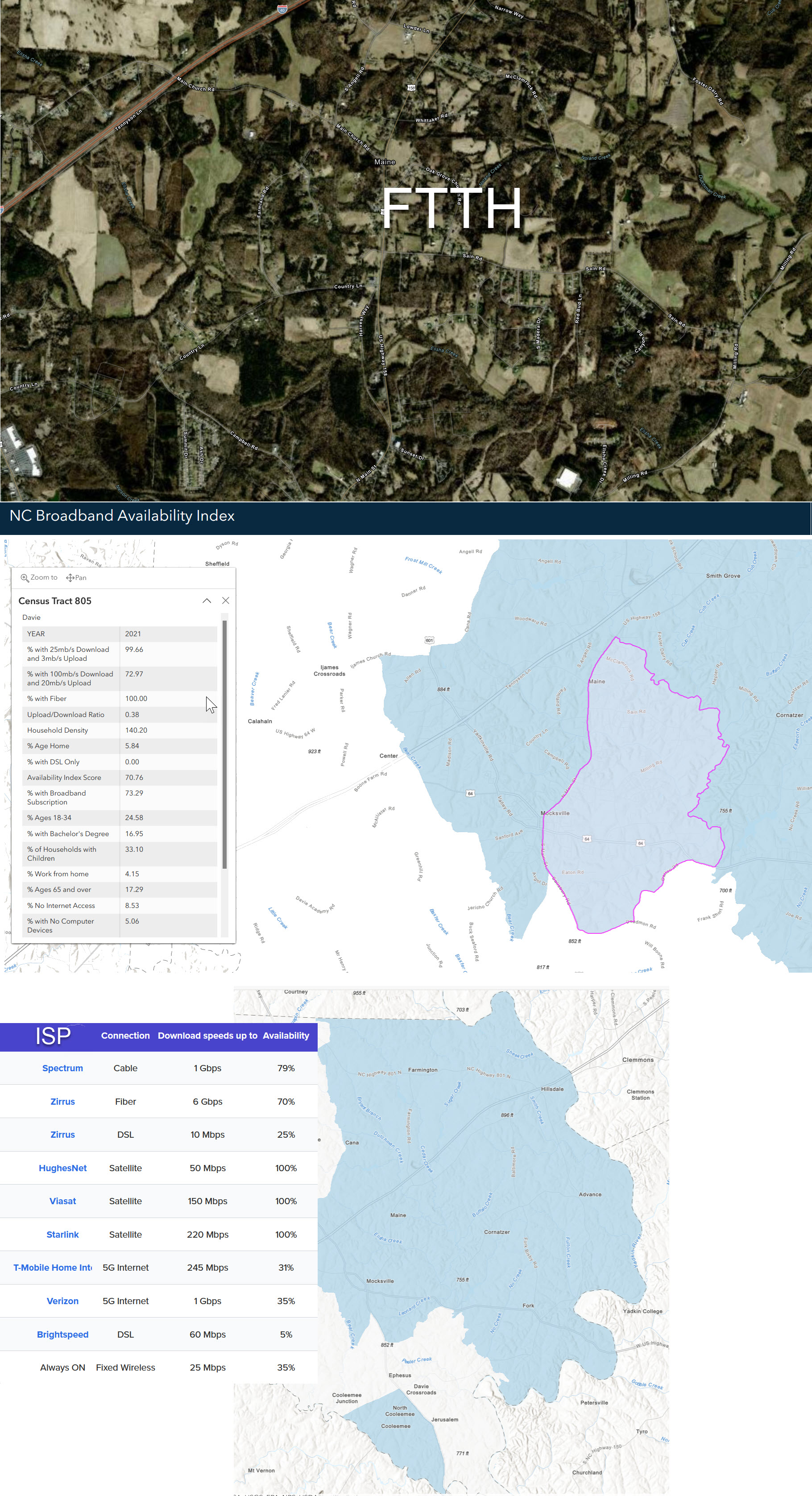
Interested in learning if fiber to the home (FTTH) is for you? Read this post of mine, Choose The Right Technology For The Decade.

Apple No Longer Just Works

Actually, I am a patient person when it comes to technology. It took me two years before I labelled my 2010 iMac, my first iLemon.  Even then I gave Apple’s executive relations team a chance to make it better. When they failed, my son, who passed his Apple service certification before he graduated from college, helped me fix it by installing a SSD drive.

I said this back in 2012, just over ten years ago,

To many people Apple is a premium product on par with the best computers that are out there. Certainly with few exceptions, you end up paying more for an Apple product than you might for a product from another manufacturer. If like many Americans you live in a metro area, your Apple purchase gives you access to an Apple store and what can be for many people a very satisfying support infrastructure.

Apple products are even more premium now than they were ten years ago. We still use Macs in our company, WideOpen Networks, where I am vice president of sales. Even though I am in much more of a metro area than when I made the comment ten years ago, an Apple Store is still almost an hour away from us. Still that drive is an hour and an half shorter than the nearest one to our corporate office.

I could easily have given up on Apple products when they showed me the door eighteen years ago when my team had just finished another unbelievable year selling Apple products to the largest enterprise customer in the world with perhaps the smallest sales force ever to tackle the US government. I was director of federal sales and my team of just over twenty people tripled sales there year and year.

However, I am a committed Apple user. I started on an Apple II+ and began my technology career selling Apple products over forty years ago. I still appreciate how Apple has changed computing for all of us, but they are not perfect and they seem to be reluctant to use their mountain of cash to give us better products, warranties or services. The components in Apple’sĀ  computers sometimes are no better than what we get in other products andĀ  to make you feel good about that Apple has one of the most expensive extended warranties in the business.

Even so when we moved from North Carolina’s Crystal Coast, I took the step of upgrading the Macs that I was using. We were getting fiber to the house and I felt like I needed a backup machine for my I5 MacBook Pro. I went with the new-at-the-time MacMini with the M1 processor and 16GBs of RAM.

I am glad that I kept the I5 MacBook Pro as my main work machine. The M1 MacMini is fond of locking up. I keep hoping that one of the software upgrades will fix things. I am beginning to think the real problem is Apple just not caring. I know that conventional wisdom says to never upgrade to the first release of Apple’s operating system software, but I was having enough problems that I thought it was worth a shot. After all I am never shy about upgrading my Windows and Linux machines as soon as I can.

Today, I am running Ventura 13.0 on an eighteen-month-old MacMini with 16GBs of RAM. It is hooked to my internal network and a rock solid NAS with what I would callĀ a bullet proof 2GB fiber connectionĀ where the speed at any of my desktops rarely drops below 940 Mbps/940 Mbps. There is nothing but Category 6 Ethernet cabling from the Calix Gigaspire router all through my home andĀ  office. I have five other computers in the office including that old resurrected iMac from 2010 and a Lenovo Yoga from this summer running Windows 11 and a much older Lenovo I5 running Ubuntu Linux.

One morning recently I tried adding a simple contract to my Highrise CRM using Safari. When I went to add the picture from a network mounted volume, it froze three different times under different scenarios. Finally, I brought up Chrome and everything worked fine.

So the question is- how can Google make a better browser for the Mac than Apple’s own Safari? Google makes Chrome for all sorts of platforms and it generally works. You would think that when you release a major operating system update like Ventura that you would make sure your browser works.

Apparently Apple just doesn’t care any more.

I haven’t been brave enough to open any of the newly updated apps like Pages, Numbers, and Keynote. I am not expecting a good ride.

Apple should appreciate that more customers than me have been using their products for over forty years. We deserve better and because we have been around so long, we have seen better from Apple. Even when there were far worse problems in the early nineties, Apple appeared at least to be taking the problems seriously.

Just to show that I am not conjuring this up out of an old Dual G5 case,  I ran additional tests to prove that this is a problem on the M1 with Ventura and the most recent Safari.

I used the same test of opening Highrise CRM in a browser, creating a new contact, and adding a picture from a mounted NAS volume. The results aren’t much of a surprise. It worked on everything else but the M1 Ventura MacMini.

My test worked flawlessly on the following systems:
2020 MacBook Pro I5 16GB RAM running macOS Monterey 12.4 and Safari 15.5
Late 2012 15 MacMini 16GB RAM running MacOS Catalina version 10.15.7 and Safari 15.6.1
Mid 2010 I5 27ā€ iMac (iLemon) 16GB RAM running High Sierra 10.13.6 and Safari 13.1.2
2022 Yoga 9 14ā€ 16GB RAM running Windows 11 Home 22H2, successful using both Edge and Chrome
2010 or perhaps early I5 Lenovo desktop with 16 GB RAM running Ubuntu Jammy Jellyfish and the latest version of Firefox.

I also had no problem performing the task on a 2021 Lenovo Yoga C740 with Windows 11 using Firefox and connected through our wireless network.

I replicated the problem three days after finding it. I finally got it to work on Safari by quitting almost everything else on the M1 MacMini.

I chose not to add insult to injury by running the test on a Chromebook or an iPad.  It would probably work on my dead Dual G5 if I just get it to boot.

Apple, it is time to do better by your customers.