I once posted a picture of this Swiss Army knife and someone made some disparaging remarks about Swiss Army knives in general. I responded back that if you have never needed a Swiss Army knife, your life was likely confined to more civilized areas than I have frequented. Even a cursory examination will reveal that this knife has been well used. I am pretty sure it went to Newfoundland with me on our little trip to the barrens. I know it went in my pocket every day that I farmed. It did things it was never designed to do and some parts are broken as a result. It never failed me. I like to think the theme of my life is lot like that beaten up Swiss Army knife.
Somehow, I seemed to be prepared for whatever challenges that I faced. Perhaps it started when I grew up the child of single mother in the fifties. I tried not ever let having only one parent drag me down. Mother always told me that if I worked hard, I could be anything that I wanted to be. She pulled herself out of red clay soils of Yadkin County, NC and got her license to be a beautician. She supported us from the beauty shop attached to the back of the house.
In a sense being an only child of a mother who worked extremely long hours gave me a push into learning how to do things I might have avoided in a more standard family. I learned the basics of cooking because if we got food on the table at any reasonable hour, I needed to be involved. It started with just sticking food in the oven, but well before I got to Boy Scouts, I was grilling half chickens on an old charcoal grill. Tinkering with things started at an early age. By the third grade it was my job to balance the check book and make sure the deposits were recorded properly. At some point I became the navigator and developed a love of maps that still bedevils me today.
Being a Boy Scout accelerated many of these interests and enhanced my love of the out of doors. By the time I left college, I was in need of an escape from the cities. Regular visits to Maine had only made my desire to get back to the land worse. The old Nova Scotia farmhouse that I bought in 1971 only pushed me harder. I had to learn plumbing and how to wire a house at the same time my carpentry skills had to get better if we were going to have a place to survive the winter.
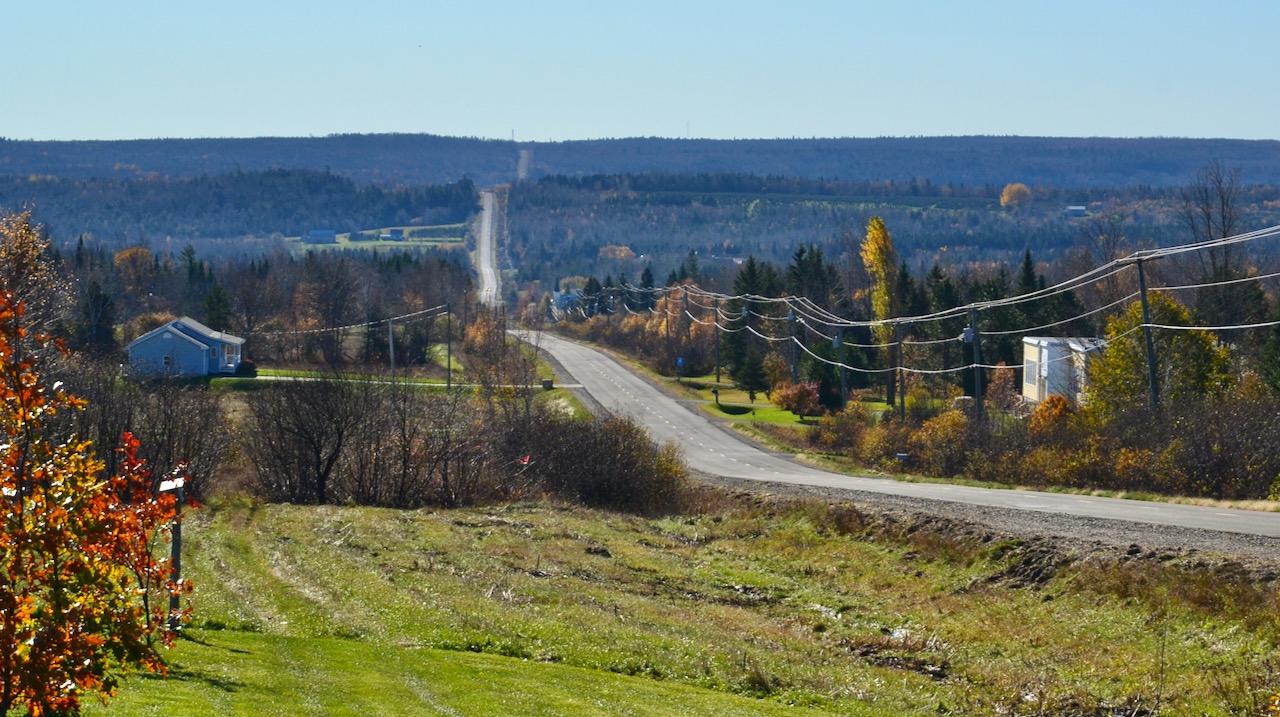
By the time we got to our New Brunswick farm, I was ready for almost anything. With a welder and an acetylene torch, there wasn’t much on the farm that could slow me down. I always had a John Deere tractor and a Chevy 350 3/4 ton 4WD that I could lean on and some great neighbors who were always willing to help. With some local help I even built a couple of barns that are still standing 50 years later.
After the farm, I went on to sell Apple computers, learned how to manage a sales force, and how to survive a teetering small business. When I actually went to work for Apple, the second day I was on board, they gave me a tray of real 35 mm slides and said you’re presenting to 100 people tomorrow, put together a presentation. If was the first of many presentations that would define my almost 20 year career at Apple. My last days at Apple in 2004, I was director of federal sales and sat with Avie Tevanian at a federal hearing on cyber security. Had Apple stuck more with open source and the direction our team was headed, there would be a lot more Macs in the federal government and our government would have a more resilient infrastructure.
After a consulting gig with the National Lambda Rail (some called it Internet 3), I went to work at an email company and learned the ins and outs of online marketing. It was a steep learning curve with Google analytics, buying search terms, and managing an inside sales force when I had spent most of my life in outside sales.
By the time the email company was sold, we were well on our way to establishing a life on the North Carolina coast, I worked a writer and I dabbled enough in real estate to know how to mine data from tax databases which turned out to be very useful when I became a vp at a company that was building fiber and convincing people to sign up for it. My love of maps led me to extensive use of Garmin’s mapping tools both on land and in my skiff and kayak. A knowledge of GPS helped me jump feet first into ArcGIS Pro and the technical reports and maps that have defined my last dozen years.
Not long ago, my barber asked me, “How in the world did you get from shoveling manure to selling computers and then helping to build fiber networks?
I told him the answer was simple, I always believed in what I was doing and I never sold anyone something that I wouldn’t be proud of using whether it was a bull, a bailer, a computer, or a report on the state of the Internet in their county. I could have said that I had a Swiss Army kind of life, always ready for the next challenge even as I was taking a lot hits along the way.