Some iPad feedback

Waves on the way
Waves on the way

Sometimes I feel the iPad is like a wave in the ocean.  It is inevitably going to hit me and get me wet even if I want to stay dry.

I am never surprised at the techno-lust that develops around new Apple products.  A couple of decades at the company gave me a chance to see almost every rationalization for buying a new Apple product.  I came up with a few myself.

While I have been gone from Apple for nearly six years, the problem has only gotten worse.  Now we have the spectacle of folks waiting in line to buy products that have not even been reviewed.  Steve says it is great, and there are hundreds of thousand of people who will buy whatever it is.

On top of that people will pay much more for an Apple product than they will for a product from Dell or HP.  The perceived value of an Apple product is much higher.

Having said that, there are some significant challenges for Apple in leveraging all this techno-lust.  While Apple’s commercials are very persuasive, the iPad  is a new category of product, and beyond the faithful, most people need to be convinced that they need it.

The iPod was a solution to problem that a lot of people had with their music.  The iPad is a solution looking for some problems.

I think the iPad is a good fit for some people and will solve a number of problems, but I also believe that a lot of people are going to have a hard time giving up their laptops.  Many of the people that I know are uninterested in having another gadget in their lives especially one which might require a whole new set of applications.

One friend was all set to buy an iPad until I told her that no Apple printing solution comes with the iPad.  Though I do not stay up on all things iPad, I believe this is still the case.  Apparently Steve Jobs when asked about printing recently said simply, “It will come.”  My friend decided to wait until printing was native from Apple.

Another friend wanted a device to read electronic books.  She evaluated the iPad and the Kindle.  She ended up with Kindle because she thought the iPad was too heavy for her old hands.

I know two ex-Apple employees who bought iPads in the first wave.  As far as I can tell, they both love them.  There is about a 90% chance of anyone who has worked at Apple is a hardware junkie so their motivations are not as interesting.  I would put myself in that category, but I am older and trying to spend less money so that curbs any appetite for new gadgets.  My gadgets end up being small and cheap.

The final person that I know who considered buying an iPad also bought one.  I thought his reasons were the most interesting of all. First of all he was an iPhone user except that the reception on his iPhone was so bad that he had to give it up for a Verizon phone.  Secondly he spends a tremendous amount of time on airplanes.

He told me that giving up his iPhone was a whole lot easier because he could use his iPhone apps on his iPad.  That actually makes sense to me.  He then said that he found the iPad much better for use on an airplane.  I can also see that.

I would have a hard time deciding to use an iPad because I would have to learn new ways of doing things which are already get done in very sensible way.   In spite of Apple telling me that I already know how to use it, likely getting my daily chores done would require some new software or new ways of doing things.  This is not change like when I went from a typewriter to a computer. That was change that saved me days of work.

Having an iPad with me is not that much different than having my smart phone except the screen is bigger.

I am actually really happy with my Droid, laptop, and desktop combination.  Things are working well, and I don’t see any reason to interject another device with yet again another series of tools.

I was around when we had to convince people that they needed computers.  Maybe it is easier to convince people that they need iPads, but I suspect it might be harder than Steve thinks to convert the world to iPads.

Anytime you ask people to do something different there is resistance.  Based on the number of commercials, Apple is going to give it a serious shot.  Apple never spends money on television commercials unless Steve is fully committed.

Actually if I am going to get wet, I would rather it be a real wave on a great beach day.
A society hooked on the quick response

Years ago, I went to a military high school in Chattanooga, Tennessee.  One of things we had to do was write home each week.  The letter was graded and sent to our parents.  My real communication with my parents happened by telephone.  Each Saturday or Sunday, I placed a collect call to home.

When I got to college I wrote fewer letters, but I still wrote.  When I got out of college and moved to Nova Scotia, I continued to write letters.  They were private, and we were on a party line with a bunch of other people.  In 1974 we moved to New Brunswick and after a lot of battling got a private phone line.

That was not the end of letters, but it certainly slowed them down.  Then in the eighties came the start of email.  By the nineties it was spreading rapidly.  Eventually instant messaging and text messaging showed up.

Now email is often done on the small screen of a smart phone.  It is actually a bad way to communicate.   A cell phone also becomes a lousy way to communicate when you are doing something while you are talking.  Talking to someone while you are reading emails on your cellphone is a slap in the face.

Somehow society has decided that quick and fast is better than deliberate and at your leisure.  The whole idea of Twitter puts additional pressures on quality communication.  I type small messages which are seen by hundreds of people some of whom I know only by their messages.  Then there are others who see the message, and I do not even know them.

Facebook is yet another away to get in touch with people who have not been able to build either an email relationship or one based on writing letters.  We almost always have a cellphone with us.  It is actually easier to call someone on the cellphone than it is post a message on Facebook.  Somehow the layers that Facebook adds to the communication process make it easy to type the message to the person you probably are afraid to call.

So are we better communicating small tidbits of information to people we hardly know or was it better to have focused on speaking our hearts and minds to those who mean something to us.  How do you communicate today?

The paradox of the smart phone

Evening Sun
Evening Sun

I am one of the few Realtors® in my circle of friends who does not have a smart phone.

Having spent over twenty years in the world of technology, I probably know more about computers and technology than all of them put together.

Yet I choose not to have a smart phone.  Recently our management sent out a list of people who had leads which had been emailed to them and which still had not been handled over the last few months..

I was not on the list.  Nor was the person I regard as the least technological in my group of friends.  Yet many of the people on the list who had five or six leads still waiting for a response were people with smart phones.

Smart phones are supposed to keep you connected all the time and to make it easier to have instant responses.

I am not sure that I buy it.  I have had managers who lived by their smart phones and who were among the hardest managers to contact.  I have had managers who were barely computer literate and could be easily reached at any time.

How quickly you respond and how easy you are to reach have more to do with you character and your work habits than your technology.

I sometime think that people carrying smart phones use it as a prop to make them feel connected and possibly to appear to be responsive.

I recently got a Google Voice account.  Will it make it easier for people to reach me?  I think the answer is perhaps.  I am pretty easy to reach now.  I almost always have my cell phone with me except when I am in church.  About 98% of the time I will answer it, even if I  just tell you that I will call you back when I have time.

Would I be easier to reach with a smart phone?  I doubt it.  The odds of a critical email in the rare 3-6 hour period when I am away from the computer are probably very low.  I am rarely in an area without cell phone service.

Until I see more utility from smart phones, I doubt that I will worry about getting one.

I have seen very few times one would be useful, and even then the cost for the service far outweighs any benefits that I can imagine.

I am as connected as I plan to be.  If you have trouble reaching me, you are not trying very hard.

Of course I might be stuck in traffic on the Emerald Isle Bridge.

Sheets by the crossroads

Swansboro Riverwalk
Swansboro Riverwalk

In a world increasingly wired, I am sometimes amazed at the effectiveness of low tech communications.  Webvillages of Blacksburg, Va has developed a great free electronic village for the Crystal Coast of NC.  Yet the intersection of highways 24 and %8 always seems to be a fertile spot for hand lettered signs or even sheets with a message.

When we tried a marketing event for some lots in a subdivision, we advertised in a number of newspapers including USA Today.  We had something of a web presence but we also put out signs the day of the event.  The signs turned out to be as effective as anything.  Several people called on the print advertising, but none showed up for the event.

Humans can be very spontaneous creatures.  We will look on the Internet and plan trips, but we are less likely to look on the Internet for a restaurant for tonight’s meal.

We are much more likely to ask someone that we meet on a boardwalk than take the time to search out restaurants on the computer.

Tonight we were driving across the bridge to Emerald Isle.  Just after the bridge was a hand lettered sign advertising a “fifties-style drive-in restaurant” at a local church, Chapel by the Sea.  We attended a similar event put on by Emerald Isle last summer so we head down Emerald Drive until we saw someone carrying a sign about burgers and hot dogs.

They had a good crowd.  I suspect that they could have gotten some additional people with Internet advertising, but I doubt it would have brought a massively larger number of people.

The critical thing to remember is that no one method will get to everyone, but one method might be more useful than another.  It just depends on what you are trying to do.

I recently took part in an online discussion which was part of the Toronto Globe and Mail’s series The Download Decade.  It was only advertised online and ended up as successful as I could handle in responding to questions.

Earlier in the week, I spent time on a YouTube video of a house that I will be listing.  It is also in the real estate section of the Crystal Coast Electronic Village.  It has been very successful in both places.  Still I cannot wait to get it listed and finally put a sign in front of the property.

People may have stopped reading newspapers and real estate magazines, but they still pay attention to signs and what they hear on the Internet.,

I suspect it will be several years before we can dispose of the sheets at the intersection.  I am happy to write for those who enjoy it.  My first for pay blog. Crystal Coast Living has become another good waay to to find out about putting down roots in our aea.   It least it is very easy on the paper supply.

Our need to open our eyes

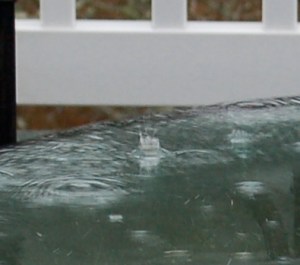
A rain drop hitting a glass table top

There are huge changes happening in how we do things with computers.  Aside from web based email, most people have not grasped the revolution yet.

Technology is one of those areas which requires some effort from most people.  Once that effort has been expended people are reluctant to embrace anything which requires more effort.  That is especially the case if the change being asked of us is of questionable value.

Upgrading from Windows XP to Windows Vista is a good example of that challenge.  Resistance to change does not just happen in the Microsoft world.

Apple recently announced a new version of its iApps.  Walt Mossberg verdict  in his recent article, “iLife Gets Better; Just Don’t Ask It to Find a Face” was ” I wouldn’t say that it’s a must-have upgrade for current Mac owners.”

Many Mac users like me might consider the features not worth the price considering they are already available in online versions of software.

Now there is a thought features available first on the web and then in a version running on your computer.  Why do people not flock to free version of Google Docs instead of buying Microsoft Office?  It is that resistance to change.  However, once you move, it is almost impossible to go back.  I am close to addicted to Google’s web based calendar.

For a few years I have been guessing that the web is going to provide much of our software innovation.  I wrote this article on web software over three years ago. The power and capabilities of web based software have continued to evolve. The move to the web will cetainly accelerate over the next few years.

Recently this was driven home to me when I bought some tent style business cards designed for printing on both sides.  I first started working on the cards in Apple’s Pages program which I use very successfully to do trifold brochures and regular business cards.  It did not take me long to figure out that this was going to be a real spatial challenge.  I thought I would give the Avery Microsoft Word template a whirl.  I downloaded it to my Mac and figured out that it did almost nothing because the Visual Basic would not work.  I went to my Windows laptops and tried there.  It appeared that even on Windows, it was going to be a very irritating process.

Then I noticed that Avery has an online suite of software.  I typed in my product code “8820” and started designing my promotion cards.  At the end, the program generated a PDF.  I printed some trial cards, then decided I wanted some changes and generated another PDF and did a final print.  I was amazed with the quality results and the speed with which I was able to design the cards.

The experience reminded me of designing tee-shirts online last summer at CustomInk.com.  It was so easy that anyone could do it.  The tee-shirts I got from my efforts were great.

When I look at what I can do on the web these days, I am amazed.   Often I insert code on my websites that has been generated by other websites.  A simple example would be the weather badge from Weather Underground on one of my webpages at CoastalNC.org.   Another would be the the Plaxo or Google reader feeds on my Blogger website.

When I look at the capabilities of Google Docs, Flickr, Picasa Web Albums, Photoshop Express and sites such as WordPress, SquareSpace, and Typepad, I am amazed at how the power of creation has shifted to the web.

The site which a friend has developed as an electronic village for the Crystal Coast is something we could only dream of a few years ago. It puts web creation tools in the hands of people who only have a browser.  The fact that I can create posts with pictures on our company’s real estate website through only the use of a browser is astonishing.

It is time we opened our eyes to the power of the web.  If web based applications continue to develop at their current pace, I suspect we won’t need very many applications loaded on our computers in a few years.

That will be just fine with me.

The trailing edge instead of the bleeding edge

Gulls on the wing
Gulls on the wing

For years I led a team from Apple that sold computers to the federal government.  I left Apple in 2004.  The few years before that were very challenging when dealing with the government and computers.

Many of the IT people we had to deal with had gone from being talented IT professionals to political appointees who knew little about their jobs.

Some organizations like the Navy decided that private contractors knew more about computers than the Navy did.  They outsourced their computer decision making.  I can still remember some Navy folks saying that they ended up with the green metal desk version of computers.

We had lots of experience with NASA where extensive use of contractors for supplying computers resulted in scientists usually getting far from the best computers.  The only Macs that they often got were ones which were being discounted because new models were about to be introduced.

I am hoping that the change in government also means a change in technology policy.  I read today about some of President Obama’s staff feeling like they had dropped into a computer time warp.

From experience I know that computer security is a challenge, but I also know some of the security that is implemented is false security.  Many security threats come from within, and I have always believed that the excuse of security is a poor reason for implementing bad technology choices.

If we are to succeed with the many challenges that we face, technology has got to be part of the solution not part of the problem.

I remain convinced that intelligently implemented new technologies can have a huge impact on the efficiency of our government.

I am looking forward to seeing if the new government makes some progress in this area.

The new censorship

Fall sky from the soybean field

I recently read an article, Blacklisted in Cyberspace, in the Washington Post.

The article reaffirmed my thoughts that we are now having to self censor communications in order for them to make it to their intended recipients.

Having worked at an email company, Webmail.us now MailTrust, I understand the problem of spam.  I also am familiar with the scoring systems which determine what mail gets marked as spam.

Unfortunately some of that scoring makes it easy for your email to never reach the person to whom you sent it.  That is frustrating for all parties.  One of the great advantages of email is that it is easy to include links and photos.

It is an advantage only when it works.  I have been trying to connect to a friend who went to the same high school as I did.  I mailed him a normal letter a couple of years ago and that did not work.  I managed to get his email address and send him a note, but I got no response.

Another friend tried to help us connect, and I managed to get a message that he would like to hear what I have been doing with my life for the last forty years.  I sent a note back with several links and a couple of pictures.

I was pretty irritated when he did not write back so recently when Harvard defeated Yale in “The Game” I sent him a link to the article.  I went to Harvard, he went to Yale.  I got a flaming email back saying that he had been trying to communicate with me for two years, and the first he hears from me is a football email.

Well I sent him a copy of the email that I had sent over two years ago.  I got back an apology, and a response that he had no idea what had happened to my other emails.

I am pretty sure that what ever spam detection software he was using at the time  added up the links and photos in my email message and decided it was spam.  He probably never checked his junk mail box or had it set to automatically empty.  That was the end of my original email.

This will be a hard problem to fix in cases where people do not already have established communication channels.  I would be very happy if everyone used a digital id certificate.

However, I understand why they do not.  My Vista machine recently decided it could no longer send messages from my account which has a Verisign Class 1 certificate.

It is no problem on my Macs, but it appears to be a big problem on Windows.

I am not happy with having to limit what I send to people that I know.  But that type of censorship is the only thing that I know to do  in order to keep my email on track.

If you need something to melt away your frustration with this, try my December YouTube video of the North Carolina coast.

Awash in misinformation

Power pole and evening sky

It takes little effort to find information these days.  Google is easy to use, and it almost always returns some results.  Unfortunately some of the time the information is wrong or not what you wanted.

Companies are spending fortunes trying to figure this out.

Most of the ideas revolve around an omnipresent search engine that gathers data that is already out there and serves it up in some useful way.

I would call that a top down solution.  It is trying to solve the problem with technology, programming, and as little local input as possible.

Recently I was writing a post, Not a nice gift from Canada, on my blog that I use to stay in touch with my Canadian roots.  I wanted the exact address of one our local fish markets.

A Google Search returned this “Insider Pages URL.”

Unfortunately the map was completely inaccurate.

A more accurate map is found at this link.

That came from a local Google map effort of my own.

There is an old rule about data that still holds true.  Garbage in, garbage out.  The challenge in providing good information is getting good quality data.

While large metropolitan areas might well have enough density and quality data to make some search engines very successful in providing information, I am not certain that it works as well in smaller or less well wired areas.

Actually a friend who had a key role in running the original Blacksburg Electronic Village and I are trying to do something of a bottoms up electronic village with local information entered and verified by locals.

It is a big challenge to make it work, but I think we have a very good chance.  The pieces are just being put together, but the Crystal Coast Electronic Village will have a consolidated area calendar for events, a business directory with maps at some point, blogs with pictures, and real estate listings already with maps.

Quite often the best solutions are those that involve people closest to the answers.  We will see if we can make it work.

Getting beyond an email’s title

Beaufort Boats

When I worked for Apple Computer, I would get hundreds of emails a day.  It was a challenge to get through them.  Of the course of twenty years I am sure a few fell through the cracks, but mostly I was able to keep up with them.

I never succumbed to the read the first line and call it quits method of email management.  I did answer many questions from people who had not bothered to the read the whole email in the first place.

Depending on how I felt at a given time, I might copy and paste the originial email with the answers highlighted.  However, I did find that the worst offenders never noticed.

Lately I have seen an even more serious email management disease.  These folks read the title of an email and assume they know what it says.

That is not only highly risky but certainly not very productive.  A couple of responses that I have gotten from people trying this are beyond worthless.

I guess it is function of the desire to get ever more done with little focus on actually be productive.

I would rather do less and make certain that I get right whatever I do.

Where technology seems to stop

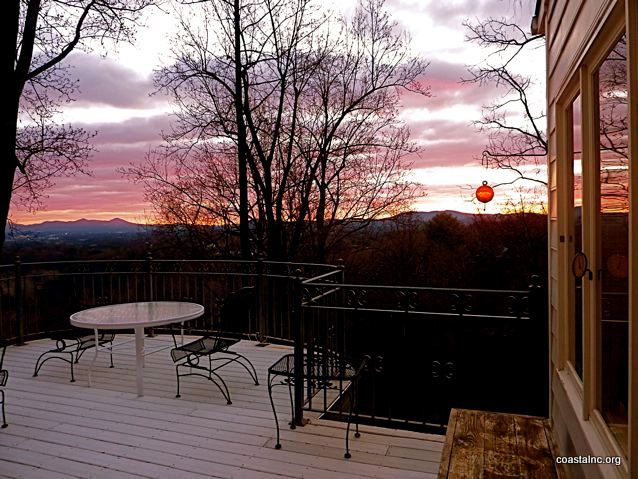
View from my deck
View from my deck

I get a tremendous advantage from technology. I would not be able to share pictures without the technology revolution that we have had in the last fifteen years.

Getting documents to people is also much easier.  Finding additional information that people might need is also a piece of cake with Google and the Internet.

Yet there is one place that technology seems to fail.  Our digital identities are hard to verify and utilize.  I actually had someone pretend to be me on a forum.  People figured out that it wasn’t me, but it should not be so easy for someone to impersonate you.  We have the technology to prove who we are digitally. Unfortunately few sites utilize it.

In a regular day to day situation if the need to prove who I am arises, I can show my driver’s license, birth certificate, or passport.

I have digital credentials for my email, an OpenIID identity and actually a smart card for real estate which lets us enter homes. Yet very few people take advantage of digital ids.  It is almost as if people like the small degree of anonymity that comes from the digital world.

I have one friend with a digital id.  Most of our conversations are encrypted.

It seems funny to me that I send a PDF of a form to a client which is handled usually by printing, signing and faxing back to me.

Why can’t we take the next step and use a smart card digital id to let me send documents and let others to sign and return them.

I recently worked with a client who did not have a computer.  I actually had to print photos to send to them.  Any documents which needed reviewing had to be mailed.  The experience reminded me of how far we have come.

Yet we recently dealt with an individual several states away who needed to sign a title and get it back to us.

He missed the express shipping pickup, and we were delayed a day because of that.  It is too bad we don’t have electronic notaries who could validate that the right person is signing a document, then scan and forward a digital version to us that it could be printed as an original and recorded in the proper county.

I know we have the technology to do this.  I guess we would just rather keep doing it the hard way.