
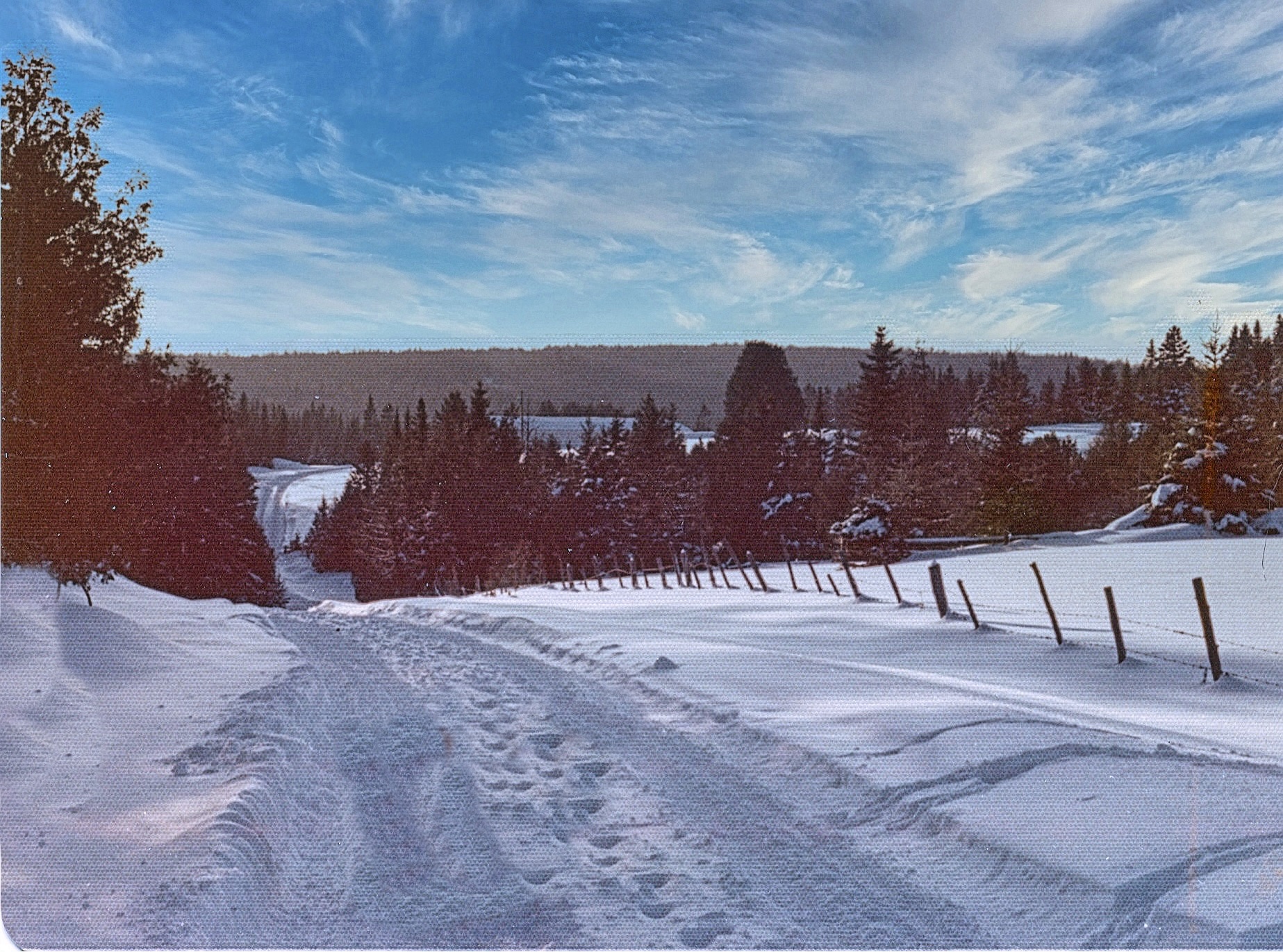
After I graduated from Harvard, I spent over a decade on the land. First, I was part of the early back to the land movement and then later as a cattleman with two hundred head of cattle before we sold them all in fall of 1982 after enduring 20% interest rates. It was a hard life with little room for error and no vacations but the rewards and lessons far outweighed the challenges.
My training other than my Boy Scout years involved wandering the woods shooting the odd squirrel as a teenager, fishing whenever I got a chance, lots of camping during college, and a summer traveling to Alaska in my Dodge Powerwagon. Studying colonial history during my college years had little value when I headed off the Nova Scotia and the old farmhouse on 140 acres overlooking the Bay of Fundy that I bought with my mother’s help.
Rebuilding the old two-hundred year old farm house was really where the training started. I grew up without a dad so I had no one to teach me many of the skills that I needed in 1971. It is surprising how much I could pick up from the free Sears Roebuck manuals on electrical wiring and plumbing. Carpentery I learned from friends who spent some time in Nova Scotia with me that first six months. Gardening and farming I learned from Roedale Press, Malabar Farm, Living the Good Life, Firefox, and the Whole Earth Catalog.
I learned how to do a Thanksgiving dinner when a handful of Harvard/Radcliffe graduates came to see the place that had captured my soul. It was the first turkey any of us had ever cooked but we managed even the careful negotiations on how much celery went in the stuffing. I had grown up knowing the basics of cooking since my single mother often worked late and if I wanted to eat, some knowledge of getting food on the table was essential.
Gardening while guided by the books but was heavily infludenced by having actual hands in the dirt. I was lucky the first old farm had some giant piles of ancient well-rotted chicken manure. The combination of great compost and Nova Scotia’s foggy shore was so good for growing broccoli, we often picked it in five gallon buckets. The cattle started with a few head on the Nova Scotia place, but I quickly figured out the Nova Scotia shore was a lousy place to raise cattle.
In the summer of 1973, I married a wonderful Southern lady who had grown up in the same area as me. Her mother was a part of the same growing, canning, and cooking environment that my mother had lived. By the fall of 1974, we had found our farm in the hardwood hills north of Fredericton, New Brunswick. There there was plenty of advice on how to farm. I incorporated some of those ideas with my own plans. By 1975 we were wintering our Angus herd in the woods and putting up our hay in round bales. My only help was the previous owner of the farm. He had farmed with horses and eventually a small tractor to help with the loose hay he put up annually. Even in his sixties he took to the world of big tractors like a duck to water. He also helped me build a couple of big barns, one 128 ft by 41 ft and the other 69 ft by 64 ft.
By the time the barns were done, we were putting up 200 to 300 tons of hay per year. I could build anything from kitchen cabinets with my radial arm saw to barns with a chain saw. I could use a welder and an acetelyene torch. I had survived working in over 100F temperatures to to feeding cattle in minus 40F a mile back from our farmhouse. In the dozen or so years we lived on the farm, I amassed enough stories to fill a lifetime. The experiences carried me through a coporate career and have defined my life.
My wife and I still have special friends from those years on the farm. Our lives were fundamentally different from those living off the grid today but many of the lessons we learned are the same being learned in Alaska. We heated with wood, supplied our house with running spring water, grew much of our own food including having a milk cow and chickens. The freezer was always full of beef and there was never a shortage of potatoes in the cellar or vegetables we had canned. We lived in a close-knit community where the men dug everyone’s graves and when the funeral was over, they went out and put their overalls on and gathered their shovels to fill the grave.
We battled as much as 23 feet of snow in one year. It was wild enough that we had no fences in the back of our farms. In the early years snowshoeing on six feet of snow was common. I know what it means to grow animals which you end up eating. My wife’s first lesson in local food was walking into our Nova Scotia kitchen early one morning and seeing a freshly dressed lamb that I had hung from the top of a door frame so I could cut it up. We sometimes ate salmon that the local tribles sold door to door. There were even a few meals of wild native brook trout. In the spring we gathered fiddlehead greens from the marshes. Before our cattle herd got so large we could often pick chantrelle mushroom from the edge of the forest. They were a staple when we lived in Nova Scotia.
The challenges that we faced on the edge of civilization made us stronger people. Living in Halifax, Nova Scotia, Columbia, Maryland, Roanoke, Virginia, and Cape Carteret, North Carolina ground any rough edges off of us and helped us give our three children, all born on the farm, a good start in life. Even at 77 years old, I still garden and I love the feel of rich dirt in my hands.
I have no regrets about the years that I spent living on the land.

 Our technological infirmity