A Life of Icy Roads

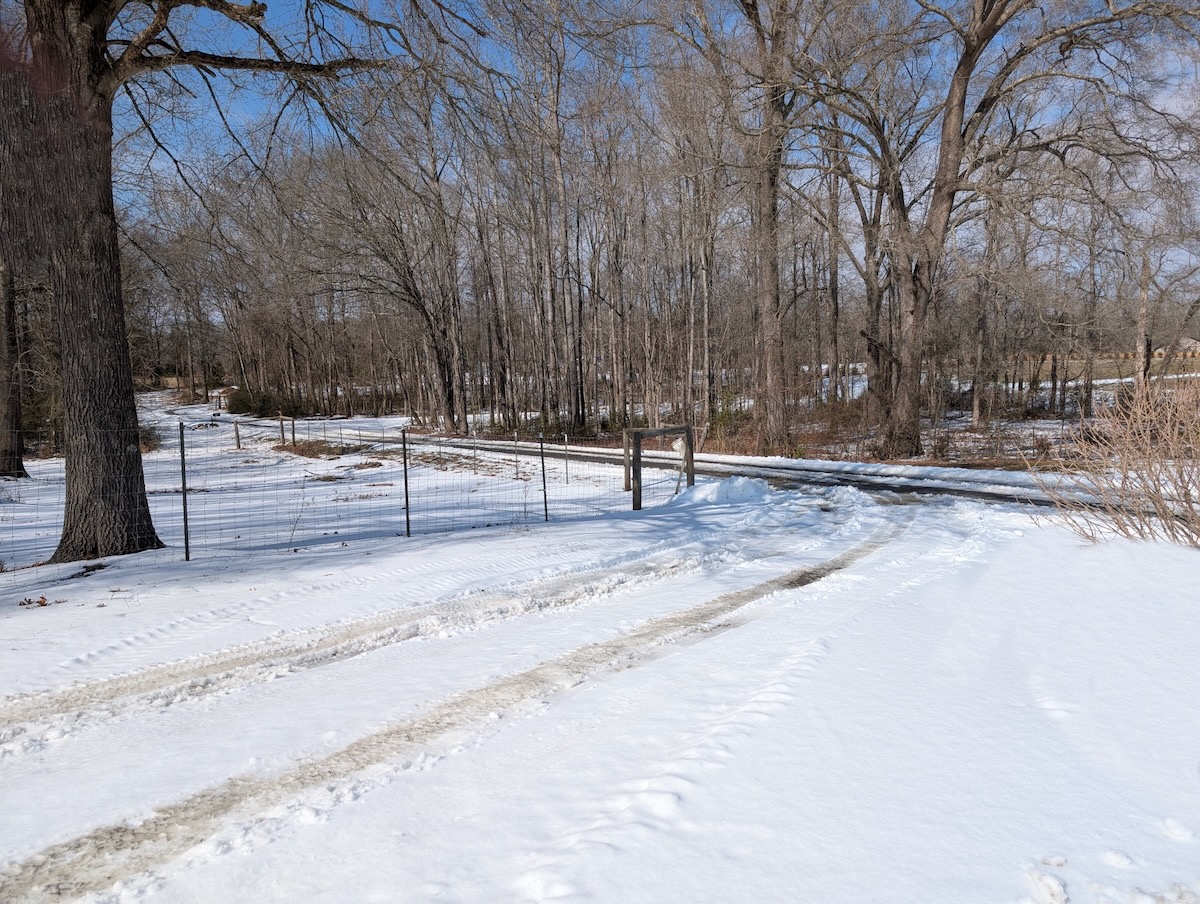
An icy road in the woods, five days after our second storm of the year.

The first time that I can remember facing an icy road, it was probaby 1961. I was a twelve-year old passenger in car headed back from Camp Raven Knob, a Boy Scout camp west of Mt. Airy, North Carolina. Adults had come to rescue us from another frozen, icy night in the three-sided Adirondack lean-tos. I wasn’t particularly worried about the icy roads because I wasn’t driving.
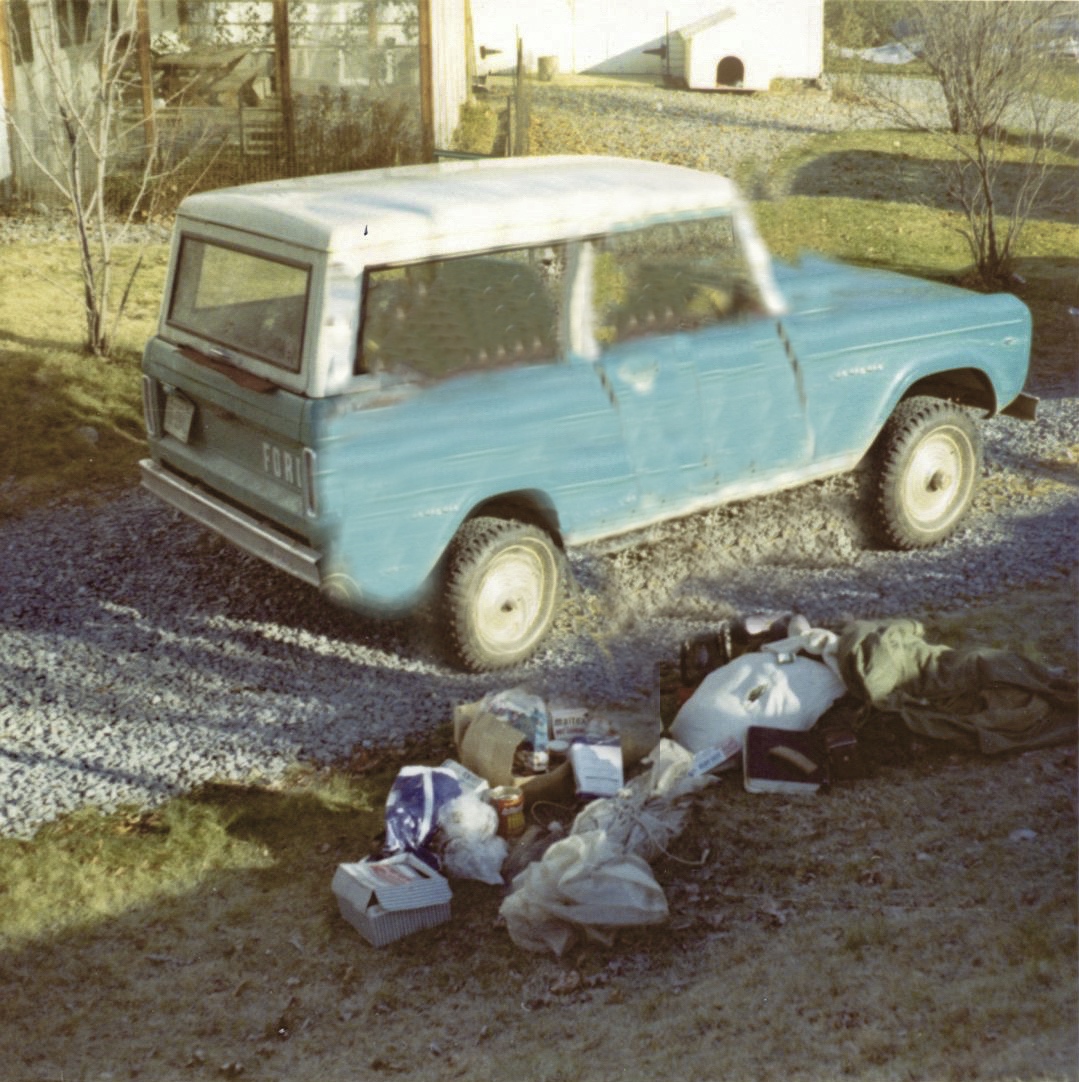
Seven years later I am home for the holidays from college and my mother is hosting a Christmas party in Mt. Airy, NC, for her extended family which are mostly from the next country over. Mount Airy is in the transition area between the hill country and the Blue Ridge Mountains. Weather forecasting in the sixties was a little more rudimentary and a snowstorm hit early in the afternoon. Snowstorms are not every day occurences in the North Carolina foothills. Our relatives were becoming worried about getting home. I was going to school in Massachusetts so my old Bronco had snow tires on all four wheels. I offered to escort a convoy through the worst hills. It might have been the first time I had driven in North Carolina snow which isn’t anything like northern snow. It is rare when NC snow isn’t slush or packed ice. That first trip was in slush which is no problem with snow tires. Everyone drove in my tracks and I took them half way home to the point there was hardly any snow on the road. I was young and probably didn’t worry about it very much.
There were many opportunities to drive on snowy roads during college. Four of us even took a trip to Nova Scotia’s Cape Breton Island in November our junior year. Cape Breton welcomed us with snow, sleet and freezing rain. We faced some very cold camping and tough driving in the old Bronco.
After graduating college, I moved to eastern Canada. Over the course of the next seventeen years I owned a variety of snow worthy vehicles from Land Rovers to Land Cruisers and 4WD trucks. We even had 4WD drive tractors on our 400 acres farmland.
My wife was in her orange rear wheel drive Volvo wagon on a very snowy day coming back from the doctor with our first child who had swallowed a bunch of Flintsone vitamins. The syrup of ipecac hadn’t worked at the doctor’s office. I had just found out when I came in from barn chores and rushed to the doctor’s office in my trusty 4WD Chevy pickup. I crested a hill as I was speeding to the clinic and there was my wife’s car stopped in the middle of the road. She had stopped because our daughter had started throwing up and she was afraid she would choke in her car seat. I didn’t have time to think, I avoided hitting my wife and daughter by putting the truck into a snow filled ditch. With the big snowbanks, I ended up safe, and I rode home with my wife, grabbed a tractor and a neighbor and we retrieved the truck without any problems.
Snowbanks along the rural roads were a great safety feature. You could slide into a snowbank without worrying about damaging your car. After we quit farming, I became a sales manager for the first Apple microcomputer dealer in the area. I had to travel to three locations in New Brunswick, one in PEI and another in Halifax, Nova Scotia. At first I did it in my old front wheel drive Subaru. One time I came home from a trip and was barely able to get the Subaru far enough in the driveway so I could get our tractor and snow blower around it.
Soon after that I switched to a rear wheel drive Volvo sedan. I put snow tires on all four wheels and fifty pounds of sand over each rear wheel in the trunk. I went everywhere in it. After I joined Apple, I once drove my sales manager from Toronto from Fredericton, New Brunswick to Charlottetown, PEI in a blizzard. He was amazed what the Volvo would go through and even more surprised at the ice encrusted ferry that we took to the island.
Four years later we are living on a mountainside overlooking Roanoke, Virginia. We bought an AWD Nissan our first winter there. We had a variety of AWD vehicles there from Subarus and Grand Cherokees to my wife’s AWD Volvo wagon and my AWD Acura MDX. The little Nissan Axcess was a favorite because I could put chains on all four wheels. There were storms when Little Limo as she was fondly known was the only safe way up and down our mountain. I ferried many people with groceries up and down the mountain to their parked cars at the foot of the hill over our seventeen years there. The Acura with its locking AWD mode was the second best vehicle on the mountain. It is still with us and now 21 years old.
We lived on the NC coast for sixteen years and only had ice a few times. With no hills it is not much of challenge. Here in the Piedmont where we now live there are certainly enough hills to make things interesting but snow and ice is a rarity. Still in the last two weeks we have had two storms, one four inches of sleet and the other a foot of fluffy snow. We had no need to go out but I did go to our butcher shop located on the ice road pictured at the took. The Acura MDX never hesitated even a couple of really icy hills. It brought back some memories, even a snowy one to Newfoundland pictured below.

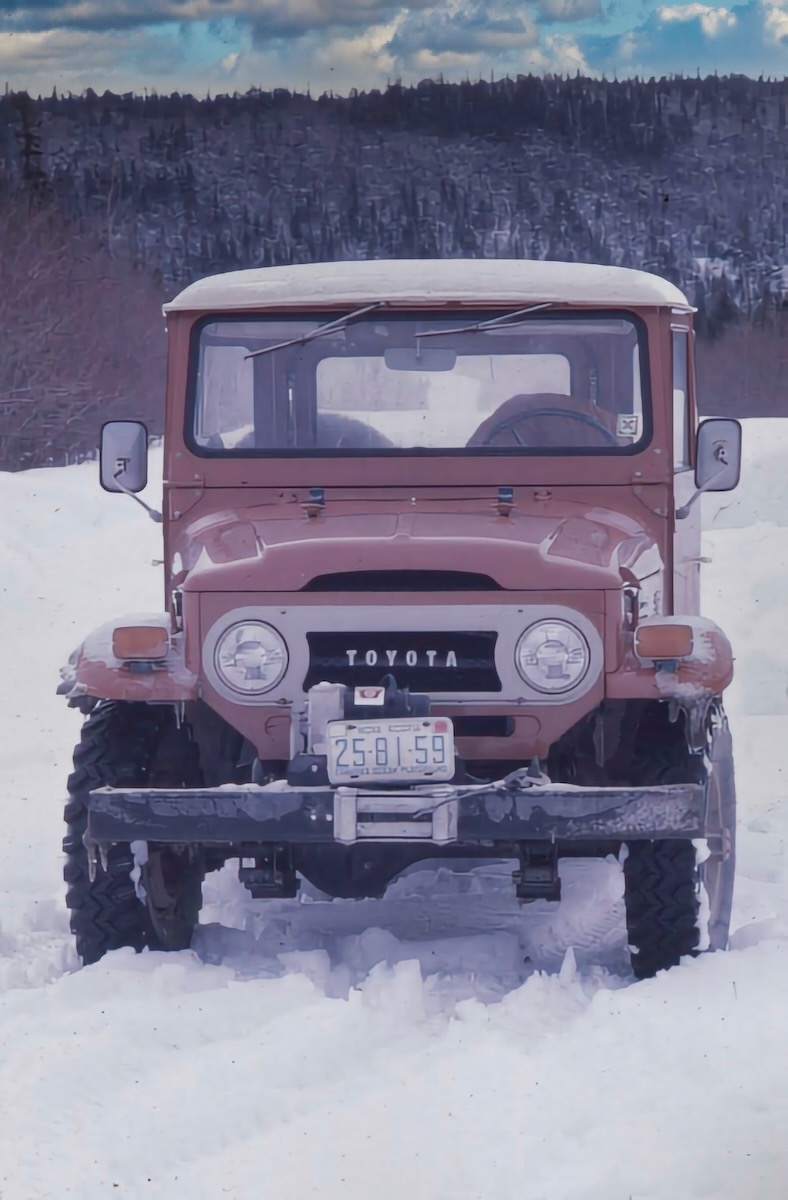
Toyota Land Cruiser on a snowy road to nowhere in Newfoundland, March 1973

Where the roads end

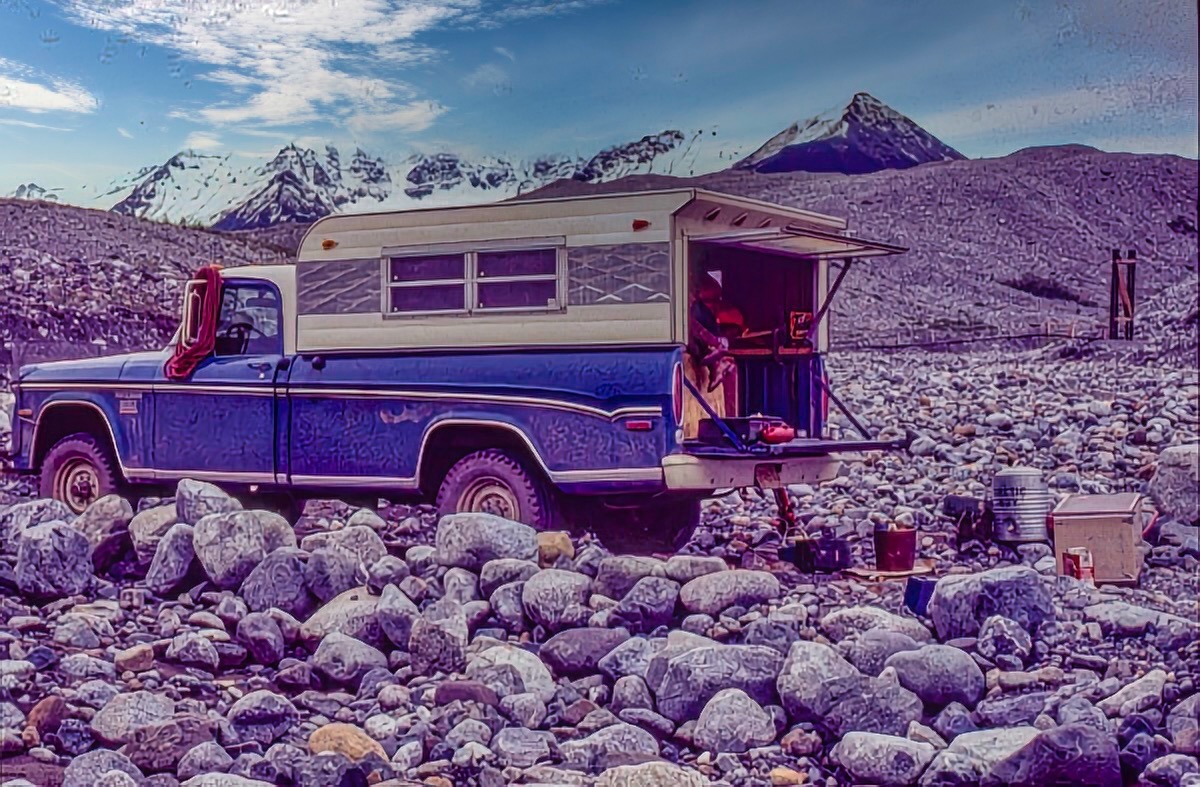
My Dodge Powerwagon at the end of the road on the way to Denali, Summer 1970

Americans are famous for their Sport Utility Vehicles (SUVs) that never leave the paved roads. Unfortunately, some people get behind the wheel of a SUV with the belief that it makes you invincible. There are a few things I have said in life that seem to have some staying power. One of them is that all an AWD, 4WD, or SUV will allow most people to accomplish is to get stuck in a more difficult to reach place.
I have been stuck or broken down in some pretty remote places like the one above a few miles off a road in Alaska. That vehicle had a winch and it was useless in that situation. Farms are places where people can really get stuck. However, the rule on a farm is do not get the biggest tractor stuck unless you have the gear to pull it out. We kept an old bulldozer around for that. It got used for that.
Our herd of cattle wintered in the woods about a mile from the barns and the area where I kept the round bales of hay. It was not unusual after a big storm to blow the road to cows at night. One night after a particularly nasty storm when the temperature had already dropped into the minus twenties, I was blowing the road. I had successfully cleared one lane out to the cows and I was headed back widening the cleared road. As you get within a quarter of a mile of the barns, the road dips down into a small valley and crosses a culvert. There is a small pond on one side of the road and the culvert that allowed for overflow from the pond on the other side. I had a rear mounted snowblower that cleared eight feet of snow at a time but because it was rear mounted, you backed the tractor as you blew the snow. That gets a little tiring after an hour or so. The tractor had a nice unheated cab, weighed about 12,000 lbs., and ring chains on the tires. They are necessary on farm roads which often have ice as a base coat.
Just as I started across the culvert one of my large rear tires slipped off the road into the pond. Fortunately the pond wasn’t very deep but it still put the tractor in a precarious position. Experience told me the best thing to do was to wait for daylight and get a neighbor to help me pull it out. I walked home and spent my dreams figuring out how to retrieve the tractor.
By the next morning the temperature had dropped to minus twenty-eight degrees, but it was no problem to get my farm helper who was in his sixties to go with me to unstick the tractor. It was a complex operation. I loaded a generator in the pickup, some salt and a chain saw along with our three quarter inch logging chain.
First we drove down to the tractor, started the generator and hooked it to the recirculating block heater that would hopefully warm the engine of the tractor so we could start it. Next we made cuts into the ice around the tractor’s wheel that was now frozen in ice. We put salt in the cuts in the ice. While all that was working we went to start the bulldozer. It was a very old Cat D5 bulldozer which originally had a small gasoline motor that you started and used to start the big old diesel. Unfortunately the gas motor had died shortly after I got the bulldozer and I found it would cost more to replace it than the bulldozer was worth. However, we quickly discovered that towing the bulldozer six feet would start it. I had another large tractor and we used that to start the bulldozer that cold morning.
I drove the old 16,000 lb. bulldozer down and positioned it so we could hook the big chain to it. My neighbor got in the stuck tractor and fired it up. All he was supposed to do was steer the tractor. I moved the generator to safe ground, got on the bulldozer and carefully pulled the stuck tractor out of the shallow pond. While the actual pulling seemed effortless for the bulldozer, It likely took us two hours to get to that point. It is unlikely that I could have gotten a wrecker out to do the same thing without the wrecker getting stuck. We were fortunate to have the equipment. Most of the time when you get stuck, you have to make do with what you have.
Not every time you get stuck is going to be that complicated but as I said if you wander far off the road, you run the risk of being stuck in a difficult place. We were actually stuck in the picture at the top of the post. The locking hubs on our four wheel drive quit working. I had to take one hub apart and adjust things. Fortunately, I had the tools to do it.
With many four wheel drives vehicles all you have to do is get one wheel spinning and your vehicle might as well be a turtle on its back. I am a big believer in chains for ice in spite of the pain putting them on a vehicle. Chains make more difference than either four wheel drive or AWD.
AWDs are also not all created equal. Some will get stuck in nothing and some will walk up a mountain of snow. My old Acura MDX has a locking mode that is amazing but I still avoid ice.
Just after the first big snowstorm of the year is not the time to figure out how good your vehicle is at getting stuck. At a minimum, an emergency kit includes a tow strap, shovel, a square piece of 3/4 inch plywood, gloves and a good jack which should be a bumper jack if you are headed into sand or mud. If you have a winch on your vehicle, be very careful, they are exceedingly dangerous if you don’t know what you are doing,
Sometimes I miss living up north. Once the ditches were full of snow, the safest thing you could do to avoid an accident was to drive into a snow bank and get stuck on purpose. I avoided a few accidents that way. Most were close to home and only walking distance to one of those big tractors.

It Started With Nova Scotia

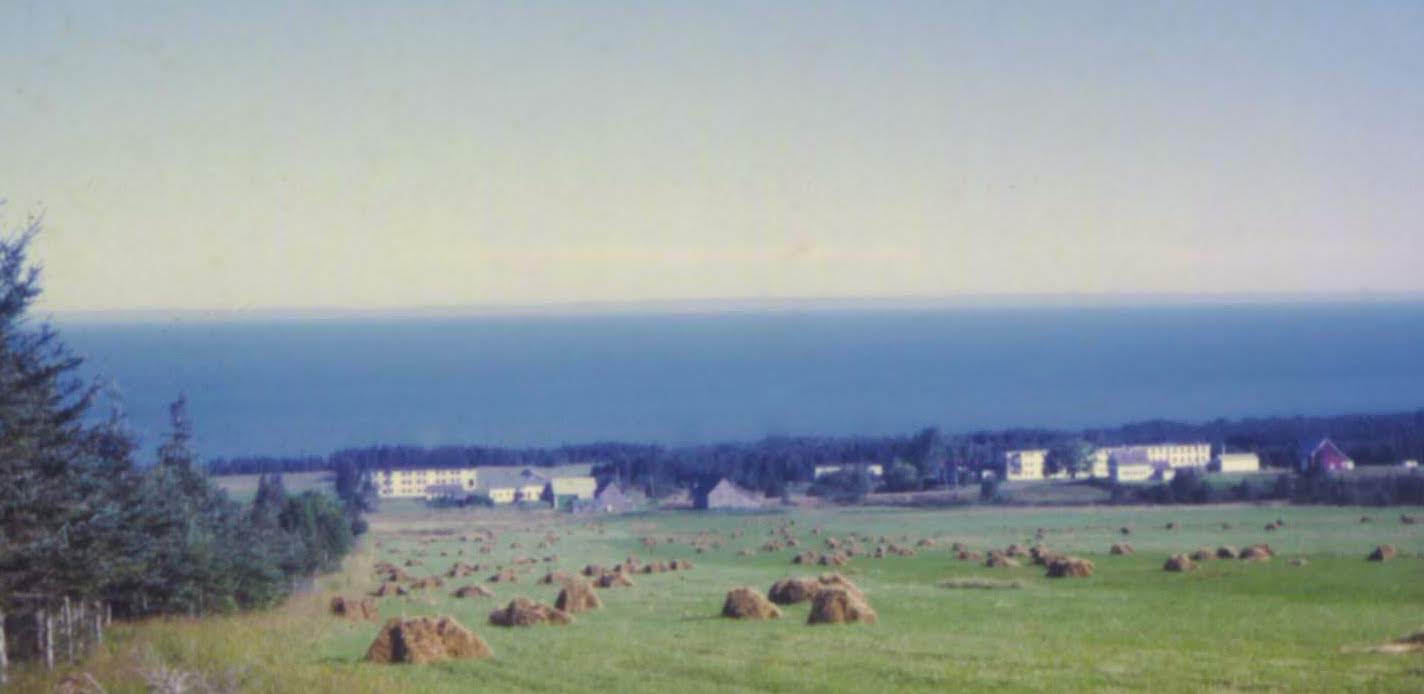
The view from the top of the hay field at the back of my new home in St. Croix Cove, NS

Thanksgiving during my junior year in college, three college friends and I decided to take an extra long break and go camping on Cape Breton Island. This was long before the days of the Internet and Google maps. We had little idea of what was ahead of us when we choose to drive up Route 1 through Maine and then into New Brunswick and finally Nova Scotia where we could finally cross the Canso Causeway to Cape Breton Island. Even today with more bypasses, Google maps says the drive is thirteen hours. It probably took us sixteen hours.

We went in my old 1966 Bronco which had a can of stop leak as an item in emergency equipment. Fortunately, we were young and driving that far and crossing an international border was not nearly as hard as it would be today. By the time we got to Cape Breton, it was sleeting and snowing. All the provincial campgrounds had shut down months earlier. We managed to pitch a tent in an abandoned field one night. We almost froze. Everything was soaked. By the time we got back to Halifax, I pulled out my emergency credit card and we booked a single room for the four of us in a Holiday Inn. Hot showers never felt so good.

We drove back down Nova Scotia’s south shore stopping only to grill a steak over a fire and eat a barely thawed bag of Nova Scotia shrimp. Our trip back was on the Bluenose Ferry which in those days traveled from Yarmouth to Bar Harbor, Maine. The seas were rough but there were few people on the ferry besides us. We stretched out and slept on the long bench seats. I have vague memory of a weighted ash tray sliding by me in the rough seas.

The trip has no moments that suggest that Nova Scotia is a place to visit again but as my wife has always said, “If you can tolerate a place during miserable weather, you are likely to live it when the sunshines. Somehow what I saw of Nova Scotia planted a seed. I started watching the Sunday Boston Globe for Nova Scotia properties for sale.

The spring after the trip to Nova Scotia, the anti-war protests hit Cambridge. In a classic case of taking to the woods after all the debates and marches, a roommate and I decided to take a road trip to Alaska in the Dodge Powerwagon that I convinced my parents that would keep me out of trouble for a summer. It was a beast, a 3/4 ton 4X4 with a mechanically driven (PTO) 8,000 pound winch on the front. It had two gas tanks since it barely got ten miles to the gallon with its 383 cubic inch V8 and four speed transmission. The Powerwagon would come back to school senior year, haul me to Nova Scotia and even have a place on the farm in New Brunswick.

Sleeping in the back of a truck while traveling thousands of miles seemed like a good idea. I was in love with wilderness. There were great adventures on the trip including my roommate almost getting killed while climbing. It was to be an epic trip and one that would give me a life long love of wild places. It would make Nova Scotia the place that I wanted to live.

The Company of Cats

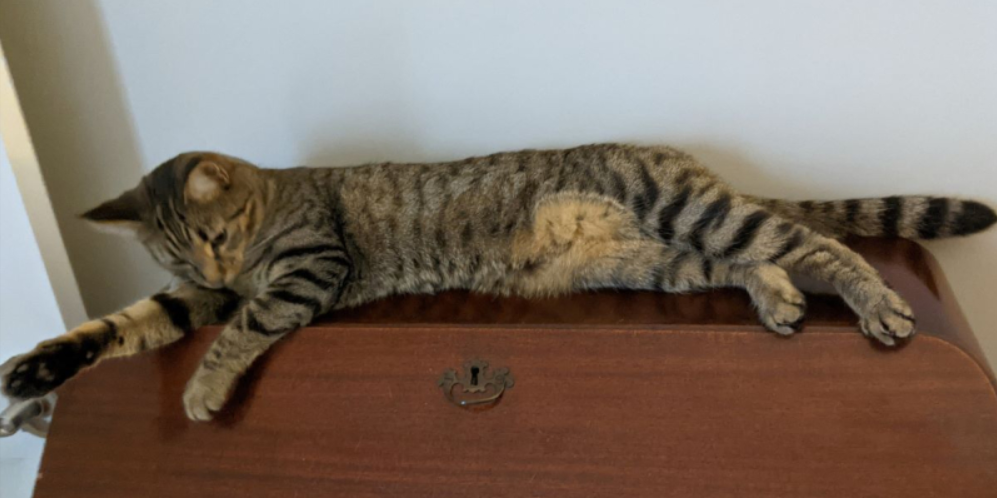
Jester, Relaxing After First Post

I have invited Jessie, one our four marsh cats to be the guest writer for post number fifteen hundred. I think she has a talent for writing. She certainly campaigned hard for the opportunity during the last seven days. Each morning I have awakened to Jessie curled up on my chest and looking down on me.  As you can see from the picture above, Jessie is exhausted from all the typing. I did help her with the editing, but the thoughts are hers. This is Jessie’s first effort at writing, but I am sure it will not be her last. She is always first to the office and last to leave. Here are her words.

I am one of four kittens that were born under a shed by Raymond’s Gut on the North Carolina coast. My name is Jessie, but I am sometimes called Jester by our friend, David. I spend most days curled up near his desks which are covered in computers. That is how I learned how to type.

I have three siblings, my two sisters, Merlin and Maverick and one big brother, Goose. Our mother, Elsie, has lived by Raymond’s Gut since before Hurricane Florence. We were very lucky. Our mother brought us to David’s garage to eat. It was there that his wife, Glenda, saw us. We didn’t understand but one night our mom told us to stay in the garage after we finished eating.

When the big door went down, we were stuck inside the garage. The next thing we knew it was dark but we could smell something delicious. Merlin crawled out from behind the cabinet where we were hiding but she did not come back. Then Goose went looking for her and he did not come back. Next I went out and I found the food that smelled so good. Then before I knew what was happening a door shut behind me and I was trapped in a wire box.

It wasn’t long before the human that I now know as David came and carried the wire box inside. Next I was put in a bigger wire box with my brother and sister. It was really scary at first but there was a soft towel. We did a lot of hissing and spitting but none of it kept the humans away. We kept waiting for Maverick to show up, but it was seven days before she let herself get caught. She was really mad that she was caught. She tried biting and scratching, but David had these great big gloves that he would use to catch her. She was so mean that she got thrown into solitary confinement for a week.

Eventually we figured out that they were feeding us and making sure that we were okay. It was much better than living on the dirt under the shed or behind the cabinets in the garage. The first strange thing that happened was when they gave us a bath. We got all wet but then they dried us with a towel and cuddled us until we got warm. It wasn’t too bad after we had a chance to work on our fur ourselves.

It wasn’t long before we got to go live in our bedroom. It was much nicer than living in a cage. It had a big queen-sized bed. It was perfect for hiding under. For a long time we spent all of our time in our bedroom and the adjoining bathroom. David would come play with us. He taught us how to play a game he called kitten fishing. He took one of his fishing rods and tied a string to it and some feathers to the end of the string. We would chase it and jump on it. Sometimes the only way we could get it was to jump high in the air. For a long time Goose was the best at jumping, then he got so big it was hard for him to jump as high. Maverick, who is a little bit of a loner, eventually could jump better than any us. For a long time we played kitten fishing at least once a day.

Then came the big day when we got the run of most of the house. It was really exciting. There were so many things to smell and places to explore. We found out pretty quickly that there were places that we were not allowed to visit but it is so hard if something needs investigating. Our favorite place is David’s office. Not much is off limits there and he pretty well lets us do as we please. It is also the place that we started learning about the real world. Learning about the real world made us realize how lucky we are.

A few months ago things got really exciting at our house. Some people from California bought our home and we had to move. It was really scary and we spent a lot of time in our big cage as David, Glenda, and their son Michael got everything ready to be moved. We did not understand what moving meant at first, then we learned that we would no longer get to see our mom, Elsie outside the glass door of our play room. We were sad, but knew that we had become house kittens and should go with our humans.

The move was actually scary. We had to ride in our cage in the back of a car for four hours. Then we ended up in a hotel for two days. We were allowed out of our cage, but the second day somehow Maverick got inside one of the beds. It took a long time to find her, but finally we took another ride and ended up at our new house. After a really busy day, lots of the furniture from our old house ended up in our new home. The next day we finally got to explore the new house and found that it has a screened porch where we are allowed to go smell the fresh air.

We really love our new house. The new house has our favorite shreds cat food and from the upstairs we can no longer see water, but we can see woods and fields. Most important our humans are still with us. We have even met their grandchildren and we were so excited that Michael has come back to pet us. He doesn’t like us to get on counters but he is really nice to us. He even rescued Goose once when he fell through the ceiling of the attic onto the porch.

We hope everyone has as nice a Thanksgiving as we are going to have.  We have lots to be thankful for this year and we don’t have to go up to the office for a few days. Maybe we will get to play some games.

Finding a home by the water

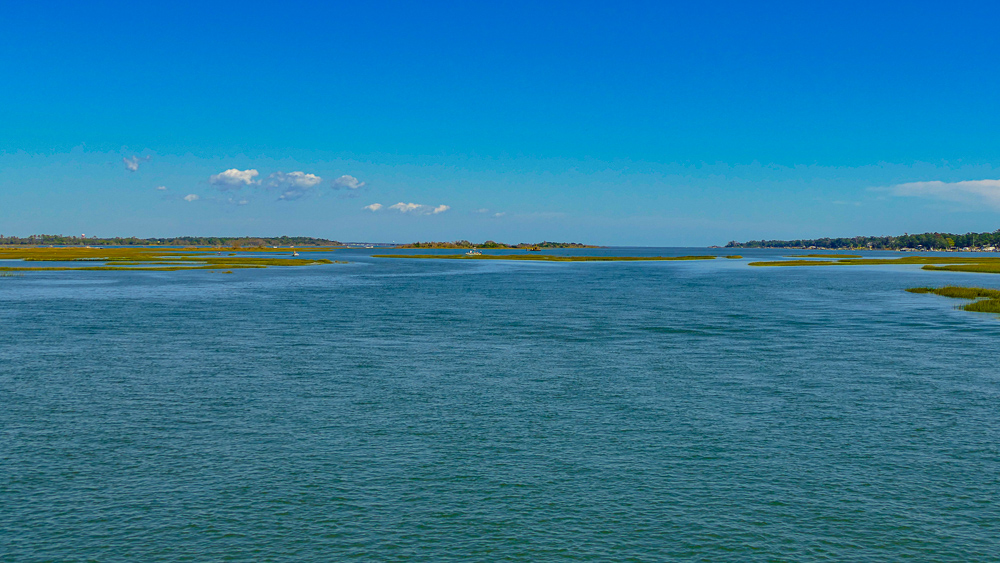
Bogue Sound not far from our Crystal Coast home

Our journey to a home by the water involved a lot of learning and more than a few surprises

Finding your spot on the water is not as simple as it might first appear but it is not really difficult. You just need to understand that are a lot of different kinds of water. Read more about where and how we found our piece of waterfront paradise.

TOLERANCE LEADS TO ACCEPTANCE

Each of us is an interesting mixture of what we were born with, who raised us, where we have lived and the people whose lives have intersected our paths. How we have reacted to all those situations ends up defining us and our world view. Some of my best friends are living just miles from where they grew up.  My wife, Glenda, and I have lived a far different life and it is about to get even more interesting again. Read more

From calm waters to uncertain waters

Pinch me when it is over

afterflorence2wm

The fall of 2018 has not been a fall to cherish.  Fall is usually a wonderful time on the Crystal Coast but unfortunately, the slow movement of Hurricane Florence over the North Carolina coast set the tone for the fall.  Along with Florence, we have had more than our share of rainy and windy weather.  Read more