
Growing up in the rolling hills of North Carolina’s Piedmont in the 1950s meant that you were not far from the land. Most people had a connection with the land in those days. I can remember hog killings
Two quotes from my book, “The Road To My County Country,” seem appropriate,
“The land was what gave life to us all, and where we go when life is gone. The land was at the center of all, and how could understand anything without first being on the land? You take whatever road you can find to get to the land…”
“If we were not going to be lawyers. What would we be? There could be only one answer. You had to go back to the land to find yourself. It was only there you could sort out what was good and what was bad. There you could find out what was important and how to live life the way it should be. That the roads had turned back to dirt was a good thing.”
If it sounds like I had a serious case of sixties disillusionment, it is likely a fair diagnosis. I grew up in the South, spent four years at a military school, saw a series of political figures I admired assassinated, and my college years at Harvard took place during the turmoil of the Vietnam war. Part of my college education included getting billy-clubbed while walking to our favorite hamburger place. Until that moment the students occupying University Hall were of little interest to us. That changed instantly and the only things that had much certainty when I graduated was that I did not want to be a lawyer and a charging line of state troopers was to be avoided at all costs.
That someone who grew up wandering the woods could only survive four years in the city was no surprise. The strange light of the city was never for me. I loved the deep dark woods and could fish silently with a friend all afternoon and never feel lonely. If camping under the stars as a Boy Scout ignited my love of the outdoors, trips to Alaska and Nova Scotia made life on the edge of wilderness one of the few certainties in my future.
“Our family had no history of lawyers, but we had a long and proud history of farmers.”
After it turned out that I they did not need me for fodder in Vietnam, I went back to the land. In 1971, I was determined to learn how to farm and how to treat the land well. Helen and Scott Nearing’s “Living the Good Life”, Louis Bromfield’s “Malabar Farm,” and Steward Brand’s “Whole Earth Catalogue” were my bibles along with advice from those who had been farming their whole lives. Perhaps we were lucky those first couple of years when we had an unlimited supply of composted chicken manure for the garden, but we learned how to grow stuff including hay, pigs, cattle and what seemed like enough broccoli to feed the world.
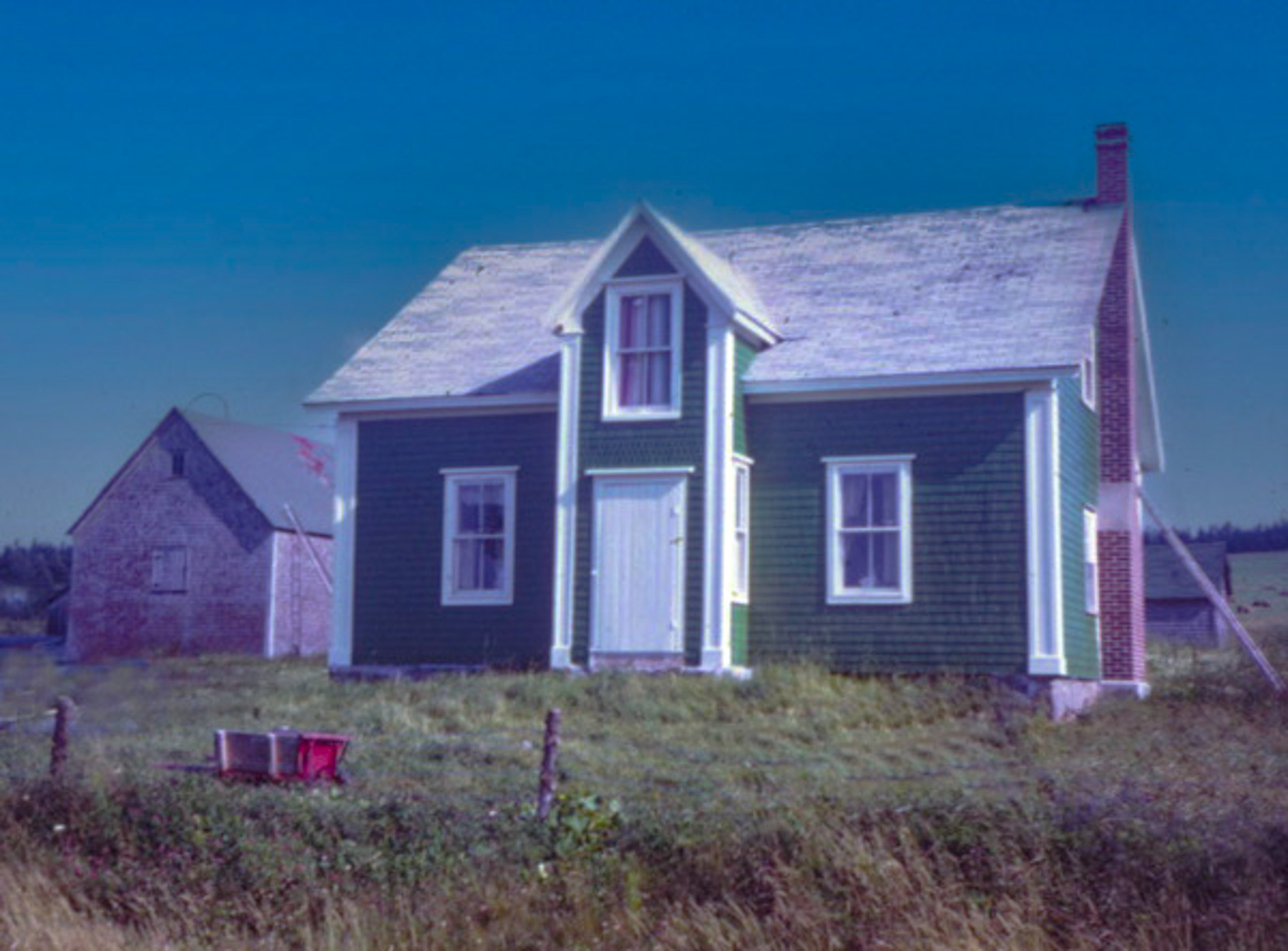
That the land I found was in Canada on the Nova Scotia shore of the Bay of Fundy was even better. Life in Nova Scotia in the seventies reminded me a lot of life in North Carolina in the fifties when I was growing up. Still other than having long hair until my mother sheared me on one of her visits, I never came close to being a hippy. I thought electricity, running water, indoor toilets, and especially hot water were good things and worth having. I had relatives in the fifties who had electricity but no indoor toilets and they still warmed their water with wood. One of my first family memories is my great grandmother sitting by her wood cook stove while reading the newspaper.
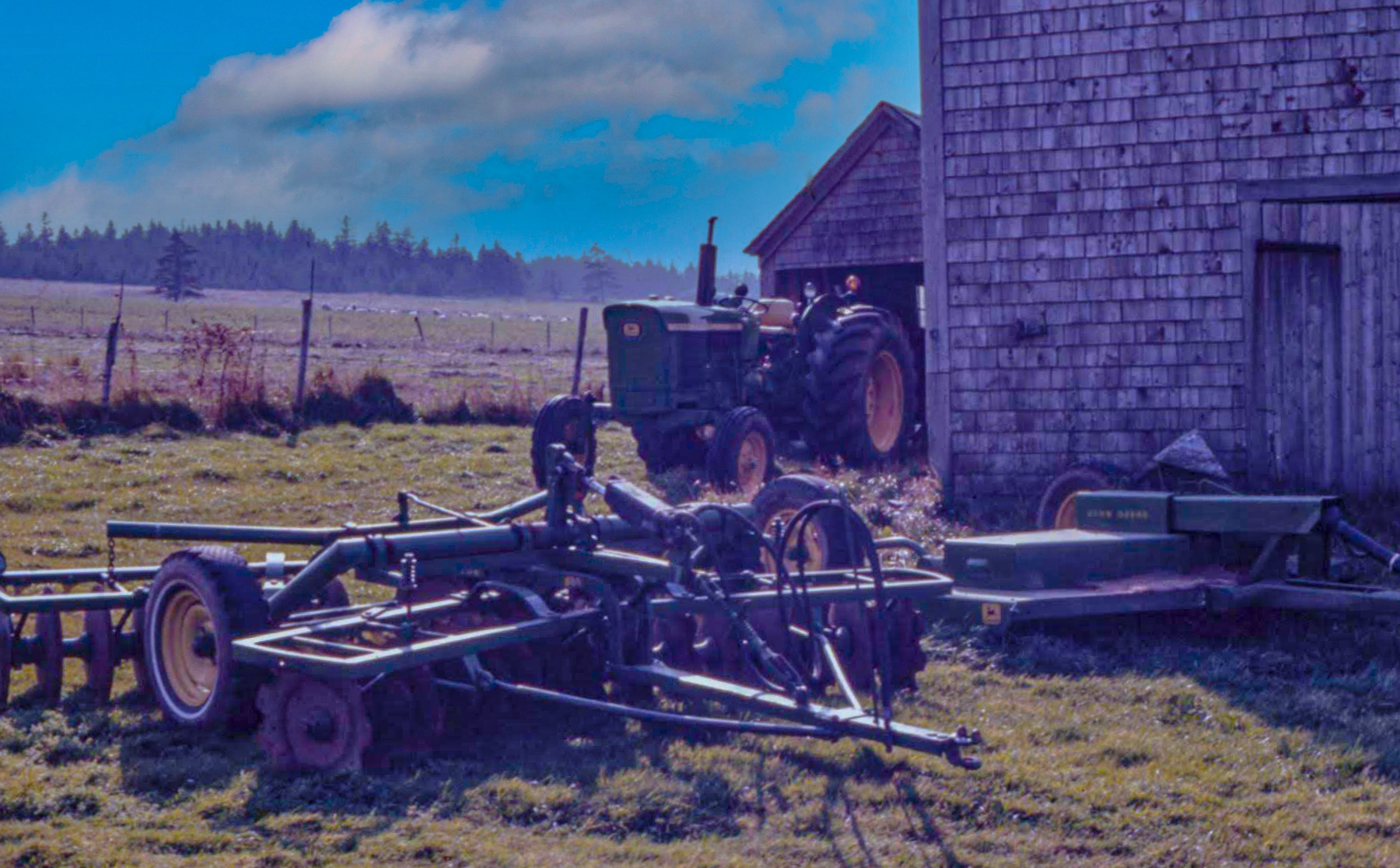
Most of all like Louis Bromfield, I could not see how to farm without a tractor so I ended up with a John Deere diesel tractor, a three furrow plow, disc harrows, a seven foot cutter bar, bush hog, hay rake and a manure spreader. A hay baler came with the farm I bought. All the equipment including a front end loader, rear blade, and post hole auger cost $10,555. The farm was $6,000 and my first few head of cattle were $1,500. I already had a pickup truck and my uncle built us a hay trailer. Fifty years after I started farming for under $20,000, I seriously doubt you could get started today for less than $250,000.
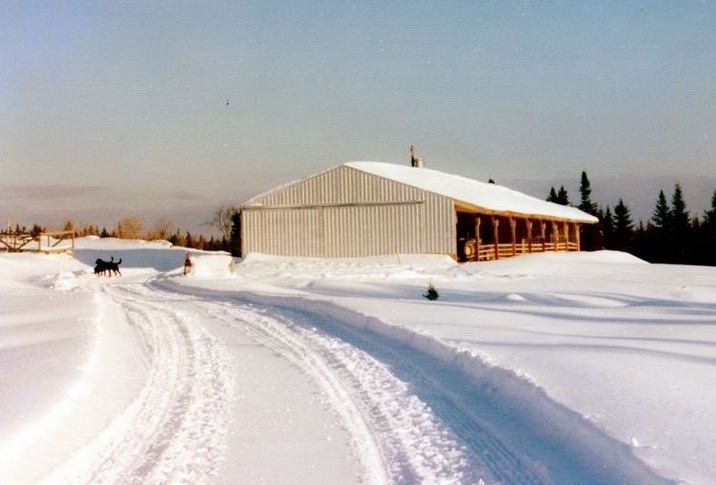
For the next eleven years, we had huge gardens and grew much of our own food even butchered our own animals for a time. Our cattle breeding operation which eventually ended up in the hardwood hills north of Fredericton, New Brunswick, grew astronomically. Eventually there were four big tractors, a round baler that could put up sixty tons of hay in a day. It took a hay rake twenty-one feet wide to feed the baler. We put up over 300 tons of hay a year with just one seventy-year old neighbor helping me part time. Our farm produced at least twenty-five 700 to 800 pound yearlings each year for beef and an identical number of yearling heifers as breeding stock along along with our most profitable product a dozen or so performance tested yearling bulls that sold for up to $1,500 each. Even with a family of five, it was a challenge to eat more than a side of beef each year so we never went hungry. At our peak we had two hundred head of cattle which is way more than a few cattle.
What was high on the list when we moved off the farm and I went to work for Apple? As soon as we could afford it, we hired a backhoe to dig out some of Halifax’s rocks so we could have a little garden. It wasn’t long after we moved to Roanoke, Virginia, in 1989 that we started planting things in the bed pictured above. Tomatoes by the house followed soon after. When we headed off to the coast in the fall of 2006, we managed to plant tomatoes the next spring. Eventually we grew unbelievable amounts of vegetables in tiny space. You don’t have a grow an acre of vegetable to get your fingers in dirt. We are about to prove that once more even though we are now in our seventies.
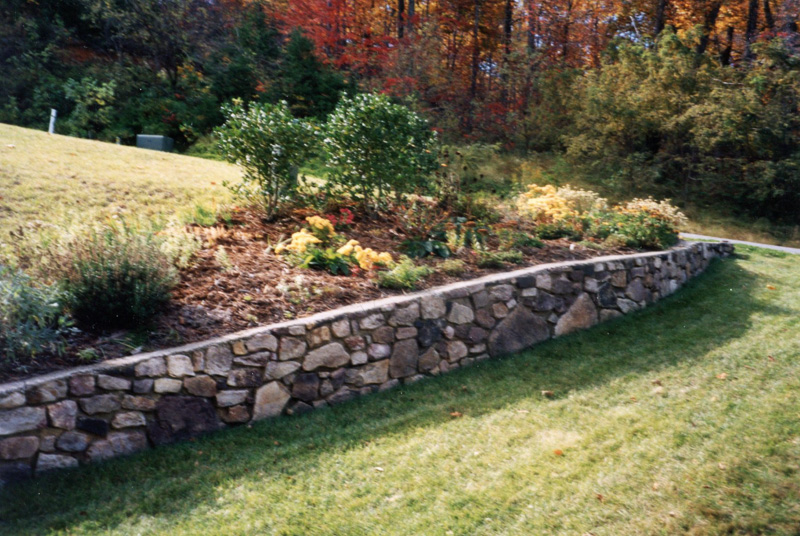
In 2021, we moved again, this time we move back to NC’s Piedmont and its challenging red clay soil. It has taken a while but we had a wall built behind our home. We don’t have the chicken manure that we had with our first farm, but we do have a local compost farm. Our wall contractor mixed over five cubic yards of compost with our red clay soil. Pictures of the whole project are here. We added a few other soil amendments and while we were doing it capped the whole bed off with another five cubic yards of compost. We planted a lot of bulb is the center third but have reserved the front third for gardening and the back area around our little fringe tree for perennials. By early March 2023 we we will have some vegetables plants in the ground once again. We can hope they turn out as well as our spring Cape Carteret gardening.

 Our technological infirmity