Goose on his blanket, Maverick by her pillow, and Merlin on the highest pillow
Not a creature was stirring not even one of the tabby cats. They were all snuggled in their beds dreaming of Santa Cat and his sled full of cat treats. What a feast there would be if the sled just turned over. Even Goose might get his fill for once.
Merry Christmas from Goose, Merlin, Jester, and Maverick and the less furry members of the family.
May the next year find you living where you want to live and doing what inspires you. May whatever you do help you to love others and most importantly leave the people whose lives you touch better off for having known you.
It was the fall of 1963, and I was headed for Chattanooga, Tennessee. I was being sent to McCallie School so I could have more male influence in my life. In retrospect that almost seems funny since my mother was far tougher than most men. She might not have been much at hunting and fishing, but that was only because she did not enjoy them.
Still I was destined to go to McCallie. Like most teenage boys, I was not particularly interested in being dragged away from what I considered a perfectly good life. I had enjoyed an exceptionally rich family life for an only child with a single mother. Living close to my mother’s sisters and her oldest brother, Henry, had given me just about everything you could ask for in life except a dad. It was really tough going to away to school, and I fought it pretty hard.
Sometime during that first fall away, my dad had a heart attack. He was 88 at the time of the attack. If you do the math, you can figure out that I was born when he was 74. Something in the care he was receiving really upset my mother who in a very short time went to live in his house and took over his care. She eventually agreed to what he had wanted for many years, and they got married.
I know my mother made a few trips to Chattanooga to try to help me adjust that fall, but it was only when Major Arthur Burns had a talk with me, that I finally gave up and decided to make the best of what I considered to be a tough situation. I was a heavy kid so that created some challenges for me, but fortunately the academics came pretty easy to me so I did well there.
I had also been taught to not get into trouble so I stayed out of trouble, did my work, and figured out the system. The system as a freshman was not a lot of fun. We had to carry our laundry down the side of Missionary Ridge each week. As freshmen we also got to carry that of upper class students. I can remember a couple of frozen laundry bags that I had to carry.
I managed to get involved with things and eventually paid enough attention that I started succeeding in the military world. Getting by at a military school means getting up when the bells ring every morning, getting your name checked off at breakfast whether you ate or not, making your bed, and showing up for inspection with a shiny belt buckle and shoes. For some strange reason, I enjoyed shining my shoes and brass so that was never a problem.
Each morning we would head off to chapel for a few minutes of talk and announcements. There I mastered one of the great skills in life, sleeping while appearing to be awake. Then we would have classes, drill, lunch, another chapel meeting, more classes, and then sports. Unfortunately, I figured out how to do as little as possible in after school exercise so my weight remained a problem all through McCallie. I did get involved in some school sports as a manager and really enjoyed that.
In the evenings we had a very short time after the afternoon activities before our six PM dinner. Lunch and dinner were both eaten at a family style table with a teacher at each table. When I became a sophomore, I was rescued from the life at an ordinary table by my Latin II teacher, W.O.E.A. Humphreys. I joined his table which eventually came to be known as the Establishment. It was a bright spot in an otherwise uninspiring dinner environment. It offered intelligent conversation and a group where I felt like I belonged. Perhaps that explains why I took four years of Latin at McCallie.
After dinner was study hall which ran from 7 to 9:30 PM each night except weekends when Saturday was free and Sunday was a little shorter. You had to do study hall in the study hall unless you had good grades and had stayed out of trouble. If you met the requirements, you got to study in your room. I do not remember many weeks in the study hall. If you got over ten demerits each week, you had to walk them off around the track on Saturday afternoon. It was a system designed to keep you on the straight and narrow.
Some kids fought the system, I decided to make it work for me.
I had come back to McCallie my sophomore year with a different last name since my dad went through the formal adoption process so I could have his name. My roommate was a little worried until I showed up, and he figured out that the new person was actually me.
Somewhere along the years, I became popular enough to run for office. I ended up in the student senate for a term or two. I still remember one of our great victories was outlawing the hazing of freshmen students. We lived on floors in dorms. Each floor had a room with two seniors who were called prefects. Their job was to inspect our rooms, make certain we were in bed by 10:15 PM and in general keep us in line.
The summer of my junior year I was chosen as one of the prefects for the second floor of Founders Hall. It was one of the nicest dorms on campus and housed mostly juniors. I had worked exceptionally hard my junior year, often waking at 5 AM to study by a flashlight in the small alcove for our room doorway. I had risen to second or third in our class rankings.
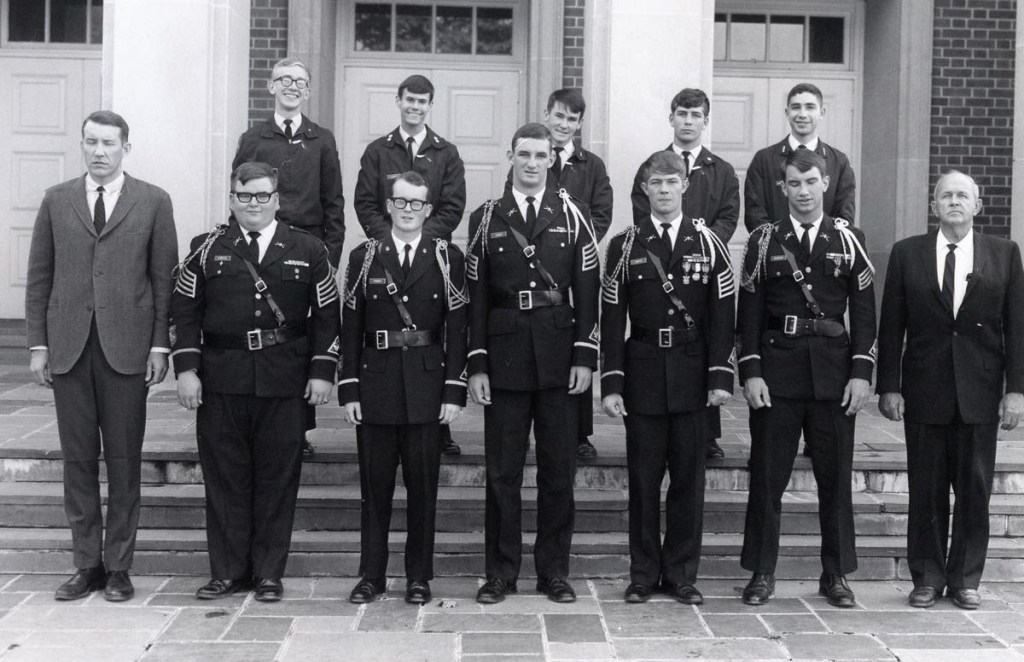
That spring I was also one of four juniors appointed to the rank of captain. I was also inducted into some leadership organizations. It was to be a pretty good senior year. I can remember getting into some trouble with the senior play when we executed Santa Claus which I believe was me, but I doubt anyone goes through high school without a few challenges.
My senior year, I got a special privilege which was to keep my car on campus because my dad seemed to be rotating in and out of the hospital, and I was often called home because he appeared to be dying. I was only allowed to drive the car for these emergency missions, but still it was nice having the car there. I think my parents had felt guilty about sending me away so they had given me a blue and white GTO convertible. It was a very cool car. It took me a while maybe even into my college years to figure out that having a cool car did not make you cool, but I suppose I figured it out a lot sooner than some.
A big part of McCallie was getting into college. Getting into college in those days did not mean you had been on a grand tour to select the colleges which you liked. You applied to some colleges, got in to some and went to the one everyone thought you should go to.
Lynn Weigel, my prefect my junior year, had gone to Harvard. When he figured out what a great experience it was, he convinced me to apply to Harvard. Harvard even sent an admissions person down to Chattanooga and I spent some time with him. I am sure he had other stops, but he made a compelling case for going to Harvard. When the admissions slips came, I had gotten into Harvard. In what seemed like an obvious decision, I decided to go to Harvard.
I was glad to leave McCallie, and I vowed to make the most of my experience at Harvard. I can still remember pulling the cord of my alarm clock out of the wall. When I got home to Mt. Airy, I filled the clock with solder so that I would never forget the exact time when I left McCallie.
I know I learned to work hard, take care of myself, and to be careful with any power that was given to me, but sometime you have repeat lessons until they really sink into your character. I did vow that my children would never be sent way to school.
The next chapter is Harvard and the world beyond the South.
Our Lewisville, NC at the corner of Shallowford Road and Styers Street
My mother wanted to be independent so as soon as she could she bought a lot in Lewisville and built a house with an attached beauty shop. She bought the lot from Uncle Joe Styers. We were a Styers family living on Styers Street no far from Styers Ferry Road which was named after the ferry across the river run by my great grandfather Abe Styers. While Abe was gone, his wife Millie lived next door to us. One of my jobs was to run over and peak in the window of her little house to see if she was still alive. Every time I looked she was sitting in her rocking chair next to her wood stove with the newspaper in her lap. She died a year or so after we moved. In those days, the viewing was help in the home. Great grandmother Millie was viewed in Uncle Joe’s house. She was the first dead person I had seen.
Lewisville was my first experience with school. Not many people have the privilege of going to first grade and finding out their teacher is a first cousin who has been teaching first grade for longer than anyone can imagine. Miss Conrad was my first grade teacher, and she was as tough as they come. I had no choice but to shape up and be a good student even as a first grader. I think my mother got daily reports or at least it seemed that way.
My first year in the Lewisville School was the last year that the school was a complete grade one to grade twelve school. The first and second grades were isolated on the bottom floor of the school near the cafeteria. I guess that protected us from all the high school students, but I seriously doubt that anyone would have messed with one of Miss Conrad’s charges.
I remember surprisingly little about my elementary years. I guess time mellows those memories. I can remember the “ah hah” moment of learning to add two columns of numbers in the second grade. I think we played a lot of dodge ball and kick ball during recess. I can remember some school plays where I had to memorize lots of lines, but most of it is sort of a blur. A few teacher names spring to memory, O’Daniels, Jenkins, and Greer. I remember Mrs. Greer because I had a crush on her. She was the youngest of the teachers that I had. I can remember baby sitting for her. I suspect that was my only baby sitting job ever. I can still remember the old white Volvo that she drove.
I had only one male teacher in my seven years at Lewisville. His name was something like Lasley, and I do remember that he used to drive the activity bus in the summer for those two wonderful weeks when we got to go to school sponsored swimming lessons at Tanglewood Park. That was truly a dream since we would go to one hour of swimming lessons in the morning, swim the rest of the morning, have a hot dog at the snack bar, and then play putt-putt until the bus took us home in the afternoon.
It did not take long to get through all the swimming classes, but we kept going because it was such a treat. Swimming pools were rare commodities in the fifties in North Carolina where almost no one had an air conditioner much less a swimming pool.
I must have been almost ten years old when we finally got an air conditioner that handled one room. We choose the living room. When it was hot, I would sneak in there and sleep on the sofa.
Television came to our neighborhood when I was six or seven, but I think I was more like eight by the time we got a TV. We would have been classed as media novices since the color film strips and the old reels of movies at school were a true wonder to us. Beyond those few enhancements, books and the blackboard served us well. In the end I think we mostly had to learn on our own.
Going to the movies required going to Winston-Salem which was a rare treat. I can remember the long winding two lane road which got replaced with a four lane road by the time I was a teenager. When finally there was a Saturday night at the movies on television, we were enthralled. A color television did not make it into our home until I was a teenager.
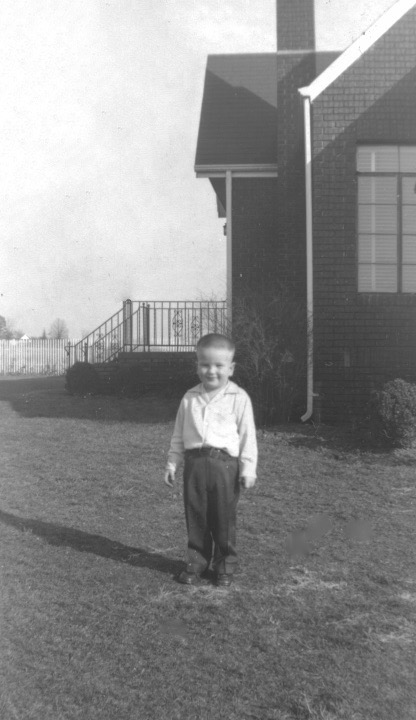
I do not remember homework being a burden during elementary school. In fact I can remember going home most days and playing outside until dark and finishing my homework after dinner. We had a huge cedar tree, a cherry tree, a plum tree, a persimmon tree, and a row of new planted white pines. Mother also planted some Japanese Weeping Cherry trees. There is a picture of me standing by a newly planted cherry tree. In summer of 2023 I took a picture of the same trees over 67 years later. They are pretty gnarly at this point.
I often rode my bicycle to school. When I got older, I got to be a member of the safety patrol and eventually was the Captain in the sixth and seventh grades. There were actually a couple of ways that I could get home from school. One took me through the back of our church and the other took me by the general store which other than the dry cleaners and furniture store was the only commercial entity in our end of town.
There was a great mysterious grove of tall bamboo growing behind the general store in a marshy area. It was a little scarier than the big woods where we often played. It was scarier mostly because it was nearly impossible to penetrate the center of the bamboo grove because it grew so close together.
Towards the other end of Lewisville there was a feed mill, another general store, two gas stations, a hardware store, the fire department, and eventually what passed as a grocery store and a small snack bar which kept going out of business.
The hardware store was my favorite place in town because they sold fishing tackle. I loved to fish and probably drove my mother crazy asking her to take my friend, Mike, and me fishing. My Uncle Henry had fishing ponds ten to fifteen miles away in Yadkin County. We eventually got to the age probably around ten that we could be left there. We spent many a day fishing those ponds. We caught everything from bream to bass.
I can remember learning how to run electrical current with two screw drivers through my mother’s flower beds so that the worms would crawl to the surface. Fishing was my favorite thing to do, but there were few other things that Lewisville had to offer. You could go watch softball games in the evening during the summer at the school for twenty-five cents. There was small parade on the Fourth of July. Other than that, you were on your own with your imagination. We lived in the world of forts we built and dams that we created. Eventually we got to the age that we could hunt. We would sometimes wander the woods with shotguns looking for squirrels, rabbits or quail. In those long ago days, deer were hardly known in the area.
We might have ended up more committed hunters if deer had been around, but as it was, we did better fishing so hunting mostly dropped off the radar. I think that by the time I was fourteen I had given up hunting.
When we were about eleven or twelve years old, a few of the parents got together and started taking us to a Boy Scout troop in a nearby town. I think there were five us, Mike, Skip, Russ, Cary, and me. After a year, we splintered off and formed Troop 752 in Lewisville.
Troop 752 became the focus of most of what we did. We were lucky to have a troop campground at the far end of town. Often we would plan a trip on Thursday and spend Friday and Saturday nights in tents. It was a great way to learn about camping and leadership. I became a Patrol leader and then the Senior Patrol leader for the troop.
In the summers we enjoyed Camp Raven Knob and Lake Sobotta which happened to be named after my father who still was only in my life a Saturday once a month or so. Every time he visited Lewisville, he would stop at one of the general stores and get a pound of sliced boiled ham. I still associate boiled ham with him I think it was in the Boy Scouts when they started father-son camp outs, that I first really missed having a father.
Still the Boy Scouts was a great organization to be part of in the fifties. I became a member of the Order of the Arrow and the next level Brotherhood. I lacked only a couple of merit badges in chasing the Eagle Scout award until I got shipped away to military school.
But before military school, I had one more educational experience that had a huge impact on me. I was selected to be one of thirty gifted seventh grade students out of Forsyth County to go to a summer school program at the Graylyn Estate in Winston-Salem. That summer they taught us how to type among other things and the next year I joined the other students in a special class at the Old Town School. My mother had to drive me there every day before her work. It was exciting being with people as smart or smarter than me. I enjoyed the year immensely, but there was even more challenge in the wind.
My mother was an amazing lady, she worked harder to keep us going than could be imagined, and I never heard her complain. She often worked so late that I had to start supper or fix something for myself. How she managed the burden of forty minutes of driving morning and afternoon that year I was in the eighth grade, I will never know. She was also always ready to a haul a car load of Boy Scouts anywhere. She was a great driver, and she took us to many camping spots. Most of my friends in Scouts considered my mother a better driver than the men. There was always competition to ride with her.
In September 1963, back when President Kennedy was touting hiking as good for your fitness, our troop decided to hike the 20.3 miles of Daniel Boone’s Wilderness Road through the Cumberland Gap. We did a number of five mile hikes to prepare us, but only our youth saved us. We should have done a couple of ten mile hikes first. We hiked all 20.3 miles in a day. I know that I was never that tired again until I farmed. I was lucky because instead of spending the night after the hike in a tent, mother hauled me back to a motel where I got to soak in a tub. It was the last spoiling that I would get for a while.
It had been decided that I needed more of a manly influence in my life, so my mother and father apparently picked McCallie School in Chattanooga, Tennessee to be the school where I would get my high school education. Not long after the Wilderness Road hike, I was in the car headed for Chattanooga, Tennessee. The first trip to Chattanooga we picked absolutely the worst way to get there going all the way through Murphy and emerging into Tennessee at Ducktown. That route took us through a mining area which had lost all vegetation. We quickly learned that it was best to go north into Virginia and then follow the valleys down to Chattanooga.
Sometimes I think my life is a little like a Rubik’s Cube puzzle which I have been trying to solve for as long as I can remember. There are times when the puzzle pieces have been close to alignment. Other times, especially in the early day, the puzzle has almost felt like it was broken. Throughout the journey, there have been lessons learned, some opportunities seized, and more than a few missed. Some of my first memories are of the home in Yadkin County where my mother and I lived until I was three years old. For some reason, never explained to me, my mother and father chose not to marry so mother and I lived in a home that my father and mother had helped my Aunt Mollie and Uncle Austin build. It was a cozy red brick two-story home set on a plot of land in the middle of corn fields at a cross roads that came to be known for the junk my Uncle Austin collected. That I was well protected in my early years is safe to say. In a sense I had three older sisters, daughters of Aunt Molly, who watched over me when they were not driving school buses or chasing boys. One of the earliest things that I can remember is taking apart a door lock in that home. I cannot say whether or not I got in trouble, but I distinctly remember the pieces of the lock in my hands. While I did not grow up to be a locksmith, I am proud that I learn how to use a wide range tools including a welder and an acetylene torch. The ability to work with my hands has served me well, and I suspect there is some significance in finding tools in my hands while living with my Uncle Austin who was a genius with his hands. He was one of those men who could build something out of nothing. A junkyard was like a shopping center for him. Finding that kind self reliance in Yadkin County, North Carolina just a couple of miles from where my mother grew up on a small mill pond comes as no surprise. The rural south of the fifties was a place where making something yourself replaced many of the things for which there was no money even if you could find it. Sears Roebuck was as good as it got. It was a place where people milked cows, had chickens, and grew huge vegetable gardens. The produce from the gardens was canned and frozen in staggering quantities. Each fall when the weather cooled, hogs were killed, sausage was made, and hams were sugar cured for later use. While Yadkin County was a protective cocoon for me, it had been a straight jacket for my mother, Blanche. Her mother died when she was eight, and as the eldest daughter she was cooking for the family well before she could even lift a heavy frying pan. She attended the one room school within walking distance of the mill pond where they lived, but she never graduated. After her father remarried, there were sparks between her and the step mother who quickly became afraid to tangle with my mother, Blanche. Blanche, who was destined to be the matriarch of our family, left home in her teens and went to live in Mount Airy over twenty rutted miles away. In a certain sense it was my mother’s determination that pulled the whole family out of the red clay of Yadkin County. She brought clothes, toys, and whatever was needed from the big city of Mount Airy to her sister’s family who managed to live near the location of the old mill pond their whole lives. That rural North Carolina of my youth was a place where Sunday afternoons in the summer were spent under shade trees eating homemade ice cream, peach when it was in season, and watermelon. Even after we moved to Styers St. in Lewisville just across the Yadkin River, we came back to my Aunt Mollie’s almost every Sunday. In a way it became the home place, because the real home place on the mill pond had burned down many years earlier. Walter, my grandfather and a miller, had moved away from the mill pond and started a small dairy on the main road when he remarried. While I was an only child, my Aunt Mollie had six children including one daughter Sue, who was as close to a me as a real sister could be. I was only a year older than her. Sunday under the shade trees was a time when we kids ran and played in the yard. Family news was passed from one to another, and I am sure more than a few problems were discussed by the adults. It was a time when children were sheltered. When someone became pregnant, code words came out. She was labeled PG, but as children often do, we figured it out. I can only remember a couple of exciting Sunday afternoons. One Sunday a pressure cooker that was being used improperly exploded and sent its lid through the ceiling of the kitchen and left beans everywhere. I also remember my Aunt Mollie cutting the head off a chicken and the headless chicken running around the yard. I guess we were easily entertained. In those days, there was no television to watch. The teenagers listened to records, and the rest of us played games outside. Our move to Lewisville was a move of independence. Blanche, my mother, was determined to raise me as a single mother. Our home in the village of Lewisville contained a small beauty shop where she worked long hours to support us. My father, John, a furniture manufacturer, would visit once in a while on Saturdays, but it was years before I figured out that he was my real father. Lewisville was a great place to be a kid in the fifties. We had a general store that was within walking distance. It had a cooler of small sodas that were ten cents each when we moved. I think it was my first experience with inflation. Living in the country we had been next to RK Brown’s General Store where sodas were only a nickel. The great attraction of Lewisville for me happened to be the fields and woods that bordered our home. It was a wonderful playground for a youngster. We built forts in the fields, dammed small streams, and became experts with BB guns and eventually pellet guns. There were some fishing ponds within biking distance, and even church and school were within walking distance. At a very early age I became a fisherman for life. Maybe it was that first catfish my Uncle Henry put on my line when I was barely able to hold a rod. I managed to make fishing a big part of my youth. It was a good life with backyard football seamlessly becoming backyard baseball as the seasons turned. In the summers we played until dark and then wandered home. No one seemed to worry about us even when we were running behind the mosquito spray truck on our oiled dirt road.
Years ago the kind of computer you used could stir some serious passions. The world was in two camps DOS/Windows and Macintosh. There were people who were afraid of the Macintosh and the ease of use that it represented. Computers were supposed to be difficult. Taking away the hard work meant that anyone could do it, not just those who had invested years in learning how to make computers work for them. In the early days, people believed that knowing what to do with a DOS command prompt made them superior.
Apple lost the hardware desktop war for a myriad of reasons which are beyond the scope of my article. Even the resounding success of the iPhone did not matter a lot. Only 41% of iPhone users also use Mac. A lot more use iPads but that is a different story. While DOS users did not all end up on Macs, Microsoft to its credit came banging on Windows until on the surface it looks enough like a Mac that there are no longer religious wars about computer operating systems. The Mac user interface one, even if the plumbing under the Windows version is a lot more complicated.
The difference between a Mac and Windows machine is still huge but it is not something that you can explain in a sentence. Unfortunately, most people have decided Windows is good enough for them. However, among those of us who still really need desktops to churn out serious work, the Mac enjoys a serious and dedicated following.
While I did work for Apple for nearly twenty years selling Mac in some of the toughest markets, anyone who has read some of my writing or my book about my Apple sales career, The Pomme Company, would agree that at times I have been one of their toughest critics. I like to think that I have seen far more Macs than the average person and just maybe I have a better idea of where Apple needs to apply resources to make the Mac experience even better.
I am still not particularly excited about Apple, the company. While they arguably have some of the best computers, their products are marketed as elite products with only those living close to Apple Stores really getting the kind of support that users sometimes need and certainly pay for in Apple’s case.
There is a case to be made that We Are Lucky to Still Have Macs, because Mac revenue is dwarfed by other parts of the company. It’s not the Mac’s fault that they are not on more desks. It has a lot to do with Apple, the company, and the decisions made over the years to not grow their share of the desktop. At times it was like, we have a great product but we really need to keep it a secret. We don’t want it to sell in the enterprise because Steve would be unhappy.
I hesitate to call it poorly-conceived marketing that focuses on just one part of the country but that is close to the truth. If you are near a blue-voting metropolitan area, you likely have an Apple Store close enough by to be practical. If like me you have lived near Roanoke, Virginia, the North Carolina coast, or west of Winston-Salem, North Carolina, you likely have rarely seen the inside of an Apple Store except on visits to the big city. I hate to think the kind of support people in the fly-over states get.
I have suggested Apple hire Apple user group coordinators across the country where it does not make sense to have a store, but given that Apple would have to part company with some of its pile of money to make that happen, I think the chances are close to nil. The money would hardly register a blip on Apple’s horde of cash, but I am not going to worry around it very much because those of us who have been using Macs for years know how to get by the challenges that Apple throws in front of its non-metropolitan users.
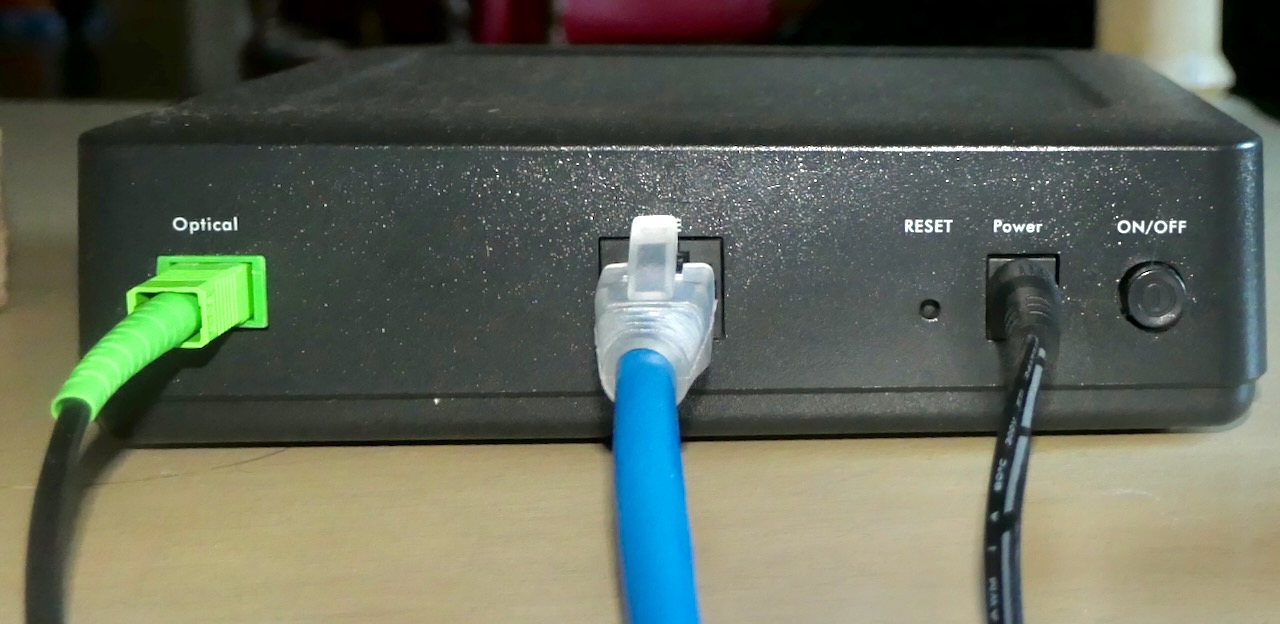
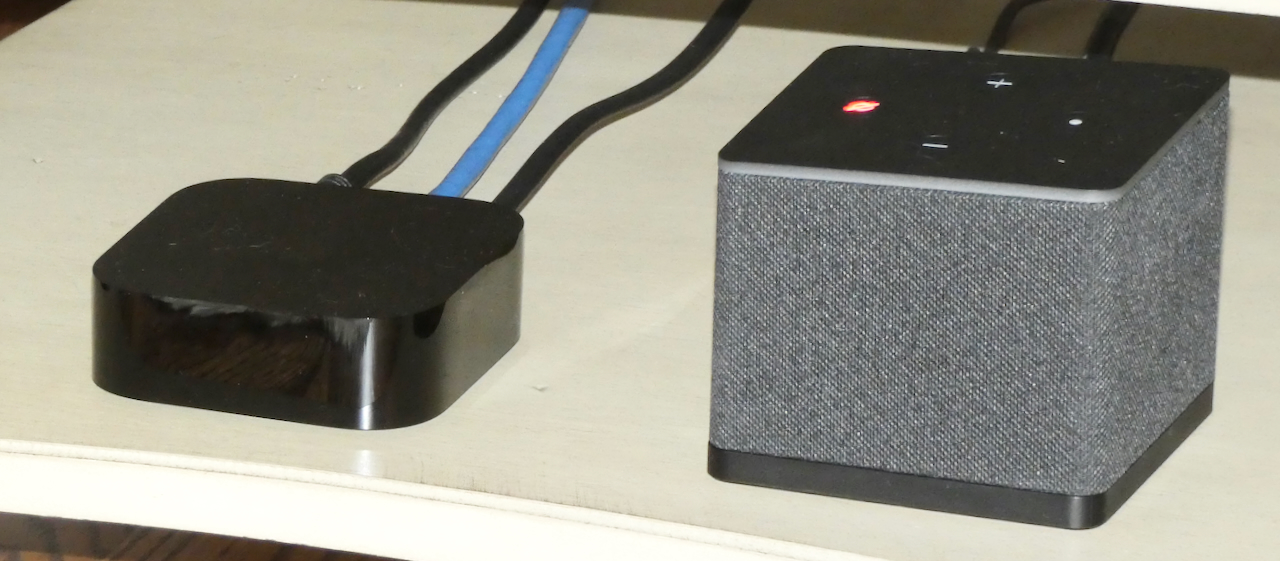
About the only place that I get to see Macs is in our local Costco twenty-five minutes away. Unfortunately choices there are usually limited to lower-end configurations with minimal storage or RAM options. Either one of those limitations would keep me from buying there since Apple like other manufacturers has been on the no-upgrade path for years. While I call myself a rural user because there is a twenty-acre soybean field across from our subdivision and lots of other farming nearby, there is a two GB fiber connection to our house which my Mac Studio could handle if Calix could deliver a router with 2GB output ports. There is no shortage of computers and technology in the house. I even have a 12 TB Network Attached Storage device (NAS) next to my desk. My home office is better equipped than the Reston, Virginia, Apple office I had when I was director of federal sales for the company.
It is fair question as to why I am still using Macs. Would you still drive a Ford if Ford threw you out the window after 20 years? Apple defenestrated me in July 2004. I bought an aluminum PowerBook G4 the next month- it died thirteen months later. Fortunately, I also bought a Dual G5 tower that December. It lasted from December 2004 until January 2023, an admirable run for any computer. I started using Linux in 2004 when I also started using Windows.
I have seen plenty of Windows computers over the years and my dalliance with real estate means that I ended up using a Windows machine for most of that job. I still use Windows because my current job requires the use of ArcGIS Pro and it will only run on Windows. For a good ten years, I did most of my photo work almost exclusively on Windows. It is only in the last six months that I have switched back to the Mac for my photo work. Apple finally decided to no longer tie your data to a single Mac and I got tired of Lightroom on Windows being unable to figure out two monitors being used at once, Windows has also become something of a pest. It wants Teams to launch anytime it isn’t running and it is also quick to try to get me to do something I have no interest in doing. The first rule of operating systems is to not get in the way of the user. Windows has never done that and certainly does not do that in its most recent incarnation.
Besides photos, I maintain a number of websites. I got used to Mac web tools at the dawn of the Internet. They have continued to mature and get better. They kept me using a Mac when I was doing most of my work on Windows
I have been using Microsoft Excel since it was Multiplan. That means I have a lot of years with it and it is still but default spreadsheet but I have grown to appreciate what you can do with Apple’s Numbers. Most of my books have been written in MS Word, but the number of pages composed and complexity pale in comparison to the reports that I have done with Pages in the last twelve years.
Perhaps the straw that broke any loyalty that I had to Word is Word’s propensity to screw up its own mail merge documents. It is tremendously frustrating and time-consuming to have to go looking for dropped addresses in a list of one hundred twenty addresses. I have wasted a lot of time recovering from those Word errors. While Apple’s Pages does not do mail merge address labels, LibreOffice which runs on the Mac does them flawlessly without dropping any. Apple’s Pages is a pretty good page layout program.
I recently wrote an article, The Best Mac Ever. In it I declare the reason the Mac Studio Pro is the best Mac ever because it just works. I doubt anyone is going to switch to a Mac because of this article or my experiences. However, remember the Mac has to be a pretty dang good computer for someone like me to keep using it.
I don’t remember serious computer user switching over to the Mac ever going make to Windows. The only thing that is better on Windows is search. If you are like me, you probably have a Windows machine doing little or nothing that can run a search for you while you keep working on your Mac.
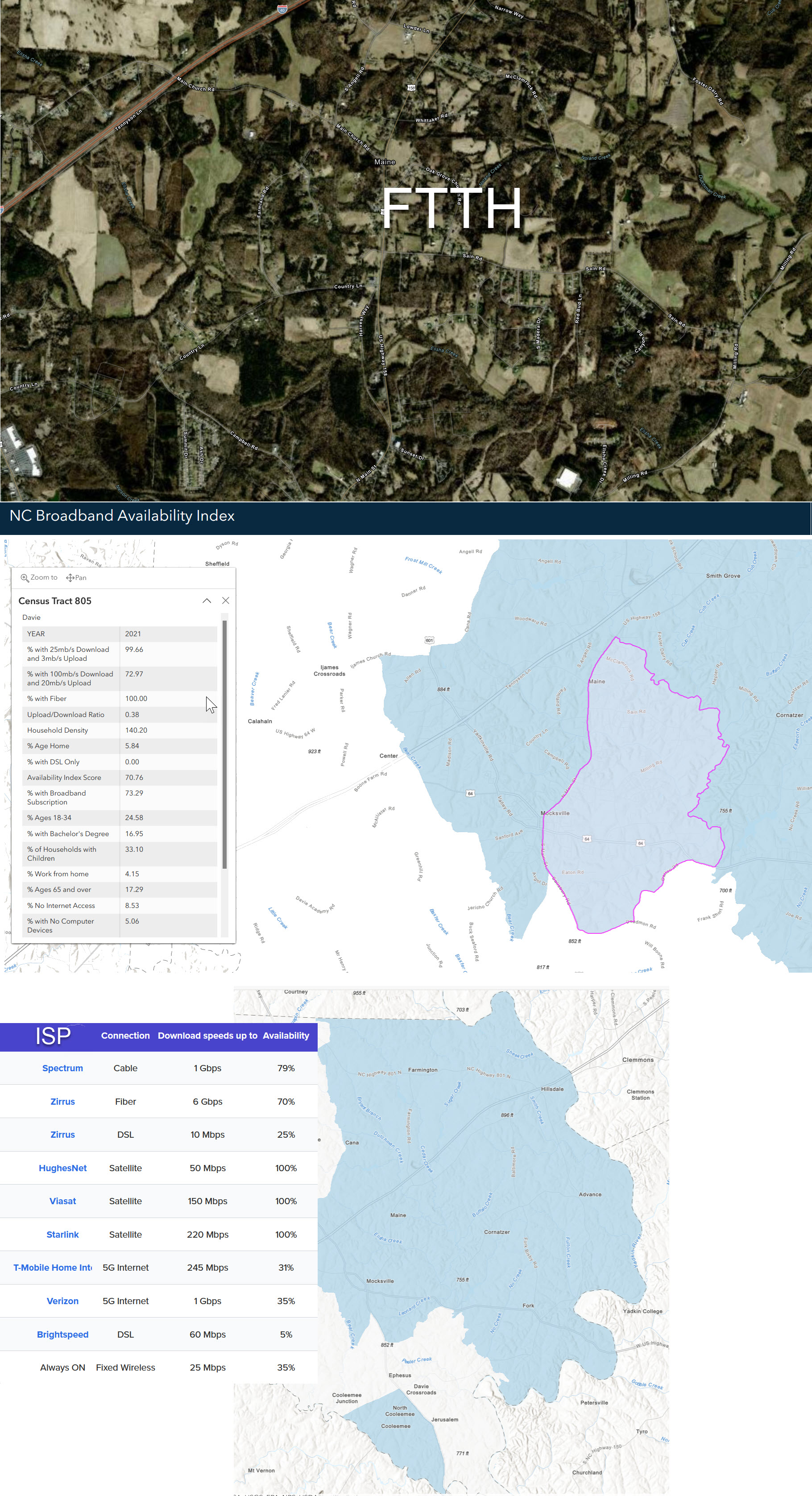
Our rural area in Davie County, NC- Rural with 2 Gig fiber
I have made my living in the broadband world for over twelve years. I spend the time at my day job analyzing broadband in counties across the United States.
While there are publications that would disagree, I can confidently say that most of you might at best have a choice between two providers. Sometimes it is between an expensive provider and a lousy provider, one with high costs and terrible customer service and the other with dead slow or unreliable service.
All this results from the broadband world being cut up into little fiefdoms. Competition to broadband providers is “I am going to lock up this subdivision before you have a chance to wire it.”
Competition in the broadband world is rarely here are three services competing for my business, I will pick the one that best suits my needs.
Many of us for years have believed that community-run, open-access fiber fixes this problem. The challenge is that sixteen states won’t let communities run networks. I have used the road analogy many times. We don’t build different roads for UPS, FEDEX and Amazon Prime. We build one road they all share it.
In broadband each provider builds their own network. They like to do that because it locks the customers into them. If we built fiber once, there is plenty for them to share but what mini-monopolist wants to share customers.
If Amazon Prime had to build their own roads, it would be a more expensive proposition than today’s sharing of roads.
Our company has built open-access networks across the country. Some have been running successfully for over a decade. They all have multiple providers competing for customers.
The problem is that now the federal government is throwing bucketloads of money around. Many local governments who are tired of being beat up by their citizens over broadband just want broadband to go away. They know they need a network but they don’t want to go through the difficult process of figuring out how to come up with a long-term solution that fixes both availability and competitive pricing.
They opt for what I call the “Westshore Homes Model.” I came up with the name from the home remodeling outfit that promises your bathroom remodel will be easy and done in a day.
A current Internet Service Provider hears the city/county wants a network. They show up, “We will build you a network, and you don’t have to worry about the details. Just trust us.”
The government jumps into bed or perhaps better out of the frying pan into the fire with the Internet Service Provider (ISP). The ISP applies for funding with their new government partner. They get money and build another leg of their mini-monopoly. The only problem, you and I are financing their profits.
Sometimes you run across a situation where there is competition and government money has helped foster that competition. I live in one of those places.
A situation like mine where I have a choice between telephone coop built fiber, cable and other technologies while living in a very rural setting is not what I usually see in my studies.
While I work for a fiber company, I have nothing against cable companies. In the absence of a lot of open-access networks, cable competing against fiber is what keeps pricing competitive.
In areas where there is only cable or only fiber, you run the risk of someone taking advantage of the situation. Having both around usually fixes that.
I will make one prediction. In ten years, someone is going to ask why did we spend so much government money creating mini-monopolies to carve up the world?
Our red Angus bull, Yellowstone, with a small part of the herd- 1981
My first cattle were purchased in the summer of 1973, when we were living in the two-hundred year old post and beam house along the Bay of Fundy in the village of St. Croix Cove. I laugh when I tell the story that our cattle got mixed up with a dairy farmer’s herd and I barely knew enough to separate the two herds.
It did not take much farming on the North Mountain of the Annapolis Valley to figure out that there had to be better places to make hay than a slope that was often covered with fog during the haying season.
I was looking for a new place to farm when I met my wife, Glenda, on a blind date while visiting my mother back in North Carolina. I guess the theory was that a beautiful North Carolina girl would keep me in North Carolina. It did not work and the beautiful North Carolina lady headed off to Canada where we even explored Newfoundland as option for our next farm.
Finally, in the summer of 1974, one year after we got married, we found our farm. It was in the rolling hardwood hills north of New Brunswick’s provincial capital, Fredericton. It was a good place to make hay with much warmer summers than Nova Scotia. It also had winter weather that tended towards snow instead of rain, snow, rain, snow, and finally freezing rain which was typical of the Nova Scotia coast.
When we moved, we sold our first cattle and started fresh. We probably had a couple dozen in the herd that first winter. I was still learning and I got talked into tying the mature females in the barn that first winter. It was the first and last time that we would do that. After a trip to Manitoba, Saskatchewan, and Alberta to buy some better brood stock, I was convinced the cattle would be better in the woods than a damp barn. For the next eight years we ran our cattle outside in the winter. For the last few years, we calved an average of sixty cows per year.
The important statistic is that we never had a vet on the farm for a calving problem or a sick calf. We were heavily mechanized using a round baler to put up 300 t0 400 large round bales per year.
The large framed Angus and big bulls that we imported from the west turned out to be pretty popular. We had a good spring trade of selling performance tested yearly bulls. Our cull bulls were sold for beef at twelve months of age.
As we had got several daughters from our original feedstock, we started selling them for breeding stock and replacing them with their daughters. It was a lot of work and lots of promotional work. Yellowstone, our giant red Angus bull from Montana was a show stopper for most people.
In the fall of 1982, we dispersed our herd. Interest rates had risen to 20% and according to the Provincial farm board, we were too successful to qualify for a government-backed two percent loan. I always thought it was because I was a young American with too many new ideas for them to swallow.
In 1974, when I started farming in New Brunswick, I was one of a handful of farmers using round bales to put up their hay. The Provincial Agriculture people told me round would never work in New Brunswick’s climate.
Unfortunately the statistics were on my side. I fed two hundred head of cattle with them for over eight years. I was also told that running the cattle outside would never work. We built two large barns designed around the theory that a cow could have its calf outside in the snow and spend a night or two in a barn before the cow and calf went back outside. Yearlings had a large pole barn to run into during bad weather. We never lost a calf to a cow calving in the snow.
When I went back to New Brunswick forty years later, I found my two barns still standing, almost everyone using round balers, and very few cattle farmers. I guess that shows how effective agricultural experts can be in destroying cattle farming when they put their minds to it.
There have been lots of things that pushed farmers out of beef cattle but having clueless agricultural experts certainly didn’t help. I have often wondered if would still be farming if I had gotten the two precent provincially-backed loan.
My son and I walking through the herd during the summer of 1981
Our former home just off the White Oak River, near Swansboro, NC
Some of you who aren’t used to heat will likely get a taste of it this summer. From 2006, until 2021, we lived on the North Carolina coast where heat is part of the life. Our house and large yard are pictured. Except for the last three years, I did all the mowing and trimming. Until like many grasses, the centipede we had thrives eat and can come close to needing to be mowed more than once a week. Any Bermuda grass absolutely needs more than weekly mowing. We had a nice patch of Bermuda in the middle of our yard. Fortunately, heat has been part of my life for many years. There are few things we learned to do before we had air conditioning. Also the way we work has changed a little since the proliferation of heat pumps. I grew in the South in the fifties. We did not get our first single room air conditioner until I was about ten years old. It cooled our living room and kitchen and that was about it. Still it was a miracle because it gave you a cool oasis where you could seek refuge on the hottest days. My bedroom was too far away to get any benefit so on really hot nights I would sneak into the living room and sleep on the sofa. Heat was part of your life back then, shade trees were to be treasured and the deep dark woods were our friends during the day in summer. At night it was cool enough to play capture the flag in our yards. The first thing you learn about heat when you grow up is that for outside work, you have to work early or late and find something else to do from noon to four or five pm. When we moved back from Nova Scotia to the states in the late eighties, we spent our first two years in Maryland. I didn’t work outside much but I wore a suit everyday. It was a dash from the air-conditioned car to a similarly air-conditioned building. I could hardly wait to get home and switch to shorts. By the time we got to our mountainside in SW Virginia, I was used to heat and I went back to mowing our yard. Seventeen years in Virginia was not enough serious heat training for our move to coastal North Carolina. We lived on a coastal river in Carteret County which is mostly water. Heat did not come early to Carteret County because it took a while for all the water to warm up. When the real heat arrived in late June or July, it was serious heat. I did a lot of boating, hiking, and kayaking and I learned never to be far from a bottle of water. Sometimes I would freeze a bottle and carry in my kayaking tackle pack. It was a lifesaver a number of times. The biggest challenge was mowing a big yard like ours in the heat. The best planned days sometimes get offtrack, and you end up mowing when you should be cooling in the air conditioning. There are things I learned in coastal North Carolina that are of value anywhere you have to face heat. Our garage which had a good cross breeze when the back door was open was what I called a transition zone. It is never a good idea to charge out from a chilled house directly into 85F heat and start pushing a lawn mower. I alway puttered around in the garage until my body started getting accustomed to the heat. Then I would put my straw hat on and start mowing. You are always better pacing yourself than racing with yourself. When I felt myself getting really hot – the kind of hot that sends the message – “Well you’ve done it, this is nearly as hot as your body can get without shutting down,” I would head back to our porch or garage and request some ice water. I would always drink my water outside in the shade or in the garage but not in the sunshine. Real heat means that you have sweated so much your clothes are damp if not wet. Going inside and getting chilled in air conditions just makes it harder to finish your job. Once you’re done, you cool off outside in shade but still in the heat. When you’re not longer about to incinerate, head inside to the shower. On the NC coast the water lines are so shallow that in the summer, cold water is pretty warm. I could tell it was the peak of summer when I could shower without any hot water. They say take off clothes to stay cool, but on the Carolina coast, our uniform ten months out of the year was shorts and t-shirts. I wore shorts mowing but pulled on some leg protectors when I switched over to weed eating. There were times in early summer when I would take a quick shower, switch to bathing suit and head to pool. Until mid-July the pool water would be cool enough in the mornings to feel good. By the end of July or early August, the outdoor swimming pools offered no cooling and were often empty. I have even heard of people dumping bags of ice in a pool in an attempt to cool it. I always figured it would take a chunk of an iceberg to really make a difference. Most of the summer, you could count on the ocean retaining its cooling power. I used to joke that the one sure way to get the heat to drain out of your body was to head to ocean, get about waist-deep in the water, then turn around and face the shore while a wave hits you between the shoulder blades. Usually that will do the trick. Of course in the summer time by July, you should plan on wearing something on your feet to get across what can become very hot sand. Even with it only being ten minutes to the beach, it was easier to find an easy chair under a fan and relax after a shower. The only good thing about heat at the coast is that remnants of it make for a very pleasant fall. I have many memories of kayaking in November and even December when the air was cool but the water kept you warm. Aside from the odd dangerous hurricane, fall is the best time to go to the beach.
Last fall we had a wall built. I was amazed at how well the company did their job. They had the right tools, everyone knew what to do and they were done in the three days and left no mess. I asked the owner if he ever did any advertising. He told me that he has never advertised. All his business comes from customers telling others about his great work. Who do you think will get my recommendation, the company that built the wall or the pressure washing company that never came back to finish the job? Everyone one wants customers that are excited about their products and services. Executives want customers to be delighted but we also want them to tell others about how good our company is at delivering what we promise. Few people write something like this.
From the day we arrived in Mocksville on Feb.1, 2021, every interaction that I have had with your employees has consistently exceeded my expectations.
David Sobotta
Certainly even fewer people write that about their Internet Service Provider like I did. When I see employees that have customer satisfaction in their DNA, it is well worth the effort to encourage companies to treasure those employees. In our very wired world where customer interactions take place in a mix of places from online to telephone calls and in person, you have to build a culture that values customers as something more than revenue. That is a challenge when many of the people coming into the work force are not enamored with making a phone call or even talking to someone that they do not know. The challenge is to get new workers to see the big picture of how all their actions reflect on the company. Treating customers well can improve customer satisfaction but also the bottom line. Back in the day of rotary and pay phones, it was not unusual to make a phone call and not be sure who was going to answer the call. You needed enough conversational skills to get through the person who answered the phone to the one who you really wanted to get on the phone. It is a skill that many are missing today. I have trained fresh out of college interns to make effective calls. By coaching them and using a script the first few times, they can learn to do a great job. It is far better to jump with them into the fire as opposed to throwing them in the fire and assuming they will figure it out. I had friends in the technology world who were willing to be pretend customers. Do practice sales calls with someone you do not know is a great way to get on the right track. Some of my pretend customers were people who I had also trained years earlier. Talking to customers is a learned behavior and when you get good at it, you want to continue doing it. It also helps to new employees who might be technology savvy get some perspective on how their customers view technology. After the Macintosh was introduced by Apple, I was fond of making sales trainees learn how to use and sale the Apple IIe. I often introduced the training by saying you cannot appreciate how easy it is to draw a circle on the Macintosh without figuring out how to do it on an Apple IIe. Today I would probably make sure sales people could get a picture from a real camera to a smartphone and explain what they have done. With automated online signups, the opportunities for good phone calls are diminishing but they are still there and should not be ignored. Writing a good customer response email is also something that seems to falling out of favor to automated responses. I am not a fan of automated responses or customers never being able to reach a real person. The easiest way to lose a customer is a phone tree with no real people. An enthusiastic customer is worth their weight in gold but how do you measure that and take into account the not so enthusiastic customers?
In 2003, Fred Reichheld, a partner at Bain & Company, created a new way of measuring how well an organization treats the people whose lives it affects—how well it generates relationships worthy of loyalty. He called that metric the Net Promoter ScoreSM, or NPS®
You may have never heard of NPS but it is likely that you have answered, “On a scale of 0 to 10, how likely are you to recommend our business to a friend or colleague?” That is the classic NPS survey question and it is used to create a metric that shows what customers think about your company, its products and services. It allows companies to find under performing areas and fix them. When it comes to customers that love companies, I feel fortunate to have spent a couple of decades at Apple. Apple would not be here today if its customers had not become extensions of its sales force. Customers loved the products so much, many were on a mission to convert friends and colleagues using MS/DOS and later Windows. However, one of the maxims about Apple for the balance of its early years was “love the products but hate doing business with the company.” For many years at least in Higher Education, Apple’s revenue was sustained by a tiny higher education sales force that rarely numbered more than 125. They were responsible for institutional and individual sales all across the United States. The higher ed sales reps were so enthusiastic about their products and their customers that they held the whole thing together even when Apple ran through a set of horrible products or pulled stupid contractual stunts. The Apple case makes it clear that in order to have delighted customers over the long run you need both enthusiastic customers and dedicated employees committed to their customers. I worked at Webmail.us before it was purchased by Rackspace. Rackspace is mentioned as an example of the success of NPS in some publicity that I seen. Our goal at Webmail was to deliver fanatical customer support. I am pleased to see Rackspace still using the term and by the way, I love my Rackspace mail. Give me a few minutes and I will outline why. We achieved fanatical customer support by aggressive training of sales and support people. We also gave them the resources and support to excel at their jobs. If you have ever had to change your MX records at your hosting provider or transfer your domain, you realize how complex a task that can be. We solved the problem by creating detailed step by step guides on the web that a new employee could click on and read to a customer when the need arose. We did the same thing for customers, we had guides for Rackspace email to work with every conceivable client. We were aggressive about testing on every platform. Today I was researching some Internet Service Provider pricing. As is often the case I ran into some web pages that did not work properly. I had one that I tried on two browsers on a Mac and two on Windows before getting it to work on Chrome on my Pixel 6 Pro. Can you imagine how dissatisfied a customer experiencing that would be? I did a stint working the retail floor in the early days of the computer revolution. I learned early that it wasn’t really the product features that would complete the sale, it was what the product would do for the customer that would get them to buy it. Our challenge with many of the new sales and support people is to get them to understand they need to convey an understanding of what the product can do and how buying it from their company will make the product even more valuable. I go back to my post on QR codes being required to register at North Carolina DMV offices. We need to explain key technologies like QR codes to people walking out the door with new smartphones or they won’t be very happy with their expensive smartphones or with the company that sold them when they try to get their licenses renewed. It only takes a couple minutes to make sure someone knows how to use a QR code. It might well be the gem of knowledge that keeps the customer excited about the experience with your company. Apple’s Genius Bar was a brilliant idea. More companies need to embrace it. I can almost guarantee it will improve your NPS. Imagine a genius bar for smartphones. It would be swamped with customers eager to be convinced your company really understands their products.
Hayfield Near Farmington, North Carolina, April 22, 2023
Of the over fifty years that I have worked since I graduated college, only a little over a decade was spent farming. I did grow up in North Carolina in the fifties and sixties when everyone we knew had gardens, some had chickens, and even a few had a milk cow. It was not unusual to see hog killings in the fall and to receive some fresh country sausage as a gift.
The land was what gave life to us all, and where we go when life is gone. The land was at the center of all, and how could understand anything without first being on the land?
I felt that I had to go back to land. I was a little shellshocked after the sixties, four years in a military school and another four in the funny lights of Cambridge. I bought an old farm in Nova Scotia the summer that I graduated from Harvard. The skies in Nova Scotia were like the ones I remembered in my youth. The urge to work the soil was strong even though I did not grow up on a farm. The immersion course we got in farming was intense but somehow we thrived for over a decade. We might have stayed on the farm if interest rates had not hit twenty percent in the early eighties and there were better local opportunities for our children. We dispersed our cattle in the fall of 1982 and sold the farm three years later after I spent a couple of years working in the city.
Farming has stayed with me all these years, even during my years in technology. It was only a year or two ago when I was driving from our home at the coast through the Virginia Mountains to headquarters when I saw a field of grass down. It was well on its way to being ready to be becoming hay. I had to stop, roll down the windows and enjoy the smells and remember all the good memories. It was not unusual for our “team,” Harvey and I to put up sixty tons of hay in a good day. Harvey was in his sixties when I bought his farm which he had farmed with horses. We sometimes cut hay with two nine-foot mower conditioners. The big fields Harvey would rake with our twenty-one foot rake and the small fields with a ten-foot rake. I would bale with the big Vermeer baler and one of the 105 HP International tractors. You could start cutting hay in the morning while the dew was still on it. Raking the hay before noon was okay, but I rarely started baling the hay until the afternoon. Large windrows that the tractor could barely straddle helped me churn out a nearly 2,000 pound bale every five to ten minutes depending on how much turning had to be done. When the hay was rolled up, we left it in the field until we had time to haul it back to the farm in the fall. Our hay farm was a couple of miles from where we kept the cows. We also cut hay all around the area wherever we could strike a deal with the owners. Before our children came, my wife even used to rake hay.
On a good day, making hay was something that gave you a feeling of accomplishment. A good crop of hay started with clearing the field of brush and rocks, applying lime, then working the ground, planting the grass seed in an oat cover crop, and sometimes fertilizing the fields in the spring. It doesn’t sound like much but it was lots of back-breaking work and sweat.
There were bad days making hay. Our mowers in those days had cutter bars with blades riveted on them. If you hit a rock and broke a blade, you had to stop and replace it. There are few things dirtier that replacing a blade on a mower conditioner cutter bar that has been collecting bugs, seeds, and dust for ten acres on its platform. If you didn’t itch from something that got on you, just remembering all the bugs would make you itch. The worst thing is when the equipment broke when you had hay ready to bale and wet weather was on the way. You try to forget those days. Getting hay that was ready to be baled dry after it was rained on is not a lot of fun.
There were some great memories from those haying seasons. Sometimes I would stop for lunch and my wife and the kids would show up with a real lunch. While my wife and I ate lunch, the kids would pick red raspberries on the rock piles. There were no snakes so it was as safe as it could be. Few of the raspberries they picked made it to us but they were so plentiful you could pick all that you wanted in a few minutes. The hay farm was high on a ridge and you could see for miles. There were no places any nicer on a summer day in the hardwood hills of New Brunswick.
It should be no surprise that I stopped recently to look at a field of grass (pictured above) that needed cutting. It is the last week of April here in North Carolina. There will be no thoughts other than my dreams of cutting hay in New Brunswick, Canada for another couple of months. If I am lucky in the next two to three weeks, I will get to smell some curing hay in our rural area. I can hardly wait because it is still in my blood.