Paths Not Taken

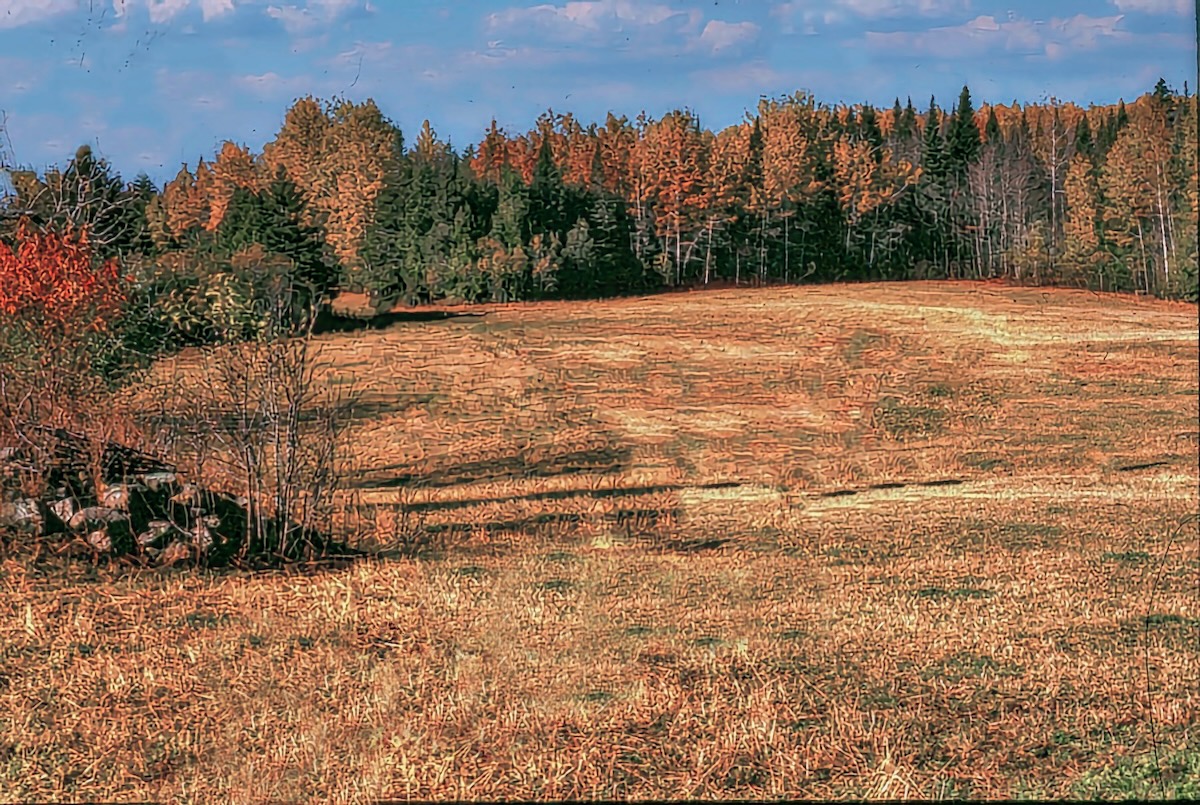
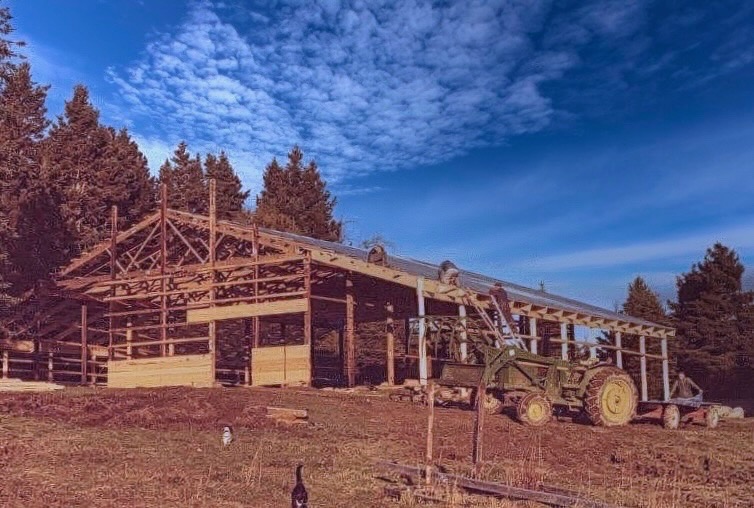
The backfield at our Tay Creek farm where I am homesteading and splitting wood in my dreams

In every life there are decisions which determine what direction your life will take. I have been fortunate to be in positions where I had enough flexibiity to guide our life in certain directions. Even now fifty years after some of those decisions, it is hard to say that what we did was the right decision for us. Our decisions worked out for us but it is impossible to tell if another path might have given us an even more rewarding (and not in monetary terms) life.
I graduated Harvard and instead of going to law school, I went back to the land in Nova Scotia. Whether the neighbors ever called us hippies or not is still an open question, but my bet is that they didn’t because we had a John Deere tractor and were trying to farm the land. We were friends with hippies living in a Dome in the woods, but I worked hard to wire our house so we could have electricity and the modern coveniences that came with it
We did grow a huge garden and put up prodigous amounts of produce both canned and frozen. We butchered our own steer and hogs. We collected wild Chantrelle mushrooms from the woods. We even tended a gill net for a while.
The old house I bought and fixed up had 140 acres. Of that well over 25 acres was a cleared hayfield with a small pond. Though the woodland with it was mostly spruce, I did eventually get another piece that had some hardwood. It is not too much of a stretch of the imagination to think that we could have kept a few cows, had a huge garden, and lived a very simple life. Looking at recent aerial photos of the property which I sold in 1976, the property appears to now have lots of gardens, more trees and little pasture though I am sure goats would be happy with what is there now. I might well have done something similar had my partner in the enterprise not been such a jerk. He married the local school teacher in our small community and devoted far too much time to telling our neighbors what a terrible person I was. While my new bride stayed with me there for a year, we were determined to move a friendlier place.
We found the better place in the hardwood hills north of Fredericton, New Brunswick. Instead of people being petty and mean, the residents of Tay Creek were welcoming, helpful, and supportive. I can think of no better place to raise a family. The community when we moved there had two country stores, three churches, a town hall, and a lot of opened minded people.
We stayed in Tay Creek for over a decade. Our three children were born while we were on the farm. Our two Labrador retrievers are buried there a long with a good chunk of my soul. This would have been an even better place to have a few cows, lots of gardens, and even fill the freezer with trout to supplement our beef.
We did not take that path, I wanted to work the soil and to raise high quality cattle, selling bulls to improve the local herds. We accomplished that goal, along with continuing to grow much of our own food. We had chickens, a Guernsey milk cow and a beautiful farm.
We eventually had to give up farming because interest rates soared to over 20% during the early eighties when our herd had grown to two hundred head. We couldn’t handle the high interest rates on our $100,000 operating loan, so we had a very successful dispersal sale. . After selling the cattle we could have hunkered down on the farm which was paid for, sold off some of the machinery, and continued to work the land, but we had three children, and we wanted them to go to college. Like many others I went to work in town after taking a few months off. My job was in an early computer store and led to a twenty year career at Apple. After Apple I worked as a vice president of a network construction and consulting firm for over a decadsa.
It has been a good life. All three children who were born while we were living on the farm have gone to college and done well. Yet as I have been watching some of the Alaska homesteading YouTube videos, I can only wonder how would things be different if we had stuck with working the land instead of keyboards. After all, I made the trip to Alaska before I moved to Nova Scotia and I even considered homesteading in Newfoundland.
Instead of that I ended up walking the halls of government as Apple’s director of federal sales. I know the people that I would have gotten to know working the land would have made much better friends than the politicians that I have met.
Still in my dreams I am splitting hunks of birch, milking the cow, collecting eggs and filling the freezer with brook trout, beef, pork and the cupboards and root cellar with homegrown veggies. We still garden in a token fashion and I still make sourdough bread but we buy more from local small farmers thsn we grown. At my age the amount of wood, even birch, that I could split would be limited.

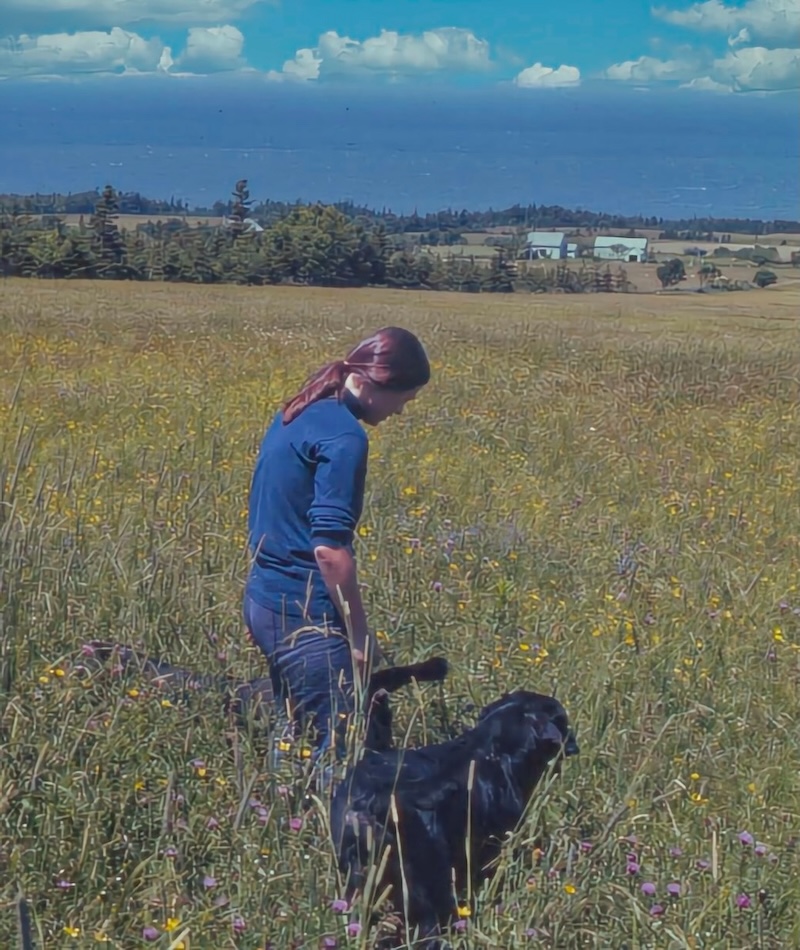
My wife in the large hayfield behind the house at our first farm in Nova Scotia

Life Sneaks Up On You

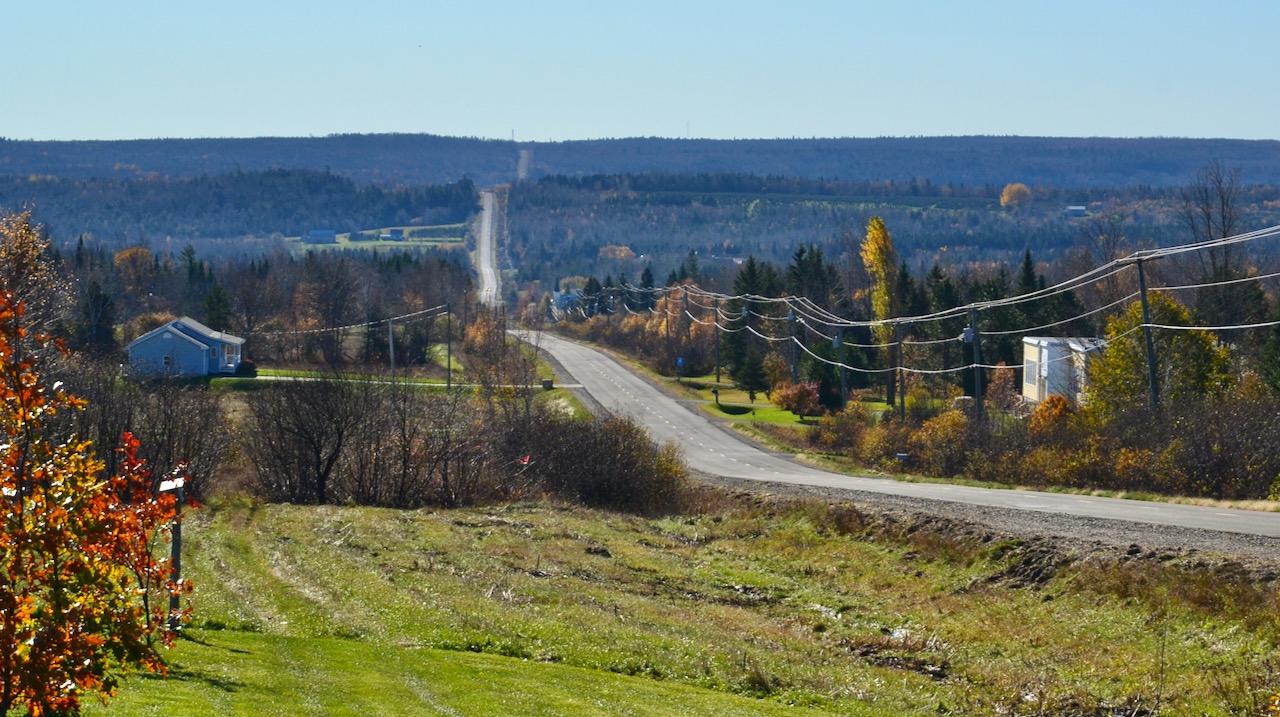
The Royal Road, Tay Creek, New Brunswick, Canada

Just after I graduated college in the summer of 1971, instead of going to Law School, I headed off to Nova Scotia. I was part of the generation that felt strongly about getting back to the land and understanding a lot of things that modern society was hiding from us.

A decision like that is possible when you are young, I believe that as age and life will sneak up on you, it gets much harder to go off on your own in a wild adventure as you age. How older people have done it, remains a mystery to me.

Eventually, I got married and my wife and I moved to what I considered a real farm or at least one that I believed that I could make into a modern farm. We never really gave up all modern conveniences like many back-to-the-landers. One of the first things that I installed in our Nova Scotia farmhouse was a dishwasher. I also put one in our home in New Brunswick. I plowed my garden with a John Deere tractor not a horse.

The road in the picture ran 20 miles back to Fredericton, the capital of New Brunswick. We were lucky to have schools, churches, a couple of general stores and medical services in our little community of Tay Creek. Forty years after we left, the churches and general stores are gone. If you want to buy gasoline or a nail, you have to go to Fredericton.

Taking on building a home for your family in an isolated spot which at the time was subject to amazing snow storms is something you only do when you are young and your body can take on almost any challenge. In my twenties and thirties, I never doubted that I could do everything for my family aside from medical care and schooling. Plumbing, electrical wiring, installing appliances, those were expected of the folks who lived beyond the city. There was no one to hire to mow a yard or even change faucet. While we had an oil furnace, most of our heat came from a wood stove. The furnace would come on during the early morning hours as the house cooled. Our water came from a spring. Our food came from our garden, our milk cow, chickens and cattle herd.

As nice as the life on your own in the hardwood hills of New Brunswick was, it was non-stop work. It was ten years before we went on a real vacation. After we left the farm, we mostly lived in suburbs. Seven years after leaving the farm we were in subdivision on the side of a mountain in SW Virginia. For many years I kept the steep slope behind the house clear of brush and small trees. It meant working with a chainsaw on a hill where I could barely stand. Fortunately, I never got injured. It was another activity reserved for youth.

By the time we got to our next house twenty-four years after leaving the farm, the strenuous work was down to mowing the yard, keeping our skiff running, and hurricane preparation. Good preparation for a hurricane often meant the cleanup afterwards was relatively easy. A storm like Hurricane Florence meant extra cleanup for everyone in the area no matter how much you prepared. The older you get, the harder all that is. Polywood outdoor furniture is nice until you have to haul it all into the garage.

When we moved from the coast in 2021, my wife and I were both over seventy. We were far from our children and family. Our house had too many steps and we were both tired of the hurricane routine in spite of never having any real damage to our house.

My wife had almost five acres of raw farmland which was a hayfield in Surry County. We briefly considered building a home there, but quickly decided that we were too old for all the work needed to build a home so we found a great subdivision with public sewer, water, and fiber Internet. Moving to North Carolina Piedmont close to where I grew up has turned out to be a wise decision.

We are glad that we moved when we did. We have friends our age that would like to move from the coast but have decided that they are too old to try. I can relate to their feelings. Getting our coastal home ready to sell and moving with our four kittens was not the easiest thing that I have ever done. I am pretty sure that three years later, I would be reluctant to move again unless I just had to move.

You don’t think about these things when you are young and can handle anything. Life can sneak up on you. It is good to plan a little for the time when you can no longer take on the world with one arm tied behind your back.

The Urge to Work the Soil

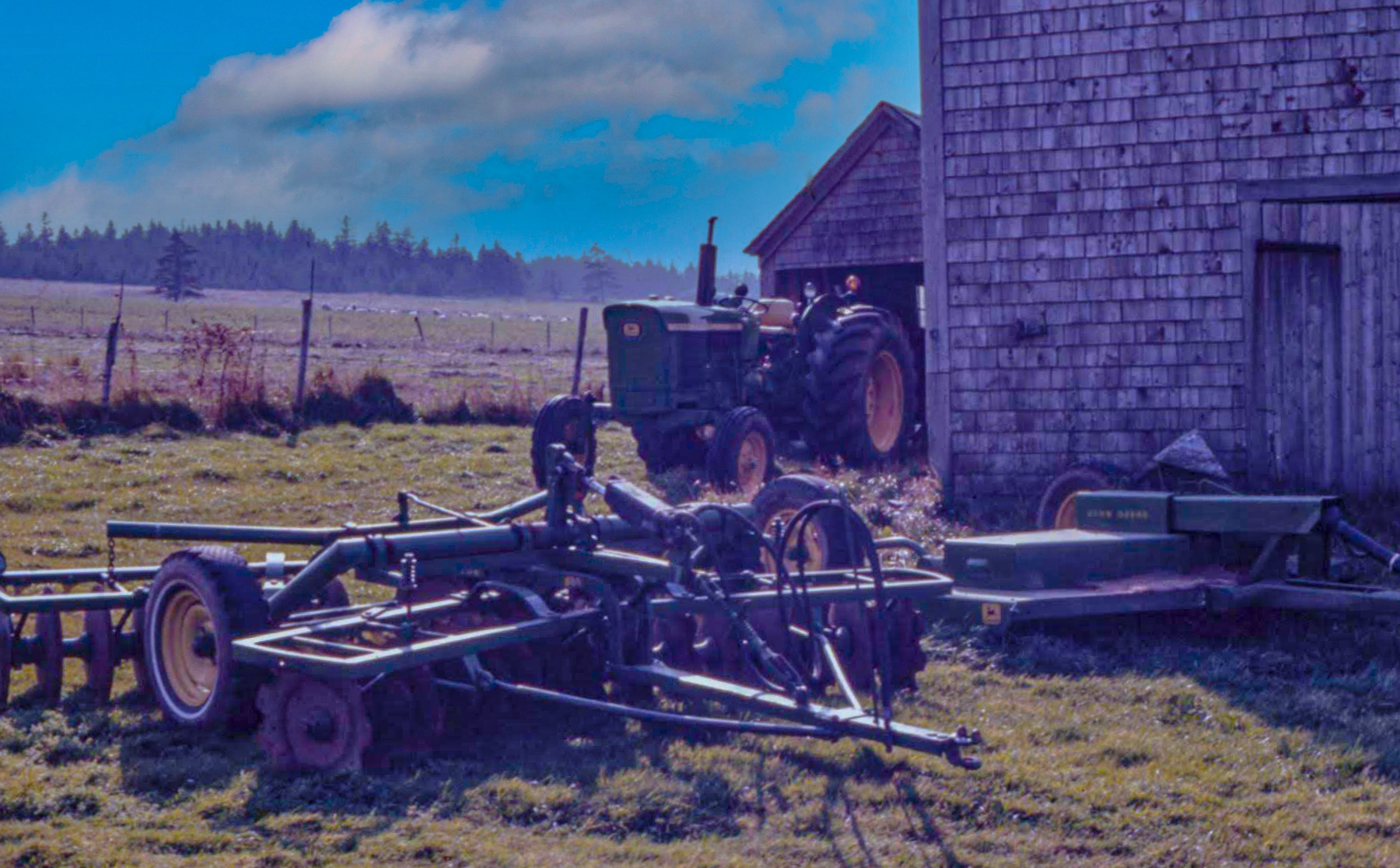
Our John Deere Equipment in St. Croix Cove, Nova Scotia, as the morning fog is lifting

Growing up in the rolling hills of North Carolina’s Piedmont in the 1950s meant that you were not far from the land.  Most people had a connection with the land in those days. I can remember hog killings

Two quotes from my book,  “The Road To My County Country,” seem appropriate,

“The land was what gave life to us all, and where we go when life is gone.  The land was at the center of all, and how could understand anything without first being on the land?  You take whatever road you can find to get to the land…”

“If we were not going to be lawyers. What would we be? There could be only one answer. You had to go back to the land to find yourself. It was only there you could sort out what was good and what was bad.  There you could find out what was important and how to live life the way it should be.  That the roads had turned back to dirt was a good thing.”

If it sounds like I had a serious case of sixties disillusionment, it is likely a fair diagnosis.  I grew up in the South, spent four years at a military school, saw a series of political figures I admired assassinated,  and my college years at Harvard took place during the turmoil of the Vietnam war. Part of my college education included getting billy-clubbed while walking to our favorite hamburger place. Until that moment the students occupying University Hall were of little interest to us. That changed instantly and the only things that had much certainty when I graduated was that I did not want to be a lawyer and a charging line of state troopers was to be avoided at all costs.

That  someone who grew up wandering the woods could only survive four years in the city was no surprise.  The strange light of the city was never for me. I loved the deep dark woods and could fish silently with a friend all afternoon and never feel lonely. If camping under the stars as a Boy Scout ignited my love of the outdoors, trips to Alaska and Nova Scotia made life on the edge of wilderness one of the few certainties in my future.

“Our family had no history of lawyers, but we had a long and proud history of farmers.”

After it turned out that I they did not need me for fodder in Vietnam, I went back to the land.  In 1971, I was determined to learn how to farm and how to treat the land well. Helen and Scott Nearing’s “Living the Good Life”, Louis Bromfield’s “Malabar Farm,” and Steward Brand’s “Whole Earth Catalogue” were my bibles along with advice from those who had been farming their whole lives.  Perhaps we were lucky those first couple of years when we had an unlimited supply of composted chicken manure for the garden, but we learned how to grow stuff including hay, pigs, cattle and what seemed like enough broccoli to feed the world.

That the land I found was in Canada on the Nova Scotia shore of the Bay of Fundy was even better. Life in Nova Scotia in the seventies reminded me a lot of life in North Carolina in the fifties when I was growing up. Still other than having long hair until my mother sheared me on one of her visits, I never came close to being a hippy.  I thought electricity, running water, indoor toilets, and especially hot water were good things and worth having.  I had relatives in the fifties who had electricity but no indoor toilets and they still warmed their water with wood.  One of my first family memories is my great grandmother sitting by her wood cook stove while reading the newspaper.

Most of all like Louis Bromfield, I could not see how to farm without a tractor so I ended up with a John Deere diesel tractor, a three furrow plow, disc harrows, a seven foot cutter bar, bush hog, hay rake and a manure spreader. A hay baler came with the farm I bought. All the equipment including a front end loader, rear blade, and post hole auger cost $10,555. The farm was $6,000 and my first few head of cattle were $1,500. I already had a pickup truck and my uncle built us a hay trailer. Fifty years after I started farming for under $20,000, I seriously doubt you could get started today for less than $250,000.

For the next eleven years, we had huge gardens and grew much of our own food even butchered our own animals for a time. Our cattle breeding operation which eventually ended up in the hardwood hills north of Fredericton, New Brunswick, grew astronomically. Eventually there were four big tractors, a round baler that could put up sixty tons of hay in a day. It took a hay rake twenty-one feet wide to feed the baler. We put up over 300 tons of hay a year with just one seventy-year old neighbor helping me part time. Our farm produced at least twenty-five 700 to 800 pound yearlings each year for beef and an identical number of yearling heifers as breeding stock along along with our most profitable product a dozen or so performance tested yearling bulls that sold for up to $1,500 each.  Even with a family of five, it was a challenge to eat more than a side of beef each year so we never went hungry.  At our peak we had two hundred head of cattle which is way more than a few cattle.

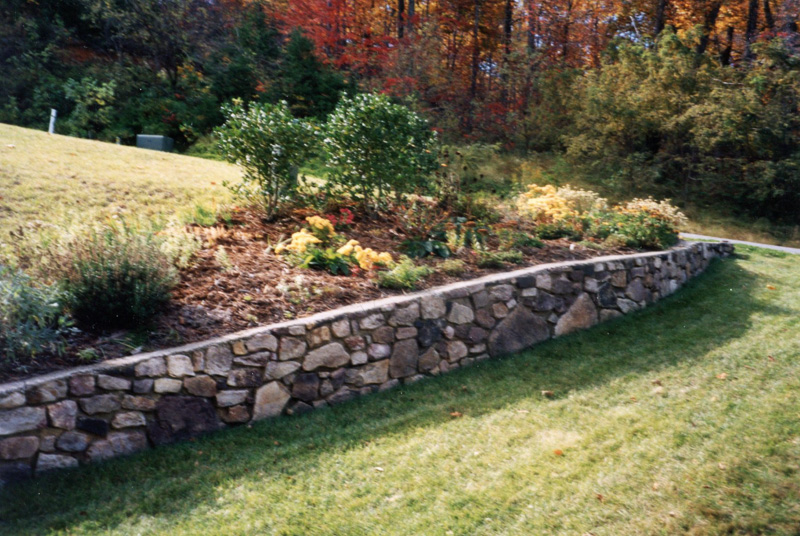
What was high on the list when we moved off the farm and I went to work for Apple?  As soon as we could afford it, we hired a backhoe to dig out some of Halifax’s rocks so we could have a little garden.  It wasn’t long after we moved to Roanoke, Virginia, in 1989 that we started planting things in the bed pictured above. Tomatoes by the house followed soon after.  When we headed off to the coast in the fall of 2006, we managed to plant tomatoes the next spring.  Eventually we grew unbelievable amounts of vegetables in tiny space. You don’t have a grow an acre of vegetable to get your fingers in dirt. We are about to prove that once more even though we are now in our seventies.

Our Rock Wall Garden in Roanoke, Virginia

In 2021, we moved again, this time we move back to NC’s Piedmont and its challenging red clay soil.  It has taken a while but  we had a wall built behind our home. We don’t have the chicken manure that we had with our first farm, but we do have a local compost farm. Our wall contractor mixed over five cubic yards of compost with our red clay soil. Pictures of the whole project are here. We added a few other soil amendments and while we were doing it capped the whole bed off with another five cubic yards of compost. We planted a lot of bulb is the center third but have reserved the front third for gardening and the back area around our little fringe tree for perennials. By early March 2023 we we will have some vegetables plants in the ground once again. We can hope they turn out as well as our spring Cape Carteret gardening.

From Cambridge to Cattle

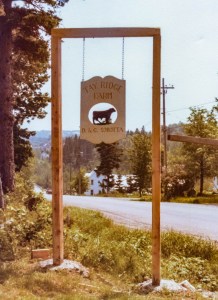
The sign at our farm in Tay Creek, New Brunswick.

Many people have asked me how I ended up farming in New Brunswick. It is a fair question. I did not grow up on a farm. I went to a military school in Chattanooga, Tennessee, and got my undergraduate degree from Harvard where I studied mostly Colonial American History. I am sure it drove my mother crazy but it was something that I needed to do.

“But if we were not going to be lawyers what would we be? There could be only one answer. You had to go back to land to find yourself. It was only there that you could sort out what was good and bad. There you could find out what was important and how to live life the way it should be. That the roads had turned back to dirt was a good thing.”

Read more at YEARS ON THE FARM.