Barely Clinging To The Grid

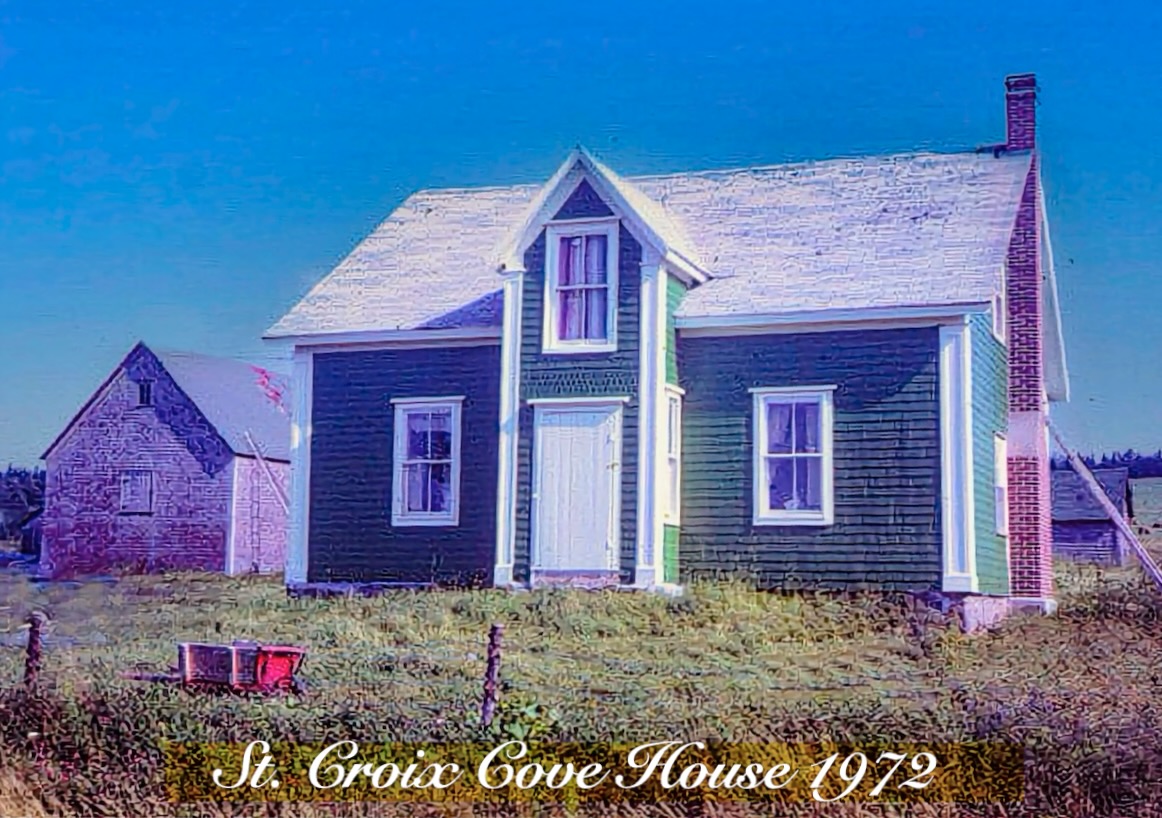
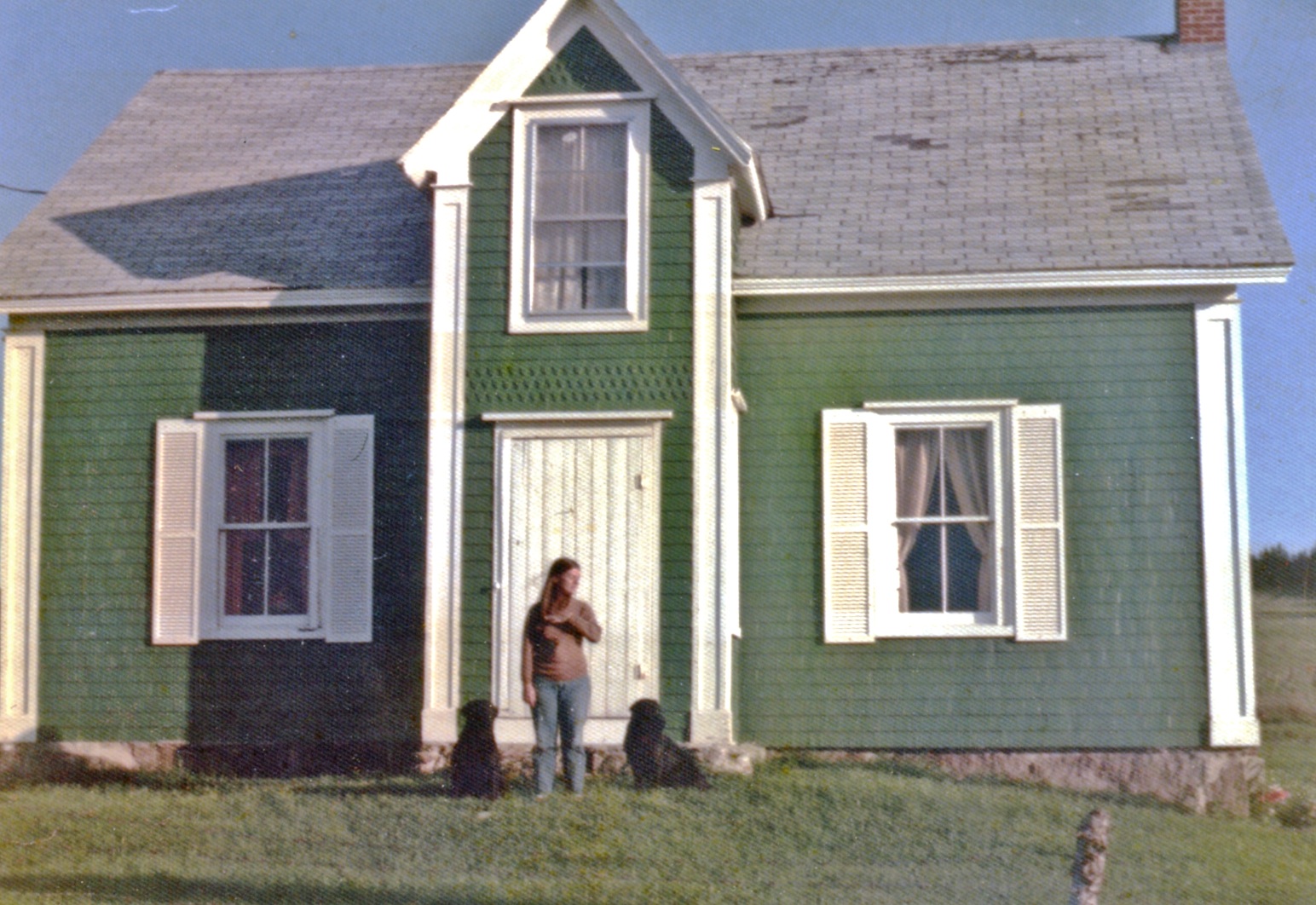
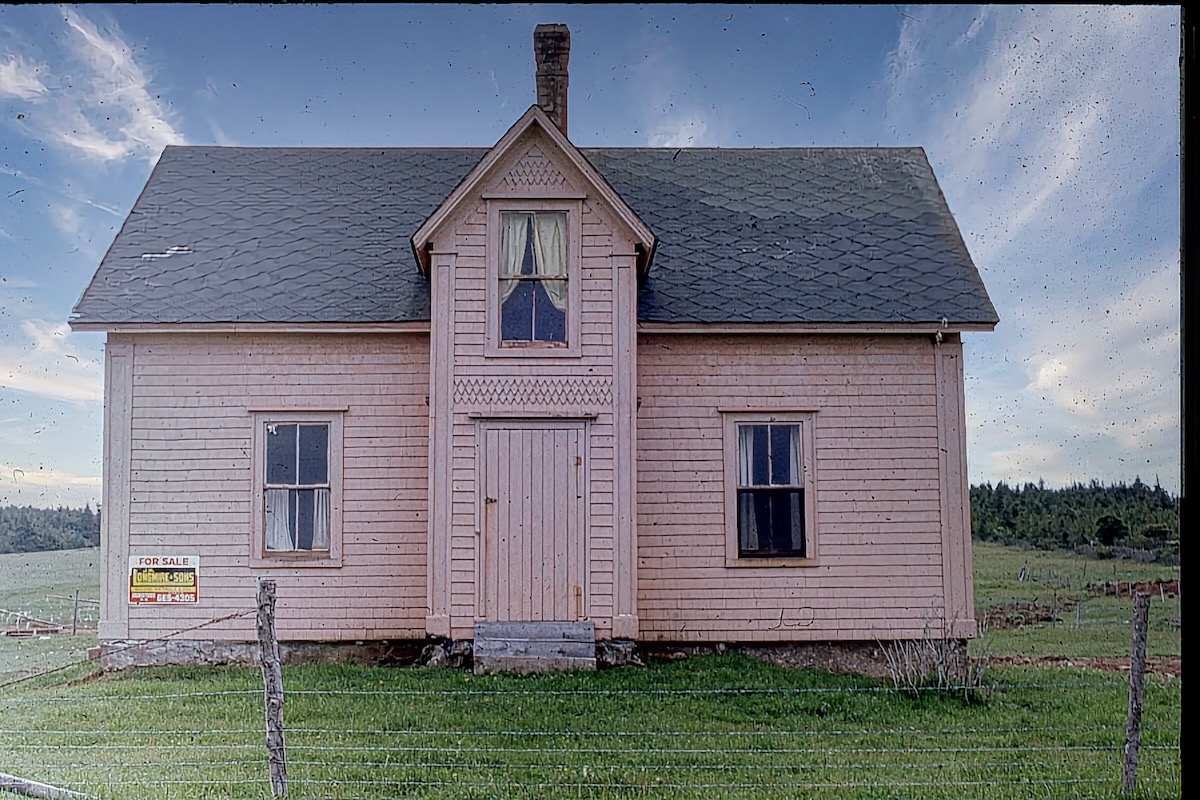
Our formerly pink house after a year of intense work

The dearth of good programming this holiday season has sent me to YouTube where I have enjoyed watching this generation’s homesteaders who would have been part of my generation’s back to the land movement in the late sixties and early seventies.
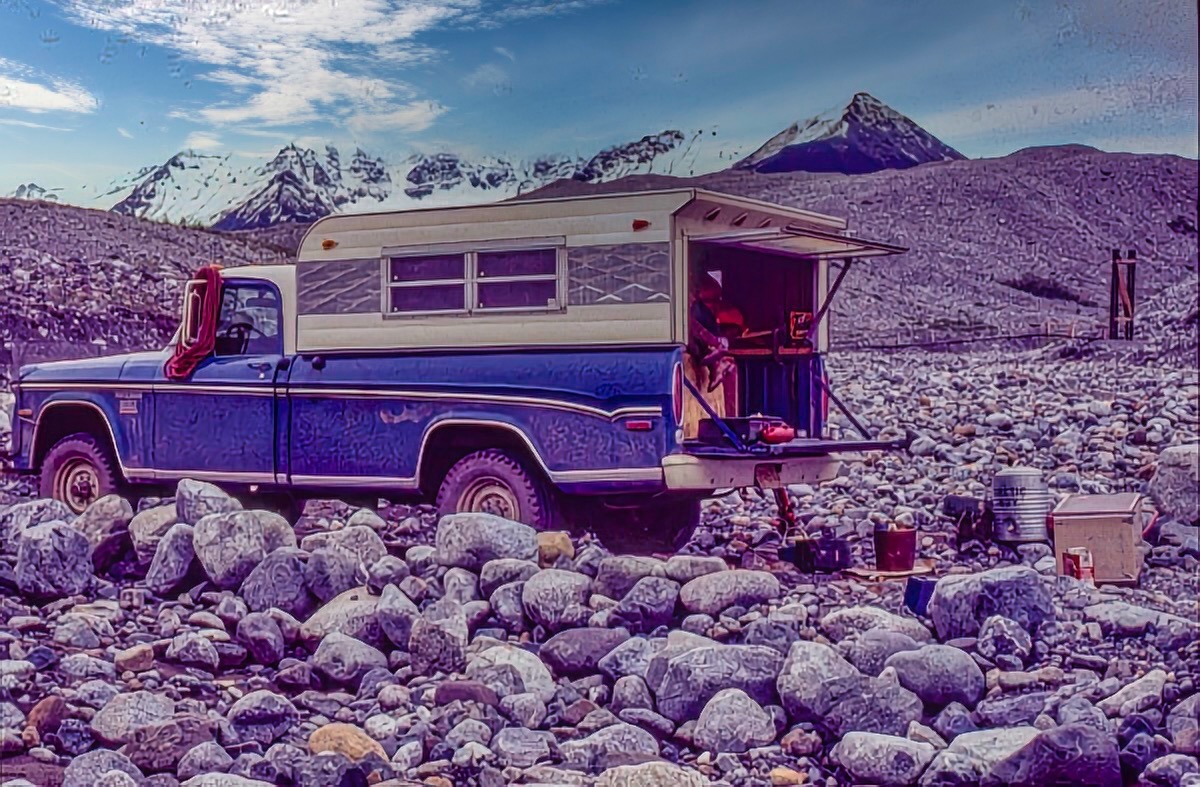
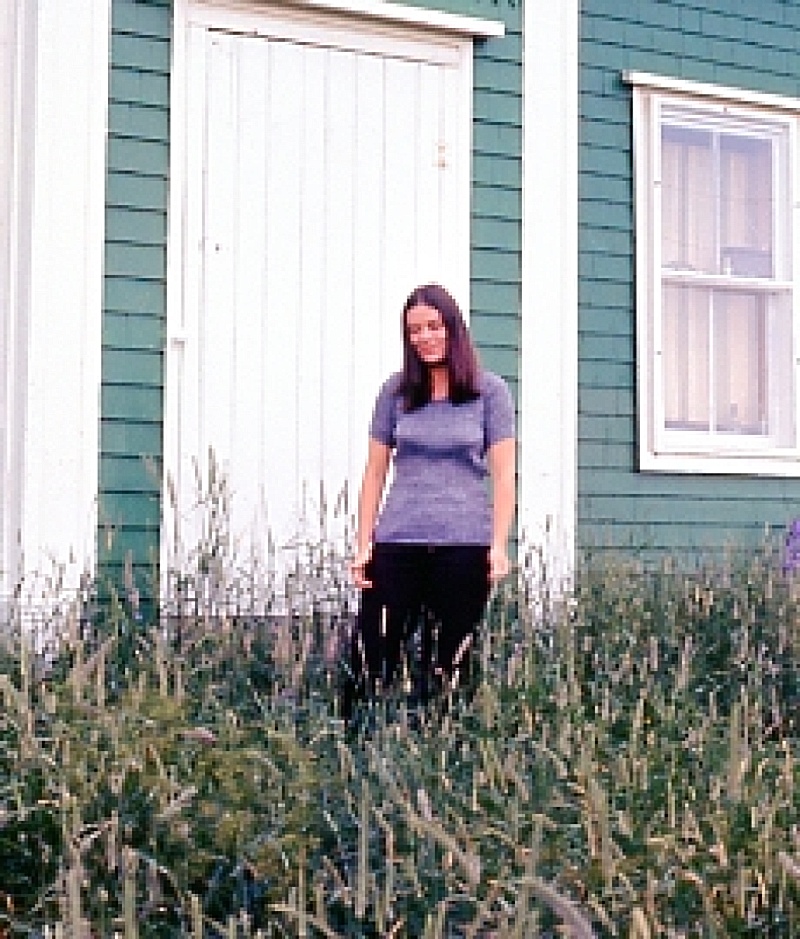
I was on the fringes of that movement back in 1971 when I bought an old farm including 140 acres, a two-hundred-fifty year old farmhouse (pictured above after a year’s hard work), with a barn and out buildings. I had just graduated from Harvard but had chosen Nova Scotia over law school. Four, also disillusioned, college friends went with me to Canada, but I was the only one to make the commitment to become a landed immigrant. My Dodge Powerwagon and Landrover came with me to Nova Scotia. They carried all that I owned including a TV and lots of spare kitchen utensils from my mother in Mt. Airy, North Carolina.
The pink house in the middle of a sheep pasture was in rough shape when I took possession. We set about tearing it down to the hand hewn beams, insulating it and attempting to bring some modern conveniences to the house. That was probably what set me apart from most in the back to land movement who leaned towards off grid domes, hauling their water, and hand tools for gardening and no modern conveniences,
Maybe it was a childhood in rural North Carolina which was still close to the land filled with small farms that made me different. My mother had been born on a millpond in 1910. I had listened to plenty of her stories of ice being stored in saw-dust insulated holes in the ground and cooking over a wood stove. When I was growing up in the fifties some of relatives still had outhouses on their farms. I also probably had camped in the woods more than most. For whatever reason, I was fine with the conveniences that electricity brought including hot water and a dishwasher. I was also happy to use a diesel tractor on our farm.
I became the electrician and plumber for the modernization of the old house. By Thanksgiving of 1971 we were ready to host some college friends who were sure that we were crazy. It was the first Thanksgiving on our own for all of us. It was pretty rough with everyone sleeping on the floor, a blanket for a bathroom door, chicken crates for kitchen cabiinets, and mayonaise jars for glasses. Still we had an electric stove and a dishwasher. Still it was a great celebration of our independence.
The next year the house was more livable but we poured our energies into gardening and farming. My dad gave me $11,000 to buy a tractor, three furrow plow, disk harrows, front end loader, manure spreader and a bush hog. I took $1,500 and bought our first herd of six or seven cows. We also started refurbishing the old baler that had come with the farm. We converted it to a PTO driven model instead of one powered by a mounted gasoline engine.
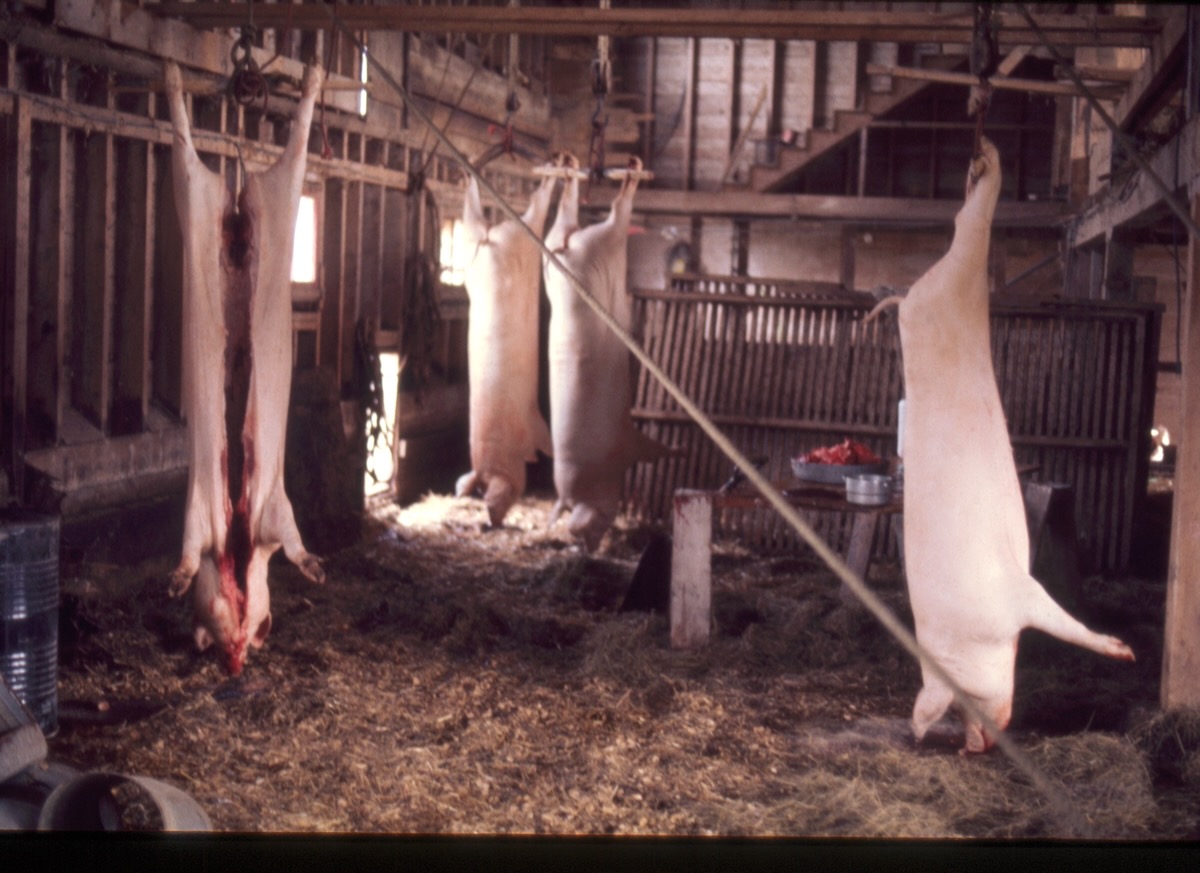
We had unlimited compost from chicken manure that had rotted for years behind some old chicken houses. I had little experience gardening besides helping my mother grow tomato plants in North Carolina. What I did have was inspiration from Helen and Scott Nearing and Malabar Farm. Gardening in Nova Scotia on the foggy North Mountain by the Bay of Fundy required a lot more expertise than in North Carolina. Still the abundance from the garden was overwhelming until my mother and her sister, both experienced canners, showed up to help us through that first harvest. We filled the freezer and the cupboards. That winter we butchered a steer we had fattened from our herd. We hung it age in our cellar before carving it up. The next summer we raised pigs, one for us and three more for neighbors. We butchered them with the help of neighbors in the fall, topped up the freezer and made crocks of salt pork. It was an amazing amount of work that made me appreciate all the fresh pork in the fall that our relatives had always given my mother and me.

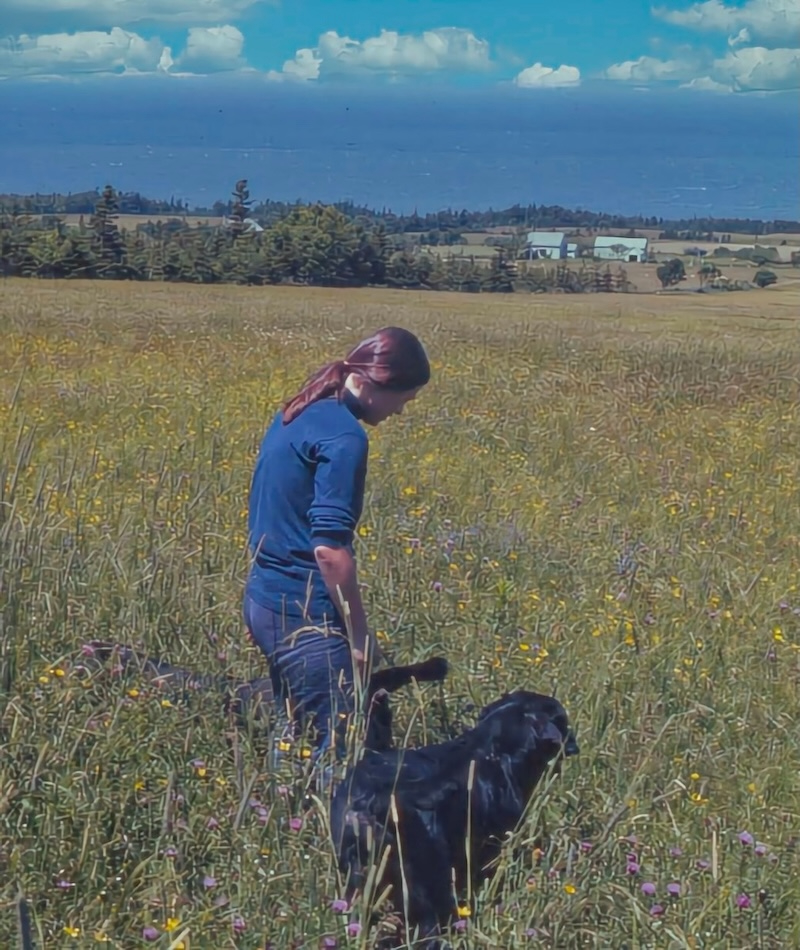
That winter of 1972 was something of a lonely one. One member of the college crew married the local school teacher and moved into another old house across the dirt road. The last one of my college friends left for a warmer climate. That left me wintering on the Bay of Fundy with our two Labs, Tok and Fundy, and a handful of cats. I made friends with some back to the land folks who lived far in the woods in a dome. I ordered some supplies with them including a giant tub of honey that was still with me when we moved. Mostly what we didn’t grow came from Beaver Fruit Cooperative in Lawrencetown down in the Annapolis Valley or from itenerant peddlers who sold salt fish and winter vegetables. I say we because that was my last winter alone.
I got married in the summer of 1973 and brought my new North Carolina bride home that September just in time for an early season snow storm that took the power out for a week. We stayed warm with the fireplace and cooked over the same. It was not unusual for the powe to go out on our dirt shore road but a week long outage was rare. That next summer my wife and I continued to garden, work on the house, and farm a little. Farming was a little because I had sold the cattle and part of my land to disolve an uneasy partnership with the friend who had married the village school teacher. Well before garden season my wife and I had made the decision to move to a better farming area with more and friendlier people.
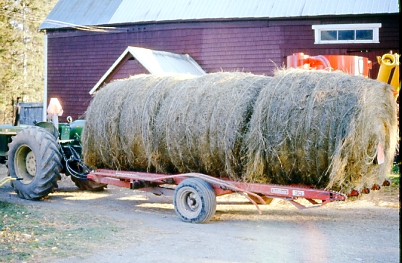
We found the perfect place for us in Tay Creek, New Brunswick. We moved there in the fall of 1974 and started the process of building a real farm with the help of some great neighbors. We built our first barn in 1975 and converted to round bales in the summer of 1975.

Annually, we put up 200 large round bales for our herd which eventually grew to 200 head of purehred Angus.

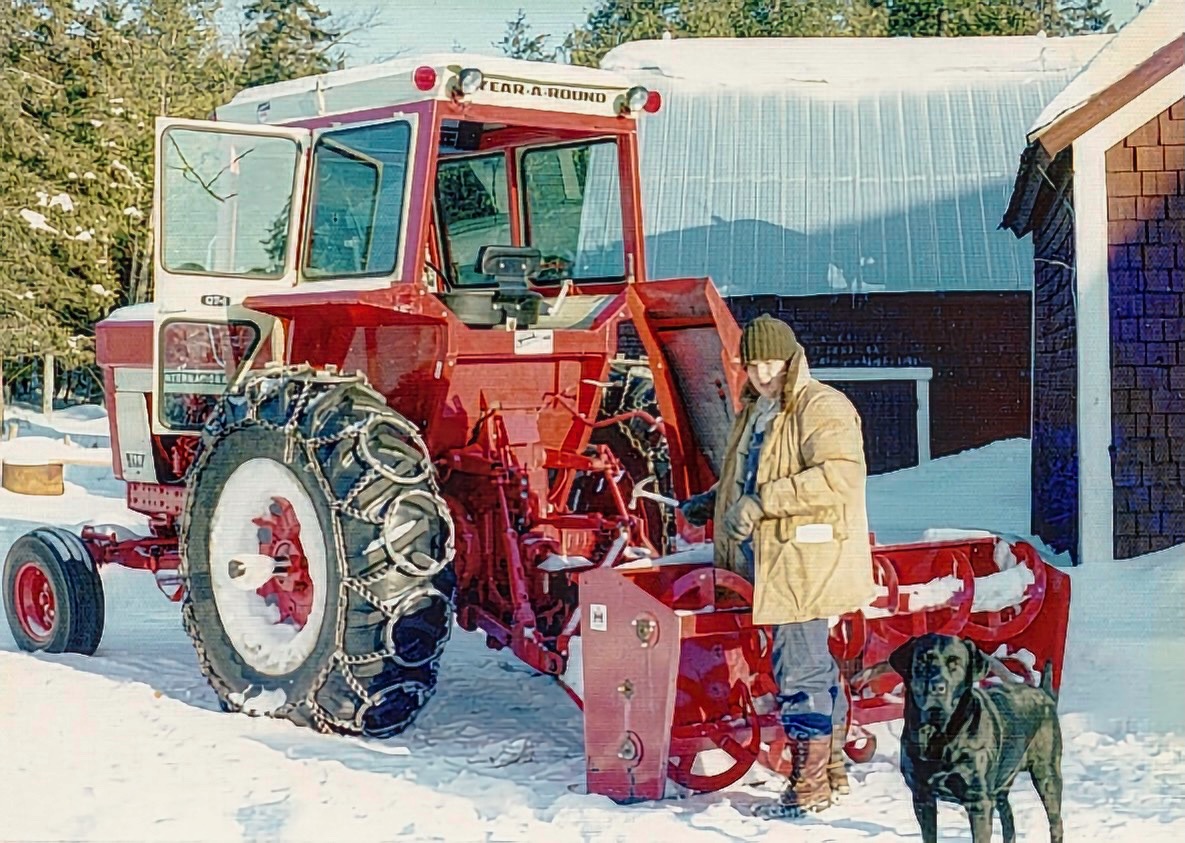
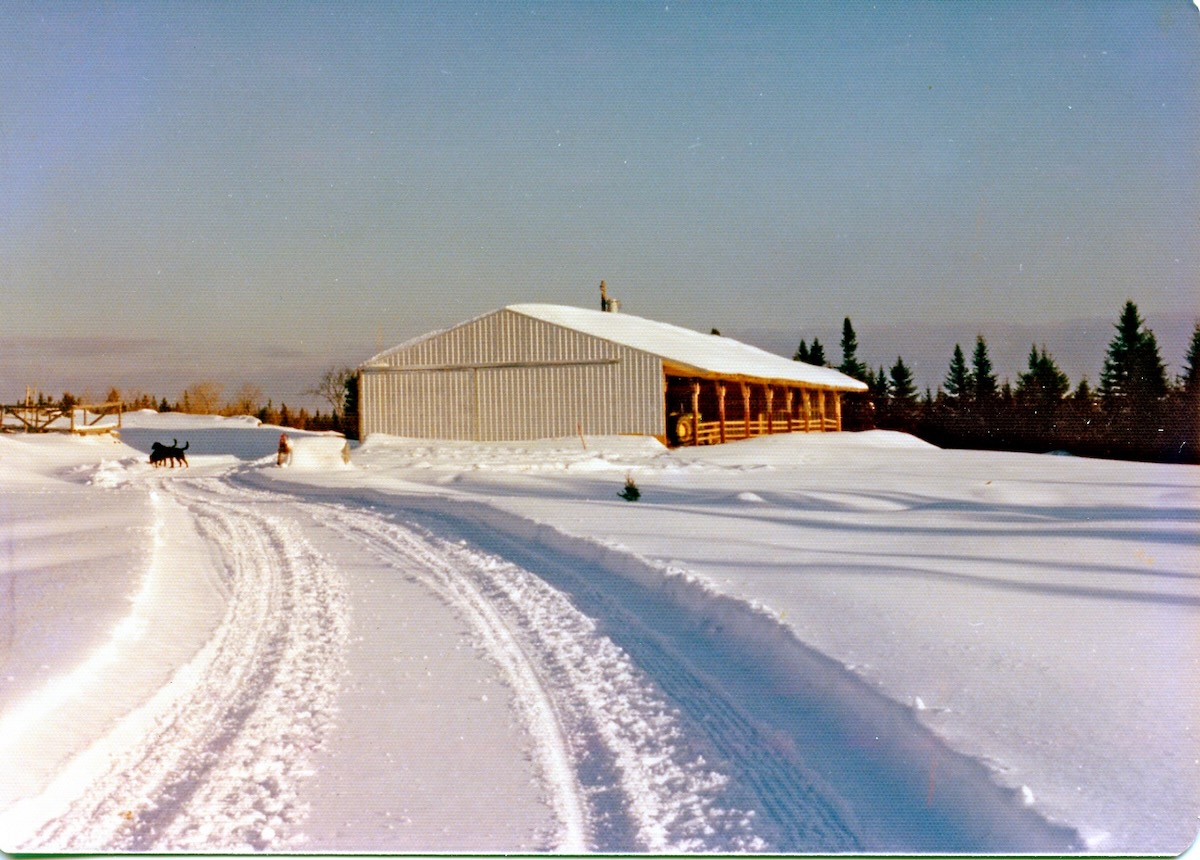
We were actually even closer to the land than we were in Nova Scotia. On our New Brunswick farm we had spring-fed water for our house. We continued to garden, added chickens, and a milk cow. However, we found a local butcher to do our annual steer. We were still on the edge of the grid. Our first winter we got twenty-three feet of snow. We saw weather as cold as minus forty with sixty mile per hour winds. We went back to mostly heating with wood, burning three to four cords per year in our much newer home which was only one hundred years old. It was cold enough that we unplugged our freezers in the shed which was attached to house so you could get wood without going outside. The first winter there I fed hay that had been put up with horses. One thing we did not do is fight snow with tiny all terrain vehicles. A couple of miles of road to keep clear required real snow removal equipment.

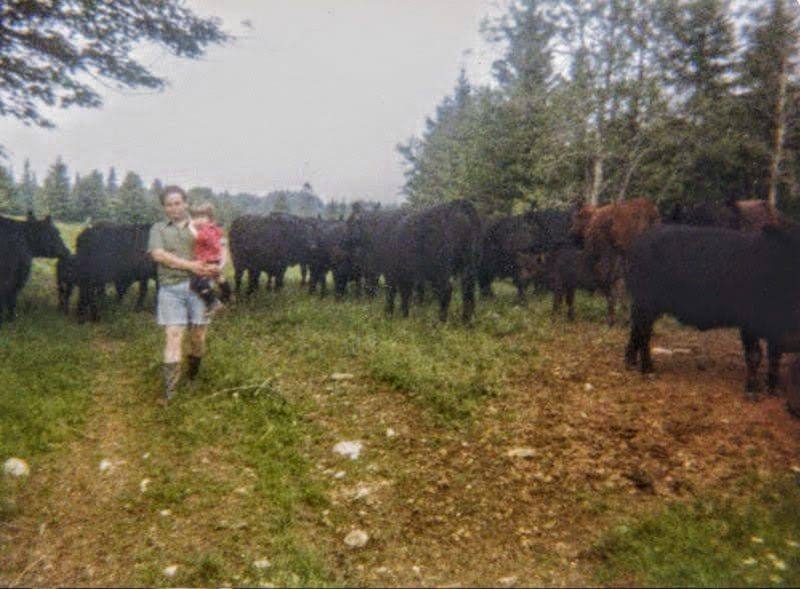
Our 85 HP International 786 tractor with 8 ft wide blower, Tok and me with lots of layers

When I look back on it all, I am amazed that we did it without someone getting really injured. There was no Internet or YouTube for advice. Advice either came from a book or your neighbors. I learned to be pretty self-sufficient often repairing broken equipment with my torch and welder. I added chain saw carpentry to my resume as we built the barns. We ran our cattle in the woods in the winter and managed to get through our farming years without ever having a vet come out for a sick animal. We might still be farming if interest rates hadn’t surged to 20% and drove me to working in the city with computers and eventually to a career of nearly twenty years at Apple Computer.

We were never off grid but if your farm doesn’t have any cattle fences in the back because there is no place for the cattle to go, you can justifiably say you were barely clinging to the grid.

The First Frost

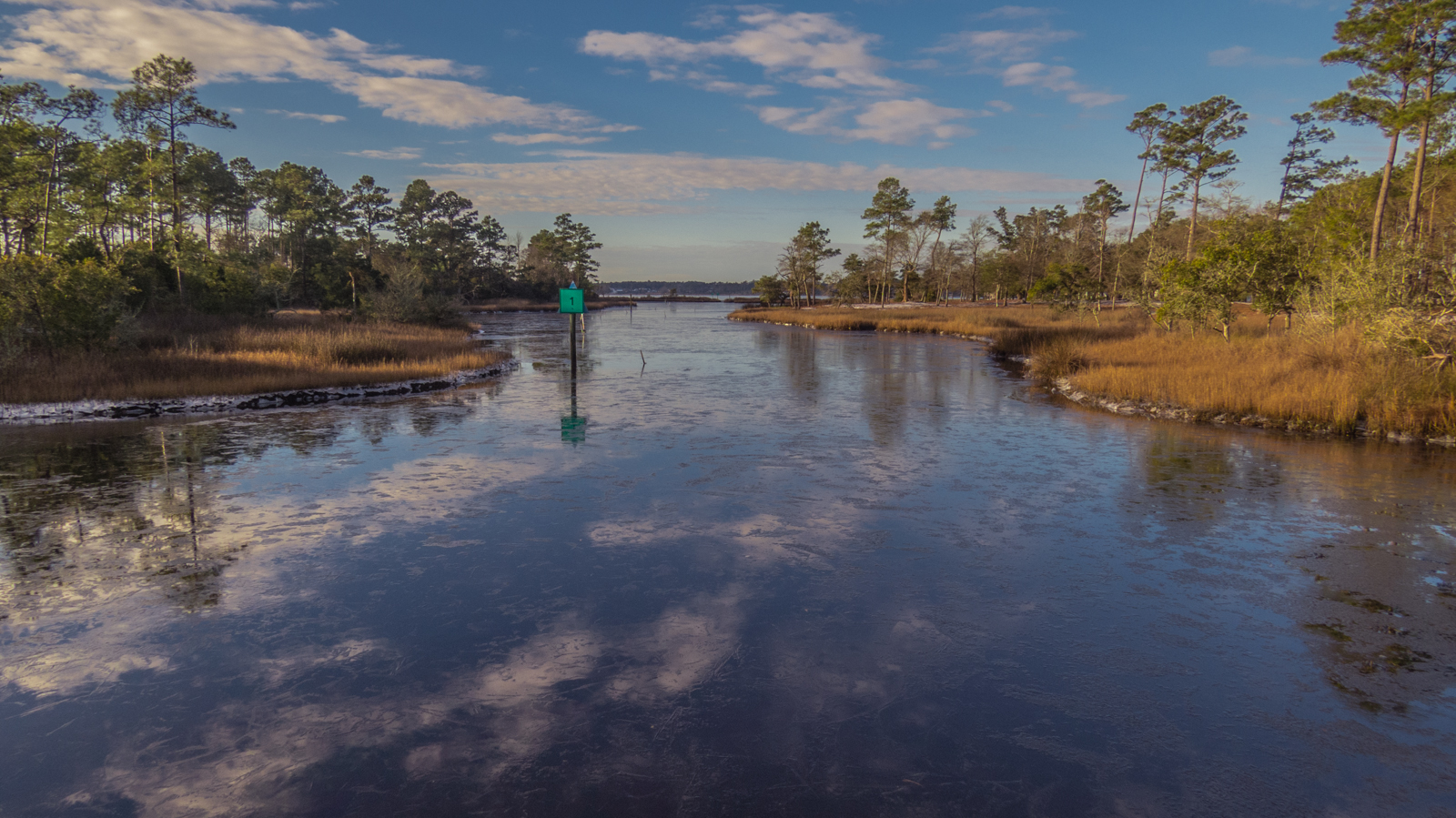
Raymond’s Gut with a few inches of ice during a previous winter

When we living on the North Carolina coast, we always considered the first cold day to be the one when we had to give up wearing shorts. Only the first two weeks of February were reliably cold. The picture of the frozen body of water (Raymond’s Gut) was taken during a Febraury cold snap in Carteret County. The trouble with packing your shorts away was that warmth could descend on the coastal area almost at any time. The result was that I rarely gave up my shorts while living at the coast. When I lived on the farm in Tay Creek, New Brunswick, the first cold day was when I had to start wearing mittens. That was actually a whole lot colder than you might think. I rarely used mittens until it got below zero Fahrenheit.
Growing up in North Carolina, cold is not something you think about very much. To me it was cold when the red dirt banks sparkled with frost crystals. As I got older and went winter camping with our Boy Scout Troop 752 at Camp Raven Knob, I got to know real cold. There is nothing like rain and chilly weather to make you appreciate a nice warm home. Still it was not serious cold.
The first serious cold that I remember was on a trip freshman year (1967) from Cambridge to Dartmouth in Hanover, New Hampshire. I cannot remember why we went, but I do remember it being minus twenty-four degrees Fahrenheit the Saturday morning we left. Fortunately, serious cold does bother you very long if you are in a car with a functioning heater. Still it left an impression. While temperatures in Cambridge got down into single digits, they could not come close to the Hanover freeze.
Sometime in my college years I caught a snow-loving virus. That and a obsession with having some land of my own led me to head off to Maritime Canada after graduation. In the early seventies land was cheap in Nova Scotia and life seemed like a throwback to life in the fifties in the United States.
The old house that I bought on the shore of the Bay of Fundy was not exactly the warmest house around. In spite of lots of efforts and a newly built fireplace, it could still be cold especially since the wind often howled in St. Croix Cove where the house was. That part of Nova Scotia was famous for storms that went from rain to snow to sleet to freezing rain back to snow accompanied by bitter cold.
Fortunately, for the snow loving part of me, the lousy Nova Scotia weather was also bad for running cattle outside so my wife and I decided to move to New Brunswick. Without much thought other than falling in love with the farm, we ended up in Tay Creek, New Brunswick in the middle of New Brunswick’s snow belt. Our first winter we had over twenty feet of snow. We also got to endure minus twenty-eight Fahrenheit that first year. In January of 1982, when our youngest daughter was born one January, the thermometer dipped to minus forty with an accompanying blizzard and high winds.
Most years in New Brunswick the first real cold came in the first week or so December just about the time busy mothers needed to finish up their Christmas shopping. You could tell the real cold weather had arrived when on successive days the previous day’s low would become the next day’s high temperature. Things would continue that way as we started plugging our cars in until the temperature bottomed out at something seriously below zero Fahrenheit.
I endured some bitter cold on our New Brunswick farm but I doubt that I ever felt colder than when I went fishing in a skiff on the rainy, wind morning of October 25, 2005 with the temperature in the forties. When we finished fishing that morning and I was dropped off at the dock, it only took me about a block of walking before I realized that I could not feel my extremities. There is nothing like being completely soaked in the wind to make cold penetrate to your bones. I had to spend some serious time in a very hot tub bath before I recovered. It is no surprise that I did not feel cold while I was catching all the fish. That fishing trip remains one of my coldest memories next to sitting on a brick hard seat in my pickup at minus forty.
Since we have moved back to North Carolina’s Piedmont, cold weather has become a little more dependable. Most years we see a little snow. In 2024, our first frost was October 20th. ‘We have already beaten that. It looks like that in 2025, the first chance for frost will be no earlier than Wednesday, October 23 when our low temperature is forecasted to reach 36F.
This potential frost got me to thinking about the tales that my mother used to tell. She was born in 1910 and told us of stories of her father taking teams of horses out on their frozen mill pond to cut ice and store it for the summer in a deep hole insulated with saw dust. That would not be too much of a surprise had she not lived in the foothills of North Carolina, just west of Winston-Salem. The mill pond which was part of so many of her stories was near Yadkinville, North Carolina which is not exactly known as one the earth’s cold spots.
A little climate research indicates western North Carolina the earlier 1910s was cooler than our current weather. Since then the trend has been steadily warmer with a noticeable peak in the 1950s.
I cannot remember anyone telling me about people skating on ponds in central North Carolina during the fifties when I grew up. There certainly was no report of driving teams of horses onto the frozen ponds. I cannot even remember a pond freezing over.
My son pulled our tomatoes out yesterday but that was more from being tired of looking after tomatoes than the danger of frost. Needless to say, I will still be wearing shorts when I go out to the front porch to read the next few days. When I change to blue jeans, it is going to have to be a whole lot colder. The weather might be sweatshirt worthy.

From Farm to Apple

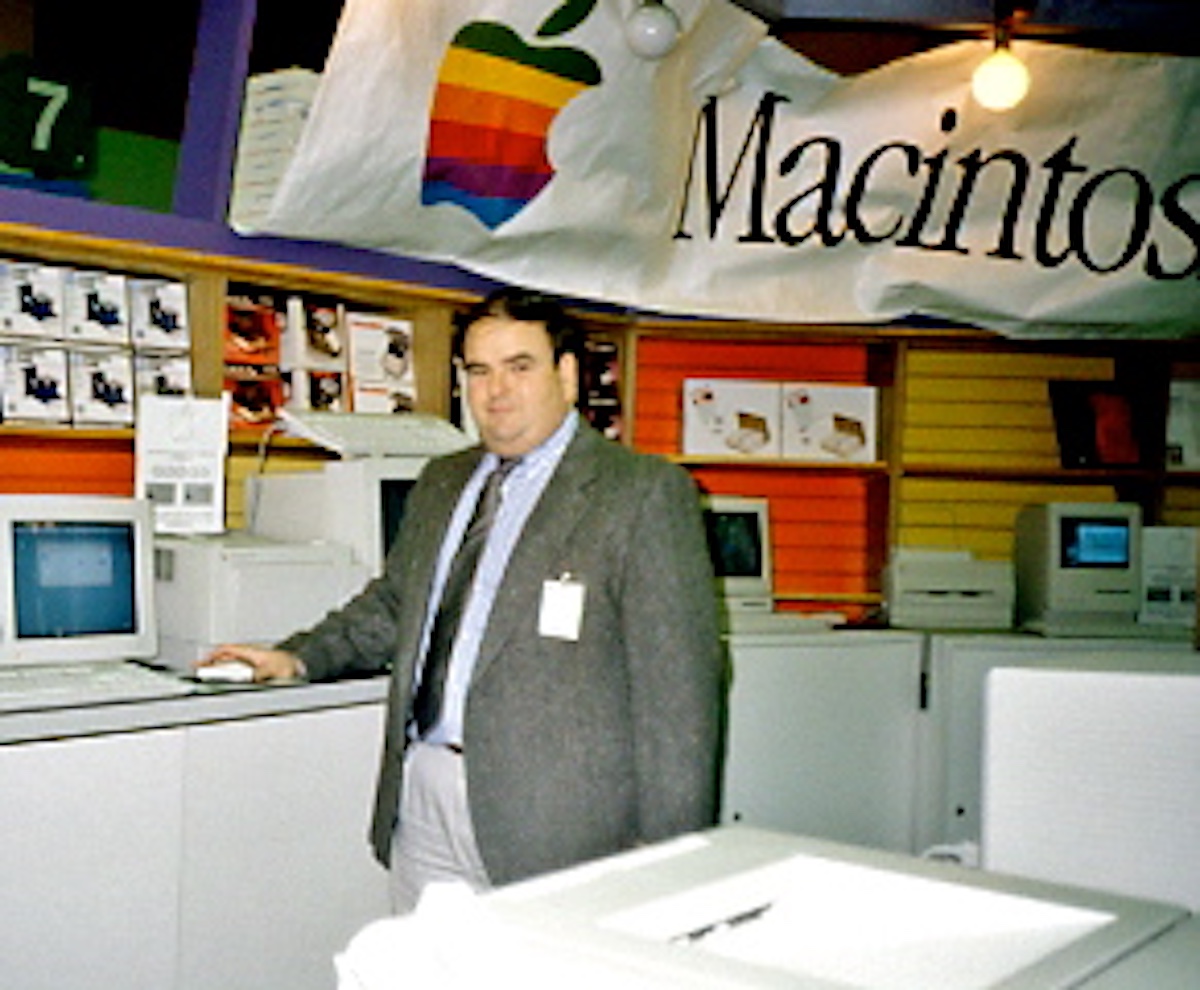
I have been asked serveral times how I got from shoveling manure on a farm to selling shiny Macs for Apple?
There are several pieces to the puzzle. The first factor was the sky high interest rate we had to pay on our $100,000 operating loan in the early eighties. Once interest got over 20% and the Canadian government decided that our beef cattle operation was too profitable for the subsized 2% loans that our diary famer neighbors were getting, we made the decision that we had to get out. Putting together a successful cattle dispersal sale takes time. In our case it took ten months to turn one of our barns into an auction arena and get the cattle looking their best.


We had gone from a few cows to a much larger herd in under ten years. Turns out that selling a lot of cows in a short time, a dispersal, is a massive undertaking. We would have never pulled it off without help from the community. The weather turned so rainy and cold that it looked like we were not going to get the barns cleaned out in time. Most of the men of the community showed up one Monday and worked whatever hours they could over the next two weeks until everything was ready. I remain eternally grateful for their help.
When all was said and done, we paid off all our loans except about $10,000. We did still have a lot of farm equipment which we sold off gradually, the last being our 4WD 60 HP John Deere diesel tractor with the snow blower and front end loader, but that did not happen until two years after the dispersal.
My sale was so successful that Maritime Angus Association hired me as a part-time fieldman. One of the requirements of the job was to write and mail a newsletter to the sixty or so Angus breeders acrosss the Martimes. I sat down at my college-era Adler typewriter and after a week of very hard work and some real old-fashioned copying and pasting I had the first one done. Then it took me hours to photocopy and hand address the newsletters.
I had spent my first winter of not tending cows hauling my oldest daughter, Erin, the twently miles to Fredericton to a preschool. It was too far to drive home on the potholed Royal Road and come back to get her so I found places in town to stay warm. One of them was a fledling computer store, I got to know the people pretty well. I even bought one of their TI 99/4A game consoles for the kids.
While I was writing my first newsletter, my friends in the computer store were getting their first Apple II+ machines. I was telling my North Carolina-based mother about my new fieldman job, how long it took to write the newsletter, and my hope to speed up with the process when I could afford the $3,000 for an Apple computer, Epson MX-80 printer, and some word processing software. My always supportive mother who was looking for a way to make certain that I did not go back to farming offered to buy the computer. It was probably the best investment that she every made.
I bought one the first computers that the Fredericton store sold. I took to software like a duck to water. In a matter of weeks, I knew more about the practical applications of a personal computer than everyone in the computer store combined. After three people I had talked to bought computers at the store, I became Salesman #1 in September 1982. I went on to design a course to teach smart college graduates how to sell computers. We opened four more stores across the Maritimes and within a year, I was salesmanager and had close to twenty people working for me. I spent at least a week a month visiting the stores and going on important sales calls. I still have the invoice for where I sold one Apple IIe, a 5 meg Corvus hard drive, and a couple of printers for over $20,000. I was writing simple database applications for customers that saved them time and money..
In the spring of 1984, the company sent me to the rollout of the Macintosh in Toronto. As soon as I saw Steve Jobs draw a circle on the screen with a mouse, I made a vow that I would one day work for Apple. As the old saying goes, be careful what you wish for, you might get it. By November of 1984, I was working for Apple out of the Montreal office.
Things moved quickly at the dealership to push me towards Apple. The company. was operating on a shoestring and always near bankruptcy. They went searching for other product lines since Apple would only deliver computers to them for cash. They picked up the Sperry and TI MS/DOS compatibles but what they really wanted an IBM authorization. They found a white knight computer company out of Toronto who could bring the IBM authorization with a merger.
Like many mergers, the only way to make the company attractive was to cut costs. Upper level management asked me to rewrite the commission plan to massively reduce commissions and to sell the idea to the sales people.
I looked at the plan, decided that I could not in good conscience support the new commission plan so I resigned. The company offered me another job, but I was already bleeding rainbow colors and knew their focus was going to be IBM. I stayed until the merger went through.
That was September of 1984. That same month Apple started adversing for an Apple rep in the Maritimes. I immediately applied for the job and in early November I got an offer. I started work on November 26, 1984. The only condition was that we had to move to Halifax. On December 26, 1984, in a snowstorm we moved to our new house in Halifax. We got there before the furniture so that night we slept on the floor. The next almost twenty years were a wild ride.

The Wonder Of It All

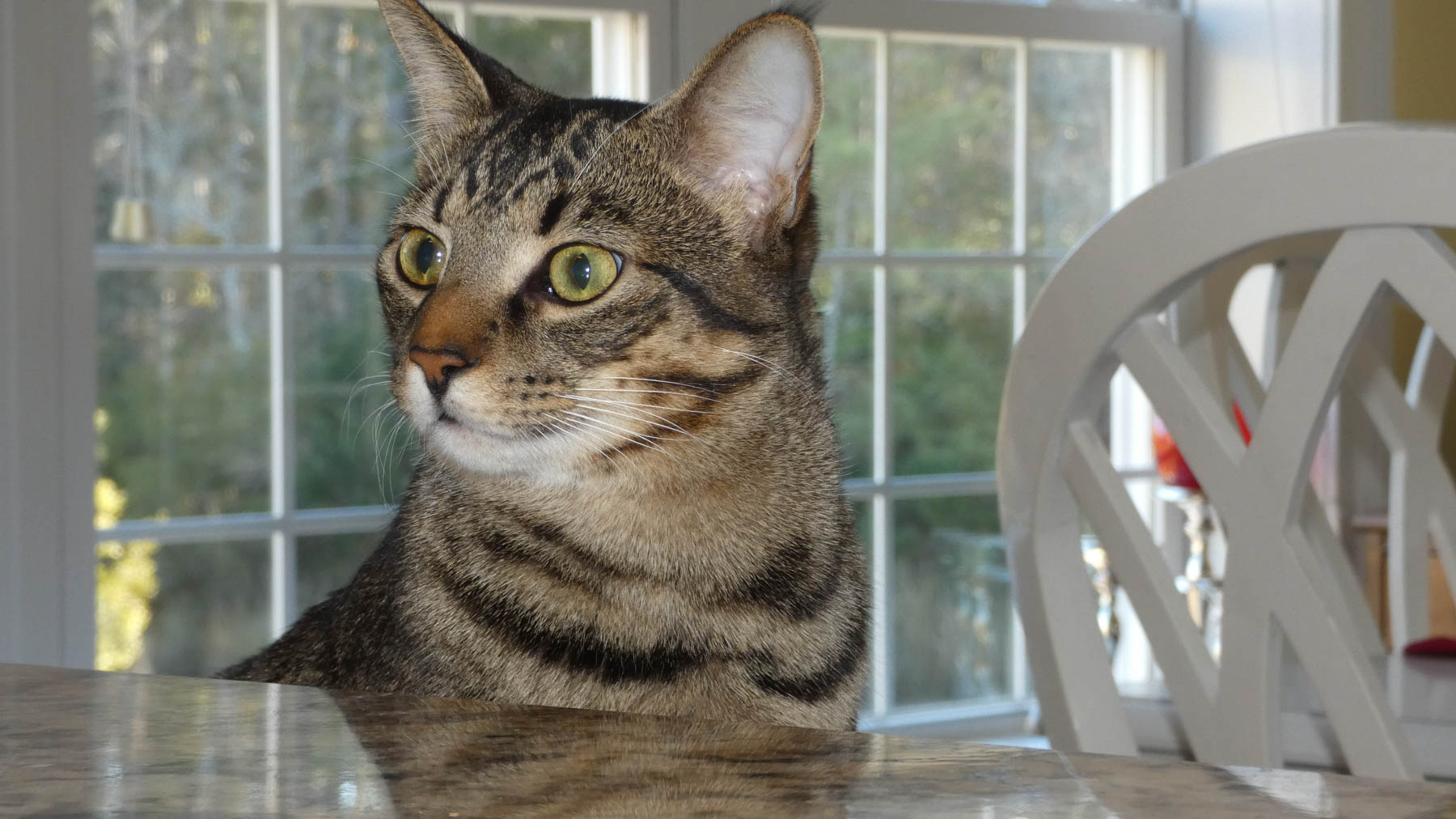
Goose, our tabby cat with a permanet sense of wonder

One of the reasons that I love our big tabby cat, Goose, is that he always has a look of wonder.  We could learn a few things from Goose.  A few times over the years I have forgotten to be pleasantly surprised at whatever has happened, but not often.

After I went away to military high school in Tennessee in 1963, I figured out within the first three months that I could either be unhappy with what was happening in my life or I could be wonderously surprised at whatever happens next because it is often an unknown piece of the puzzle that turns out to be my life.

When I got in my car to go office to college in the fall of 1967, I left with a sense of adventure which included a promise to myself to try new things especially if they forced me to step out of my box. The Vietnam war was raging during my college years and for a while it looked like I might become a foot soldier in it.  Instead once I graduated and figured out that I wasn’t going to be drafted, I immigrated to Canada.

That as you might expect was a huge decision but like many decisions in the days before the Internet, not a lot of research went into it. I was in love with Nova Scotia.  The beauty and wonder of the place wrapped itself around my mind. Before I got married, I came to know loneliness even in a place as scenic as Nova Scotia. Marriage to a NC girl was another moment that surprised me and left me thinking that I was living under a special star that helped me find such a wonderful wife.

There were plenty other moments of wonder. After dispersing our cattle herd, somehow I made the transitiion to working with Apple Computer. From shoveling manure to selling Macintoshes has to be an epic career switch. Twenty years later when Apple pushed me away from the company, several people encouraged me to think about my next career as finding something that would excite me for the next fifteen years. It took a while, but I ended up helping communitieis build fiber networks.  Along the way, I learned how to take a skiff out into the Atlantic and how to kayak a two-mile wide river. I spent a few years rescuing an HOA. 

I always welcomed the next challenge never doubting my ability to do a good job and always approaching a new challenge with a sense of wonder.  That doesn’t mean I did not have any worries. There were many sleepness nights during my HOA time.  I would always wake early when I was taking someone new in our skiff out into the Atlantic. It was a big responsibility.

I recently got a new heart valve by way of a TAVR procedure.  While I was afraid, I never waivered.  I am still facing some medical issues but I face them with a sense of wonder that something so complex can be done without cutting me open.

I have been surprised by people all my life from the British doctor and his wife who became great friends to some of the very interesting people that I met Harvard.

I continue to be amazed by people that I meet from the young farm family working on the same farm that has been in their family for over one hundred years to the New Brunswick farm couple in their sixties still haying and keeping work horses. I also amazed by the young adults finding their way through this increasingly complex world.  That they can keep moving forward when most of the cards are stacked against them renews my sense of wonder.  Then there is my adult son who rose up to start doing many of the things that I was doing before my heart valve problem. I am back to driving and hope to be gardening in a few weeks but I definitely have a feeling of wonder seeing my son plant flowers. If that can happen, I think we will be able to push back on the anti-democracy forces trying to destroy our country.  That of course would lead me to an immense feeling of relief.