A Life of Icy Roads

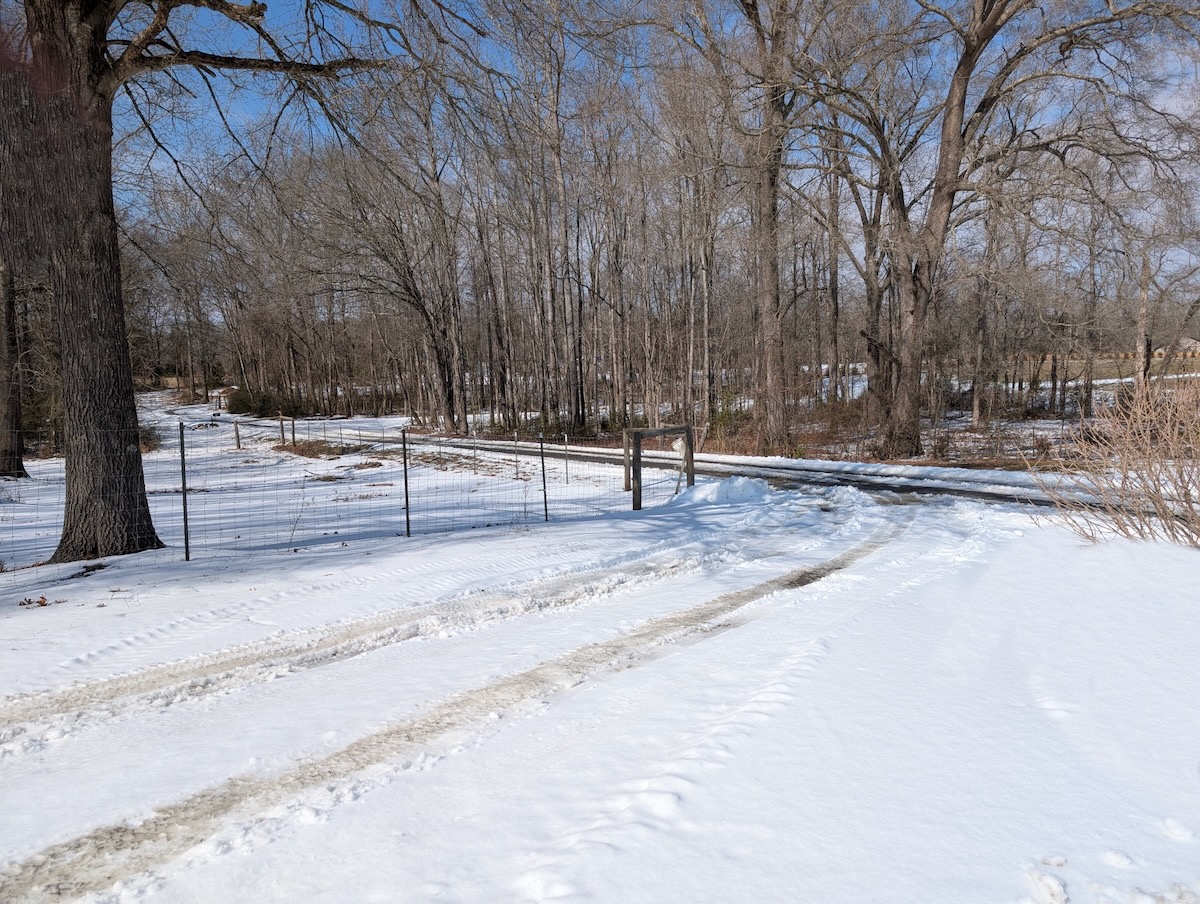
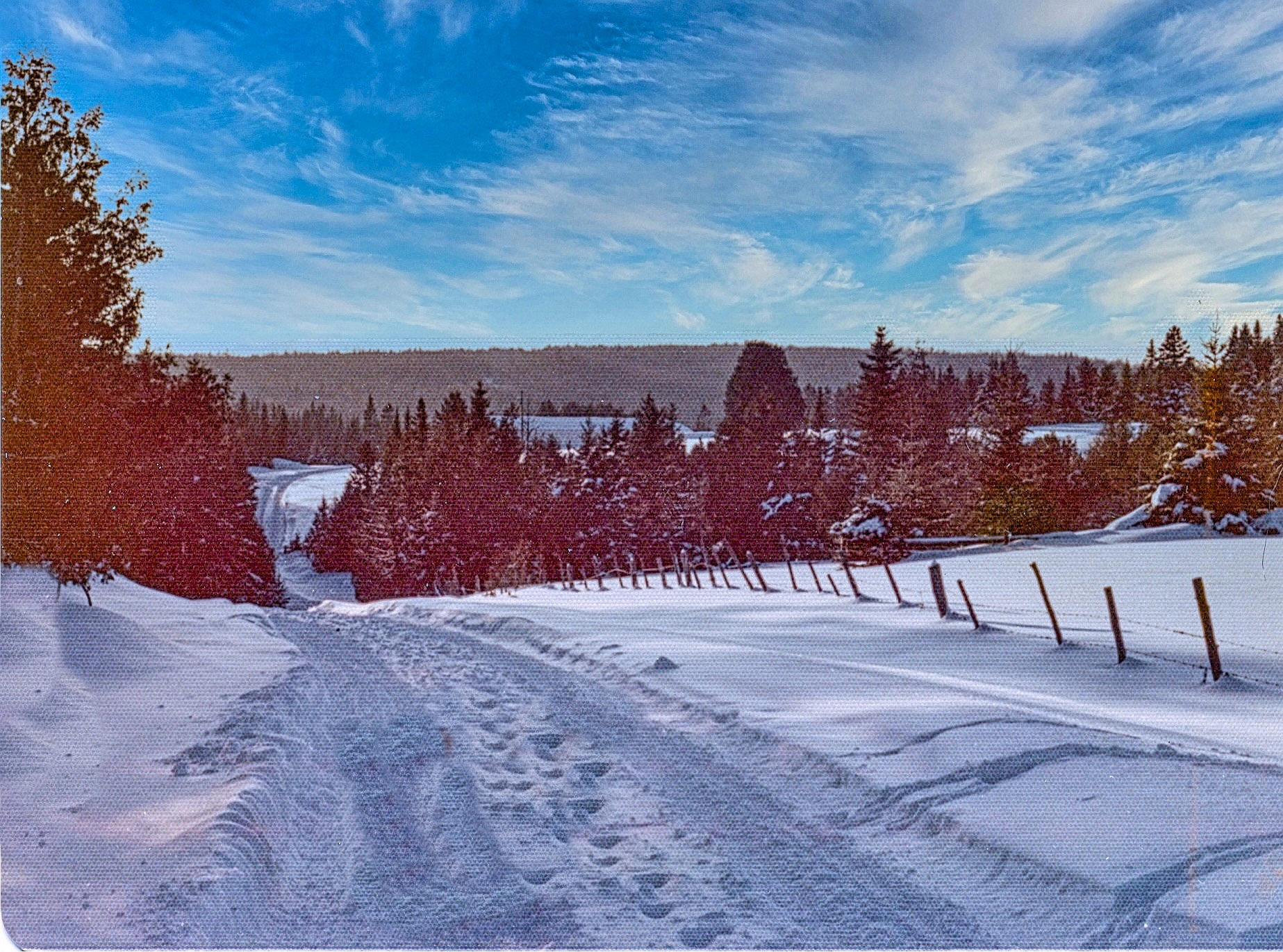
An icy road in the woods, five days after our second storm of the year.

The first time that I can remember facing an icy road, it was probaby 1961. I was a twelve-year old passenger in car headed back from Camp Raven Knob, a Boy Scout camp west of Mt. Airy, North Carolina. Adults had come to rescue us from another frozen, icy night in the three-sided Adirondack lean-tos. I wasn’t particularly worried about the icy roads because I wasn’t driving.
Seven years later I am home for the holidays from college and my mother is hosting a Christmas party in Mt. Airy, NC, for her extended family which are mostly from the next country over. Mount Airy is in the transition area between the hill country and the Blue Ridge Mountains. Weather forecasting in the sixties was a little more rudimentary and a snowstorm hit early in the afternoon. Snowstorms are not every day occurences in the North Carolina foothills. Our relatives were becoming worried about getting home. I was going to school in Massachusetts so my old Bronco had snow tires on all four wheels. I offered to escort a convoy through the worst hills. It might have been the first time I had driven in North Carolina snow which isn’t anything like northern snow. It is rare when NC snow isn’t slush or packed ice. That first trip was in slush which is no problem with snow tires. Everyone drove in my tracks and I took them half way home to the point there was hardly any snow on the road. I was young and probably didn’t worry about it very much.
There were many opportunities to drive on snowy roads during college. Four of us even took a trip to Nova Scotia’s Cape Breton Island in November our junior year. Cape Breton welcomed us with snow, sleet and freezing rain. We faced some very cold camping and tough driving in the old Bronco.
After graduating college, I moved to eastern Canada. Over the course of the next seventeen years I owned a variety of snow worthy vehicles from Land Rovers to Land Cruisers and 4WD trucks. We even had 4WD drive tractors on our 400 acres farmland.
My wife was in her orange rear wheel drive Volvo wagon on a very snowy day coming back from the doctor with our first child who had swallowed a bunch of Flintsone vitamins. The syrup of ipecac hadn’t worked at the doctor’s office. I had just found out when I came in from barn chores and rushed to the doctor’s office in my trusty 4WD Chevy pickup. I crested a hill as I was speeding to the clinic and there was my wife’s car stopped in the middle of the road. She had stopped because our daughter had started throwing up and she was afraid she would choke in her car seat. I didn’t have time to think, I avoided hitting my wife and daughter by putting the truck into a snow filled ditch. With the big snowbanks, I ended up safe, and I rode home with my wife, grabbed a tractor and a neighbor and we retrieved the truck without any problems.
Snowbanks along the rural roads were a great safety feature. You could slide into a snowbank without worrying about damaging your car. After we quit farming, I became a sales manager for the first Apple microcomputer dealer in the area. I had to travel to three locations in New Brunswick, one in PEI and another in Halifax, Nova Scotia. At first I did it in my old front wheel drive Subaru. One time I came home from a trip and was barely able to get the Subaru far enough in the driveway so I could get our tractor and snow blower around it.
Soon after that I switched to a rear wheel drive Volvo sedan. I put snow tires on all four wheels and fifty pounds of sand over each rear wheel in the trunk. I went everywhere in it. After I joined Apple, I once drove my sales manager from Toronto from Fredericton, New Brunswick to Charlottetown, PEI in a blizzard. He was amazed what the Volvo would go through and even more surprised at the ice encrusted ferry that we took to the island.
Four years later we are living on a mountainside overlooking Roanoke, Virginia. We bought an AWD Nissan our first winter there. We had a variety of AWD vehicles there from Subarus and Grand Cherokees to my wife’s AWD Volvo wagon and my AWD Acura MDX. The little Nissan Axcess was a favorite because I could put chains on all four wheels. There were storms when Little Limo as she was fondly known was the only safe way up and down our mountain. I ferried many people with groceries up and down the mountain to their parked cars at the foot of the hill over our seventeen years there. The Acura with its locking AWD mode was the second best vehicle on the mountain. It is still with us and now 21 years old.
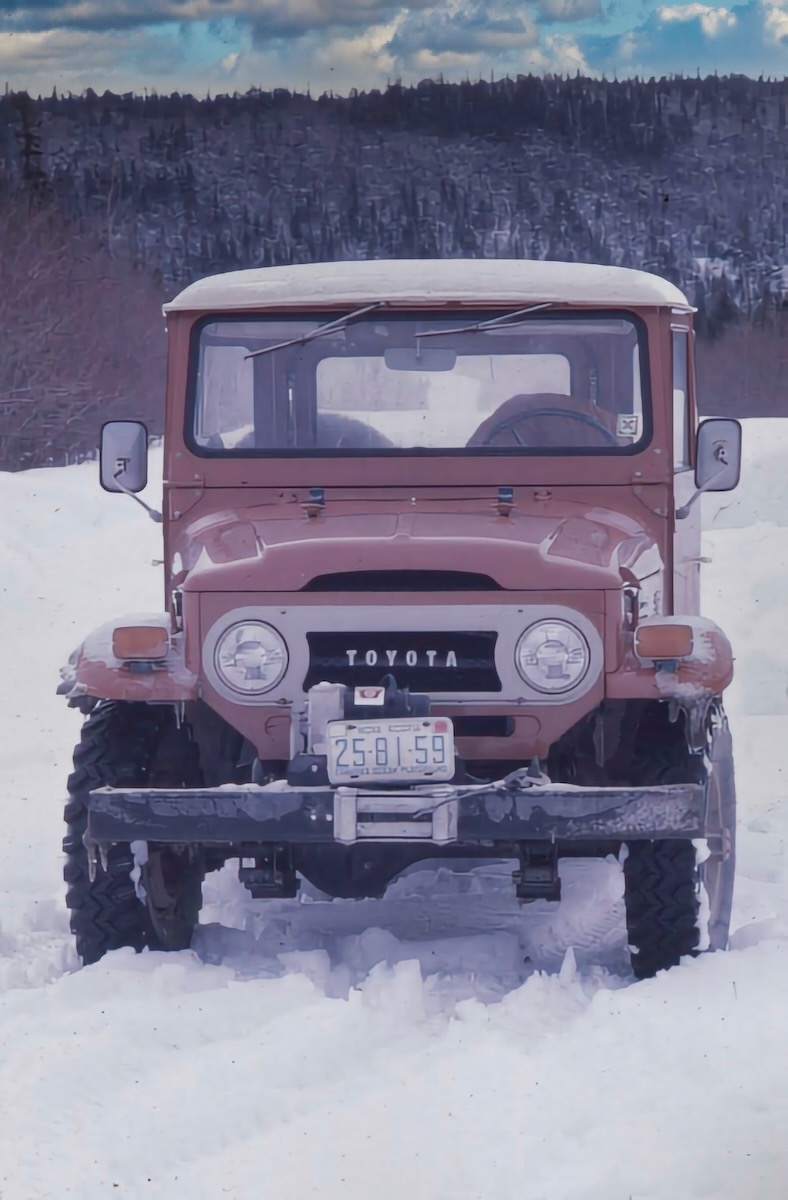
We lived on the NC coast for sixteen years and only had ice a few times. With no hills it is not much of challenge. Here in the Piedmont where we now live there are certainly enough hills to make things interesting but snow and ice is a rarity. Still in the last two weeks we have had two storms, one four inches of sleet and the other a foot of fluffy snow. We had no need to go out but I did go to our butcher shop located on the ice road pictured at the took. The Acura MDX never hesitated even a couple of really icy hills. It brought back some memories, even a snowy one to Newfoundland pictured below.

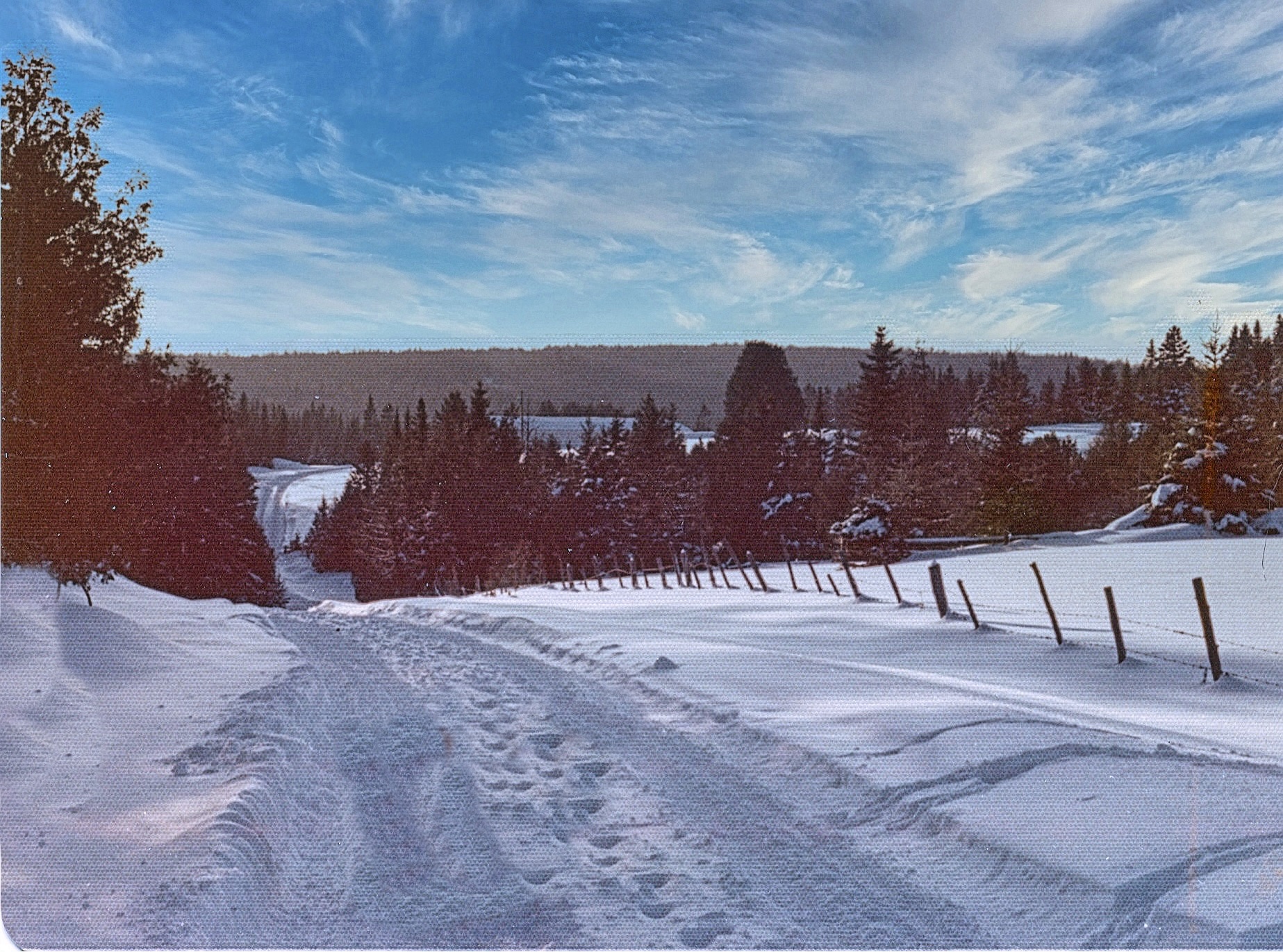
Toyota Land Cruiser on a snowy road to nowhere in Newfoundland, March 1973

Where the roads end

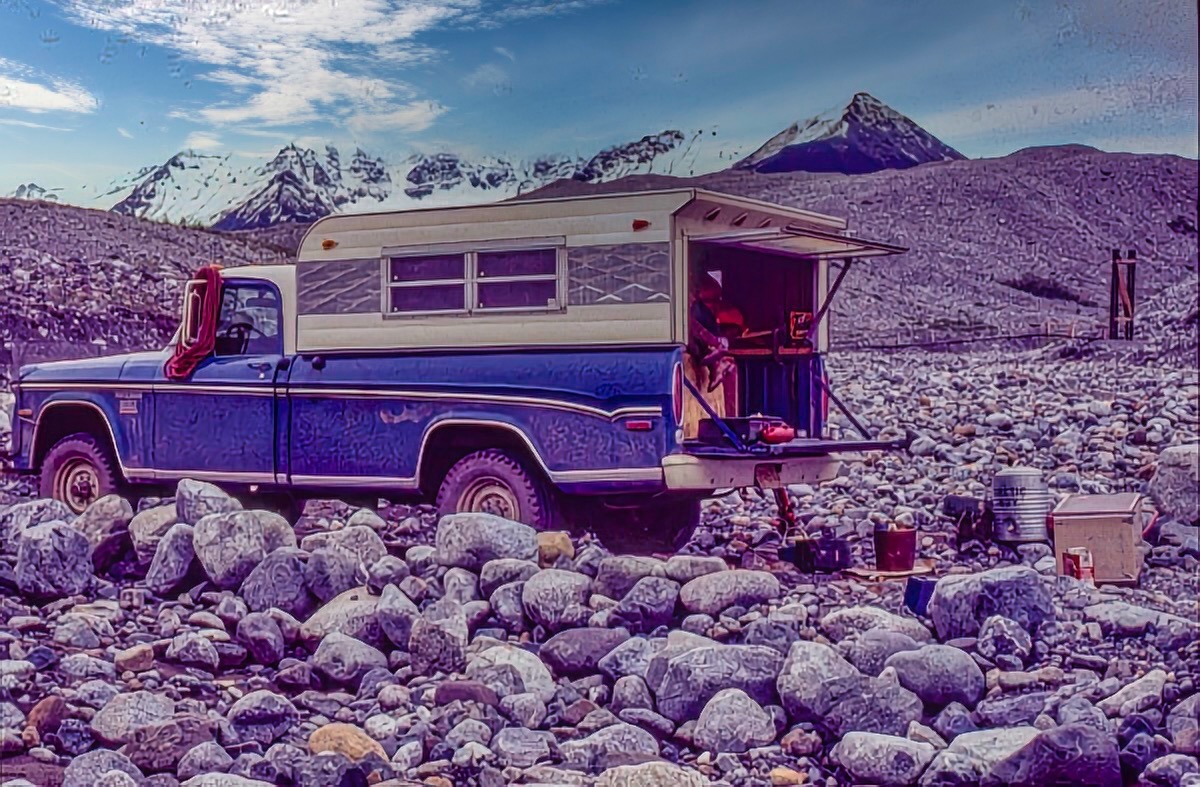
My Dodge Powerwagon at the end of the road on the way to Denali, Summer 1970

Americans are famous for their Sport Utility Vehicles (SUVs) that never leave the paved roads. Unfortunately, some people get behind the wheel of a SUV with the belief that it makes you invincible. There are a few things I have said in life that seem to have some staying power. One of them is that all an AWD, 4WD, or SUV will allow most people to accomplish is to get stuck in a more difficult to reach place.
I have been stuck or broken down in some pretty remote places like the one above a few miles off a road in Alaska. That vehicle had a winch and it was useless in that situation. Farms are places where people can really get stuck. However, the rule on a farm is do not get the biggest tractor stuck unless you have the gear to pull it out. We kept an old bulldozer around for that. It got used for that.
Our herd of cattle wintered in the woods about a mile from the barns and the area where I kept the round bales of hay. It was not unusual after a big storm to blow the road to cows at night. One night after a particularly nasty storm when the temperature had already dropped into the minus twenties, I was blowing the road. I had successfully cleared one lane out to the cows and I was headed back widening the cleared road. As you get within a quarter of a mile of the barns, the road dips down into a small valley and crosses a culvert. There is a small pond on one side of the road and the culvert that allowed for overflow from the pond on the other side. I had a rear mounted snowblower that cleared eight feet of snow at a time but because it was rear mounted, you backed the tractor as you blew the snow. That gets a little tiring after an hour or so. The tractor had a nice unheated cab, weighed about 12,000 lbs., and ring chains on the tires. They are necessary on farm roads which often have ice as a base coat.
Just as I started across the culvert one of my large rear tires slipped off the road into the pond. Fortunately the pond wasn’t very deep but it still put the tractor in a precarious position. Experience told me the best thing to do was to wait for daylight and get a neighbor to help me pull it out. I walked home and spent my dreams figuring out how to retrieve the tractor.
By the next morning the temperature had dropped to minus twenty-eight degrees, but it was no problem to get my farm helper who was in his sixties to go with me to unstick the tractor. It was a complex operation. I loaded a generator in the pickup, some salt and a chain saw along with our three quarter inch logging chain.
First we drove down to the tractor, started the generator and hooked it to the recirculating block heater that would hopefully warm the engine of the tractor so we could start it. Next we made cuts into the ice around the tractor’s wheel that was now frozen in ice. We put salt in the cuts in the ice. While all that was working we went to start the bulldozer. It was a very old Cat D5 bulldozer which originally had a small gasoline motor that you started and used to start the big old diesel. Unfortunately the gas motor had died shortly after I got the bulldozer and I found it would cost more to replace it than the bulldozer was worth. However, we quickly discovered that towing the bulldozer six feet would start it. I had another large tractor and we used that to start the bulldozer that cold morning.
I drove the old 16,000 lb. bulldozer down and positioned it so we could hook the big chain to it. My neighbor got in the stuck tractor and fired it up. All he was supposed to do was steer the tractor. I moved the generator to safe ground, got on the bulldozer and carefully pulled the stuck tractor out of the shallow pond. While the actual pulling seemed effortless for the bulldozer, It likely took us two hours to get to that point. It is unlikely that I could have gotten a wrecker out to do the same thing without the wrecker getting stuck. We were fortunate to have the equipment. Most of the time when you get stuck, you have to make do with what you have.
Not every time you get stuck is going to be that complicated but as I said if you wander far off the road, you run the risk of being stuck in a difficult place. We were actually stuck in the picture at the top of the post. The locking hubs on our four wheel drive quit working. I had to take one hub apart and adjust things. Fortunately, I had the tools to do it.
With many four wheel drives vehicles all you have to do is get one wheel spinning and your vehicle might as well be a turtle on its back. I am a big believer in chains for ice in spite of the pain putting them on a vehicle. Chains make more difference than either four wheel drive or AWD.
AWDs are also not all created equal. Some will get stuck in nothing and some will walk up a mountain of snow. My old Acura MDX has a locking mode that is amazing but I still avoid ice.
Just after the first big snowstorm of the year is not the time to figure out how good your vehicle is at getting stuck. At a minimum, an emergency kit includes a tow strap, shovel, a square piece of 3/4 inch plywood, gloves and a good jack which should be a bumper jack if you are headed into sand or mud. If you have a winch on your vehicle, be very careful, they are exceedingly dangerous if you don’t know what you are doing,
Sometimes I miss living up north. Once the ditches were full of snow, the safest thing you could do to avoid an accident was to drive into a snow bank and get stuck on purpose. I avoided a few accidents that way. Most were close to home and only walking distance to one of those big tractors.

The Worthwhile Journey North

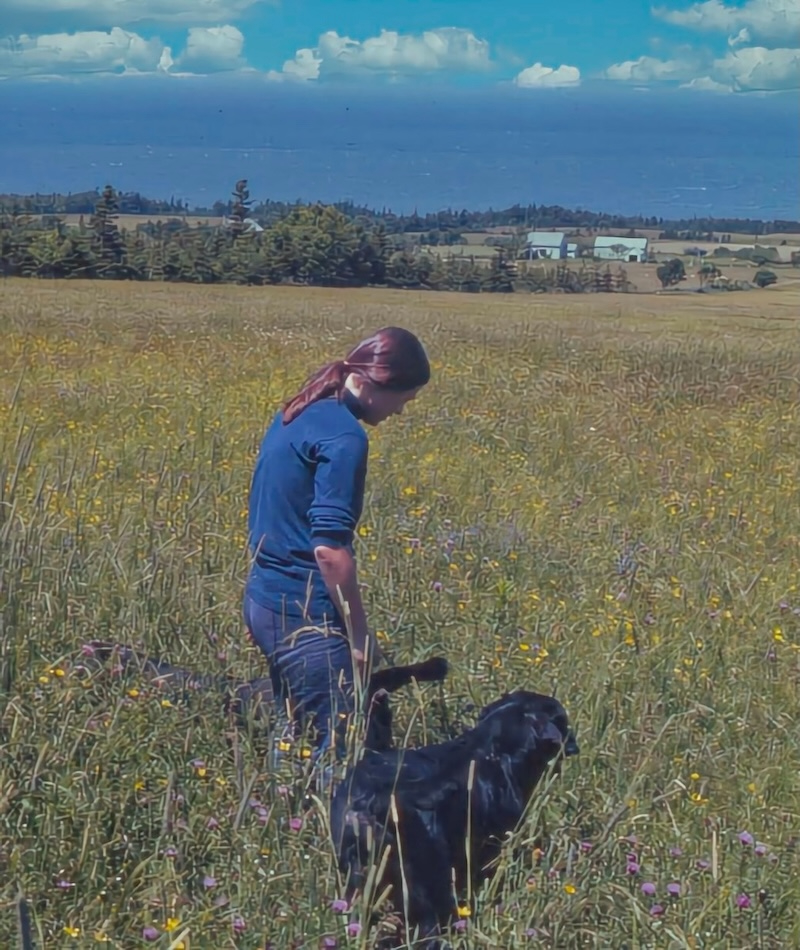
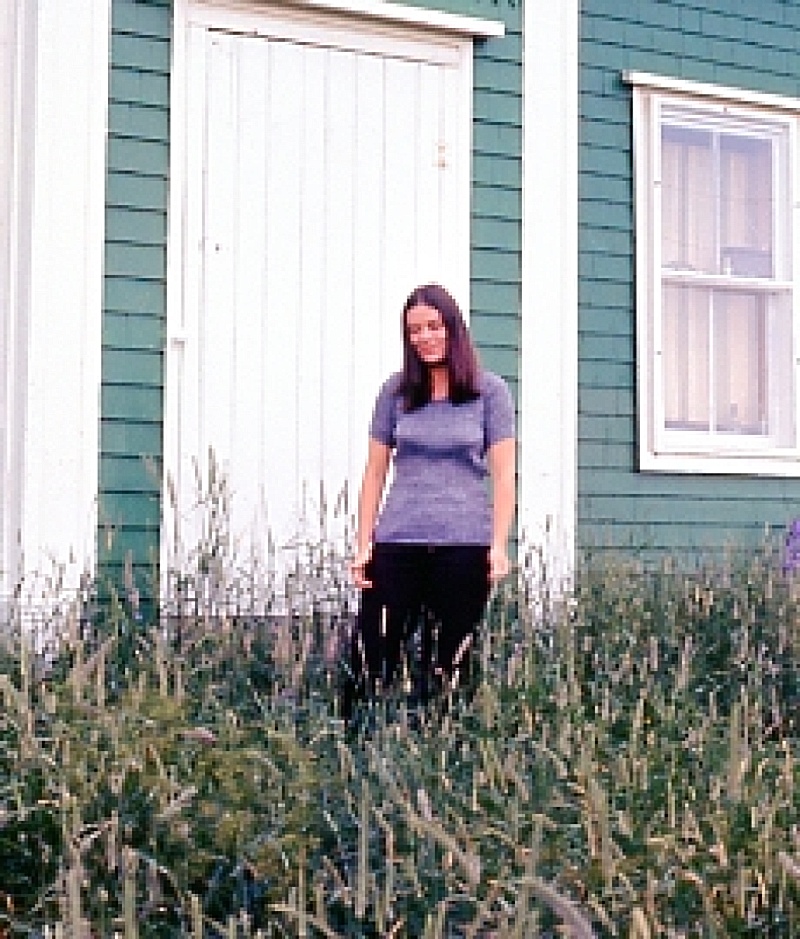
My wife, Glenda, at the head of our hayfield in St. Croix Cove, Nova Scotia. She is accompanied by Tok, one of our Labrador Retrievers

My seventy-seventh birthday is coming up in a few weeks. The thought of being that old has prompted a lot of introspection. Someimes we know why we do something but there are some forks in the road where our motivations might not be so clear. There are also things you remember which make you wonder how much influence they had on your decisions. I was in high school, a military one, when President Kennedy was assasinated. I remember the deaths of Robert F. Kennedy and Martin Luther King. I also vividly remember the election of Richard Nixon, the Vietnam War demonstrations and the feeling of relief when I found out that I wasn’t going to get drafted to fight a war which I thought was wrong on more than one level. When I graduated college, I went back to the land on shores of the Bay of Fundy in Nova Scotia. Some dissatisfaction with the political direction in the United States helped direct me to the north in 1971.
I spent first weeks of 2026, entertaining myself with YouTube videos of the new generation of homesteaders. Many of them are young, and all that I have seen appear to be healthy enough to handle all the wood splitting required to live off grid. I often wonder how their lives might change a few years down the road when their families include two or three children who need educating while the unrelenting work taking care of farm animals demands much of their time. Some of these homesteaders seek purity and will not even consider using a chainsaw. Others seem to believe that doing everything with used equipment shows their dedication to a different kind of life with ingenuity and a dose of poverty. Some fully embrace ATVs, snowmobiles, tractors and even excavators. Most it not all of them embrace solar power. There is a propensity for them to have goats and chickens with few pigs and cattle sprinkled around. Some have subsistence permits and live off Alaska’s. bountiful salmon and wild game. No one seems to have the land to grow their own hay, but many are investing huge effort into growing vegetables in places were vegetables are very hard to grow. Some have very young children but very few have teenagers. I am sure there are many reasons why they are living off grid or in my world have gone back to the land. They will likely wrestle with their decisions as they get older. A few have figured out how absolutely brutal longterm homesteading is on the homesteaders. It will be interesting to see how many are still around five eyars from now.
Long before I graduated college in the summer of 1971, I wanted to move north There were all sorts of reasons but four years at military school along with four turbulent years at college set the stage. My freshman year (1967) at Harvard, I was one of three students out of 1,500 in our class from North Carolina. At the time North Carolina was a rural place, and I had grown up loving camping, fishing, and wandering the woods. No one from our family had ever been to college so there was no famial advice to lean on for a career. My single mother raised me by running a beauty shop in the back of our house. Her one piece of advice was whatever I chose to do, I should do it to the best of my ability. She had grown up on a mill pond with a father who was a miller. She had become the lady of the house for her five sisters and brother at the age of nine when her mother died in 1917 flu pandemic. She left home by her middle teenage years when her father remarried..
With those ties to the land and the family of one of mother’s sisters still farming, it was not a stretch for me to want to go back to the land and farm. A trip to Alaska and another to Nova Scotia fanned the flame. In the spring of 1971, I found an old farm on the Nova Scotia coast that was listed for $6,000. It included an old farm house and 140 acres with about thirty acres of that in a hayfield.
Restoring the old house, buying some farm equipment and a few cows are all part of my history. When we decided to get serious about farming we moved to New Brunswick where we built a farm where we eventually had sixty-five cows calving every year.
There were lots of other easier paths to take to adulthood. I needed a path that let me learn everything the hard way. I learned how to wire a house and do copper plumbing by reading Sears How-to-do-it pamplets. I learned to farm by reading books and listening to my neighbors in most cases. I built barns with just common sense, skill saws, and a chainsaw. We only left the farm when interest rates got to over 20%. We also made the decision three years after leaving the farm that we wanted our children to know their North Carolina based grandparents and hopefully find lives not far from us.
It was a huge effort to move from the farm to Halifax, Nova Scotia, where I went to work for Apple. It took even more effort to move back to the states.
Now as I sit in my comfortable house eating food from local farms and exotic places like Trader Joe’s, I struggle to remember the day to day challenges we faced on the farm. I can remember all the wood splitting, the hauling it into the woodshed, the years of milking our Guernsey, Rosie. I also remember all those trips, often three times a night, to check for new born calves in the depths of winter. All the work that went into haying and gardening is clearly burned into my mind. The freezers were always filled with beef which is a luxury today. We had more garden produce than we could dream of eating but it was a lot of hard work especially when the black flies were around. We saw weather as cold as minus forty with sixty mile per hour winds and heat over one hundred degrees. We lived on the edge of civilization but most days we had power. We also had the equipment to move snow and take care of 200 head of cattle without hiring another person. There was a ten year stretch with no vacation. When we finally did get a vacation to Prince Edward Island, we did not know how to act on vacation. Farm life was brutally hard at times, often money was very short, but we all slept well at night.
Even with all the hard work, I would sign up for it again but with fewer cattle if somehow I miraculously got a body forty years younger. Whatever the reasons behind this generation going back to the land, it might well burn brightest in their memories like it does in mine.

The Lost Art of Calling Home

The rotary telephone in my home bedroom until 2004

I took a course in college my senior year. It was decades ago. The class focused on communications. Computers were not on the desktop, cameras were film based, and telephones were analog with rotary dials. There was no Internet much less text messaging or cell phones. People still wrote letters on paper by hand. I still have some of my old ones. The other choice for a was a typewriter. In the seventies it was not unusual to find people who did not know how to touch type.
I went away to boarding school at the tender age of fourteen. The weekend call home from the telephone booth in the hallway was a lifeline to family and all that was familiar. You might not be able to predict the person who would answer but you learned how to make the most out of whomever you got on the phone. The old fashioned telephone was a great leveler. If you called one of your friends, you could get their parents, but back in the fifties and sixties, we learned how to talk to adults respectfully.
The weekend call became more of a ritual than a lifeline when we started farming in Canada. It was something that kept us connected long after the art of writing letters disappeared. I still love phone calls to my Canadian friends. I enjoy talking to my friends whether I reach the wife or the husband. These calls keep the web of friendship healthy.
A couple decades ago, a friend died. I did not have the opportunity to say good bye to that friend. It caused me to recommit to finding people who had been important in my life. Over the years I made several car trips to Ronceverte, WV, because that was the only way to really visit with my high school Latin teacher who never went beyond the telephone in the world of electronics. He was a little hard to talk to on the telephone but I treasured our visits. He has been dead several years now. I never regretted the effort I made to stay in touch.
Our trips to Mount Airy, NC and Yadkin County, NC to visit friends and family have gotten fewer and farther between each trip as we have aged. The time we spend with elderly relatives is precious. We have lost several over the last few years but the time spent with them was well spent.
Sharing our lives and communicating with others has given us strength to do things we never would have done by ourselves. It has also connected us to history and stories that we might never have known
We were living at the coast when Hurricane Irene made landfall on August 26-27, 2011, about 35 miles to the east of our home near the beaches of Emerald Isle. We received a lot of phone calls from friends and family prior to Irene’s arrival urging us to head for higher grounds than our six feet above sea level. Irene was our first serious storm in our first five years on the coast.
Interestingly, none of the calls came from our three grown children who ranged in age at the time from the late twenties to the mid thirties. I told myself at the time that they knew we were well prepared and tough enough to handle the storm. At sixty-one, I think that was a fair description of us. We were not people who had led quiet lives in one place all their lives. Still Irene roared for thirty-six hours but we only used our generator for three hours.
Perhaps there was something else at play. Most of us older adults have noted that today’s young adults rarely communicate even though they have far more ways to connect than our generation ever had.
One of the other things besides the weekly phone call that happened at military school when I was fourteen was we had an assignment to write a letter home every Sunday night. It was graded, and mailed home for us complete with red marks. Of course no useful communication ever took place in the letters. The weekend phone call was the lifeline to home.
While I quit shining my shoes every morning like I did in military school when I went away to college, I didn’t drop the ritual of the weekend call home and writing letters. Even after graduating from college, moving to Nova Scotia to farm, and getting married, the calls continued. We added a weekly call to the parents of my wife, Glenda. We also wrote letters in cursive to family and friends. Long distance calls for much of our early married life were extremely costly but they remained important to our mental health so we rarely missed one.
Calling home for all those decades was always something of a surprise, you never knew who was going to answer the phone, but 99% of the time they were happy to hear your voice if not your message. Almost always you felt better after talking to them.
I think the old cold calling home on a rotary phone helped us be the people we are today. It helped us build strong networks of support and advice. It gave us skills that the current younger generations may never master. The world will be lonelier and poorer because of that.

Stay up with the Goose Speaks commentary on our country’s situation in “Time to Trust Our Own Eyes” either for free at Substack on as a simple HTML flat file with a different name, “Time to Speak Out,” at my Crystal Coast website.

All in on Cattle

Our red Angus bull, Yellowstone, with a small part of the herd- 1981

My first cattle were purchased in the summer of 1973, when we were living in the two-hundred year old post and beam house along the Bay of Fundy in the village of St. Croix Cove. I laugh when I tell the story that our cattle got mixed up with a dairy farmer’s herd and I barely knew enough to separate the two herds.

It did not take much farming on the North Mountain of the Annapolis Valley to figure out that there had to be better places to make hay than a slope that was often covered with fog during the haying season.

I was looking for a new place to farm when I met my wife, Glenda, on a blind date while visiting my mother back in North Carolina. I guess the theory was that a beautiful North Carolina girl would keep me in North Carolina. It did not work and the beautiful North Carolina lady headed off to Canada where we even explored Newfoundland as option for our next farm.

Finally, in the summer of 1974, one year after we got married, we found our farm. It was in the rolling hardwood hills north of New Brunswick’s provincial capital, Fredericton. It was a good place to make hay with much warmer summers than Nova Scotia. It also had winter weather that tended towards snow instead of rain, snow, rain, snow, and finally freezing rain which was typical of the Nova Scotia coast.

When we moved, we sold our first cattle and started fresh. We probably had a couple dozen in the herd that first winter. I was still learning and I got talked into tying the mature females in the barn that first winter. It was the first and last time that we would do that. After a trip to Manitoba, Saskatchewan, and Alberta to buy some better brood stock, I was convinced the cattle would be better in the woods than a damp barn. For the next eight years we ran our cattle outside in the winter. For the last few years, we calved an average of sixty cows per year.

The important statistic is that we never had a vet on the farm for a calving problem or a sick calf. We were heavily mechanized using a round baler to put up 300 t0 400 large round bales per year.

The large framed Angus and big bulls that we imported from the west turned out to be pretty popular. We had a good spring trade of selling performance tested yearly bulls. Our cull bulls were sold for beef at twelve months of age.

As we had got several daughters from our original feedstock, we started selling them for breeding stock and replacing them with their daughters. It was a lot of work and lots of promotional work. Yellowstone, our giant red Angus bull from Montana was a show stopper for most people.

In the fall of 1982, we dispersed our herd. Interest rates had risen to 20% and according to the Provincial farm board, we were too successful to qualify for a government-backed two percent loan. I always thought it was because I was a young American with too many new ideas for them to swallow.

In 1974, when I started farming in New Brunswick, I was one of a handful of farmers using round bales to put up their hay. The Provincial Agriculture people told me round would never work in New Brunswick’s climate.

Unfortunately the statistics were on my side. I fed two hundred head of cattle with them for over eight years. I was also told that running the cattle outside would never work. We built two large barns designed around the theory that a cow could have its calf outside in the snow and spend a night or two in a barn before the cow and calf went back outside. Yearlings had a large pole barn to run into during bad weather. We never lost a calf to a cow calving in the snow.

When I went back to New Brunswick forty years later, I found my two barns still standing, almost everyone using round balers, and very few cattle farmers. I guess that shows how effective agricultural experts can be in destroying cattle farming when they put their minds to it.

There have been lots of things that pushed farmers out of beef cattle but having clueless agricultural experts certainly didn’t help. I have often wondered if would still be farming if I had gotten the two precent provincially-backed loan.

My son and I walking through the herd during the summer of 1981

Haying Stays In Your Blood

Hayfield
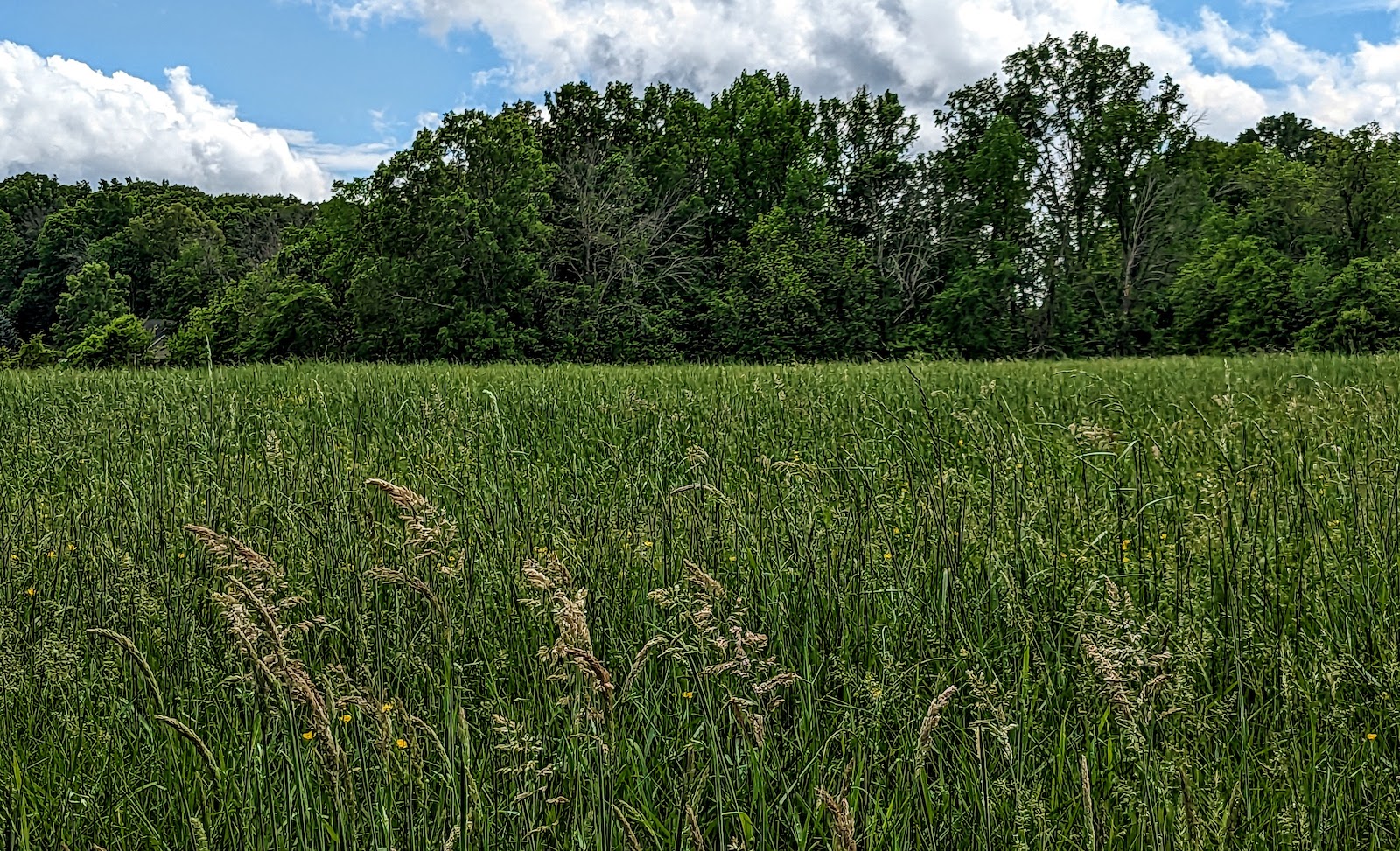
Hayfield Near Farmington, North Carolina, April 22, 2023

Of the over fifty years that I have worked since I graduated college, only a little over a decade was spent farming. I did grow up in North Carolina in the fifties and sixties when everyone we knew had gardens, some had chickens, and even a few had a milk cow. It was not unusual to see hog killings in the fall and to receive some fresh country sausage as a gift.

The land was what gave life to us all, and where we go when life is gone. The land was at the center of all, and how could understand anything without first being on the land?

The Road to My Country

I felt that I had to go back to land. I was a little shellshocked after the sixties, four years in a military school and another four in the funny lights of Cambridge. I bought an old farm in Nova Scotia the summer that I graduated from Harvard. The skies in Nova Scotia were like the ones I remembered in my youth.
The urge to work the soil was strong even though I did not grow up on a farm. The immersion course we got in farming was intense but somehow we thrived for over a decade. We might have stayed on the farm if interest rates had not hit twenty percent in the early eighties and there were better local opportunities for our children. We dispersed our cattle in the fall of 1982 and sold the farm three years later after I spent a couple of years working in the city.

Farming has stayed with me all these years, even during my years in technology. It was only a year or two ago when I was driving from our home at the coast through the Virginia Mountains to headquarters when I saw a field of grass down. It was well on its way to being ready to be becoming hay. I had to stop, roll down the windows and enjoy the smells and remember all the good memories.
It was not unusual for our “team,” Harvey and I to put up sixty tons of hay in a good day. Harvey was in his sixties when I bought his farm which he had farmed with horses. We sometimes cut hay with two nine-foot mower conditioners. The big fields Harvey would rake with our twenty-one foot rake and the small fields with a ten-foot rake. I would bale with the big Vermeer baler and one of the 105 HP International tractors.
You could start cutting hay in the morning while the dew was still on it. Raking the hay before noon was okay, but I rarely started baling the hay until the afternoon. Large windrows that the tractor could barely straddle helped me churn out a nearly 2,000 pound bale every five to ten minutes depending on how much turning had to be done. When the hay was rolled up, we left it in the field until we had time to haul it back to the farm in the fall. Our hay farm was a couple of miles from where we kept the cows. We also cut hay all around the area wherever we could strike a deal with the owners. Before our children came, my wife even used to rake hay.

On a good day, making hay was something that gave you a feeling of accomplishment. A good crop of hay started with clearing the field of brush and rocks, applying lime, then working the ground, planting the grass seed in an oat cover crop, and sometimes fertilizing the fields in the spring. It doesn’t sound like much but it was lots of back-breaking work and sweat.

There were bad days making hay. Our mowers in those days had cutter bars with blades riveted on them. If you hit a rock and broke a blade, you had to stop and replace it. There are few things dirtier that replacing a blade on a mower conditioner cutter bar that has been collecting bugs, seeds, and dust for ten acres on its platform. If you didn’t itch from something that got on you, just remembering all the bugs would make you itch. The worst thing is when the equipment broke when you had hay ready to bale and wet weather was on the way. You try to forget those days. Getting hay that was ready to be baled dry after it was rained on is not a lot of fun.

There were some great memories from those haying seasons. Sometimes I would stop for lunch and my wife and the kids would show up with a real lunch. While my wife and I ate lunch, the kids would pick red raspberries on the rock piles. There were no snakes so it was as safe as it could be. Few of the raspberries they picked made it to us but they were so plentiful you could pick all that you wanted in a few minutes. The hay farm was high on a ridge and you could see for miles. There were no places any nicer on a summer day in the hardwood hills of New Brunswick.

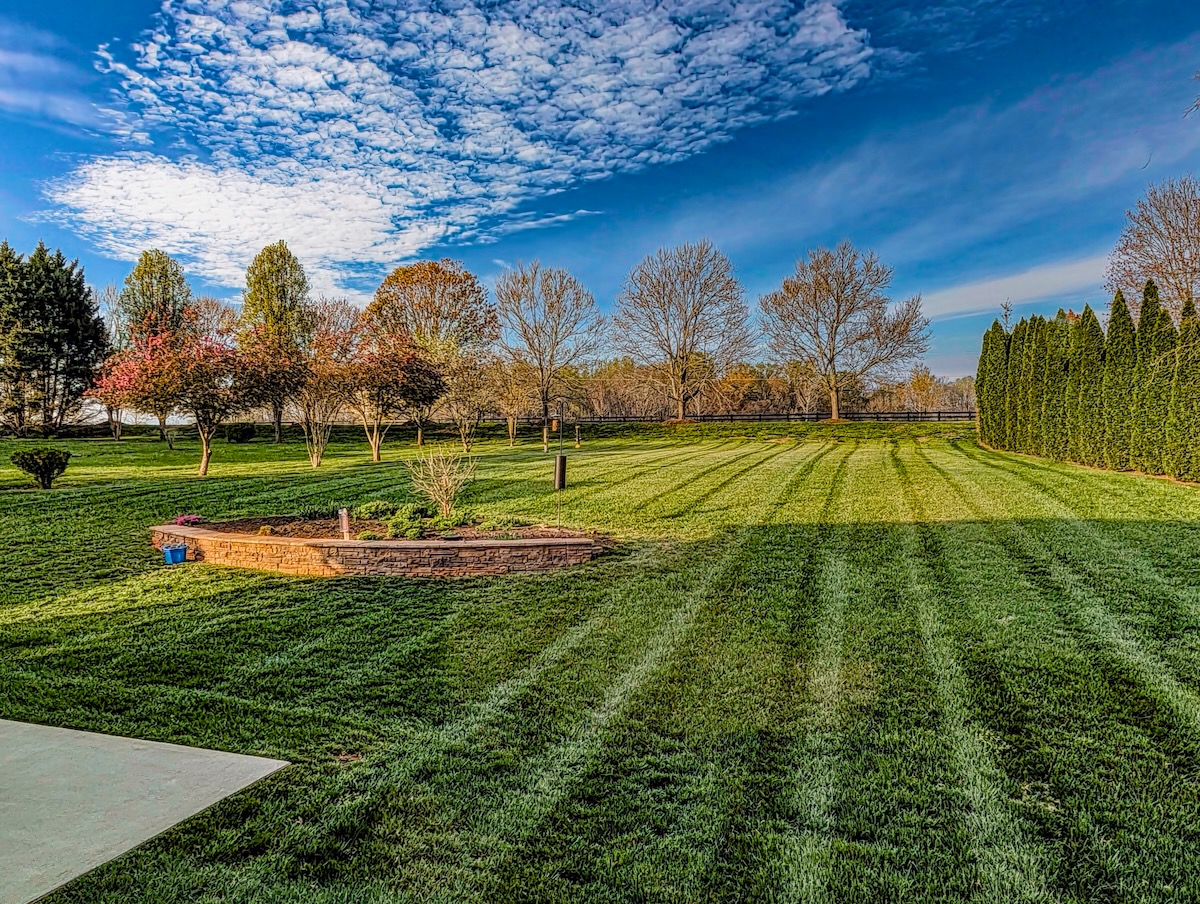
It should be no surprise that I stopped recently to look at a field of grass (pictured above) that needed cutting. It is the last week of April here in North Carolina. There will be no thoughts other than my dreams of cutting hay in New Brunswick, Canada for another couple of months.
If I am lucky in the next two to three weeks, I will get to smell some curing hay in our rural area. I can hardly wait because it is still in my blood.

We Find Our Farm

An aerial photo which a super-imposed elevation of our old farm with picture of the house, a barn, and some cattle.
Tay Ridge Angus Aerial Photo

While we were still working on our old farm house the winter of 1973-74, we were also trying to find a place to move where we could have more success farming. When I look back on it, I am amazed that we found a place which was forgiving enough for us to take what little we knew about farming and have a run at being successful. Still I wanted to work the soil.
We looked in several places in Nova Scotia and Cape Breton Island without much success. We took a trip to New Brunswick from St. Croix Cove to deliver Sophie, the goat, and to lend a hand moving to my college roommate and his wife. Mostly my job was to upgrade the electrical panel in the old house that they had purchased.
The trip there was quite an adventure, the Saint John River was flooding and as I have said many times, the only way we made it through the flooded roads was staying in the wake of a tractor trailer that was in front of us on the Trans Canada highway.
This was well before cellphones and the Internet so you might say that we were flying blind but we got there, delivered Sophie, and on the first weekend in May after surviving a night in my roommate’s newly purchased and almost flooded old house, we had a look at a nearby farm that would become Tay Ridge Angus.
It was a spur of the moment decision to look at farm near where my college roommate had found his old farm. It was the first weekend in May. There was still snow on the ground. A rational person would have said snow in May, no way.
My wife and I have talked about it a number of times, but we were hardly on the farm when it was clear that it was love at first sight. The farm had a lot of sheltered areas where cattle could be kept in the woods during the winter. There were plenty of streams and brooks for water, and the land matched the soils that I hoped to farm.
We finally came to an agreement with owner that carved off a couple of acres on the front of the farm so he could build a new house and have a garden spot.
It would take a few years, but Harvey, the previous owner, would become the main help on my farm which he had farmed mostly with horse-drawn equipment. He would transition from raking with a converted horse-drawn rake to a double one that was over twenty feet wide. It made the Vermeer round baler that I built the farm around very happy.
After one winter with a few cows housed in an old barn, I transitioned to cattle running in the woods and calves born on the snow. It turned out to be a wise decision. In the seven years that we farmed there, we never had the vet on the farm. Even Harvey came to believe that cattle were healthier outside and that in spite of what the Dept. of Agriculture said, round bale hay worked for them.
In hind sight, there are a lot of things I might have done differently, the first being to have kept our herd smaller. A lot of things and cows are one of them, you have to learn the hard way, having just a few cows is a hard lesson to learn. We eventually got to two hundred head. It was too much work and required too much equipment. However, that was the dynamics of farming then, get big or get out. The second is that I would have tried harder to get a government-backed 2% loan. We tried once and were turned down.
The twenty per cent interest rates on our operating loan killed us while our neighbors with 2% loans did just fine. We could have built a third bard to store our hay and save a lot of waste. However, with no government loans, we crunched the numbers, weighed the options and decided going to work in town was the better of the two. We had a very successful dispersal sale. We sold our cattle in the fall of 1981. I went to work helping people market their cattle but quickly moved to selling computers in the fall of 1982 and by the fall of 1984, I was working for Apple which turned out to be a career of nearly twenty years which came with a good dose of magic before my wings melted.
Still, I would love to relive those years on the farm with the knowledge and skills that I have gotten since then. However, I doubt the old body would hold up to all the work that a farm, even a modern one, requires.

The Urge to Work the Soil

Our John Deere Equipment in St. Croix Cove, Nova Scotia, as the morning fog is lifting

Growing up in the rolling hills of North Carolina’s Piedmont in the 1950s meant that you were not far from the land.  Most people had a connection with the land in those days. I can remember hog killings

Two quotes from my book,  “The Road To My County Country,” seem appropriate,

“The land was what gave life to us all, and where we go when life is gone.  The land was at the center of all, and how could understand anything without first being on the land?  You take whatever road you can find to get to the land…”

“If we were not going to be lawyers. What would we be? There could be only one answer. You had to go back to the land to find yourself. It was only there you could sort out what was good and what was bad.  There you could find out what was important and how to live life the way it should be.  That the roads had turned back to dirt was a good thing.”

If it sounds like I had a serious case of sixties disillusionment, it is likely a fair diagnosis.  I grew up in the South, spent four years at a military school, saw a series of political figures I admired assassinated,  and my college years at Harvard took place during the turmoil of the Vietnam war. Part of my college education included getting billy-clubbed while walking to our favorite hamburger place. Until that moment the students occupying University Hall were of little interest to us. That changed instantly and the only things that had much certainty when I graduated was that I did not want to be a lawyer and a charging line of state troopers was to be avoided at all costs.

That  someone who grew up wandering the woods could only survive four years in the city was no surprise.  The strange light of the city was never for me. I loved the deep dark woods and could fish silently with a friend all afternoon and never feel lonely. If camping under the stars as a Boy Scout ignited my love of the outdoors, trips to Alaska and Nova Scotia made life on the edge of wilderness one of the few certainties in my future.

“Our family had no history of lawyers, but we had a long and proud history of farmers.”

After it turned out that I they did not need me for fodder in Vietnam, I went back to the land.  In 1971, I was determined to learn how to farm and how to treat the land well. Helen and Scott Nearing’s “Living the Good Life”, Louis Bromfield’s “Malabar Farm,” and Steward Brand’s “Whole Earth Catalogue” were my bibles along with advice from those who had been farming their whole lives.  Perhaps we were lucky those first couple of years when we had an unlimited supply of composted chicken manure for the garden, but we learned how to grow stuff including hay, pigs, cattle and what seemed like enough broccoli to feed the world.

That the land I found was in Canada on the Nova Scotia shore of the Bay of Fundy was even better. Life in Nova Scotia in the seventies reminded me a lot of life in North Carolina in the fifties when I was growing up. Still other than having long hair until my mother sheared me on one of her visits, I never came close to being a hippy.  I thought electricity, running water, indoor toilets, and especially hot water were good things and worth having.  I had relatives in the fifties who had electricity but no indoor toilets and they still warmed their water with wood.  One of my first family memories is my great grandmother sitting by her wood cook stove while reading the newspaper.

Most of all like Louis Bromfield, I could not see how to farm without a tractor so I ended up with a John Deere diesel tractor, a three furrow plow, disc harrows, a seven foot cutter bar, bush hog, hay rake and a manure spreader. A hay baler came with the farm I bought. All the equipment including a front end loader, rear blade, and post hole auger cost $10,555. The farm was $6,000 and my first few head of cattle were $1,500. I already had a pickup truck and my uncle built us a hay trailer. Fifty years after I started farming for under $20,000, I seriously doubt you could get started today for less than $250,000.

For the next eleven years, we had huge gardens and grew much of our own food even butchered our own animals for a time. Our cattle breeding operation which eventually ended up in the hardwood hills north of Fredericton, New Brunswick, grew astronomically. Eventually there were four big tractors, a round baler that could put up sixty tons of hay in a day. It took a hay rake twenty-one feet wide to feed the baler. We put up over 300 tons of hay a year with just one seventy-year old neighbor helping me part time. Our farm produced at least twenty-five 700 to 800 pound yearlings each year for beef and an identical number of yearling heifers as breeding stock along along with our most profitable product a dozen or so performance tested yearling bulls that sold for up to $1,500 each.  Even with a family of five, it was a challenge to eat more than a side of beef each year so we never went hungry.  At our peak we had two hundred head of cattle which is way more than a few cattle.

What was high on the list when we moved off the farm and I went to work for Apple?  As soon as we could afford it, we hired a backhoe to dig out some of Halifax’s rocks so we could have a little garden.  It wasn’t long after we moved to Roanoke, Virginia, in 1989 that we started planting things in the bed pictured above. Tomatoes by the house followed soon after.  When we headed off to the coast in the fall of 2006, we managed to plant tomatoes the next spring.  Eventually we grew unbelievable amounts of vegetables in tiny space. You don’t have a grow an acre of vegetable to get your fingers in dirt. We are about to prove that once more even though we are now in our seventies.

Our Rock Wall Garden in Roanoke, Virginia

In 2021, we moved again, this time we move back to NC’s Piedmont and its challenging red clay soil.  It has taken a while but  we had a wall built behind our home. We don’t have the chicken manure that we had with our first farm, but we do have a local compost farm. Our wall contractor mixed over five cubic yards of compost with our red clay soil. Pictures of the whole project are here. We added a few other soil amendments and while we were doing it capped the whole bed off with another five cubic yards of compost. We planted a lot of bulb is the center third but have reserved the front third for gardening and the back area around our little fringe tree for perennials. By early March 2023 we we will have some vegetables plants in the ground once again. We can hope they turn out as well as our spring Cape Carteret gardening.

Next Came The Old House And Barn

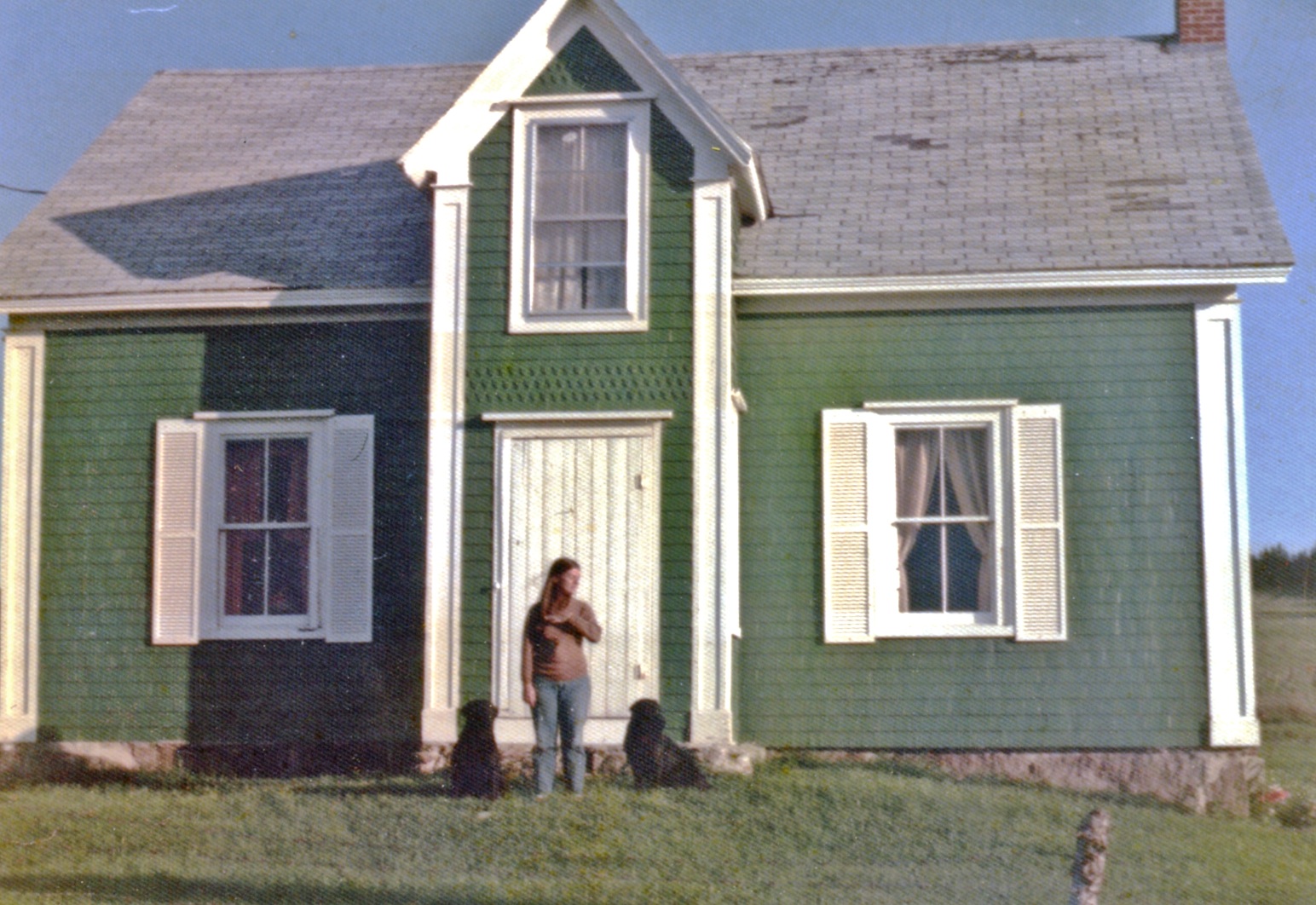
Our St. Croix Cove, Nova Scotia, House After Remodeling, Summer 1973

The glowing ember of that Nova Scotia trip did not die.  Maybe it was fanned a little by another trip that my college roommate and I took to Alaska in the summer of 1970 in my PowerWagon.  We were gone most of the summer.  When we came back I was even more determined to find a spot away from the big cities of the East.   In the spring of 1971, I wrote to the Longmire Real Estate agency of Bridgetown, Nova Scotia, about a farm and land on the shores of the Bay of Fundy.  The property was advertised in the Sunday Boston Globe.  At the time there was only a print version of the paper and reading the Sunday paper was something I really enjoyed. I was not alone.

Though the details took time to work out, I ended up the owner of 140 acres, a two hundred year old house, barn, and carriage house in Saint Croix Cove. That first piece of land and buildings cost around $7,000. The view of the Bay of Fundy was spectacular.  Soon after with help from my mother, I ended up buying more property across the road.  It actually went down to the shore.

That August after I finished my last class ( I had missed a semester from sickness), I followed in my Land Rover and the adventure really began for me. Two roommates and I had graduated from Harvard and now we were determined to get our hands dirty and let the land tell us what to do. A third adventurer had left Harvard as a sophomore and might have been even more lost than we three college roommates.

Just reworking the old house was a huge undertaking. It needed painting and complete reconstruction inside.  By the time I got there, the plaster, old chimney and lathe had been ripped out. Much of the home was down to its hand-hewn beams. That was only the start of the work. We had to caulk the cracks on the inside of the walls.  Then came wiring and insulation for the exterior walls.  We had made the decision to go with electric baseboard heating because it was easy to install.  We had one very good carpenter, another who loved to tear things apart and to do shingles. A third who was also good with hand tools. I became the electrician and plumber.

There were no beds, we slept in sleeping bags on the floors on four inch thick pieces of foam.  Our few pieces of furniture had come from college dorm rooms.  The decision to relocate the bathroom upstairs delayed having a functional shower for weeks, so we warmed water in a coffee pot for bathing.  Sometimes we took advantage of the showers at a local campground. Eventually one of roommates’ new sweetheart came to stay with us, and she helped with some of the cooking.  Cooking was pretty basic since there was no kitchen.  We ate a lot of tuna fish sandwiches in the midst of our construction and more than a few fried clams at Alice’s Clam shack down in the village of Hampton a few miles away. We did learn how to cook smoked picnic hams and make baked beans.  We also learned to make salt cod and potatoes.  The salty dish was a particularly good excuse for some beer.

We celebrated an amazing first Thanksgiving in Canada with college friends who had decided they needed to see this place that had lured their friends north. There were lots of walks in the brisk Nova Scotia air and the housed now blessed by lots of college friends was soon ready for winter.

By the time winter rolled around, the roommates/helpers started to disappear.

Then there were only two of us left. In the next year, it became clear that I had moved to Canada and beyond working on the old house, I needed to figure out what to do with the rest of my life. I bought a few cows and decided to try my hand at cattle and gardening. One of my original helpers had married a local school teacher, he and I began a tenuous partnership with those few cows.

There was a lot to learn and the biggest lesson was that partnerships are hard to sustain. By the next fall, I decided that I needed to move on and find a better place to farm. Between that thought and the reality of accomplishing it there would be a lot that needed to happen. Some things also were hidden in the cards. The decisions were about to get a lot more complicated. Just to keep things interesting, I decided to get my pilot’s license. It would be just a footnote in 1973 which by the time it was done would set me on a course for the next ten years of life.

Sobotta, David. A Taste for the Wild, Canada’s Maritimes

The PowerWagon Changed Me

The Beast

This is part of a series on life and careers that that started with this post, An Unconventional Journey – Life, Learning and Work.

It had been a rough semester at Harvard. Getting away from the city seemed like a really good idea. It was a short trip from Cambridge to Newton’s Silver Lake Dodge in the spring of 1970 to take delivery of a shiny Dodge PowerWagon.

I have described it as a beast and like other trucks of the day, it rode like a truck. It had a four speed manual transmission. Of course the shifter and the transfer case that allowed you to switch into four wheel low were both on the floor and far from silky smooth. For the day, the standard tires were pretty big. The big 3/4 ton truck had manual locking hubs, two gas tanks, and an eight thousand pound mechanical winch behind its extended front bumper. On a good day, it would get ten or eleven miles to the gallon. The plan that I hatched with one of my roommates was to drive to Alaska with it.

School at Harvard in that spring was cancelled because of all a few riots and lots of demonstrations. I headed home as soon as I got the truck. I had ordered a cover the same height as the cab for the back from a place just south of my home in Mount Airy, North Carolina. It would allow us to build a platform for our four inch foam mattresses and store our gear underneath it.

We outfitted it with my faithful Coleman Stove and lantern, my favorite camping cooler, and a large Igloo water cooler. In addition we had our sleeping bags, climbing ropes, my fishing gear, first aid gear, cooking equipment, a couple of big bumper jacks, medical supplies and a good selection of tools that might save the day.

There was also a five-shot Remington 30-06 semi-automatic and a 30-30 Winchester lever action plus a 44 magnum pistol. I had talked to a bush pilot in Anchorage. He told me that they would not fly us into the back country unless we were armed. The only gun I had to buy was the 44 magnum pistol. Neither rifle had ever been used for anything beyond target shooting. I had given up hunting four or five years earlier.

Around the third week of June, we packed up and headed off from Mt. Airy. The goal was to get to Alaska or at least the western US mountains as quickly as possible. Somewhere on a country road in the Midwest, we pulled down a short slope into the edge of a farmer’s field. We were going to catch a few hours sleep. It rained a little and we decided to move on but the top few inches of the field had turned to mud. We locked the hubs, engaged the four wheel drive, and nothing happened.

I ended up taking the locking hubs apart and adjusting them in order to get us out of the field. It would not be the last time I would be reminded that four wheel drive just lets you get stuck in worse places and that whenever something can break, it will break.

Somehow we managed to make our way out to Colorado where we started climbing. We had been doing some practice climbing in Maine and rappelling down anywhere we could find a place to tie off. I had even rappelled down from the fourth floor attic of our Mount Airy home.

The first few climbs went fine but one day about seventy-five feet up with my boot clinched to a ledge of rock barely an inch wide, I decided that I would rather fish than climb. I rappelled down and that was it for me and climbing. My roommate seemed fine with my decision, we figured that we could find someone for him to climb with when we got to the climbers’ camp in the Grand Tetons. I would fish by myself while he climbed.

After driving across some high passes where snow still partially covered the picnic tables in the highest campgrounds, we finally made it the Tetons. It didn’t take long before a climbing trip to the Grand Teton was arranged. I dropped my partner off and agreed to pick him up three days later.

Over the next few days, I tried a number of trout streams without any luck and enjoyed a few meals at Moran’s Chuck Wagon. When I went back to pick up my traveling partner, I was told that he was not there. He had slipped on an ice slope on the descent from the Grand Teton. He had been unable to stop his slide and ended up falling one hundred fifty feet to a ledge barely a foot or two wide.

After they got him off the ledge, he managed to walk out five miles with a broken collarbone. They had taken him to the Jackson hospital which is where I headed. After talking to the doctor, I called his parents and soon afterwards, I loaded him into the back of the truck and headed off to the larger hospital in Idaho Falls. They were fine with me handling his “care.”

I spent a week in the Idaho Falls KOA campground while my partner got well enough to travel. Of course he was in no shape to drive and would not be for a long time, but he was determined to make it to Alaska. After the hospital stay we headed up to Montana’s Hungry Horse Lake by way of Yellowstone Park. We finally got to a camping spot near the lake, I found a stream full of cutthroat trout. It was my first success fishing on the trip and I loved it. The fresh fish were great fried up on the Coleman stove.

The trip would get more exciting as we headed north through Alberta.