Life Sneaks Up On You

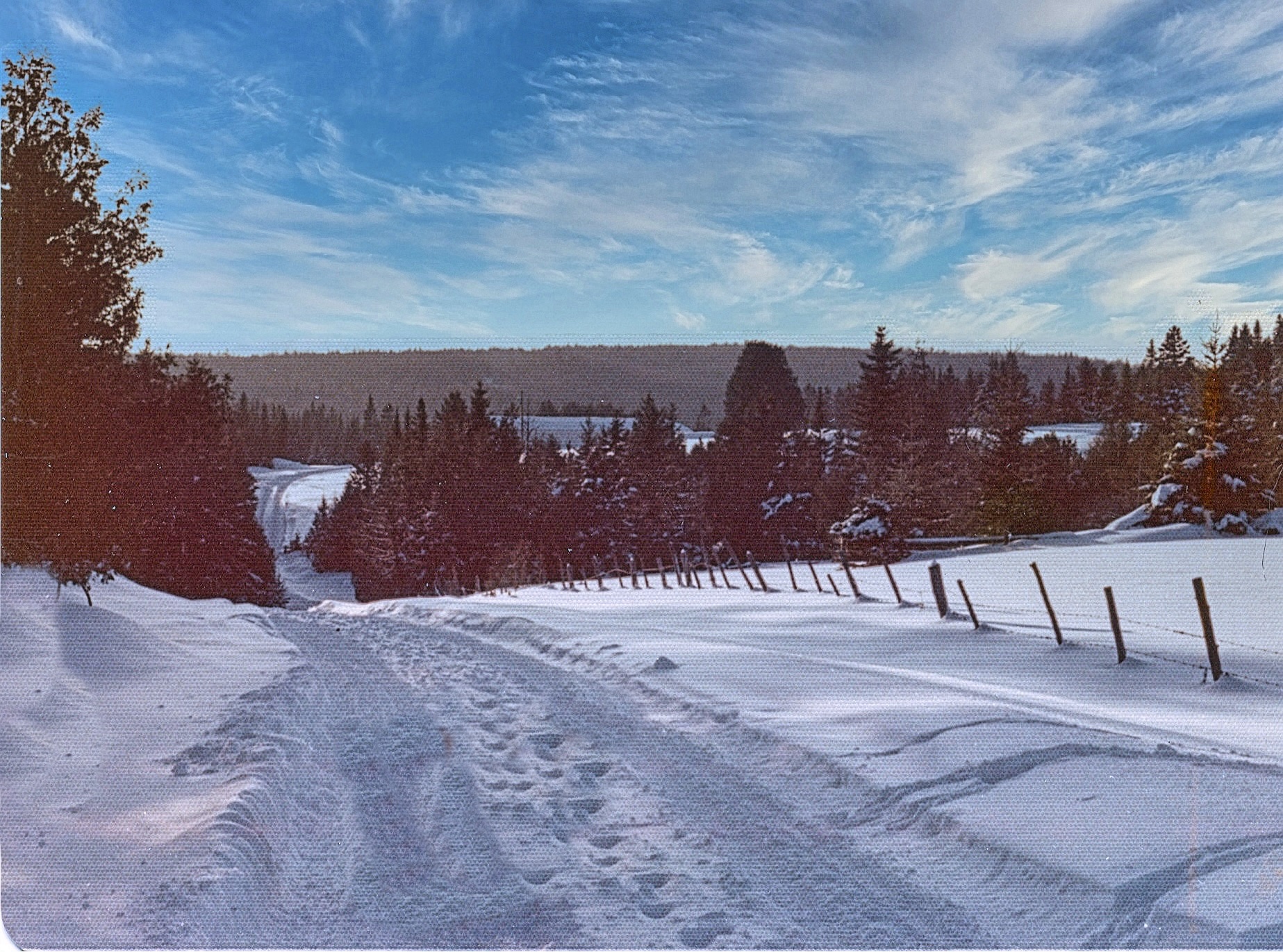
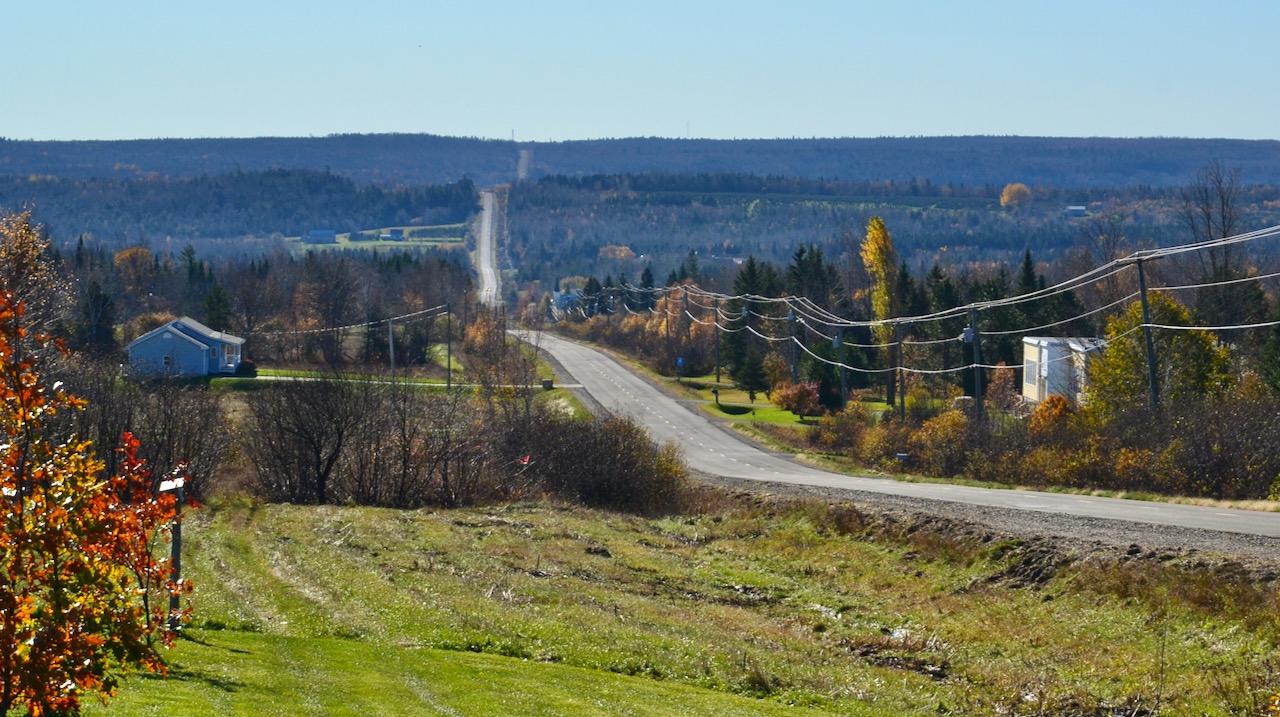
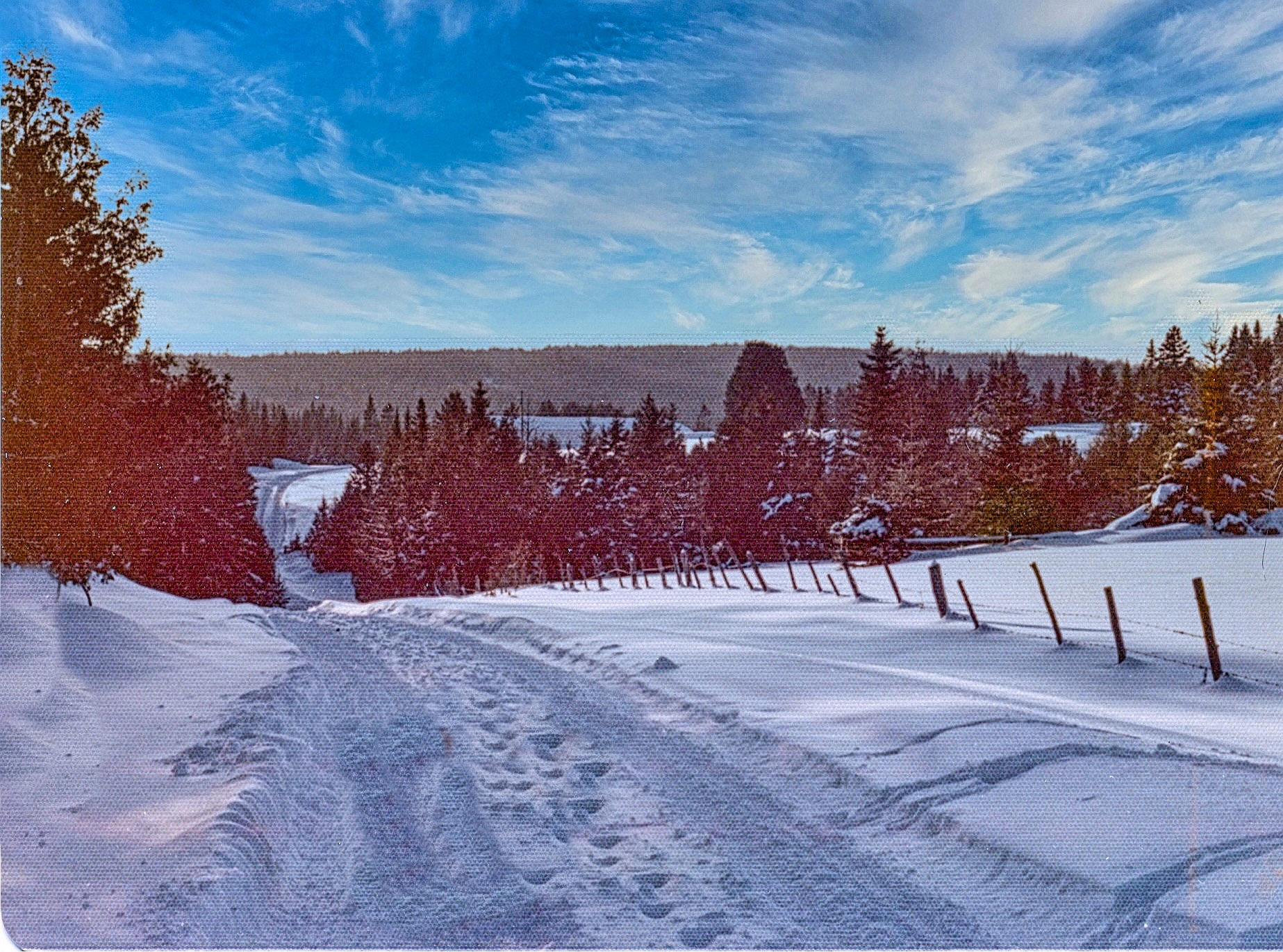
The Royal Road, Tay Creek, New Brunswick, Canada

Just after I graduated college in the summer of 1971, instead of going to Law School, I headed off to Nova Scotia. I was part of the generation that felt strongly about getting back to the land and understanding a lot of things that modern society was hiding from us.

A decision like that is possible when you are young, I believe that as age and life will sneak up on you, it gets much harder to go off on your own in a wild adventure as you age. How older people have done it, remains a mystery to me.

Eventually, I got married and my wife and I moved to what I considered a real farm or at least one that I believed that I could make into a modern farm. We never really gave up all modern conveniences like many back-to-the-landers. One of the first things that I installed in our Nova Scotia farmhouse was a dishwasher. I also put one in our home in New Brunswick. I plowed my garden with a John Deere tractor not a horse.

The road in the picture ran 20 miles back to Fredericton, the capital of New Brunswick. We were lucky to have schools, churches, a couple of general stores and medical services in our little community of Tay Creek. Forty years after we left, the churches and general stores are gone. If you want to buy gasoline or a nail, you have to go to Fredericton.

Taking on building a home for your family in an isolated spot which at the time was subject to amazing snow storms is something you only do when you are young and your body can take on almost any challenge. In my twenties and thirties, I never doubted that I could do everything for my family aside from medical care and schooling. Plumbing, electrical wiring, installing appliances, those were expected of the folks who lived beyond the city. There was no one to hire to mow a yard or even change faucet. While we had an oil furnace, most of our heat came from a wood stove. The furnace would come on during the early morning hours as the house cooled. Our water came from a spring. Our food came from our garden, our milk cow, chickens and cattle herd.

As nice as the life on your own in the hardwood hills of New Brunswick was, it was non-stop work. It was ten years before we went on a real vacation. After we left the farm, we mostly lived in suburbs. Seven years after leaving the farm we were in subdivision on the side of a mountain in SW Virginia. For many years I kept the steep slope behind the house clear of brush and small trees. It meant working with a chainsaw on a hill where I could barely stand. Fortunately, I never got injured. It was another activity reserved for youth.

By the time we got to our next house twenty-four years after leaving the farm, the strenuous work was down to mowing the yard, keeping our skiff running, and hurricane preparation. Good preparation for a hurricane often meant the cleanup afterwards was relatively easy. A storm like Hurricane Florence meant extra cleanup for everyone in the area no matter how much you prepared. The older you get, the harder all that is. Polywood outdoor furniture is nice until you have to haul it all into the garage.

When we moved from the coast in 2021, my wife and I were both over seventy. We were far from our children and family. Our house had too many steps and we were both tired of the hurricane routine in spite of never having any real damage to our house.

My wife had almost five acres of raw farmland which was a hayfield in Surry County. We briefly considered building a home there, but quickly decided that we were too old for all the work needed to build a home so we found a great subdivision with public sewer, water, and fiber Internet. Moving to North Carolina Piedmont close to where I grew up has turned out to be a wise decision.

We are glad that we moved when we did. We have friends our age that would like to move from the coast but have decided that they are too old to try. I can relate to their feelings. Getting our coastal home ready to sell and moving with our four kittens was not the easiest thing that I have ever done. I am pretty sure that three years later, I would be reluctant to move again unless I just had to move.

You don’t think about these things when you are young and can handle anything. Life can sneak up on you. It is good to plan a little for the time when you can no longer take on the world with one arm tied behind your back.

All in on Cattle

Our red Angus bull, Yellowstone, with a small part of the herd- 1981

My first cattle were purchased in the summer of 1973, when we were living in the two-hundred year old post and beam house along the Bay of Fundy in the village of St. Croix Cove. I laugh when I tell the story that our cattle got mixed up with a dairy farmer’s herd and I barely knew enough to separate the two herds.

It did not take much farming on the North Mountain of the Annapolis Valley to figure out that there had to be better places to make hay than a slope that was often covered with fog during the haying season.

I was looking for a new place to farm when I met my wife, Glenda, on a blind date while visiting my mother back in North Carolina. I guess the theory was that a beautiful North Carolina girl would keep me in North Carolina. It did not work and the beautiful North Carolina lady headed off to Canada where we even explored Newfoundland as option for our next farm.

Finally, in the summer of 1974, one year after we got married, we found our farm. It was in the rolling hardwood hills north of New Brunswick’s provincial capital, Fredericton. It was a good place to make hay with much warmer summers than Nova Scotia. It also had winter weather that tended towards snow instead of rain, snow, rain, snow, and finally freezing rain which was typical of the Nova Scotia coast.

When we moved, we sold our first cattle and started fresh. We probably had a couple dozen in the herd that first winter. I was still learning and I got talked into tying the mature females in the barn that first winter. It was the first and last time that we would do that. After a trip to Manitoba, Saskatchewan, and Alberta to buy some better brood stock, I was convinced the cattle would be better in the woods than a damp barn. For the next eight years we ran our cattle outside in the winter. For the last few years, we calved an average of sixty cows per year.

The important statistic is that we never had a vet on the farm for a calving problem or a sick calf. We were heavily mechanized using a round baler to put up 300 t0 400 large round bales per year.

The large framed Angus and big bulls that we imported from the west turned out to be pretty popular. We had a good spring trade of selling performance tested yearly bulls. Our cull bulls were sold for beef at twelve months of age.

As we had got several daughters from our original feedstock, we started selling them for breeding stock and replacing them with their daughters. It was a lot of work and lots of promotional work. Yellowstone, our giant red Angus bull from Montana was a show stopper for most people.

In the fall of 1982, we dispersed our herd. Interest rates had risen to 20% and according to the Provincial farm board, we were too successful to qualify for a government-backed two percent loan. I always thought it was because I was a young American with too many new ideas for them to swallow.

In 1974, when I started farming in New Brunswick, I was one of a handful of farmers using round bales to put up their hay. The Provincial Agriculture people told me round would never work in New Brunswick’s climate.

Unfortunately the statistics were on my side. I fed two hundred head of cattle with them for over eight years. I was also told that running the cattle outside would never work. We built two large barns designed around the theory that a cow could have its calf outside in the snow and spend a night or two in a barn before the cow and calf went back outside. Yearlings had a large pole barn to run into during bad weather. We never lost a calf to a cow calving in the snow.

When I went back to New Brunswick forty years later, I found my two barns still standing, almost everyone using round balers, and very few cattle farmers. I guess that shows how effective agricultural experts can be in destroying cattle farming when they put their minds to it.

There have been lots of things that pushed farmers out of beef cattle but having clueless agricultural experts certainly didn’t help. I have often wondered if would still be farming if I had gotten the two precent provincially-backed loan.

My son and I walking through the herd during the summer of 1981

Haying Stays In Your Blood

Hayfield
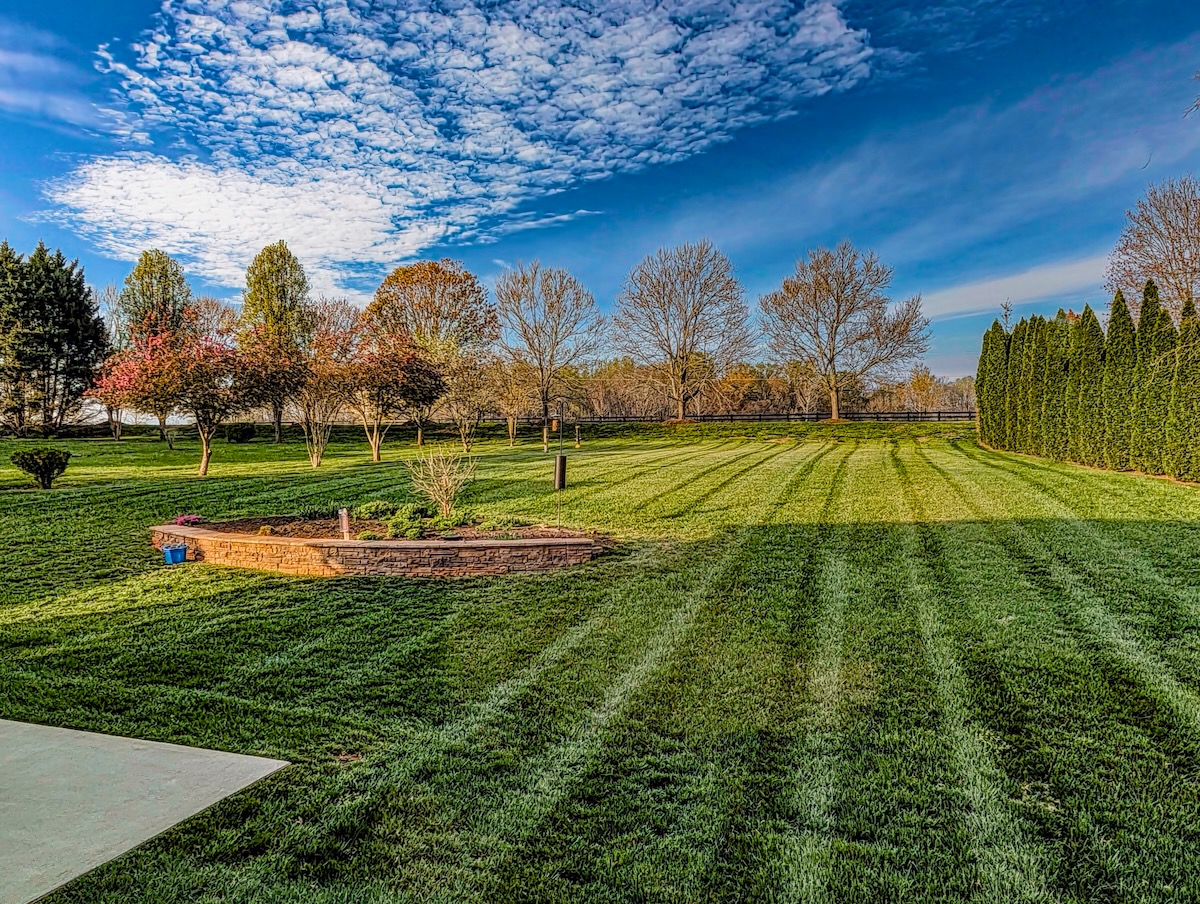
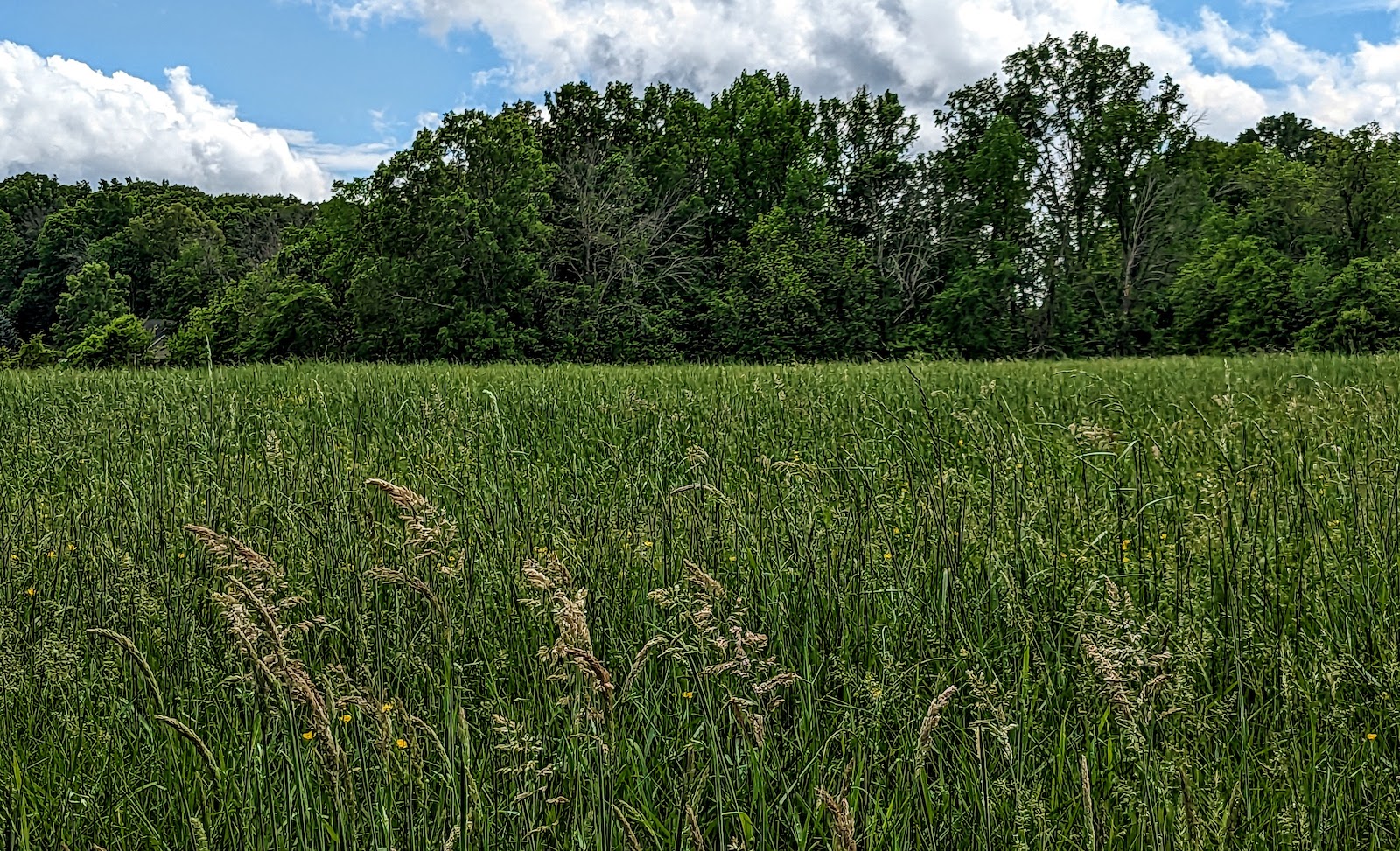
Hayfield Near Farmington, North Carolina, April 22, 2023

Of the over fifty years that I have worked since I graduated college, only a little over a decade was spent farming. I did grow up in North Carolina in the fifties and sixties when everyone we knew had gardens, some had chickens, and even a few had a milk cow. It was not unusual to see hog killings in the fall and to receive some fresh country sausage as a gift.

The land was what gave life to us all, and where we go when life is gone. The land was at the center of all, and how could understand anything without first being on the land?

The Road to My Country

I felt that I had to go back to land. I was a little shellshocked after the sixties, four years in a military school and another four in the funny lights of Cambridge. I bought an old farm in Nova Scotia the summer that I graduated from Harvard. The skies in Nova Scotia were like the ones I remembered in my youth.
The urge to work the soil was strong even though I did not grow up on a farm. The immersion course we got in farming was intense but somehow we thrived for over a decade. We might have stayed on the farm if interest rates had not hit twenty percent in the early eighties and there were better local opportunities for our children. We dispersed our cattle in the fall of 1982 and sold the farm three years later after I spent a couple of years working in the city.

Farming has stayed with me all these years, even during my years in technology. It was only a year or two ago when I was driving from our home at the coast through the Virginia Mountains to headquarters when I saw a field of grass down. It was well on its way to being ready to be becoming hay. I had to stop, roll down the windows and enjoy the smells and remember all the good memories.
It was not unusual for our “team,” Harvey and I to put up sixty tons of hay in a good day. Harvey was in his sixties when I bought his farm which he had farmed with horses. We sometimes cut hay with two nine-foot mower conditioners. The big fields Harvey would rake with our twenty-one foot rake and the small fields with a ten-foot rake. I would bale with the big Vermeer baler and one of the 105 HP International tractors.
You could start cutting hay in the morning while the dew was still on it. Raking the hay before noon was okay, but I rarely started baling the hay until the afternoon. Large windrows that the tractor could barely straddle helped me churn out a nearly 2,000 pound bale every five to ten minutes depending on how much turning had to be done. When the hay was rolled up, we left it in the field until we had time to haul it back to the farm in the fall. Our hay farm was a couple of miles from where we kept the cows. We also cut hay all around the area wherever we could strike a deal with the owners. Before our children came, my wife even used to rake hay.

On a good day, making hay was something that gave you a feeling of accomplishment. A good crop of hay started with clearing the field of brush and rocks, applying lime, then working the ground, planting the grass seed in an oat cover crop, and sometimes fertilizing the fields in the spring. It doesn’t sound like much but it was lots of back-breaking work and sweat.

There were bad days making hay. Our mowers in those days had cutter bars with blades riveted on them. If you hit a rock and broke a blade, you had to stop and replace it. There are few things dirtier that replacing a blade on a mower conditioner cutter bar that has been collecting bugs, seeds, and dust for ten acres on its platform. If you didn’t itch from something that got on you, just remembering all the bugs would make you itch. The worst thing is when the equipment broke when you had hay ready to bale and wet weather was on the way. You try to forget those days. Getting hay that was ready to be baled dry after it was rained on is not a lot of fun.

There were some great memories from those haying seasons. Sometimes I would stop for lunch and my wife and the kids would show up with a real lunch. While my wife and I ate lunch, the kids would pick red raspberries on the rock piles. There were no snakes so it was as safe as it could be. Few of the raspberries they picked made it to us but they were so plentiful you could pick all that you wanted in a few minutes. The hay farm was high on a ridge and you could see for miles. There were no places any nicer on a summer day in the hardwood hills of New Brunswick.

It should be no surprise that I stopped recently to look at a field of grass (pictured above) that needed cutting. It is the last week of April here in North Carolina. There will be no thoughts other than my dreams of cutting hay in New Brunswick, Canada for another couple of months.
If I am lucky in the next two to three weeks, I will get to smell some curing hay in our rural area. I can hardly wait because it is still in my blood.

We Find Our Farm

An aerial photo which a super-imposed elevation of our old farm with picture of the house, a barn, and some cattle.
Tay Ridge Angus Aerial Photo

While we were still working on our old farm house the winter of 1973-74, we were also trying to find a place to move where we could have more success farming. When I look back on it, I am amazed that we found a place which was forgiving enough for us to take what little we knew about farming and have a run at being successful. Still I wanted to work the soil.
We looked in several places in Nova Scotia and Cape Breton Island without much success. We took a trip to New Brunswick from St. Croix Cove to deliver Sophie, the goat, and to lend a hand moving to my college roommate and his wife. Mostly my job was to upgrade the electrical panel in the old house that they had purchased.
The trip there was quite an adventure, the Saint John River was flooding and as I have said many times, the only way we made it through the flooded roads was staying in the wake of a tractor trailer that was in front of us on the Trans Canada highway.
This was well before cellphones and the Internet so you might say that we were flying blind but we got there, delivered Sophie, and on the first weekend in May after surviving a night in my roommate’s newly purchased and almost flooded old house, we had a look at a nearby farm that would become Tay Ridge Angus.
It was a spur of the moment decision to look at farm near where my college roommate had found his old farm. It was the first weekend in May. There was still snow on the ground. A rational person would have said snow in May, no way.
My wife and I have talked about it a number of times, but we were hardly on the farm when it was clear that it was love at first sight. The farm had a lot of sheltered areas where cattle could be kept in the woods during the winter. There were plenty of streams and brooks for water, and the land matched the soils that I hoped to farm.
We finally came to an agreement with owner that carved off a couple of acres on the front of the farm so he could build a new house and have a garden spot.
It would take a few years, but Harvey, the previous owner, would become the main help on my farm which he had farmed mostly with horse-drawn equipment. He would transition from raking with a converted horse-drawn rake to a double one that was over twenty feet wide. It made the Vermeer round baler that I built the farm around very happy.
After one winter with a few cows housed in an old barn, I transitioned to cattle running in the woods and calves born on the snow. It turned out to be a wise decision. In the seven years that we farmed there, we never had the vet on the farm. Even Harvey came to believe that cattle were healthier outside and that in spite of what the Dept. of Agriculture said, round bale hay worked for them.
In hind sight, there are a lot of things I might have done differently, the first being to have kept our herd smaller. A lot of things and cows are one of them, you have to learn the hard way, having just a few cows is a hard lesson to learn. We eventually got to two hundred head. It was too much work and required too much equipment. However, that was the dynamics of farming then, get big or get out. The second is that I would have tried harder to get a government-backed 2% loan. We tried once and were turned down.
The twenty per cent interest rates on our operating loan killed us while our neighbors with 2% loans did just fine. We could have built a third bard to store our hay and save a lot of waste. However, with no government loans, we crunched the numbers, weighed the options and decided going to work in town was the better of the two. We had a very successful dispersal sale. We sold our cattle in the fall of 1981. I went to work helping people market their cattle but quickly moved to selling computers in the fall of 1982 and by the fall of 1984, I was working for Apple which turned out to be a career of nearly twenty years which came with a good dose of magic before my wings melted.
Still, I would love to relive those years on the farm with the knowledge and skills that I have gotten since then. However, I doubt the old body would hold up to all the work that a farm, even a modern one, requires.

The Urge to Work the Soil

Our John Deere Equipment in St. Croix Cove, Nova Scotia, as the morning fog is lifting

Growing up in the rolling hills of North Carolina’s Piedmont in the 1950s meant that you were not far from the land.  Most people had a connection with the land in those days. I can remember hog killings

Two quotes from my book,  “The Road To My County Country,” seem appropriate,

“The land was what gave life to us all, and where we go when life is gone.  The land was at the center of all, and how could understand anything without first being on the land?  You take whatever road you can find to get to the land…”

“If we were not going to be lawyers. What would we be? There could be only one answer. You had to go back to the land to find yourself. It was only there you could sort out what was good and what was bad.  There you could find out what was important and how to live life the way it should be.  That the roads had turned back to dirt was a good thing.”

If it sounds like I had a serious case of sixties disillusionment, it is likely a fair diagnosis.  I grew up in the South, spent four years at a military school, saw a series of political figures I admired assassinated,  and my college years at Harvard took place during the turmoil of the Vietnam war. Part of my college education included getting billy-clubbed while walking to our favorite hamburger place. Until that moment the students occupying University Hall were of little interest to us. That changed instantly and the only things that had much certainty when I graduated was that I did not want to be a lawyer and a charging line of state troopers was to be avoided at all costs.

That  someone who grew up wandering the woods could only survive four years in the city was no surprise.  The strange light of the city was never for me. I loved the deep dark woods and could fish silently with a friend all afternoon and never feel lonely. If camping under the stars as a Boy Scout ignited my love of the outdoors, trips to Alaska and Nova Scotia made life on the edge of wilderness one of the few certainties in my future.

“Our family had no history of lawyers, but we had a long and proud history of farmers.”

After it turned out that I they did not need me for fodder in Vietnam, I went back to the land.  In 1971, I was determined to learn how to farm and how to treat the land well. Helen and Scott Nearing’s “Living the Good Life”, Louis Bromfield’s “Malabar Farm,” and Steward Brand’s “Whole Earth Catalogue” were my bibles along with advice from those who had been farming their whole lives.  Perhaps we were lucky those first couple of years when we had an unlimited supply of composted chicken manure for the garden, but we learned how to grow stuff including hay, pigs, cattle and what seemed like enough broccoli to feed the world.

That the land I found was in Canada on the Nova Scotia shore of the Bay of Fundy was even better. Life in Nova Scotia in the seventies reminded me a lot of life in North Carolina in the fifties when I was growing up. Still other than having long hair until my mother sheared me on one of her visits, I never came close to being a hippy.  I thought electricity, running water, indoor toilets, and especially hot water were good things and worth having.  I had relatives in the fifties who had electricity but no indoor toilets and they still warmed their water with wood.  One of my first family memories is my great grandmother sitting by her wood cook stove while reading the newspaper.

Most of all like Louis Bromfield, I could not see how to farm without a tractor so I ended up with a John Deere diesel tractor, a three furrow plow, disc harrows, a seven foot cutter bar, bush hog, hay rake and a manure spreader. A hay baler came with the farm I bought. All the equipment including a front end loader, rear blade, and post hole auger cost $10,555. The farm was $6,000 and my first few head of cattle were $1,500. I already had a pickup truck and my uncle built us a hay trailer. Fifty years after I started farming for under $20,000, I seriously doubt you could get started today for less than $250,000.

For the next eleven years, we had huge gardens and grew much of our own food even butchered our own animals for a time. Our cattle breeding operation which eventually ended up in the hardwood hills north of Fredericton, New Brunswick, grew astronomically. Eventually there were four big tractors, a round baler that could put up sixty tons of hay in a day. It took a hay rake twenty-one feet wide to feed the baler. We put up over 300 tons of hay a year with just one seventy-year old neighbor helping me part time. Our farm produced at least twenty-five 700 to 800 pound yearlings each year for beef and an identical number of yearling heifers as breeding stock along along with our most profitable product a dozen or so performance tested yearling bulls that sold for up to $1,500 each.  Even with a family of five, it was a challenge to eat more than a side of beef each year so we never went hungry.  At our peak we had two hundred head of cattle which is way more than a few cattle.

What was high on the list when we moved off the farm and I went to work for Apple?  As soon as we could afford it, we hired a backhoe to dig out some of Halifax’s rocks so we could have a little garden.  It wasn’t long after we moved to Roanoke, Virginia, in 1989 that we started planting things in the bed pictured above. Tomatoes by the house followed soon after.  When we headed off to the coast in the fall of 2006, we managed to plant tomatoes the next spring.  Eventually we grew unbelievable amounts of vegetables in tiny space. You don’t have a grow an acre of vegetable to get your fingers in dirt. We are about to prove that once more even though we are now in our seventies.

Our Rock Wall Garden in Roanoke, Virginia

In 2021, we moved again, this time we move back to NC’s Piedmont and its challenging red clay soil.  It has taken a while but  we had a wall built behind our home. We don’t have the chicken manure that we had with our first farm, but we do have a local compost farm. Our wall contractor mixed over five cubic yards of compost with our red clay soil. Pictures of the whole project are here. We added a few other soil amendments and while we were doing it capped the whole bed off with another five cubic yards of compost. We planted a lot of bulb is the center third but have reserved the front third for gardening and the back area around our little fringe tree for perennials. By early March 2023 we we will have some vegetables plants in the ground once again. We can hope they turn out as well as our spring Cape Carteret gardening.

Next Came The Old House And Barn

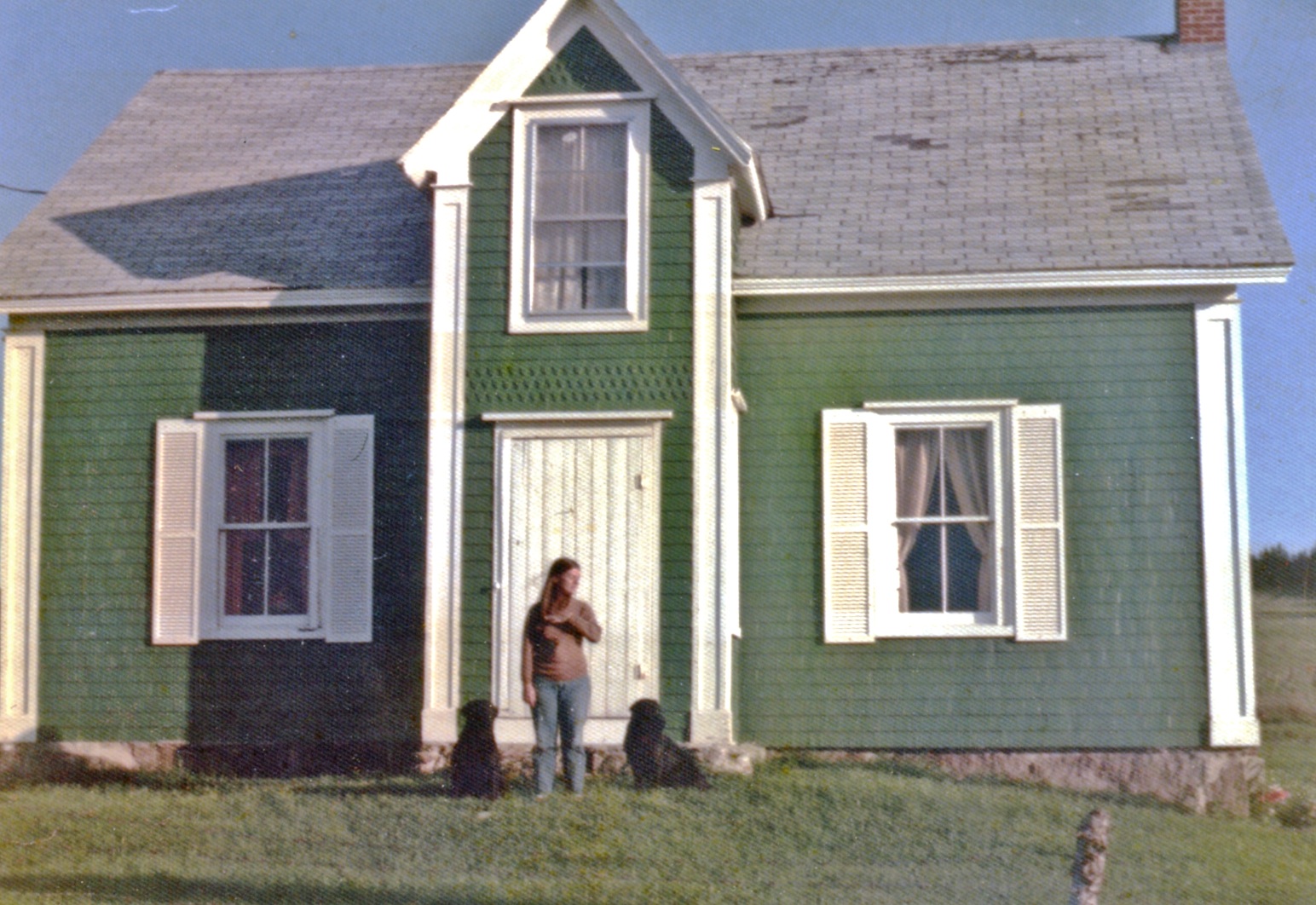
Our St. Croix Cove, Nova Scotia, House After Remodeling, Summer 1973

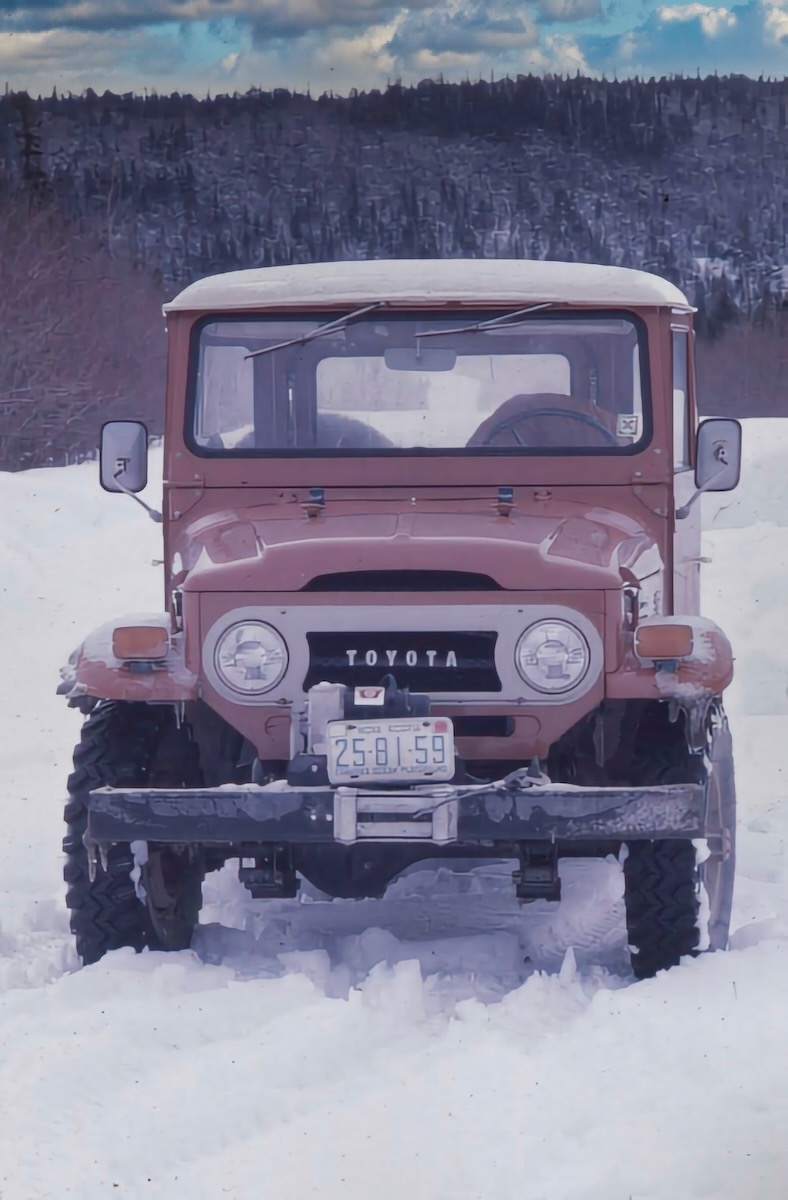
The glowing ember of that Nova Scotia trip did not die.  Maybe it was fanned a little by another trip that my college roommate and I took to Alaska in the summer of 1970 in my PowerWagon.  We were gone most of the summer.  When we came back I was even more determined to find a spot away from the big cities of the East.   In the spring of 1971, I wrote to the Longmire Real Estate agency of Bridgetown, Nova Scotia, about a farm and land on the shores of the Bay of Fundy.  The property was advertised in the Sunday Boston Globe.  At the time there was only a print version of the paper and reading the Sunday paper was something I really enjoyed. I was not alone.

Though the details took time to work out, I ended up the owner of 140 acres, a two hundred year old house, barn, and carriage house in Saint Croix Cove. That first piece of land and buildings cost around $7,000. The view of the Bay of Fundy was spectacular.  Soon after with help from my mother, I ended up buying more property across the road.  It actually went down to the shore.

That August after I finished my last class ( I had missed a semester from sickness), I followed in my Land Rover and the adventure really began for me. Two roommates and I had graduated from Harvard and now we were determined to get our hands dirty and let the land tell us what to do. A third adventurer had left Harvard as a sophomore and might have been even more lost than we three college roommates.

Just reworking the old house was a huge undertaking. It needed painting and complete reconstruction inside.  By the time I got there, the plaster, old chimney and lathe had been ripped out. Much of the home was down to its hand-hewn beams. That was only the start of the work. We had to caulk the cracks on the inside of the walls.  Then came wiring and insulation for the exterior walls.  We had made the decision to go with electric baseboard heating because it was easy to install.  We had one very good carpenter, another who loved to tear things apart and to do shingles. A third who was also good with hand tools. I became the electrician and plumber.

There were no beds, we slept in sleeping bags on the floors on four inch thick pieces of foam.  Our few pieces of furniture had come from college dorm rooms.  The decision to relocate the bathroom upstairs delayed having a functional shower for weeks, so we warmed water in a coffee pot for bathing.  Sometimes we took advantage of the showers at a local campground. Eventually one of roommates’ new sweetheart came to stay with us, and she helped with some of the cooking.  Cooking was pretty basic since there was no kitchen.  We ate a lot of tuna fish sandwiches in the midst of our construction and more than a few fried clams at Alice’s Clam shack down in the village of Hampton a few miles away. We did learn how to cook smoked picnic hams and make baked beans.  We also learned to make salt cod and potatoes.  The salty dish was a particularly good excuse for some beer.

We celebrated an amazing first Thanksgiving in Canada with college friends who had decided they needed to see this place that had lured their friends north. There were lots of walks in the brisk Nova Scotia air and the housed now blessed by lots of college friends was soon ready for winter.

By the time winter rolled around, the roommates/helpers started to disappear.

Then there were only two of us left. In the next year, it became clear that I had moved to Canada and beyond working on the old house, I needed to figure out what to do with the rest of my life. I bought a few cows and decided to try my hand at cattle and gardening. One of my original helpers had married a local school teacher, he and I began a tenuous partnership with those few cows.

There was a lot to learn and the biggest lesson was that partnerships are hard to sustain. By the next fall, I decided that I needed to move on and find a better place to farm. Between that thought and the reality of accomplishing it there would be a lot that needed to happen. Some things also were hidden in the cards. The decisions were about to get a lot more complicated. Just to keep things interesting, I decided to get my pilot’s license. It would be just a footnote in 1973 which by the time it was done would set me on a course for the next ten years of life.

Sobotta, David. A Taste for the Wild, Canada’s Maritimes

An Unconventional Journey – Life, Learning and Work

My wife, Glenda, in Newfoundland, October 1973

I recently started reading Disrupted, My Misadventure in the Start-Up Bubble by Dan Lyons. Dan and I have crossed paths a few times. The first time was when he was in full Fake Steve persona. He offered me sanctuary when it appeared Apple might be coming after my Applepeels blog.

In Dan’s book which starts with losing his job at Newsweek and finding a new job as an editor at ReadWrite. The description of his first new job made me smile.

“Suddenly I am the editor-in-chief of a struggling technology news website called RedWrite a tiny blog with three full-time employees and a half-dozen, woefully underpaid freelancers”

Disrupted, My Misadventure in the Start-Up Bubble

I was one of those “woefully underpaid freelancers.” Dan was actually my first real editor. I had already written my first book, The Pomme Company, by then but the editor of that book had been my very patient but comma-obsessed wife with some help from two former colleagues.

I wrote for ReadWrite for a few months at end of the five years it took me to find my four or fifth career. After nearly twenty years at Apple that was a tall order. During the years after Apple, I worked at a couple of VP jobs in technology, including one at a startup which fortunately unlike Dan’s misadventure was actually generating revenue and went on to a successful acquisition. However, there were enough similarities in my experience to Dan’s to bring back some interesting memories.

Though writing is one of the things that I love to do, I have never thought of it as a possible career. I also love photography and fishing but I have never understood how to make a career out of any of my favorite things. I have supplemented our income through writing and photography. Perhaps having been “a woefully underpaid freelancer,” I learned how hard it is to make good money doing something you love. Good money is required to send three young adults off to college and help them get off on the right foot. I also figured out that what you do doesn’t matter nearly as much as doing it with someone you love at your side in a place that you both learn to love.

How you end up in your career is an interesting topic that Dan talks about in his book. My experience has some similarities but is very different. I hope to write about it through a number of blog posts here.

Only a couple people in my youth even mentioned a career to me. Things were very different in the fifties especially if you were the only child of a single mother and no one in your family had even gone to college.

Mother worked long hours as a beautician in the beauty shop that was attached to our house. We lived in the small community of Lewisville, just west of Winston-Salem, North Carolina. My elementary school and church were just a short walk from home. There were deep woods around our homes. As we were growing up, we thought more about building forts in the woods than we did about building careers. There is no question that I enjoyed my childhood in spite of its share of challenges.

A big turn in my life came in 1963 when I got sent off to a military school that was a six-hours drive from home. Being a boarding student in a dorm was not how I envisioned my teenage high school years. At some point after I got over the worst of being homesick, I decided to make the best of it. Getting good grades had never been a problem for me so I focused on that first. Next I figured out how to do well in the military, stick to the rules, shine your shoes, and do what you are told.

McCallie, where I went to military school did have an important impact on my future. It was assumed that every student would be headed to college. I was part of the pack there so college was clearly now part of my future as well.

While the years at McCallie rolled by, I did get to meet a number of adults with careers that were new to me. Whether they were at McCallie or in Mount Airy where I moved after my mom and dad decided to get back together, meeting new adults did give me an opportunity to think about my future. One of the most interesting people who came into my life was RJ Berrier, who was at the time was the editor of the Mount Airy Times, one of two small local newspapers. RJ was something of a local legend and he loved what he did which was getting the paper out the door onto people’s doorsteps in time for them to enjoy it with their morning coffee. The Times was still using lead type and bourbon to make deadlines. People looked forward to RJ’s Mount Airy After Midnight column as much as I look forward to the comics and the morning paper today.

Though I was already showing some talent for writing, RJ gave me no encouragement to go into the newspaper business. He often explained the pay was poor, the hours long, and job security non-existent. Getting a liberal arts degree at Harvard was not much of a push in that direction either especially since it was during the turmoil of the late sixties and early seventies. I did really hit my stride with writing at Harvard. I am not sure whether it was the expository writing class or all the long papers. However, something clicked and I could churn papers that got stellar marks even at Harvard. I also got paid to do some research work, but there were other things on my agenda that created a hard turn away from writing.

Perhaps, the best description of what was pulling at me was the necessity to get away from the cities that threatened to smother me. Like many others, getting my hands dirty seemed more important than a law degree.

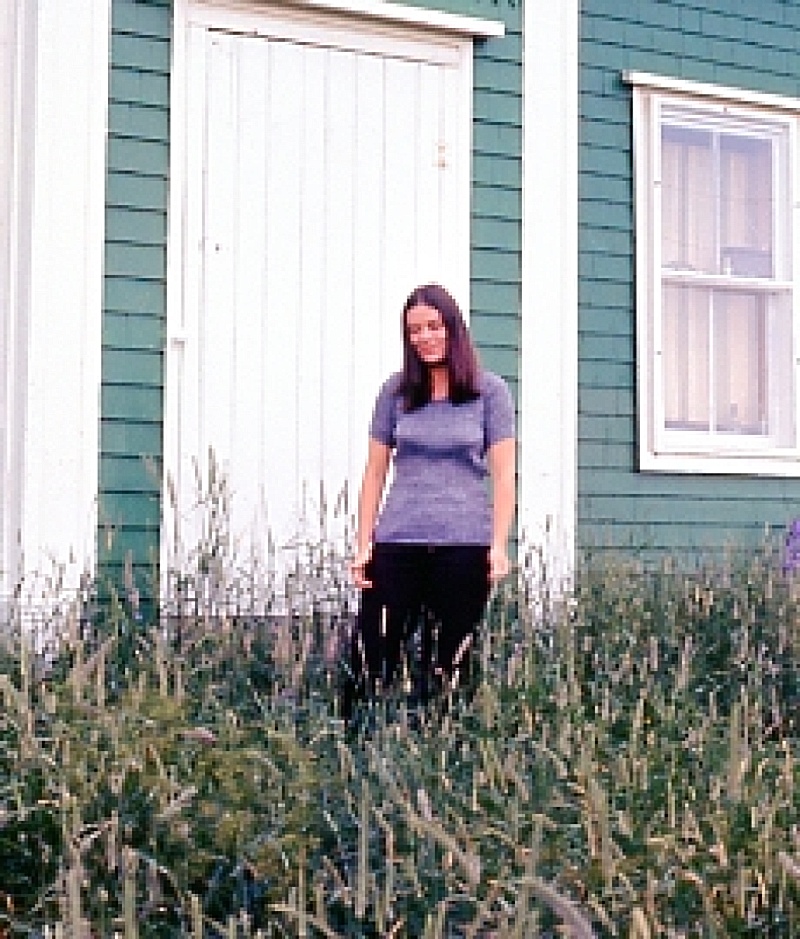
In my case, Nova Scotia appeared to be the locus for a cure. My wife, Glenda, seen contemplating Newfoundland at the top of the post also became a big part of the equation. That we spent ten years building a herd of two hundred head of Angus before I went to Apple is just part of the magic that has touched our lives. I will get around to our lives in Atlantic Canada and how Nova Scotia, Newfoundland and New Brunswick became part of the magic.

The Trails of Our Lives

My Nova Scotia Trail

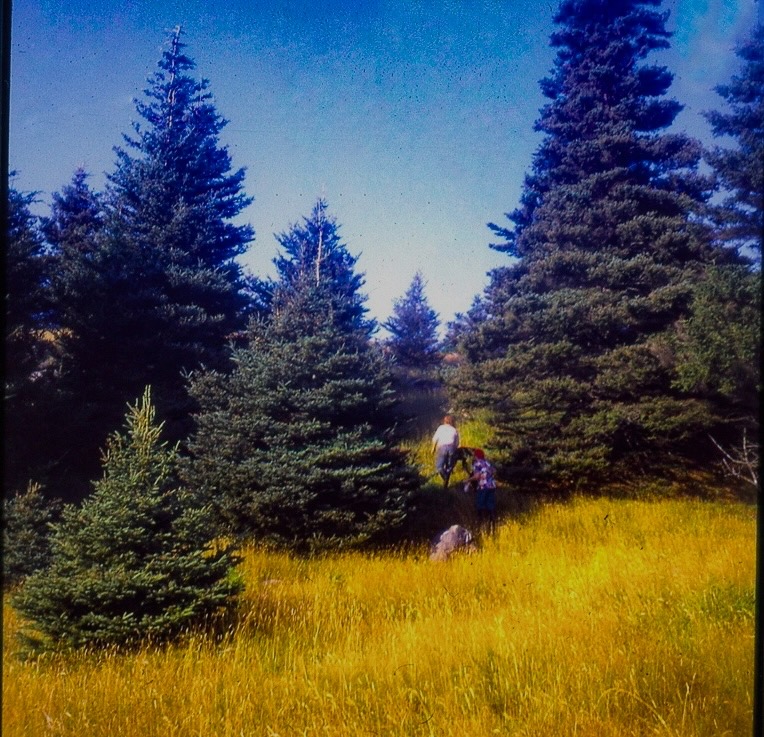
By the time I found the first trail that really meant something to my life, I had graduated from college and was living in an old farm house on the shore of the Bay of Fundy. Behind the house was a large field which sloped upwards to a spruce forest. At the top of the field there was a trail that wound through the woods. As much as I loved the rocky shore that was part of the property, the trail at the head of the field seemed to be more personal.

My two Labrador Retrievers, Tok and Fundy, often accompanied me on my hikes. There was nothing spectacular about much of the trail but it finally opened into a clearing that actually was on my neighbor Joe’s property. The view from the clearing was spectacular. I was living in the Village of St. Croix Cove and you could see the actual St. Croix Cove. I loved the view so much that I eventually traded some land for it.

There were times that I thought that Nova Scotia was the greenest place that I had ever seen. We sometimes were able to find baskets of chanterelle mushrooms just off the trail. No mushrooms since then have ever tasted like those.

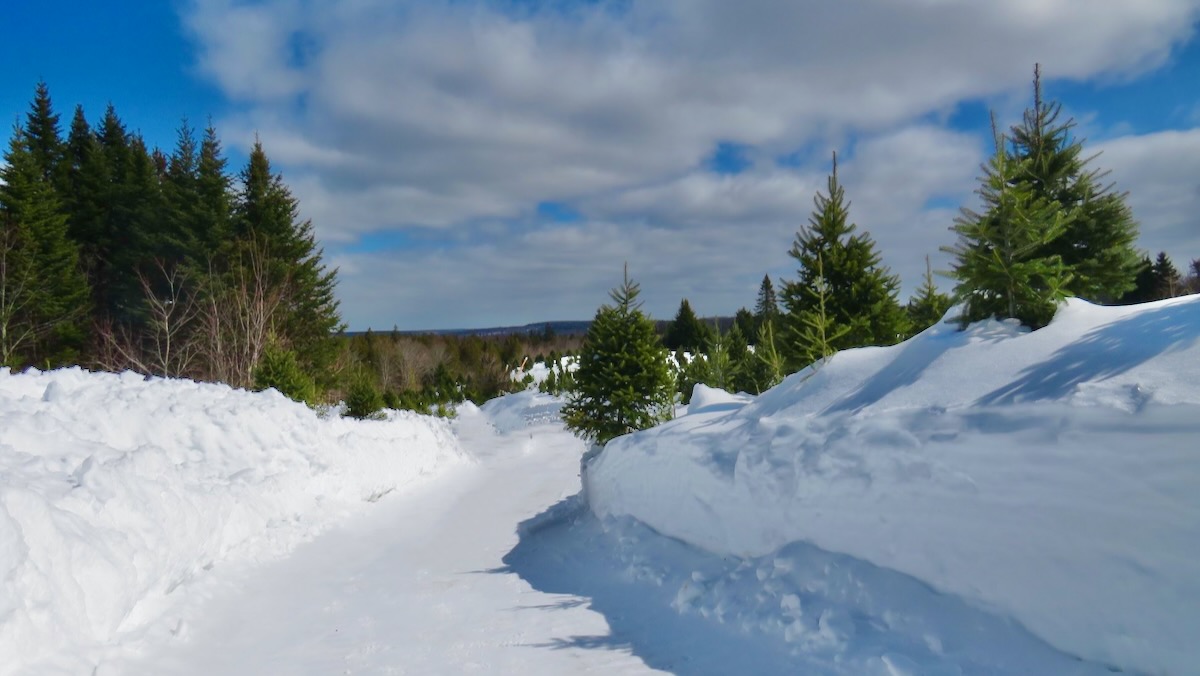
With the trail being inNova Scotia, it sometimes took on a winter look and often stayed that way for a month or two. While it was hard to walk up the hill, getting up to the trail on cross country skis was even more challenging.

With each move, we managed to find new trails, some of them memorable.

 I eventually got some snow shoes but the snow and and my schedule never managed to really coordinate before we moved off to New Brunswick which was the land of real snow as opposed to rain, snow, rain, and more snow like Nova Scotia.

Still the Nova Scotia trail was beautiful when it did snow.  It was a little challenge skiing through the trees without getting covered with snow but that was just part of the charm.  That and freezing your tail off were just part of cross country skiing in Nova Scotia in its normal thirty mile per hour breeze.

When we finally moved to New Brunswick, it snowed a lot and we eventually got a tractor-mounted snow blower which coincidentally allowed me to groom a very nice cross country ski trail. Obviously, my wife breaking trail on snowshoes like she did the first winter was not a sustainable solution especially once we had three children.

That first winter on snowshoes helped me to find my next favorite trail which was about a mile and a half and took me to a ridge at the back of our home farm. At the top of the ridge you seemed to surrounded by endless woods. It felt like true wilderness.

The next ten years were spent farming and there was scant time for pleasure hiking. Every trip to the top of the ridge was precious. I did spend lots of time leading cows through the woods from summer to fall pasture and making the long walk to the barn during calving season.

If we fast forward about twenty years, we have moved from New Brunswick to Halifax and back to the states, first finding some temporary roots in Columbia, Maryland. While Columbia, a planned community, was full of trails, none of them were wild enough for me. Barely two years after getting to Maryland, we moved south to Virginia and found a wonderful place on the side of the foothills of Twelve O’Clock Knob Mountain. Up on the mountain behind our home there was nothing for miles. It was a good place for the next trail that provided a respite from the pressures of civilization.

In the early nineties while still living on the mountain, we went to look at a Labrador puppy.  It was no surprise that we came home with Chester.  Chester, a wonderful pal, like all Labradors grew quickly and needed lots of exercise.

One winter Chester and I were doing our normal two to three mile hike around our subdivision and we saw an old woods road. We walked up it and managed to find our way home through the woods. It was not too long afterwards that I ran into the owner and got his permission to work on the trail.

It was a beginning of a decade of walking that trail, but it took a lot of work to make the trail usable during the summer.  The old logging road had filled up with poison ivy. It took me months of work and spraying to kill the poison ivy so Chester and I could enjoy the trail together.  Then we often spent Saturdays doing trail maintenance. Chester sleeping in a shady spot while I worked.

The trail rose high above all the houses and looked down on the city of Roanoke. Once on the trail, you felt like civilization was far away. Eventually I discovered an old homestead and the grave of a confederate soldier. It was easy to imagine living on the ridge and trying to scratch out a life from the small fields on the mountainside. A couple of times I made it to parts of the mountain where I found an old road that was knee deep in pine needles. It appeared the road had been unused for decades.  At the very top of the ridge even the type trees started to change from hardwoods to firs. It was not unusual to hike the trail in the morning and the evening. We all loved it. We kept a kiddie pool so Chester could cool off after his hikes. Only when Chester began to get old did the trail fall into disuse.

It was always Chester’s Trail to us even as we moved from Roanoke in 2006 two years after he passed away. It was perhaps time to go because the old road that I cleared had been graded and paved.  Someone from the valley had bought the land along the ridge and was building a home near the old homestead.

After moving from the mountains, we spent almost sixteen years at the beach. I found a favorite trail on the beach to the end of the Point at Emerald Isle. It was a wonderful hike and once again it was easy to feel like civilization had slipped away. Still it was not the same since I had to share it with lots of others in the summer and people could even get to the end of the trail by boat. I did fall in love with the salt marshes where you could lose the pretense of civilization a lot easier than on the beaches.

Now we are back in the hardwood hills not far where I grew up playing in the deep woods. I think that I might have found another trail that looks like it will be a big part of my life. It runs through what can only be called a cathedral of leaves.  The beauty of their colors have left me speechless at times. I am happy to have found it early enough in life to still be able to enjoy walking it.

Not Enough Wilderness To Save Us

Sunset on White Oak River Near Swansboro, NC

Towns are magnets and they suck people from the countryside, especially the young and talented. We noticed this happening when we returned to New Brunswick in 2012.We farmed there in the seventies and early eighties. Since our trip, what remained of the three churches in our old town disappeared. The community store closed. Yet the provincial capital, Fredericton, is thriving as the small towns wither.  It is a story repeated time and again in Canada and the United States.

I still worry that some of those wild places like the North Carolina coast will become too populated. I sometimes think that what we call the Northern Outer Banks from Corolla to Cape Hatteras will sink into the seas just from the weight of all those beach castles. I offer up my profound thanks for those who created the National Seashores. Beyond nourishing our souls places like coastal Carteret County and hilly Davie County where we now live grow a lot of food that North Carolina cities need.

(Read More)

Empty Promises

No Paper in the Driveway and An Empty Newspaper Box

I don’t want to be the old guy complaining about other people trying to earn a living. I would like to provide some constructive criticism that might make all of our lives easier.

I spent nearly twenty years at Apple and anyone who knows me will quickly tell you that I am no Steve Jobs fan. I saw him do things that were nothing but mean and contributed nothing to the great products that came out of the company.

However, the one thing that I learned of value from time within the Steve Job’s orbit is that the hardest thing is to say no to things that you might like to do but aren’t in your sweet spot. I would add that if you cannot do something with passion and precision, find something else to do.

Obviously sometimes you really need money and I understand those pressures because I have had my back to the wall with a payment or bill due.  I have been lucky that I have always found ways, one time I sold our bulldozer, to keep going until better times. Those better times have always taken me to opportunities where I was proud to work and more importantly eager to do my best.

So here is the problem today. People take jobs and commit to doing the work, then they don’t do the job. Some never master what it takes to do the job. Some pretend to do the job. Others do not even bother to show up. We have been amazed when trying to hire students to do data entry as part time jobs. It is not hard work, yet continually people commit to working x-number of hours but only work half that. Then there are those who promise but never show.

The problem is widespread. (Read More)