A Measure of life we all should take

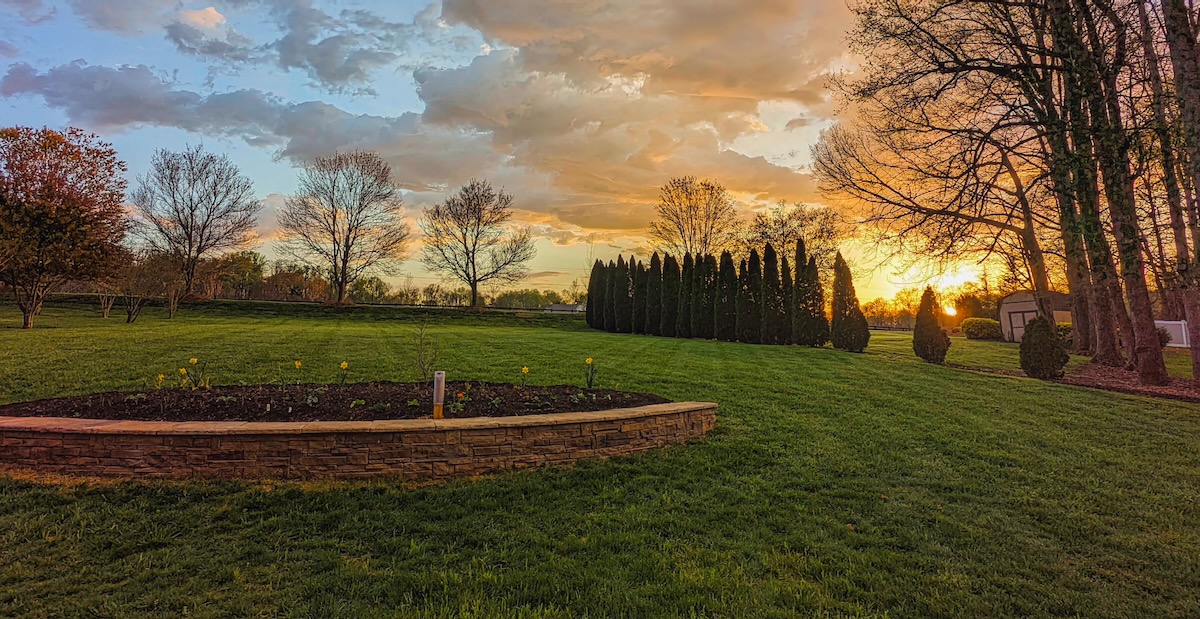
Sunrise on another day in our backyard

When my first grade career started under the watchful eye of my mother’s first cousin, Ms. Conrad, I was only thinking about what it would take to make it to the end of day. Then I could walk home, play a little football with friends, watch the evening news with my mother, and do my homework with some help from Whiskers, my cat. There was no thought of where the next seventy plus years would take me.
It is a lot easier to look back on seven decades than to imagine the future when you are six years old in a rapidly changing world. Now it makes sense for me to look back. I retired about a year ago when our company went out business. Our business dried up with changes in government funding. Since then I came back and worked one stray project but there haven’t been any others in eleven months. We weren’t building buggy harnesses, we were analyzing needs and designing fiber networks.
My first thought is that I am happy to have worked for the last fifty-six years in a number of productive roles. I consider myself even more fortunate to have worked from home the last fifteen years. I worked hard, maybe too hard during large parts of my life, but I do remain proud of what I have done.
Still it is important to acknowledge that your work career is not your life. How you measure your life probably says a lot more about the person you have become than almost any summary you could write.

My overall measure of life is to look and see if the places, people and organizations that I have touched are any better off for my having been there.

Digging deeper, I look at the kind of people that our children have become. Then, I look at the kind of life we have lived. Did we help others when possible, were we kind and respectful people, did we strive to give more in relationships than we took? I also look at what we learned from life, how much we enjoyed the things we have done, what kind of relationships did we build including those with our spouse, parents, children, grandparents, and friends. I don’t seek to measure anything precisely or to see how close to perfection we got, I just want to understand if our good intentions came through. To have more friends than we started with in first grade isn’t a bad accomplishment especially if you have managed to keep one of those first grade friendships going.
It is not important to me that every person I have met likes me because I have run into some not so nice people along the way. If they tried to harm me or those working for me, I hope they remember that I always stood up for what was right even if it made some people unhappy or came with a personal cost. There are also some people with extraordinarily thin skin who expect to be treated like the privileged person that they have adopted for their persona. You can never do enough for these folks because they will always be slighted by something you said or did which would not bother a normal person. I happy to let these folks stew in their own juices on the sidelines of my life. Whether they ended up liking me or hating me is irrelevant. That handful of people like that intersected my life for varying periods of time is hardly matters because they were just passing through.
Finally in measuring our lives, we have to look at the times we have lived through. I lived in Canada for sixteen years and over sixty years in the United States. I can remember things that touched me throughout life, the polio epidemic, President Kennedy’s assassination, Nixon’s election, the Watergate hearings, Vietnam demonstrations, moving to Canada, the energy crisis of the seventies, 20% interest rates in the early eighties, the Quebec separation crisis, the 9/11 attacks, the Iraq and Afghanistan wars, Obama’s election, COVID and Biden’s four years in office. I have lots of other memories especially of farming in Canada, my twenty years with Apple, and the fifteen years living on the North Carolina coast. For over fifty years the challenges thrown our way have been ones where we could adjust our lives and get on with it. Only recently has that changed.
Governments have come and gone, we have lived our lives. Then Trump and the MAGA movement showed up. The first four years were bad but largely erased by the peace and sanity of the Biden years. Now Trump is back and the threat to our country and the life we have lived is immeasurable. We wake every day wondering what the idiot in the White House has done overnight. If we were ten or fifteen years younger, we would move back to Canada. I don’t want the final chapters of my life written from within the confines of Trump’s world of hate and violence. I fight Trump world with the written word and my voice. The hope we nourish is that we can finally have justice in the White House. We must demonstrate to the world that no man is above the law in America.
Yards Connect Us To The Soil

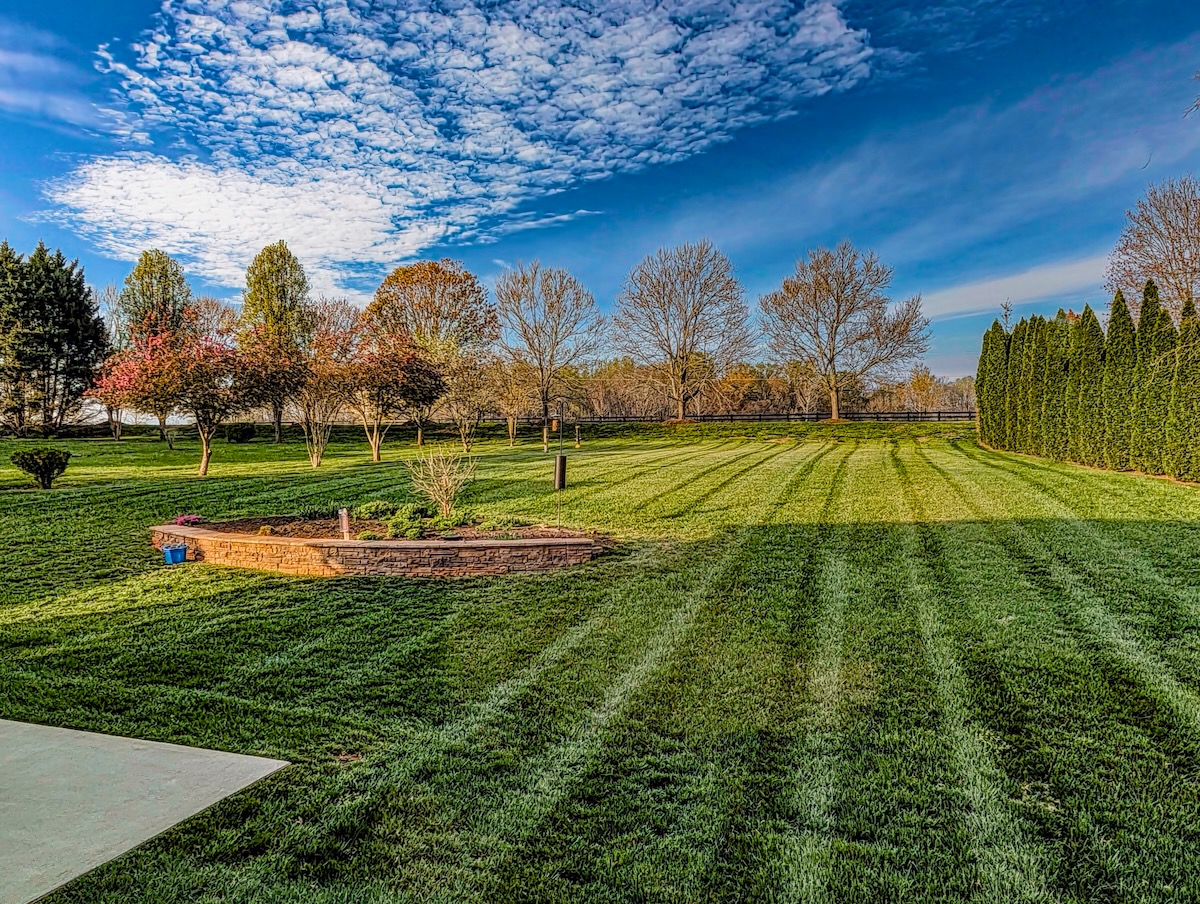
Our Backyard After The First Mowing Of 2026

People outside the cities in the first half of the twentieth century likely kept their connection to the soil by gardening and small-scale farming. By the time I was growing up in the fifties in Lewisville, North Carolina, yards, flowers, and shrubs had largely replaced gardening for food as a connection. As a youngster the condition of our grassy yard often stood between me and a trip to my uncle Henry’s fishing ponds. My mother who claimed the only yard she had as a child was packed dirt swept with broom straw wanted our American-dream yard neatly clipped. In driving by our old home, I am little disappointed the town did not put in sidewalks in front of our house during my youth. It would have eliminated the slope on the front yard. It was by far the hardest part of the yard to mow as a youngster.

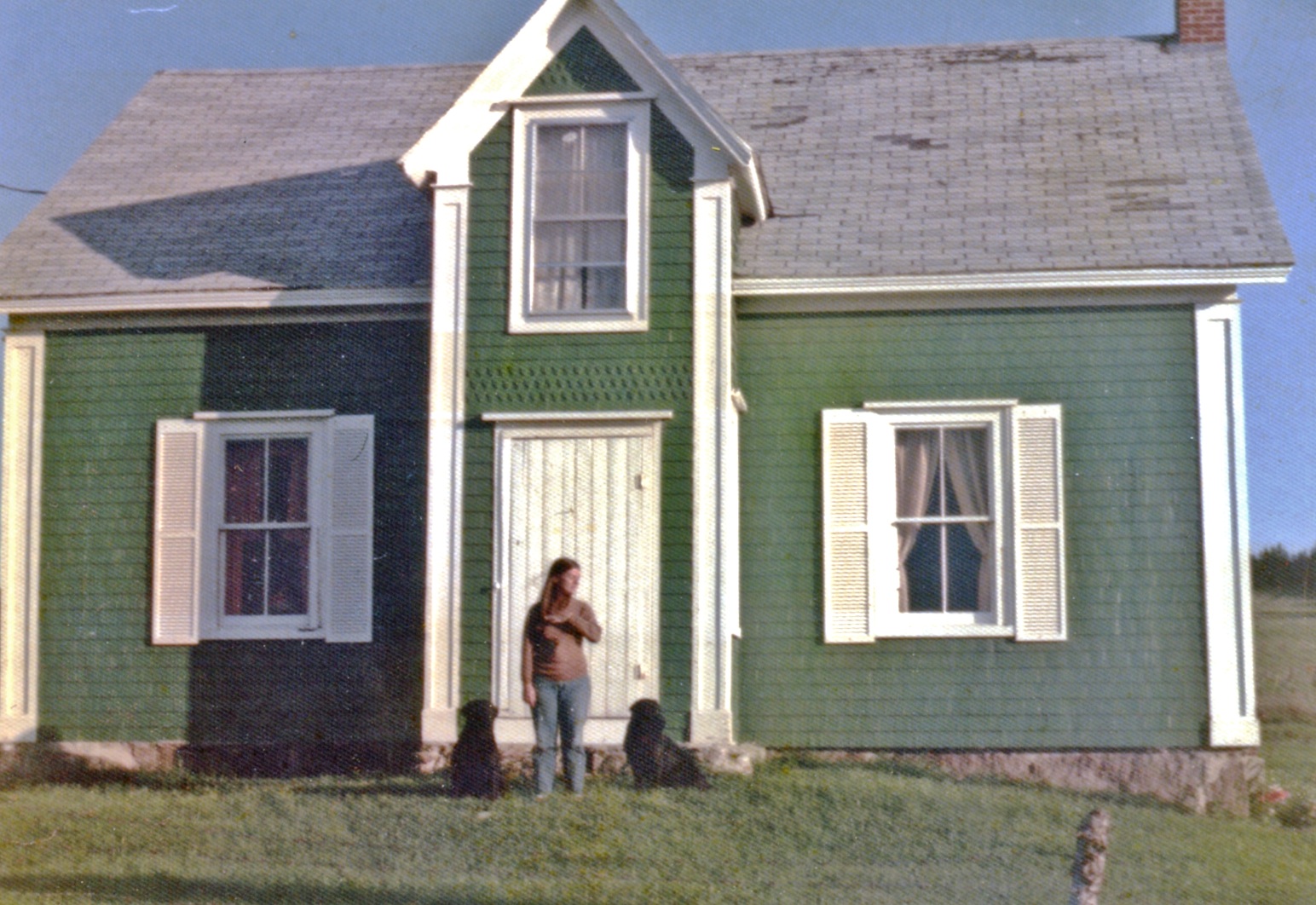
Going away to military school (high school) and then college got me out of mowing yards for almost a decade. My first home after graduation was a two-hundred year old farm house located in a sheep pasture on the Fundy coast of Nova Scotia. No sheep came with the old farm house but long grass around the house did not bother me as a young farmstead owner. When I first moved there in the summer of 1971, the yard was the least of my worries. Getting hot water plumbed and running so we could stop taking showers at the local campground was close to the top of the list. By the second summer I had a tractor with a nine-foot-wide bush hog which I used to mow around the house a couple of times a summer. That was all I judged it needed in my days of being single. After all, I mowed plenty of mature grass or hay, starting with the twenty acre field behind the house which served as one of the few very nice backyards in my adult life.

Then came the summer of 1973, and I married Glenda, the love of my life. She came from the world of well-manicured yards in North Carolina. Her mother often mowed their yard twice, the second time against the grain, just to catch any grass that might pop up after the first mowing. Sometime during the summer of 1974, Glenda decided the long grass had to go. She and my neat-lawn-loving mother who was visiting us formed a conspiracy. They drove down the mountain to Bridgetown ten miles away and came home with a Toro push mower. The yard became manicured soon afterwards. I spent much of the next forty-forty years sharing the task of mowing whatever yard happened to be attached to our personal home.

For the ten years or so when we lived on our farm in Tay Creek, we had a nice riding lawn mower which was adequate for much of the yard. Even Glenda did some mowing. When we lived in Halifax, our yard was postage-stamp sized. By the time we arrived on the mountain in Roanoke, Virginia, I had come to somewhat enjoy mowing. There are those times in your life when something as simple as mowing a yard can be very satisfying because you can actually see what you have done.

One of the immutable laws of mowing is that the farther south you live, the more miserable the task of mowing can be. Sometimes, even the most careful home yard person can end mowing in the oppressive heat of the day like I did more times than I want to admit after we moved to the North Carolina coast. As I wrote then, there is a true brotherhood of Southerners (both men, women, and teenagers) who have mowed yards when they never should have. I almost had a heat stroke once mowing our big yard there.

Mowing is one of those circular things in life. In your early years, you are too young to push a mower, so it seems fitting that in the later years of life, it is also okay to be too old to push a mower. You come to a point when you are faced with either hiring someone to mow the yard or buying a riding mower which I’m told requires better reflexes than we older folks have. Since I spent many years straddling a John Deere farm tractor, we chose not to revisit those days after a back problem slowed me somewhat. For a couple of years, I shared the task with our mowing service, choosing the hard spots that required a push mower for myself. However, it was an easy transition to giving it all up. When we made our 2021 move from the land of coastal centipede grass back to the fescue grasses of the Piedmont, we left our third Toro mower with the father and son team that was doing our mowing. I even gave them my gas-powered trimmer. After all by then i was over 70 years old.

When our current, very capable mowing team shows up, I know the noise will be over with in a few minutes as opposed to the hours that it would have taken me with a push mower. I still enjoy our green space especially the backyard which is the nicest we have had since that twenty-acre field that came with our first home.

We are trying to go more natural in the backyard by not using any chemicals or herbicides. I would like to see more fireflies and butterflies like I remember from my youth. No one ever worried about a little clover showing up in your yard in those days.

We continue to garden a little like old southerners are supposed to do. However, I have backed off the serious gardening that I did in 2023 and the slightly less ambitious garden of 2024. My six Cherokee Purple tomato plants produced over four hundred and eighty tomatoes in the summer of 2024. We had to sell some at a produce stand after we filled our freezer. Last summer we cut back to three tomato plants. This summer maybe we will have one or two, but I have already been out digging in the garden getting it ready. There is no danger of me losing my connection to the soil for a while longer.

Travel Enriches Life

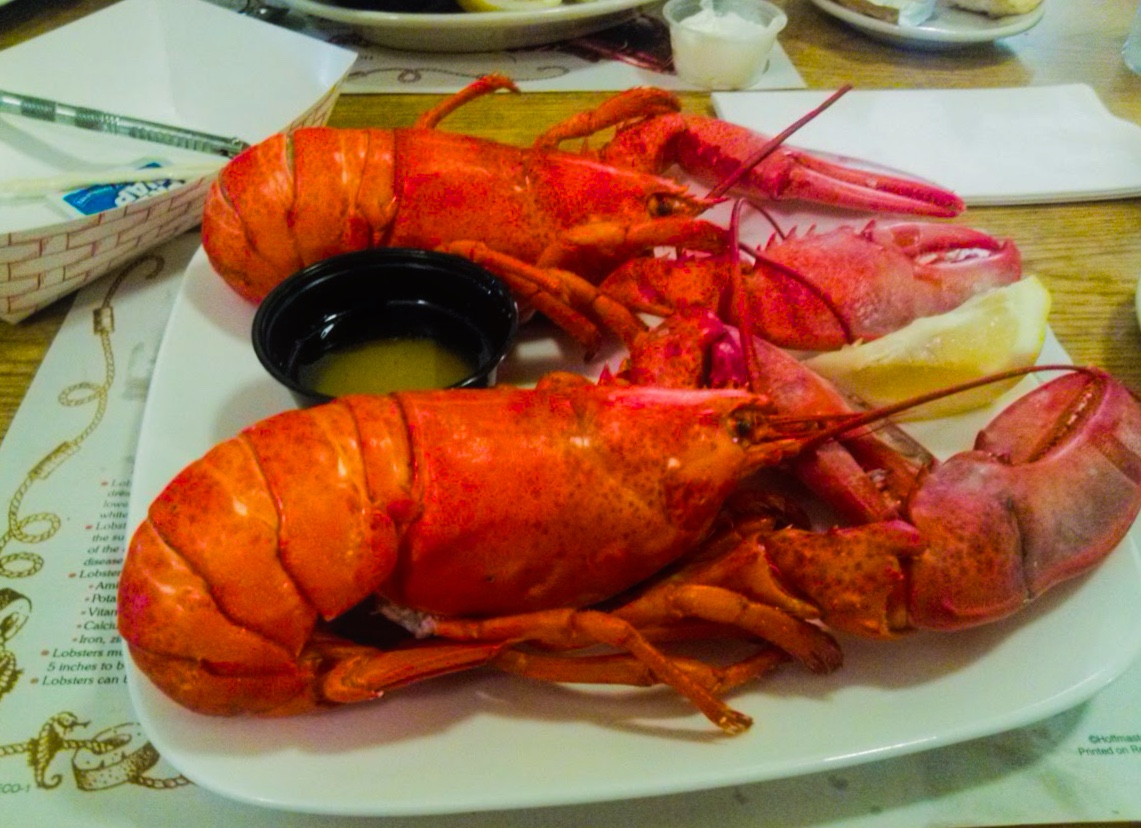
Maine Lobsters from a 2012 Trip to Canada

I have been accused of being born with wanderlust in my soul. I suspect it is true. The urge to travel was nurtured by mother was traveler in her own right. At the age of twenty-six she went to the World’s Fair in New York City, managed a boat trip up the Hudson, a visit to Niagra Fall, and took the train to Chicago and dropped down to Kansas for a visit. She might have had someone with her on the New York part of the trip but I am pretty sure that she was alone on the Kansas leg of her journey. She was a single mother, but she would throw me into the old 1953 Ford, hand me a map, and say let’s go to the beach. Often the back seat had two or three of her neices that were ten years older than me. When she was in her late sixties, she managed a solo air trip from North Carolina to Nova Scotia by way of the ever complex Boston airport. She was never afraid to travel and once she call too old to make long drives herself, she always found a driver. I like to think she taught be how travel and enjoy it with not a lot of money
There are people who never want to leave home. I am not one of those people. Part of me wants to see what is around the next curve or over the top of the next hill. Not only do I want to see it, I want to experience it. I still remember seeing the Montana mountains towering above the plains on my first cross-country trip when I was seventeen and traveled with a nineteen year-old friend in 1966. Seeing mountains so different from those near me made me want to see more serious mountains. We briefly slid into Canada into on that first trip. In 1969, I got another opportunity when a college roommate and I drove to Alaska. We went right up the spine of the Rockies.
While some take pleasure in knowing a community intimately, I find my pleasure of living in a community is greatly enhanced by having seen and even lived in other communities. Living in a wide variety of places makes you appreciate where you live. For the most part, the communities that I have figured out have been warm welcoming places where you feel like making a home and improving your surroundings.
One rule has been my companion, always try to leave a place better than you found it. The first house I bought for six thousand dollars was pink and something of a wreck when I first found it and convinced my college roommates to help remodel it. Though it was not finished when I left three years, it had been stripped to walls, insulated and rewired. It got copper pipes, a new roof, new pine paneling, a new chimney and fireplace, a new bathroom and water supply. We also created a great organic garden and put new roofs on the barn and brought the hayfield back to life. The house looked a lot different when we left.
St. Croix Cove along the Bay of Fundy was not the right place for cattle so we found an old farm in New Brunswick. We didn’t do much to the New Brunswick farm house other than paint it and add a chimney but we built two huge barns, renewed some pasture, and turned another abandoned farm into great hay fields. We farmed until twenty-two percent interest rates pushed me into a job in the city.
By then responsibility for a family had put my wanderlust in the backseat so we went where the job took me and that was Halifax, Nova Scotia. Halifax was a wonderful place to figure out. We would still be living there but we learned most children had to go to Toronto, Alberta, or British Columbia for jobs. We fled back to the states and eventually ended up on the top of mountain overlooking Roanoke, Virginia. We were there when we took our children on their three week journey around the country. I hoped that travel might get in their blood, but perhaps home was too comfortable a place. Though they have traveled, it has never been just for the thrill of it like I have done most of my life.
When I was still living in Nova Scotia and not yet married, I ventured off to Newfoundland and dreamed of homesteading there. My new wife put an end to that but she was okay with farming in the hardwood hills of New Brunswick where we built our cattle operation. She was also okay with leaving all the friends we made during our twenty years in Roanoke for an extended adventure on the North Carolina coast which she grew to love.
We went to the coast wanting to be out on the water. At the age of fifty-seven, I began the journey of becoming a capable boater in the challenging waters of the White Oak River, Bogue Sound, and the Atlantic Ocean. I logged over 500 hours at the helm of my skiff until someone convinced me that seventy years was too old to be boating out in the Atlantic by yourself. Figuring out the coast and how to prepare a house and boat for a hurricane was a lot more complicated than I imagined, but we did it. We stayed through Category 3 Irene and in sixteen years there only evacuated for Florence. While living at the coast, we made a trip back to our Canadian stomping grounds in 2012. On that trip in Bangor, Maine, was where I found those beautiful lobsters.
You can have wanderlust but still want to enjoy and thrive where you are. We added to and improved every house where we lived. We made the places ours . Even after leaving the farm, isome places we were able to have extensive gardens. Our gardens were amazing around our coastal home and here in the Piedmont.
Perhaps the most unique change we made to a place was the small house that we built on the upper back porch of our coastal home. we created an amazing home but there too many steps for our aging knees. In 2021, we looked foreward to a move from the coast to the piedmont. Because we were old there was some exhaustion mixed with excitement, but we have enjoyed getting to learn our new area. I still miss the marsh and all the creatures there, but I have lots of pictures. The trips now are much shorter now but my mind wanders freely.

Everyone Needs A Wild Spot

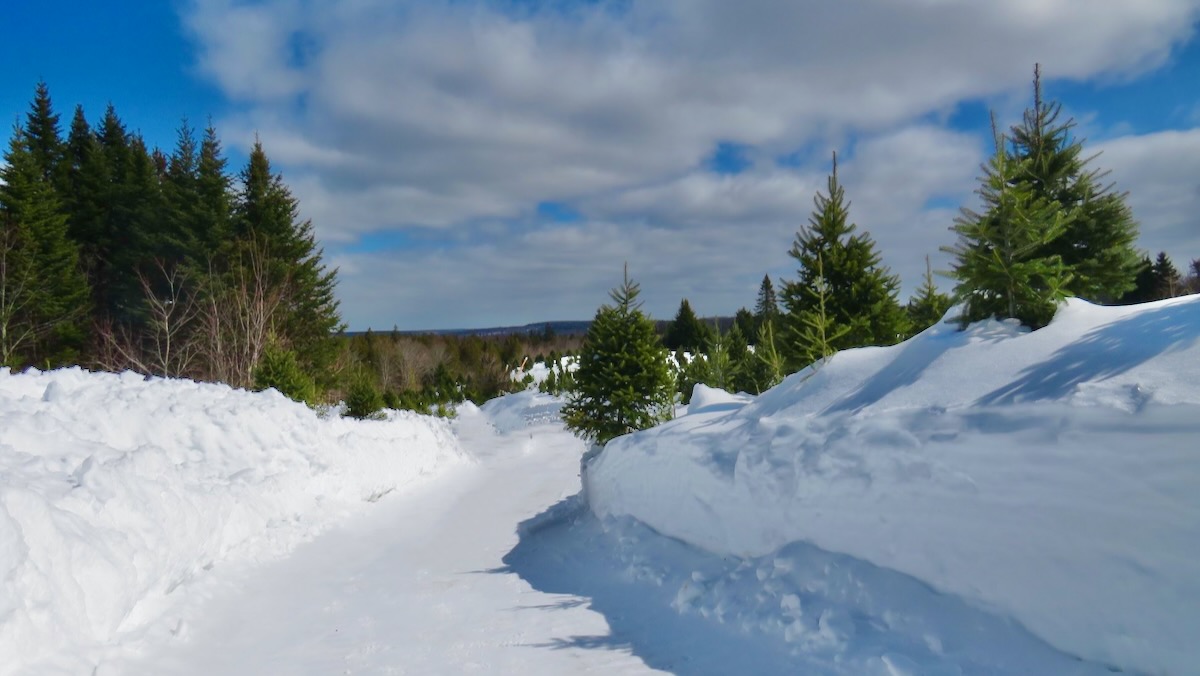
Snowy Woods Road, Tay Creek, New Brunswick, Canada

The years in Cambridge drove my need to escape to wild places, I explained.
Goose, “I was born into the wild so getting close to it makes my fur feel alive.”
Me, “Does your fur feel alive when you go out on the screened porch?”
Goose, “The outdoor air smells different. Sometimes I can smell other animals like foxes. The wildest thing I have ever smelled is that long-haired cat that sneaks around the house. That puffs up my tail.”
Me, “I have always had to travel a little to my wild places but the reward has always been far greater than the effort.”
Goose, “Going to a place where you can focus all your senses on what is around you is very rewarding. If you close your eyes, you can imagine the place you are visiting in a different light. The screened porch in the morning is not a screen porch at all. It is a hill overlooking a grass-filled meadow filled with little creatures and the occasional larger creature that causes my fur to stand on end.”
Me, “Does you mind let you wander the meadow?”
Goose, “Even better, my mind absorbs the meadow environment so when I nap, I am actually out in the meadow hunting in my dreams.”
Me, “That’s very human-like. The older I get the more my dreams try to pull together pieces of places that I have been. I often find myself in a problem-solving situation that I never quite have enough time to finish.”
Goose, “We all try to solve problems in our dreams. I am always trying to open a can of pop-top cat food. My dreams have never figured out how my two paws can do that.”
Me, “You are very talented with paws, I have seen you take your paw and wrap it around a knob on a cabinet door and pull it open.”
Goose, “Yes, my paws are big enough to do that, It is easier if one of my sisters is there to use their paw to hold the door open while I change positions.”
Me, “I haven’t been to my special place in the park here in a while. It is a bench among the tall oaks with a tiny brook nearby. I am hoping that as warm weather returns, I will get back there. I know that I need it.”
Goose, “Hopefully you still have some of those wild places stored away in your mind.”
Me, “Yes, I have written about my special wild placesmany times. Those posts and the pictures attached to them are a great help.”
Goose, “We all need to pull ourselves out of our daily live to get some perspective.”
Me, “I agree. Once I did it so successfully that in my dreams I was flying fifty feet above my life. I still remember how vivid those images were. I could see things I never imagined. This was in the eighties, well before drones. It was very different that any experience in my real life.”
Goose, “Our brains work in mysterious ways. Mine is telling me that I need a nap.”
Me, “Yeah, I think you are overdue.”

Where the roads end

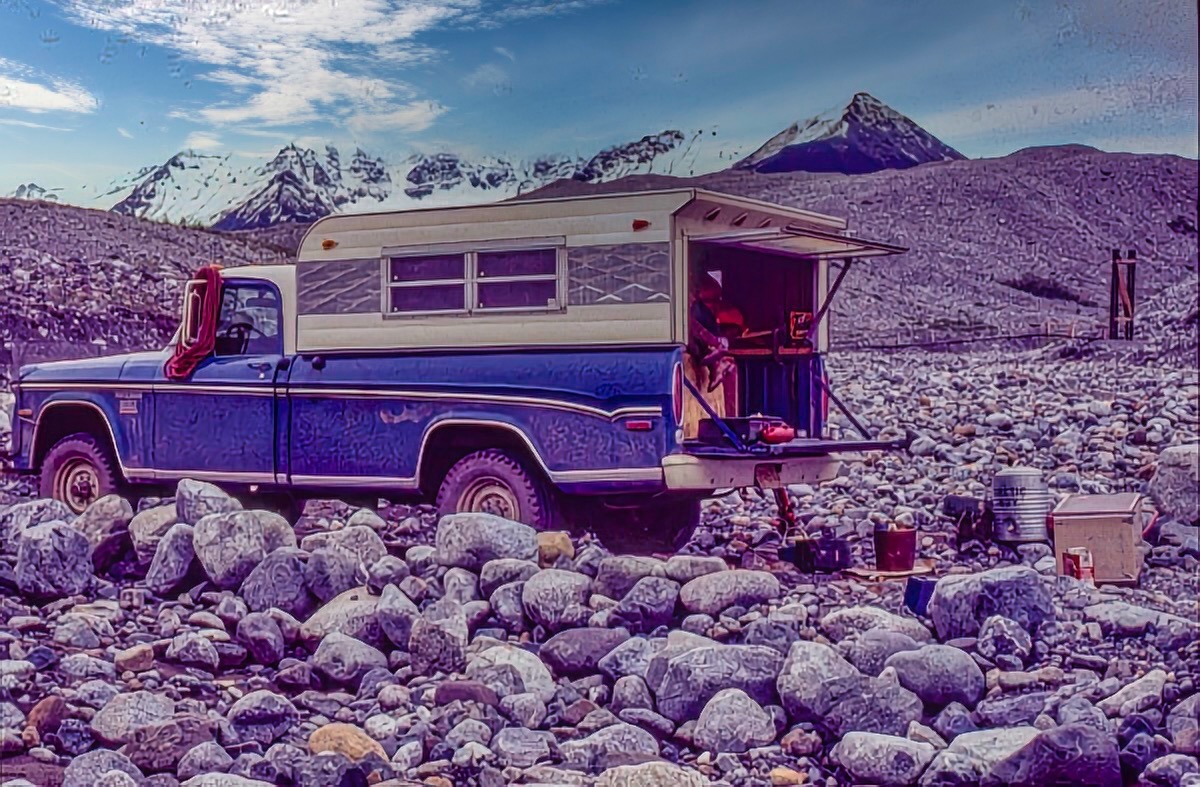
My Dodge Powerwagon at the end of the road on the way to Denali, Summer 1970

Americans are famous for their Sport Utility Vehicles (SUVs) that never leave the paved roads. Unfortunately, some people get behind the wheel of a SUV with the belief that it makes you invincible. There are a few things I have said in life that seem to have some staying power. One of them is that all an AWD, 4WD, or SUV will allow most people to accomplish is to get stuck in a more difficult to reach place.
I have been stuck or broken down in some pretty remote places like the one above a few miles off a road in Alaska. That vehicle had a winch and it was useless in that situation. Farms are places where people can really get stuck. However, the rule on a farm is do not get the biggest tractor stuck unless you have the gear to pull it out. We kept an old bulldozer around for that. It got used for that.
Our herd of cattle wintered in the woods about a mile from the barns and the area where I kept the round bales of hay. It was not unusual after a big storm to blow the road to cows at night. One night after a particularly nasty storm when the temperature had already dropped into the minus twenties, I was blowing the road. I had successfully cleared one lane out to the cows and I was headed back widening the cleared road. As you get within a quarter of a mile of the barns, the road dips down into a small valley and crosses a culvert. There is a small pond on one side of the road and the culvert that allowed for overflow from the pond on the other side. I had a rear mounted snowblower that cleared eight feet of snow at a time but because it was rear mounted, you backed the tractor as you blew the snow. That gets a little tiring after an hour or so. The tractor had a nice unheated cab, weighed about 12,000 lbs., and ring chains on the tires. They are necessary on farm roads which often have ice as a base coat.
Just as I started across the culvert one of my large rear tires slipped off the road into the pond. Fortunately the pond wasn’t very deep but it still put the tractor in a precarious position. Experience told me the best thing to do was to wait for daylight and get a neighbor to help me pull it out. I walked home and spent my dreams figuring out how to retrieve the tractor.
By the next morning the temperature had dropped to minus twenty-eight degrees, but it was no problem to get my farm helper who was in his sixties to go with me to unstick the tractor. It was a complex operation. I loaded a generator in the pickup, some salt and a chain saw along with our three quarter inch logging chain.
First we drove down to the tractor, started the generator and hooked it to the recirculating block heater that would hopefully warm the engine of the tractor so we could start it. Next we made cuts into the ice around the tractor’s wheel that was now frozen in ice. We put salt in the cuts in the ice. While all that was working we went to start the bulldozer. It was a very old Cat D5 bulldozer which originally had a small gasoline motor that you started and used to start the big old diesel. Unfortunately the gas motor had died shortly after I got the bulldozer and I found it would cost more to replace it than the bulldozer was worth. However, we quickly discovered that towing the bulldozer six feet would start it. I had another large tractor and we used that to start the bulldozer that cold morning.
I drove the old 16,000 lb. bulldozer down and positioned it so we could hook the big chain to it. My neighbor got in the stuck tractor and fired it up. All he was supposed to do was steer the tractor. I moved the generator to safe ground, got on the bulldozer and carefully pulled the stuck tractor out of the shallow pond. While the actual pulling seemed effortless for the bulldozer, It likely took us two hours to get to that point. It is unlikely that I could have gotten a wrecker out to do the same thing without the wrecker getting stuck. We were fortunate to have the equipment. Most of the time when you get stuck, you have to make do with what you have.
Not every time you get stuck is going to be that complicated but as I said if you wander far off the road, you run the risk of being stuck in a difficult place. We were actually stuck in the picture at the top of the post. The locking hubs on our four wheel drive quit working. I had to take one hub apart and adjust things. Fortunately, I had the tools to do it.
With many four wheel drives vehicles all you have to do is get one wheel spinning and your vehicle might as well be a turtle on its back. I am a big believer in chains for ice in spite of the pain putting them on a vehicle. Chains make more difference than either four wheel drive or AWD.
AWDs are also not all created equal. Some will get stuck in nothing and some will walk up a mountain of snow. My old Acura MDX has a locking mode that is amazing but I still avoid ice.
Just after the first big snowstorm of the year is not the time to figure out how good your vehicle is at getting stuck. At a minimum, an emergency kit includes a tow strap, shovel, a square piece of 3/4 inch plywood, gloves and a good jack which should be a bumper jack if you are headed into sand or mud. If you have a winch on your vehicle, be very careful, they are exceedingly dangerous if you don’t know what you are doing,
Sometimes I miss living up north. Once the ditches were full of snow, the safest thing you could do to avoid an accident was to drive into a snow bank and get stuck on purpose. I avoided a few accidents that way. Most were close to home and only walking distance to one of those big tractors.

The Lost Art of Calling Home

The rotary telephone in my home bedroom until 2004

I took a course in college my senior year. It was decades ago. The class focused on communications. Computers were not on the desktop, cameras were film based, and telephones were analog with rotary dials. There was no Internet much less text messaging or cell phones. People still wrote letters on paper by hand. I still have some of my old ones. The other choice for a was a typewriter. In the seventies it was not unusual to find people who did not know how to touch type.
I went away to boarding school at the tender age of fourteen. The weekend call home from the telephone booth in the hallway was a lifeline to family and all that was familiar. You might not be able to predict the person who would answer but you learned how to make the most out of whomever you got on the phone. The old fashioned telephone was a great leveler. If you called one of your friends, you could get their parents, but back in the fifties and sixties, we learned how to talk to adults respectfully.
The weekend call became more of a ritual than a lifeline when we started farming in Canada. It was something that kept us connected long after the art of writing letters disappeared. I still love phone calls to my Canadian friends. I enjoy talking to my friends whether I reach the wife or the husband. These calls keep the web of friendship healthy.
A couple decades ago, a friend died. I did not have the opportunity to say good bye to that friend. It caused me to recommit to finding people who had been important in my life. Over the years I made several car trips to Ronceverte, WV, because that was the only way to really visit with my high school Latin teacher who never went beyond the telephone in the world of electronics. He was a little hard to talk to on the telephone but I treasured our visits. He has been dead several years now. I never regretted the effort I made to stay in touch.
Our trips to Mount Airy, NC and Yadkin County, NC to visit friends and family have gotten fewer and farther between each trip as we have aged. The time we spend with elderly relatives is precious. We have lost several over the last few years but the time spent with them was well spent.
Sharing our lives and communicating with others has given us strength to do things we never would have done by ourselves. It has also connected us to history and stories that we might never have known
We were living at the coast when Hurricane Irene made landfall on August 26-27, 2011, about 35 miles to the east of our home near the beaches of Emerald Isle. We received a lot of phone calls from friends and family prior to Irene’s arrival urging us to head for higher grounds than our six feet above sea level. Irene was our first serious storm in our first five years on the coast.
Interestingly, none of the calls came from our three grown children who ranged in age at the time from the late twenties to the mid thirties. I told myself at the time that they knew we were well prepared and tough enough to handle the storm. At sixty-one, I think that was a fair description of us. We were not people who had led quiet lives in one place all their lives. Still Irene roared for thirty-six hours but we only used our generator for three hours.
Perhaps there was something else at play. Most of us older adults have noted that today’s young adults rarely communicate even though they have far more ways to connect than our generation ever had.
One of the other things besides the weekly phone call that happened at military school when I was fourteen was we had an assignment to write a letter home every Sunday night. It was graded, and mailed home for us complete with red marks. Of course no useful communication ever took place in the letters. The weekend phone call was the lifeline to home.
While I quit shining my shoes every morning like I did in military school when I went away to college, I didn’t drop the ritual of the weekend call home and writing letters. Even after graduating from college, moving to Nova Scotia to farm, and getting married, the calls continued. We added a weekly call to the parents of my wife, Glenda. We also wrote letters in cursive to family and friends. Long distance calls for much of our early married life were extremely costly but they remained important to our mental health so we rarely missed one.
Calling home for all those decades was always something of a surprise, you never knew who was going to answer the phone, but 99% of the time they were happy to hear your voice if not your message. Almost always you felt better after talking to them.
I think the old cold calling home on a rotary phone helped us be the people we are today. It helped us build strong networks of support and advice. It gave us skills that the current younger generations may never master. The world will be lonelier and poorer because of that.

Stay up with the Goose Speaks commentary on our country’s situation in “Time to Trust Our Own Eyes” either for free at Substack on as a simple HTML flat file with a different name, “Time to Speak Out,” at my Crystal Coast website.

The Wonder Of It All

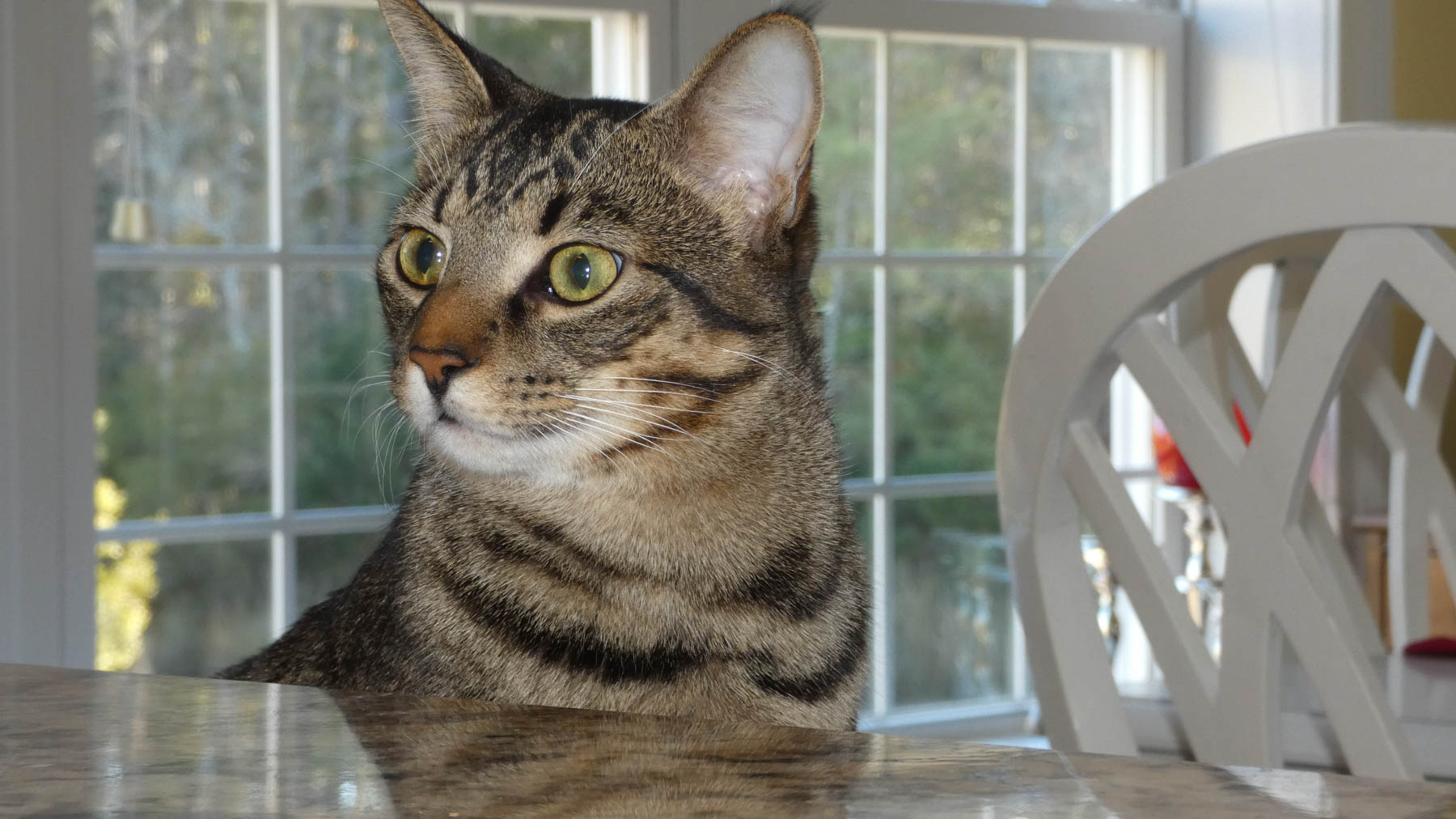
Goose, our tabby cat with a permanet sense of wonder

One of the reasons that I love our big tabby cat, Goose, is that he always has a look of wonder.  We could learn a few things from Goose.  A few times over the years I have forgotten to be pleasantly surprised at whatever has happened, but not often.

After I went away to military high school in Tennessee in 1963, I figured out within the first three months that I could either be unhappy with what was happening in my life or I could be wonderously surprised at whatever happens next because it is often an unknown piece of the puzzle that turns out to be my life.

When I got in my car to go office to college in the fall of 1967, I left with a sense of adventure which included a promise to myself to try new things especially if they forced me to step out of my box. The Vietnam war was raging during my college years and for a while it looked like I might become a foot soldier in it.  Instead once I graduated and figured out that I wasn’t going to be drafted, I immigrated to Canada.

That as you might expect was a huge decision but like many decisions in the days before the Internet, not a lot of research went into it. I was in love with Nova Scotia.  The beauty and wonder of the place wrapped itself around my mind. Before I got married, I came to know loneliness even in a place as scenic as Nova Scotia. Marriage to a NC girl was another moment that surprised me and left me thinking that I was living under a special star that helped me find such a wonderful wife.

There were plenty other moments of wonder. After dispersing our cattle herd, somehow I made the transitiion to working with Apple Computer. From shoveling manure to selling Macintoshes has to be an epic career switch. Twenty years later when Apple pushed me away from the company, several people encouraged me to think about my next career as finding something that would excite me for the next fifteen years. It took a while, but I ended up helping communitieis build fiber networks.  Along the way, I learned how to take a skiff out into the Atlantic and how to kayak a two-mile wide river. I spent a few years rescuing an HOA. 

I always welcomed the next challenge never doubting my ability to do a good job and always approaching a new challenge with a sense of wonder.  That doesn’t mean I did not have any worries. There were many sleepness nights during my HOA time.  I would always wake early when I was taking someone new in our skiff out into the Atlantic. It was a big responsibility.

I recently got a new heart valve by way of a TAVR procedure.  While I was afraid, I never waivered.  I am still facing some medical issues but I face them with a sense of wonder that something so complex can be done without cutting me open.

I have been surprised by people all my life from the British doctor and his wife who became great friends to some of the very interesting people that I met Harvard.

I continue to be amazed by people that I meet from the young farm family working on the same farm that has been in their family for over one hundred years to the New Brunswick farm couple in their sixties still haying and keeping work horses. I also amazed by the young adults finding their way through this increasingly complex world.  That they can keep moving forward when most of the cards are stacked against them renews my sense of wonder.  Then there is my adult son who rose up to start doing many of the things that I was doing before my heart valve problem. I am back to driving and hope to be gardening in a few weeks but I definitely have a feeling of wonder seeing my son plant flowers. If that can happen, I think we will be able to push back on the anti-democracy forces trying to destroy our country.  That of course would lead me to an immense feeling of relief.

Swiss Army Knife Life

I once posted a picture of this Swiss Army knife and someone made some disparaging remarks about Swiss Army knives in general. I responded back that if you have never needed a Swiss Army knife, your life was likely confined to more civilized areas than I have frequented. Even a cursory examination will reveal that this knife has been well used. I am pretty sure it went to Newfoundland with me on our little trip to the barrens. I know it went in my pocket every day that I farmed. It did things it was never designed to do and some parts are broken as a result. It never failed me. I like to think the theme of my life is lot like that beaten up Swiss Army knife.

Somehow, I seemed to be prepared for whatever challenges that I faced. Perhaps it started when I grew up the child of single mother in the fifties. I tried not ever let having only one parent drag me down. Mother always told me that if I worked hard, I could be anything that I wanted to be. She pulled herself out of red clay soils of Yadkin County, NC and got her license to be a beautician. She supported us from the beauty shop attached to the back of the house.

In a sense being an only child of a mother who worked extremely long hours gave me a push into learning how to do things I might have avoided in a more standard family. I learned the basics of cooking because if we got food on the table at any reasonable hour, I needed to be involved. It started with just sticking food in the oven, but well before I got to Boy Scouts, I was grilling half chickens on an old charcoal grill. Tinkering with things started at an early age. By the third grade it was my job to balance the check book and make sure the deposits were recorded properly. At some point I became the navigator and developed a love of maps that still bedevils me today.

Being a Boy Scout accelerated many of these interests and enhanced my love of the out of doors. By the time I left college, I was in need of an escape from the cities. Regular visits to Maine had only made my desire to get back to the land worse. The old Nova Scotia farmhouse that I bought in 1971 only pushed me harder. I had to learn plumbing and how to wire a house at the same time my carpentry skills had to get better if we were going to have a place to survive the winter.

By the time we got to our New Brunswick farm, I was ready for almost anything. With a welder and an acetylene torch, there wasn’t much on the farm that could slow me down. I always had a John Deere tractor and a Chevy 350 3/4 ton 4WD that I could lean on and some great neighbors who were always willing to help. With some local help I even built a couple of barns that are still standing 50 years later.

After the farm, I went on to sell Apple computers, learned how to manage a sales force, and how to survive a teetering small business. When I actually went to work for Apple, the second day I was on board, they gave me a tray of real 35 mm slides and said you’re presenting to 100 people tomorrow, put together a presentation. If was the first of many presentations that would define my almost 20 year career at Apple. My last days at Apple in 2004, I was director of federal sales and sat with Avie Tevanian at a federal hearing on cyber security. Had Apple stuck more with open source and the direction our team was headed, there would be a lot more Macs in the federal government and our government would have a more resilient infrastructure.

After a consulting gig with the National Lambda Rail (some called it Internet 3), I went to work at an email company and learned the ins and outs of online marketing. It was a steep learning curve with Google analytics, buying search terms, and managing an inside sales force when I had spent most of my life in outside sales.

By the time the email company was sold, we were well on our way to establishing a life on the North Carolina coast, I worked a writer and I dabbled enough in real estate to know how to mine data from tax databases which turned out to be very useful when I became a vp at a company that was building fiber and convincing people to sign up for it. My love of maps led me to extensive use of Garmin’s mapping tools both on land and in my skiff and kayak. A knowledge of GPS helped me jump feet first into ArcGIS Pro and the technical reports and maps that have defined my last dozen years.

Not long ago, my barber asked me, “How in the world did you get from shoveling manure to selling computers and then helping to build fiber networks?

I told him the answer was simple, I always believed in what I was doing and I never sold anyone something that I wouldn’t be proud of using whether it was a bull, a bailer, a computer, or a report on the state of the Internet in their county. I could have said that I had a Swiss Army kind of life, always ready for the next challenge even as I was taking a lot hits along the way.

Life Sneaks Up On You

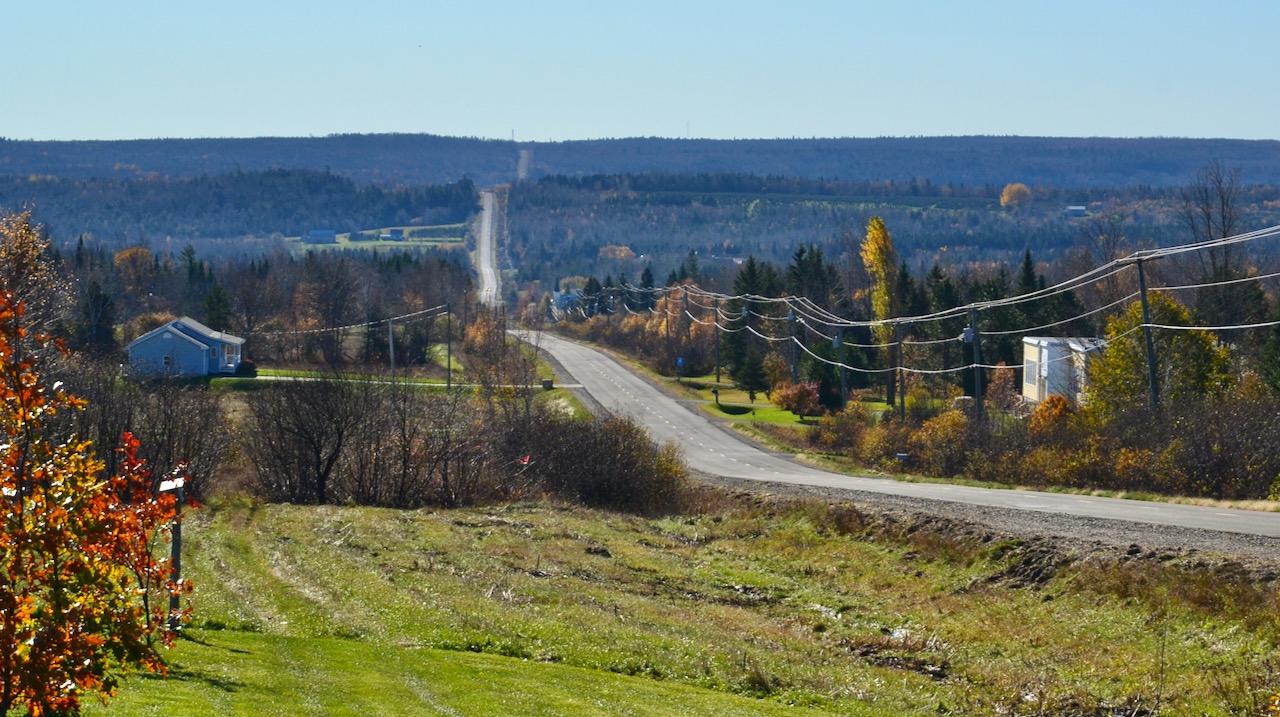
The Royal Road, Tay Creek, New Brunswick, Canada

Just after I graduated college in the summer of 1971, instead of going to Law School, I headed off to Nova Scotia. I was part of the generation that felt strongly about getting back to the land and understanding a lot of things that modern society was hiding from us.

A decision like that is possible when you are young, I believe that as age and life will sneak up on you, it gets much harder to go off on your own in a wild adventure as you age. How older people have done it, remains a mystery to me.

Eventually, I got married and my wife and I moved to what I considered a real farm or at least one that I believed that I could make into a modern farm. We never really gave up all modern conveniences like many back-to-the-landers. One of the first things that I installed in our Nova Scotia farmhouse was a dishwasher. I also put one in our home in New Brunswick. I plowed my garden with a John Deere tractor not a horse.

The road in the picture ran 20 miles back to Fredericton, the capital of New Brunswick. We were lucky to have schools, churches, a couple of general stores and medical services in our little community of Tay Creek. Forty years after we left, the churches and general stores are gone. If you want to buy gasoline or a nail, you have to go to Fredericton.

Taking on building a home for your family in an isolated spot which at the time was subject to amazing snow storms is something you only do when you are young and your body can take on almost any challenge. In my twenties and thirties, I never doubted that I could do everything for my family aside from medical care and schooling. Plumbing, electrical wiring, installing appliances, those were expected of the folks who lived beyond the city. There was no one to hire to mow a yard or even change faucet. While we had an oil furnace, most of our heat came from a wood stove. The furnace would come on during the early morning hours as the house cooled. Our water came from a spring. Our food came from our garden, our milk cow, chickens and cattle herd.

As nice as the life on your own in the hardwood hills of New Brunswick was, it was non-stop work. It was ten years before we went on a real vacation. After we left the farm, we mostly lived in suburbs. Seven years after leaving the farm we were in subdivision on the side of a mountain in SW Virginia. For many years I kept the steep slope behind the house clear of brush and small trees. It meant working with a chainsaw on a hill where I could barely stand. Fortunately, I never got injured. It was another activity reserved for youth.

By the time we got to our next house twenty-four years after leaving the farm, the strenuous work was down to mowing the yard, keeping our skiff running, and hurricane preparation. Good preparation for a hurricane often meant the cleanup afterwards was relatively easy. A storm like Hurricane Florence meant extra cleanup for everyone in the area no matter how much you prepared. The older you get, the harder all that is. Polywood outdoor furniture is nice until you have to haul it all into the garage.

When we moved from the coast in 2021, my wife and I were both over seventy. We were far from our children and family. Our house had too many steps and we were both tired of the hurricane routine in spite of never having any real damage to our house.

My wife had almost five acres of raw farmland which was a hayfield in Surry County. We briefly considered building a home there, but quickly decided that we were too old for all the work needed to build a home so we found a great subdivision with public sewer, water, and fiber Internet. Moving to North Carolina Piedmont close to where I grew up has turned out to be a wise decision.

We are glad that we moved when we did. We have friends our age that would like to move from the coast but have decided that they are too old to try. I can relate to their feelings. Getting our coastal home ready to sell and moving with our four kittens was not the easiest thing that I have ever done. I am pretty sure that three years later, I would be reluctant to move again unless I just had to move.

You don’t think about these things when you are young and can handle anything. Life can sneak up on you. It is good to plan a little for the time when you can no longer take on the world with one arm tied behind your back.