
Subscribe to continue reading
Subscribe to get access to the rest of this post and other subscriber-only content.

Subscribe to get access to the rest of this post and other subscriber-only content.
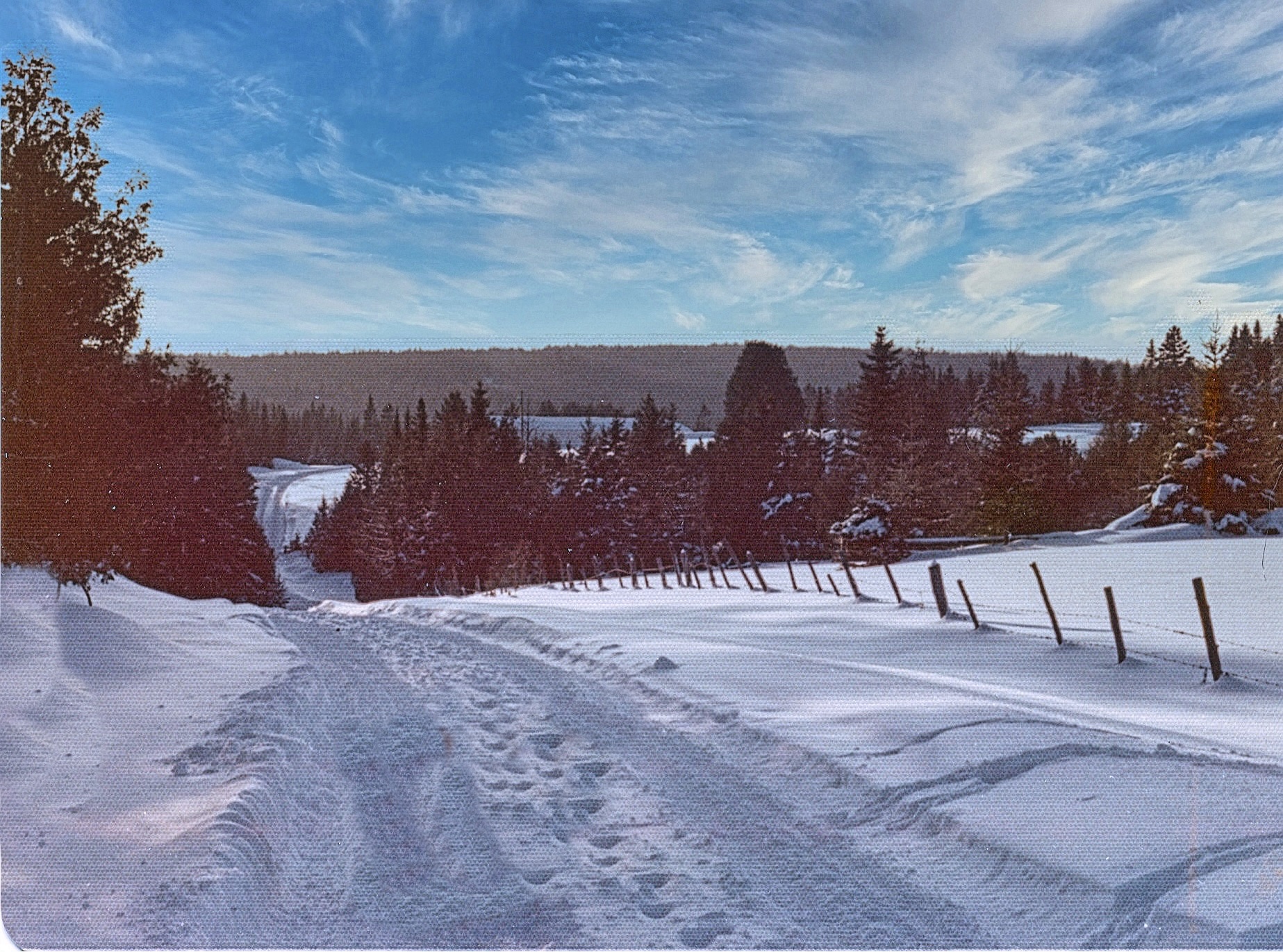
After I graduated from Harvard, I spent over a decade on the land. First, I was part of the early back to the land movement and then later as a cattleman with two hundred head of cattle before we sold them all in fall of 1982 after enduring 20% interest rates. It was a hard life with little room for error and no vacations but the rewards and lessons far outweighed the challenges.
My training other than my Boy Scout years involved wandering the woods shooting the odd squirrel as a teenager, fishing whenever I got a chance, lots of camping during college, and a summer traveling to Alaska in my Dodge Powerwagon. Studying colonial history during my college years had little value when I headed off the Nova Scotia and the old farmhouse on 140 acres overlooking the Bay of Fundy that I bought with my mother’s help.
Rebuilding the old two-hundred year old farm house was really where the training started. I grew up without a dad so I had no one to teach me many of the skills that I needed in 1971. It is surprising how much I could pick up from the free Sears Roebuck manuals on electrical wiring and plumbing. Carpentery I learned from friends who spent some time in Nova Scotia with me that first six months. Gardening and farming I learned from Roedale Press, Malabar Farm, Living the Good Life, Firefox, and the Whole Earth Catalog.
I learned how to do a Thanksgiving dinner when a handful of Harvard/Radcliffe graduates came to see the place that had captured my soul. It was the first turkey any of us had ever cooked but we managed even the careful negotiations on how much celery went in the stuffing. I had grown up knowing the basics of cooking since my single mother often worked late and if I wanted to eat, some knowledge of getting food on the table was essential.
Gardening while guided by the books but was heavily infludenced by having actual hands in the dirt. I was lucky the first old farm had some giant piles of ancient well-rotted chicken manure. The combination of great compost and Nova Scotia’s foggy shore was so good for growing broccoli, we often picked it in five gallon buckets. The cattle started with a few head on the Nova Scotia place, but I quickly figured out the Nova Scotia shore was a lousy place to raise cattle.
In the summer of 1973, I married a wonderful Southern lady who had grown up in the same area as me. Her mother was a part of the same growing, canning, and cooking environment that my mother had lived. By the fall of 1974, we had found our farm in the hardwood hills north of Fredericton, New Brunswick. There there was plenty of advice on how to farm. I incorporated some of those ideas with my own plans. By 1975 we were wintering our Angus herd in the woods and putting up our hay in round bales. My only help was the previous owner of the farm. He had farmed with horses and eventually a small tractor to help with the loose hay he put up annually. Even in his sixties he took to the world of big tractors like a duck to water. He also helped me build a couple of big barns, one 128 ft by 41 ft and the other 69 ft by 64 ft.
By the time the barns were done, we were putting up 200 to 300 tons of hay per year. I could build anything from kitchen cabinets with my radial arm saw to barns with a chain saw. I could use a welder and an acetelyene torch. I had survived working in over 100F temperatures to to feeding cattle in minus 40F a mile back from our farmhouse. In the dozen or so years we lived on the farm, I amassed enough stories to fill a lifetime. The experiences carried me through a coporate career and have defined my life.
My wife and I still have special friends from those years on the farm. Our lives were fundamentally different from those living off the grid today but many of the lessons we learned are the same being learned in Alaska. We heated with wood, supplied our house with running spring water, grew much of our own food including having a milk cow and chickens. The freezer was always full of beef and there was never a shortage of potatoes in the cellar or vegetables we had canned. We lived in a close-knit community where the men dug everyone’s graves and when the funeral was over, they went out and put their overalls on and gathered their shovels to fill the grave.
We battled as much as 23 feet of snow in one year. It was wild enough that we had no fences in the back of our farms. In the early years snowshoeing on six feet of snow was common. I know what it means to grow animals which you end up eating. My wife’s first lesson in local food was walking into our Nova Scotia kitchen early one morning and seeing a freshly dressed lamb that I had hung from the top of a door frame so I could cut it up. We sometimes ate salmon that the local tribles sold door to door. There were even a few meals of wild native brook trout. In the spring we gathered fiddlehead greens from the marshes. Before our cattle herd got so large we could often pick chantrelle mushroom from the edge of the forest. They were a staple when we lived in Nova Scotia.
The challenges that we faced on the edge of civilization made us stronger people. Living in Halifax, Nova Scotia, Columbia, Maryland, Roanoke, Virginia, and Cape Carteret, North Carolina ground any rough edges off of us and helped us give our three children, all born on the farm, a good start in life. Even at 77 years old, I still garden and I love the feel of rich dirt in my hands.
I have no regrets about the years that I spent living on the land.
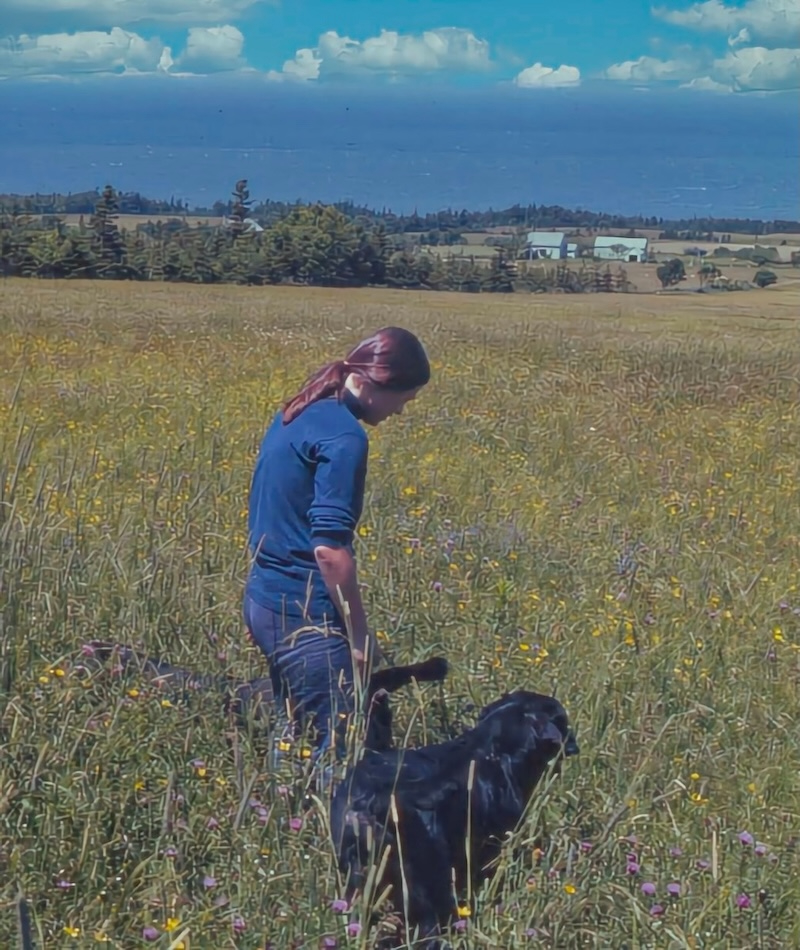
My seventy-seventh birthday is coming up in a few weeks. The thought of being that old has prompted a lot of introspection. Someimes we know why we do something but there are some forks in the road where our motivations might not be so clear. There are also things you remember which make you wonder how much influence they had on your decisions. I was in high school, a military one, when President Kennedy was assasinated. I remember the deaths of Robert F. Kennedy and Martin Luther King. I also vividly remember the election of Richard Nixon, the Vietnam War demonstrations and the feeling of relief when I found out that I wasn’t going to get drafted to fight a war which I thought was wrong on more than one level. When I graduated college, I went back to the land on shores of the Bay of Fundy in Nova Scotia. Some dissatisfaction with the political direction in the United States helped direct me to the north in 1971.
I spent first weeks of 2026, entertaining myself with YouTube videos of the new generation of homesteaders. Many of them are young, and all that I have seen appear to be healthy enough to handle all the wood splitting required to live off grid. I often wonder how their lives might change a few years down the road when their families include two or three children who need educating while the unrelenting work taking care of farm animals demands much of their time. Some of these homesteaders seek purity and will not even consider using a chainsaw. Others seem to believe that doing everything with used equipment shows their dedication to a different kind of life with ingenuity and a dose of poverty. Some fully embrace ATVs, snowmobiles, tractors and even excavators. Most it not all of them embrace solar power. There is a propensity for them to have goats and chickens with few pigs and cattle sprinkled around. Some have subsistence permits and live off Alaska’s. bountiful salmon and wild game. No one seems to have the land to grow their own hay, but many are investing huge effort into growing vegetables in places were vegetables are very hard to grow. Some have very young children but very few have teenagers. I am sure there are many reasons why they are living off grid or in my world have gone back to the land. They will likely wrestle with their decisions as they get older. A few have figured out how absolutely brutal longterm homesteading is on the homesteaders. It will be interesting to see how many are still around five eyars from now.
Long before I graduated college in the summer of 1971, I wanted to move north There were all sorts of reasons but four years at military school along with four turbulent years at college set the stage. My freshman year (1967) at Harvard, I was one of three students out of 1,500 in our class from North Carolina. At the time North Carolina was a rural place, and I had grown up loving camping, fishing, and wandering the woods. No one from our family had ever been to college so there was no famial advice to lean on for a career. My single mother raised me by running a beauty shop in the back of our house. Her one piece of advice was whatever I chose to do, I should do it to the best of my ability. She had grown up on a mill pond with a father who was a miller. She had become the lady of the house for her five sisters and brother at the age of nine when her mother died in 1917 flu pandemic. She left home by her middle teenage years when her father remarried..
With those ties to the land and the family of one of mother’s sisters still farming, it was not a stretch for me to want to go back to the land and farm. A trip to Alaska and another to Nova Scotia fanned the flame. In the spring of 1971, I found an old farm on the Nova Scotia coast that was listed for $6,000. It included an old farm house and 140 acres with about thirty acres of that in a hayfield.
Restoring the old house, buying some farm equipment and a few cows are all part of my history. When we decided to get serious about farming we moved to New Brunswick where we built a farm where we eventually had sixty-five cows calving every year.
There were lots of other easier paths to take to adulthood. I needed a path that let me learn everything the hard way. I learned how to wire a house and do copper plumbing by reading Sears How-to-do-it pamplets. I learned to farm by reading books and listening to my neighbors in most cases. I built barns with just common sense, skill saws, and a chainsaw. We only left the farm when interest rates got to over 20%. We also made the decision three years after leaving the farm that we wanted our children to know their North Carolina based grandparents and hopefully find lives not far from us.
It was a huge effort to move from the farm to Halifax, Nova Scotia, where I went to work for Apple. It took even more effort to move back to the states.
Now as I sit in my comfortable house eating food from local farms and exotic places like Trader Joe’s, I struggle to remember the day to day challenges we faced on the farm. I can remember all the wood splitting, the hauling it into the woodshed, the years of milking our Guernsey, Rosie. I also remember all those trips, often three times a night, to check for new born calves in the depths of winter. All the work that went into haying and gardening is clearly burned into my mind. The freezers were always filled with beef which is a luxury today. We had more garden produce than we could dream of eating but it was a lot of hard work especially when the black flies were around. We saw weather as cold as minus forty with sixty mile per hour winds and heat over one hundred degrees. We lived on the edge of civilization but most days we had power. We also had the equipment to move snow and take care of 200 head of cattle without hiring another person. There was a ten year stretch with no vacation. When we finally did get a vacation to Prince Edward Island, we did not know how to act on vacation. Farm life was brutally hard at times, often money was very short, but we all slept well at night.
Even with all the hard work, I would sign up for it again but with fewer cattle if somehow I miraculously got a body forty years younger. Whatever the reasons behind this generation going back to the land, it might well burn brightest in their memories like it does in mine.
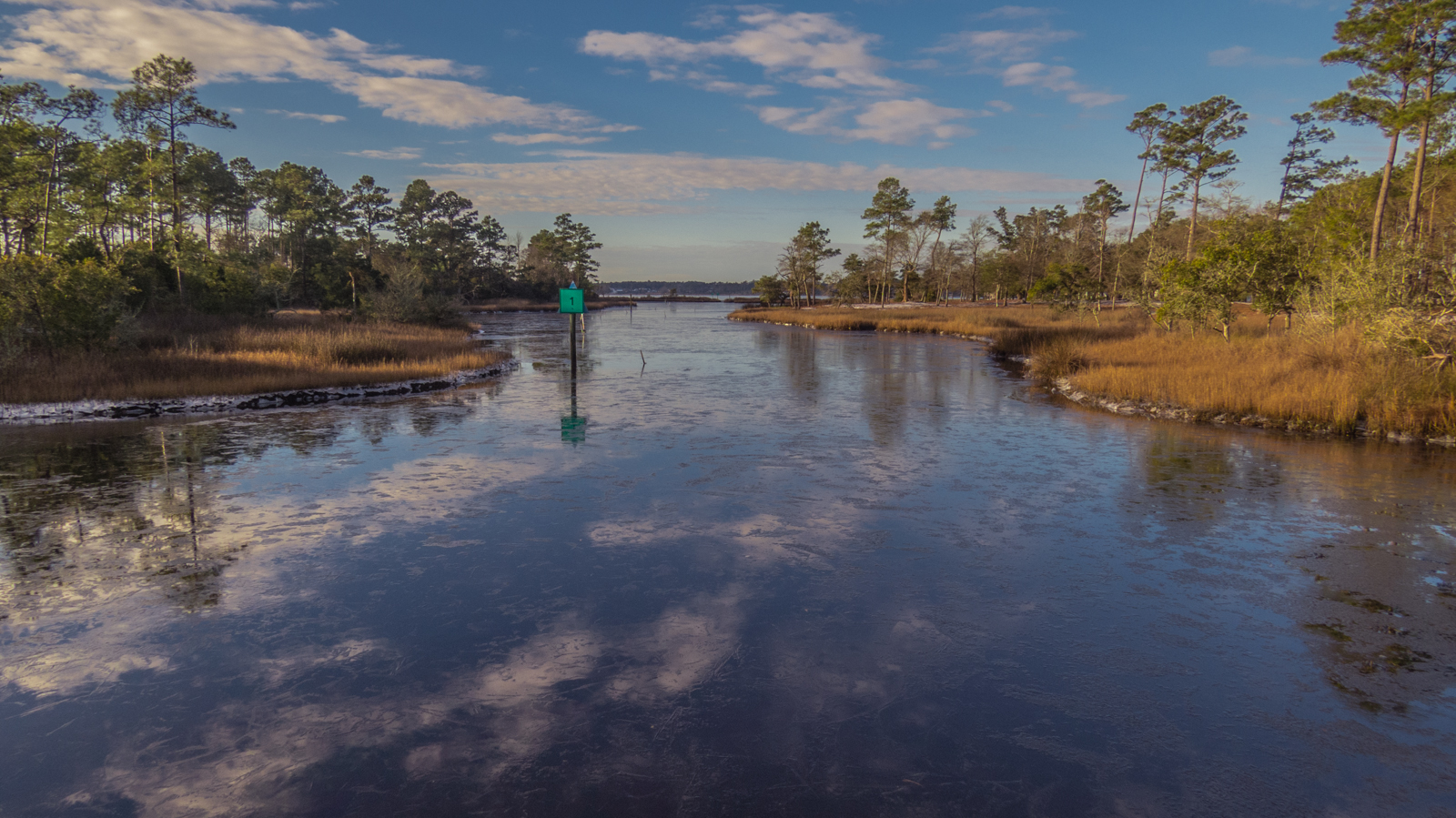
When we living on the North Carolina coast, we always considered the first cold day to be the one when we had to give up wearing shorts. Only the first two weeks of February were reliably cold. The picture of the frozen body of water (Raymond’s Gut) was taken during a Febraury cold snap in Carteret County. The trouble with packing your shorts away was that warmth could descend on the coastal area almost at any time. The result was that I rarely gave up my shorts while living at the coast. When I lived on the farm in Tay Creek, New Brunswick, the first cold day was when I had to start wearing mittens. That was actually a whole lot colder than you might think. I rarely used mittens until it got below zero Fahrenheit.
Growing up in North Carolina, cold is not something you think about very much. To me it was cold when the red dirt banks sparkled with frost crystals. As I got older and went winter camping with our Boy Scout Troop 752 at Camp Raven Knob, I got to know real cold. There is nothing like rain and chilly weather to make you appreciate a nice warm home. Still it was not serious cold.
The first serious cold that I remember was on a trip freshman year (1967) from Cambridge to Dartmouth in Hanover, New Hampshire. I cannot remember why we went, but I do remember it being minus twenty-four degrees Fahrenheit the Saturday morning we left. Fortunately, serious cold does bother you very long if you are in a car with a functioning heater. Still it left an impression. While temperatures in Cambridge got down into single digits, they could not come close to the Hanover freeze.
Sometime in my college years I caught a snow-loving virus. That and a obsession with having some land of my own led me to head off to Maritime Canada after graduation. In the early seventies land was cheap in Nova Scotia and life seemed like a throwback to life in the fifties in the United States.
The old house that I bought on the shore of the Bay of Fundy was not exactly the warmest house around. In spite of lots of efforts and a newly built fireplace, it could still be cold especially since the wind often howled in St. Croix Cove where the house was. That part of Nova Scotia was famous for storms that went from rain to snow to sleet to freezing rain back to snow accompanied by bitter cold.
Fortunately, for the snow loving part of me, the lousy Nova Scotia weather was also bad for running cattle outside so my wife and I decided to move to New Brunswick. Without much thought other than falling in love with the farm, we ended up in Tay Creek, New Brunswick in the middle of New Brunswick’s snow belt. Our first winter we had over twenty feet of snow. We also got to endure minus twenty-eight Fahrenheit that first year. In January of 1982, when our youngest daughter was born one January, the thermometer dipped to minus forty with an accompanying blizzard and high winds.
Most years in New Brunswick the first real cold came in the first week or so December just about the time busy mothers needed to finish up their Christmas shopping. You could tell the real cold weather had arrived when on successive days the previous day’s low would become the next day’s high temperature. Things would continue that way as we started plugging our cars in until the temperature bottomed out at something seriously below zero Fahrenheit.
I endured some bitter cold on our New Brunswick farm but I doubt that I ever felt colder than when I went fishing in a skiff on the rainy, wind morning of October 25, 2005 with the temperature in the forties. When we finished fishing that morning and I was dropped off at the dock, it only took me about a block of walking before I realized that I could not feel my extremities. There is nothing like being completely soaked in the wind to make cold penetrate to your bones. I had to spend some serious time in a very hot tub bath before I recovered. It is no surprise that I did not feel cold while I was catching all the fish. That fishing trip remains one of my coldest memories next to sitting on a brick hard seat in my pickup at minus forty.
Since we have moved back to North Carolina’s Piedmont, cold weather has become a little more dependable. Most years we see a little snow. In 2024, our first frost was October 20th. ‘We have already beaten that. It looks like that in 2025, the first chance for frost will be no earlier than Wednesday, October 23 when our low temperature is forecasted to reach 36F.
This potential frost got me to thinking about the tales that my mother used to tell. She was born in 1910 and told us of stories of her father taking teams of horses out on their frozen mill pond to cut ice and store it for the summer in a deep hole insulated with saw dust. That would not be too much of a surprise had she not lived in the foothills of North Carolina, just west of Winston-Salem. The mill pond which was part of so many of her stories was near Yadkinville, North Carolina which is not exactly known as one the earth’s cold spots.
A little climate research indicates western North Carolina the earlier 1910s was cooler than our current weather. Since then the trend has been steadily warmer with a noticeable peak in the 1950s.
I cannot remember anyone telling me about people skating on ponds in central North Carolina during the fifties when I grew up. There certainly was no report of driving teams of horses onto the frozen ponds. I cannot even remember a pond freezing over.
My son pulled our tomatoes out yesterday but that was more from being tired of looking after tomatoes than the danger of frost. Needless to say, I will still be wearing shorts when I go out to the front porch to read the next few days. When I change to blue jeans, it is going to have to be a whole lot colder. The weather might be sweatshirt worthy.
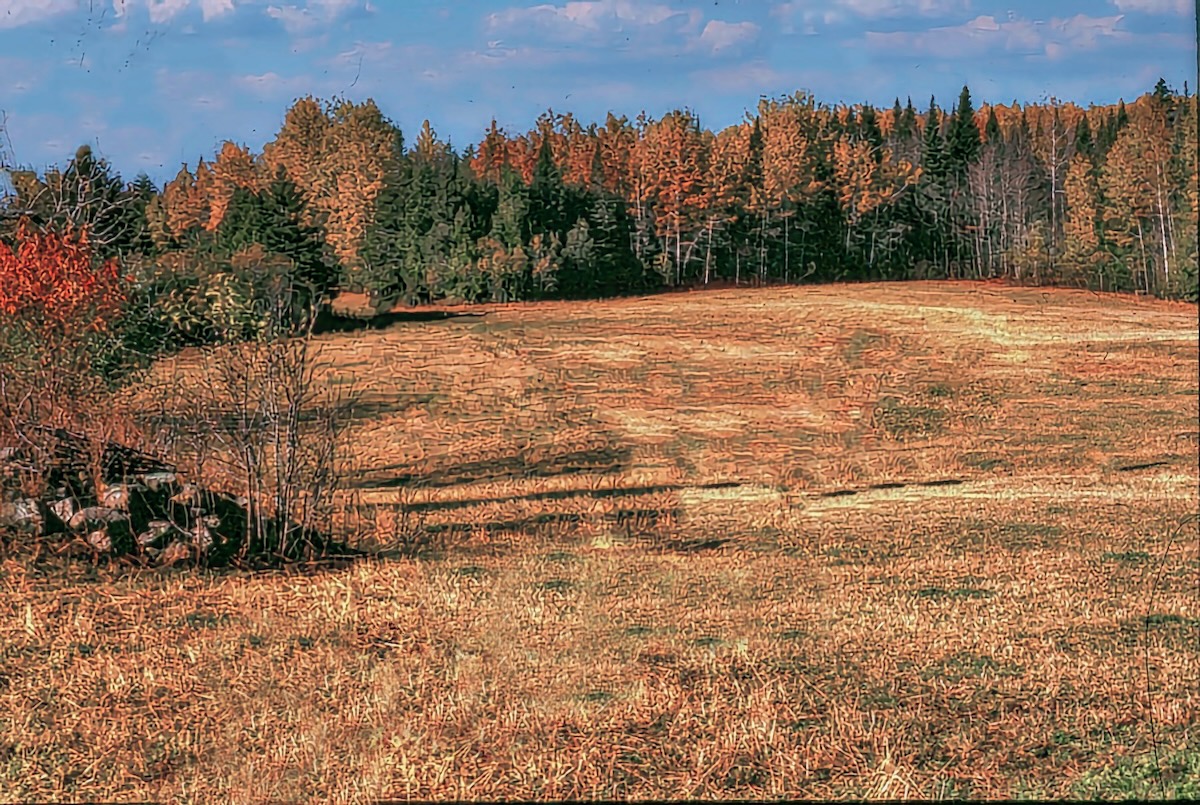
In every life there are decisions which determine what direction your life will take. I have been fortunate to be in positions where I had enough flexibiity to guide our life in certain directions. Even now fifty years after some of those decisions, it is hard to say that what we did was the right decision for us. Our decisions worked out for us but it is impossible to tell if another path might have given us an even more rewarding (and not in monetary terms) life.
I graduated Harvard and instead of going to law school, I went back to the land in Nova Scotia. Whether the neighbors ever called us hippies or not is still an open question, but my bet is that they didn’t because we had a John Deere tractor and were trying to farm the land. We were friends with hippies living in a Dome in the woods, but I worked hard to wire our house so we could have electricity and the modern coveniences that came with it
We did grow a huge garden and put up prodigous amounts of produce both canned and frozen. We butchered our own steer and hogs. We collected wild Chantrelle mushrooms from the woods. We even tended a gill net for a while.
The old house I bought and fixed up had 140 acres. Of that well over 25 acres was a cleared hayfield with a small pond. Though the woodland with it was mostly spruce, I did eventually get another piece that had some hardwood. It is not too much of a stretch of the imagination to think that we could have kept a few cows, had a huge garden, and lived a very simple life. Looking at recent aerial photos of the property which I sold in 1976, the property appears to now have lots of gardens, more trees and little pasture though I am sure goats would be happy with what is there now. I might well have done something similar had my partner in the enterprise not been such a jerk. He married the local school teacher in our small community and devoted far too much time to telling our neighbors what a terrible person I was. While my new bride stayed with me there for a year, we were determined to move a friendlier place.
We found the better place in the hardwood hills north of Fredericton, New Brunswick. Instead of people being petty and mean, the residents of Tay Creek were welcoming, helpful, and supportive. I can think of no better place to raise a family. The community when we moved there had two country stores, three churches, a town hall, and a lot of opened minded people.
We stayed in Tay Creek for over a decade. Our three children were born while we were on the farm. Our two Labrador retrievers are buried there a long with a good chunk of my soul. This would have been an even better place to have a few cows, lots of gardens, and even fill the freezer with trout to supplement our beef.
We did not take that path, I wanted to work the soil and to raise high quality cattle, selling bulls to improve the local herds. We accomplished that goal, along with continuing to grow much of our own food. We had chickens, a Guernsey milk cow and a beautiful farm.
We eventually had to give up farming because interest rates soared to over 20% during the early eighties when our herd had grown to two hundred head. We couldn’t handle the high interest rates on our $100,000 operating loan, so we had a very successful dispersal sale. . After selling the cattle we could have hunkered down on the farm which was paid for, sold off some of the machinery, and continued to work the land, but we had three children, and we wanted them to go to college. Like many others I went to work in town after taking a few months off. My job was in an early computer store and led to a twenty year career at Apple. After Apple I worked as a vice president of a network construction and consulting firm for over a decadsa.
It has been a good life. All three children who were born while we were living on the farm have gone to college and done well. Yet as I have been watching some of the Alaska homesteading YouTube videos, I can only wonder how would things be different if we had stuck with working the land instead of keyboards. After all, I made the trip to Alaska before I moved to Nova Scotia and I even considered homesteading in Newfoundland.
Instead of that I ended up walking the halls of government as Apple’s director of federal sales. I know the people that I would have gotten to know working the land would have made much better friends than the politicians that I have met.
Still in my dreams I am splitting hunks of birch, milking the cow, collecting eggs and filling the freezer with brook trout, beef, pork and the cupboards and root cellar with homegrown veggies. We still garden in a token fashion and I still make sourdough bread but we buy more from local small farmers thsn we grown. At my age the amount of wood, even birch, that I could split would be limited.
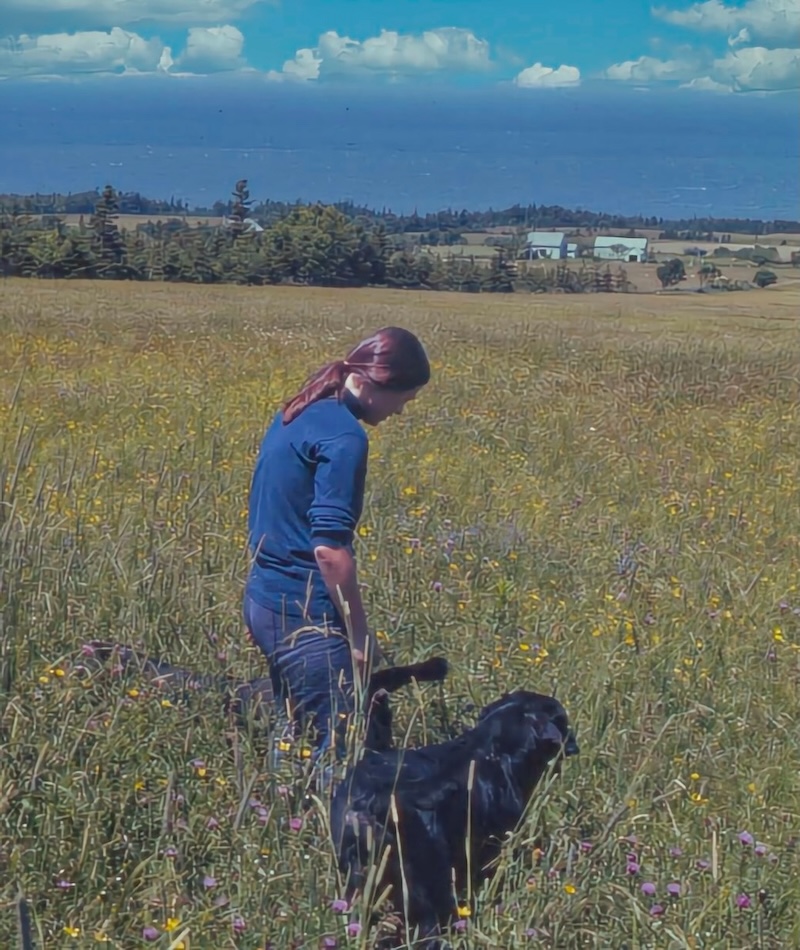
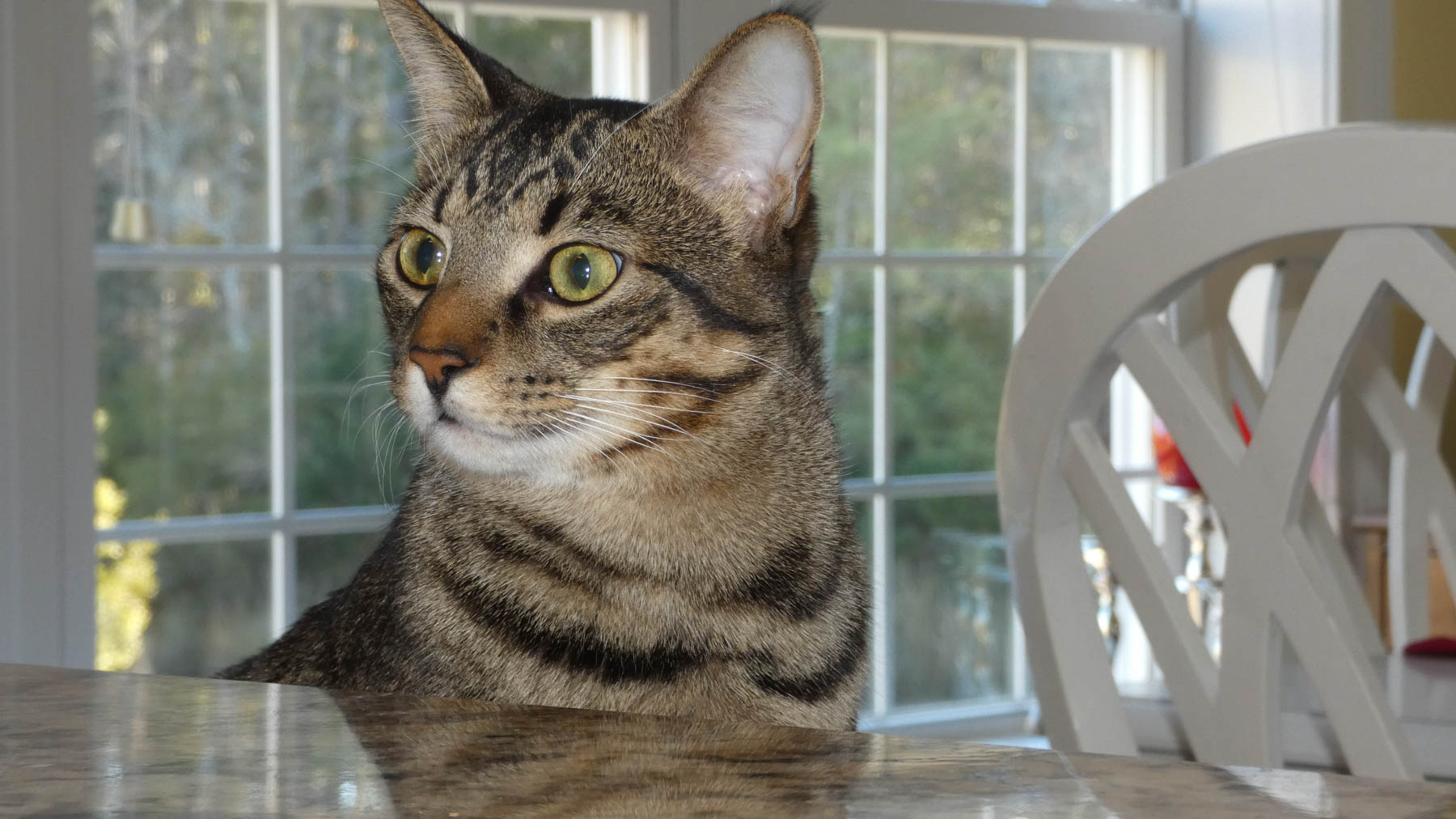
One of the reasons that I love our big tabby cat, Goose, is that he always has a look of wonder. We could learn a few things from Goose. A few times over the years I have forgotten to be pleasantly surprised at whatever has happened, but not often.
After I went away to military high school in Tennessee in 1963, I figured out within the first three months that I could either be unhappy with what was happening in my life or I could be wonderously surprised at whatever happens next because it is often an unknown piece of the puzzle that turns out to be my life.
When I got in my car to go office to college in the fall of 1967, I left with a sense of adventure which included a promise to myself to try new things especially if they forced me to step out of my box. The Vietnam war was raging during my college years and for a while it looked like I might become a foot soldier in it. Instead once I graduated and figured out that I wasn’t going to be drafted, I immigrated to Canada.
That as you might expect was a huge decision but like many decisions in the days before the Internet, not a lot of research went into it. I was in love with Nova Scotia. The beauty and wonder of the place wrapped itself around my mind. Before I got married, I came to know loneliness even in a place as scenic as Nova Scotia. Marriage to a NC girl was another moment that surprised me and left me thinking that I was living under a special star that helped me find such a wonderful wife.
There were plenty other moments of wonder. After dispersing our cattle herd, somehow I made the transitiion to working with Apple Computer. From shoveling manure to selling Macintoshes has to be an epic career switch. Twenty years later when Apple pushed me away from the company, several people encouraged me to think about my next career as finding something that would excite me for the next fifteen years. It took a while, but I ended up helping communitieis build fiber networks. Along the way, I learned how to take a skiff out into the Atlantic and how to kayak a two-mile wide river. I spent a few years rescuing an HOA.
I always welcomed the next challenge never doubting my ability to do a good job and always approaching a new challenge with a sense of wonder. That doesn’t mean I did not have any worries. There were many sleepness nights during my HOA time. I would always wake early when I was taking someone new in our skiff out into the Atlantic. It was a big responsibility.
I recently got a new heart valve by way of a TAVR procedure. While I was afraid, I never waivered. I am still facing some medical issues but I face them with a sense of wonder that something so complex can be done without cutting me open.
I have been surprised by people all my life from the British doctor and his wife who became great friends to some of the very interesting people that I met Harvard.
I continue to be amazed by people that I meet from the young farm family working on the same farm that has been in their family for over one hundred years to the New Brunswick farm couple in their sixties still haying and keeping work horses. I also amazed by the young adults finding their way through this increasingly complex world. That they can keep moving forward when most of the cards are stacked against them renews my sense of wonder. Then there is my adult son who rose up to start doing many of the things that I was doing before my heart valve problem. I am back to driving and hope to be gardening in a few weeks but I definitely have a feeling of wonder seeing my son plant flowers. If that can happen, I think we will be able to push back on the anti-democracy forces trying to destroy our country. That of course would lead me to an immense feeling of relief.
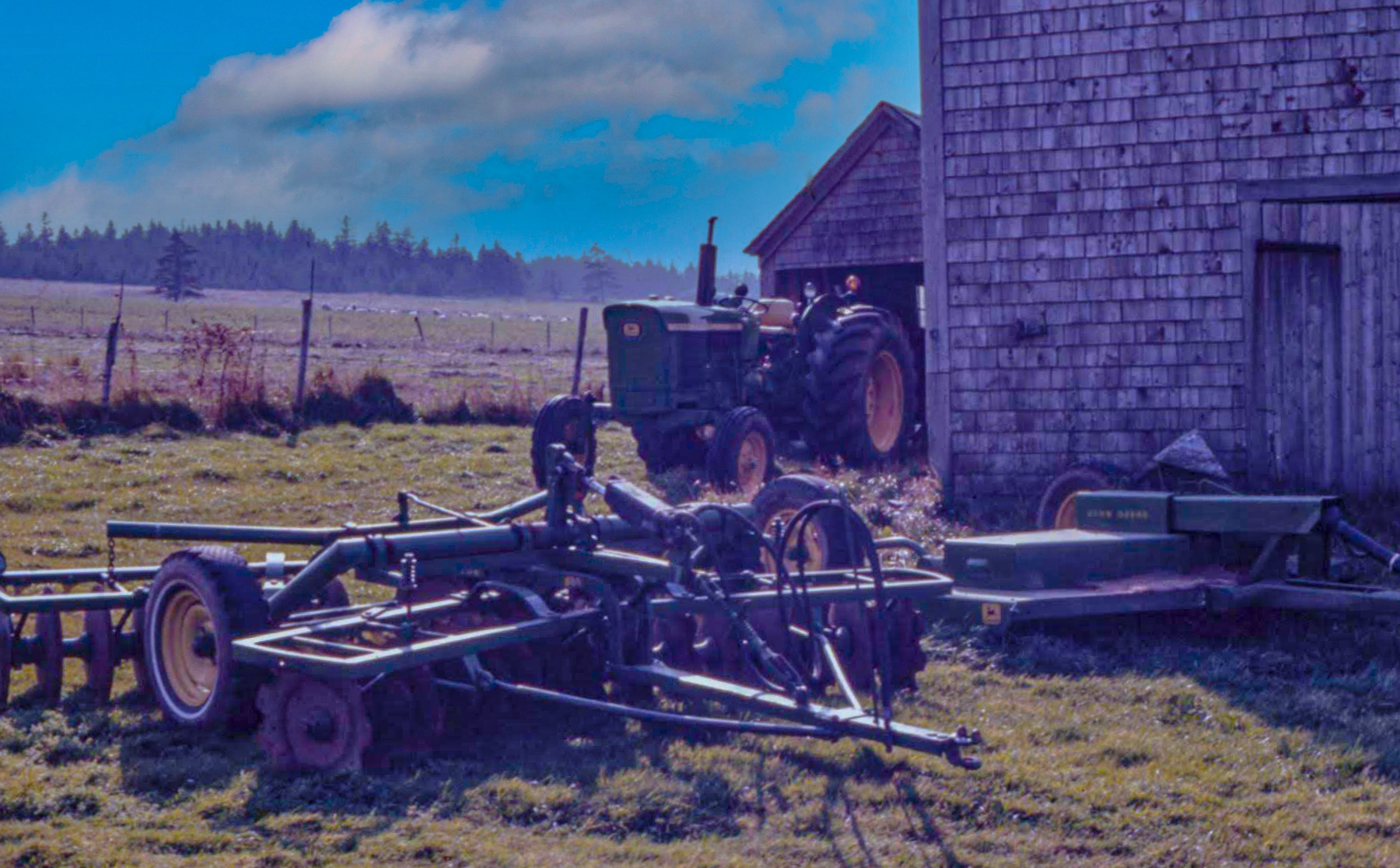
Growing up in the rolling hills of North Carolina’s Piedmont in the 1950s meant that you were not far from the land. Most people had a connection with the land in those days. I can remember hog killings
Two quotes from my book, “The Road To My County Country,” seem appropriate,
“The land was what gave life to us all, and where we go when life is gone. The land was at the center of all, and how could understand anything without first being on the land? You take whatever road you can find to get to the land…”
“If we were not going to be lawyers. What would we be? There could be only one answer. You had to go back to the land to find yourself. It was only there you could sort out what was good and what was bad. There you could find out what was important and how to live life the way it should be. That the roads had turned back to dirt was a good thing.”
If it sounds like I had a serious case of sixties disillusionment, it is likely a fair diagnosis. I grew up in the South, spent four years at a military school, saw a series of political figures I admired assassinated, and my college years at Harvard took place during the turmoil of the Vietnam war. Part of my college education included getting billy-clubbed while walking to our favorite hamburger place. Until that moment the students occupying University Hall were of little interest to us. That changed instantly and the only things that had much certainty when I graduated was that I did not want to be a lawyer and a charging line of state troopers was to be avoided at all costs.
That someone who grew up wandering the woods could only survive four years in the city was no surprise. The strange light of the city was never for me. I loved the deep dark woods and could fish silently with a friend all afternoon and never feel lonely. If camping under the stars as a Boy Scout ignited my love of the outdoors, trips to Alaska and Nova Scotia made life on the edge of wilderness one of the few certainties in my future.
“Our family had no history of lawyers, but we had a long and proud history of farmers.”
After it turned out that I they did not need me for fodder in Vietnam, I went back to the land. In 1971, I was determined to learn how to farm and how to treat the land well. Helen and Scott Nearing’s “Living the Good Life”, Louis Bromfield’s “Malabar Farm,” and Steward Brand’s “Whole Earth Catalogue” were my bibles along with advice from those who had been farming their whole lives. Perhaps we were lucky those first couple of years when we had an unlimited supply of composted chicken manure for the garden, but we learned how to grow stuff including hay, pigs, cattle and what seemed like enough broccoli to feed the world.
That the land I found was in Canada on the Nova Scotia shore of the Bay of Fundy was even better. Life in Nova Scotia in the seventies reminded me a lot of life in North Carolina in the fifties when I was growing up. Still other than having long hair until my mother sheared me on one of her visits, I never came close to being a hippy. I thought electricity, running water, indoor toilets, and especially hot water were good things and worth having. I had relatives in the fifties who had electricity but no indoor toilets and they still warmed their water with wood. One of my first family memories is my great grandmother sitting by her wood cook stove while reading the newspaper.
Most of all like Louis Bromfield, I could not see how to farm without a tractor so I ended up with a John Deere diesel tractor, a three furrow plow, disc harrows, a seven foot cutter bar, bush hog, hay rake and a manure spreader. A hay baler came with the farm I bought. All the equipment including a front end loader, rear blade, and post hole auger cost $10,555. The farm was $6,000 and my first few head of cattle were $1,500. I already had a pickup truck and my uncle built us a hay trailer. Fifty years after I started farming for under $20,000, I seriously doubt you could get started today for less than $250,000.
For the next eleven years, we had huge gardens and grew much of our own food even butchered our own animals for a time. Our cattle breeding operation which eventually ended up in the hardwood hills north of Fredericton, New Brunswick, grew astronomically. Eventually there were four big tractors, a round baler that could put up sixty tons of hay in a day. It took a hay rake twenty-one feet wide to feed the baler. We put up over 300 tons of hay a year with just one seventy-year old neighbor helping me part time. Our farm produced at least twenty-five 700 to 800 pound yearlings each year for beef and an identical number of yearling heifers as breeding stock along along with our most profitable product a dozen or so performance tested yearling bulls that sold for up to $1,500 each. Even with a family of five, it was a challenge to eat more than a side of beef each year so we never went hungry. At our peak we had two hundred head of cattle which is way more than a few cattle.
What was high on the list when we moved off the farm and I went to work for Apple? As soon as we could afford it, we hired a backhoe to dig out some of Halifax’s rocks so we could have a little garden. It wasn’t long after we moved to Roanoke, Virginia, in 1989 that we started planting things in the bed pictured above. Tomatoes by the house followed soon after. When we headed off to the coast in the fall of 2006, we managed to plant tomatoes the next spring. Eventually we grew unbelievable amounts of vegetables in tiny space. You don’t have a grow an acre of vegetable to get your fingers in dirt. We are about to prove that once more even though we are now in our seventies.
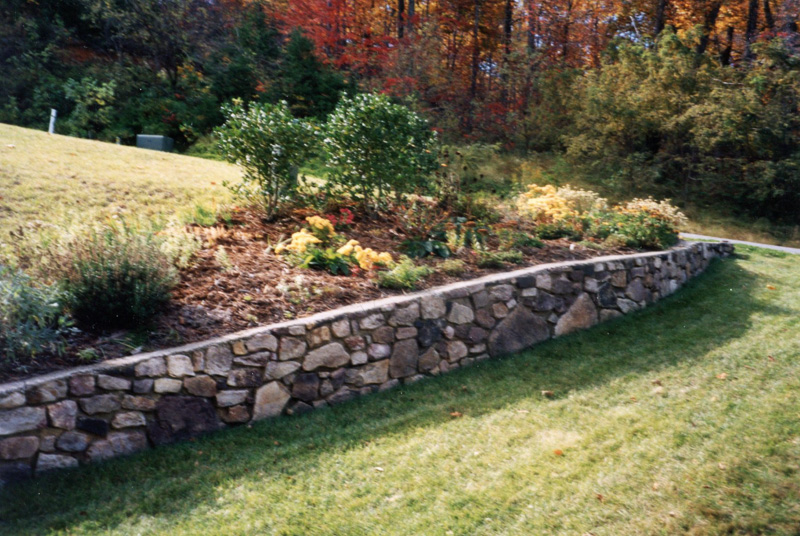
In 2021, we moved again, this time we move back to NC’s Piedmont and its challenging red clay soil. It has taken a while but we had a wall built behind our home. We don’t have the chicken manure that we had with our first farm, but we do have a local compost farm. Our wall contractor mixed over five cubic yards of compost with our red clay soil. Pictures of the whole project are here. We added a few other soil amendments and while we were doing it capped the whole bed off with another five cubic yards of compost. We planted a lot of bulb is the center third but have reserved the front third for gardening and the back area around our little fringe tree for perennials. By early March 2023 we we will have some vegetables plants in the ground once again. We can hope they turn out as well as our spring Cape Carteret gardening.
 Our technological infirmity