From Farm to Apple

I have been asked serveral times how I got from shoveling manure on a farm to selling shiny Macs for Apple?
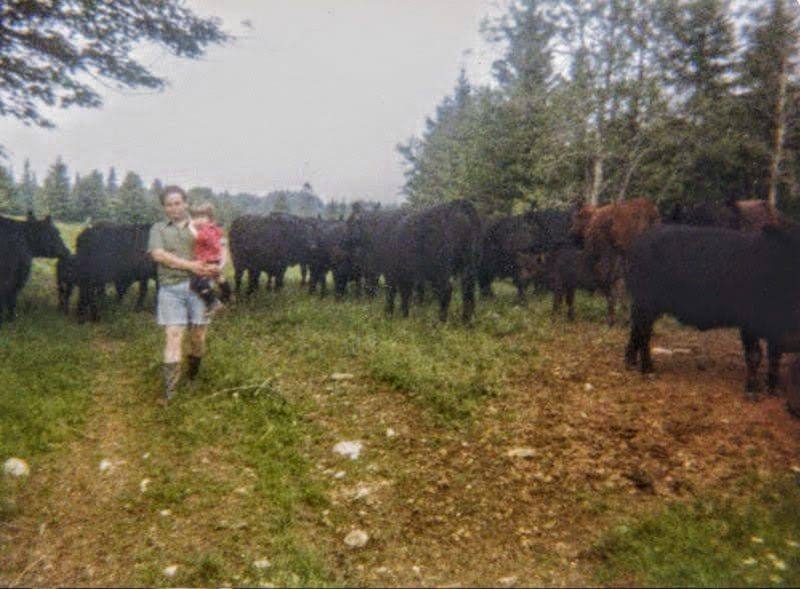
There are several pieces to the puzzle. The first factor was the sky high interest rate we had to pay on our $100,000 operating loan in the early eighties. Once interest got over 20% and the Canadian government decided that our beef cattle operation was too profitable for the subsized 2% loans that our diary famer neighbors were getting, we made the decision that we had to get out. Putting together a successful cattle dispersal sale takes time. In our case it took ten months to turn one of our barns into an auction arena and get the cattle looking their best.


We had gone from a few cows to a much larger herd in under ten years. Turns out that selling a lot of cows in a short time, a dispersal, is a massive undertaking. We would have never pulled it off without help from the community. The weather turned so rainy and cold that it looked like we were not going to get the barns cleaned out in time. Most of the men of the community showed up one Monday and worked whatever hours they could over the next two weeks until everything was ready. I remain eternally grateful for their help.
When all was said and done, we paid off all our loans except about $10,000. We did still have a lot of farm equipment which we sold off gradually, the last being our 4WD 60 HP John Deere diesel tractor with the snow blower and front end loader, but that did not happen until two years after the dispersal.
My sale was so successful that Maritime Angus Association hired me as a part-time fieldman. One of the requirements of the job was to write and mail a newsletter to the sixty or so Angus breeders acrosss the Martimes. I sat down at my college-era Adler typewriter and after a week of very hard work and some real old-fashioned copying and pasting I had the first one done. Then it took me hours to photocopy and hand address the newsletters.
I had spent my first winter of not tending cows hauling my oldest daughter, Erin, the twently miles to Fredericton to a preschool. It was too far to drive home on the potholed Royal Road and come back to get her so I found places in town to stay warm. One of them was a fledling computer store, I got to know the people pretty well. I even bought one of their TI 99/4A game consoles for the kids.
While I was writing my first newsletter, my friends in the computer store were getting their first Apple II+ machines. I was telling my North Carolina-based mother about my new fieldman job, how long it took to write the newsletter, and my hope to speed up with the process when I could afford the $3,000 for an Apple computer, Epson MX-80 printer, and some word processing software. My always supportive mother who was looking for a way to make certain that I did not go back to farming offered to buy the computer. It was probably the best investment that she every made.
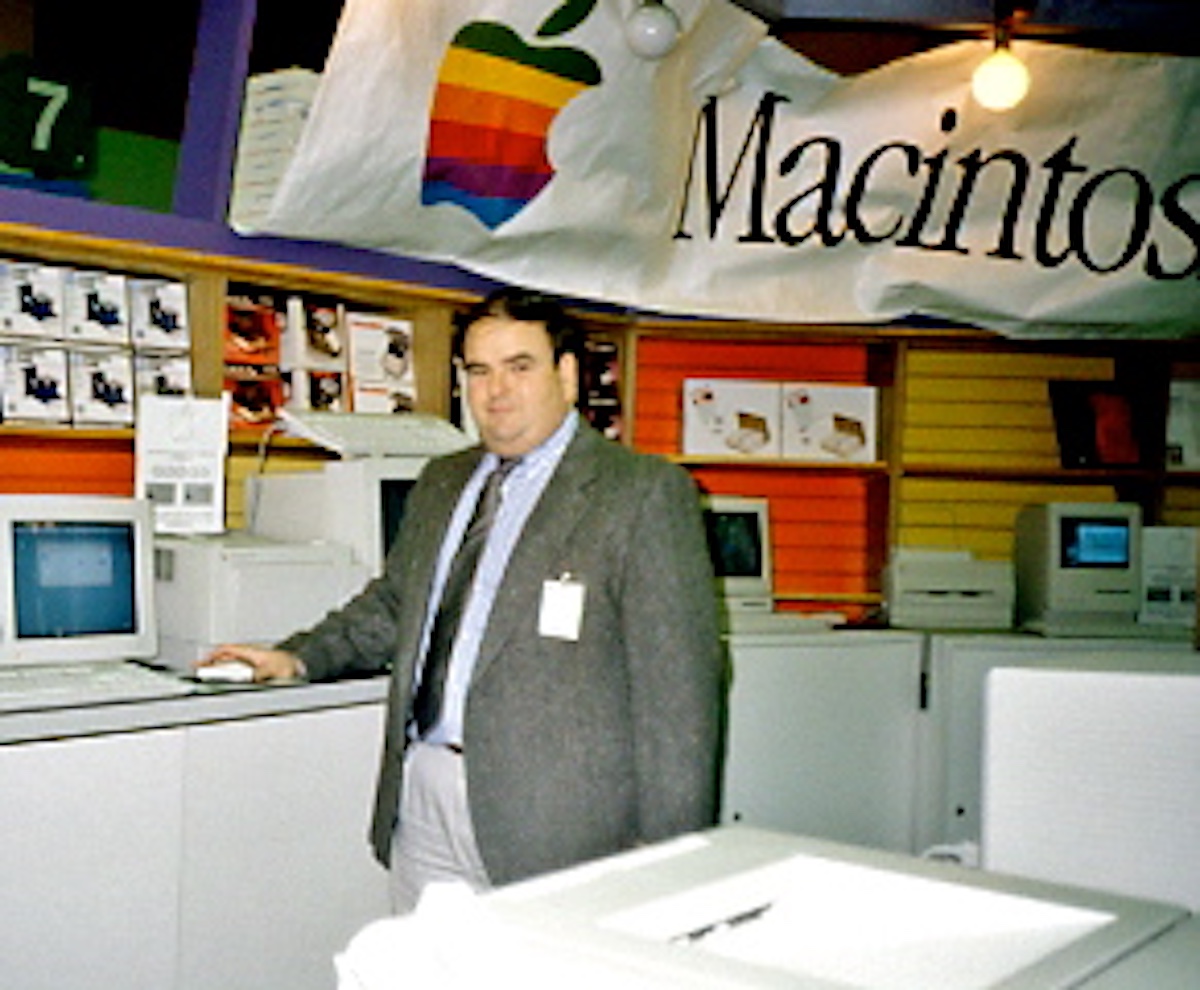
I bought one the first computers that the Fredericton store sold. I took to software like a duck to water. In a matter of weeks, I knew more about the practical applications of a personal computer than everyone in the computer store combined. After three people I had talked to bought computers at the store, I became Salesman #1 in September 1982. I went on to design a course to teach smart college graduates how to sell computers. We opened four more stores across the Maritimes and within a year, I was salesmanager and had close to twenty people working for me. I spent at least a week a month visiting the stores and going on important sales calls. I still have the invoice for where I sold one Apple IIe, a 5 meg Corvus hard drive, and a couple of printers for over $20,000. I was writing simple database applications for customers that saved them time and money..
In the spring of 1984, the company sent me to the rollout of the Macintosh in Toronto. As soon as I saw Steve Jobs draw a circle on the screen with a mouse, I made a vow that I would one day work for Apple. As the old saying goes, be careful what you wish for, you might get it. By November of 1984, I was working for Apple out of the Montreal office.
Things moved quickly at the dealership to push me towards Apple. The company. was operating on a shoestring and always near bankruptcy. They went searching for other product lines since Apple would only deliver computers to them for cash. They picked up the Sperry and TI MS/DOS compatibles but what they really wanted an IBM authorization. They found a white knight computer company out of Toronto who could bring the IBM authorization with a merger.
Like many mergers, the only way to make the company attractive was to cut costs. Upper level management asked me to rewrite the commission plan to massively reduce commissions and to sell the idea to the sales people.
I looked at the plan, decided that I could not in good conscience support the new commission plan so I resigned. The company offered me another job, but I was already bleeding rainbow colors and knew their focus was going to be IBM. I stayed until the merger went through.
That was September of 1984. That same month Apple started adversing for an Apple rep in the Maritimes. I immediately applied for the job and in early November I got an offer. I started work on November 26, 1984. The only condition was that we had to move to Halifax. On December 26, 1984, in a snowstorm we moved to our new house in Halifax. We got there before the furniture so that night we slept on the floor. The next almost twenty years were a wild ride.

Swiss Army Knife Life

I once posted a picture of this Swiss Army knife and someone made some disparaging remarks about Swiss Army knives in general. I responded back that if you have never needed a Swiss Army knife, your life was likely confined to more civilized areas than I have frequented. Even a cursory examination will reveal that this knife has been well used. I am pretty sure it went to Newfoundland with me on our little trip to the barrens. I know it went in my pocket every day that I farmed. It did things it was never designed to do and some parts are broken as a result. It never failed me. I like to think the theme of my life is lot like that beaten up Swiss Army knife.

Somehow, I seemed to be prepared for whatever challenges that I faced. Perhaps it started when I grew up the child of single mother in the fifties. I tried not ever let having only one parent drag me down. Mother always told me that if I worked hard, I could be anything that I wanted to be. She pulled herself out of red clay soils of Yadkin County, NC and got her license to be a beautician. She supported us from the beauty shop attached to the back of the house.

In a sense being an only child of a mother who worked extremely long hours gave me a push into learning how to do things I might have avoided in a more standard family. I learned the basics of cooking because if we got food on the table at any reasonable hour, I needed to be involved. It started with just sticking food in the oven, but well before I got to Boy Scouts, I was grilling half chickens on an old charcoal grill. Tinkering with things started at an early age. By the third grade it was my job to balance the check book and make sure the deposits were recorded properly. At some point I became the navigator and developed a love of maps that still bedevils me today.

Being a Boy Scout accelerated many of these interests and enhanced my love of the out of doors. By the time I left college, I was in need of an escape from the cities. Regular visits to Maine had only made my desire to get back to the land worse. The old Nova Scotia farmhouse that I bought in 1971 only pushed me harder. I had to learn plumbing and how to wire a house at the same time my carpentry skills had to get better if we were going to have a place to survive the winter.

By the time we got to our New Brunswick farm, I was ready for almost anything. With a welder and an acetylene torch, there wasn’t much on the farm that could slow me down. I always had a John Deere tractor and a Chevy 350 3/4 ton 4WD that I could lean on and some great neighbors who were always willing to help. With some local help I even built a couple of barns that are still standing 50 years later.

After the farm, I went on to sell Apple computers, learned how to manage a sales force, and how to survive a teetering small business. When I actually went to work for Apple, the second day I was on board, they gave me a tray of real 35 mm slides and said you’re presenting to 100 people tomorrow, put together a presentation. If was the first of many presentations that would define my almost 20 year career at Apple. My last days at Apple in 2004, I was director of federal sales and sat with Avie Tevanian at a federal hearing on cyber security. Had Apple stuck more with open source and the direction our team was headed, there would be a lot more Macs in the federal government and our government would have a more resilient infrastructure.

After a consulting gig with the National Lambda Rail (some called it Internet 3), I went to work at an email company and learned the ins and outs of online marketing. It was a steep learning curve with Google analytics, buying search terms, and managing an inside sales force when I had spent most of my life in outside sales.

By the time the email company was sold, we were well on our way to establishing a life on the North Carolina coast, I worked a writer and I dabbled enough in real estate to know how to mine data from tax databases which turned out to be very useful when I became a vp at a company that was building fiber and convincing people to sign up for it. My love of maps led me to extensive use of Garmin’s mapping tools both on land and in my skiff and kayak. A knowledge of GPS helped me jump feet first into ArcGIS Pro and the technical reports and maps that have defined my last dozen years.

Not long ago, my barber asked me, “How in the world did you get from shoveling manure to selling computers and then helping to build fiber networks?

I told him the answer was simple, I always believed in what I was doing and I never sold anyone something that I wouldn’t be proud of using whether it was a bull, a bailer, a computer, or a report on the state of the Internet in their county. I could have said that I had a Swiss Army kind of life, always ready for the next challenge even as I was taking a lot hits along the way.

From VCRs to Streaming- Apple TV – Fire TV

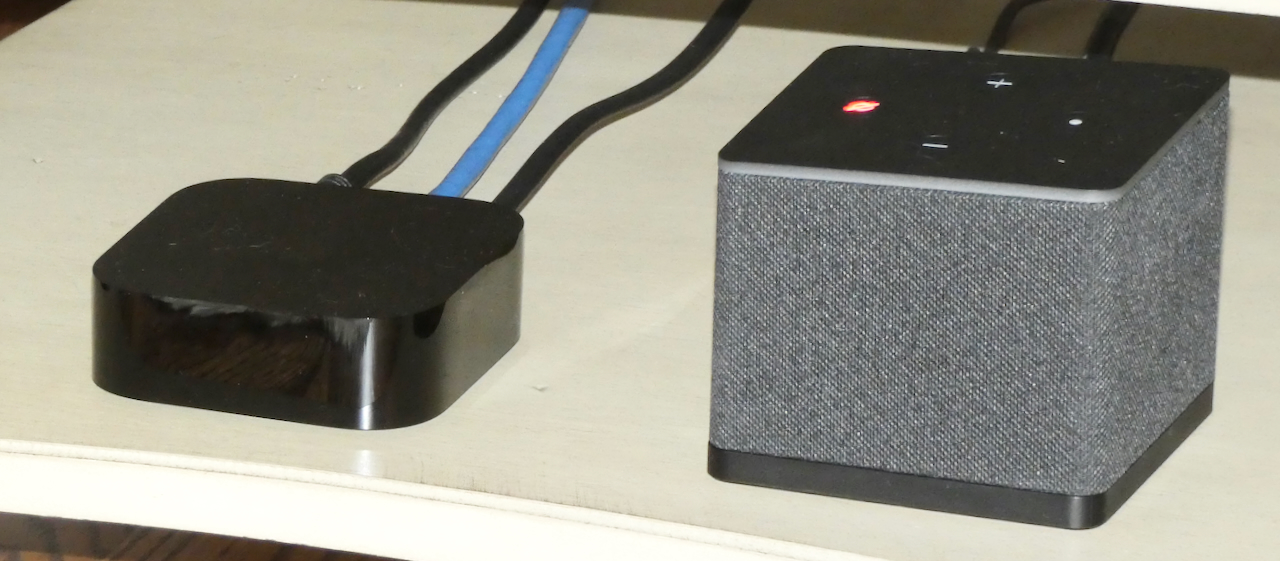
Apple TV. -Amazon Fire Cube

This history on viewing video was a result of being asked to review a Google Fire device and compare it to the Apple TV device. As you might guess from the picture I will get to a review of the Fire Cube and Apple TV but it is at the end of the article.  If you are looking for a very technical review this won’t be it. However, if you are looking for a review by someone who uses both and has no iron in the fire, this might be it.  We have both hooked up to our LG television and we regularly switch  back and forth.

I have been watching television since I was seven or eight years old. I feel fortunate that television could not compete with the outdoors when I was growing up and my high school years were nearly devoid of television. I went to a military boarding school starting in the fall of 1963. Our television was limited to fifteen minutes after study hall in the evenings.  I never got hooked. We did end up with three children born while we were living on the farm and they were fond of Sesame Street among other shows. Television there was limited to two channels which we picked up with an antennae. It sort of matched the newspaper, the Daily Gleaner, that we received in the mail the day after it was printed.  We listened to a lot of CBC radio.

In the snowy winter of 1984, we had enough cash to splurge on a Panasonic VCR. Even though the Betamax – VHS war had yet to be settled, I bet on VHS.  After all I was in the technology world selling Apple computers.  We paid just over $700 Canadian for the VCR.  It was easy enough for me to pick up some movies on the way home and bring them back in a day or two.

Five years later after we have lived in Halifax, Nova Scotia, and Columbia, Maryland, we moved to the side of a mountain in Roanoke, Virginia.  There we had easy access to a Blockbuster Video store among others.

By the mid-nineties changes were afoot, as DVDs took over from VCRs rather quickly.  The only reason to keep your VCR was for dance recital tapes. Recordable one session DVDs were incredibly expensive when they first came out sometimes costing over $20 each but they easily beat the LaserDisk competition. By the end of the decade (1999) Apple had iMovie software out for creating great personal movies. By early 2001 Apple released iDVD for authoring DVRs using movies created in iMovie. It had limitations but it was a great tool and I made a number of DVDs until the product was discontinued in 2011.

When we moved into our new house at the coast in 2006, it was the peak of the tower babel for video. We had a Sony-DVD-CD player and a Sony VCR hooked to a whole house system of speakers in each room.  Each room had port where you could plug an iPod. We might have used one of the original iPods that I won at Apple on the system once or twice but that was it.  The times were a changing.  Our system was probably out of date before we finished paying for it.  As people started streaming media on the Internet, interest in DVDs and even creating them dwindled. Sometime in late 2010, Apple introduced the last iDVD software with its iLife series. Steve Jobs had lost interest in it so  iDVD was part of iLife but not promoted.

Not long after that we got our first Roku and started experimenting with streaming alongside our cable Television.  Prime Video came along in 2011 but the first series to really get us to bite on streaming was Netflix’s House of Cards in early 2013.

In 2018, we did a refresh of our household video equipment.  The driving force was our twelve-year-old cable box needed almost daily rebooting, We took the opportunity to send the dead Sony CD-ROM/DVD player and dead Sony VCR to electronics recycling,  We added a Sony streaming box with a Blu-ray Disk player.  I also rewired everything so I could get rid of the extra HDMI cables that showed on the mantel.  It made my wife very happy. By rewiring and adding an HDMI switch I could add a Chromecast to our Roku and Sony box. The biggest challenge was getting our new cable modem to work. It was quite the saga We also took the opportunity to add a streaming only television to a newly constructed upstairs room

I just checked Amazon.  After the installation of the new BlueRay DVD player, I bought exactly one BlueRay movie, Second Hand Lions.

While this was all going on, I started making YouTube videos. I made my first ones in 2009. While I haven’t uploaded a new one since 2020, I have 153 videos that I made on my YouTube Channel. I started doing videos on Google Photos eleven years ago in 2013.

In 2021 when we moved to North Carolina’s Piedmont, we signed up for a fiber connection with the local telephone Coop.  While I work for a company that builds fiber networks, we don’t have one in North Carolina.  We never even hooked up the available cable outside our house.  A year after moving here, I was comfortable enough to write an article, How to be a sensible streamer.

So here we are forty years after buying that first VCR.  We are on our second Fire Cube. After two years the first one got cranky as electronic sometimes will do. We bought a new one in February 2023 and it has been great. Our company is considering a promo where we give away an Apple TV streaming box with new signups. I offered to buy and test The Apple TV since I have more experience streaming with fiber than anyone else in the office.

First off they both boxes offer all the bells and whistles that you need to get high quality streaming. Their user interfaces  and how some things work are the main differences,

It you are used to the Apple ecosystem and have either an iPad, iPhone or a Mac, you will likely be very comfortable with the Apple TV.  The controller which has a tiny touchpad takes some time to get used to using but it is something most people master in a few minutes.  As a bonus Siri is really good at turning on closed captions and finding apps.  The Apple TV user interface is more pleasing that Amazon’s. Amazon uses its interface to try to get you to buy content. I don’t get the feeling that Apple is pushing me to buy a particular show.  I also like how Apple TV keeps track of what I have been watching even if I was watching Britbox on FireTV.  Every app, Britbox, Acorn, Disney, Prime Video, or Netflix looks better and more consistent on Apple TV.

If you are not an Apple user, the authentication required to download an app might be something new to you.  When you install a new app on your Apple TV, you will be asked to authenticate with your Apple ID password (it is easy to create if you don’t have one).   Because I had an iPad in the room with the Apple TV, it sent a notice to the iPad which verified who I was with facial recognition. I still had to confirm the download by doing a double click on an iPad button.  Then and only then can you sign into the service.

Fire TV does not ask for the authentication before downloading, you move directly to entering you password for the service.

The only quirks we have noticed are the FireTV regularly hangs on trying to load Britbox.  On the Apple TV side, we have been unable to find our local news to stream. Currently we just switch over to FireTV and for some reason local live TV is available there.
One question which might come up. We have our Apple TV hooked up with Ethernet but we are using WiFi for the FireTV Cube. First the television is hooked up by Ethernet. Second the Fire Cube has a limited Ethernet connection which is slower than wireless. The Apple TV has a 1 Gb Ethernet port. From what I have been able to learn that makes no difference. Most reports state that streaming only requires 100 Mbps.

Connections for the Future

Internet Connectivity, August 1998

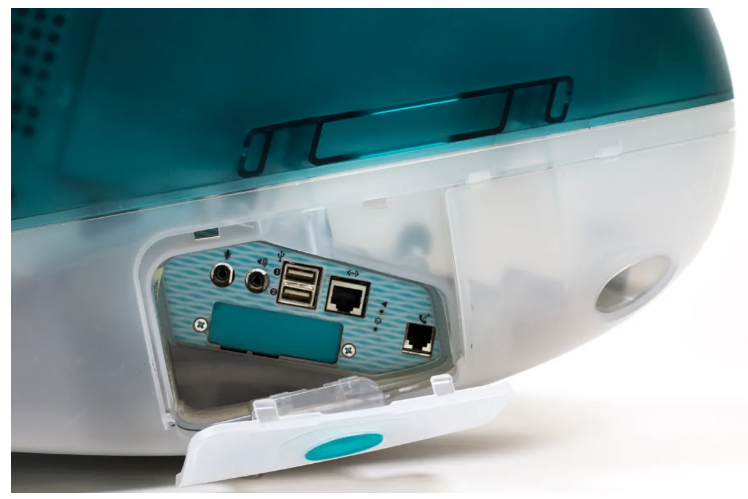
Things have changed a lot since the original iMac® introduced “simple” Internet connections. Most of us in 1998 ending up using the modem to get to the Internet and not the Ethernet port. Connecting to the Internet was often not as easy or simple as the marketing brochures promised. Fortunately, technology changes and those changes have made it much easier to connect and stay connected to today’s Internet.

WideOpen Blacksburg offers symmetric fiber Internet connectivity to its customers. Almost everyone living in Blacksburg today has a home Internet connection. If you do not have our fiber, maybe you are wondering why our symmetric fiber is such a big deal?

For lots of good reasons, fiber is often called the gold standard for home Internet connections. Technology adoption moves in stages. Most people are familiar with the technology adoption curve. We all know about the innovators and early adopters but just where do fiber to the home users fit in that curve?

We will get that answer but first let’s get some basic understanding of how to evaluate home Internet connections by looking at concepts that are familiar to everyone. When the first Interstate highways were built in the fifties they were a huge technological advance over two lane highways.

The one thing that was quickly discovered about Interstate highways is that the communities that had immediate access prospered. Also businesses and people who quickly figured out how to take advantage of them did exceptionally well. Interstate highways had the capacity to move huge amounts of traffic much more easily than two-lane roads which were often clogged with slow traffic.

Fiber is an even more capable technological advance than Interstate highways. While you have to build more lanes to increase the capacity of Interstate highways, with fiber you increase capacity by changing the electronics at the ends. It would be like putting a bigger entrance and a larger exit on a stretch of highway and magically more lanes appearing in the road between them. Fiber is technologically advanced because it moves information with light.

Fiber is also proven technology. Fiber has been the Internet backbone for decades. TAT-8, a transatlantic fiber optic cable, was built in 1988 and linked the United Kingdom, France and the US. Fiber is also a well-tested commercial technology which has become a cost effective way to deliver Internet connectivity to homes. WideOpen was involved in the design and construction of the nDanville fiber network in Danville, Virginia. It is the fiber network which has become a cornerstone in Danville’s revitalization. Amazingly, Danville’s fiber network has been in operation since 2008. Since FTTH (fiber to the home) was being offered in 2008, we are well past the early adopter phase.

Fiber is superior technology because it moves information faster. The best way of thinking about the speed of fiber is that commercially available technology already exists for 10 Gbps residential connections and for 100 Gbps business connections. It is unlikely that there are many people who need connections that fast today but it does mean the fiber that we build to your house now will be more than capable of meeting your full connectivity needs today and far in the future.

Looking at the big picture of Internet connectivity from an individual homeowner’s perspective is easy if you have recently gotten a fiber connection like I did. When we moved to Mocksville, North Carolina, eighteen months ago, we evaluated a number of things from the perspective of how will it meet our needs five or even ten years from now? Our Internet connectivity was one of our prime concerns.

I have been working for WideOpen for eleven years, and like my previous years in technology, it has been as a remote worker with a home office and an Internet connection. It did not take a lot of math to figure out that the coax cable technology we had been using was not improving fast enough to meet my business and personal needs. Beyond work, I take thousands of photographs a year and store some big files in the cloud. I am not unusual in today’s world.

Almost nine years ago in 2013, when I wrote an article, “Just How Bad Is Your Internet Connection,” our cable connection delivered 32.24 Mbps down and 5.49 Mbps up. When we moved in Feb. 2021, we were getting 484 down and 24 Mbps up. While it looks fast (and the download speed is), what it really shows is that our download speed was fifteen times what it had been nine years earlier but our upload speed had NOT even gotten to five times what it was.

It is obvious to heavier users of the “Cloud,” that coax speeds have focused on downloads and not successfully pushed ahead with faster upload speeds that we need. In their defense, the technology to increase upload speeds with coax cables is difficult and sometimes requires a lot of tuning. As is often the case with a technology like coax that is pushing its limits, users’ needs are growing faster in different directions (uploads) than coax cable technology can easily deliver today. The recording industry tried a number of things before iTunes® and similar services driven by new more scalable technology won the day.

As many people learned during the pandemic, upload speeds matter and if you are sharing a connection with people in your own household and your household is also on shared bandwidth with your neighborhood instead of using fiber which provides more individual bandwidth, you can get frustrated. Work does not get completed on time, video conferences don’t go as planned and files, including homework ones might not get where they need to as quickly as possible. That is why we went with fiber and the coax cables for our house have never been connected.

When deciding to jump from one technology to another one, the questions are pretty simple. Is the new technology proven technology? Is it better technology? Is it reasonably priced? Will it provide my family with a better experience and will it have the capability to grow with our needs?

I answered all of those questions in the affirmative so I went with fiber. While I am living in rural Davie County, North Carolina, across the road from a twenty acre soybean field, I have Gig fiber from a telephone cooperative now named Zirrus. I could have chosen any of at least three other technologies. From the day the Zirrus technician showed up on time even through getting a new Calix Gigasphere router, every experience with the company and the service has only confirmed that we made the right decision to go with fiber.

On July 31, our power flickered out for a couple of minutes during a thunderstorm. As the Internet and our WiFi came back up a minute or so later, I was reminded of all the similar times that I had spent staring at cable modem lights waiting for all the signals to sync so the Internet could return.

If you decide to not to go with fiber, remember cable companies are still working to commercialize the technology that will allow them to theoretically compete with the fastest upload speeds that we are offering today to our customers in Blacksburg. Are you willing to wait the years that it will take them to get DOCSIS (Data Over Cable Service Interface Specifications) 4.0 finalized, debugged and deployed in the field? You will also be gambling on the cost that they will eventually charge you.

Fiber is a proven technology, now available at a competitive price. To quote the Electronic Frontier Foundation, “Meanwhile, fiber systems have at least a 10,000 (yes ten…thousand) fold advantage over cable systems in terms of raw bandwidth.” What that means for an individual homeowner is that there is plenty of proven technology already in place to make your fiber connection even better next year and five or ten years down the road.

I mentioned fiber is the “gold standard”of Internet connectivity. With ever more photos and videos being produced in your home along with all the other digital services that are rapidly becoming essential to our lives why wouldn’t you go for the gold and snatch some symmetrical fiber upload speeds. Look for fiber from a local company or a community owned fiber company, both are likely committed to providing great service to their neighbors?

The iMac with its USB ports started a revolution. Today none of us connect things to our computers with serial ports. Those of us who can use fiber should not be connecting to the Internet with coax cables. Someday maybe not too far in the future everyone will connect with fiber.

iMac® and iTunes® are registered trademarks of Apple Inc.

My list of tech sins, can you add to it?

My list of tech sins, can you add to it?  What makes you want to push back from your desk and forget it for a while?

Read my article at ReadWrite by clicking the link or the picture. http://ow.ly/mU3Eq

Sometimes there is only one solution, grab the fishing gear and head out.  Here’s my new fishing gear that I am preparing to use in the surf as soon as the weather, wind, and waves cooperate.

The garden also is often good place to lose those tech frustrations.  Those are buckets of Southern Outer Banks tomatoes on the left in the background.

Fishing gear banishes tech headaches

The siren call of new technology

Marked Channel to the White Oak River


Figuring out the right path to take in the world of technology is not as easy as following this marked channel to the river.

Right now is the perfect storm for technology users and addicts.  Apple has announced a new operating system and hardware for the holiday season.  Microsoft has also come running to the party with Windows 7.  Intel has helped with its I5 and I7 processors.

Best Buy is even offering a PC Makeover for $1199.99.  It includes desktop, laptop, and netbook with wireless network and setup for one price.

It is hard to believe that you could get three computers for that price, but I suspect you get what you pay for.  I have had great luck with my HP hardware, but I know others who have not.

Of course Apple barely offers one of their new iMacs for the price of $1199.

Having lived and worked in the technology industry most of my life since 1982, the natural response is to want to get my hands on some of this new stuff.

My newest computer is a HP laptop that has Vista and is two years old.  My newest Mac is a three and one half years old white MacBook running Snow Leopard.  My desktop G5 Mac was a previous year’s model when I bought it in December 2004.

Surprisingly I have gotten along just fine.  I did add Snow Leopard recently, but it only cost $29.  I do have a 2004 vintage Dell Dimension that I just upgraded to the latest Ubuntu.  It is likely my fastest system.

I suspect that I am getting to the point of upgrading to a new Mac. I have taken the hard drive size about as far as I want to go.  I certainly need more memory in my Mac desktop unit if for no other reason than my iPhoto libraries seem to get bigger even when I start new ones.  However, I am a little reluctant to put a lot more money in a system that is getting a little long in the tooth.

Whatever I do, I am in no rush.  My wife actually needs a system before I do since her Mac laptop is almost seven years old.

How did I get beyond the need to upgrade whenever something new is announced?  The simple answer is pretty easy, money.  While you are working for a computer manufacturer new systems are a status symbol and rarely cost your wallet anything.

When you are out on your own, a new system has to be justified by the results that it will deliver.  In my case, I doubt that a new system will bring me greater productivity.  It will allow me to standardize my laptop and desktop operating systems.

While that is not a big deal right now, my guess is that a year or two from now, it will be a big deal.

The other thing that has helped me resist all this new technology is that I have yet to see the killer application which requires new technology. Internet based applications have brought me more functionality than computer based ones.

I continue to be able to do my computing tasks on whatever computer is put in front of me.  That includes the ancient Windows XP Dells that are at our real estate office.  While I would likely not do photo work or website work on them unless I was desperate, my other work could survive.

Certainly if my main desktop is a Mac that is likely six years old technologically, I would question the need for new hardware for any other reason than mechanical reliability.

Actually if I could get better bandwidth for my Internet connection I would trade it for at least another year on my old hardware.

So how do you feel about that choice?  Would you give up buying new hardware for a year, if you could get faster Internet?

While I have a good solid cable connection, I work with enough large files that I could use some extra bandwidth if it were available here on the Crystal Coast.  I would like to see Internet sites almost jump into my lap.

When I go to work at our office where we have DSL, I almost die while waiting for pages to load.

In my situation new hardware would be nice, but more Internet speed would speed my work and be even nicer.

Of course I would trade both faster Internet and new computers for another day of great fishing like we had recently out in the ocean off of Bogue Inlet.

River and mind fog

River FogToday, December 29, the air temperatures on North Carolina’s Crystal Coast are so warm that fog is forming over some of the rivers.

Sometimes I think we live in a fog of technology. While the river fog will go away when the weather changes, I think we have to work at losing the technology fog.

Almost every home has a computer, and lots of people depend on email to do their jobs and to stay in touch with friends.

Most people, not including my wife, use a cell phone with a camera phone.

Wireless networks are everywhere, and few homes are without an all in one printer/scanner/copier.

Then there are the digital cameras and movie cameras. We have HD televisions with HDMI inputs so I suppose the next thing is a Blue Ray or HD DVD.

We were in Best Buy the other day and actually stopped for a couple of minutes to look at a comparison between Blue Ray and regular DVD. I will admit to the Blue Ray images being stunning.

What I can do with the technology that we already have in the home and that which is accessible on the web like geotagging and Google Earth is astonishing.

While I cannot yet send an image that rivals Blue Ray, I can send some very stunning images.

Someone sent me some fantastic images that are going around the web. While my images might not be quite in the same class, they aren’t bad. I think a lot of people can say that these days.

We have such good tools today, that anyone can be an expert, by capturing an image, balancing the color a little, and easily sending it by email or MMS.

Not only can you send it to someone, but likely they will be able to get it even if they are traveling. There is so much content, some of it very high quality, and delivered very quickly that we are in an information fog.

There are people who have trouble processing it all. And above all it is harder and harder to get information to stand out.
It is easy to lose track of what you want to focus on because there is so much information. Sometimes it is more than you want or need to know.

There are times you have to back away from the technology and what it delivers until you can see through the fog.

Too much information can take away your decision making ability. Maybe I am old school, but once in a while you have to go with a gut feeling and not let yourself get overwhelmed with instantaneous high tech data.  Once in a while, all this high tech stuff lets you turn something not so appealing into something not exactly as good as it looks.

Maybe it helps to go back to a basic computer that does not overwhelm you with its possibilities. I am trying that with a new Zonbu computer.

Lost in the digital chaff

Clyde Phillips Shrimp BoatIt is so easy to take digital pictures that they have little intrinsic value these days. Anyone can also print them as high quality snapshots.

We have become so adept at capturing images that no one takes the time to appreciate good photography. Few actually make the effort to get the image onto to paper.

Some people never even get them off their cameras, Then there are those who tote the images around on their iPods, iPhotos, or other digital devices.

Of those who do print pictures, almost none take the time to try to print something other than a snapshot. Those who do try to print and sell large scale photos often find people who want the image but not the print.

I find it hard to even cover the costs of the ink for my Epson 4000 printer when I do large scale images.

If there are jobs harder than real estate, they might be selling digital prints for more than $24.95 or convincing people to pay attention to the real issues of the day.

As technology makes us more capable, it might also be making us less appreciative of  real life and some really great photos.

Lots of important things seem to be lost in the chaff of the modern world.

Maybe some of the pictures will at least live on as long as the servers keep the Internet humming.

The anonymity of technology

Raymond's GutWe can’t live without technology.  That’s no secret.

What is interesting is how technology has become something to hide behind.

People have online identities that are virtually untraceable.  It is not very hard to have an anonymous email account.  There are people who don’t even have the courage to have that anonymous account.

People also say things online that they would never say in person.  It is easy to write a note if you know no one can touch you. It is a whole different story if you are in an office and have to make the comment in person.

If talk is cheap, email is cheaper, and anonymous comments are the cheapest commodity in the land.

I have a number of blogs, one very popular one called Applepeels.  I have to moderate the comments there, because it often touches a raw nerve with some Apple people. Once in a while they write things in response to my posts that aren’t in the spirit of reasonable discourse to put it mildly.

As employees of a Fortune 500 company, you would expect that the Apple folks could provide some real arguments if I am off base.  Those real debates never happen with Apple people.

Unfortunately Apple is the North Korea of technology companies.  The one thing these people fear more than anything is losing their jobs if they speak in public forums.

They afraid to use their real identities.  I even had one Apple person make a comment, and send me a note asking for it to be removed because he thought he might have given away his identity.

Of course I removed it.  More troubling are the Apple people who have a hard time handling the truth.  Today I got a comment from one of them.  He has sent comments before and usually has the same thing to say.

All he can do is launch into personal attacks. It is course the sign of a very tiny mind.

His anonymous rants also highlight his cowardice since he never uses his real name or email.  I guess he doesn’t have the intelligence to set up an anonymous email account.

He hides behind the anonymity I allow.   Still technology keeps me one up and allows me to monitor the comments and not publish the ones that I don’t like.  I don’t force authentication because a few Apple folks will make intelligent comments, and I don’t want them to get fired.

In another time, I might have been writing opinion pieces and my cowardly antagonist would have sending anonymous poison pen letters.

While technology makes it easier to hide, it also makes it as simple as the click of the mouse to remove comments from the small minded folks who cannot stand the light of day.

Technology has just given us different tools with which to work.   On the one hand it is easier to control the idiots and on the other hand they can still be pests.

The new tools will probably always keep those of us who use them ahead of those who try to abuse them.