When I was about three in 1952, mother and I moved into a new house mother had built in Lewisville on Styers Street next door to my great grandmother, Millie Ann Crews Styers. She was ninety-nine the spring of 1952 when we moved into our new house. While she was still alive a the year and one half after we moved, one of my chores was to run over to her little house to see if she was still sitting upright in her rocking chair by her wood-stove and reading the newspaper.
Our new house had a beauty shop attached and a breezeway. The breezeway eventually got turned into my bedroom. There were no ghostly things in our Lewisville house unless you count the scary smell of the permanent solutions mother administered to ladies in the beauty shop adjacent to my bedroom. It was her high margin item so she was happy to do as many as possible in spite of the toxic fumes.
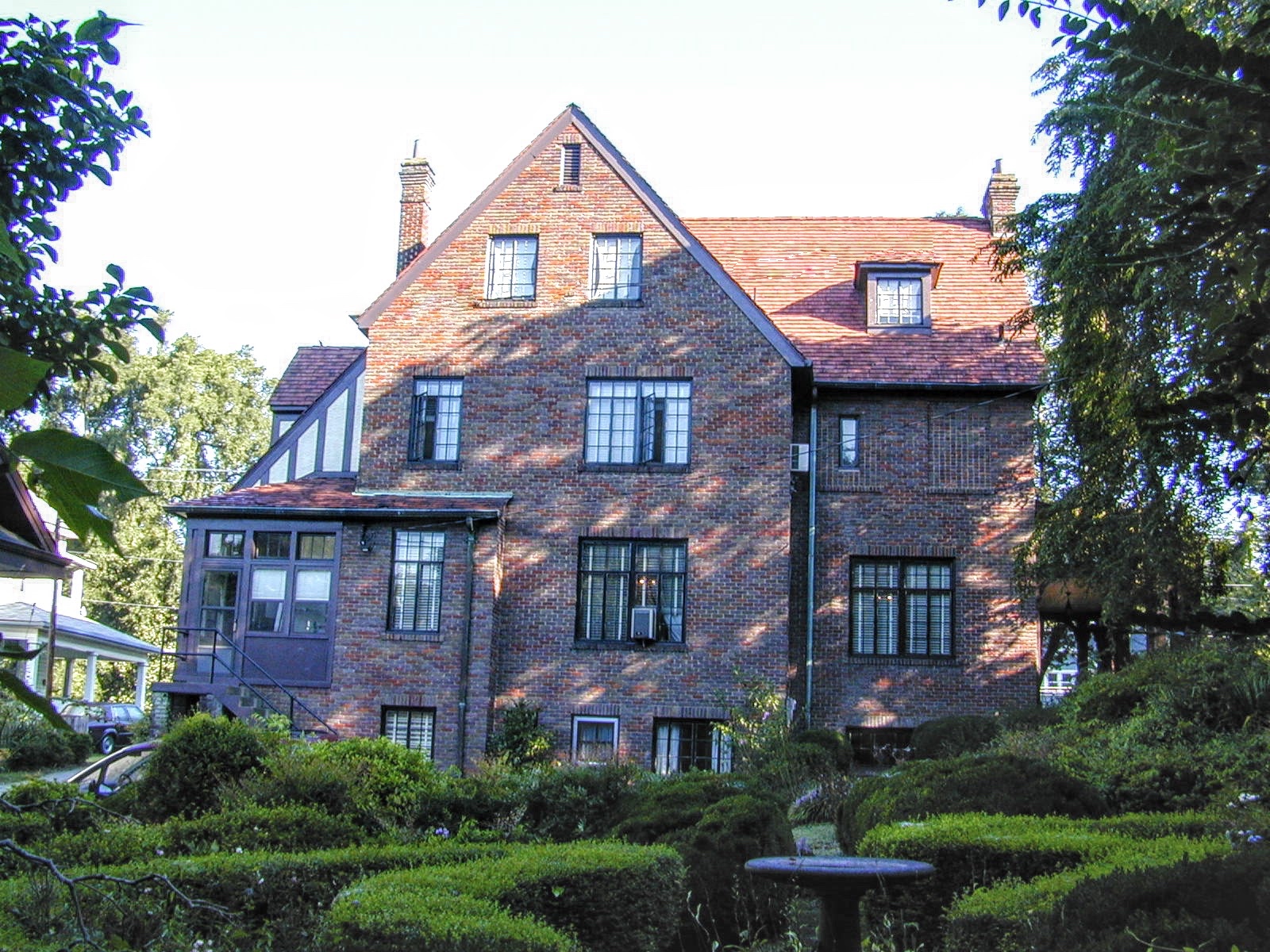
Then the fall of 1963, my mother moved back to 347 West Pine Street (pictured above) in Mount Airy, North Carolina. My first Thanksgiving trip home from boarding school was to that house by way of a Piedmont Airlines puddle-jumper. I was attending McCallie, a Presbyterian military school in Chattanooga, Tennessee. On that first flight home, I still remember they didn’t turn the airplane engines off when did a touch and go in Asheville. They just lowered the steps that came from the tail. Passengers exited, and we continued our flight. It was my first and only flight to the Winston-Salem airport. After that they all started and ended in Greensboro.
Since I left for boarding school, mybedroom had moved from our non-spooky house in Lewisville about thirty-eight miles away to the huge to me Pine Street house which certainly had the potential for spookiness. My dad had been in a house at that location since around the turn of the century. My mom lived there from the mid-twenties until just before I was born in 1949 in Charlotte, North Carolina. For many years, she ran a beauty shop on Main St. in Mount Airy, near Snappy Lunch, just walking distance from the Pine Street house.
The house also had a lot of history, some of it gruesome including a fire that destroyed most of the original house. Lots of history is certainly helpfully when looking for ghosts. Many of stories that the house’s four walls could tell never got explained to me before everyone who could shed light on the mysteries died.
Some the questions that I wanted answered never got addressed because no one ever wanted to talk about them. There were things that I did not even know to ask when I was growing up.
The house at 347 West Pine Street is an imposing home with bedrooms on three floors and noisy old hot boiler that made lots of strange sounds in the night. There was so much water pressure in the showers, that I thought it might take my skin off. It was something of a dark, magic house likely with secret passages. It was a good place to let your imagination run wild especially if you are a country boy more comfortable in the woods than in a big fancy house. By the time, I got old enough to care about the secrets of the house, I was on a mission to get away from the house and Mount Airy. That mission took me to Canada by the time I was twenty-two.
Upstairs above the floor with the bedrooms was a full stick-framed attic complete with walnut banisters. If ever there was an area that could house ghosts along with mysterious locked steamer trunks, this attic was it. The house even had a laundry chute which went all the way to the basement where there was a bedroom and bathroom for a maid. The kitchen, dining room, and great room were on the second floor along with the bedroom my father was reduced to using because of a stroke. I ended with the master bedroom and Mertha, the maid, took to calling me Mister David.
It did not take me long to figure out that the history I did not know about was powerful in the minds of others. My Aunt Molly when she visited would not stay in the guest bedroom. She always slept in one of the twin beds in my mother’s bedroom. Eventually I heard the story about my father’s first wife’s attempted suicide. My mother, who at the time was nursing my grandmother Sobotta, found my father’s first wife hanging from the walnut railing around the top of the stairs. She saved her but the one traumatic story that I heard about was born. I know there were others but I never heard them.
I was never afraid of the house but there were some strange things that made you wonder like how cool the hallway always felt between my bedroom and the stairs to the attic. Of course there were strange noises but it was an old house. Then in 1974 after my dad had died, my wife and I were staying in my bedroom after coming back from our place in Canada. It was our first night in the house as a married couple.
We were going to bed and all of sudden the two electrical panels started popping. It was like someone was running between the two floors using the steep back stairs flipping the ancient circuit breakers off and on except the lights didn’t go off and on. The circuit breakers, the first ever for Surry County, were not easy to move from one position to the other. They also made a loud noise. My mother was sound asleep in her bedroom. She always slept with a baseball bat by her bed but said the ghost had never bothered her. I thought someone had broken into the house. I took my Remington semi-automatic shotgun from my gun cabinet and checked the whole house. All doors were locked and no windows had been breached. Things quieted down as soon as I left my bedroom. To this day, I have never solved the riddle of the noise that night. I came to believe the ghost was welcoming my wife to the old house.
My mother deeded the house to my wife and me in 2000 when she moved in with us after her friend, RJ Berrier, a local newsman, died. He had taken over my bedroom for the last fifteen years so mother could still live there. If possible the house got even spookier with no live souls in it. Mother died in the spring of 2004. I often said that if there was a ghost in the house, it would have to deal with the life force of my mother when she entered the realm of spirits. My money was always on my mother winning any battle, even one of the spirits.
After her death, we were faced with cleaning out one hundred years of stuff that had accumulated in the Pine Street house. It took us a few years and we often spent weekends working on the house. One weekend my wife was working in a hall closet on the main floor. She looked towards the foyer and saw something translucent and triangular shaped floating from the stairs to the dining room. We are pretty grounded people but we could never come up with an explanation that made any sense. It was probably my imagination, but the upstairs hallway felt particularly cold that day.
This might prove I am crazy but not long after that I decided that the blinds in the attic had to go. I ripped them down and threw open the windows. It was not long after that when I noticed how warm the upstairs hallway felt. I smiled and thought to myself that my mother’s spirit had prevailed and the restless ghost had been driven out once I opened the windows and made sure the attic got plenty of sunshine.
Even after that I was the only one willing to spend the night in the house alone. By that time the guns were long gone but so was the evil ghost.
After we sold the house there were rumors guests in the house, now a bed and breakfast, seeing an ephemeral lady in a blue dress leaning over the bed in the bedrooms and of a jar of honey that moved from one shelf in the kitchen to the counter without human help. I probably can guess the name of the new ghost living there now.




 Our technological infirmity