Food, Post Pandemic

A feast that did not take a lot of cooking

It has been years since I spent significant time in the big cities so I cannot vouch for the state of restaurants outside the rural world of North Carolina’s Piedmont. We have some good restaurants here, but with few exceptions, most can be faulted on something, service, price, or even the quality of the food.

Like many families since the pandemic, we have cut back our in-restaurant eating drastically. We have been disappointed so many times that we often choose to not go back.

Our home-cooked meals have for the last few decades been exceptional. We were fortunate enough to eat wonderful fish like red drum and flounder fresh from the waters of the White Oak River where we lived from 2006-2021. The fish I caught was often supplemented with vegetables from our own garden.

We know what good food is. We understand what it looks like and how it tastes. 

For a decade we had a cattle farm and raised most of our own food. Our kids grew up on unpasteurized Guernsey milk that I got from Rosie, our cow, every morning. Our freezer was full of beef. We had our own chickens which provided us with eggs even when they had only snow for their water.

We had wild red raspberries that grew along the rock piles by our fields. There were plenty of blueberries to be had in the fall and a wonderful strawberry u-pick near us. There were still a few wild strawberries around in those days. We harvested Chantelle mushrooms from our woods and fiddlehead greens from our marshes.  My wife made butter, yogurt, and lots of homemade oatmeal bread.

Times have changed, we left our farm in 1984. We are a lot older but we still love good food. We still garden but it is only supplemental to what we buy from farmers, farmers’ markets and grocery stores. We also have relatives that garden. In  2024, I grew enough tomatoes to sell a few pounds, pay for seeds/plants and still have plenty to enjoy and share with friends.

We have all the tools we need to cook well from a sous vide stick to a gas grill, a wood pellet smoker, an Instapot, and an induction stove.  The challenge is that the older you get, the less time you want to spend cooking and cleaning up. If you don’t like to cook and are not excited by going out, you have to get creative.

We use our cooking energy sparingly, often working to cook something that will last a few days. If I smoke something, we might eat off it for four or five days or until it ends up in the soup pot. A pot of beans or crowder peas will last at least as long. When I bake sourdough bread which I have been doing for over fifty years, it is usually three or four pounds of bread. We always freeze most of what I bake.

Even so there comes a time when the spirit to cook needs a rest. We have learned very little take out food even the good stuff travels well. Pizza needs to come from a place as close as possible, certainly not more than ten minutes away and it is still just pizza. Burgers are better eaten in the parking lot.

Chinese and Mexican food just don’t travel well. Even rotisserie chicken is a gamble and often too salty. The one food we have found that travels well is barbecue or smoked meat. We are lucky to live in the North Carolina where the real wood smoked stuff is plentiful.

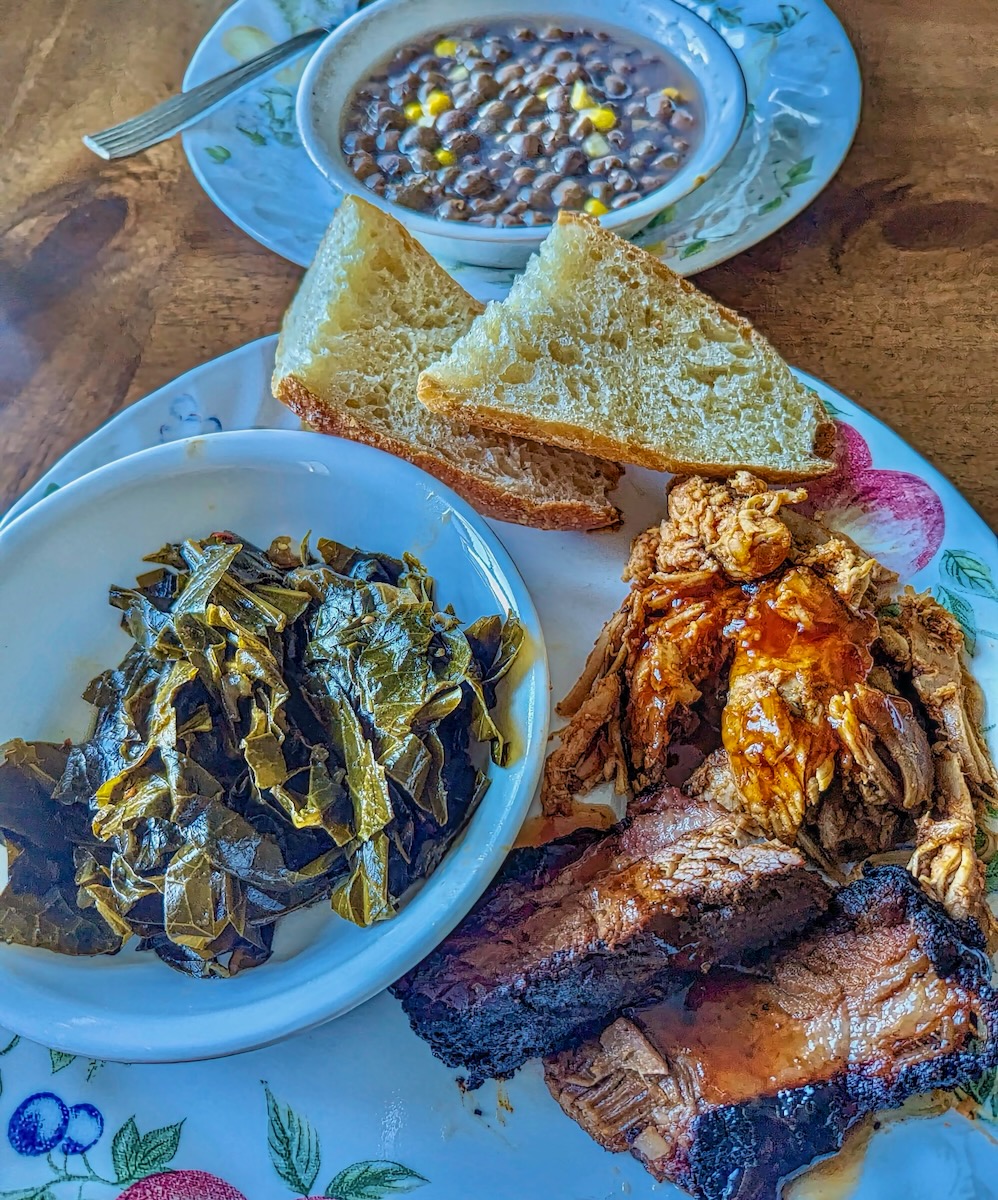
A recent meal had crowder peas that were given to us by relatives and cooked by my wife. The brisket and smoked-pulled chicken, and collards came from Honky Tonk Smokehouse in Winston-Salem, NC. Honky Tonk is one of the hidden gems in the Triad area. The baguette was from Camino Bakery in Winston-Salem. It was a delicious takeout meal supplemented by some of our cooking and bread from a good local bakery. It is the way we have learned to give ourselves a cooking break post pandemic – find something that travels well and build a meal around it.

Haying Stays In Your Blood

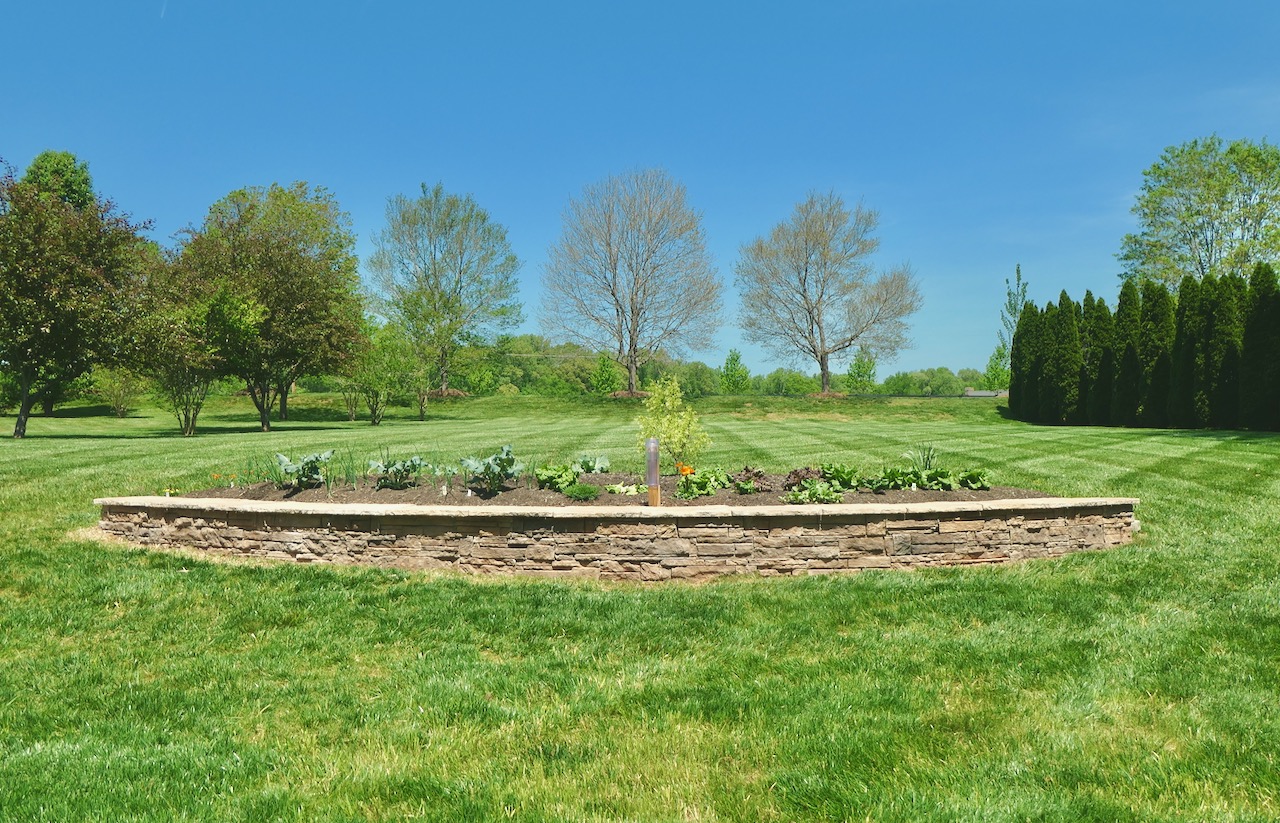
Hayfield
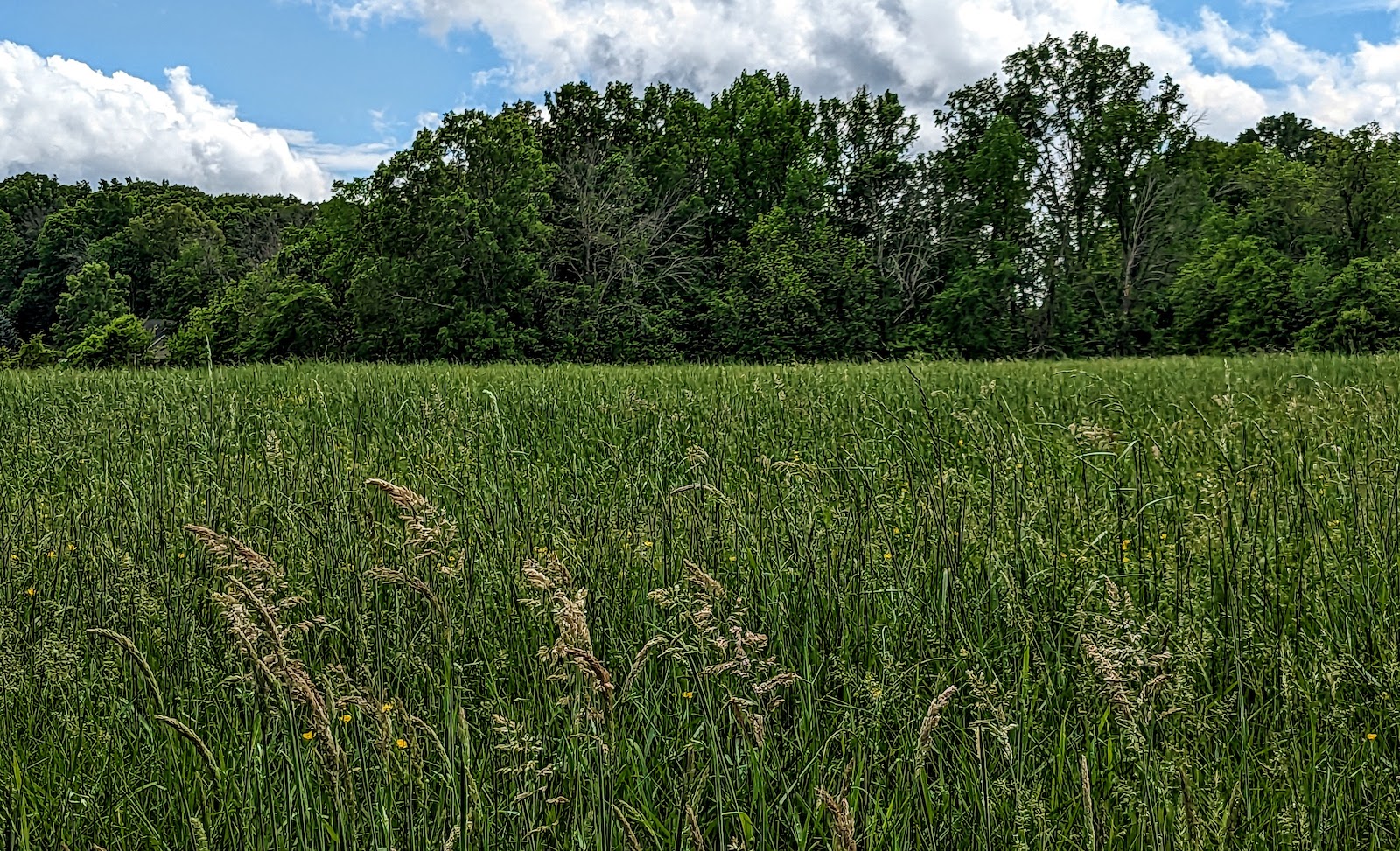
Hayfield Near Farmington, North Carolina, April 22, 2023

Of the over fifty years that I have worked since I graduated college, only a little over a decade was spent farming. I did grow up in North Carolina in the fifties and sixties when everyone we knew had gardens, some had chickens, and even a few had a milk cow. It was not unusual to see hog killings in the fall and to receive some fresh country sausage as a gift.

The land was what gave life to us all, and where we go when life is gone. The land was at the center of all, and how could understand anything without first being on the land?

The Road to My Country

I felt that I had to go back to land. I was a little shellshocked after the sixties, four years in a military school and another four in the funny lights of Cambridge. I bought an old farm in Nova Scotia the summer that I graduated from Harvard. The skies in Nova Scotia were like the ones I remembered in my youth.
The urge to work the soil was strong even though I did not grow up on a farm. The immersion course we got in farming was intense but somehow we thrived for over a decade. We might have stayed on the farm if interest rates had not hit twenty percent in the early eighties and there were better local opportunities for our children. We dispersed our cattle in the fall of 1982 and sold the farm three years later after I spent a couple of years working in the city.

Farming has stayed with me all these years, even during my years in technology. It was only a year or two ago when I was driving from our home at the coast through the Virginia Mountains to headquarters when I saw a field of grass down. It was well on its way to being ready to be becoming hay. I had to stop, roll down the windows and enjoy the smells and remember all the good memories.
It was not unusual for our “team,” Harvey and I to put up sixty tons of hay in a good day. Harvey was in his sixties when I bought his farm which he had farmed with horses. We sometimes cut hay with two nine-foot mower conditioners. The big fields Harvey would rake with our twenty-one foot rake and the small fields with a ten-foot rake. I would bale with the big Vermeer baler and one of the 105 HP International tractors.
You could start cutting hay in the morning while the dew was still on it. Raking the hay before noon was okay, but I rarely started baling the hay until the afternoon. Large windrows that the tractor could barely straddle helped me churn out a nearly 2,000 pound bale every five to ten minutes depending on how much turning had to be done. When the hay was rolled up, we left it in the field until we had time to haul it back to the farm in the fall. Our hay farm was a couple of miles from where we kept the cows. We also cut hay all around the area wherever we could strike a deal with the owners. Before our children came, my wife even used to rake hay.

On a good day, making hay was something that gave you a feeling of accomplishment. A good crop of hay started with clearing the field of brush and rocks, applying lime, then working the ground, planting the grass seed in an oat cover crop, and sometimes fertilizing the fields in the spring. It doesn’t sound like much but it was lots of back-breaking work and sweat.

There were bad days making hay. Our mowers in those days had cutter bars with blades riveted on them. If you hit a rock and broke a blade, you had to stop and replace it. There are few things dirtier that replacing a blade on a mower conditioner cutter bar that has been collecting bugs, seeds, and dust for ten acres on its platform. If you didn’t itch from something that got on you, just remembering all the bugs would make you itch. The worst thing is when the equipment broke when you had hay ready to bale and wet weather was on the way. You try to forget those days. Getting hay that was ready to be baled dry after it was rained on is not a lot of fun.

There were some great memories from those haying seasons. Sometimes I would stop for lunch and my wife and the kids would show up with a real lunch. While my wife and I ate lunch, the kids would pick red raspberries on the rock piles. There were no snakes so it was as safe as it could be. Few of the raspberries they picked made it to us but they were so plentiful you could pick all that you wanted in a few minutes. The hay farm was high on a ridge and you could see for miles. There were no places any nicer on a summer day in the hardwood hills of New Brunswick.

It should be no surprise that I stopped recently to look at a field of grass (pictured above) that needed cutting. It is the last week of April here in North Carolina. There will be no thoughts other than my dreams of cutting hay in New Brunswick, Canada for another couple of months.
If I am lucky in the next two to three weeks, I will get to smell some curing hay in our rural area. I can hardly wait because it is still in my blood.

Love Where You Are Planted

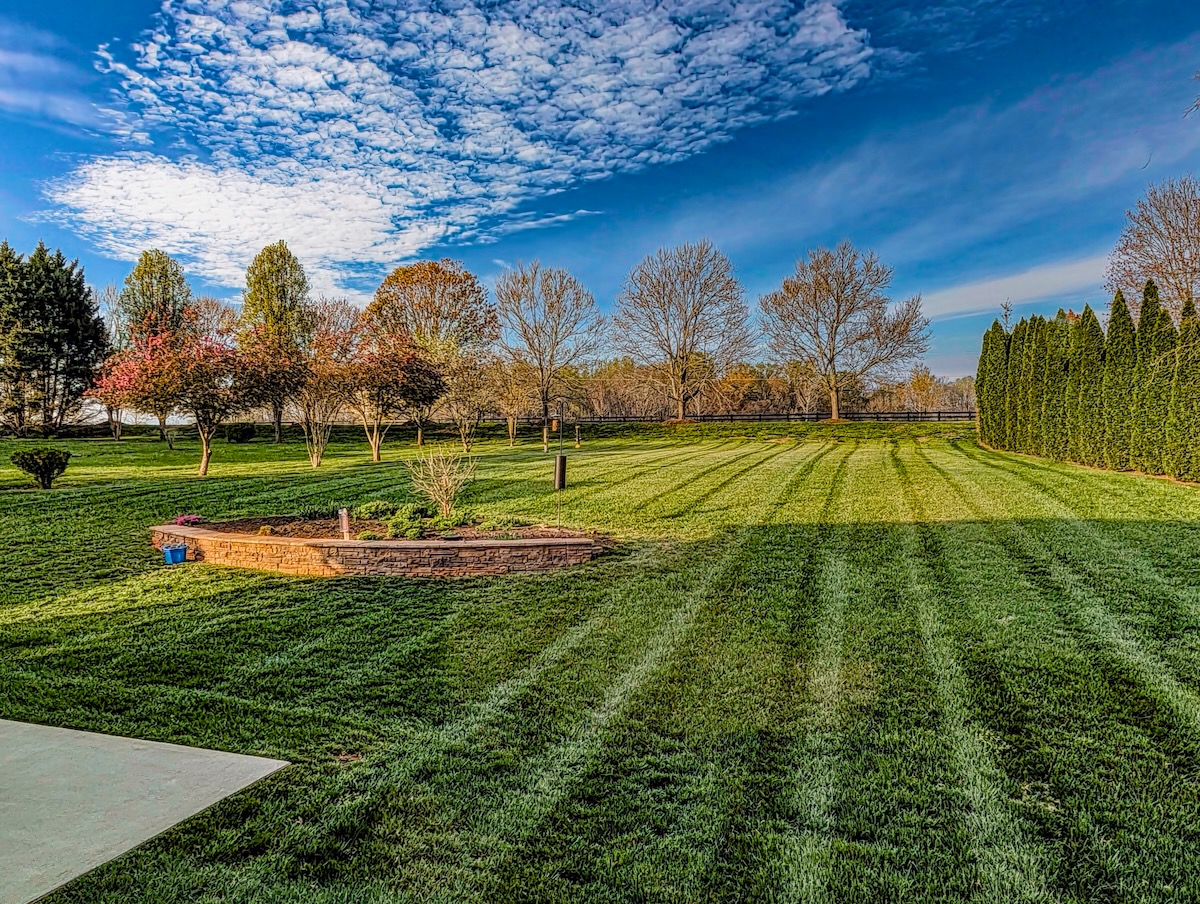
Our Backyard Garden

I got sent off to boarding school at the ripe old age of fourteen. It was six hours from home and was a military school. I was pretty miserable for a few months. Then it dawned on me that there will be times in your life that you will have little control of where you are. What you can control is how you choose to react to the situation and your location.
Four years later when I got in my car and drove the twelve hours by myself to Harvard in Cambridge, Massachusetts, I was determined to make the best of it. I had never been there, but I planned to push my limits.
As a married adult, I have lived in eight different homes in two provinces and three states. At least one was a little insular but we managed to find good people in all places.
From 2006 until 2021, we had a home on the North Carolina coast. It was on the water and had stunning views. I am a photographer so I was in paradise with all the water and big birds. I had a wonderful time. When we got ready to move, our friends started asking what beauty could we possibly find to compare all the scenery at the coast.
I simply smiled and said I am confident that there will be lots of things to capture with my cameras. That has turned out to be the cast.
When you have lived in a lot of places, you probably figure out quickly that there are no perfect places for those us not in the ranks of the super rich. We bought our current house during the pandemic-fueled housing boom. We are very pleased that it has turned out even better than we expected.
While I don’t have great egrets, great blue herons and otters at my beck and call, I do have beautiful forest and fields that remind me of where I grew up.
That is no real surprise because we moved back to the area near where my mother’s family settled in 1790. When I was wandering the hills and forests of the area in the fifties, I was living on Styers Street not far from Styers Ferry Road which happened to be named for my great grandfather who ran a ferry across the Yadkin River. So this is home, but it is more than that.
This is one of few rural areas in North Carolina where you have modern services and are within a few minutes of about everything that your consumer heart can imagine. On top of that we are blessed with farmers’ markets all through the summer.
After years of tolerating faux beach grass, we are now living where our yards don’t feel squishy when you step in them. We have a real backyard that is unlikely to ever flood. It is big enough for us to have a small garden.
Settling into an area which was not far from where I grew up is one of the most pleasant moves that I have ever made. I am just a few minutes from one of my grade school fishing buddies.
I laugh when some of my northern friends talk about North Carolina’s humidity. The thing is when we moved from the coast to the Piedmont, we took a serious step down in humidity. Summer humidity is very real across the South, but there are degrees of it and the marshes along the coast can feel like you’re being swallowed by the humidity.
Here in the Piedmont there is fall and spring. If you have ever lived on the coast, you know that both fall and spring are very subtle. Here in the Piedmont they are a riot of colors.
I wonder if I have enough time left to try living in the desert?

The Internet Is Not Done Changing Our Lives

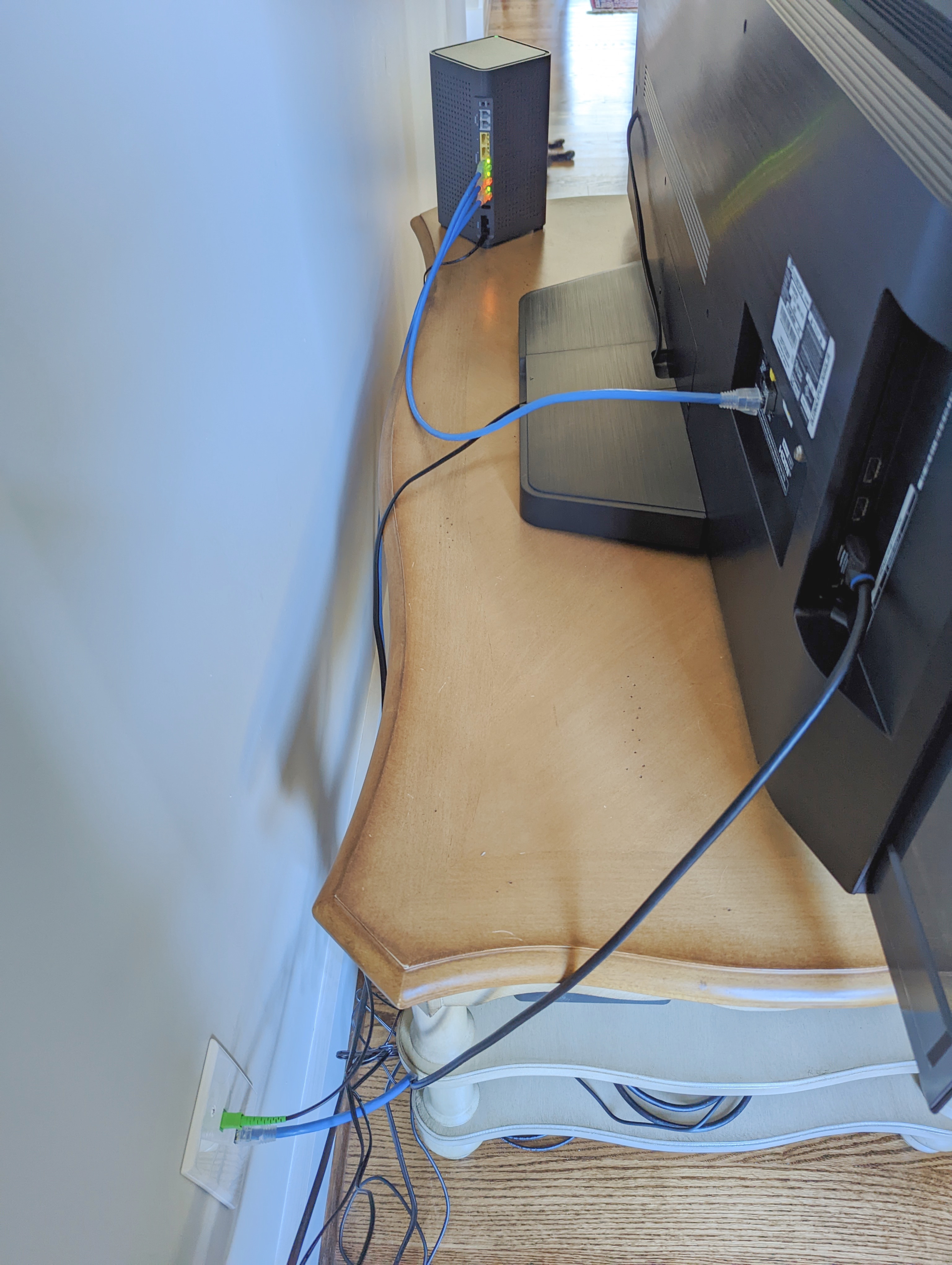
Recently, our home in rural Davie County got a 2 Gig fiber circuit. It was not a special order, just a $99.95 midrange consumer offering of Zirrus, our local telephone cooperative. I know people in California who would give their left arm for connectivity like what I now have across the road from acres of soybeans. One of my co-workers who works out of San Diego asked if I was going to run a data center out of our house? I know one thing, having my television connected to Ethernet is way better than having it on wireless.

Around thirty years ago, I first got on the Internet. The early Internet brought little new functionality. Email had been part of our lives for years. We used a proprietary system called AppleLink. Most of our big customers used the same system. The switch to standards based email that allowed us to communicate with anyone who had an email address was the first of many radical changes headed our way driven by the Internet

It was impossible in the early nineties to predict how deeply the Internet would become intertwined with our lives. Our family was destined to be full of early adopters. My son gave me my own Internet domain in the mid-nineties. My first webpages were online well before the century closed out. Not long afterwards, I helped create Apple’s online store for federal customers in 2002. Online shopping was something of a novelty then. By 2004, I was regularly blogging. Those baby steps were just the tips of my personal Internet iceberg. Shortly after his college graduation my son was managing networks on multiple continents from the heart of the Internet, Northern Virginia.

Even with all that early preparation and a career in technology, I am not sure that even I appreciated how quickly it is coming and perhaps how unprepared we are for the Internet driven changes which are accelerating even in my little piece of the Piedmont. In Davie County which by most measures is about as far away from the data centers and urban sprawl of Northern Virginia as you can get, we have Internet connectivity far better than most urban Internet users.

I recently got my NC driver’s license updated to a Real Id one. When I walked in the DMV office, I was greeted with a large sign saying “Scan this QR Code to Check In.” As I did, I wondered how many people might not be able to do that? Almost immediately the answer was clear, a lot more than I suspected. While I made and confirmed my appointment weeks prior online, there were people unsuccessfully trying to make an appointment in person at the office. All those folks after a substantial wait were eventually given a piece of paper with a web address and a phone number. One person who said he had neither smartphone or computer was told to call the DMV phone. Someone quickly chimed in that no one ever answers that number. The response was, “they’re understaffed.”

Not long after, I did an e-checkin for a blood test at our local Novant clinic. All those forms which accompany every medical visit were filled out and signed on my iPad from the comfort of our kitchen table. Less than hours after the tests, I started seeing test results posted in Novant’s MyChart app.

I haven’t made a hotel reservation in years by talking to a person. It is always online. We get many of our household staples shipped to us by Amazon. I depend on the fast service of Chewy for the wheat-based cat litter that our cats use. I even read my treasured Winston-Salem Journal online if the carrier has been delayed. The Journal made some of my favorite comics online only. I ended up subscribing to Go Comics and have all the comics that I have loved my whole life.

It is impressive that all of these things would be impossible without the Internet, but those things pale in comparison to what that 2 Gig fiber connection will allow our house to do. We now have two offices both with 1 Gig circuits. My son, the Linux system administrator and network architect, will be able to work from home in his next job if he so chooses, I have been working at home for over three decades. My home now has better connectivity than the three story Apple office I managed in Reston, Virginia, when I was director of federal sales.

What do I expect to see in Davie County and yes even in Forsyth County as fiber comes to many cable modem suffering urban dwellers? We will see more companies like the one where I have worked for the last twelve years. I like to joke that I have only been to our head office in Blacksburg a few times and one of them was the result of a hurricane evacuation when we lived on the NC coast.

Every Monday afternoon for as along as I can remember, we have had a video conference staff meeting. It brings together those of who work remotely with those who work at the head office. There might always be a need for some people to be in an office, but I can tell you the signs are already on the wall of the seismic change that is coming.

Recently we were interviewing for a job with a California customer. We have an employee less than a two-hour drive from the potential client. Much to our surprise, they turned down the offer to have our California employee at the interview in person. They told us they found 100% virtual meetings to be more effective. We got the job and our business is not the only one continuing to evolve. Many will follow the path we have blazed.

I tell people that neighborhoods which have fiber should be called fiber-hoods. Those lucky neighborhoods will form the basis of virtual business parks where knowledge, ideas, and new ways of doing business will flow freely. We have studied over 200 communities in the last decade or so. Even five years ago we were seeing some communities where 70% of new businesses were being run from homes. Much as the home laser printer revolutionized what could be published from a home office, fiber is going to do the same thing for the business tasks that can be done from home.

Fiber will also make it is easier for students to effectively educated at home and for all workers to take courses to retrain themselves for future jobs which might be home-based just like the administrative pool that has answered our phones for years. Fiber even makes it easier for some medical services to be delivered in the home and for older people to stay in their homes longer.

North Carolina has a lot going for it when it comes to connecting people with fiber. Long ago some visionary North Carolinians paved the way with a strong open-access middle mile. The North Carolina General Assembly initially funded the Microelectronics Center of North Carolina (MCNC) in 1980 to be “a catalyst for technology-based economic development throughout the state.” They have gone on to build middle mile fiber across on whole state. It is how our educational institutions and classrooms got connected so early.

That same middle mile enabled telephone coops like Zirrus to bring fiber to those us in places like rural Davie County even before our more prosperous neighbor Forsyth County has gotten much of a start. Coops like Zirrus have done an exceptional job bringing not just fiber but world class fiber to our homes.

If fiber is so great, why don’t we have even more fiber? Unfortunately there is some restrictive legislation driven by incumbent telecommunications companies that prevents NC communities that don’t have a Zirrus from pushing forward. Greenville, North Carolina was one of two that took fiber into their own hands before the assembly decided to stop it. For the last few years, there has been an effort to make it easier for communities to support fiber coming to their communities. While that effort has stalled, it is absolutely critical because we have seen companies threaten to leave towns without better connectivity. Telecommunications companies love mini-monopolies but North Carolinians can fix that by electing people who support letting communities responsibly help bring fiber to their citizens.

Fiber is not a magic bullet. We also need to train people how to take advantage of the opportunities that fiber brings to areas like Davie County. North Carolina is blessed with places that have a rural feel but access to top quality services. We just need to make certain that fiber is one of those services. It has risen to the top of the checklists for many companies and is often nonnegotiable.

Having worked in both Northern Virginia and California, I can only say that people look with envy at our beautiful rural areas. Where else can you find an abundance of farmers’ markets and charming small towns combined with outstanding connectivity plus access to mountains and world class beaches?

As a native North Carolinian, I am a little humbled to know how far we have come as a state. I grew up on Styers Street in Lewisville listening to my mother tell stories of walking by her dad’s wagon from the millpond where she lived in Yadkin County to Winston-Salem by way of Styers Ferry where they would spend the night with my great grandfather, Abe Styers, who ran the ferry.

We have gone from cutting ice from millponds and hauling that ice with horse teams. There were only dirt roads with few bridges then. Now we have to fiber to the home (FTTH) and super highways across the Yadkin River. It has happened in just a little over one hundred years. It is nothing short of amazing. I have to smile a little at the jealousy of my California friends still waiting for their 2 Gig fiber circuits. However, this is just the beginning for no one knows how far our connected state can go.