The Lost Art of Calling Home

The rotary telephone in my home bedroom until 2004

I took a course in college my senior year. It was decades ago. The class focused on communications. Computers were not on the desktop, cameras were film based, and telephones were analog with rotary dials. There was no Internet much less text messaging or cell phones. People still wrote letters on paper by hand. I still have some of my old ones. The other choice for a was a typewriter. In the seventies it was not unusual to find people who did not know how to touch type.
I went away to boarding school at the tender age of fourteen. The weekend call home from the telephone booth in the hallway was a lifeline to family and all that was familiar. You might not be able to predict the person who would answer but you learned how to make the most out of whomever you got on the phone. The old fashioned telephone was a great leveler. If you called one of your friends, you could get their parents, but back in the fifties and sixties, we learned how to talk to adults respectfully.
The weekend call became more of a ritual than a lifeline when we started farming in Canada. It was something that kept us connected long after the art of writing letters disappeared. I still love phone calls to my Canadian friends. I enjoy talking to my friends whether I reach the wife or the husband. These calls keep the web of friendship healthy.
A couple decades ago, a friend died. I did not have the opportunity to say good bye to that friend. It caused me to recommit to finding people who had been important in my life. Over the years I made several car trips to Ronceverte, WV, because that was the only way to really visit with my high school Latin teacher who never went beyond the telephone in the world of electronics. He was a little hard to talk to on the telephone but I treasured our visits. He has been dead several years now. I never regretted the effort I made to stay in touch.
Our trips to Mount Airy, NC and Yadkin County, NC to visit friends and family have gotten fewer and farther between each trip as we have aged. The time we spend with elderly relatives is precious. We have lost several over the last few years but the time spent with them was well spent.
Sharing our lives and communicating with others has given us strength to do things we never would have done by ourselves. It has also connected us to history and stories that we might never have known
We were living at the coast when Hurricane Irene made landfall on August 26-27, 2011, about 35 miles to the east of our home near the beaches of Emerald Isle. We received a lot of phone calls from friends and family prior to Irene’s arrival urging us to head for higher grounds than our six feet above sea level. Irene was our first serious storm in our first five years on the coast.
Interestingly, none of the calls came from our three grown children who ranged in age at the time from the late twenties to the mid thirties. I told myself at the time that they knew we were well prepared and tough enough to handle the storm. At sixty-one, I think that was a fair description of us. We were not people who had led quiet lives in one place all their lives. Still Irene roared for thirty-six hours but we only used our generator for three hours.
Perhaps there was something else at play. Most of us older adults have noted that today’s young adults rarely communicate even though they have far more ways to connect than our generation ever had.
One of the other things besides the weekly phone call that happened at military school when I was fourteen was we had an assignment to write a letter home every Sunday night. It was graded, and mailed home for us complete with red marks. Of course no useful communication ever took place in the letters. The weekend phone call was the lifeline to home.
While I quit shining my shoes every morning like I did in military school when I went away to college, I didn’t drop the ritual of the weekend call home and writing letters. Even after graduating from college, moving to Nova Scotia to farm, and getting married, the calls continued. We added a weekly call to the parents of my wife, Glenda. We also wrote letters in cursive to family and friends. Long distance calls for much of our early married life were extremely costly but they remained important to our mental health so we rarely missed one.
Calling home for all those decades was always something of a surprise, you never knew who was going to answer the phone, but 99% of the time they were happy to hear your voice if not your message. Almost always you felt better after talking to them.
I think the old cold calling home on a rotary phone helped us be the people we are today. It helped us build strong networks of support and advice. It gave us skills that the current younger generations may never master. The world will be lonelier and poorer because of that.

Stay up with the Goose Speaks commentary on our country’s situation in “Time to Trust Our Own Eyes” either for free at Substack on as a simple HTML flat file with a different name, “Time to Speak Out,” at my Crystal Coast website.

Doing it the hard way

In the sixties or early seventies, the back to land movement was well known. The 1968 Whole Earth Catalog was the instruction manual dedicated to it. Helen and Scott Nearing were its inspirational grandparents. Many in my generation’s back to the land movement were vegetarians like the Nearings. Some were vegetarian by choice and others because of necessity. Because of my proclivity to cattle and farming, I studied Louis Bromfield’s book, Malabar Farm. Today there there is a new generation of people going back to the land.
In this century they are known by the label “off grid.” Few of those folks are openly vegetarians. This new generation proudly hunts and fishes for protein to supplement what they grow. Though their animals are more likely goats than cows, there are some with cows and even horses.
Many of today’s off grid folks are often in places deliberately difficult to reach. Most back to the landers in the seventies went where they could find cheap land whether it was alongside a road like my house and barn or back in the boonies where my friends in the dome lived.
During the seventies, the rural Annapolis Valley where we shopped did not have supermarkets. It had small grocery stores and cooperatives where you could get your food, your baler twine, and some beef fattener for your steer all in one shopping trip. Beaver Fruit Cooperative got most of our business. I also did some bulk orders with the folks in the dome. We had a local hardware and a Sears catalogue store which is where we ordered our appliances.
There were times in the early seventies when I thought about getting farther from the roads that connected us to the rest of the world. Reality always intruded. I thought about homesteading in Newfoundland, but my wife took one look and said I would be homesteading alone. I even found a great spot high on a hill on my land in Nova Scotia.
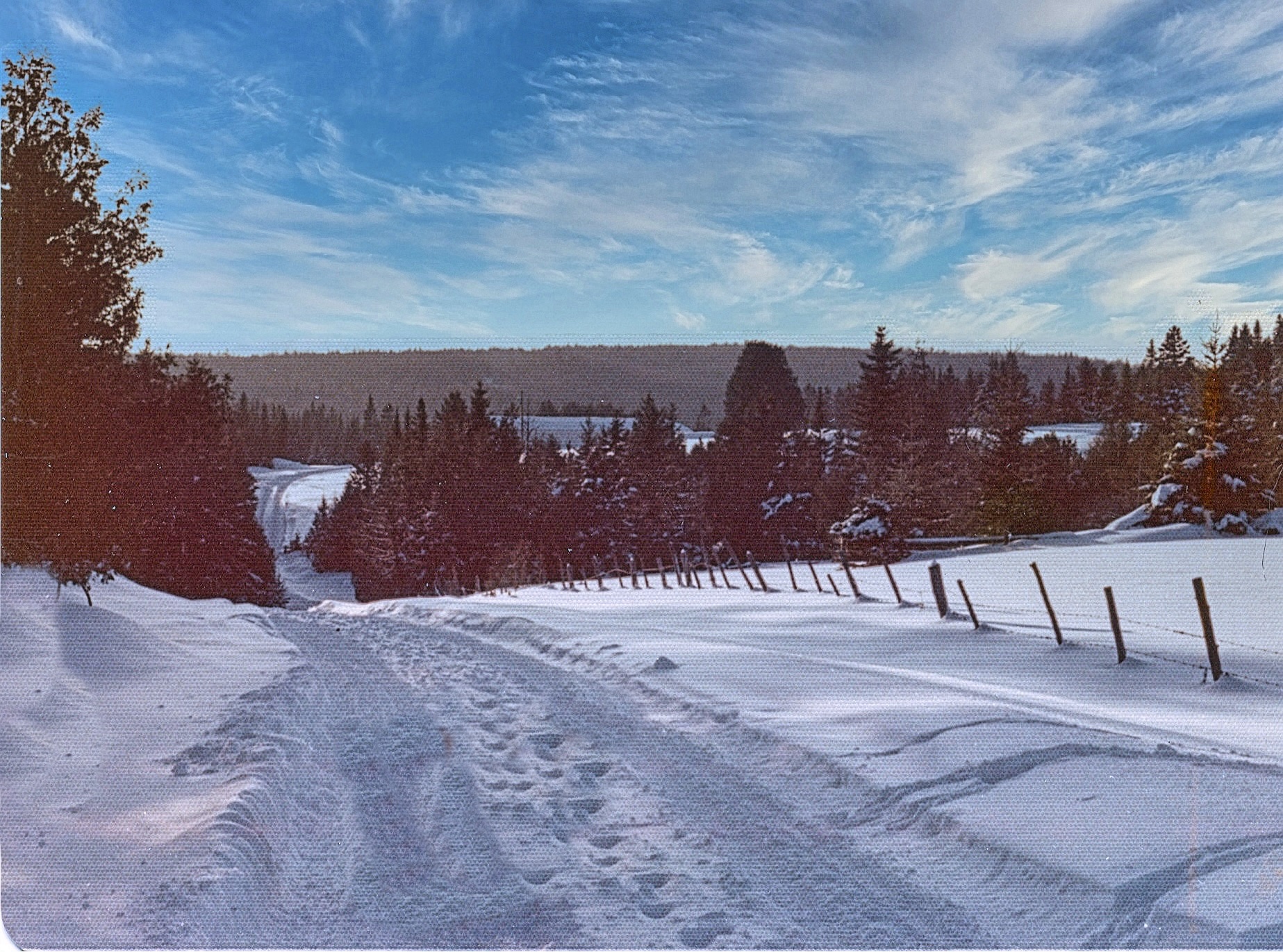
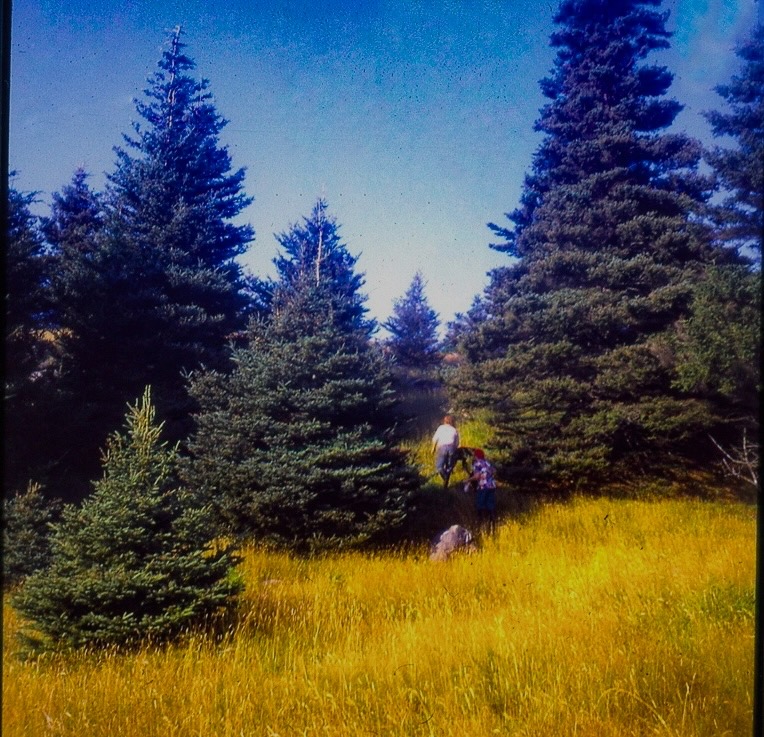
It is pictured at the top of the post. It was over a mile off the road which does not sound very far until you factor in the heavy clay soil and the astronomical expense of building a mile-long gravel road where gravel is in short supply. Then there would be the likely impossible task of getting power to the homestead. In those days there were no solar panels and battery systems to give you electricity off grid. Drilling water wells on our North Mountain was also problematic.
By the time we moved to New Brunswick we were well on the track for serious farming. We still gardened on a large scale, had chickens, and a milk cow. We did move to having someone butcher our annual steer for us instead of doing it ourselves. In creating our farm, we built well over a mile and a half of roads with New Brunswick’s ready supply of gravel over our rocky soils. I also convinced New Brunswick power to bring power a quarter of a mile back to the new barns that we built. We drilled a well back by the barns. It provided so much water that it was hard to measure.
So by 1976, all the elements were in place for us to move farther from the village of Tay Creek near our new barns but with no close neighbors. It wasn’t in the cards. While we had not had a great experience with the people of St. Croix Cove, the people of Tay Creek had been so welcoming that neither my wife or I would consider having the village become less accessible. It was also a great convenience to be by the road where the school bus picked up our children. It turned out we liked being part of our small farming village. We valued the connections of people dropping by to chat. I did not even mind cleaning the driveways of some residents who became close friends. When we needed them, our farming neighbors were there to help as much as they could.
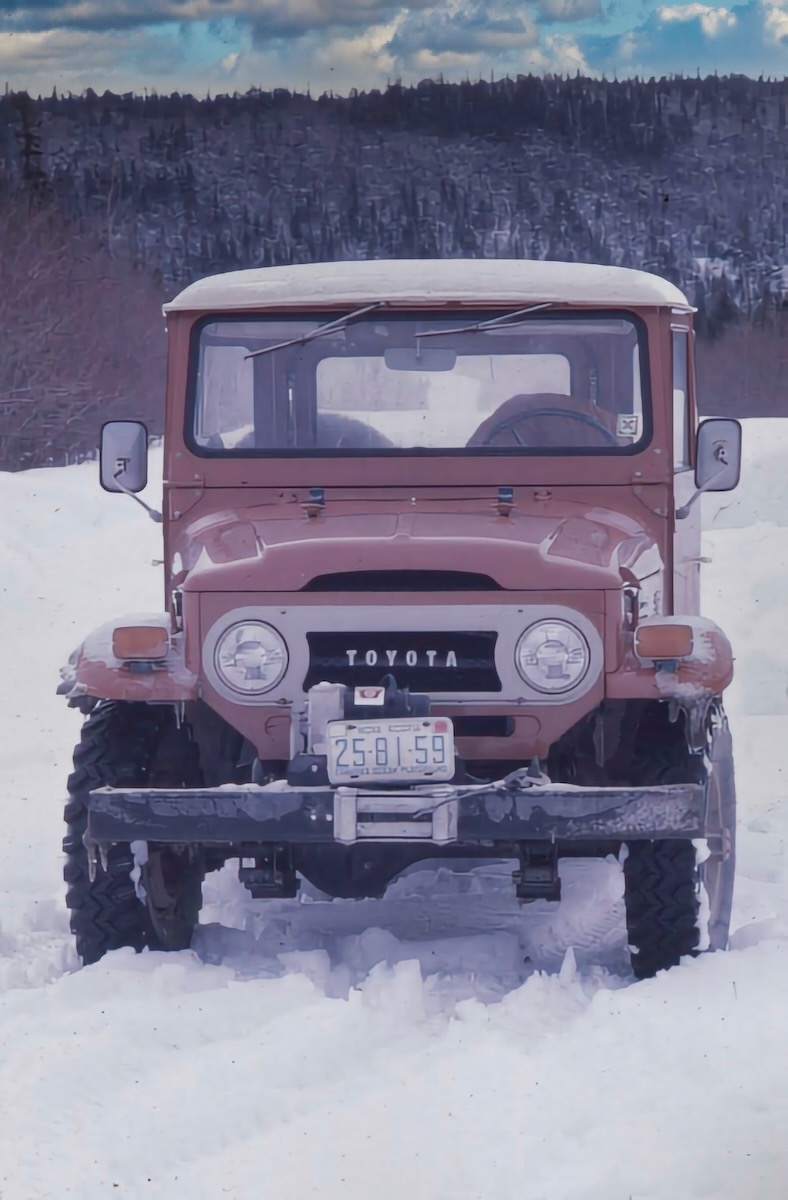
In the end it seems the biggest difference between the back to the land movement of the sixties and seventies and today’s off grid homesteader is that the homesteader of today is often working to isolate themselves from others. In the sixties and seventies back to landers were still interested in community. I loved the small country stores, but today’s off grid folks are much more likely to seek out the anonymity of COSTCO. The money that some make from YouTube makes it even easier to not have ties with nearby communities. We were part of communities because we needed connections and income. Even today you will find exceptions and some off grid folks are much more community oriented than others. However, when I hear the term off grid what comes to mind are people living in places that are only accessible by four wheel drive, snow mobile or ice road for at least part of the year.

Someone Lives Here

My First Home on the Bay of Fundy after a year’s work

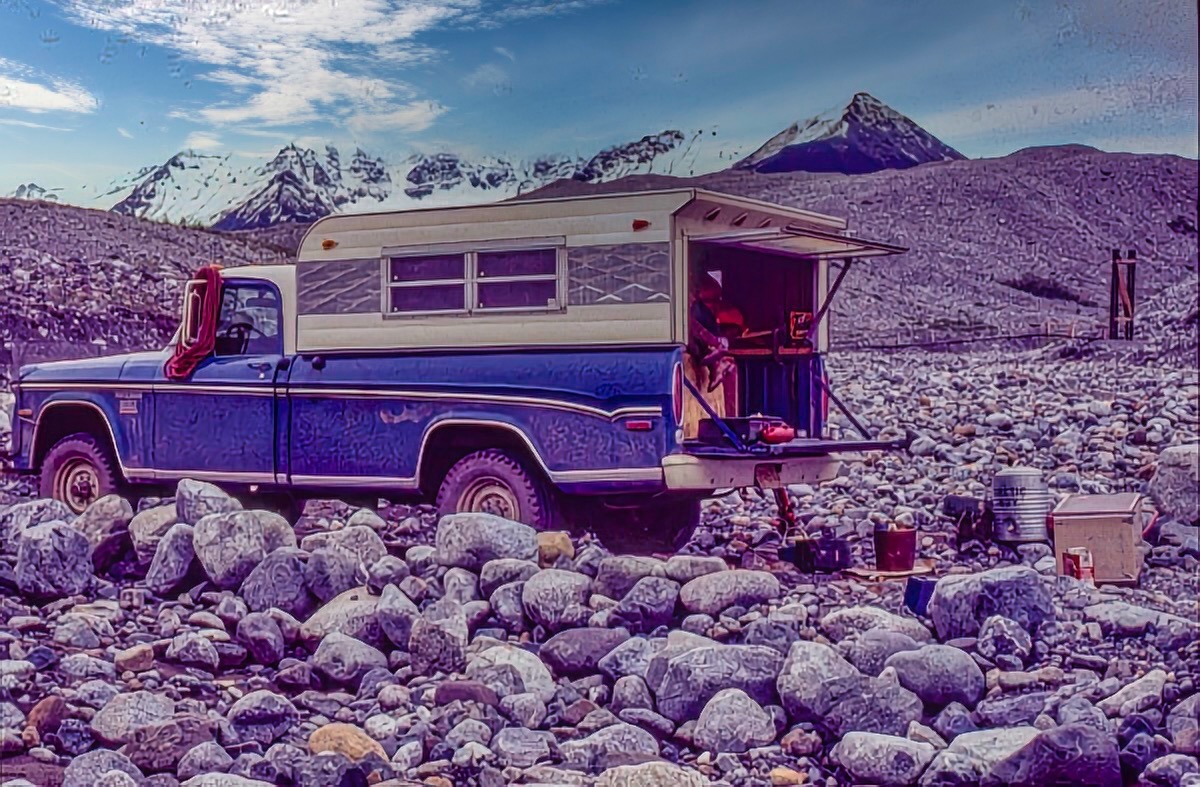
I was  gone most of the summer of 1970, it seemed like the most logical thing to do after all the college protests.  A roommate and I drove to Alaska and we returned barely ahead of the snow and just before school started. When we came back I was determined to find some land away from the big cities of the East.   In the spring of 1971, I wrote to the Longmire Real Estate agency of Bridgetown, Nova Scotia, about a farm and land on the shores of the Bay of Fundy.  The property was advertised in the Sunday Boston Globe.  At the time there was only a print version of the paper and reading the Sunday paper was something many of us really enjoyed. The trip to look at the place sealed the deal.

Though the details took time to work out, I ended up the owner of 140 acres, a two hundred year old house, barn, and carriage house in Saint Croix Cove. That first piece of land and buildings cost around $7,000. The view of the Bay of Fundy was spectacular.  The picture at the top is the house after a year’s work. This what it looked like when I bought it.

First Home when I purchased it in 1971

When I bought the house, it was in a sheep pasture and had not been lived in for years. The old chimney went quickly. We also tore out the insides down to walls and hand-hewn, pegged six by sixes that framed the house. It was a huge undertaking  Still after a year it looked a lot better, was insulated, had heat, hot water, a new kitchen and a shower

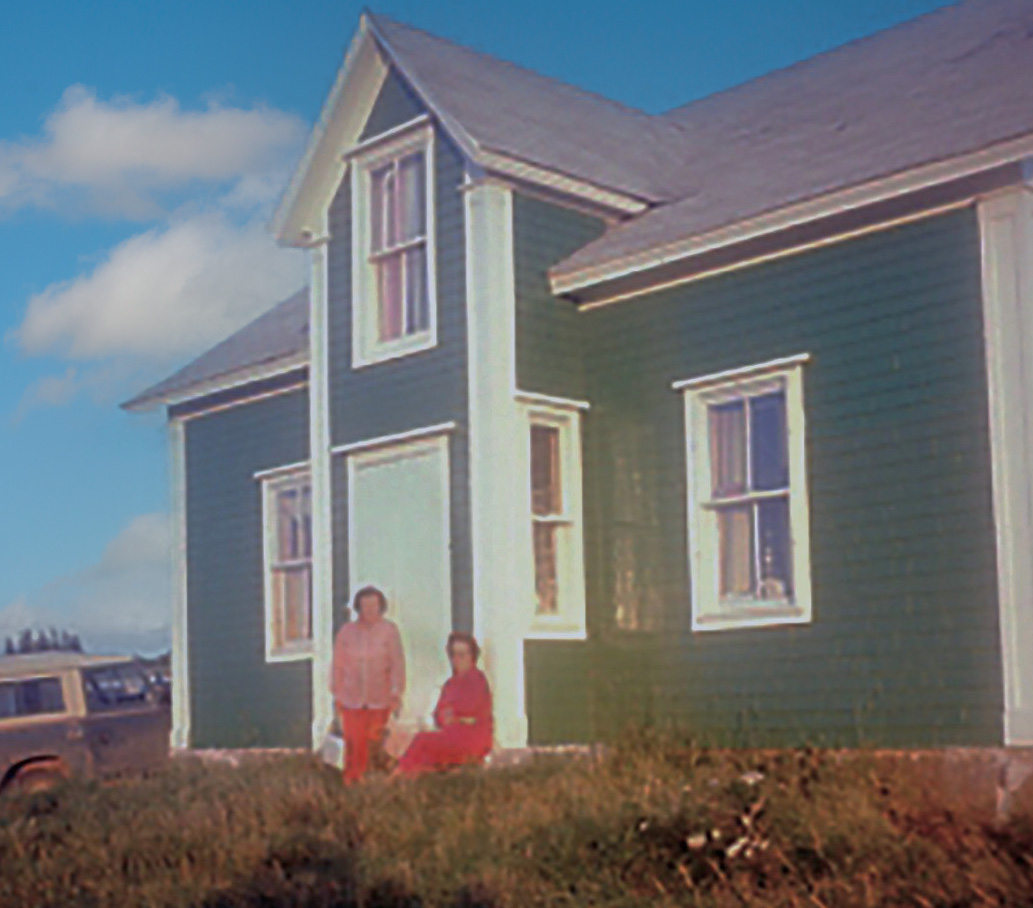
Even with all that work I am not sure it looked like someone was living there all the time. My mother and her sister came up and worked on the house during the summer of 1972  and stayed with us for a couple of weeks but most of their time was spent on canning and freezing produce from the garden.

My Mother and Her Sister Visiting in 1972

The next summer, I made a trip to Boston to help an old college roommate get married. Then I headed south and stopped in Washington, DC to spend a short time with another college friend that I enjoyed. From there I went home to Mount Airy, North Carolina.  My mother was always scheming to keep me at home a little longer. She arranged a blind date with Glenda, a young lady from UNC Greensboro.

It was one of those love at first sight dates. I cooked Lobsters for our first dinner together. The next day we picnicked  on the Blue Ridge Parkway. When she headed back to her apartment in Greensboro, the plan was that she was going to drop me off at the airport on the way but few other than my mother would be surprised that we never stopped there. We spent a magical few days in her apartment.  About sixty days later after Glenda made a trip to Nova Scotia to check things out, we got married.  She wasn’t in Nova Scotia long before she started making our home look like someone was living there.

My wife, Glenda’s first flower bed in St. Croix Cove, Nova Scotia

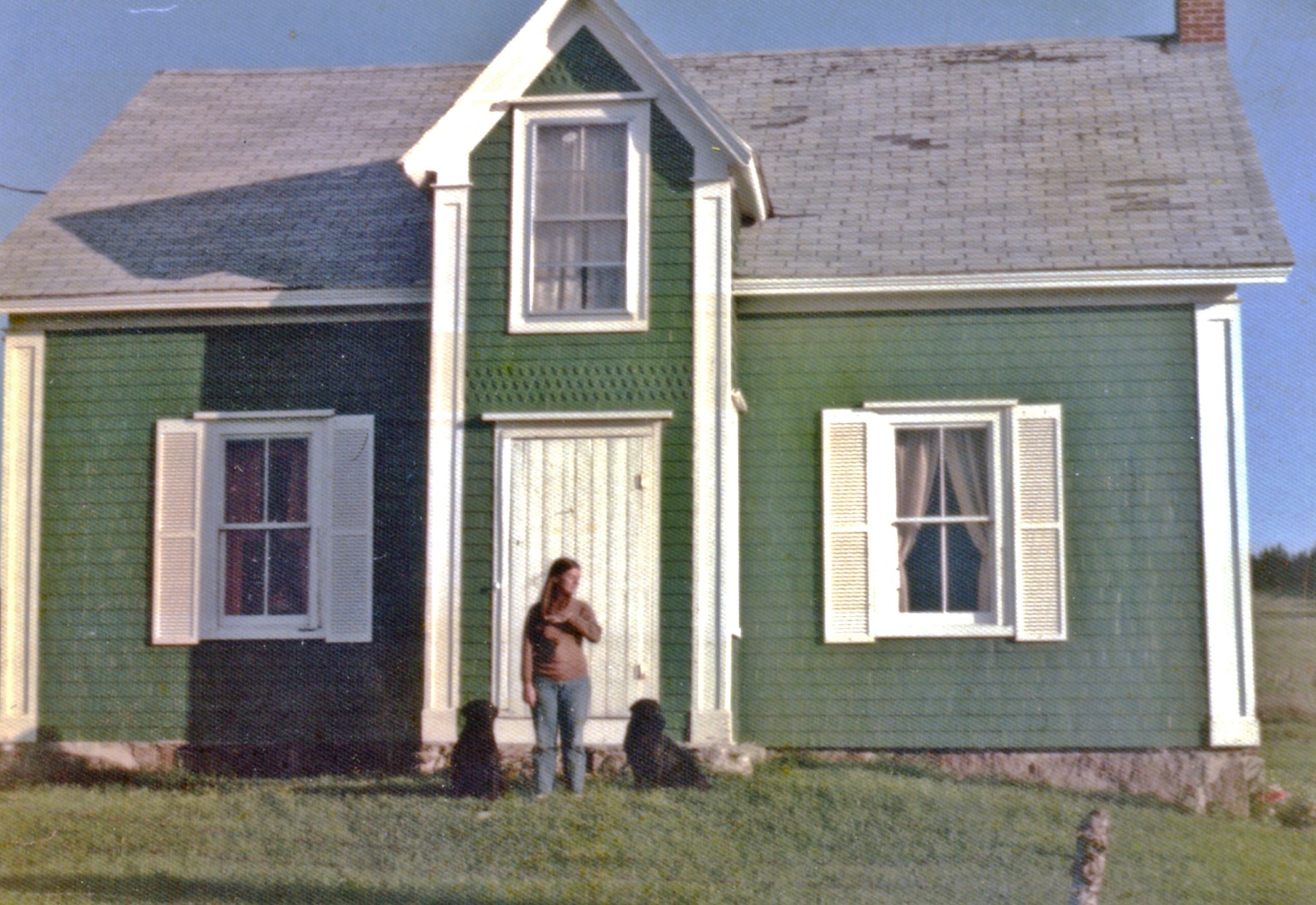
It didn’t take long for flowers to be added.  During my mother’s next trip, Glenda and my mother decided we needed a lawn mower which they got on a trip to town by themselves. In short order the yard look like a normal yard.

Our St. Croix Cove home after Glenda had tamed it and won the hearts of Tok and Fundy

We moved from the green house on the shore road in the fall of 1974.  We needed better farmland if we were going to be successful. It was less than a year before our next house looked like someone was living there.

Our Tay Creek Farm House the first summer there 1975

The picture above was taken in 1975, almost fifty years ago. If you stretch your imagination, you might come close to imagining how many flowers have been planted in the name of making our houses look like someone lives in them over those forty-nine years.  Last summer’s (2023) flowers are pictured below.

Summer of 2023’s front flower bed at our home in Mocksville, NC

My mother was probably 84 years old when she had to give up planting flowers and tomatoes. For the next six years until mother moved in with us, Glenda would go down in the fall and plant a huge bed of pansies that my mother could watch grow from fall through spring. It was something that made mother smile. When we are in our eighties, I hope we have someone willing to add a little beauty to our lives when we can no longer plant it ourselves.

My Glenda amending the soil in Nova Scotia with some well-rotted chicken manure
My mother watering her azaleas in the seventies when she started renewing the gardens
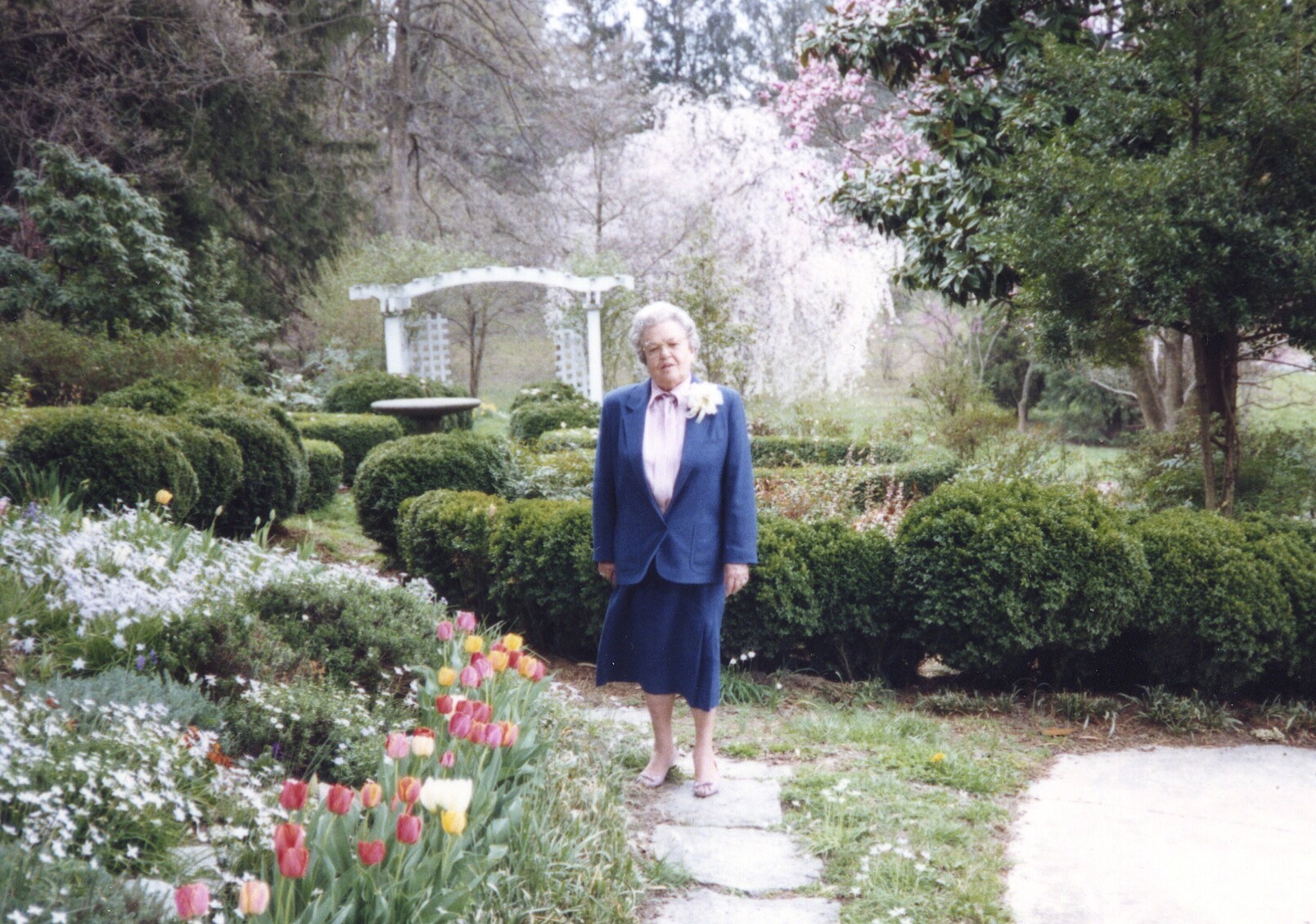
Mother in the gardens in eighties
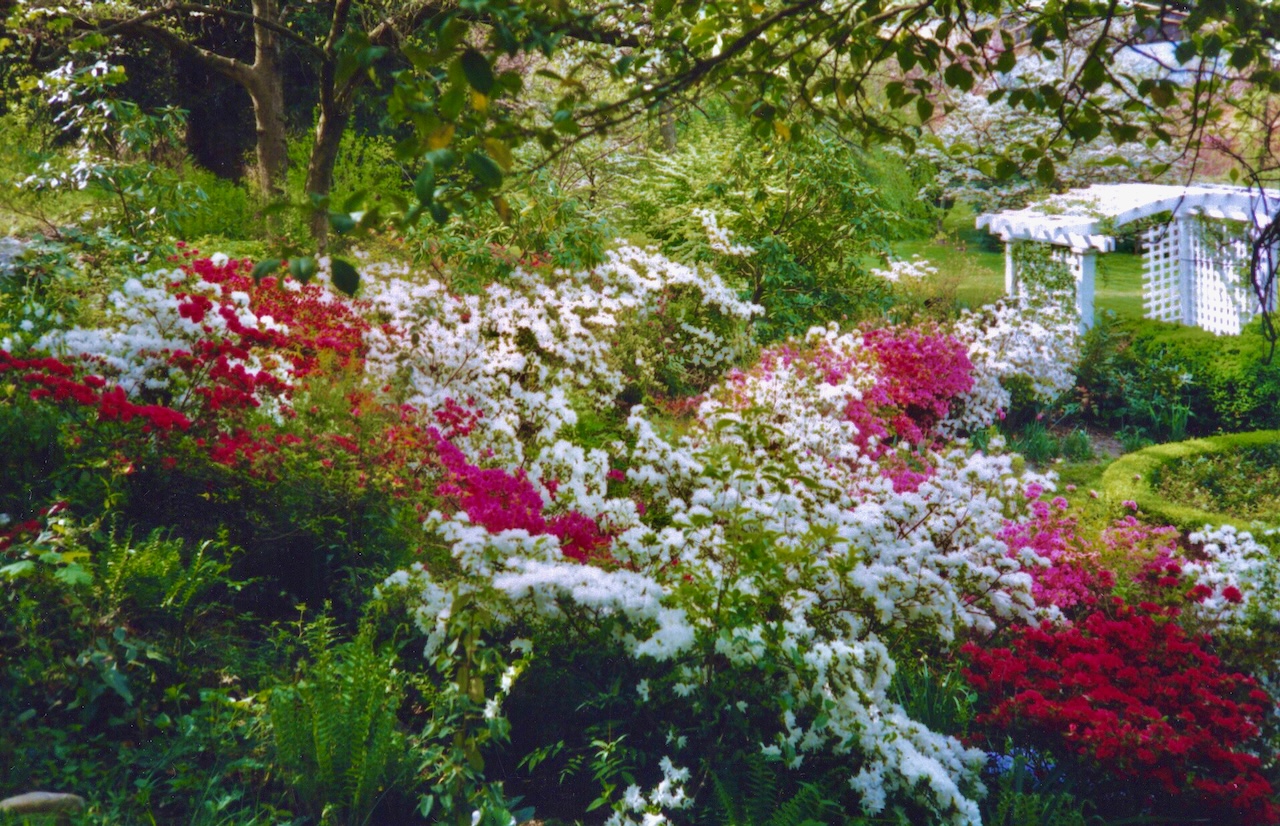
Mother’s azaleas just before she moved in 2004

The Early Years

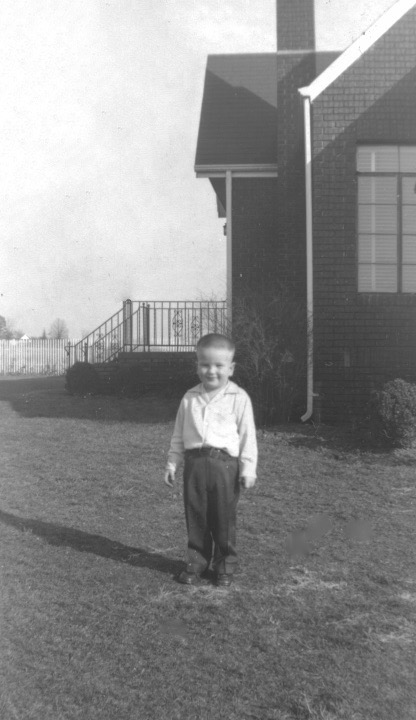
Me at my Aunt Mollie’s House in Yadkin County

Sometimes I think my life is a little like a Rubik’s Cube puzzle which I have been trying to solve for as long as I can remember.  There are times when the puzzle pieces have been close to alignment.  Other times, especially in the early day, the puzzle has almost felt like it was broken.  Throughout the journey, there have been lessons learned, some opportunities seized, and more than a few missed.
Some of my first memories are of the home in Yadkin County where my mother and I lived until I was three years old. For some reason, never explained to me, my mother and father chose not to marry so mother and I lived in a home that my father and mother had helped my Aunt Mollie and Uncle Austin build.  It was a cozy red brick two-story home set on a plot of land in the middle of corn fields at a cross roads that came to be known for the junk my Uncle Austin collected.
That I was well protected in my early years is safe to say.  In a sense I had three older sisters, daughters of Aunt Molly, who watched over me when they were not driving school buses or chasing boys.
One of the earliest things that I can remember is taking apart a door lock in that home.  I cannot say whether or not I got in trouble, but I distinctly remember the pieces of the lock in my hands.
While I did not grow up to be a locksmith, I am proud that I learn how to use a wide range tools including a welder and an acetylene torch.  The ability to work with my hands has served me well, and I suspect there is some significance in finding tools in my hands while living with my Uncle Austin who was a genius with his hands.  He was one of those men who could build something out of nothing.  A junkyard was like a shopping center for him.
Finding that kind self reliance in Yadkin County, North Carolina just a couple of miles from where my mother grew up on a small mill pond comes as no surprise.  The rural south of the fifties was a place where making something yourself replaced many of the things for which there was no money even if you could find it. Sears Roebuck was as good as it got.
It was a place where people milked cows, had chickens, and grew huge vegetable gardens.  The produce from the gardens was canned and frozen in staggering quantities.   Each fall when the weather cooled, hogs were killed, sausage was made, and hams were sugar cured for later use.
While Yadkin County was a protective cocoon for me, it had been a straight jacket for my mother, Blanche. Her mother died when she was eight, and as the eldest daughter she was cooking for the family well before she could even lift a heavy frying pan.
She attended the one room school within walking distance of the mill pond where they lived, but she never graduated.  After her father remarried, there were sparks between her and the step mother who quickly became afraid to tangle with my mother, Blanche.
Blanche, who was destined to be the matriarch of our family, left home in her teens and went to live in Mount Airy over twenty rutted miles away.
In a certain sense it was my mother’s determination that pulled the whole family out of the red clay of Yadkin County.  She brought clothes, toys, and whatever was needed from the big city of Mount Airy to her sister’s family who managed to live near the location of the old mill pond their whole lives.
That rural North Carolina of my youth was a place where Sunday afternoons in the summer were spent under shade trees eating homemade ice cream, peach when it was in season, and watermelon.
Even after we moved to Styers St. in Lewisville just across the Yadkin River, we came back to my Aunt Mollie’s almost every Sunday.  In a way it became the home place, because the real home place on the mill pond had burned down many years earlier.  Walter, my grandfather and a miller, had moved away from the mill pond and started a small dairy on the main road when he remarried.
While I was an only child, my Aunt Mollie had six children including one daughter Sue, who was as close to a me as a real sister could be. I was only a year older than her.  Sunday under the shade trees was a time when we kids ran and played in the yard.  Family news was passed from one to another, and I am sure more than a few problems were discussed by the adults.
It was a time when children were sheltered.  When someone became pregnant, code words came out.  She was labeled PG, but as children often do, we figured it out. I can only remember a couple of exciting Sunday afternoons.  One Sunday a pressure cooker that was being used improperly exploded and sent its lid through the ceiling of the kitchen and left beans everywhere.  I also remember my Aunt Mollie cutting the head off a chicken and the headless chicken running around the yard.  I guess we were easily entertained.
In those days, there was no television to watch.  The teenagers listened to records, and the rest of us played games outside.
Our move to Lewisville was a move of independence.  Blanche, my mother, was determined to raise me as a single mother.  Our home in the village of Lewisville contained a small beauty shop where she worked long hours to support us.  My father, John, a furniture manufacturer, would visit once in a while on Saturdays, but it was years before I figured out that he was my real father.
Lewisville was a great place to be a kid in the fifties.  We had a general store that was within walking distance.  It had a cooler of small sodas that were ten cents each when we moved.  I think it was my first experience with inflation.  Living in the country we had been next to RK Brown’s General Store where sodas were only a nickel.
The great attraction of Lewisville for me happened to be the fields and woods that bordered our home.  It was a wonderful playground for a youngster.  We built forts in the fields, dammed small streams, and became experts with BB guns and eventually pellet guns.  There were some fishing ponds within biking distance, and even church and school were within walking distance.
At a very early age I became a fisherman for life.  Maybe it was that first catfish my Uncle Henry put on my line when I was barely able to hold a rod.  I managed to make fishing a big part of my youth.  It was a good life with backyard football seamlessly becoming backyard baseball as the seasons turned.  In the summers we played until dark and then wandered home.  No one seemed to worry about us even when we were running behind the mosquito spray truck on our oiled dirt road.