Sometimes I think my life is a little like a Rubik’s Cube puzzle which I have been trying to solve for as long as I can remember. There are times when the puzzle pieces have been close to alignment. Other times, especially in the early day, the puzzle has almost felt like it was broken. Throughout the journey, there have been lessons learned, some opportunities seized, and more than a few missed.
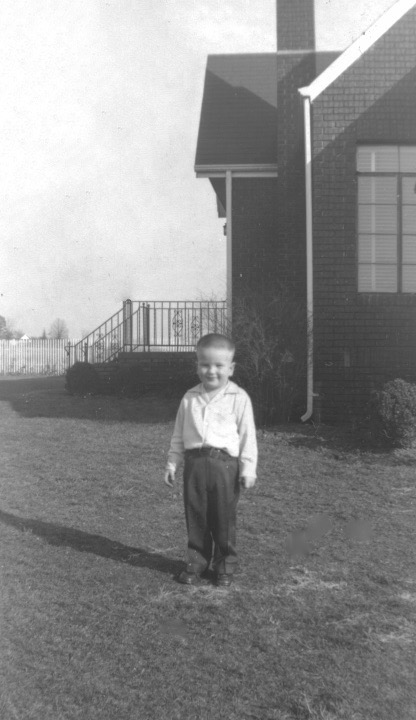
Some of my first memories are of the home in Yadkin County where my mother and I lived until I was three years old. For some reason, never explained to me, my mother and father chose not to marry so mother and I lived in a home that my father and mother had helped my Aunt Mollie and Uncle Austin build. It was a cozy red brick two-story home set on a plot of land in the middle of corn fields at a cross roads that came to be known for the junk my Uncle Austin collected.
That I was well protected in my early years is safe to say. In a sense I had three older sisters, daughters of Aunt Molly, who watched over me when they were not driving school buses or chasing boys.
One of the earliest things that I can remember is taking apart a door lock in that home. I cannot say whether or not I got in trouble, but I distinctly remember the pieces of the lock in my hands.
While I did not grow up to be a locksmith, I am proud that I learn how to use a wide range tools including a welder and an acetylene torch. The ability to work with my hands has served me well, and I suspect there is some significance in finding tools in my hands while living with my Uncle Austin who was a genius with his hands. He was one of those men who could build something out of nothing. A junkyard was like a shopping center for him.
Finding that kind self reliance in Yadkin County, North Carolina just a couple of miles from where my mother grew up on a small mill pond comes as no surprise. The rural south of the fifties was a place where making something yourself replaced many of the things for which there was no money even if you could find it. Sears Roebuck was as good as it got.
It was a place where people milked cows, had chickens, and grew huge vegetable gardens. The produce from the gardens was canned and frozen in staggering quantities. Each fall when the weather cooled, hogs were killed, sausage was made, and hams were sugar cured for later use.
While Yadkin County was a protective cocoon for me, it had been a straight jacket for my mother, Blanche. Her mother died when she was eight, and as the eldest daughter she was cooking for the family well before she could even lift a heavy frying pan.
She attended the one room school within walking distance of the mill pond where they lived, but she never graduated. After her father remarried, there were sparks between her and the step mother who quickly became afraid to tangle with my mother, Blanche.
Blanche, who was destined to be the matriarch of our family, left home in her teens and went to live in Mount Airy over twenty rutted miles away.
In a certain sense it was my mother’s determination that pulled the whole family out of the red clay of Yadkin County. She brought clothes, toys, and whatever was needed from the big city of Mount Airy to her sister’s family who managed to live near the location of the old mill pond their whole lives.
That rural North Carolina of my youth was a place where Sunday afternoons in the summer were spent under shade trees eating homemade ice cream, peach when it was in season, and watermelon.
Even after we moved to Styers St. in Lewisville just across the Yadkin River, we came back to my Aunt Mollie’s almost every Sunday. In a way it became the home place, because the real home place on the mill pond had burned down many years earlier. Walter, my grandfather and a miller, had moved away from the mill pond and started a small dairy on the main road when he remarried.
While I was an only child, my Aunt Mollie had six children including one daughter Sue, who was as close to a me as a real sister could be. I was only a year older than her. Sunday under the shade trees was a time when we kids ran and played in the yard. Family news was passed from one to another, and I am sure more than a few problems were discussed by the adults.
It was a time when children were sheltered. When someone became pregnant, code words came out. She was labeled PG, but as children often do, we figured it out. I can only remember a couple of exciting Sunday afternoons. One Sunday a pressure cooker that was being used improperly exploded and sent its lid through the ceiling of the kitchen and left beans everywhere. I also remember my Aunt Mollie cutting the head off a chicken and the headless chicken running around the yard. I guess we were easily entertained.
In those days, there was no television to watch. The teenagers listened to records, and the rest of us played games outside.
Our move to Lewisville was a move of independence. Blanche, my mother, was determined to raise me as a single mother. Our home in the village of Lewisville contained a small beauty shop where she worked long hours to support us. My father, John, a furniture manufacturer, would visit once in a while on Saturdays, but it was years before I figured out that he was my real father.
Lewisville was a great place to be a kid in the fifties. We had a general store that was within walking distance. It had a cooler of small sodas that were ten cents each when we moved. I think it was my first experience with inflation. Living in the country we had been next to RK Brown’s General Store where sodas were only a nickel.
The great attraction of Lewisville for me happened to be the fields and woods that bordered our home. It was a wonderful playground for a youngster. We built forts in the fields, dammed small streams, and became experts with BB guns and eventually pellet guns. There were some fishing ponds within biking distance, and even church and school were within walking distance.
At a very early age I became a fisherman for life. Maybe it was that first catfish my Uncle Henry put on my line when I was barely able to hold a rod. I managed to make fishing a big part of my youth. It was a good life with backyard football seamlessly becoming backyard baseball as the seasons turned. In the summers we played until dark and then wandered home. No one seemed to worry about us even when we were running behind the mosquito spray truck on our oiled dirt road.
Category: North Carolina
Haying Stays In Your Blood

Of the over fifty years that I have worked since I graduated college, only a little over a decade was spent farming. I did grow up in North Carolina in the fifties and sixties when everyone we knew had gardens, some had chickens, and even a few had a milk cow. It was not unusual to see hog killings in the fall and to receive some fresh country sausage as a gift.
The land was what gave life to us all, and where we go when life is gone. The land was at the center of all, and how could understand anything without first being on the land?
The Road to My Country
I felt that I had to go back to land. I was a little shellshocked after the sixties, four years in a military school and another four in the funny lights of Cambridge. I bought an old farm in Nova Scotia the summer that I graduated from Harvard. The skies in Nova Scotia were like the ones I remembered in my youth.
The urge to work the soil was strong even though I did not grow up on a farm. The immersion course we got in farming was intense but somehow we thrived for over a decade. We might have stayed on the farm if interest rates had not hit twenty percent in the early eighties and there were better local opportunities for our children. We dispersed our cattle in the fall of 1982 and sold the farm three years later after I spent a couple of years working in the city.
Farming has stayed with me all these years, even during my years in technology. It was only a year or two ago when I was driving from our home at the coast through the Virginia Mountains to headquarters when I saw a field of grass down. It was well on its way to being ready to be becoming hay. I had to stop, roll down the windows and enjoy the smells and remember all the good memories.
It was not unusual for our “team,” Harvey and I to put up sixty tons of hay in a good day. Harvey was in his sixties when I bought his farm which he had farmed with horses. We sometimes cut hay with two nine-foot mower conditioners. The big fields Harvey would rake with our twenty-one foot rake and the small fields with a ten-foot rake. I would bale with the big Vermeer baler and one of the 105 HP International tractors.
You could start cutting hay in the morning while the dew was still on it. Raking the hay before noon was okay, but I rarely started baling the hay until the afternoon. Large windrows that the tractor could barely straddle helped me churn out a nearly 2,000 pound bale every five to ten minutes depending on how much turning had to be done. When the hay was rolled up, we left it in the field until we had time to haul it back to the farm in the fall. Our hay farm was a couple of miles from where we kept the cows. We also cut hay all around the area wherever we could strike a deal with the owners. Before our children came, my wife even used to rake hay.
On a good day, making hay was something that gave you a feeling of accomplishment. A good crop of hay started with clearing the field of brush and rocks, applying lime, then working the ground, planting the grass seed in an oat cover crop, and sometimes fertilizing the fields in the spring. It doesn’t sound like much but it was lots of back-breaking work and sweat.
There were bad days making hay. Our mowers in those days had cutter bars with blades riveted on them. If you hit a rock and broke a blade, you had to stop and replace it. There are few things dirtier that replacing a blade on a mower conditioner cutter bar that has been collecting bugs, seeds, and dust for ten acres on its platform. If you didn’t itch from something that got on you, just remembering all the bugs would make you itch. The worst thing is when the equipment broke when you had hay ready to bale and wet weather was on the way. You try to forget those days. Getting hay that was ready to be baled dry after it was rained on is not a lot of fun.
There were some great memories from those haying seasons. Sometimes I would stop for lunch and my wife and the kids would show up with a real lunch. While my wife and I ate lunch, the kids would pick red raspberries on the rock piles. There were no snakes so it was as safe as it could be. Few of the raspberries they picked made it to us but they were so plentiful you could pick all that you wanted in a few minutes. The hay farm was high on a ridge and you could see for miles. There were no places any nicer on a summer day in the hardwood hills of New Brunswick.
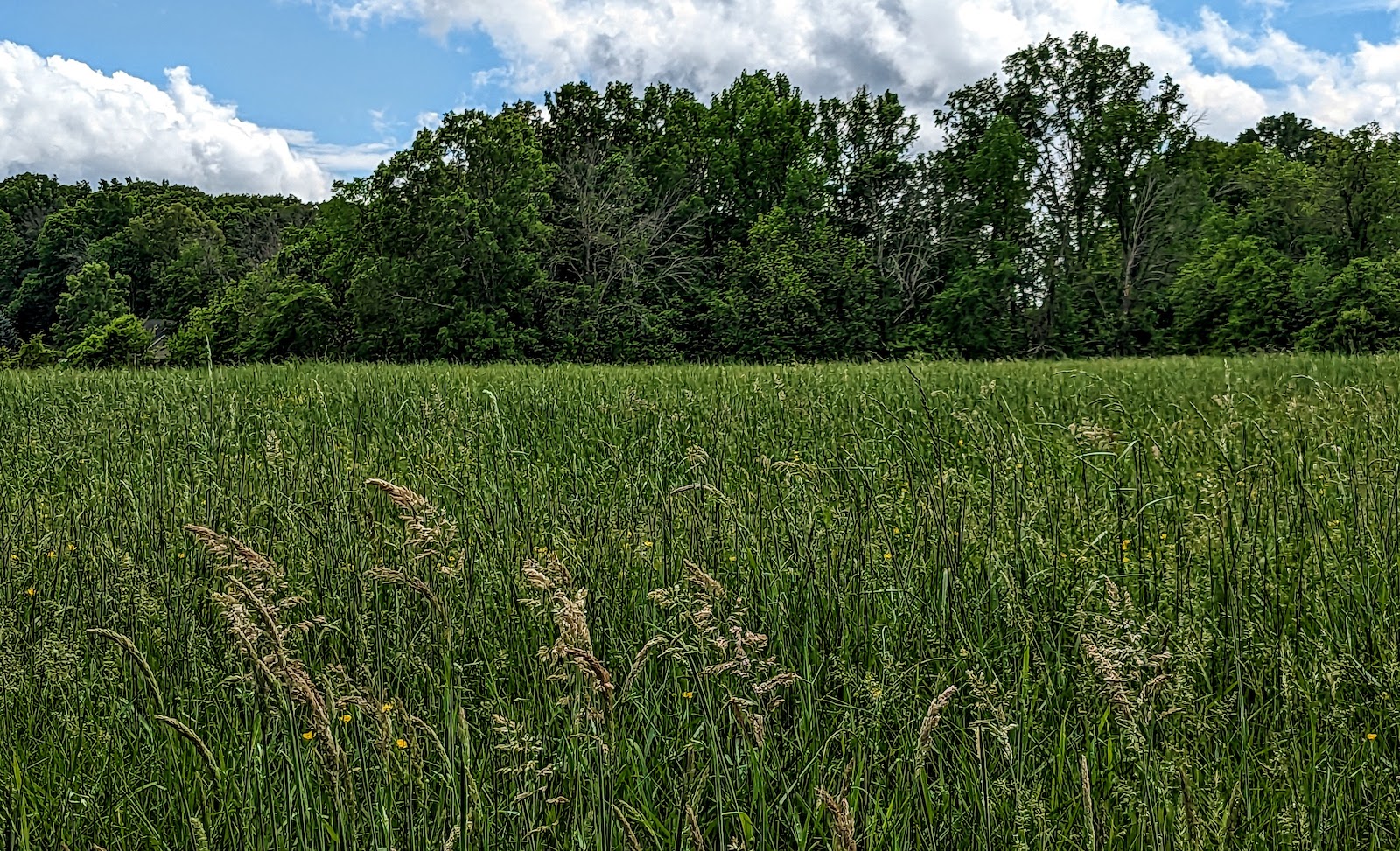
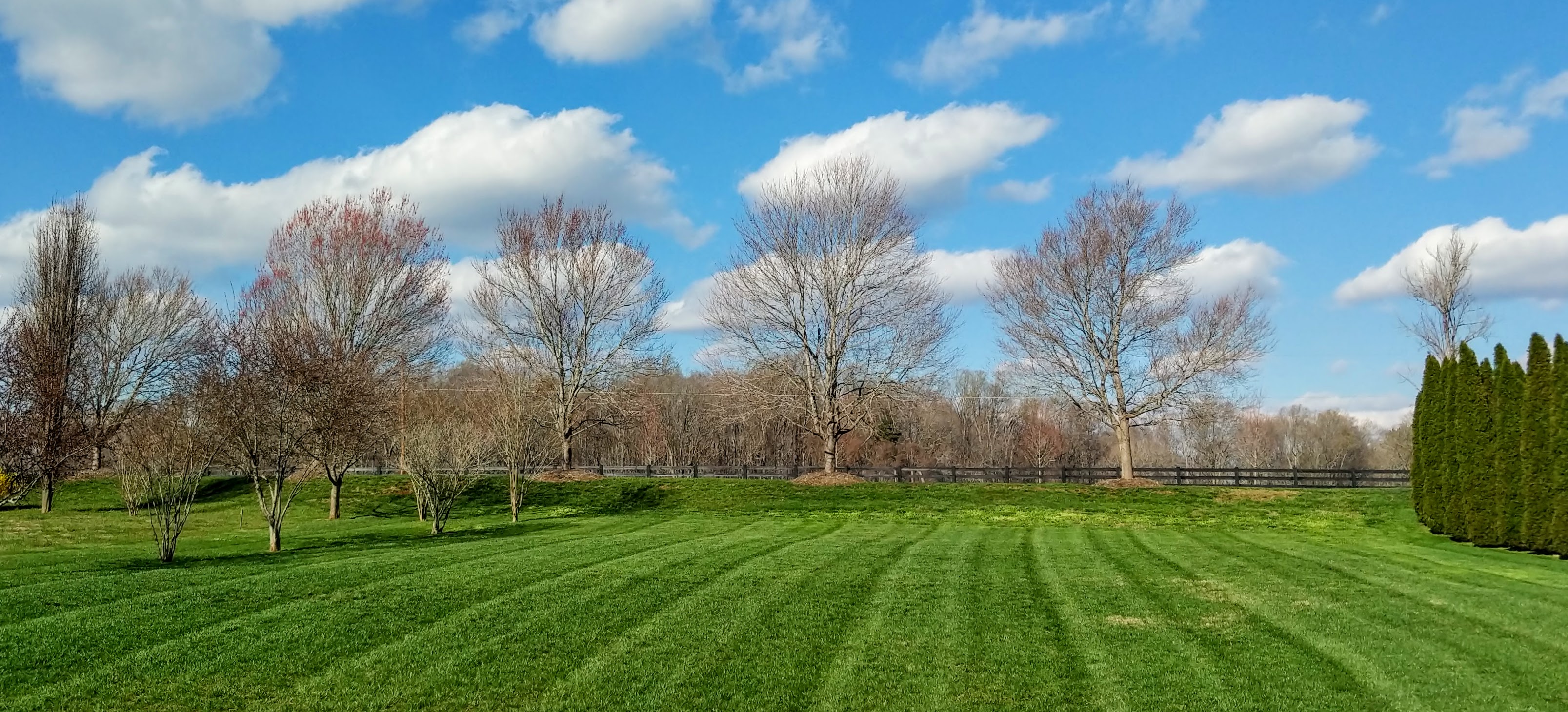
It should be no surprise that I stopped recently to look at a field of grass (pictured above) that needed cutting. It is the last week of April here in North Carolina. There will be no thoughts other than my dreams of cutting hay in New Brunswick, Canada for another couple of months.
If I am lucky in the next two to three weeks, I will get to smell some curing hay in our rural area. I can hardly wait because it is still in my blood.
The Internet Is Not Done Changing Our Lives
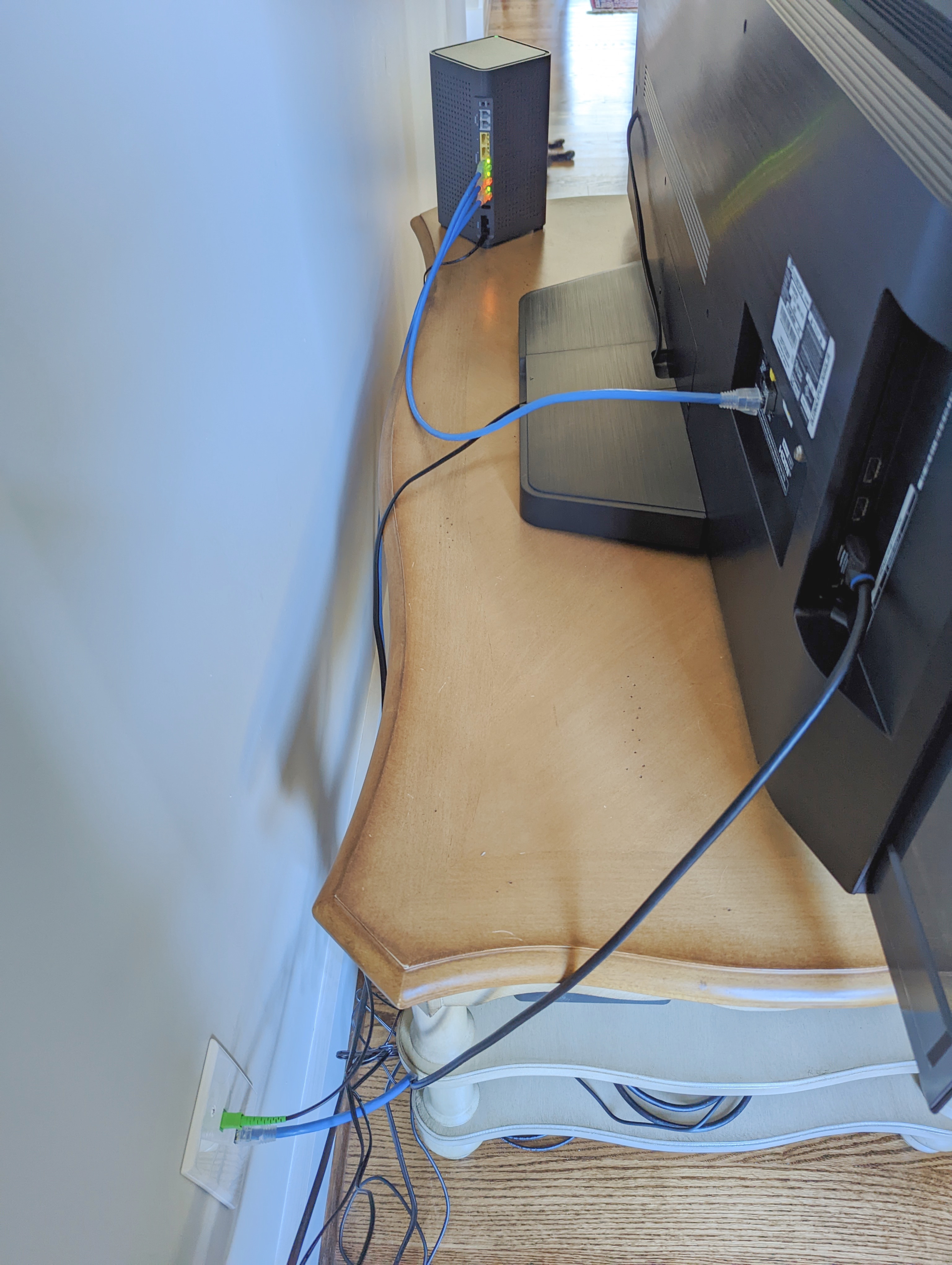
Recently, our home in rural Davie County got a 2 Gig fiber circuit. It was not a special order, just a $99.95 midrange consumer offering of Zirrus, our local telephone cooperative. I know people in California who would give their left arm for connectivity like what I now have across the road from acres of soybeans. One of my co-workers who works out of San Diego asked if I was going to run a data center out of our house? I know one thing, having my television connected to Ethernet is way better than having it on wireless.
Around thirty years ago, I first got on the Internet. The early Internet brought little new functionality. Email had been part of our lives for years. We used a proprietary system called AppleLink. Most of our big customers used the same system. The switch to standards based email that allowed us to communicate with anyone who had an email address was the first of many radical changes headed our way driven by the Internet
It was impossible in the early nineties to predict how deeply the Internet would become intertwined with our lives. Our family was destined to be full of early adopters. My son gave me my own Internet domain in the mid-nineties. My first webpages were online well before the century closed out. Not long afterwards, I helped create Apple’s online store for federal customers in 2002. Online shopping was something of a novelty then. By 2004, I was regularly blogging. Those baby steps were just the tips of my personal Internet iceberg. Shortly after his college graduation my son was managing networks on multiple continents from the heart of the Internet, Northern Virginia.
Even with all that early preparation and a career in technology, I am not sure that even I appreciated how quickly it is coming and perhaps how unprepared we are for the Internet driven changes which are accelerating even in my little piece of the Piedmont. In Davie County which by most measures is about as far away from the data centers and urban sprawl of Northern Virginia as you can get, we have Internet connectivity far better than most urban Internet users.
I recently got my NC driver’s license updated to a Real Id one. When I walked in the DMV office, I was greeted with a large sign saying “Scan this QR Code to Check In.” As I did, I wondered how many people might not be able to do that? Almost immediately the answer was clear, a lot more than I suspected. While I made and confirmed my appointment weeks prior online, there were people unsuccessfully trying to make an appointment in person at the office. All those folks after a substantial wait were eventually given a piece of paper with a web address and a phone number. One person who said he had neither smartphone or computer was told to call the DMV phone. Someone quickly chimed in that no one ever answers that number. The response was, “they’re understaffed.”
Not long after, I did an e-checkin for a blood test at our local Novant clinic. All those forms which accompany every medical visit were filled out and signed on my iPad from the comfort of our kitchen table. Less than hours after the tests, I started seeing test results posted in Novant’s MyChart app.
I haven’t made a hotel reservation in years by talking to a person. It is always online. We get many of our household staples shipped to us by Amazon. I depend on the fast service of Chewy for the wheat-based cat litter that our cats use. I even read my treasured Winston-Salem Journal online if the carrier has been delayed. The Journal made some of my favorite comics online only. I ended up subscribing to Go Comics and have all the comics that I have loved my whole life.
It is impressive that all of these things would be impossible without the Internet, but those things pale in comparison to what that 2 Gig fiber connection will allow our house to do. We now have two offices both with 1 Gig circuits. My son, the Linux system administrator and network architect, will be able to work from home in his next job if he so chooses, I have been working at home for over three decades. My home now has better connectivity than the three story Apple office I managed in Reston, Virginia, when I was director of federal sales.
What do I expect to see in Davie County and yes even in Forsyth County as fiber comes to many cable modem suffering urban dwellers? We will see more companies like the one where I have worked for the last twelve years. I like to joke that I have only been to our head office in Blacksburg a few times and one of them was the result of a hurricane evacuation when we lived on the NC coast.
Every Monday afternoon for as along as I can remember, we have had a video conference staff meeting. It brings together those of who work remotely with those who work at the head office. There might always be a need for some people to be in an office, but I can tell you the signs are already on the wall of the seismic change that is coming.
Recently we were interviewing for a job with a California customer. We have an employee less than a two-hour drive from the potential client. Much to our surprise, they turned down the offer to have our California employee at the interview in person. They told us they found 100% virtual meetings to be more effective. We got the job and our business is not the only one continuing to evolve. Many will follow the path we have blazed.
I tell people that neighborhoods which have fiber should be called fiber-hoods. Those lucky neighborhoods will form the basis of virtual business parks where knowledge, ideas, and new ways of doing business will flow freely. We have studied over 200 communities in the last decade or so. Even five years ago we were seeing some communities where 70% of new businesses were being run from homes. Much as the home laser printer revolutionized what could be published from a home office, fiber is going to do the same thing for the business tasks that can be done from home.
Fiber will also make it is easier for students to effectively educated at home and for all workers to take courses to retrain themselves for future jobs which might be home-based just like the administrative pool that has answered our phones for years. Fiber even makes it easier for some medical services to be delivered in the home and for older people to stay in their homes longer.
North Carolina has a lot going for it when it comes to connecting people with fiber. Long ago some visionary North Carolinians paved the way with a strong open-access middle mile. The North Carolina General Assembly initially funded the Microelectronics Center of North Carolina (MCNC) in 1980 to be “a catalyst for technology-based economic development throughout the state.” They have gone on to build middle mile fiber across on whole state. It is how our educational institutions and classrooms got connected so early.
That same middle mile enabled telephone coops like Zirrus to bring fiber to those us in places like rural Davie County even before our more prosperous neighbor Forsyth County has gotten much of a start. Coops like Zirrus have done an exceptional job bringing not just fiber but world class fiber to our homes.
If fiber is so great, why don’t we have even more fiber? Unfortunately there is some restrictive legislation driven by incumbent telecommunications companies that prevents NC communities that don’t have a Zirrus from pushing forward. Greenville, North Carolina was one of two that took fiber into their own hands before the assembly decided to stop it. For the last few years, there has been an effort to make it easier for communities to support fiber coming to their communities. While that effort has stalled, it is absolutely critical because we have seen companies threaten to leave towns without better connectivity. Telecommunications companies love mini-monopolies but North Carolinians can fix that by electing people who support letting communities responsibly help bring fiber to their citizens.
Fiber is not a magic bullet. We also need to train people how to take advantage of the opportunities that fiber brings to areas like Davie County. North Carolina is blessed with places that have a rural feel but access to top quality services. We just need to make certain that fiber is one of those services. It has risen to the top of the checklists for many companies and is often nonnegotiable.
Having worked in both Northern Virginia and California, I can only say that people look with envy at our beautiful rural areas. Where else can you find an abundance of farmers’ markets and charming small towns combined with outstanding connectivity plus access to mountains and world class beaches?
As a native North Carolinian, I am a little humbled to know how far we have come as a state. I grew up on Styers Street in Lewisville listening to my mother tell stories of walking by her dad’s wagon from the millpond where she lived in Yadkin County to Winston-Salem by way of Styers Ferry where they would spend the night with my great grandfather, Abe Styers, who ran the ferry.
We have gone from cutting ice from millponds and hauling that ice with horse teams. There were only dirt roads with few bridges then. Now we have to fiber to the home (FTTH) and super highways across the Yadkin River. It has happened in just a little over one hundred years. It is nothing short of amazing. I have to smile a little at the jealousy of my California friends still waiting for their 2 Gig fiber circuits. However, this is just the beginning for no one knows how far our connected state can go.
An Unconventional Journey – Life, Learning and Work

I recently started reading Disrupted, My Misadventure in the Start-Up Bubble by Dan Lyons. Dan and I have crossed paths a few times. The first time was when he was in full Fake Steve persona. He offered me sanctuary when it appeared Apple might be coming after my Applepeels blog.
In Dan’s book which starts with losing his job at Newsweek and finding a new job as an editor at ReadWrite. The description of his first new job made me smile.
“Suddenly I am the editor-in-chief of a struggling technology news website called RedWrite a tiny blog with three full-time employees and a half-dozen, woefully underpaid freelancers”
Disrupted, My Misadventure in the Start-Up Bubble
I was one of those “woefully underpaid freelancers.” Dan was actually my first real editor. I had already written my first book, The Pomme Company, by then but the editor of that book had been my very patient but comma-obsessed wife with some help from two former colleagues.
I wrote for ReadWrite for a few months at end of the five years it took me to find my four or fifth career. After nearly twenty years at Apple that was a tall order. During the years after Apple, I worked at a couple of VP jobs in technology, including one at a startup which fortunately unlike Dan’s misadventure was actually generating revenue and went on to a successful acquisition. However, there were enough similarities in my experience to Dan’s to bring back some interesting memories.
Though writing is one of the things that I love to do, I have never thought of it as a possible career. I also love photography and fishing but I have never understood how to make a career out of any of my favorite things. I have supplemented our income through writing and photography. Perhaps having been “a woefully underpaid freelancer,” I learned how hard it is to make good money doing something you love. Good money is required to send three young adults off to college and help them get off on the right foot. I also figured out that what you do doesn’t matter nearly as much as doing it with someone you love at your side in a place that you both learn to love.
How you end up in your career is an interesting topic that Dan talks about in his book. My experience has some similarities but is very different. I hope to write about it through a number of blog posts here.
Only a couple people in my youth even mentioned a career to me. Things were very different in the fifties especially if you were the only child of a single mother and no one in your family had even gone to college.
Mother worked long hours as a beautician in the beauty shop that was attached to our house. We lived in the small community of Lewisville, just west of Winston-Salem, North Carolina. My elementary school and church were just a short walk from home. There were deep woods around our homes. As we were growing up, we thought more about building forts in the woods than we did about building careers. There is no question that I enjoyed my childhood in spite of its share of challenges.
A big turn in my life came in 1963 when I got sent off to a military school that was a six-hours drive from home. Being a boarding student in a dorm was not how I envisioned my teenage high school years. At some point after I got over the worst of being homesick, I decided to make the best of it. Getting good grades had never been a problem for me so I focused on that first. Next I figured out how to do well in the military, stick to the rules, shine your shoes, and do what you are told.
McCallie, where I went to military school did have an important impact on my future. It was assumed that every student would be headed to college. I was part of the pack there so college was clearly now part of my future as well.
While the years at McCallie rolled by, I did get to meet a number of adults with careers that were new to me. Whether they were at McCallie or in Mount Airy where I moved after my mom and dad decided to get back together, meeting new adults did give me an opportunity to think about my future. One of the most interesting people who came into my life was RJ Berrier, who was at the time was the editor of the Mount Airy Times, one of two small local newspapers. RJ was something of a local legend and he loved what he did which was getting the paper out the door onto people’s doorsteps in time for them to enjoy it with their morning coffee. The Times was still using lead type and bourbon to make deadlines. People looked forward to RJ’s Mount Airy After Midnight column as much as I look forward to the comics and the morning paper today.
Though I was already showing some talent for writing, RJ gave me no encouragement to go into the newspaper business. He often explained the pay was poor, the hours long, and job security non-existent. Getting a liberal arts degree at Harvard was not much of a push in that direction either especially since it was during the turmoil of the late sixties and early seventies. I did really hit my stride with writing at Harvard. I am not sure whether it was the expository writing class or all the long papers. However, something clicked and I could churn papers that got stellar marks even at Harvard. I also got paid to do some research work, but there were other things on my agenda that created a hard turn away from writing.
Perhaps, the best description of what was pulling at me was the necessity to get away from the cities that threatened to smother me. Like many others, getting my hands dirty seemed more important than a law degree.
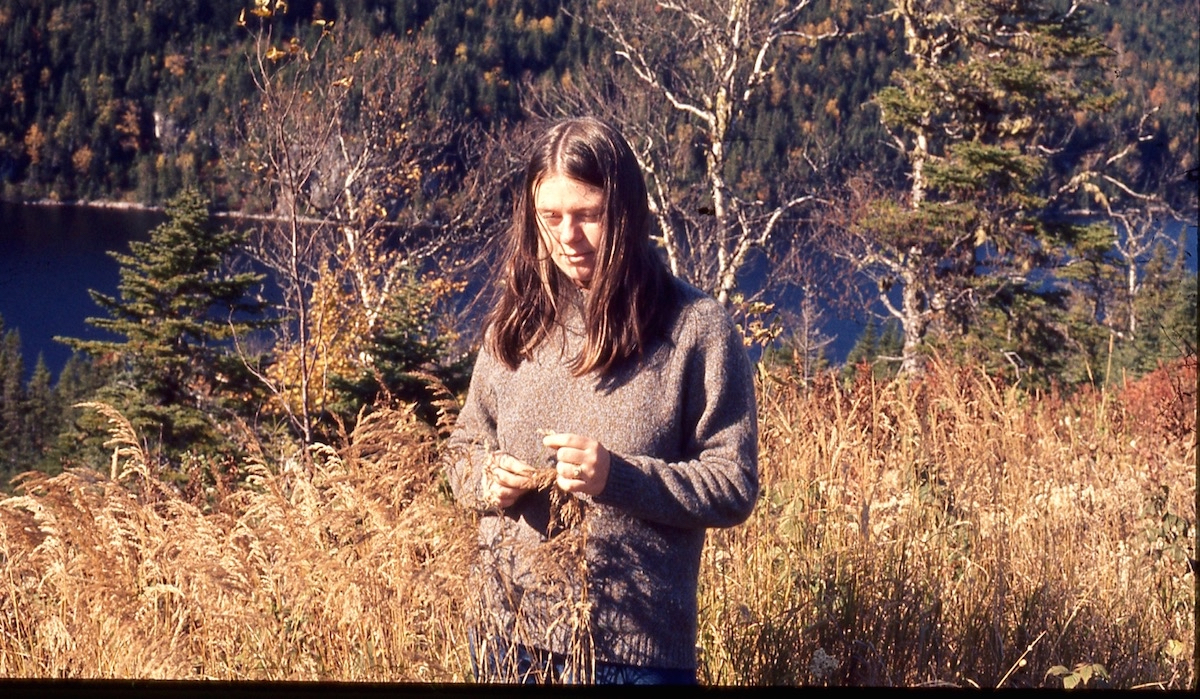
In my case, Nova Scotia appeared to be the locus for a cure. My wife, Glenda, seen contemplating Newfoundland at the top of the post also became a big part of the equation. That we spent ten years building a herd of two hundred head of Angus before I went to Apple is just part of the magic that has touched our lives. I will get around to our lives in Atlantic Canada and how Nova Scotia, Newfoundland and New Brunswick became part of the magic.
A Life On The Edge

The small town about twenty-five minutes from where we live today was in my young mind on the edge of a wilderness. The area was very different over six decades ago. When I was a small boy, the land there was very rural and not just a bedroom community for Winston-Salem.
The books I read in those days about Daniel Boone and eventually the television shows I saw about Davy Crockett only reinforced that view of wilderness at our doorstep. Daniel Boone was something of a local legend. His parents had a cabin about five minutes from where we live today. We also have a Boonville in the area.
My great grandfather ran Styers ferry that crossed the Yadkin River back in the early part of the last century. There was ground behind the homes along Styers Street and Shallowford Road where we lived. Mostly the vacant land grew up in broom straw since no one farmed it regularly. Once in a while a homeowner would carve out a garden for a few years. Farming in Forsyth County was on the decline even back then. It would remain strong just across the river in Yadkin and Davie Counties.
I guess those were my hunter-gatherer years because I was uninterested in gardening or farming, but I loved to wander the deep, dark woods with rock outcroppings and small brooks at the base of the hills. It was a paradise for little boys who had yet to be seduced by TV, video games or smartphones . In the summer we would stop by home only long enough to eat. The idea of staying inside on a beautiful day was as foreign as the idea that the Yankees might lose a World Series.
In the evenings, we did come out of the woods and often played capture the flag in the string of yards that we called our home turf. When we got older some of us started going to a Boy Scout Troop several miles away. Eventually, adults and a few of us with our recent scouting experience brought Troop 752 back to life. Being a Boy Scout was a great experience and camping out in the woods and cooking over an open fire made it even more special. In the summer going to Camp Raven Knob was like going to another world in what appeared to a real wilderness.
The last thing that I did with my old troop and by then I was senior patrol leader was to hike Daniel Boone’s Wilderness Road. It was a little over twenty miles and it is still the most that I have ever hiked in a day. It made me appreciate how hard it was to be a pioneer.
After the hike I went away to military school. It was not Boy Scouts, and there was no camping in the woods. There was a lot of marching. As a boarding student I got an early introduction to dorm life. I was very happy to go off to college, but I promised myself that I would never let dorm life again take me away from the out of doors. I was pleased when our freshman Geology class went camping and loved that a roommate’s father had a cabin on some wild land near Plymouth, Massachusetts. Maine and its rocks and coast became a favorite refuge.
The pull of the outdoors was so strong, that four of us managed to wander off to Nova Scotia and Cape Breton Island during an extended Thanksgiving break. I felt like I had found home. The wildness of the place, the water and rocks seem to be just what a soul battered by college during the sixties in a big city needed. I had been trending towards wilderness for a while. An overland trip through Colorado, Wyoming, and Montana and eventually into the Canadian Rockies and up the Alcan Highway to Alaska had shown me real wilderness. I loved the taste and the challenge of being on the edge of civilization.
Sometime during my last months in college, a plan germinated. Nova Scotia became my goal. After a couple more trips to the Annapolis Valley, I bought an old farmhouse and 140 acres on the North Mountain along the Bay of Fundy coast of Nova Scotia. It was my first adventure as an adult living beyond just beyond civilization. It was not the last.
Some friends helped me partially renovate the two-hundred-year-old house framed with hand hewn beams. In the end as all but one drifted back to civilization, the house became my project and along the way I learned to do practically everything a good homesteader might need to know from butchering a steer and hogs to gardening, wiring, plumbing, welding and making hay. Two Labrador Retrievers, one named after an Alaskan town, Tok, and the other named Fundy, after the Bay of Fundy became my constant companions.
Eventually, I married a talented southern lady who was not afraid of gardening and canning, living on a farm, or driving a tractor. We moved to better cattle country in the hardwood hills north of Fredericton, New Brunswick. There we built a cattle herd and the barns to handle calving and our fast-growing yearlings.
Tay Creek, New Brunswick at the time was a wonderfully wild place. We had no fences at the back of the farm. There was no place for the cattle to go. We cleared old hay fields and eventually were baling close to 350 big round bales for our herd of 200 Red and Black Angus. Our three children was born while we were living on the farm and we buried our two Labs there in the apple orchard during our last years of farming.
After ten years of farming and the heavy hit of 20% interest rates, we dispersed our cattle and I took a city job. Eventually, when I went to work for Apple, we moved off the farm to Halifax, Nova Scotia and then to Columbia, Maryland, but those were the last cities to grasp at us and they only had us for five years,
In 1989, we moved to the side of a mountain overlooking Roanoke, Virginia. Lots of wild country was to the west of it. Our next Lab, Chester, and I cleared miles of trails on the mountains that gone back to wilderness after being farmed when my grandfather was running Styers Ferry. In 2006, we headed to the North Carolina coast and I know my son felt we lived beyond the edge of civilization there on the coast. There were places along the far stretches of the beach that felt as wild as any spot on our farm in New Brunswick. Maybe it was a different kind of wild but it was still wild.
In 2021, we came back to North Carolina’s Piedmont but we remain on the edge of civilization tucked away just down the road in farm country. There’s a huge field across the road from us and you don’t have to travel far to find cows and farms. I think this rural area is where I belong at this stage of life, but given the chance, I might head to wilderness once again if it gets too crowded here. We managed to get away from the coast just before they cut all the trees down turned much of it into a huge housing development. For that I am grateful.
We might travel a long way in life but usually we come back to what made us comfortable. Big trees and a touch of wildness will always make me happy.
Mowing Your Way Through Life

How did people manage in the first half of the twentieth century before there were yards to connect them to the soil around their homes? I suspect that they were working in their gardens and fields. By the time I was growing up in the fifties in Lewisville, North Carolina, yards had become important. The condition of our grassy yard often stood between me and a trip to my uncle Henry’s fishing ponds. My mother who claimed the only yard she had as a child was packed dirt swept with broom straw wanted our yard neatly clipped. In driving by our old home, I am little disappointed the town did not put in sidewalks in front of our house during my youth. It would have eliminated the slope on the front yard. It was by far the hardest part of the yard to mow as a youngster.
Going away to military school (high school) and then college got me out of mowing yards for almost a decade. My first home after graduation was a two-hundred year old farm house located in a sheep pasture on the Fundy coast of Nova Scotia. No sheep came with the old farm house but long grass did not bother me as a young farmstead owner. When I first moved there in the summer of 1971, the yard was the least of my worries. Getting hot water plumbed in and running so we could stop taking showers at the local campground was close to the top of the list. The second summer I had a tractor with a nine-foot-wide bush hog which I used to mow around the house a couple of times a summer. That was all it needed in my days of being single. After all, I mowed plenty of mature grass or hay, starting with the twenty acre field behind the house which served as one of the few backyards in my life away from home.
Then came the summer of 1973, and I married Glenda, the love of my life from the world of well-manicured yards in North Carolina. Her mother often mowed their yard twice, the second time against the grain, just to catch any grass that might pop up after the first mowing. Sometime during the summer of 1974, Glenda and my neat-lawn-loving mother who was visiting us formed a conspiracy. They drove down the mountain to Bridgetown ten miles away and came home with a Toro push mower. I spent much of the next forty-forty years sharing the task of mowing whatever yard happened to be attached to our personal home.
For the ten years or so when we lived on our farm in Tay Creek, we had a nice riding lawn mower which was adequate for much of the yard. Even Glenda did some mowing. When we lived in Halifax, our yard was postage-stamp sized. By the time we arrived on the mountain in Roanoke, Virginia, I had come to somewhat enjoy mowing. There are those times in your life when something as simple as mowing a yard can be very satisfying because you can actually see what you have done.
One of the immutable laws of mowing is that the farther south you live, the more miserable the task of mowing can be. Sometimes, even the most careful home yard person can end mowing in the oppressive heat of the day like I did more times than I want to admit after we moved to the North Carolina coast. As I wrote then, there is a true brotherhood of Southerners (both men, women, and teenagers) who have mowed yards when they never should have.
Mowing is one of those circular things in life. In your early years, you are too young to push a mower, so it seems fitting that in the later years of life, it is also okay to be too old to push a mower. You come to a point when you are faced with either hiring someone to mow the yard or buying a riding mower. Since I spent many years straddling a John Deere farm tractor, we chose not to revisit those days after a back problem slowed me somewhat. For a couple of years, I shared the task with our mower of choice, choosing the spots that required a push mower for myself. However, it was an easy transition to giving it all up. When we made our 2021 move from the land of coastal centipede grass back to the fescue grasses of the Piedmont, we left our third Toro mower with the father and son team that was doing our mowing. I even gave them my gas-powered trimmer.
When our current mowing team shows up, I know the noise will be over within a few minutes as opposed to the hours that it would have taken me with a push mower. I still enjoy our green space especially the backyard which is the nicest we have had since that twenty-acre field that came with our first home. Now if the backyard were just a meadow.
No Frozen Millponds Today in NC

January 2022 with its snow and cold temperatures was a shock to Yadkin Valley residents. All the snow had most of us in the area looking for snow shovels or mittens. Depending on where you live it has been two, or three years since your last significant snow. In this throwback year, some have seen four snows in January 2022.
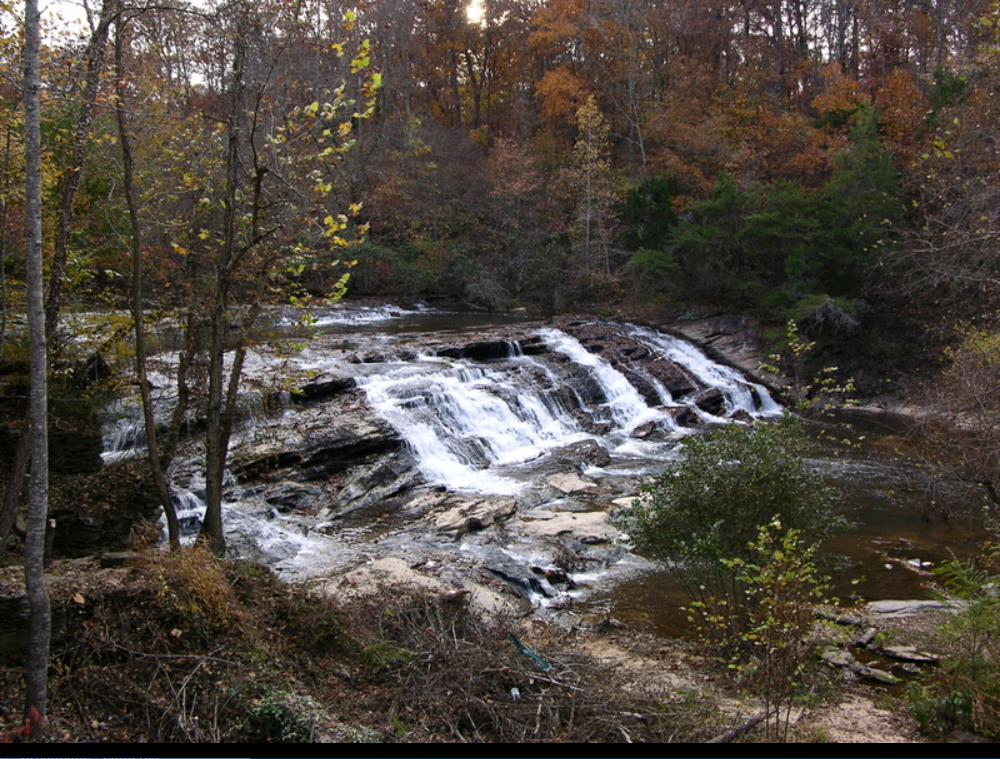
In spite of four January snows, I heard of no millponds freezing over. Our area in North Carolina’s Piedmont used to be dotted with grist mills which usually required a millpond to run. My ancestors, including my Uncle Joe Styers once ran a mill at the Yadkin Valley site pictured above.
All this cold weather feels unusual because winters are changing in North Carolina. I was in elementary school in Lewisville just west of Winston-Salem during the locally famous March of 1960 cold snap. It snowed for three straight Wednesdays. Since so many roads were dirt back then, we hardly went school that month. Even during what still is the coldest March on record, I don’t remember any ponds freezing over. I was a dedicated fisherman even at the age of eleven, and I paid attention to the condition of ponds.
Frozen ponds are part of North Carolina’s history even here in foothills. My stories of iced-over waters came from my mother. She was born in 1910 on a millpond in Yadkin County where her dad, Walter Styers, had a water-powered gristmill that ground grain between two big millstones. His millpond was just a little over five miles further north from the site above on a tributary of North Deep Creek. Their homestead and pond were just off Union Cross Church Road. Mother’s vivid stories of men driving wagons onto the frozen mill pond and sawing out blocks of ice have stayed with me. The blocks of ice she remembered were hauled back to the shore and stored in a sawdust filled underground ice house. According to mother they enjoyed iced lemonade and homemade ice cream from their treasure trove of stored mill pond ice.
The recent cold got me wondering if I could look back at state climate records and find something to lend scientific credibility to mother’s stories. I checked the NC State Climate Records, and I found the winters when my mother was young were much colder. All in that era were colder, but two winters, 1912-13 and 1913-14, when she was a toddler were strikingly colder. The two winters had 107 and 106 days respectively when the low temperature was below freezing according to Winston-Salem records which are the closest ones that go back that far. To put that in perspective, the same station only had 39 days with lows below freezing in 2019-20, and back in 2013-14 there were only 11 days with lows below freezing.
Another interesting piece of data is that in the winter of 2013-14, the first day with a low temperature below 32F was October 22. The last day was an amazing May 5.
While the records are far from complete, logic indicates that there was a great drop in the number of days with lows below freezing by the time we get to the fifties when I was in grade school. It looks like it is quite possible that my mother did see or at least was reminded by oral history that men did take teams on the ice and cut ice from her dad’s millpond.
If you are wondering about the winter 1960 with all its March snows, it was a little old-fashioned with 90 days with lows below freezing. It makes you wonder if our grandchildren will some day be talking about snow on the ground like we are talking about iced-over ponds.
The Company of Cats

I have invited Jessie, one our four marsh cats to be the guest writer for post number fifteen hundred. I think she has a talent for writing. She certainly campaigned hard for the opportunity during the last seven days. Each morning I have awakened to Jessie curled up on my chest and looking down on me. As you can see from the picture above, Jessie is exhausted from all the typing. I did help her with the editing, but the thoughts are hers. This is Jessie’s first effort at writing, but I am sure it will not be her last. She is always first to the office and last to leave. Here are her words.
I am one of four kittens that were born under a shed by Raymond’s Gut on the North Carolina coast. My name is Jessie, but I am sometimes called Jester by our friend, David. I spend most days curled up near his desks which are covered in computers. That is how I learned how to type.
I have three siblings, my two sisters, Merlin and Maverick and one big brother, Goose. Our mother, Elsie, has lived by Raymond’s Gut since before Hurricane Florence. We were very lucky. Our mother brought us to David’s garage to eat. It was there that his wife, Glenda, saw us. We didn’t understand but one night our mom told us to stay in the garage after we finished eating.
When the big door went down, we were stuck inside the garage. The next thing we knew it was dark but we could smell something delicious. Merlin crawled out from behind the cabinet where we were hiding but she did not come back. Then Goose went looking for her and he did not come back. Next I went out and I found the food that smelled so good. Then before I knew what was happening a door shut behind me and I was trapped in a wire box.
It wasn’t long before the human that I now know as David came and carried the wire box inside. Next I was put in a bigger wire box with my brother and sister. It was really scary at first but there was a soft towel. We did a lot of hissing and spitting but none of it kept the humans away. We kept waiting for Maverick to show up, but it was seven days before she let herself get caught. She was really mad that she was caught. She tried biting and scratching, but David had these great big gloves that he would use to catch her. She was so mean that she got thrown into solitary confinement for a week.
Eventually we figured out that they were feeding us and making sure that we were okay. It was much better than living on the dirt under the shed or behind the cabinets in the garage. The first strange thing that happened was when they gave us a bath. We got all wet but then they dried us with a towel and cuddled us until we got warm. It wasn’t too bad after we had a chance to work on our fur ourselves.
It wasn’t long before we got to go live in our bedroom. It was much nicer than living in a cage. It had a big queen-sized bed. It was perfect for hiding under. For a long time we spent all of our time in our bedroom and the adjoining bathroom. David would come play with us. He taught us how to play a game he called kitten fishing. He took one of his fishing rods and tied a string to it and some feathers to the end of the string. We would chase it and jump on it. Sometimes the only way we could get it was to jump high in the air. For a long time Goose was the best at jumping, then he got so big it was hard for him to jump as high. Maverick, who is a little bit of a loner, eventually could jump better than any us. For a long time we played kitten fishing at least once a day.
Then came the big day when we got the run of most of the house. It was really exciting. There were so many things to smell and places to explore. We found out pretty quickly that there were places that we were not allowed to visit but it is so hard if something needs investigating. Our favorite place is David’s office. Not much is off limits there and he pretty well lets us do as we please. It is also the place that we started learning about the real world. Learning about the real world made us realize how lucky we are.
A few months ago things got really exciting at our house. Some people from California bought our home and we had to move. It was really scary and we spent a lot of time in our big cage as David, Glenda, and their son Michael got everything ready to be moved. We did not understand what moving meant at first, then we learned that we would no longer get to see our mom, Elsie outside the glass door of our play room. We were sad, but knew that we had become house kittens and should go with our humans.
The move was actually scary. We had to ride in our cage in the back of a car for four hours. Then we ended up in a hotel for two days. We were allowed out of our cage, but the second day somehow Maverick got inside one of the beds. It took a long time to find her, but finally we took another ride and ended up at our new house. After a really busy day, lots of the furniture from our old house ended up in our new home. The next day we finally got to explore the new house and found that it has a screened porch where we are allowed to go smell the fresh air.
We really love our new house. The new house has our favorite shreds cat food and from the upstairs we can no longer see water, but we can see woods and fields. Most important our humans are still with us. We have even met their grandchildren and we were so excited that Michael has come back to pet us. He doesn’t like us to get on counters but he is really nice to us. He even rescued Goose once when he fell through the ceiling of the attic onto the porch.
We hope everyone has as nice a Thanksgiving as we are going to have. We have lots to be thankful for this year and we don’t have to go up to the office for a few days. Maybe we will get to play some games.
The Trails of Our Lives

By the time I found the first trail that really meant something to my life, I had graduated from college and was living in an old farm house on the shore of the Bay of Fundy. Behind the house was a large field which sloped upwards to a spruce forest. At the top of the field there was a trail that wound through the woods. As much as I loved the rocky shore that was part of the property, the trail at the head of the field seemed to be more personal.
My two Labrador Retrievers, Tok and Fundy, often accompanied me on my hikes. There was nothing spectacular about much of the trail but it finally opened into a clearing that actually was on my neighbor Joe’s property. The view from the clearing was spectacular. I was living in the Village of St. Croix Cove and you could see the actual St. Croix Cove. I loved the view so much that I eventually traded some land for it.
There were times that I thought that Nova Scotia was the greenest place that I had ever seen. We sometimes were able to find baskets of chanterelle mushrooms just off the trail. No mushrooms since then have ever tasted like those.
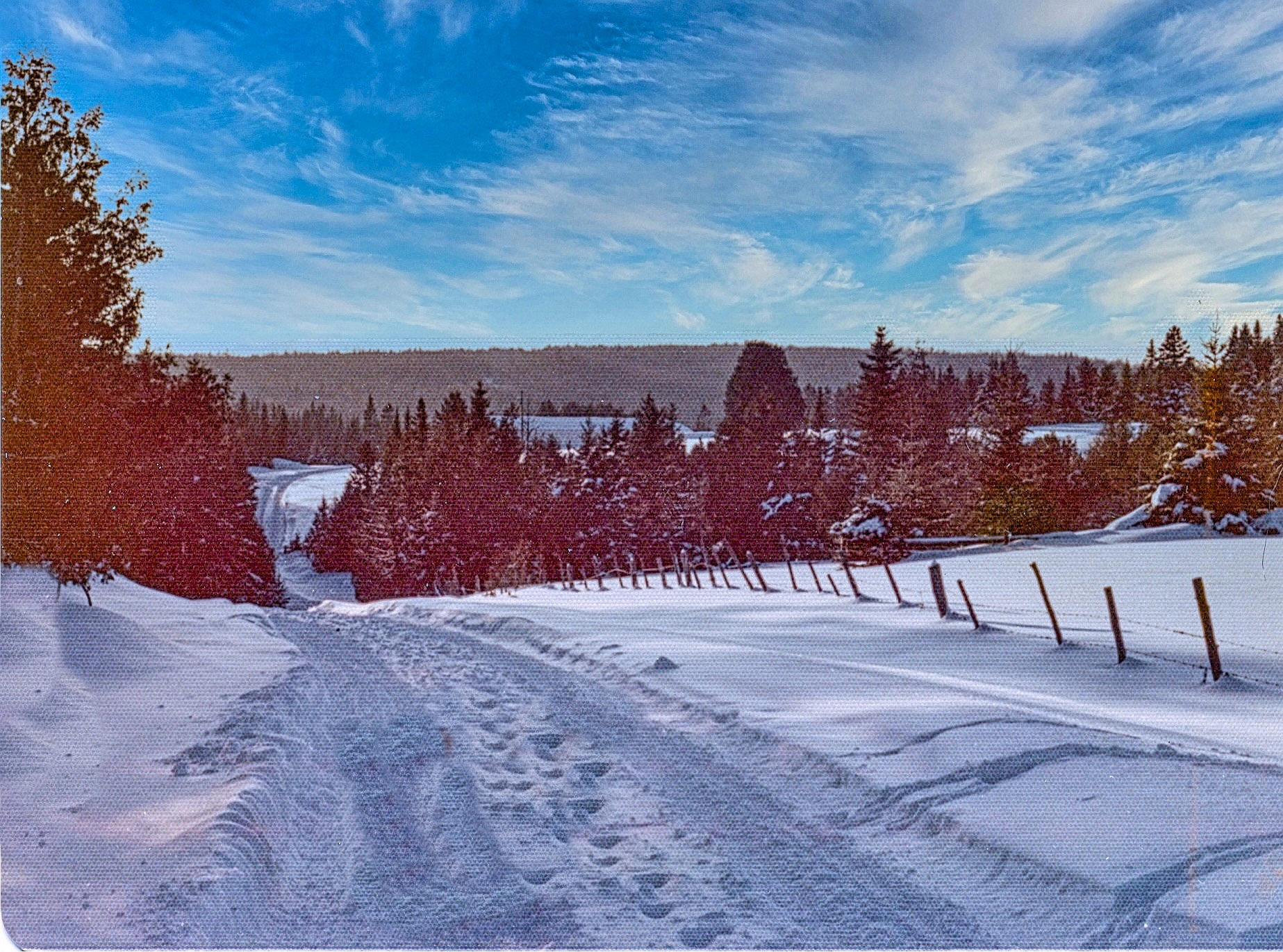
With the trail being inNova Scotia, it sometimes took on a winter look and often stayed that way for a month or two. While it was hard to walk up the hill, getting up to the trail on cross country skis was even more challenging.
With each move, we managed to find new trails, some of them memorable.
I eventually got some snow shoes but the snow and and my schedule never managed to really coordinate before we moved off to New Brunswick which was the land of real snow as opposed to rain, snow, rain, and more snow like Nova Scotia.
Still the Nova Scotia trail was beautiful when it did snow. It was a little challenge skiing through the trees without getting covered with snow but that was just part of the charm. That and freezing your tail off were just part of cross country skiing in Nova Scotia in its normal thirty mile per hour breeze.
When we finally moved to New Brunswick, it snowed a lot and we eventually got a tractor-mounted snow blower which coincidentally allowed me to groom a very nice cross country ski trail. Obviously, my wife breaking trail on snowshoes like she did the first winter was not a sustainable solution especially once we had three children.
That first winter on snowshoes helped me to find my next favorite trail which was about a mile and a half and took me to a ridge at the back of our home farm. At the top of the ridge you seemed to surrounded by endless woods. It felt like true wilderness.
The next ten years were spent farming and there was scant time for pleasure hiking. Every trip to the top of the ridge was precious. I did spend lots of time leading cows through the woods from summer to fall pasture and making the long walk to the barn during calving season.
If we fast forward about twenty years, we have moved from New Brunswick to Halifax and back to the states, first finding some temporary roots in Columbia, Maryland. While Columbia, a planned community, was full of trails, none of them were wild enough for me. Barely two years after getting to Maryland, we moved south to Virginia and found a wonderful place on the side of the foothills of Twelve O’Clock Knob Mountain. Up on the mountain behind our home there was nothing for miles. It was a good place for the next trail that provided a respite from the pressures of civilization.
In the early nineties while still living on the mountain, we went to look at a Labrador puppy. It was no surprise that we came home with Chester. Chester, a wonderful pal, like all Labradors grew quickly and needed lots of exercise.
One winter Chester and I were doing our normal two to three mile hike around our subdivision and we saw an old woods road. We walked up it and managed to find our way home through the woods. It was not too long afterwards that I ran into the owner and got his permission to work on the trail.
It was a beginning of a decade of walking that trail, but it took a lot of work to make the trail usable during the summer. The old logging road had filled up with poison ivy. It took me months of work and spraying to kill the poison ivy so Chester and I could enjoy the trail together. Then we often spent Saturdays doing trail maintenance. Chester sleeping in a shady spot while I worked.
The trail rose high above all the houses and looked down on the city of Roanoke. Once on the trail, you felt like civilization was far away. Eventually I discovered an old homestead and the grave of a confederate soldier. It was easy to imagine living on the ridge and trying to scratch out a life from the small fields on the mountainside. A couple of times I made it to parts of the mountain where I found an old road that was knee deep in pine needles. It appeared the road had been unused for decades. At the very top of the ridge even the type trees started to change from hardwoods to firs. It was not unusual to hike the trail in the morning and the evening. We all loved it. We kept a kiddie pool so Chester could cool off after his hikes. Only when Chester began to get old did the trail fall into disuse.
It was always Chester’s Trail to us even as we moved from Roanoke in 2006 two years after he passed away. It was perhaps time to go because the old road that I cleared had been graded and paved. Someone from the valley had bought the land along the ridge and was building a home near the old homestead.
After moving from the mountains, we spent almost sixteen years at the beach. I found a favorite trail on the beach to the end of the Point at Emerald Isle. It was a wonderful hike and once again it was easy to feel like civilization had slipped away. Still it was not the same since I had to share it with lots of others in the summer and people could even get to the end of the trail by boat. I did fall in love with the salt marshes where you could lose the pretense of civilization a lot easier than on the beaches.
Now we are back in the hardwood hills not far where I grew up playing in the deep woods. I think that I might have found another trail that looks like it will be a big part of my life. It runs through what can only be called a cathedral of leaves. The beauty of their colors have left me speechless at times. I am happy to have found it early enough in life to still be able to enjoy walking it.
Not Enough Wilderness To Save Us

Towns are magnets and they suck people from the countryside, especially the young and talented. We noticed this happening when we returned to New Brunswick in 2012.We farmed there in the seventies and early eighties. Since our trip, what remained of the three churches in our old town disappeared. The community store closed. Yet the provincial capital, Fredericton, is thriving as the small towns wither. It is a story repeated time and again in Canada and the United States.
I still worry that some of those wild places like the North Carolina coast will become too populated. I sometimes think that what we call the Northern Outer Banks from Corolla to Cape Hatteras will sink into the seas just from the weight of all those beach castles. I offer up my profound thanks for those who created the National Seashores. Beyond nourishing our souls places like coastal Carteret County and hilly Davie County where we now live grow a lot of food that North Carolina cities need.