Barely Clinging To The Grid

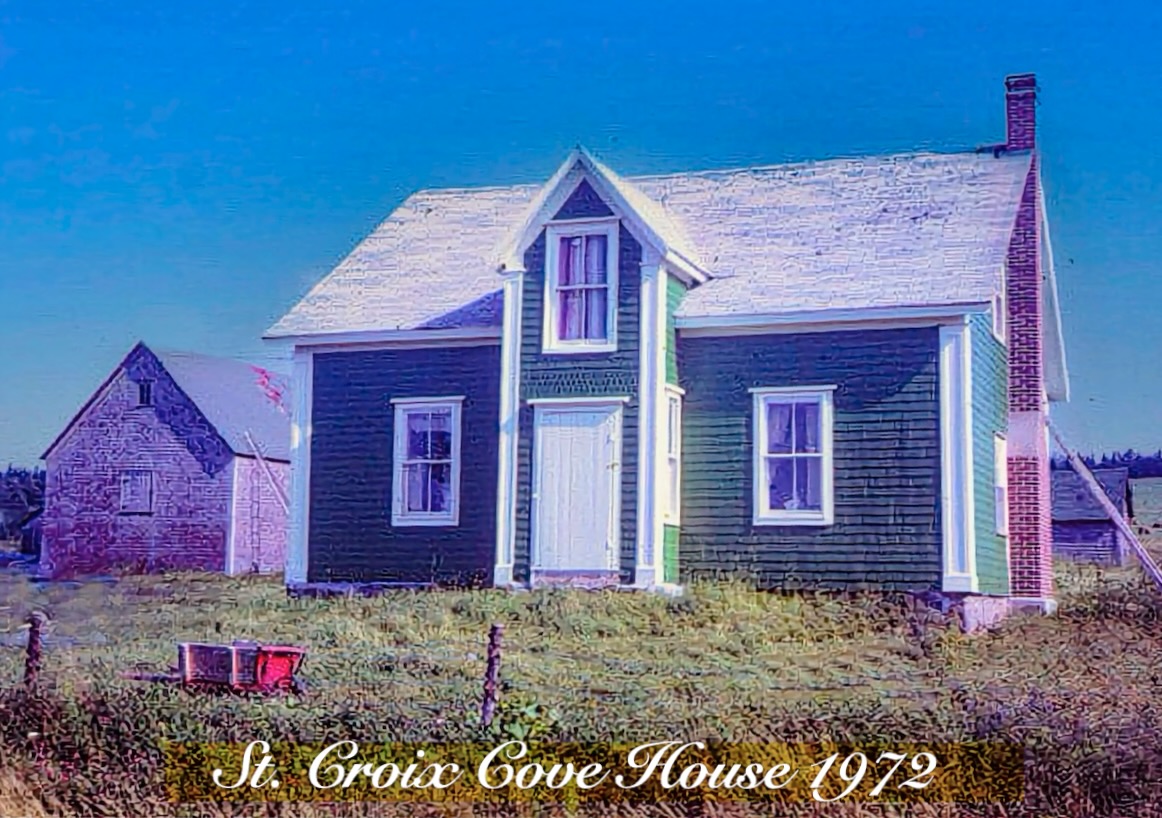
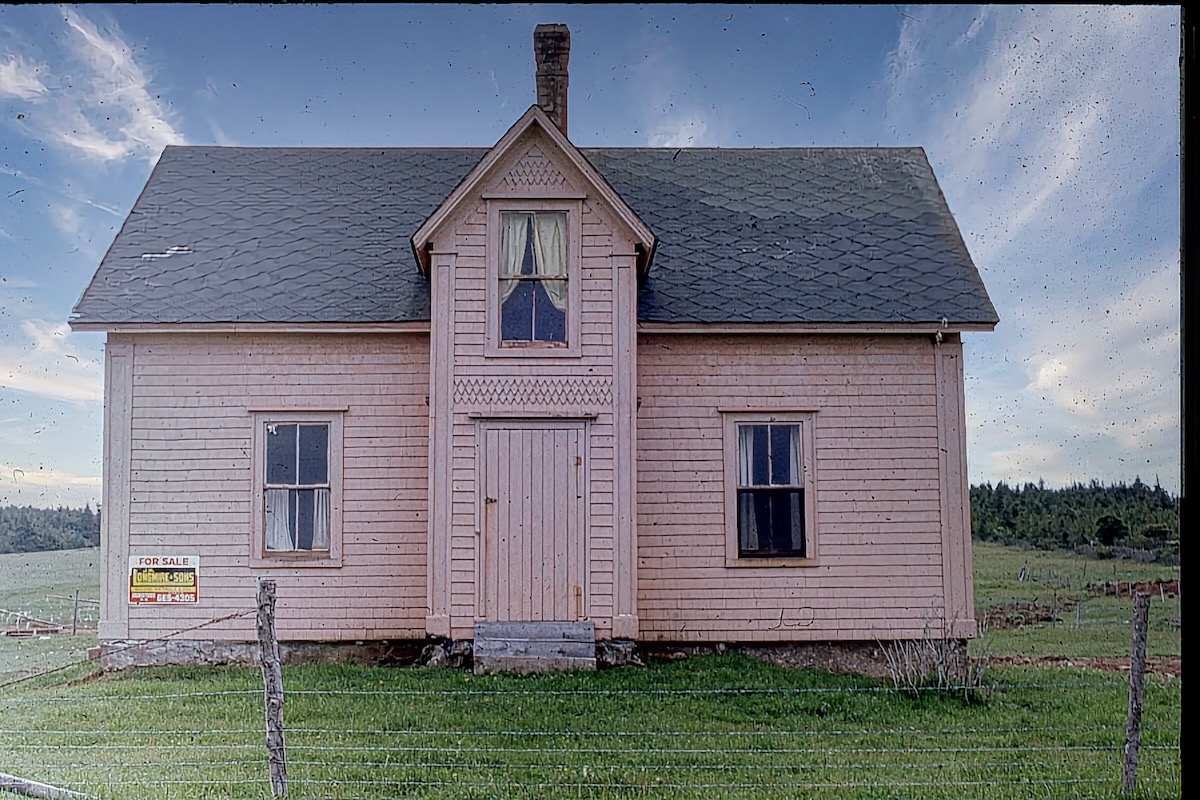
Our formerly pink house after a year of intense work

The dearth of good programming this holiday season has sent me to YouTube where I have enjoyed watching this generation’s homesteaders who would have been part of my generation’s back to the land movement in the late sixties and early seventies.
I was on the fringes of that movement back in 1971 when I bought an old farm including 140 acres, a two-hundred-fifty year old farmhouse (pictured above after a year’s hard work), with a barn and out buildings. I had just graduated from Harvard but had chosen Nova Scotia over law school. Four, also disillusioned, college friends went with me to Canada, but I was the only one to make the commitment to become a landed immigrant. My Dodge Powerwagon and Landrover came with me to Nova Scotia. They carried all that I owned including a TV and lots of spare kitchen utensils from my mother in Mt. Airy, North Carolina.
The pink house in the middle of a sheep pasture was in rough shape when I took possession. We set about tearing it down to the hand hewn beams, insulating it and attempting to bring some modern conveniences to the house. That was probably what set me apart from most in the back to land movement who leaned towards off grid domes, hauling their water, and hand tools for gardening and no modern conveniences,
Maybe it was a childhood in rural North Carolina which was still close to the land filled with small farms that made me different. My mother had been born on a millpond in 1910. I had listened to plenty of her stories of ice being stored in saw-dust insulated holes in the ground and cooking over a wood stove. When I was growing up in the fifties some of relatives still had outhouses on their farms. I also probably had camped in the woods more than most. For whatever reason, I was fine with the conveniences that electricity brought including hot water and a dishwasher. I was also happy to use a diesel tractor on our farm.
I became the electrician and plumber for the modernization of the old house. By Thanksgiving of 1971 we were ready to host some college friends who were sure that we were crazy. It was the first Thanksgiving on our own for all of us. It was pretty rough with everyone sleeping on the floor, a blanket for a bathroom door, chicken crates for kitchen cabiinets, and mayonaise jars for glasses. Still we had an electric stove and a dishwasher. Still it was a great celebration of our independence.
The next year the house was more livable but we poured our energies into gardening and farming. My dad gave me $11,000 to buy a tractor, three furrow plow, disk harrows, front end loader, manure spreader and a bush hog. I took $1,500 and bought our first herd of six or seven cows. We also started refurbishing the old baler that had come with the farm. We converted it to a PTO driven model instead of one powered by a mounted gasoline engine.
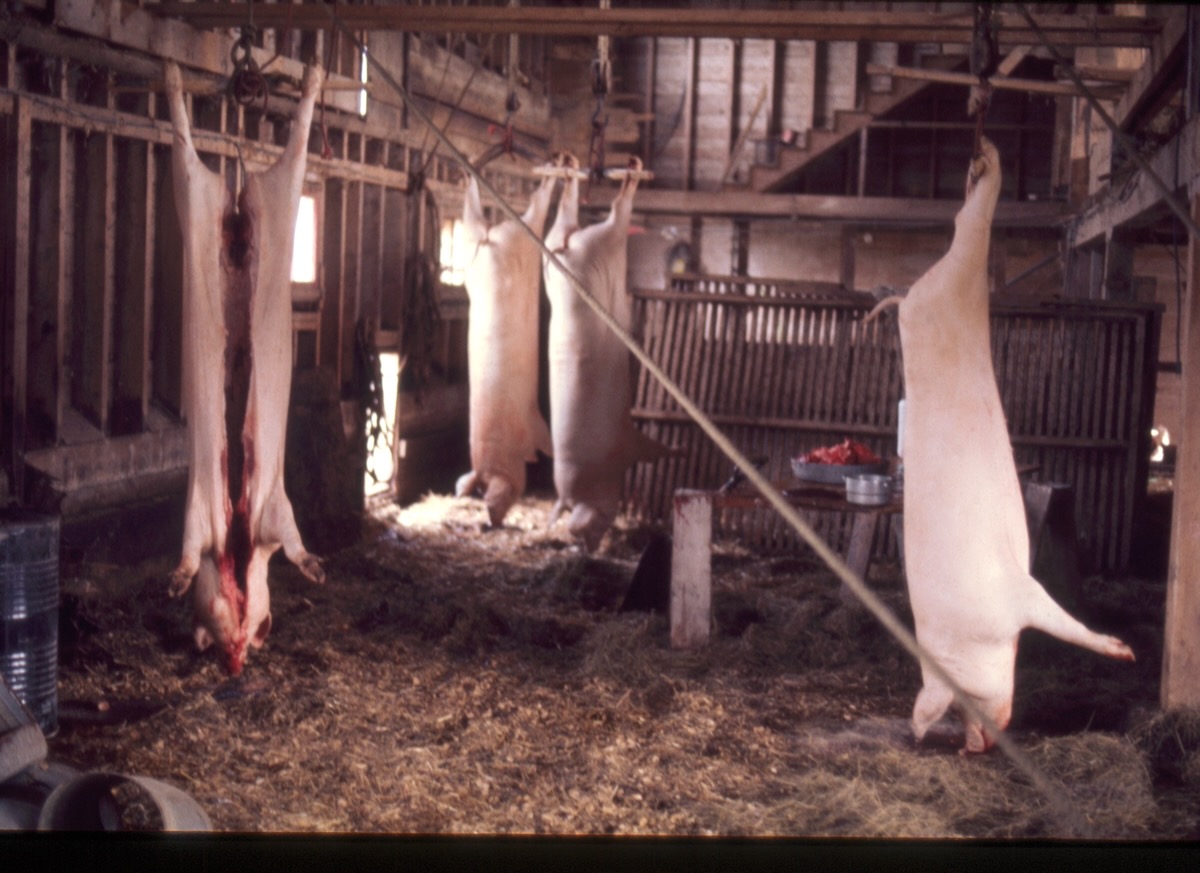
We had unlimited compost from chicken manure that had rotted for years behind some old chicken houses. I had little experience gardening besides helping my mother grow tomato plants in North Carolina. What I did have was inspiration from Helen and Scott Nearing and Malabar Farm. Gardening in Nova Scotia on the foggy North Mountain by the Bay of Fundy required a lot more expertise than in North Carolina. Still the abundance from the garden was overwhelming until my mother and her sister, both experienced canners, showed up to help us through that first harvest. We filled the freezer and the cupboards. That winter we butchered a steer we had fattened from our herd. We hung it age in our cellar before carving it up. The next summer we raised pigs, one for us and three more for neighbors. We butchered them with the help of neighbors in the fall, topped up the freezer and made crocks of salt pork. It was an amazing amount of work that made me appreciate all the fresh pork in the fall that our relatives had always given my mother and me.

That winter of 1972 was something of a lonely one. One member of the college crew married the local school teacher and moved into another old house across the dirt road. The last one of my college friends left for a warmer climate. That left me wintering on the Bay of Fundy with our two Labs, Tok and Fundy, and a handful of cats. I made friends with some back to the land folks who lived far in the woods in a dome. I ordered some supplies with them including a giant tub of honey that was still with me when we moved. Mostly what we didn’t grow came from Beaver Fruit Cooperative in Lawrencetown down in the Annapolis Valley or from itenerant peddlers who sold salt fish and winter vegetables. I say we because that was my last winter alone.
I got married in the summer of 1973 and brought my new North Carolina bride home that September just in time for an early season snow storm that took the power out for a week. We stayed warm with the fireplace and cooked over the same. It was not unusual for the powe to go out on our dirt shore road but a week long outage was rare. That next summer my wife and I continued to garden, work on the house, and farm a little. Farming was a little because I had sold the cattle and part of my land to disolve an uneasy partnership with the friend who had married the village school teacher. Well before garden season my wife and I had made the decision to move to a better farming area with more and friendlier people.
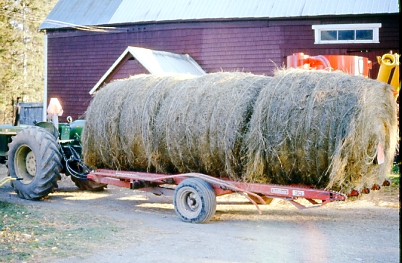
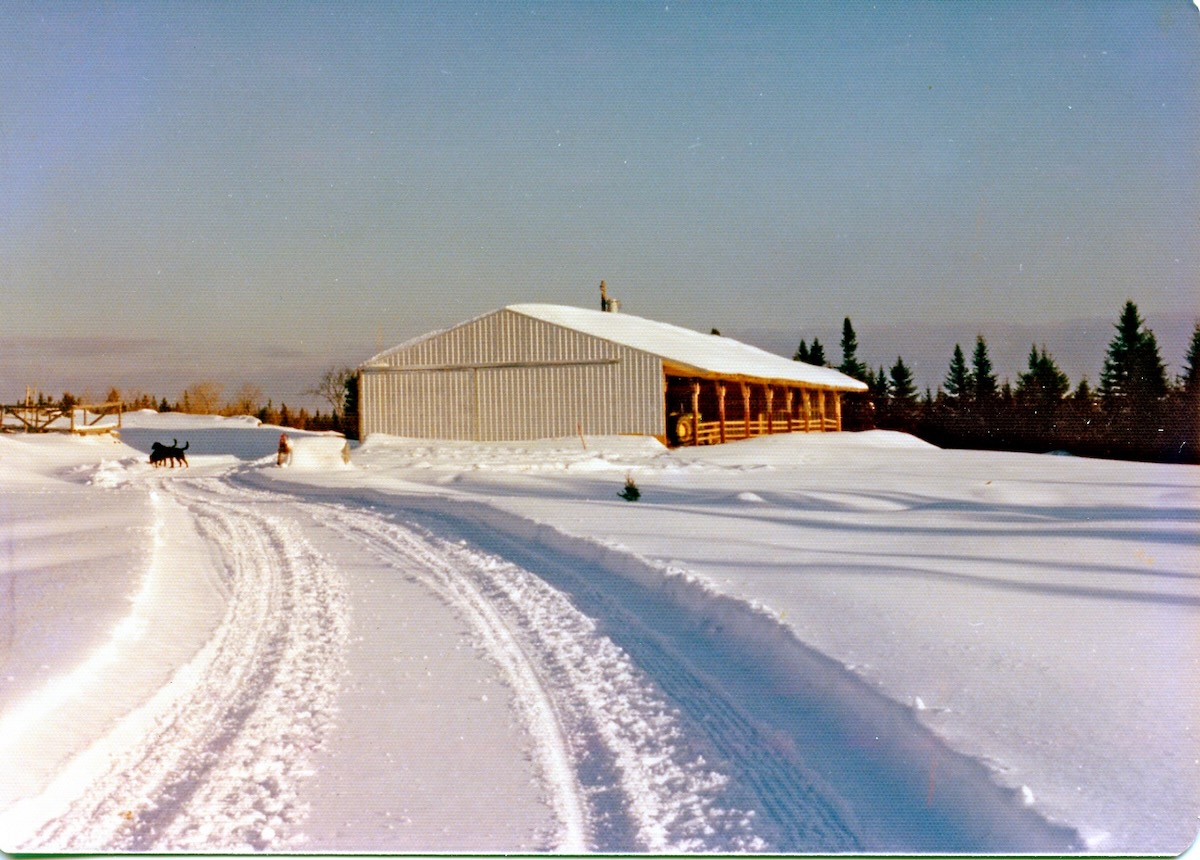
We found the perfect place for us in Tay Creek, New Brunswick. We moved there in the fall of 1974 and started the process of building a real farm with the help of some great neighbors. We built our first barn in 1975 and converted to round bales in the summer of 1975.

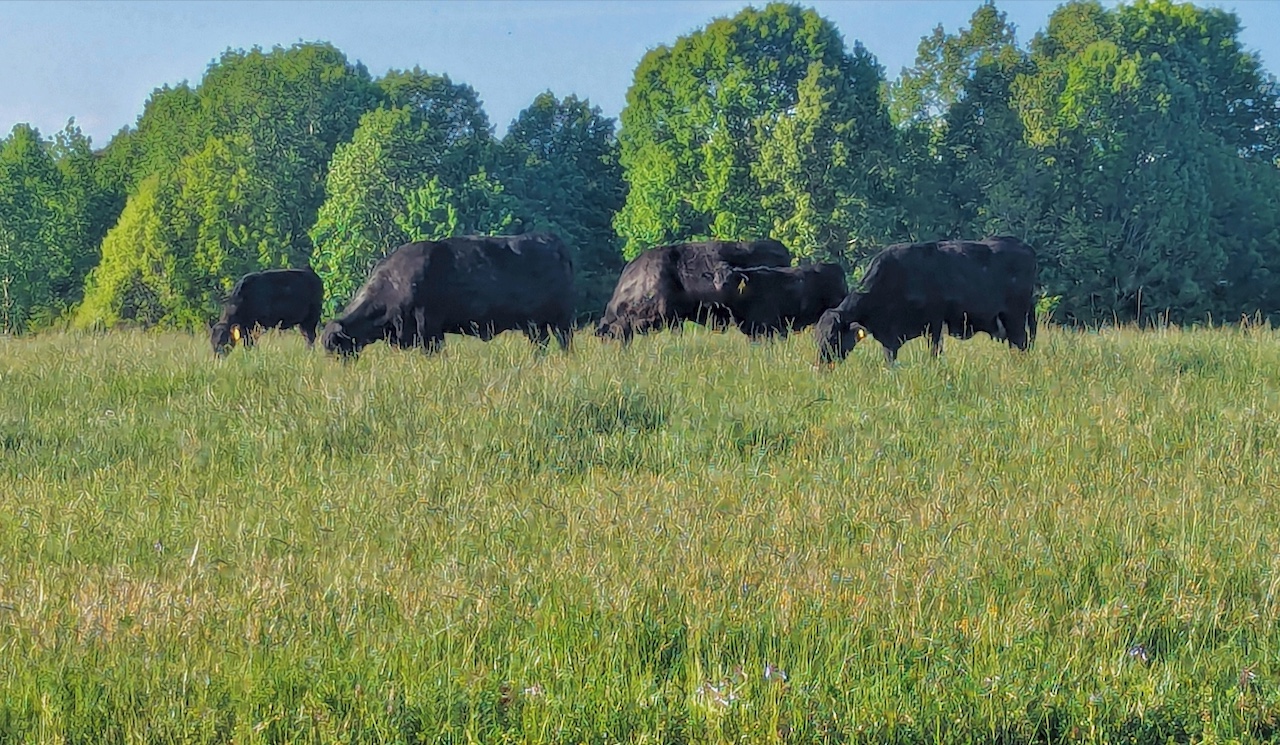
Annually, we put up 200 large round bales for our herd which eventually grew to 200 head of purehred Angus.

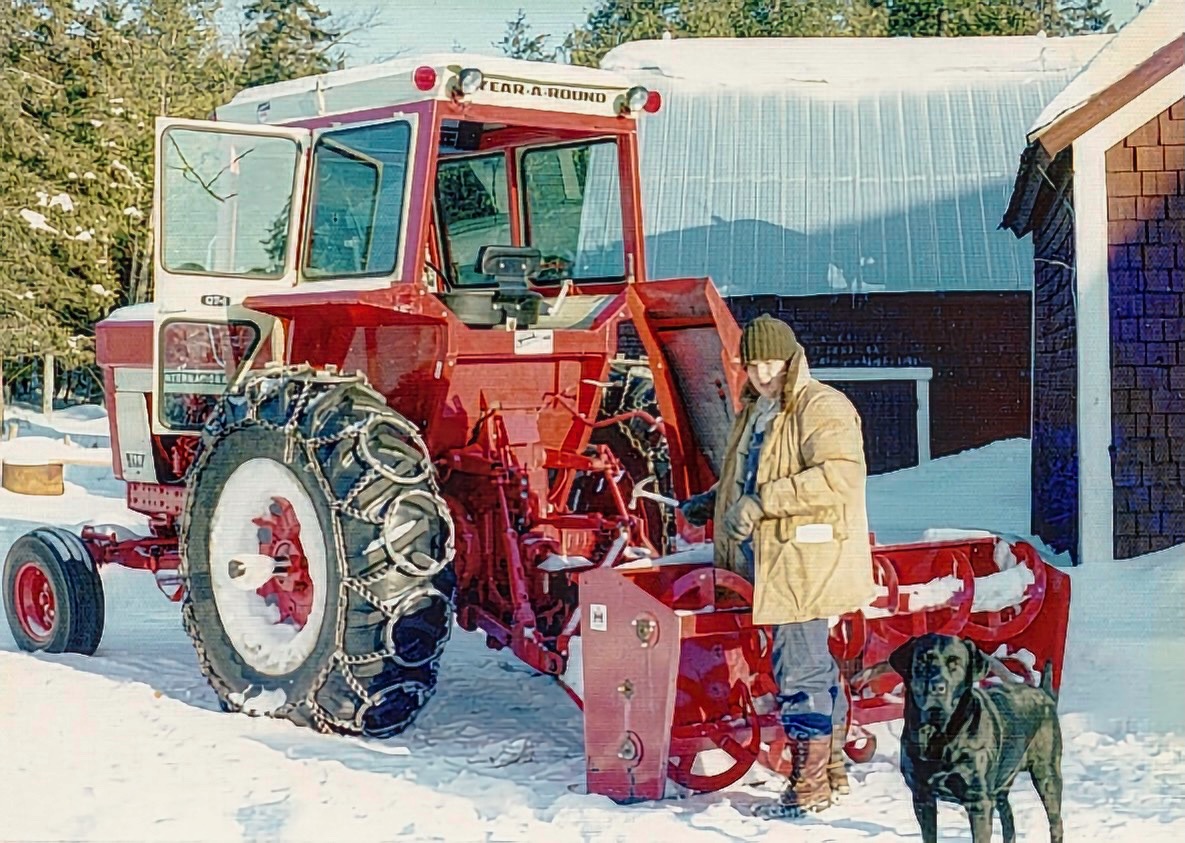
We were actually even closer to the land than we were in Nova Scotia. On our New Brunswick farm we had spring-fed water for our house. We continued to garden, added chickens, and a milk cow. However, we found a local butcher to do our annual steer. We were still on the edge of the grid. Our first winter we got twenty-three feet of snow. We saw weather as cold as minus forty with sixty mile per hour winds. We went back to mostly heating with wood, burning three to four cords per year in our much newer home which was only one hundred years old. It was cold enough that we unplugged our freezers in the shed which was attached to house so you could get wood without going outside. The first winter there I fed hay that had been put up with horses. One thing we did not do is fight snow with tiny all terrain vehicles. A couple of miles of road to keep clear required real snow removal equipment.

Our 85 HP International 786 tractor with 8 ft wide blower, Tok and me with lots of layers

When I look back on it all, I am amazed that we did it without someone getting really injured. There was no Internet or YouTube for advice. Advice either came from a book or your neighbors. I learned to be pretty self-sufficient often repairing broken equipment with my torch and welder. I added chain saw carpentry to my resume as we built the barns. We ran our cattle in the woods in the winter and managed to get through our farming years without ever having a vet come out for a sick animal. We might still be farming if interest rates hadn’t surged to 20% and drove me to working in the city with computers and eventually to a career of nearly twenty years at Apple Computer.

We were never off grid but if your farm doesn’t have any cattle fences in the back because there is no place for the cattle to go, you can justifiably say you were barely clinging to the grid.

Paths Not Taken

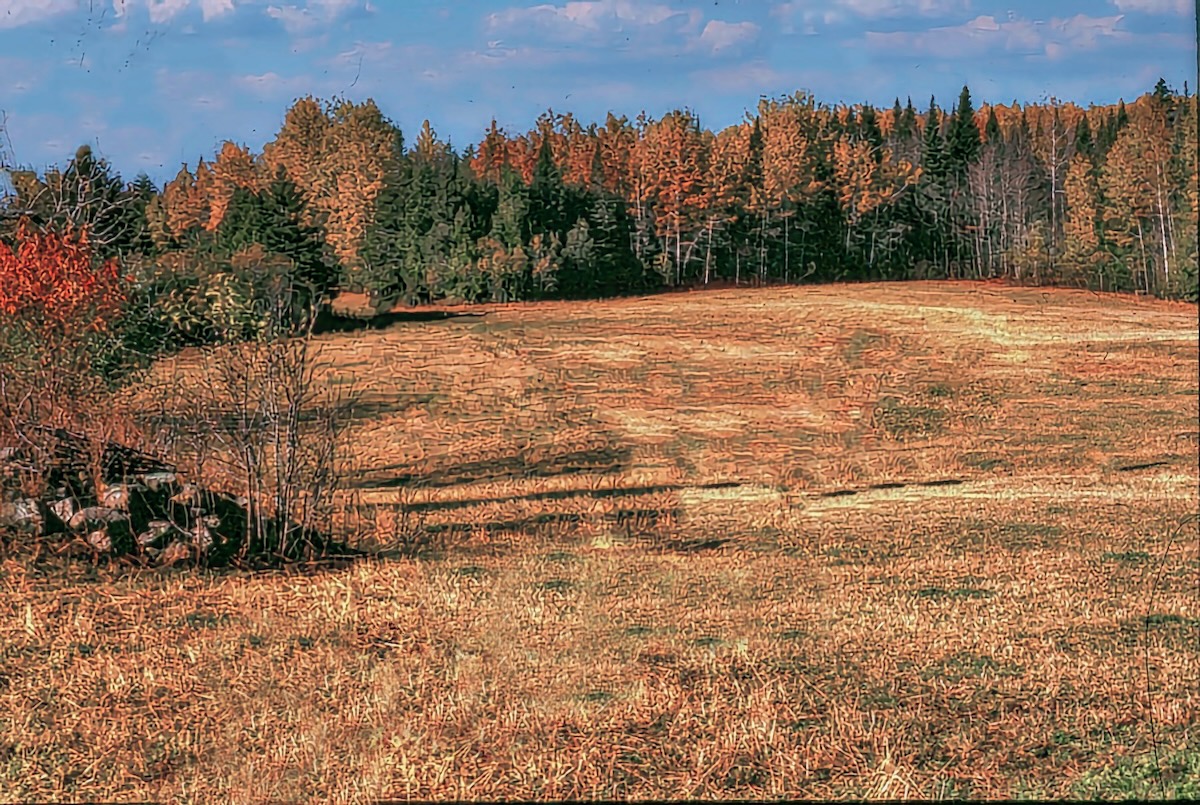
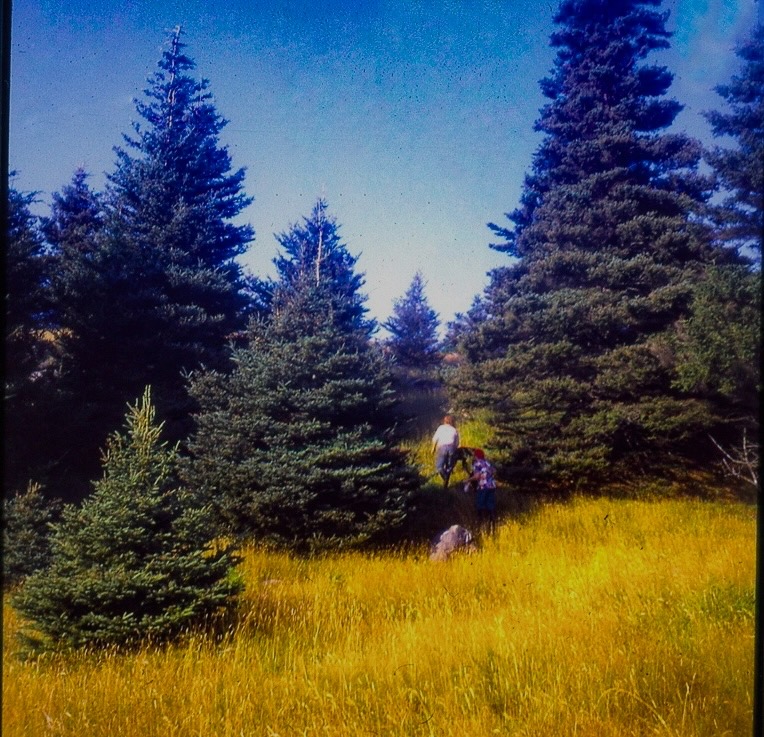
The backfield at our Tay Creek farm where I am homesteading and splitting wood in my dreams

In every life there are decisions which determine what direction your life will take. I have been fortunate to be in positions where I had enough flexibiity to guide our life in certain directions. Even now fifty years after some of those decisions, it is hard to say that what we did was the right decision for us. Our decisions worked out for us but it is impossible to tell if another path might have given us an even more rewarding (and not in monetary terms) life.
I graduated Harvard and instead of going to law school, I went back to the land in Nova Scotia. Whether the neighbors ever called us hippies or not is still an open question, but my bet is that they didn’t because we had a John Deere tractor and were trying to farm the land. We were friends with hippies living in a Dome in the woods, but I worked hard to wire our house so we could have electricity and the modern coveniences that came with it
We did grow a huge garden and put up prodigous amounts of produce both canned and frozen. We butchered our own steer and hogs. We collected wild Chantrelle mushrooms from the woods. We even tended a gill net for a while.
The old house I bought and fixed up had 140 acres. Of that well over 25 acres was a cleared hayfield with a small pond. Though the woodland with it was mostly spruce, I did eventually get another piece that had some hardwood. It is not too much of a stretch of the imagination to think that we could have kept a few cows, had a huge garden, and lived a very simple life. Looking at recent aerial photos of the property which I sold in 1976, the property appears to now have lots of gardens, more trees and little pasture though I am sure goats would be happy with what is there now. I might well have done something similar had my partner in the enterprise not been such a jerk. He married the local school teacher in our small community and devoted far too much time to telling our neighbors what a terrible person I was. While my new bride stayed with me there for a year, we were determined to move a friendlier place.
We found the better place in the hardwood hills north of Fredericton, New Brunswick. Instead of people being petty and mean, the residents of Tay Creek were welcoming, helpful, and supportive. I can think of no better place to raise a family. The community when we moved there had two country stores, three churches, a town hall, and a lot of opened minded people.
We stayed in Tay Creek for over a decade. Our three children were born while we were on the farm. Our two Labrador retrievers are buried there a long with a good chunk of my soul. This would have been an even better place to have a few cows, lots of gardens, and even fill the freezer with trout to supplement our beef.
We did not take that path, I wanted to work the soil and to raise high quality cattle, selling bulls to improve the local herds. We accomplished that goal, along with continuing to grow much of our own food. We had chickens, a Guernsey milk cow and a beautiful farm.
We eventually had to give up farming because interest rates soared to over 20% during the early eighties when our herd had grown to two hundred head. We couldn’t handle the high interest rates on our $100,000 operating loan, so we had a very successful dispersal sale. . After selling the cattle we could have hunkered down on the farm which was paid for, sold off some of the machinery, and continued to work the land, but we had three children, and we wanted them to go to college. Like many others I went to work in town after taking a few months off. My job was in an early computer store and led to a twenty year career at Apple. After Apple I worked as a vice president of a network construction and consulting firm for over a decadsa.
It has been a good life. All three children who were born while we were living on the farm have gone to college and done well. Yet as I have been watching some of the Alaska homesteading YouTube videos, I can only wonder how would things be different if we had stuck with working the land instead of keyboards. After all, I made the trip to Alaska before I moved to Nova Scotia and I even considered homesteading in Newfoundland.
Instead of that I ended up walking the halls of government as Apple’s director of federal sales. I know the people that I would have gotten to know working the land would have made much better friends than the politicians that I have met.
Still in my dreams I am splitting hunks of birch, milking the cow, collecting eggs and filling the freezer with brook trout, beef, pork and the cupboards and root cellar with homegrown veggies. We still garden in a token fashion and I still make sourdough bread but we buy more from local small farmers thsn we grown. At my age the amount of wood, even birch, that I could split would be limited.

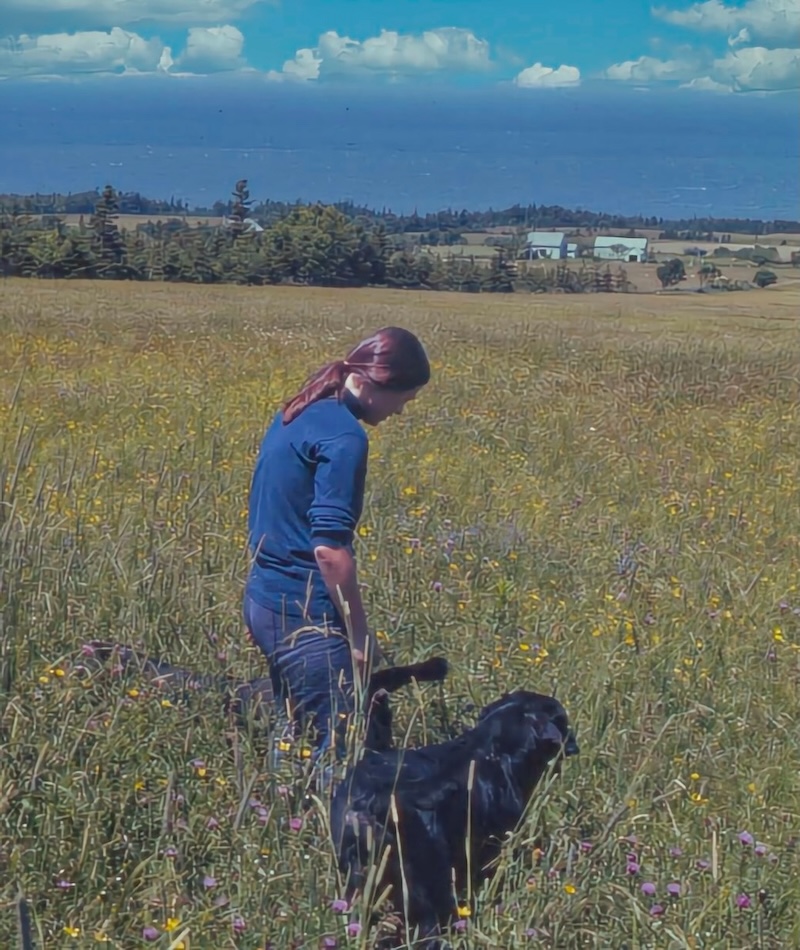
My wife in the large hayfield behind the house at our first farm in Nova Scotia

Someone Lives Here

My First Home on the Bay of Fundy after a year’s work

I was  gone most of the summer of 1970, it seemed like the most logical thing to do after all the college protests.  A roommate and I drove to Alaska and we returned barely ahead of the snow and just before school started. When we came back I was determined to find some land away from the big cities of the East.   In the spring of 1971, I wrote to the Longmire Real Estate agency of Bridgetown, Nova Scotia, about a farm and land on the shores of the Bay of Fundy.  The property was advertised in the Sunday Boston Globe.  At the time there was only a print version of the paper and reading the Sunday paper was something many of us really enjoyed. The trip to look at the place sealed the deal.

Though the details took time to work out, I ended up the owner of 140 acres, a two hundred year old house, barn, and carriage house in Saint Croix Cove. That first piece of land and buildings cost around $7,000. The view of the Bay of Fundy was spectacular.  The picture at the top is the house after a year’s work. This what it looked like when I bought it.

First Home when I purchased it in 1971

When I bought the house, it was in a sheep pasture and had not been lived in for years. The old chimney went quickly. We also tore out the insides down to walls and hand-hewn, pegged six by sixes that framed the house. It was a huge undertaking  Still after a year it looked a lot better, was insulated, had heat, hot water, a new kitchen and a shower

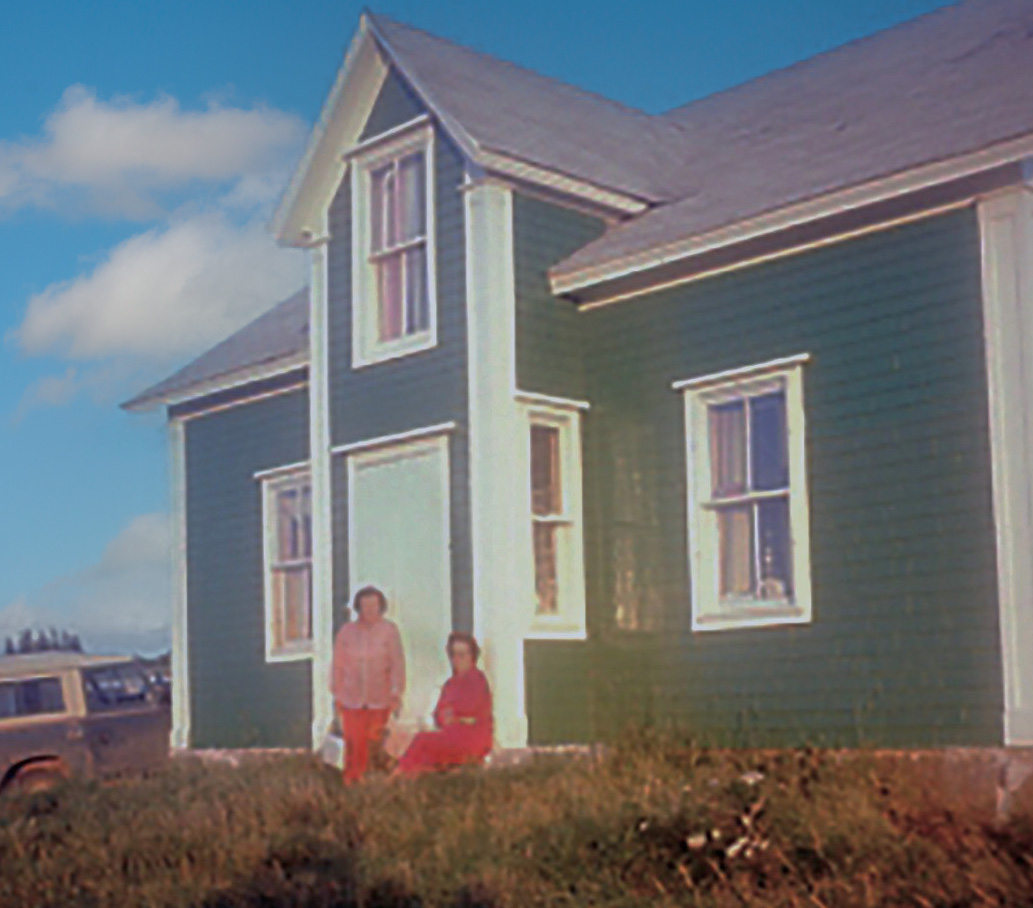
Even with all that work I am not sure it looked like someone was living there all the time. My mother and her sister came up and worked on the house during the summer of 1972  and stayed with us for a couple of weeks but most of their time was spent on canning and freezing produce from the garden.

My Mother and Her Sister Visiting in 1972

The next summer, I made a trip to Boston to help an old college roommate get married. Then I headed south and stopped in Washington, DC to spend a short time with another college friend that I enjoyed. From there I went home to Mount Airy, North Carolina.  My mother was always scheming to keep me at home a little longer. She arranged a blind date with Glenda, a young lady from UNC Greensboro.

It was one of those love at first sight dates. I cooked Lobsters for our first dinner together. The next day we picnicked  on the Blue Ridge Parkway. When she headed back to her apartment in Greensboro, the plan was that she was going to drop me off at the airport on the way but few other than my mother would be surprised that we never stopped there. We spent a magical few days in her apartment.  About sixty days later after Glenda made a trip to Nova Scotia to check things out, we got married.  She wasn’t in Nova Scotia long before she started making our home look like someone was living there.

My wife, Glenda’s first flower bed in St. Croix Cove, Nova Scotia

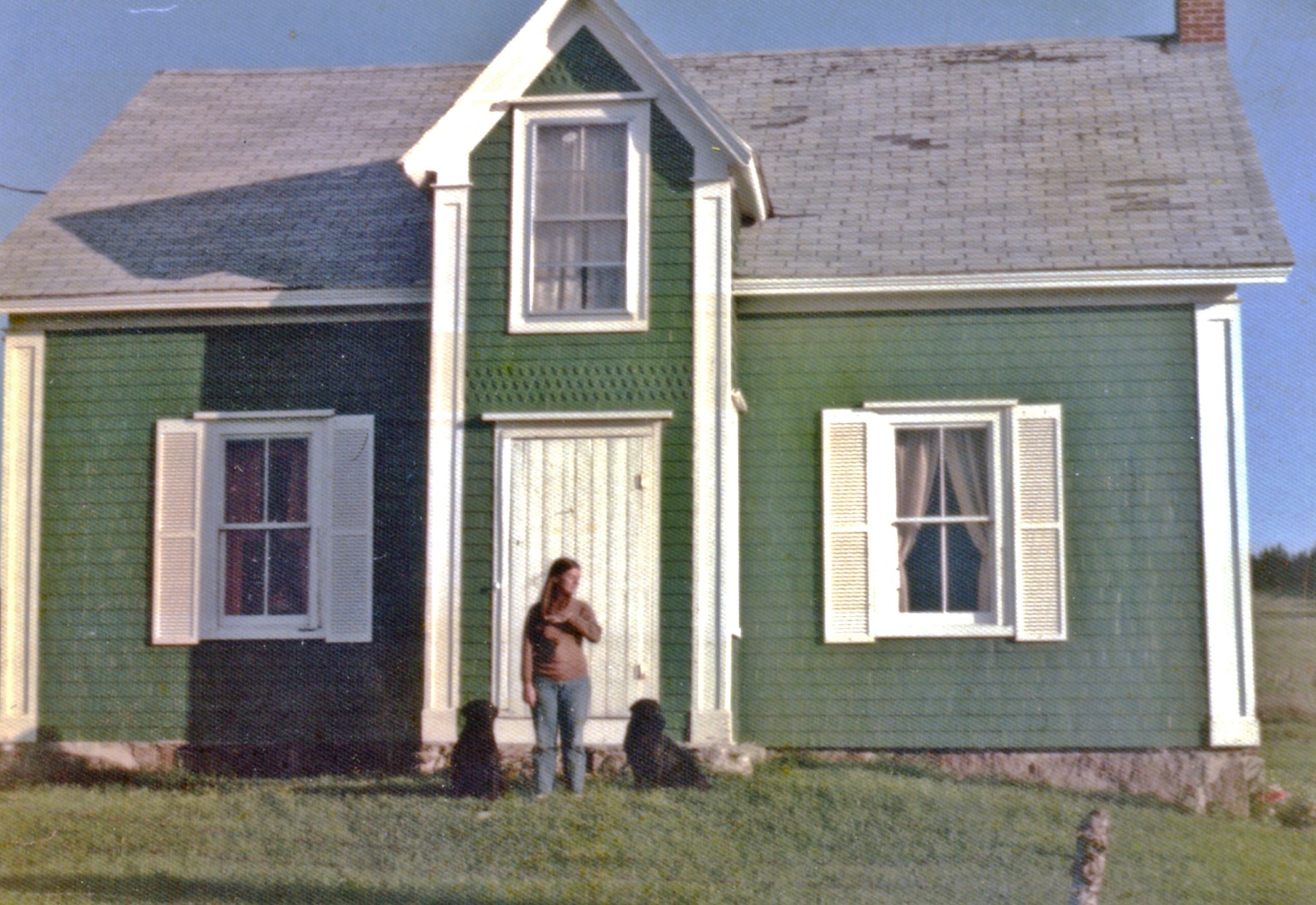
It didn’t take long for flowers to be added.  During my mother’s next trip, Glenda and my mother decided we needed a lawn mower which they got on a trip to town by themselves. In short order the yard look like a normal yard.

Our St. Croix Cove home after Glenda had tamed it and won the hearts of Tok and Fundy

We moved from the green house on the shore road in the fall of 1974.  We needed better farmland if we were going to be successful. It was less than a year before our next house looked like someone was living there.

Our Tay Creek Farm House the first summer there 1975

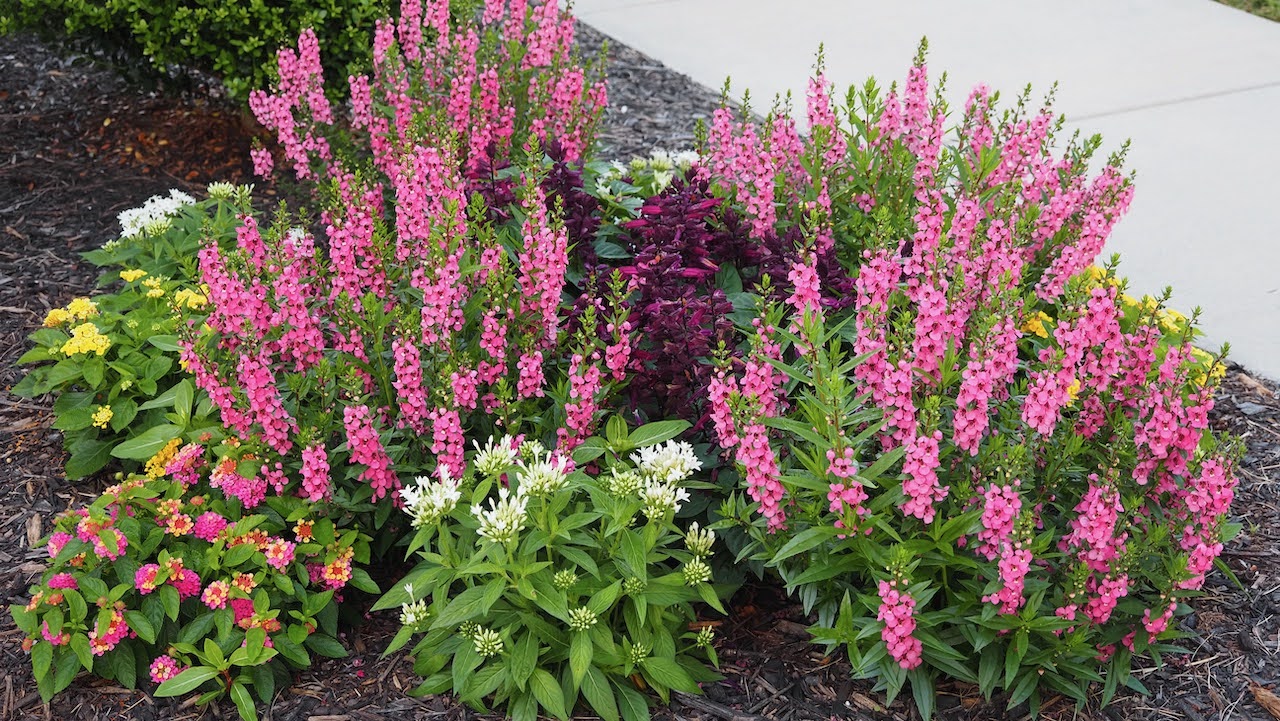
The picture above was taken in 1975, almost fifty years ago. If you stretch your imagination, you might come close to imagining how many flowers have been planted in the name of making our houses look like someone lives in them over those forty-nine years.  Last summer’s (2023) flowers are pictured below.

Summer of 2023’s front flower bed at our home in Mocksville, NC

My mother was probably 84 years old when she had to give up planting flowers and tomatoes. For the next six years until mother moved in with us, Glenda would go down in the fall and plant a huge bed of pansies that my mother could watch grow from fall through spring. It was something that made mother smile. When we are in our eighties, I hope we have someone willing to add a little beauty to our lives when we can no longer plant it ourselves.

My Glenda amending the soil in Nova Scotia with some well-rotted chicken manure
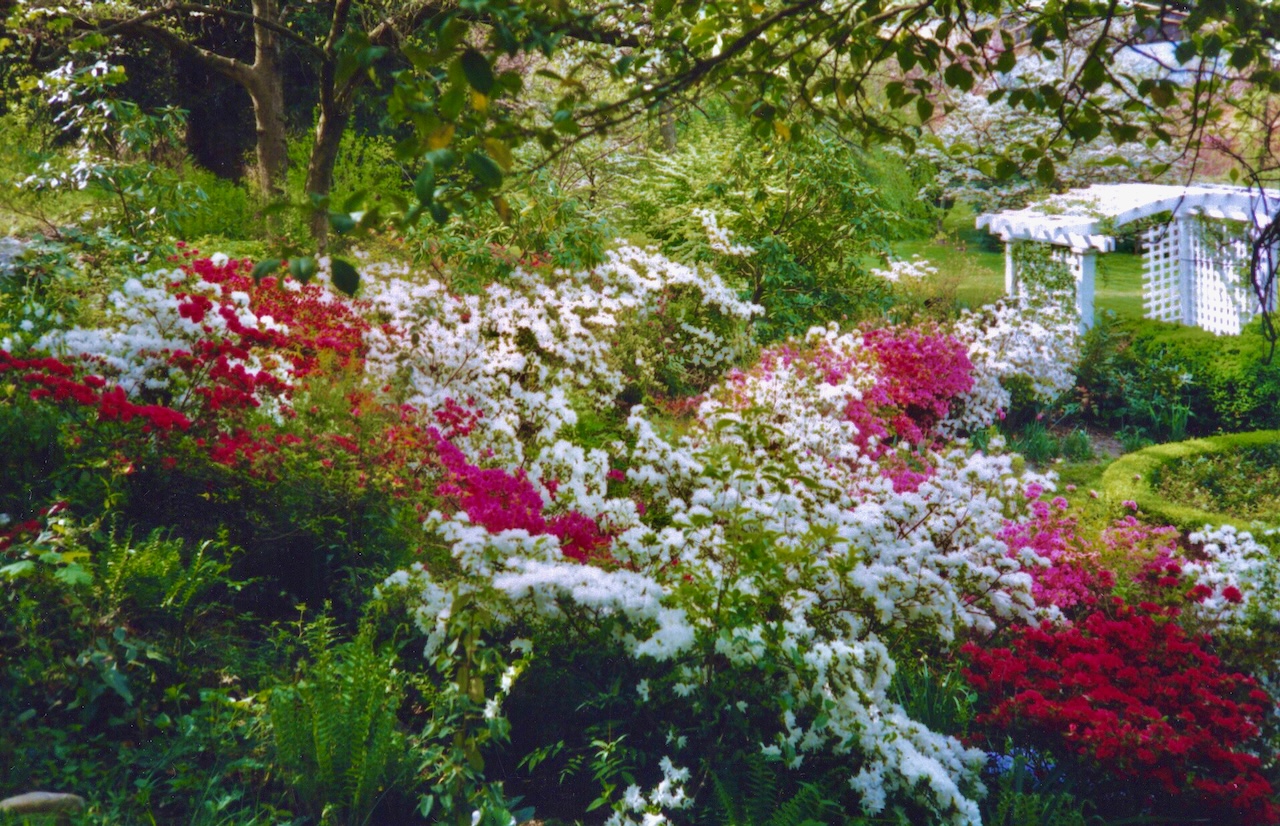
My mother watering her azaleas in the seventies when she started renewing the gardens
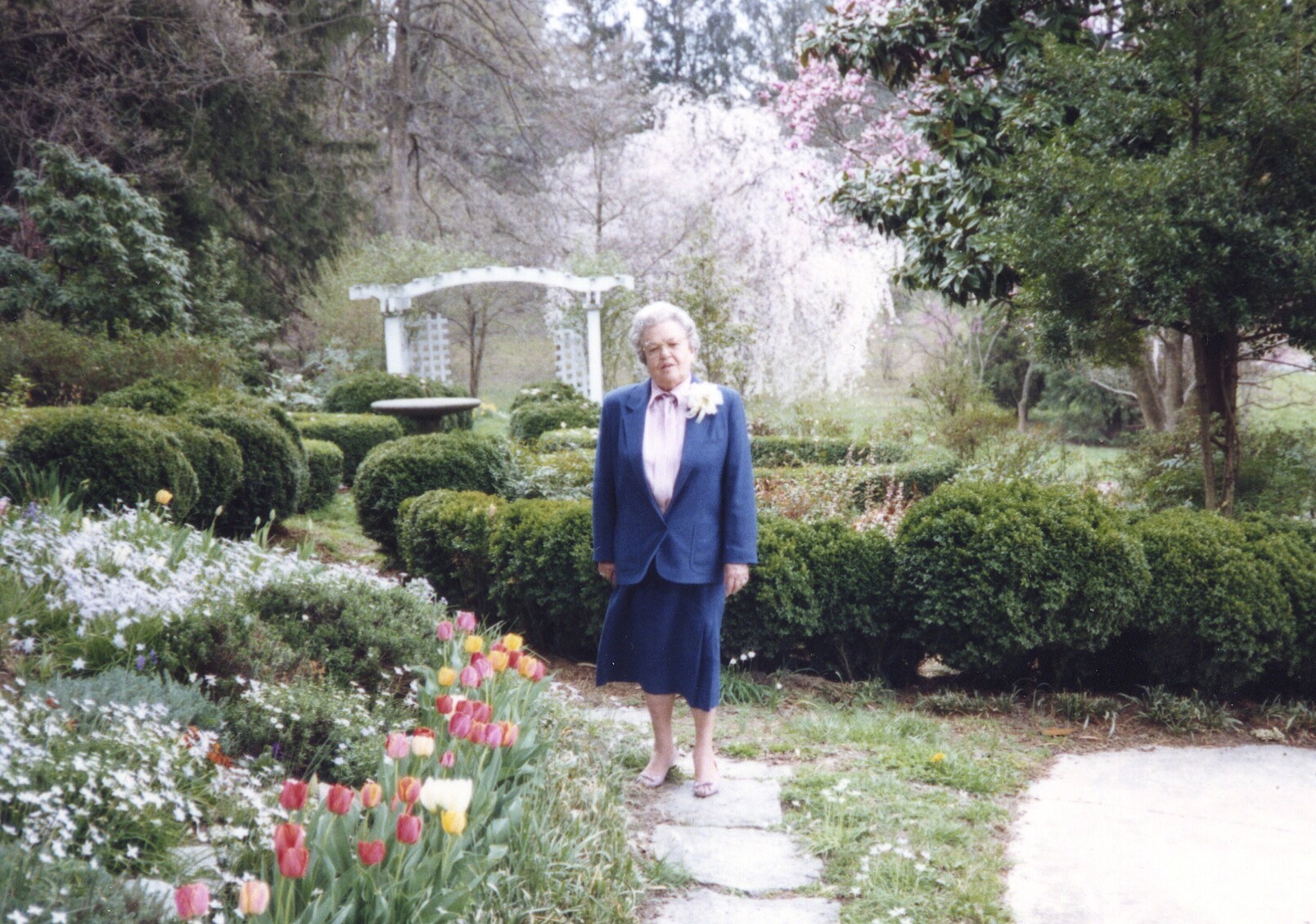
Mother in the gardens in eighties
Mother’s azaleas just before she moved in 2004

Being Part of the World

Back in the not so good world of the fifties when we feared polio and practiced hiding under desks to keep us safe from nuclear war, connecting with the world wasn’t optional. There is a good chance you walked to school. It was likely played dodge ball or kick ball on the playground in the morning. After getting home, many of us headed to the woods to maintain our forts and dams. Then there was mowing yards and even some garden work at times. Digging worms certainly connected me to Mother Earth and to the wrath of my mother if I got too close to some of her flowers.

Weekends were often devoted to Boy Scouts and camping on a nearby by farm.  Our water came from an old hand pump.  We pitched tents and cooked over open fires.  We usually had an adult with us but in the early days when there only half a dozen of us, we often camped without one. No one feared the dark or worried about crazies with guns.  When we weren’t in the woods with other Scouts, we were sometimes chasing squirrels with rifles and shotguns. 

Fishing was a much more successful endeavor. It was not unusual for my mother to drop my best friend, Mike, and me at my some fishing ponds in the next county. She wasn’t an irresponsible mother, we were responsible kids who knew out to swim and take care of ourselves. I cannot even count the number of days we spent fishing without seeing another person before we were old enough to drive.  We did catch fish and we ate them.

We still lived in a world where there were more country stores than supermarkets. People had big gardens. When the weather got cold in the fall, some relative would always bring some fresh country sausage. In the summer mother would can tomatoes and beans and freeze corn.

As we got older I went away to military school and then to college.  I did not come back to stay for sixty years, but the connections to the natural world had already been made.

By the time I got to college, I was desperate to get back to the woods.  Even spending the summers camping and traveling to Alaska wasn’t enough.

So Maine it was during college and then Nova Scotia and eventually Newfoundland. There were float plane trips into the bush, rides on an ice breaker that got stuck in the ice, and wandering the woods where it was nearly impossible to know where you were without a map and compass.

While my love of the outdoors almost got derailed by the toxic work environment at Apple, I eventually escaped to North Carolina’s Crystal Coast which my oldest son claimed was barely clinging to civilization because we had no Chipotle.

There might have been a shortage of chain fast-food, but it was a place where a kayak or a skiff could take you to natural worlds that stretched your imagination.   Over time those placed healed my soul and helped me to reconnect with the world beyond our houses.

By 2017, I was walking 10,000 steps a day for a whole year which is equivalent to 69 marathons a year. I had piloted our skiff over 500 hours, paddled and biked endless miles. We managed to compost all our household waste and grow far more vegetables  than we could eat.

All that helped me recover from Apple and get the strength to complete the circle and move back home. It has been a successful trip home. We’re back to gardening and I still hike some.

However, I worry about the generations after us that never forged the link with the outside world.  They never camped and fished their way through childhood and even if they did, the screens and phones seduced them. We were immune. There is no meaning to be gained from screens.  There might be important words on the screen but if the words just lead you to another screen you have gained nothing but more screen time.

Yet if your hands have ever worked in dirt, even it they have been clean for a long time, the dirt will welcome them back and it won’t be long before the long suppressed memories guide the hands back to growing things. Those growing plants will remind you that you are just one of many living things that are all interconnected. If you can get to that point, you are on the right track to a worthwhile relationship with yourself and the world.