Barely Clinging To The Grid

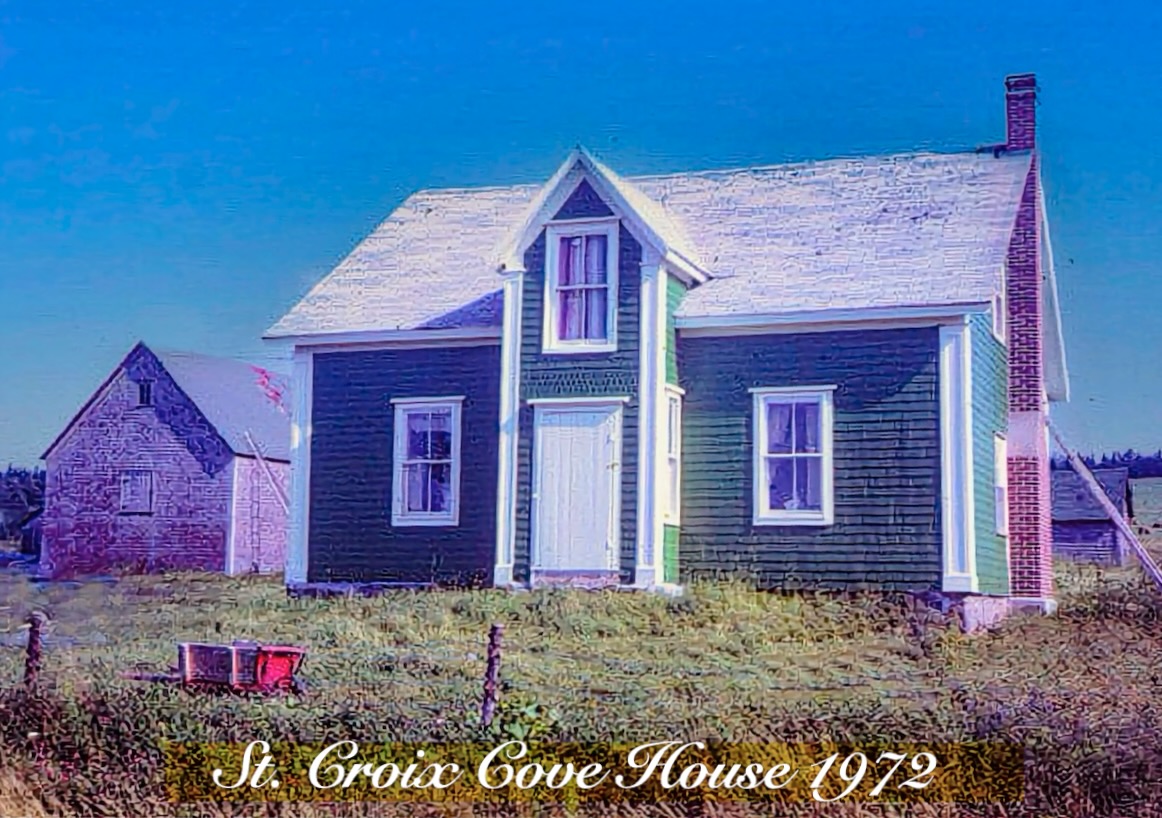
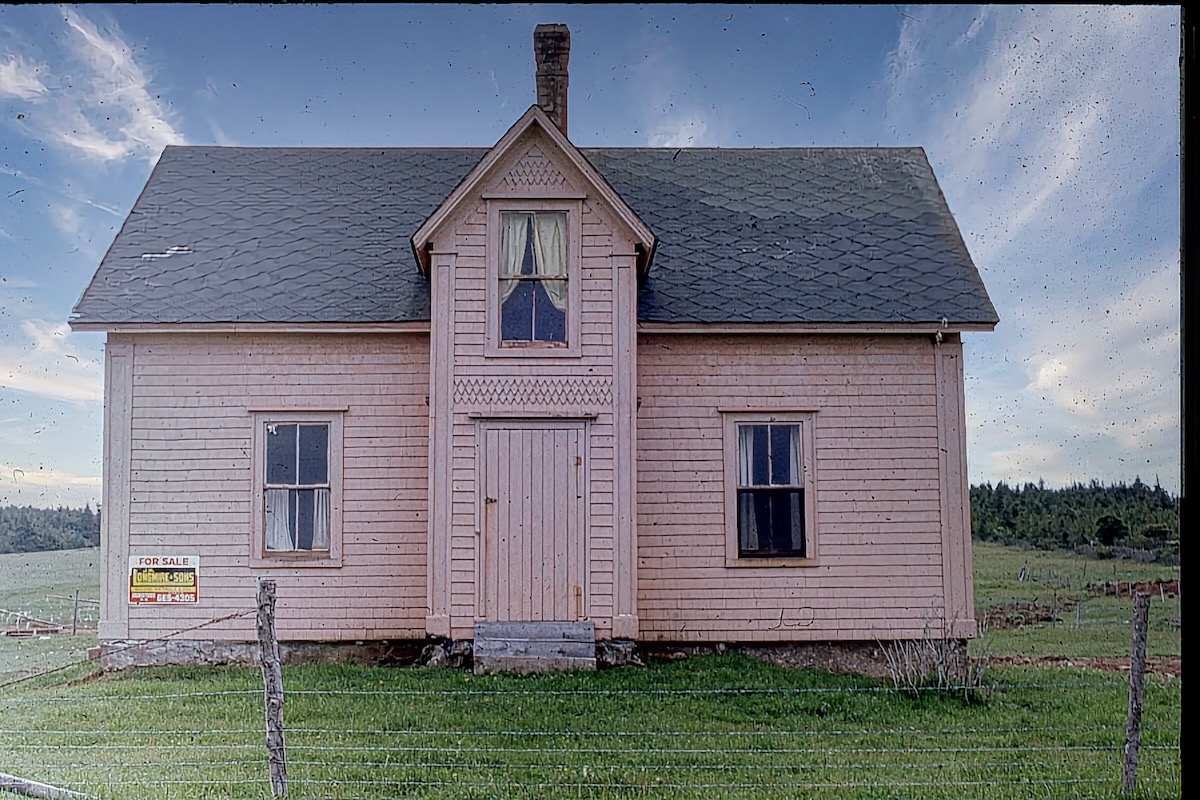
Our formerly pink house after a year of intense work

The dearth of good programming this holiday season has sent me to YouTube where I have enjoyed watching this generation’s homesteaders who would have been part of my generation’s back to the land movement in the late sixties and early seventies.
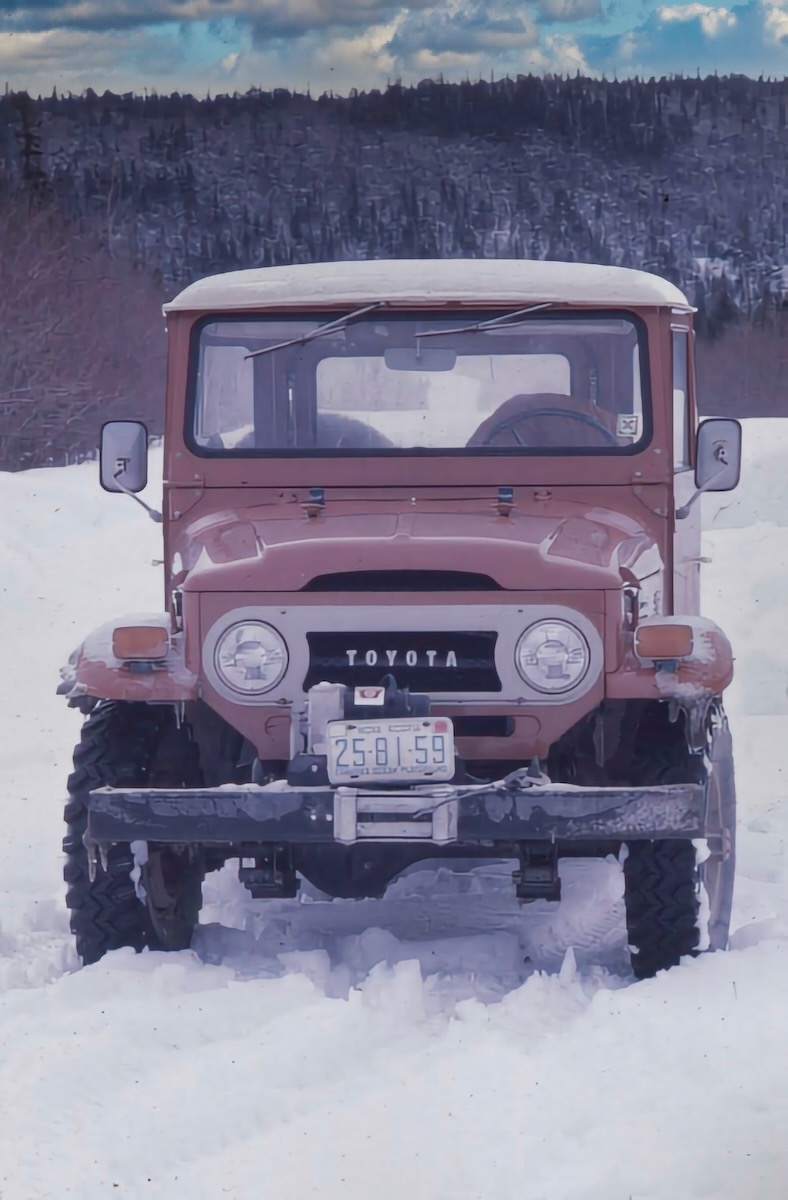
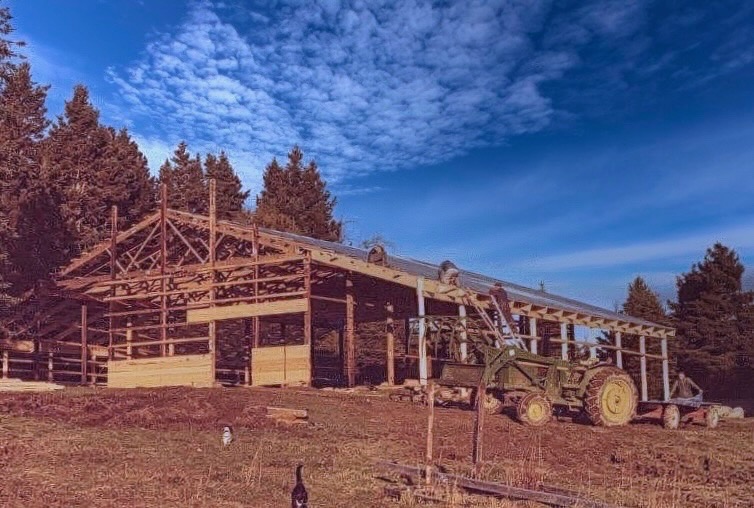
I was on the fringes of that movement back in 1971 when I bought an old farm including 140 acres, a two-hundred-fifty year old farmhouse (pictured above after a year’s hard work), with a barn and out buildings. I had just graduated from Harvard but had chosen Nova Scotia over law school. Four, also disillusioned, college friends went with me to Canada, but I was the only one to make the commitment to become a landed immigrant. My Dodge Powerwagon and Landrover came with me to Nova Scotia. They carried all that I owned including a TV and lots of spare kitchen utensils from my mother in Mt. Airy, North Carolina.
The pink house in the middle of a sheep pasture was in rough shape when I took possession. We set about tearing it down to the hand hewn beams, insulating it and attempting to bring some modern conveniences to the house. That was probably what set me apart from most in the back to land movement who leaned towards off grid domes, hauling their water, and hand tools for gardening and no modern conveniences,
Maybe it was a childhood in rural North Carolina which was still close to the land filled with small farms that made me different. My mother had been born on a millpond in 1910. I had listened to plenty of her stories of ice being stored in saw-dust insulated holes in the ground and cooking over a wood stove. When I was growing up in the fifties some of relatives still had outhouses on their farms. I also probably had camped in the woods more than most. For whatever reason, I was fine with the conveniences that electricity brought including hot water and a dishwasher. I was also happy to use a diesel tractor on our farm.
I became the electrician and plumber for the modernization of the old house. By Thanksgiving of 1971 we were ready to host some college friends who were sure that we were crazy. It was the first Thanksgiving on our own for all of us. It was pretty rough with everyone sleeping on the floor, a blanket for a bathroom door, chicken crates for kitchen cabiinets, and mayonaise jars for glasses. Still we had an electric stove and a dishwasher. Still it was a great celebration of our independence.
The next year the house was more livable but we poured our energies into gardening and farming. My dad gave me $11,000 to buy a tractor, three furrow plow, disk harrows, front end loader, manure spreader and a bush hog. I took $1,500 and bought our first herd of six or seven cows. We also started refurbishing the old baler that had come with the farm. We converted it to a PTO driven model instead of one powered by a mounted gasoline engine.
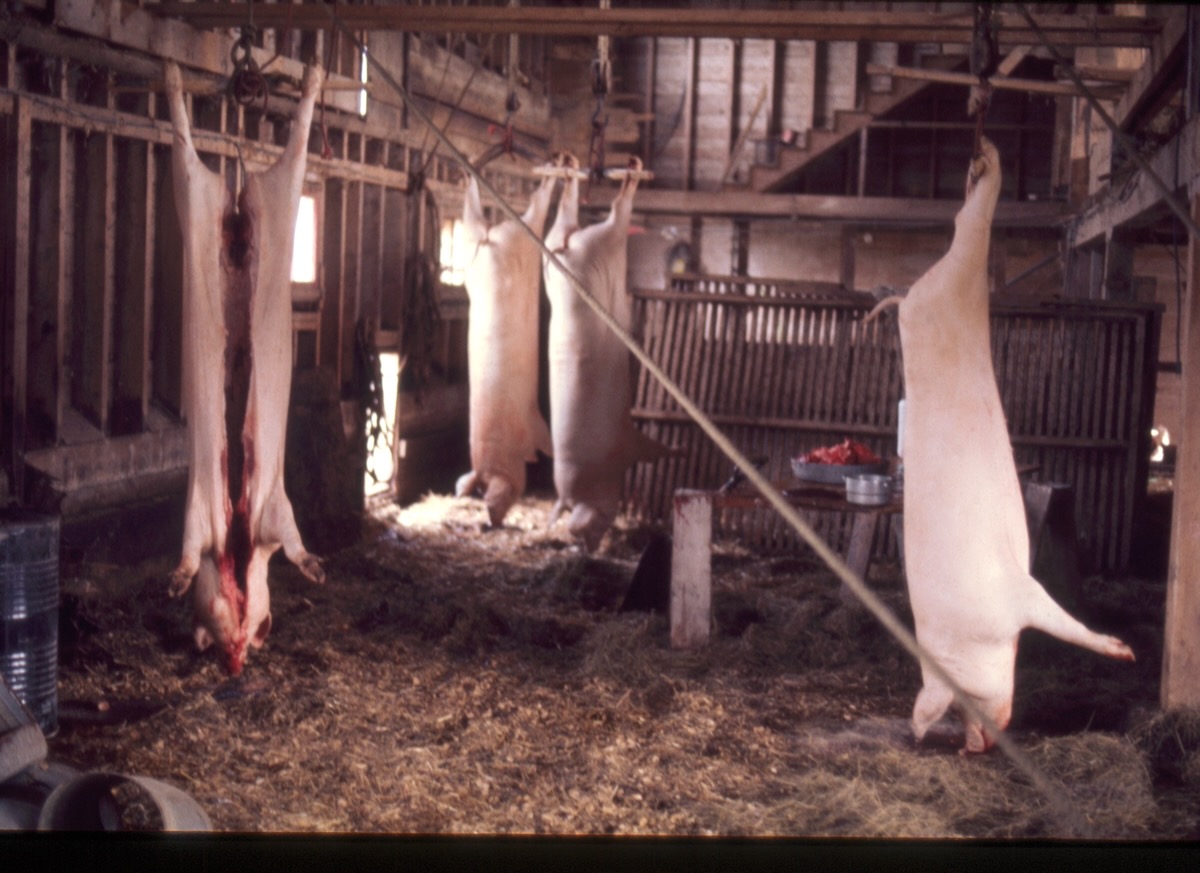
We had unlimited compost from chicken manure that had rotted for years behind some old chicken houses. I had little experience gardening besides helping my mother grow tomato plants in North Carolina. What I did have was inspiration from Helen and Scott Nearing and Malabar Farm. Gardening in Nova Scotia on the foggy North Mountain by the Bay of Fundy required a lot more expertise than in North Carolina. Still the abundance from the garden was overwhelming until my mother and her sister, both experienced canners, showed up to help us through that first harvest. We filled the freezer and the cupboards. That winter we butchered a steer we had fattened from our herd. We hung it age in our cellar before carving it up. The next summer we raised pigs, one for us and three more for neighbors. We butchered them with the help of neighbors in the fall, topped up the freezer and made crocks of salt pork. It was an amazing amount of work that made me appreciate all the fresh pork in the fall that our relatives had always given my mother and me.

That winter of 1972 was something of a lonely one. One member of the college crew married the local school teacher and moved into another old house across the dirt road. The last one of my college friends left for a warmer climate. That left me wintering on the Bay of Fundy with our two Labs, Tok and Fundy, and a handful of cats. I made friends with some back to the land folks who lived far in the woods in a dome. I ordered some supplies with them including a giant tub of honey that was still with me when we moved. Mostly what we didn’t grow came from Beaver Fruit Cooperative in Lawrencetown down in the Annapolis Valley or from itenerant peddlers who sold salt fish and winter vegetables. I say we because that was my last winter alone.
I got married in the summer of 1973 and brought my new North Carolina bride home that September just in time for an early season snow storm that took the power out for a week. We stayed warm with the fireplace and cooked over the same. It was not unusual for the powe to go out on our dirt shore road but a week long outage was rare. That next summer my wife and I continued to garden, work on the house, and farm a little. Farming was a little because I had sold the cattle and part of my land to disolve an uneasy partnership with the friend who had married the village school teacher. Well before garden season my wife and I had made the decision to move to a better farming area with more and friendlier people.
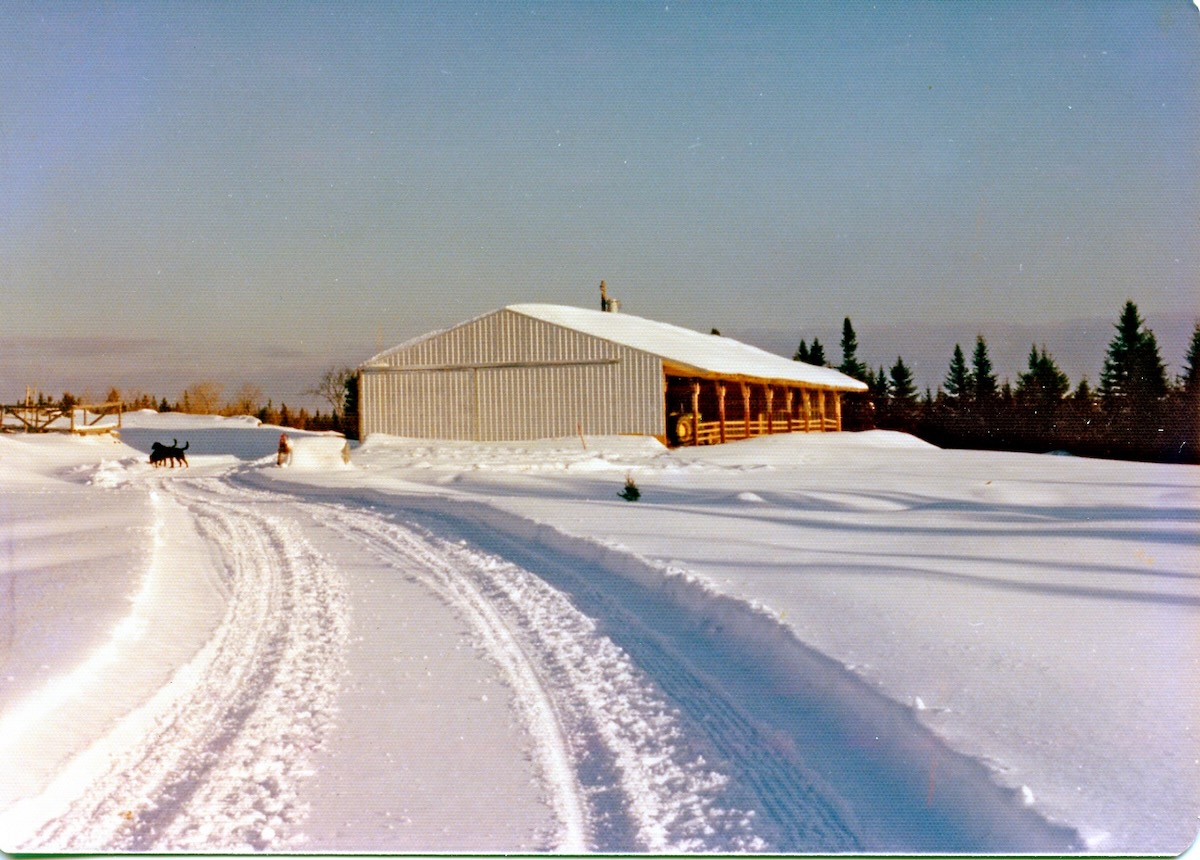
We found the perfect place for us in Tay Creek, New Brunswick. We moved there in the fall of 1974 and started the process of building a real farm with the help of some great neighbors. We built our first barn in 1975 and converted to round bales in the summer of 1975.

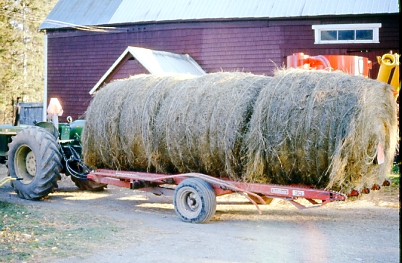
Annually, we put up 200 large round bales for our herd which eventually grew to 200 head of purehred Angus.

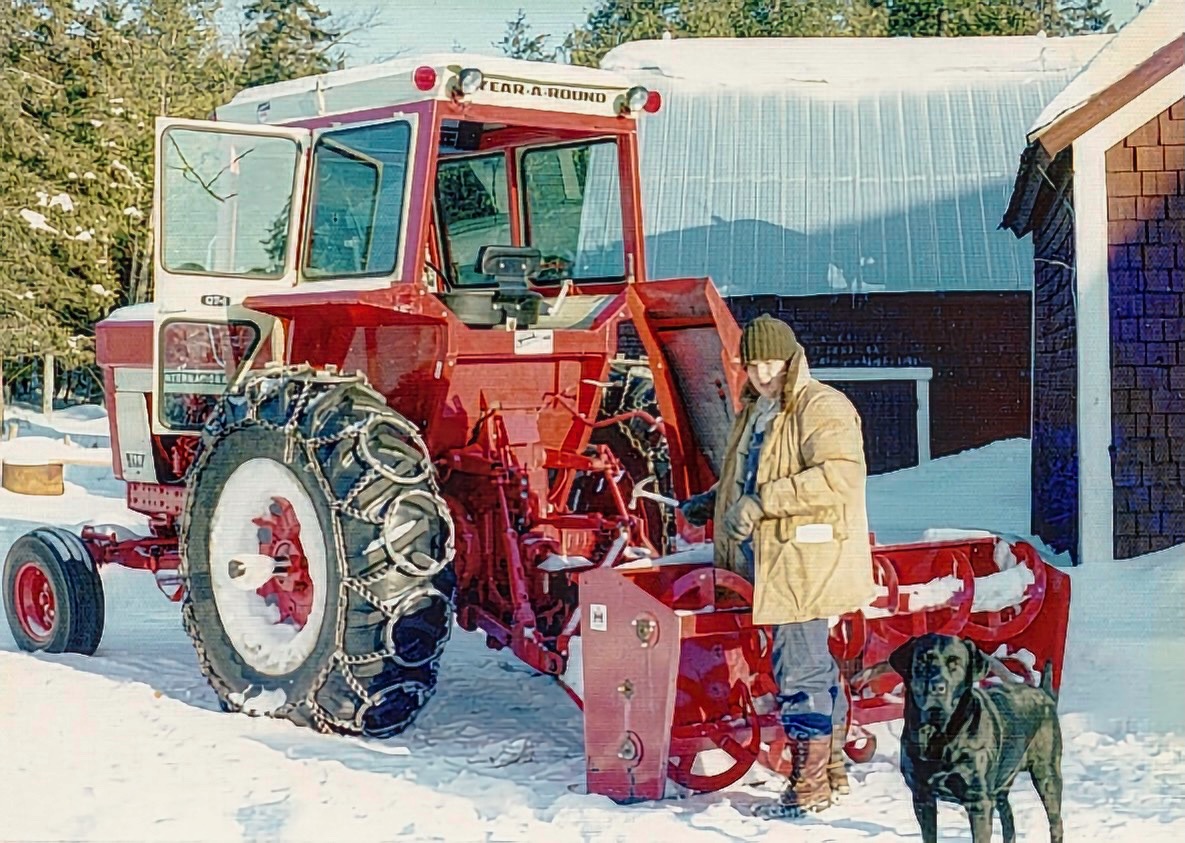
We were actually even closer to the land than we were in Nova Scotia. On our New Brunswick farm we had spring-fed water for our house. We continued to garden, added chickens, and a milk cow. However, we found a local butcher to do our annual steer. We were still on the edge of the grid. Our first winter we got twenty-three feet of snow. We saw weather as cold as minus forty with sixty mile per hour winds. We went back to mostly heating with wood, burning three to four cords per year in our much newer home which was only one hundred years old. It was cold enough that we unplugged our freezers in the shed which was attached to house so you could get wood without going outside. The first winter there I fed hay that had been put up with horses. One thing we did not do is fight snow with tiny all terrain vehicles. A couple of miles of road to keep clear required real snow removal equipment.

Our 85 HP International 786 tractor with 8 ft wide blower, Tok and me with lots of layers

When I look back on it all, I am amazed that we did it without someone getting really injured. There was no Internet or YouTube for advice. Advice either came from a book or your neighbors. I learned to be pretty self-sufficient often repairing broken equipment with my torch and welder. I added chain saw carpentry to my resume as we built the barns. We ran our cattle in the woods in the winter and managed to get through our farming years without ever having a vet come out for a sick animal. We might still be farming if interest rates hadn’t surged to 20% and drove me to working in the city with computers and eventually to a career of nearly twenty years at Apple Computer.

We were never off grid but if your farm doesn’t have any cattle fences in the back because there is no place for the cattle to go, you can justifiably say you were barely clinging to the grid.

Paths Not Taken

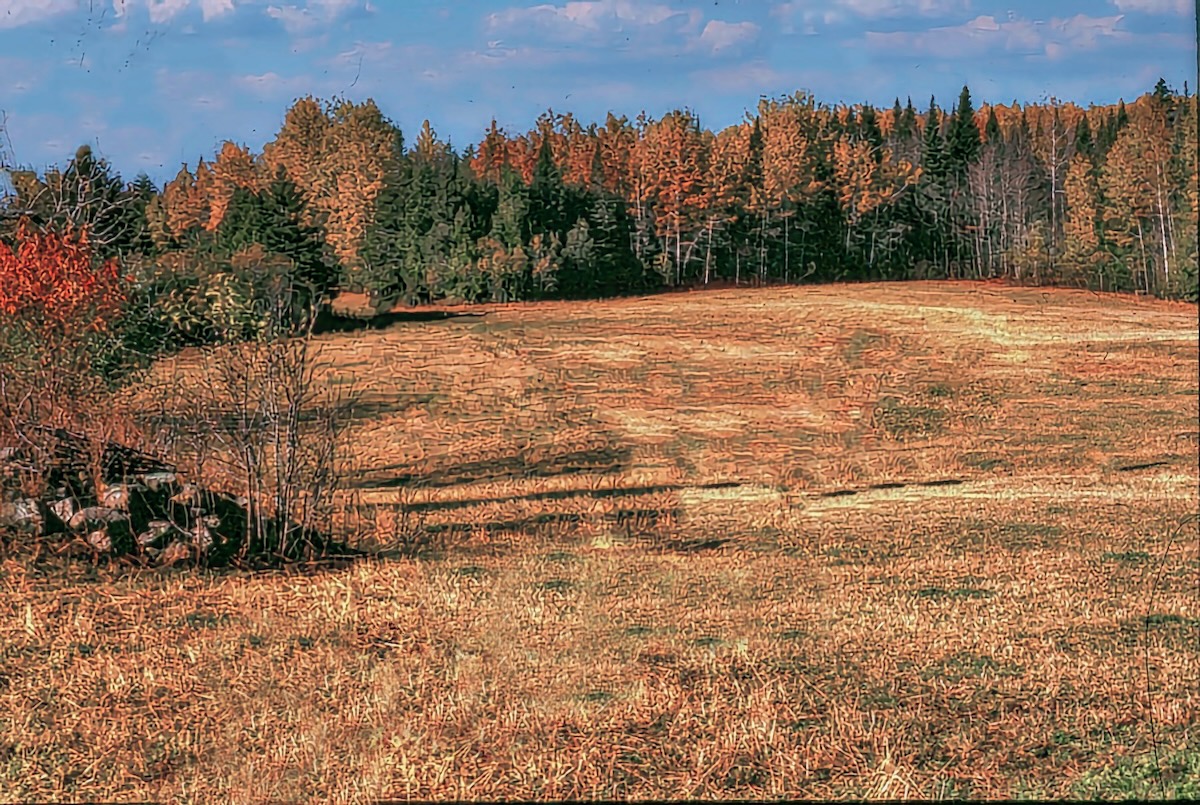
The backfield at our Tay Creek farm where I am homesteading and splitting wood in my dreams

In every life there are decisions which determine what direction your life will take. I have been fortunate to be in positions where I had enough flexibiity to guide our life in certain directions. Even now fifty years after some of those decisions, it is hard to say that what we did was the right decision for us. Our decisions worked out for us but it is impossible to tell if another path might have given us an even more rewarding (and not in monetary terms) life.
I graduated Harvard and instead of going to law school, I went back to the land in Nova Scotia. Whether the neighbors ever called us hippies or not is still an open question, but my bet is that they didn’t because we had a John Deere tractor and were trying to farm the land. We were friends with hippies living in a Dome in the woods, but I worked hard to wire our house so we could have electricity and the modern coveniences that came with it
We did grow a huge garden and put up prodigous amounts of produce both canned and frozen. We butchered our own steer and hogs. We collected wild Chantrelle mushrooms from the woods. We even tended a gill net for a while.
The old house I bought and fixed up had 140 acres. Of that well over 25 acres was a cleared hayfield with a small pond. Though the woodland with it was mostly spruce, I did eventually get another piece that had some hardwood. It is not too much of a stretch of the imagination to think that we could have kept a few cows, had a huge garden, and lived a very simple life. Looking at recent aerial photos of the property which I sold in 1976, the property appears to now have lots of gardens, more trees and little pasture though I am sure goats would be happy with what is there now. I might well have done something similar had my partner in the enterprise not been such a jerk. He married the local school teacher in our small community and devoted far too much time to telling our neighbors what a terrible person I was. While my new bride stayed with me there for a year, we were determined to move a friendlier place.
We found the better place in the hardwood hills north of Fredericton, New Brunswick. Instead of people being petty and mean, the residents of Tay Creek were welcoming, helpful, and supportive. I can think of no better place to raise a family. The community when we moved there had two country stores, three churches, a town hall, and a lot of opened minded people.
We stayed in Tay Creek for over a decade. Our three children were born while we were on the farm. Our two Labrador retrievers are buried there a long with a good chunk of my soul. This would have been an even better place to have a few cows, lots of gardens, and even fill the freezer with trout to supplement our beef.
We did not take that path, I wanted to work the soil and to raise high quality cattle, selling bulls to improve the local herds. We accomplished that goal, along with continuing to grow much of our own food. We had chickens, a Guernsey milk cow and a beautiful farm.
We eventually had to give up farming because interest rates soared to over 20% during the early eighties when our herd had grown to two hundred head. We couldn’t handle the high interest rates on our $100,000 operating loan, so we had a very successful dispersal sale. . After selling the cattle we could have hunkered down on the farm which was paid for, sold off some of the machinery, and continued to work the land, but we had three children, and we wanted them to go to college. Like many others I went to work in town after taking a few months off. My job was in an early computer store and led to a twenty year career at Apple. After Apple I worked as a vice president of a network construction and consulting firm for over a decadsa.
It has been a good life. All three children who were born while we were living on the farm have gone to college and done well. Yet as I have been watching some of the Alaska homesteading YouTube videos, I can only wonder how would things be different if we had stuck with working the land instead of keyboards. After all, I made the trip to Alaska before I moved to Nova Scotia and I even considered homesteading in Newfoundland.
Instead of that I ended up walking the halls of government as Apple’s director of federal sales. I know the people that I would have gotten to know working the land would have made much better friends than the politicians that I have met.
Still in my dreams I am splitting hunks of birch, milking the cow, collecting eggs and filling the freezer with brook trout, beef, pork and the cupboards and root cellar with homegrown veggies. We still garden in a token fashion and I still make sourdough bread but we buy more from local small farmers thsn we grown. At my age the amount of wood, even birch, that I could split would be limited.

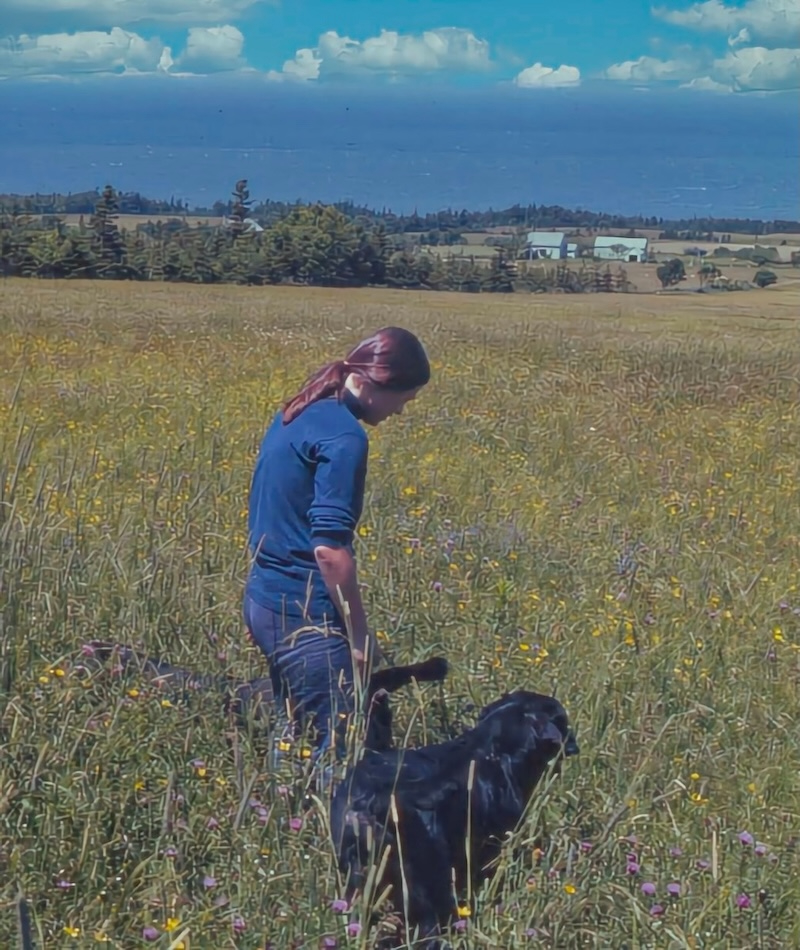
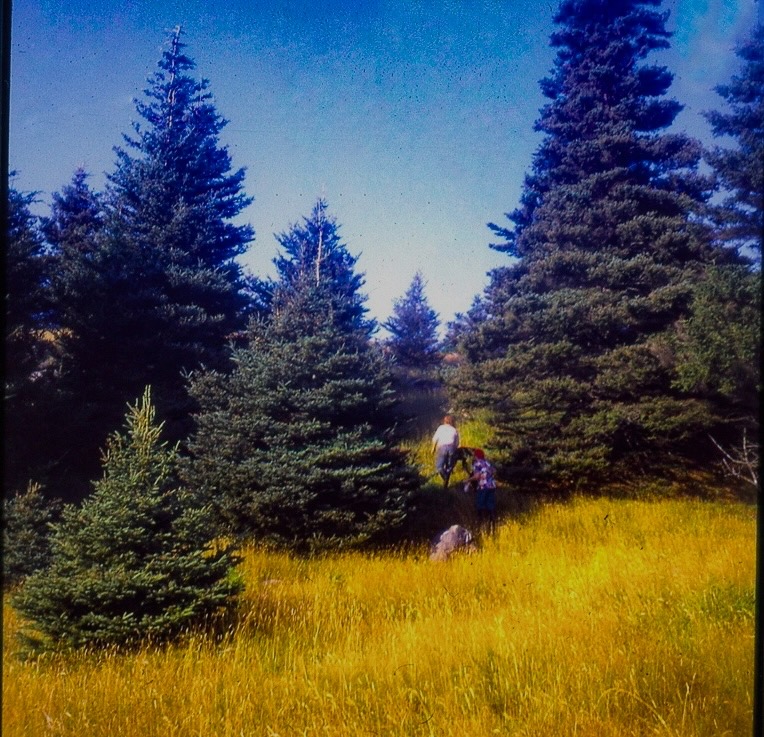
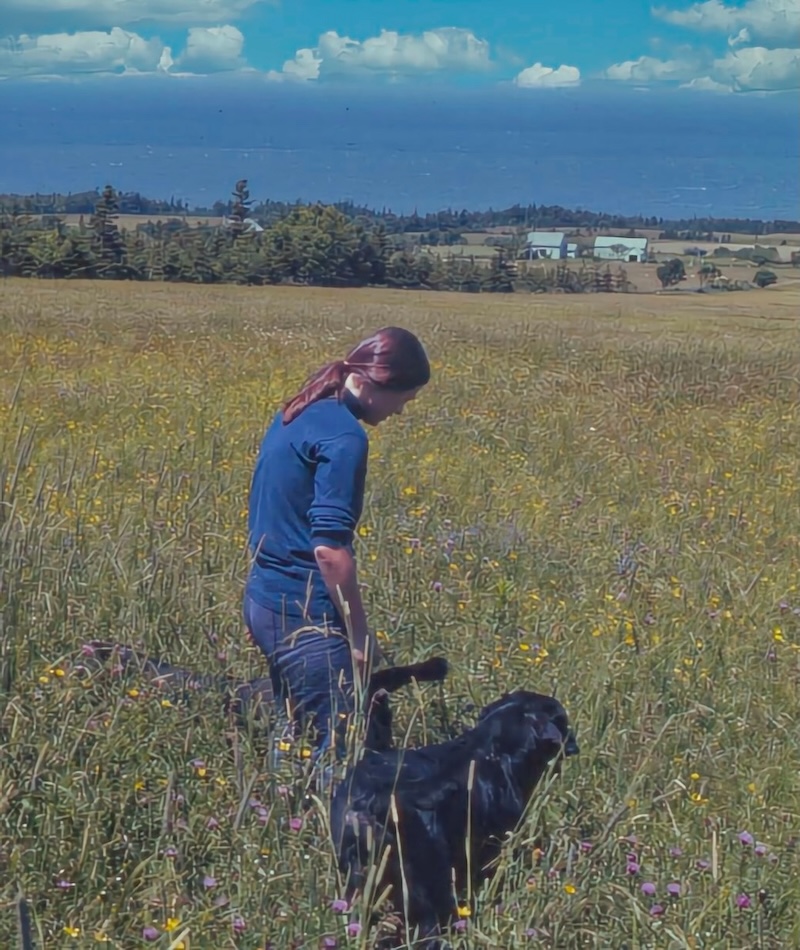
My wife in the large hayfield behind the house at our first farm in Nova Scotia

The Wonder Of It All

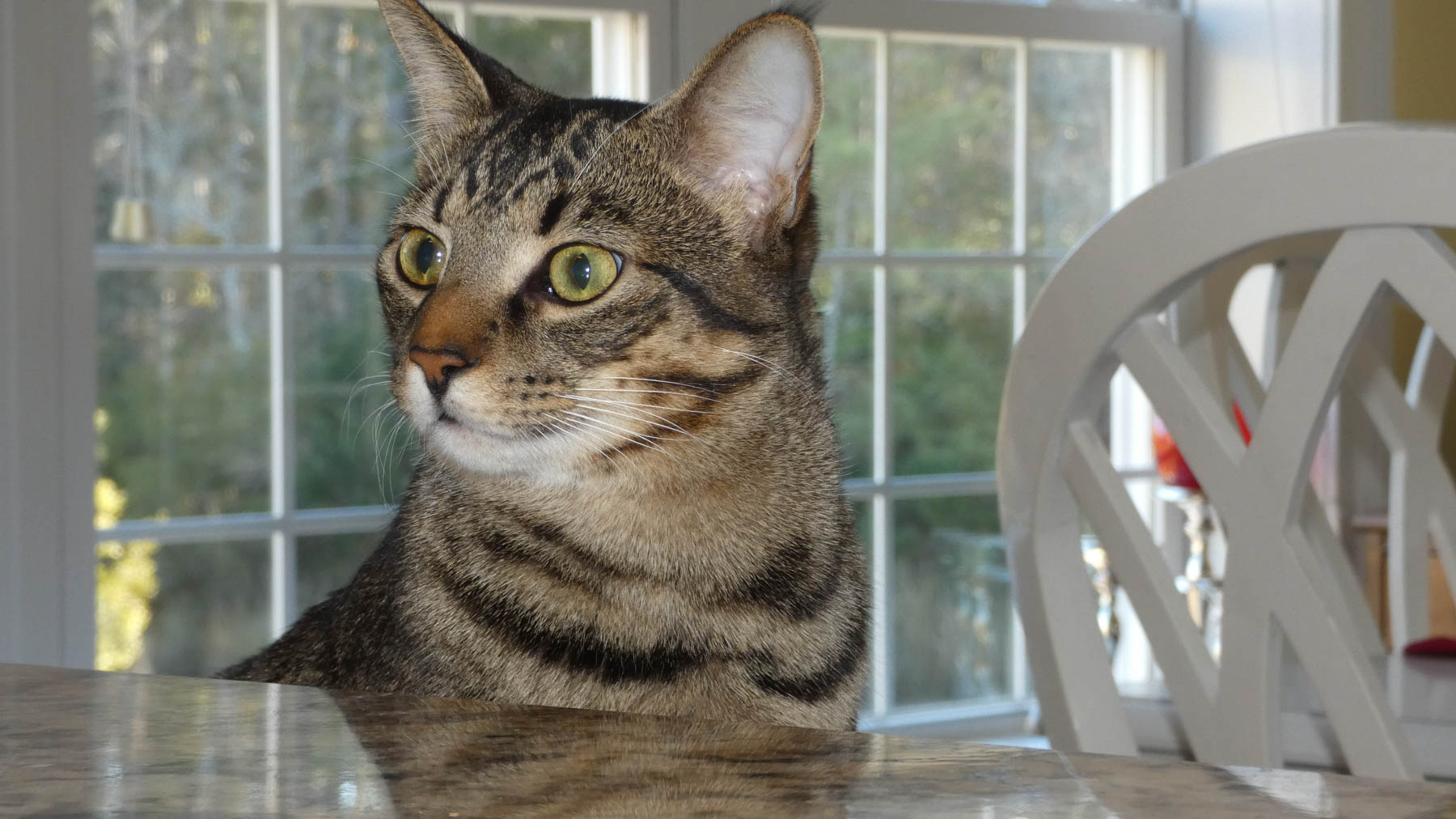
Goose, our tabby cat with a permanet sense of wonder

One of the reasons that I love our big tabby cat, Goose, is that he always has a look of wonder.  We could learn a few things from Goose.  A few times over the years I have forgotten to be pleasantly surprised at whatever has happened, but not often.

After I went away to military high school in Tennessee in 1963, I figured out within the first three months that I could either be unhappy with what was happening in my life or I could be wonderously surprised at whatever happens next because it is often an unknown piece of the puzzle that turns out to be my life.

When I got in my car to go office to college in the fall of 1967, I left with a sense of adventure which included a promise to myself to try new things especially if they forced me to step out of my box. The Vietnam war was raging during my college years and for a while it looked like I might become a foot soldier in it.  Instead once I graduated and figured out that I wasn’t going to be drafted, I immigrated to Canada.

That as you might expect was a huge decision but like many decisions in the days before the Internet, not a lot of research went into it. I was in love with Nova Scotia.  The beauty and wonder of the place wrapped itself around my mind. Before I got married, I came to know loneliness even in a place as scenic as Nova Scotia. Marriage to a NC girl was another moment that surprised me and left me thinking that I was living under a special star that helped me find such a wonderful wife.

There were plenty other moments of wonder. After dispersing our cattle herd, somehow I made the transitiion to working with Apple Computer. From shoveling manure to selling Macintoshes has to be an epic career switch. Twenty years later when Apple pushed me away from the company, several people encouraged me to think about my next career as finding something that would excite me for the next fifteen years. It took a while, but I ended up helping communitieis build fiber networks.  Along the way, I learned how to take a skiff out into the Atlantic and how to kayak a two-mile wide river. I spent a few years rescuing an HOA. 

I always welcomed the next challenge never doubting my ability to do a good job and always approaching a new challenge with a sense of wonder.  That doesn’t mean I did not have any worries. There were many sleepness nights during my HOA time.  I would always wake early when I was taking someone new in our skiff out into the Atlantic. It was a big responsibility.

I recently got a new heart valve by way of a TAVR procedure.  While I was afraid, I never waivered.  I am still facing some medical issues but I face them with a sense of wonder that something so complex can be done without cutting me open.

I have been surprised by people all my life from the British doctor and his wife who became great friends to some of the very interesting people that I met Harvard.

I continue to be amazed by people that I meet from the young farm family working on the same farm that has been in their family for over one hundred years to the New Brunswick farm couple in their sixties still haying and keeping work horses. I also amazed by the young adults finding their way through this increasingly complex world.  That they can keep moving forward when most of the cards are stacked against them renews my sense of wonder.  Then there is my adult son who rose up to start doing many of the things that I was doing before my heart valve problem. I am back to driving and hope to be gardening in a few weeks but I definitely have a feeling of wonder seeing my son plant flowers. If that can happen, I think we will be able to push back on the anti-democracy forces trying to destroy our country.  That of course would lead me to an immense feeling of relief.

Growing Not Controlling People

Love can make a difference

My Mother in backyard of our Mt. Airy House.

My mother who grew up as Susie Blanche Styers was part of family that had lived in and around the hills north and west of Winston-Salem since the Revolutionary War. Our first ancestor in the area is recorded on the 1790 census and is buried with his wife forty-five minutes away from our current home.
Mother’s grandfather Abe Styers ran Styers ferry which crossed the Yadkin River from Yadkin County to Forsyth County. Forsyth County, the home of Winston-Salem, was destined to be a county that pulled itself into the manufacturing boom of the second half of the twentieth century. Yadkin County would remain solidly agricultural.
Mother was born on a mill pond in the heart of Yadkin County in 1910. It was a time before electricity and when horse drawn buggies were more likely to be found on the dirt roads than those new Model T Fords. Her mother, Sallie Shore Styers, died in the 1919 flu epidemic. By the time my mother was nine years old she was cooking for the family of eight.
That presented some challenges since she was too small to lift the heavy cast iron pan used to bake biscuits each morning from the flour mixed up weekly by one her older female relatives. Fortunately, her older brother Henry would help her with the pan after he had taken care of bringing the wood inside and starting a fire in the stove.
While life around a millpond in the early part of the twentieth century might sound idyllic, it was actually a lot of hard work, and a life that didn’t leave a lot of time for play. While Walter, mother’s father, was a miller, most of the rest of the food for the large family with six children had to be grown and preserved on the spot.
There was no yard to mow, just some bare ground to sweep around the house with homemade brooms made from the readily available broom straw. Preserving food for winter was a skill mother and her sisters never lost.
The stories of watching men cut blocks of ice from the pond during the winter and haul the loads of ice with teams of horses to their sawdust insulated ice house in the ground seem hard to believe in our warming world. Yet life was very different then. They kept their milk and butter cooled in a spring house which was little more that a small building with a roof set on top of a spring flowing out of the ground.
Mother had places to go and things to do in her life so it didn’t take much time with her new stepmother before she left home as a teenager for the big city of Mount Airy, NC. Eventually she got a license as a beautician and had her own shop on Main Street. She even claimed to have spanked Andy Griffith when he was misbehaving in her shop while she did his mother’s hair.
When she was in her nineties, she used to joke that she had walked by Snappy Lunch for most of her long life and never tasted one of their pork chop sandwiches. We bought her one, and she declared that she had not missed much.
While mother made it out of Yadkin County, her sisters never did. With the determination that only a true southern matriarch demonstrates, she was determined that her nieces and nephews would have a taste of life beyond the red dirt fields of Yadkin County. She was the only one of the sisters to learn how to drive as a teenager.
I’ve been told many times by cousins that they never would have enjoyed much of a Christmas without my mother. She was famous for braving the muddy roads to get back to her sister Mollie’s house. I remember her stories of getting stuck and having to knock on the door of a farmer’s house to be pulled out.

Goose and I just sent out a new newsletter, Goose Speaks: Memories of Love, Black Friday 2024. It has more about my mother. You don’t have to subscribe to read it, and there is a free subscription that will get most of the posts.

Life Sneaks Up On You

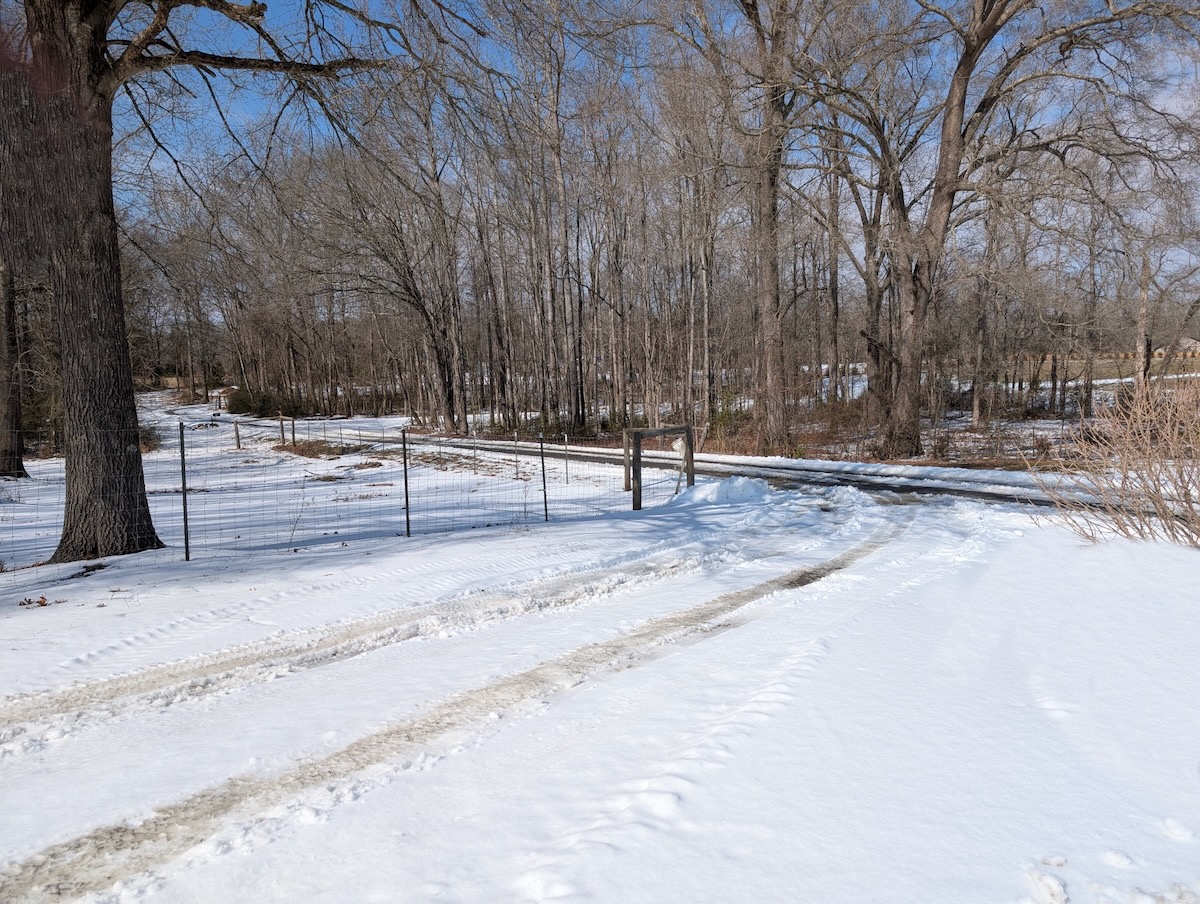
The Royal Road, Tay Creek, New Brunswick, Canada

Just after I graduated college in the summer of 1971, instead of going to Law School, I headed off to Nova Scotia. I was part of the generation that felt strongly about getting back to the land and understanding a lot of things that modern society was hiding from us.

A decision like that is possible when you are young, I believe that as age and life will sneak up on you, it gets much harder to go off on your own in a wild adventure as you age. How older people have done it, remains a mystery to me.

Eventually, I got married and my wife and I moved to what I considered a real farm or at least one that I believed that I could make into a modern farm. We never really gave up all modern conveniences like many back-to-the-landers. One of the first things that I installed in our Nova Scotia farmhouse was a dishwasher. I also put one in our home in New Brunswick. I plowed my garden with a John Deere tractor not a horse.

The road in the picture ran 20 miles back to Fredericton, the capital of New Brunswick. We were lucky to have schools, churches, a couple of general stores and medical services in our little community of Tay Creek. Forty years after we left, the churches and general stores are gone. If you want to buy gasoline or a nail, you have to go to Fredericton.

Taking on building a home for your family in an isolated spot which at the time was subject to amazing snow storms is something you only do when you are young and your body can take on almost any challenge. In my twenties and thirties, I never doubted that I could do everything for my family aside from medical care and schooling. Plumbing, electrical wiring, installing appliances, those were expected of the folks who lived beyond the city. There was no one to hire to mow a yard or even change faucet. While we had an oil furnace, most of our heat came from a wood stove. The furnace would come on during the early morning hours as the house cooled. Our water came from a spring. Our food came from our garden, our milk cow, chickens and cattle herd.

As nice as the life on your own in the hardwood hills of New Brunswick was, it was non-stop work. It was ten years before we went on a real vacation. After we left the farm, we mostly lived in suburbs. Seven years after leaving the farm we were in subdivision on the side of a mountain in SW Virginia. For many years I kept the steep slope behind the house clear of brush and small trees. It meant working with a chainsaw on a hill where I could barely stand. Fortunately, I never got injured. It was another activity reserved for youth.

By the time we got to our next house twenty-four years after leaving the farm, the strenuous work was down to mowing the yard, keeping our skiff running, and hurricane preparation. Good preparation for a hurricane often meant the cleanup afterwards was relatively easy. A storm like Hurricane Florence meant extra cleanup for everyone in the area no matter how much you prepared. The older you get, the harder all that is. Polywood outdoor furniture is nice until you have to haul it all into the garage.

When we moved from the coast in 2021, my wife and I were both over seventy. We were far from our children and family. Our house had too many steps and we were both tired of the hurricane routine in spite of never having any real damage to our house.

My wife had almost five acres of raw farmland which was a hayfield in Surry County. We briefly considered building a home there, but quickly decided that we were too old for all the work needed to build a home so we found a great subdivision with public sewer, water, and fiber Internet. Moving to North Carolina Piedmont close to where I grew up has turned out to be a wise decision.

We are glad that we moved when we did. We have friends our age that would like to move from the coast but have decided that they are too old to try. I can relate to their feelings. Getting our coastal home ready to sell and moving with our four kittens was not the easiest thing that I have ever done. I am pretty sure that three years later, I would be reluctant to move again unless I just had to move.

You don’t think about these things when you are young and can handle anything. Life can sneak up on you. It is good to plan a little for the time when you can no longer take on the world with one arm tied behind your back.

Old Age Is Not For Sissies

My Mother, Mount Airy, NC – 1937

Long ago I remember hearing my mother say, “Old age is not for sissies.”  She was 84 and I was 45.  When you are forty-five,  you think you handle just about anything.  In the twenty-four years after college, I moved to Canada where we farmed for ten years, and we moved back to the US. By the time we got to Roanoke, Virginia had already been selling Apples for nearly a decade. While I was a very successful sales person at Apple, my mother who knew nothing about computers knew a lot more about life than me. 

She understood that families can get complicated, hard work does not always result in success, and most importantly she knew the value of continuing to work even when it was not easy.  She could accomplish amazing things, but she did it not through a flurry of activity but through methodically getting things done as she was able.  When she was in her nineties, she was proud of still being able to dress herself even though it took her over an hour. Her mother died during the 1918-19 flu pandemic.  At the age of nine she became the lady of the house.  She had to cook for her five siblings. Many times she told me the story of making biscuits in the morning for the family but having one of the boys put the heavy cast iron pan in the wood stove because she could not lift it. She left home in her teens because the new stepmother and my mother did not see eye to eye. 

If I remember the story correctly, as mother was leaving leaving home, she told the stepmother that if it ever got to her that the stepmother had laid a finger on one of her sisters, she and her favorite cast iron frying pan would be back to deal with it. Mother had grown into being very proficient with a cast iron pan. Blanche, after putting herself through cosmetology school, became a successful beautician running her own shop on Main Street in Mount Airy and later after I was born, she had one in the back of our house in Lewisville, North Carolina.  It was the way she supported us. As a single mom in the fifties, she managed to raise me and become a very popular Boy Scout mom who was considered a better driver than most of the men. 

I never lacked for love. I also learned the value of education and hard work. Like all of us, mother had things in her life that challenged her, but she always rose to the challenge even if it involved a lot of false starts.  She was someone you could count on when help was needed.  We had a cattle field day at our farm in the late seventies.  My mother who was in her late sixties got on an airplane and flew from North Carolina to New Brunswick which included switching terminals by herself in Boston to help feed the 300 people who showed up. Mother was in her mid-eighties before she gave up her driver’s license. When she did it, she told me not to worry, if there was an emergency, she could still drive.  A few years after giving up driving, she had to give up working in her flowers.  It was the stairs in and out of her house that put an end to the flowers.  It was then that we realized the house was holding her prisoner.

When our good friend RJ who was living upstairs in the house died suddenly, mother had to move.  RJ had been her legs, getting groceries and things that they needed. She had continued to cook for them as he continued to work for the local newspaper. Mother moved in with us and we offered her our main floor bedroom.  She wouldn’t hear of it. Every night, she would go up the stairs on her rear, one step at a time to one of our other bedrooms.  It is appropriate to mention at this time that one of our daughters likes to say she comes from a long line of stubborn. It is pretty easy to see the source. Eventually we built mother her own room and bathroom but it was only a matter of time, before mother reluctantly had to move into an assisted living facility.  In spite of declaring she could never make new friends, she made some of the best friends of her life in those last three years.  It was only in the last few days of her life that she had to have help getting dressed.  Only after all her new friends passed away was she was ready to let go.  Her mind was still clear but her body had worn out long ago. She was ninety-three years and six months old.  She is still missed every day by those of us she touched and nurtured.  I have cousins who say that they would have never had Christmas if it wasn’t for their Aunt Blanche, my mother.  Another who is now ninety himself claims that he would have gone down a bad road and likely be dead if my mother hadn’t forced him to go to military school.  She was a force of nature.

While I still miss her, I am proud of the values that she instilled in me, and the help that she provided our family when our children were growing up. I hope she is pleases at the kind of family we have become.

Our Quirky Family Food

Years ago people ate what the cook, usually the mother of the family, put in front of them. When I was at boarding school, you ate what was on the table or went for the jar of peanut butter. It is interesting look back at not only what we ate but how our tastes have changed. Driving around the country in my teens taught me you could have ketchup with you eggs. Going to military school in Tennessee introduced me to grits and unfortunately powdered scrambled eggs.

A lot of today’s foods weren’t around when I was growing up.  I still remember my first fast food restaurant, a Burger King, near Winston-Salem in the late fifties.  Mostly we ate at home which in the South meant fried chicken on Sunday and lots of vegetables during the week. 

My mother canned a lot, and she also froze some vegetables. We had relatives with bigger gardens and freezers than ours so we were never out of vegetables We ate a lot of Pinto beans and cornbread. I learned to love cabbage. Excitement when I was young was a Chef Boyardee Pizza kit. I didn’t have a real pizza until freshmen year in college.

After college on our farm in Canada, my wife and I were lucky to grow most of our food. I was the seventies and early eighties. There were hippies afoot but we were serious famers with tractors and lots of cattle.  When we lived in Nova Scotia, we picked broccoli in five gallon buckets and rushed fresh picked corn to already boiling water in the kitchen. We gambled on tomatoes but ones ground on the shore of Nova Scotia were nothing like North Carolina tomatoes. New Brunswick had more heat which better tomatoes, more reliable corn and less broccoli.

Eating out when you were running a farm far from town and have three kids was maybe a trip to the one McDonald’s on a run to town or a stop by the Chinese restaurant that was usually deserted enough for the kids to run around and play.  With a farm there was always beef in the freezer and my wife put up something north of one fifty jars of vegetables each year and froze plenty to go with that and fill our two big chest freezers. We hauled out of the cellar each year four times the number of potatoes that we ate.

My early years in North Carolina were different than when our kids were growing up. I never remember asking for something different than what was on the table. When our children grew up in Virginia, there were so many grilled cheese sandwiches and dippy eggs that I sometimes felt like a short order cook.

Our tastes started evolved as we started grilling salmon but we never gave up on canned salmon cakes which were always a staple when growing up. I never gave up on Codfish cakes, but my wife never took them and always maintained they were just an excuse to drink a lot of beer. When we could get good seafood, the years in Nova Scotia and our sixteen years on the North Carolina coast, fresh seafood was included as much as the budget allowed or my angling skill would put on the table.

I have always done some of the cooking. My wife claims that she has never cooked my breakfast in over fifty years of marriage.  Even the very few times we had pancakes, I always cooked the breakfast meat. Now I am semi-retired, working only three or four days a week, and my wife is unable to do the shopping.  I try watch my carbs and my wife has to watch what she eats because of her kidneys. We also have an adult mid-forties son living with us. He will not eat chicken, turkey, or fish. He eats limited amounts of pork, beef, and hotdogs.  My wife and I love beans and soups. We have expanded beyond Pintos, eating Anasazi beans and whatever we see that catches our eye on Rancho Gordo’s site. We have older relatives who supply us with a localized version of Crowder peas which we call Joe’s peas since his family has been growing them and saving the seeds for over one hundred years.

We are also fans of cabbage, broccoli, and whatever else that can be sourced locally.  My wife and I love local berries and all sorts of apples. Our son will only eat honey crisp apples preferably from Whole Foods. We grow our own tomatoes during the summer and readily admit to loving either plain tomato sandwiches or BLTs.

I am a huge fan of country sausage, country ham, and true country bacon, but the breakfast meat that I eat the most is turkey sausage which no one else in the family will touch. I also love country fresh eggs and rarely buy any from the grocery store.

I started baking sourdough bread in the seventies and my wife took over the bread baking in the eighties until we moved back to the states. I took up sourdough baking seriously again fourteen years ago. Recently to save time and mess, I have been using the Wildgrain par-baked frozen bread service.  When I want a loaf of bread, I put a frozen sourdough loaf from the freezer into the toaster oven.  It bakes for 21 minutes in the oven and finishes baking another twenty minutes outside the oven. It is very good and very little different in price  from the bakery bread I sought out when I didn’t have time to bake.

I enjoy grilling, my favorite food to grill is half-chickens. We have consciously given up on the big steaks that I used to carve up into fillet mignon and a strip steak with a bone. I would buy a couple on special,  my wife and son would eat the fillets. I would eat the strips, first hot and then cold sliced in wraps or on a salad. I am also a big fan of smoking food and chicken thighs would be my smoked food of choice.

This is North Carolina so a good third of meals out revolve around barbecue. We try to limit out eating out to one or two meals a week. My wife and I often split a Jersey Mike’s sub while our son can do in a whole one.   We sometimes do fried flounder at one the local restaurants and maybe once every three months, I might get some Chinese food and try to go light on the rice.

My wife loves ice cream which I try to avoid but I did have a Dairy Queen cone with her the other day. It was the first Dairy Queen we had seen in the three years that we have been here. That Dairy Queen in Salisbury, NC has been operating in the same spot for 75 years.

Given all that, meal planning and the shopping to make those meals is challenging.  My son is always up for a taco and since I have found some good low-carb wraps, I can live with that.  My wife makes a great turkey meatloaf based on the Barefoot Contessa’s recipe, I can eat that hot or cold, breakfast, lunch or dinner.

Given all this history perhaps the hotdogs and steak at the top of the post make a little sense.  My wife and son had hot dogs and I ate a grass-fed sirloin steak. Neither of them like sirloins. I have one eight ounce steak a month from the Pre company.  It usually costs $7.99 on sale which I consider reasonable for the quality.  It took me a little experimenting to get it right but I can now cook it perfectly to my taste. In the continuing effort to improve the quality of what we eat, I added red Quinoa to my spinach salad. Usually by this time of year I have switched to the spinach from our garden but something has eaten most of it and the weather hasn’t been kind to the rest of it.

However, Sunday April 28, we had a big lettuce harvest with a small bag of spinach. With an upcoming week of heat, we figured it was time to take what we could and hope for a better season next year. It turned out to be a pretty nice harvest.

This afternoon it was time for another food compromise. My wife was worn out from processing all the lettuce we picked. I had hoped to grill some chicken thighs but I ran out of time. I agreed to a simple dinner. We stuck a frozen baked ziti into the oven. My wife made fresh Caesar salad. A baked a loaf of sourdough from Wildgrain and made some crouton from hotdogs buns. Normally I would veto a pasta and fresh bread at night but I considering the circumstances I went for it. Tomorrow, I will really have to watch my carbs but not until after breakfast.

The McCallie Years

Me back on campus fifty years later

Chapter Three, McCallie, “Honor, Truth, and Duty”

It was the fall of 1963, and I was headed for Chattanooga, Tennessee.  I was being sent to McCallie School so I could have more male influence in my life.  In retrospect that almost seems funny since my mother was far tougher than most men.  She might not have been much at hunting and fishing, but that was only because she did not enjoy them.

Still I was destined to go to McCallie.  Like most teenage boys, I was not particularly interested in being dragged away from what I considered a perfectly good life.  I had enjoyed an exceptionally rich family life for an only child with a single mother.  Living close to my mother’s sisters and her oldest brother, Henry, had given me just about everything you could ask for in life except a dad.  It was really tough going to away to school, and I fought it pretty hard.

Sometime during that first fall away, my dad had a heart attack. He was 88 at the time of the attack.  If you do the math, you can figure out that I was born when he was 74.  Something in the care he was receiving really upset my mother who in a very short time went to live in his house and took over his care.  She eventually agreed to what he had wanted for many years, and they got married.

I know my mother made a few trips to Chattanooga to try to help me adjust that fall, but it was only when Major Arthur Burns had a talk with me, that I finally gave up and decided to make the best of what I considered to be a tough situation. I was a heavy kid so that created some challenges for me, but fortunately the academics came pretty easy to me so I did well there.

I had also been taught to not get into trouble so I stayed out of trouble, did my work, and figured out the system.  The system as a freshman was not a lot of fun.  We had to carry our laundry down the side of Missionary Ridge each week.  As freshmen we also got to carry that of upper class students.  I can remember a couple of frozen laundry bags that I had to carry.

I managed to get involved with things and eventually paid enough attention that I started succeeding in the military world.  Getting by at a military school means getting up when the bells ring every morning, getting your name checked off at breakfast whether you ate or not, making your bed, and showing up for inspection with a shiny belt buckle and shoes.  For some strange reason, I enjoyed shining my shoes and brass so that was never a problem.

Each morning we would head off to chapel for a few minutes of talk and announcements. There I mastered one of the great skills in life, sleeping while appearing to be awake. Then we would have classes, drill, lunch, another chapel meeting, more classes, and then sports.  Unfortunately, I figured out how to do as little as possible in after school exercise so my weight remained a problem all through McCallie.  I did get involved in some school sports as a manager and really enjoyed that.

In the evenings we had a very short time after the afternoon activities before our six PM dinner.  Lunch and dinner were both eaten at a family style table with a teacher at each table.  When I became a sophomore, I was rescued from the life at an ordinary table by my Latin II teacher, W.O.E.A. Humphreys.  I joined his table which eventually came to be known as the Establishment.  It was a bright spot in an otherwise uninspiring dinner environment.  It offered intelligent conversation and a group where I felt like I belonged.  Perhaps that explains why I took four years of Latin at McCallie.

After dinner was study hall which ran from 7 to 9:30 PM each night except weekends when Saturday was free and Sunday was a little shorter.  You had to do study hall in the study hall unless you had good grades and had stayed out of trouble.  If you met the requirements, you got to study in your room.  I do not remember many weeks in the study hall.  If you got over ten demerits each week, you had to walk them off around the track on Saturday afternoon. It was a system designed to keep you on the straight and narrow.

Some kids fought the system, I decided to make it work for me.

I had come back to McCallie my sophomore year with a different last name since my dad went through the formal adoption process so I could have his name.  My roommate was a little worried until I showed up, and he figured out that the new person was actually me.

Somewhere along the years, I became popular enough to run for office.  I ended up in the student senate for a term or two.  I still remember one of our great victories was outlawing the hazing of freshmen students.  We lived on floors in dorms.  Each floor had a room with two seniors who were called prefects.  Their job was to inspect our rooms, make certain we were in bed by 10:15 PM and in general keep us in line.

The summer of my junior year I was chosen as one of the prefects for the second floor of Founders Hall.  It was one of the nicest dorms on campus and housed mostly juniors.  I had worked exceptionally hard my junior year, often waking at 5 AM to study by a flashlight in the small alcove for our room doorway.  I had risen to second or third in our class rankings.

That spring I was also one of four juniors appointed to the rank of captain. I was also inducted into some leadership organizations.  It was to be a pretty good senior year.  I can remember getting into some trouble with the senior play when we executed Santa Claus which I believe was me, but I doubt anyone goes through high school without a few challenges.

My senior year, I got a special privilege which was to keep my car on campus because my dad seemed to be rotating in and out of the hospital, and I was often called home because he appeared to be dying. I was only allowed to drive the car for these emergency missions, but still it was nice having the car there.  I think my parents had felt guilty about sending me away so they had given me a blue and white GTO convertible.  It was a very cool car.  It took me a while maybe even into my college years to figure out that having a cool car did not make you cool, but I suppose I figured it out a lot sooner than some.

A big part of McCallie was getting into college.  Getting into college in those days did not mean you had been on a grand tour to select the colleges which you liked.  You applied to some colleges, got in to some and went to the one everyone thought you should go to.

Lynn Weigel, my prefect my junior year, had gone to Harvard.  When he figured out what a great experience it was, he convinced me to apply to Harvard.  Harvard even sent an admissions person down to Chattanooga and I spent some time with him. I am sure he had other stops, but he made a compelling case for going to Harvard.  When the admissions slips came, I had gotten into Harvard.  In what seemed like an obvious decision, I decided to go to Harvard.

I was glad to leave McCallie, and I vowed to make the most of my experience at Harvard.  I can still remember pulling the cord of my alarm clock out of the wall.  When I got home to Mt. Airy, I filled the clock with solder so that I would never forget the exact time when I left McCallie.

I know I learned to work hard, take care of myself, and to be careful with any power that was given to me, but sometime you have repeat lessons until they really sink into your character.  I did vow that my children would never be sent way to school.

The next chapter is Harvard and the world beyond the South.

When people do stupid things, I remember Mother’s words

Watching people sometimes make me think we should license parents and  I am drawn back to one of my mother’s favorite phrases- “Who raised those folks?” http://ow.ly/oshSy  For more click the link or the picture.

The White Oak River, Near Swansboro, NC